Follow the matchup: Find matchup stats and Ravens season statistics at the Ravens Season Dashboard.
Tennessee Titans (0-3) at Baltimore Ravens (2-1)
Sunday, October 4, 1:00 p.m. ET | M&T Bank Stadium | CBS
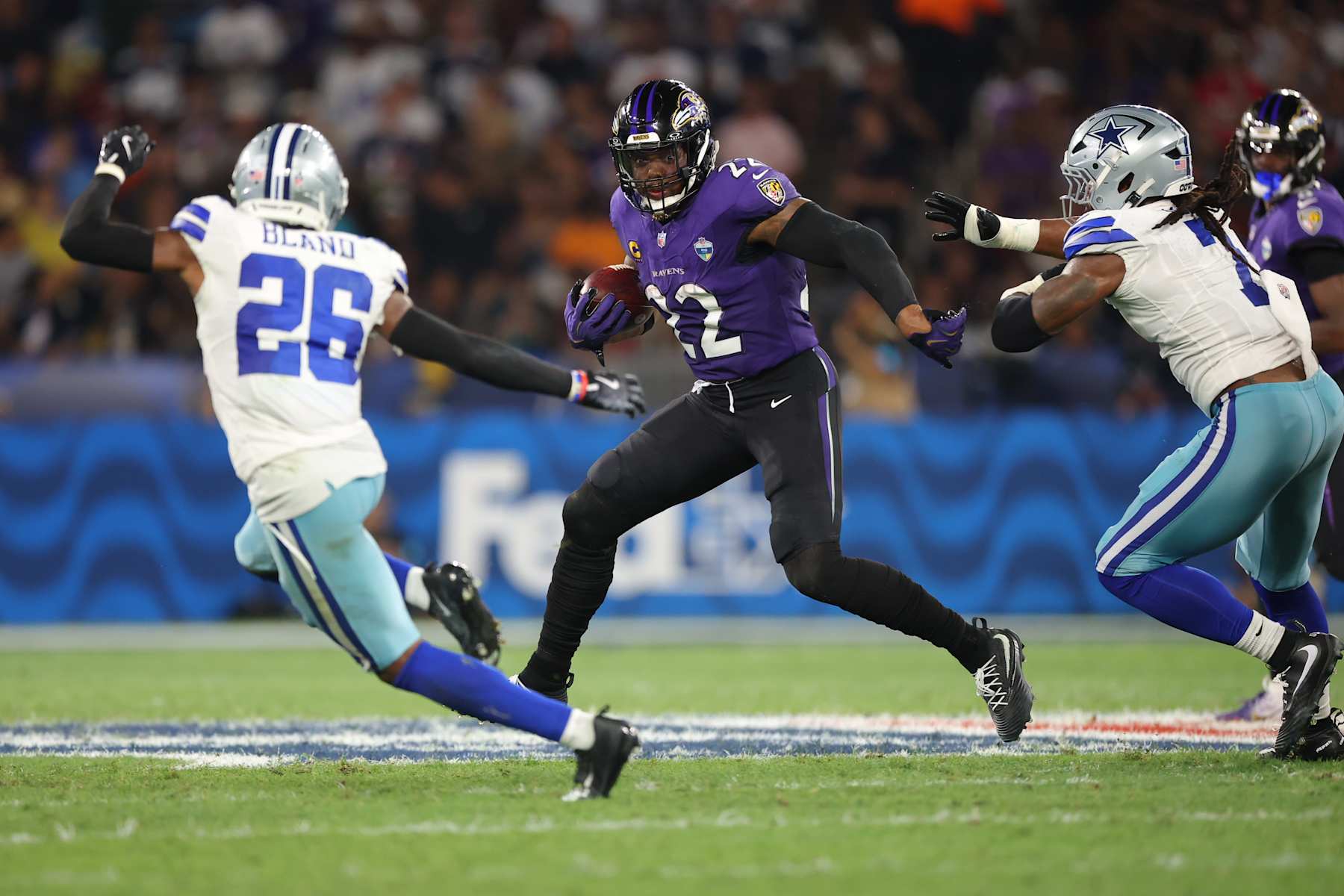
Derrick Henry gets his first game against the franchise where he became King Henry, so we know what most of the pregame coverage will look like.
While the hype will surround Henry facing his former franchise, the game may favor a more pass-heavy approach.
The Titans arrive in Baltimore at 0-3 with one of the least productive offenses in football, but their defense has been considerably better than the record suggests. The Titans are allowing only 19.7 points and 4.9 yards per play, and the biggest strength of that unit has been stopping the run. Opponents are averaging only 3.6 yards per carry, while Tennessee has allowed negative EPA on rushing plays.
They have been much more vulnerable through the air.
Opposing quarterbacks have completed 71.1 percent of their passes for 7.2 yards per attempt, while the Titans have allowed +0.11 EPA per pass. That presents Declan Doyle with an interesting choice. The Ravens have spent the first three weeks becoming one of the league’s most run-heavy offenses, Henry has already scored six times, and now his old team is coming to Baltimore.
The storyline calls out for a big day from Henry.
The matchup suggests something different.
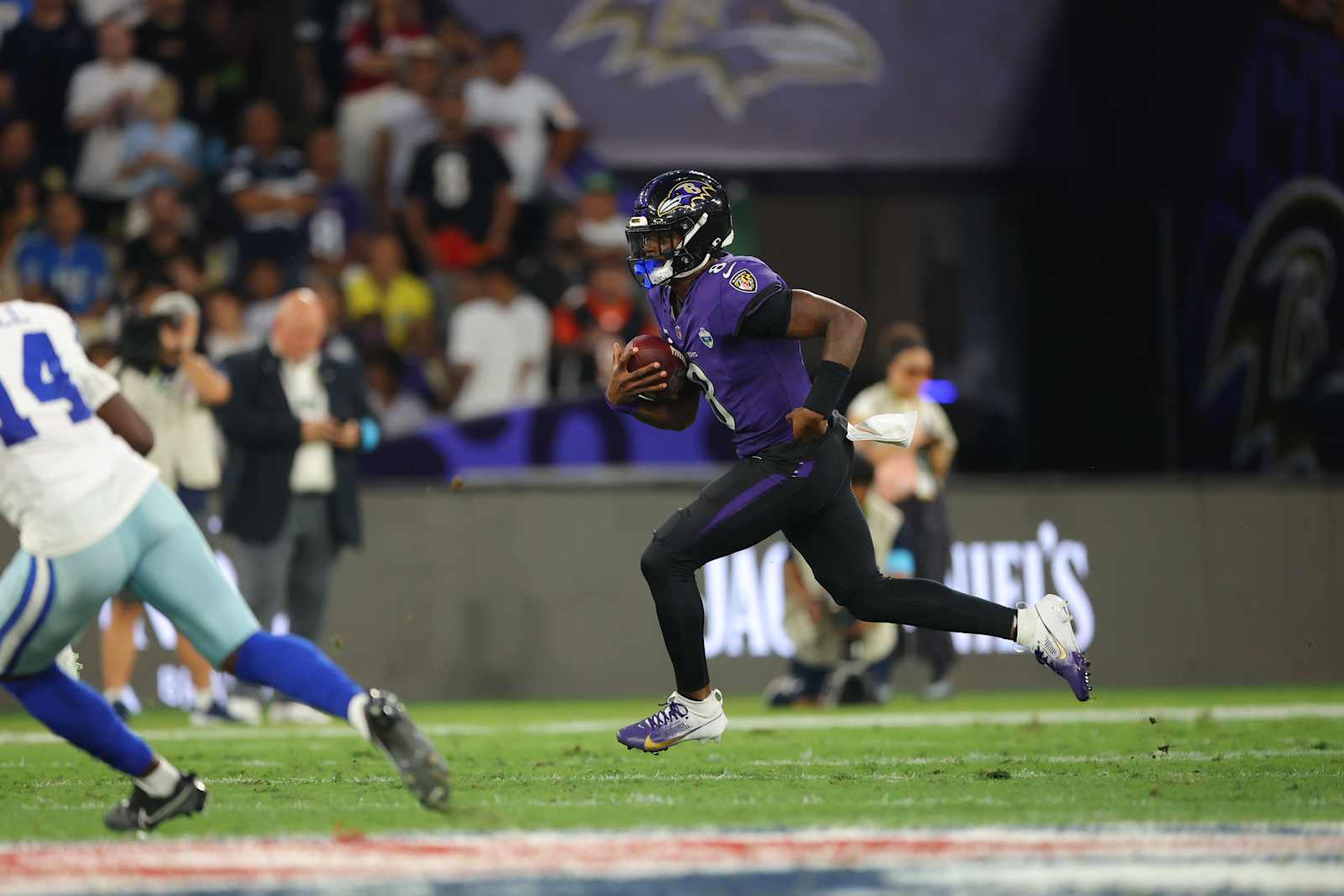
The Henry game might actually belong to Lamar
The Ravens should obviously run the football. Their rushing attack is not merely another way to gain yards. Henry and Lamar Jackson change how the defense has to align before the snap, and much of what Doyle wants to create in the passing game begins with that threat.
But there is a difference between using the run to manipulate the defense and repeatedly attacking the strongest part of the Titans.
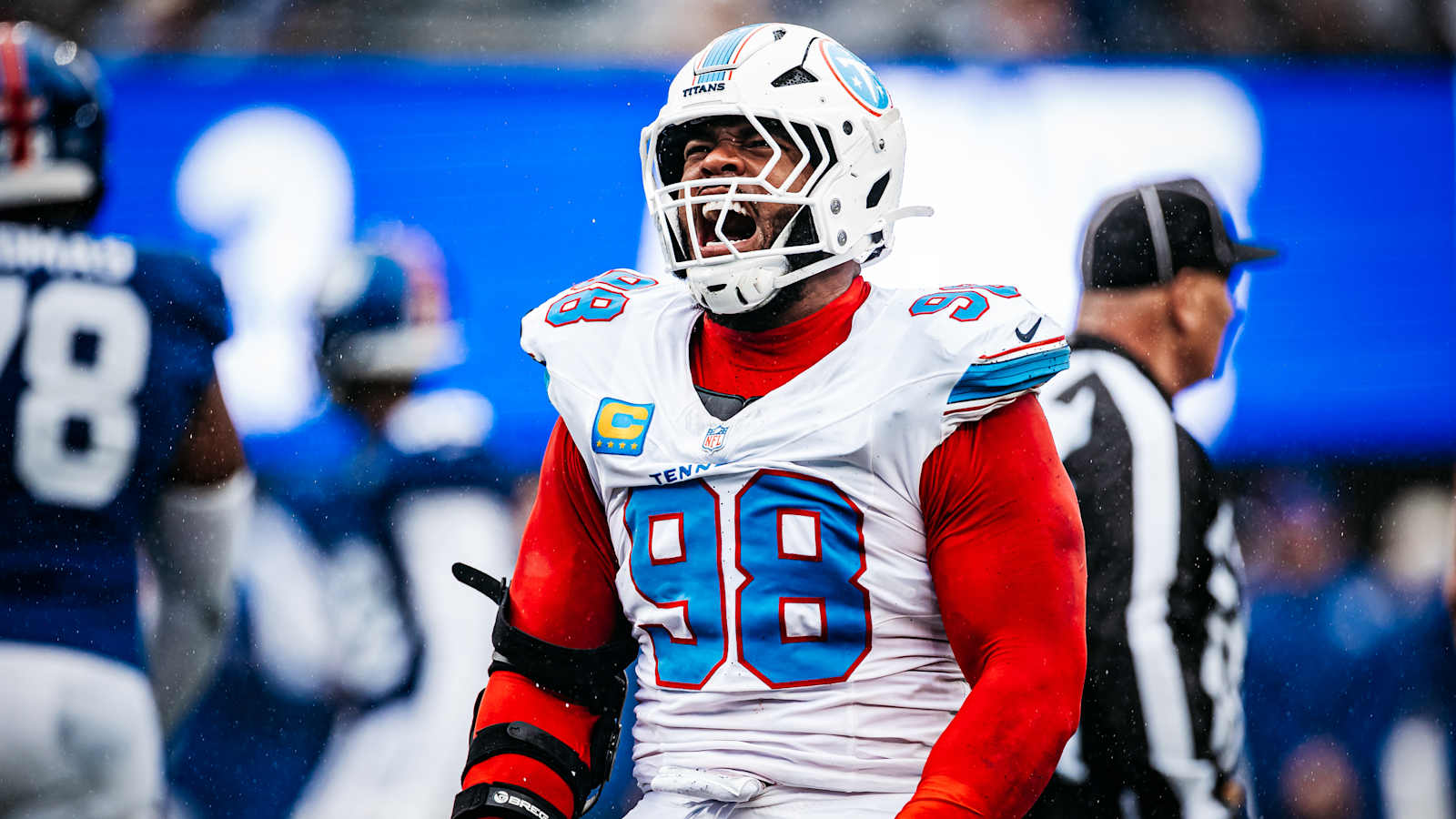
Tennessee has limited the ground game with a 20 percent stuff rate. Jeffery Simmons remains one of the best interior defenders in football, while rookie linebacker Anthony Hill Jr. already has 34 tackles. Opponents have run frequently against the Titans, but much of that volume has come because Tennessee has spent almost its entire season playing from behind. Volume has not necessarily meant efficiency.
What makes those numbers more interesting is that Tennessee has not needed to consistently overload the box to produce them. The Titans have used light boxes on 41.5 percent of defensive snaps overall through three weeks, according to Sharp Football Analysis. That is not among the most extreme rates in football, but they have been willing to go considerably lighter depending upon the opponent. Against Philadelphia in Week 2, Tennessee showed six or fewer defenders in the box on 18 of 30 designed runs. The Eagles gained only 78 yards on those 30 attempts, including 48 on the 18 runs into light boxes.
A light box only creates a clean numerical advantage if the offense can actually block the defenders who are there. Tennessee has allowed just 1.2 yards before contact per running-back attempt, which tells us the Titans are disrupting runs before the lack of an extra safety near the line should become a major problem.
Simmons is the key to that equation.
One excellent defensive tackle can distort the arithmetic. If Simmons defeats a block quickly, forces a double-team or pushes the run off its intended path, Tennessee does not necessarily need another body near the line of scrimmage. Hill can then arrive from the second level rather than having to win through traffic.
Gus Bradley’s zone-heavy structure helps too. Tennessee is playing zone on more than 80 percent of its defensive snaps, meaning many of its defenders can keep their eyes on the backfield rather than chasing receivers across the formation in man coverage.
That is how you can play lighter without simply conceding five yards whenever the offense hands the ball off.
And that may actually make the Ravens heavy personnel more dangerous through the air than on the ground.
Heavy personnel could stress Tennessee
The Ravens have used two tight ends on more than 30 percent of its offensive snaps and three tight ends on another 18 percent, both well above league-average rates.
From 12 personnel, the Ravens have generated +0.22 EPA per pass and +0.17 per run. From 13 personnel, their passing efficiency has been enormous, although the sample is far too small to treat the actual +1.02 EPA per pass as much of a signal.
Put Henry in the backfield with two or three tight ends and Tennessee has to respect the possibility of a downhill run. The Titans have been able to defend that kind of problem without routinely committing another defender to the box because Simmons disrupts things up front and the second level triggers quickly.
That is exactly what Lamar should be trying to manipulate. A linebacker stepping downhill toward Henry creates space behind him. A safety inserting aggressively into the run fit creates a window somewhere else. Mark Andrews can release behind the linebackers. Another tight end can leak into the flat or up the seam. Zay Flowers can cross the formation into the area a defender just vacated.
Doyle does not need Tennessee to bring eight defenders to the line to make play action work. He only needs the defenders responsible for fitting Henry to believe the run long enough to move themselves out of the passing window.
That is particularly attractive because Tennessee has already struggled against the same personnel packages. Against 12 personnel, the Titans have allowed +0.43 EPA per pass in the early sample while remaining effective against the run.
There is a temptation with Henry facing his old team to treat every successful carry as evidence that the Ravens should simply keep feeding him.
But the better approach is to leverage those carries into passing game opportunities. If Henry runs for six and Hill starts triggering faster, throw behind him. If a safety starts creeping closer to the fit, move Andrews into the space he abandoned. If Tennessee keeps the safeties patient and refuses to overreact, hand Henry the ball again.
That is the conflict Doyle should be creating.
The goal is to make the Titans wrong regardless of which answer they choose.
The matchup that can wreck everything: Vega Ioane vs. Jeffery Simmons
There is one pretty substantial obstacle to all of this.
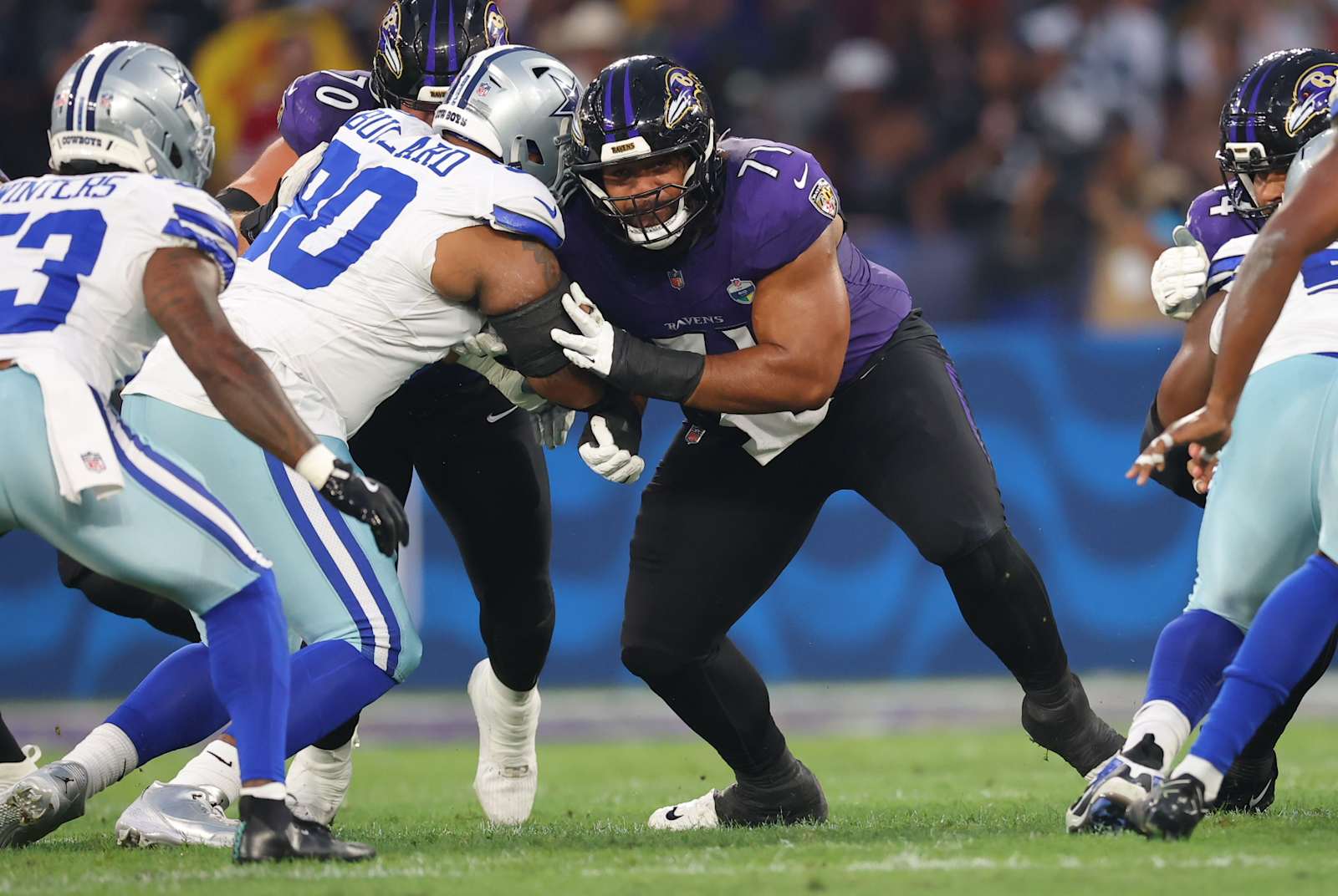
For all the attention Henry will receive, the most important Raven on offense Sunday might be a rookie in just his fourth NFL start, playing a position he was not drafted to play.
Jovaughn Gwyn and Ethan Pocic are both now on IR after suffering injuries against Dallas, leaving first-round pick Vega Ioane preparing to start at center. Ioane moved there for eight snaps in the fourth quarter last week.
Now he gets Jeffery Simmons.
Welcome to the NFL.
Simmons already has 15 pressures and two sacks through three games and is coming off a 10-tackle performance against the Giants. Tennessee’s overall pass rush has not been especially productive, with a pressure rate of just 31.6 percent, but Simmons does not need the rest of the front to dominate if he can consistently create immediate pressure through the middle.
Edge pressure can sometimes create an escape route. Interior pressure eliminates it. If Simmons is immediately collapsing the pocket, Lamar cannot comfortably step forward, play-action concepts do not have time to develop and the Ravens can suddenly find themselves living in the second-and-12 and third-and-long situations it has mostly avoided this season.
Ioane’s assignment also extends beyond physically blocking Simmons. He has to handle the snap, identify fronts, communicate protection changes, recognize twists and coordinate combination blocks from a position he began seriously preparing to play only days ago.
That is a lot to put on any rookie. Doing it with Simmons lined up across from you feels borderline rude.
Ronnie Stanley’s status becomes important here. If Stanley returns from his toe injury and can be trusted alone on the edge, Baltimore can devote more help toward Simmons. If Stanley sits again, the Ravens could be playing with a backup left tackle and a rookie emergency center simultaneously.
Doyle has answers available. Double Simmons. Use quick throws. Move Lamar. Change the front with heavy personnel. Stay out of obvious passing situations.
But every resource committed to Simmons is one the Titans can leverage somewhere else.
If Ioane merely survives this matchup, the Ravens should have advantages nearly everywhere else.
Make Cam Ward carry the Titans offense
The Titans offense is bad, and this year, it’s not due to the supporting cast.
Their offensive line has actually been one of the more encouraging parts of the team.
Tennessee has allowed only five sacks through three games, compared with 15 at the same point last season, and its 29.3 percent pressure rate allowed ranks among the better early-season marks in the league. The run game has also produced +0.05 EPA per play, identical to Baltimore’s rushing figure through three weeks.
The passing game has been the problem.
Cam Ward has completed 62.5 percent of his throws for 504 yards, two touchdowns and one interception. He has not reached 200 passing yards in any of Tennessee’s first three games and is averaging only 5.7 yards per attempt.
Three games into his second season, Ward has never really looked the part of an NFL quarterback. This season, he has generally protected the football, but too many possessions end without the passing game generating anything significant. He is not pushing the ball downfield or stressing opposition secondaries.
The Titans have punted on a league-high 59.3 percent of their possessions. They are averaging only 52.3 offensive plays per game, dead last in the NFL, and they have yet to run a single offensive snap while holding a lead.
If the Ravens defense can’t get right in this game at home, they may have more serious issues than we feared.
Pollard has been the stable part of this offense, averaging roughly 4.6 yards per carry while providing value as a receiver. If he can consistently turn first-and-10 into second-and-5, Brian Daboll can keep Ward in manageable situations and build the passing game around quick throws, play action and defined reads.
Minter’s job is to remove that option.
Stop Pollard early. Create second-and-long. Force Tennessee into obvious passing situations.
Then make Ward produce the throws this offense has been missing.
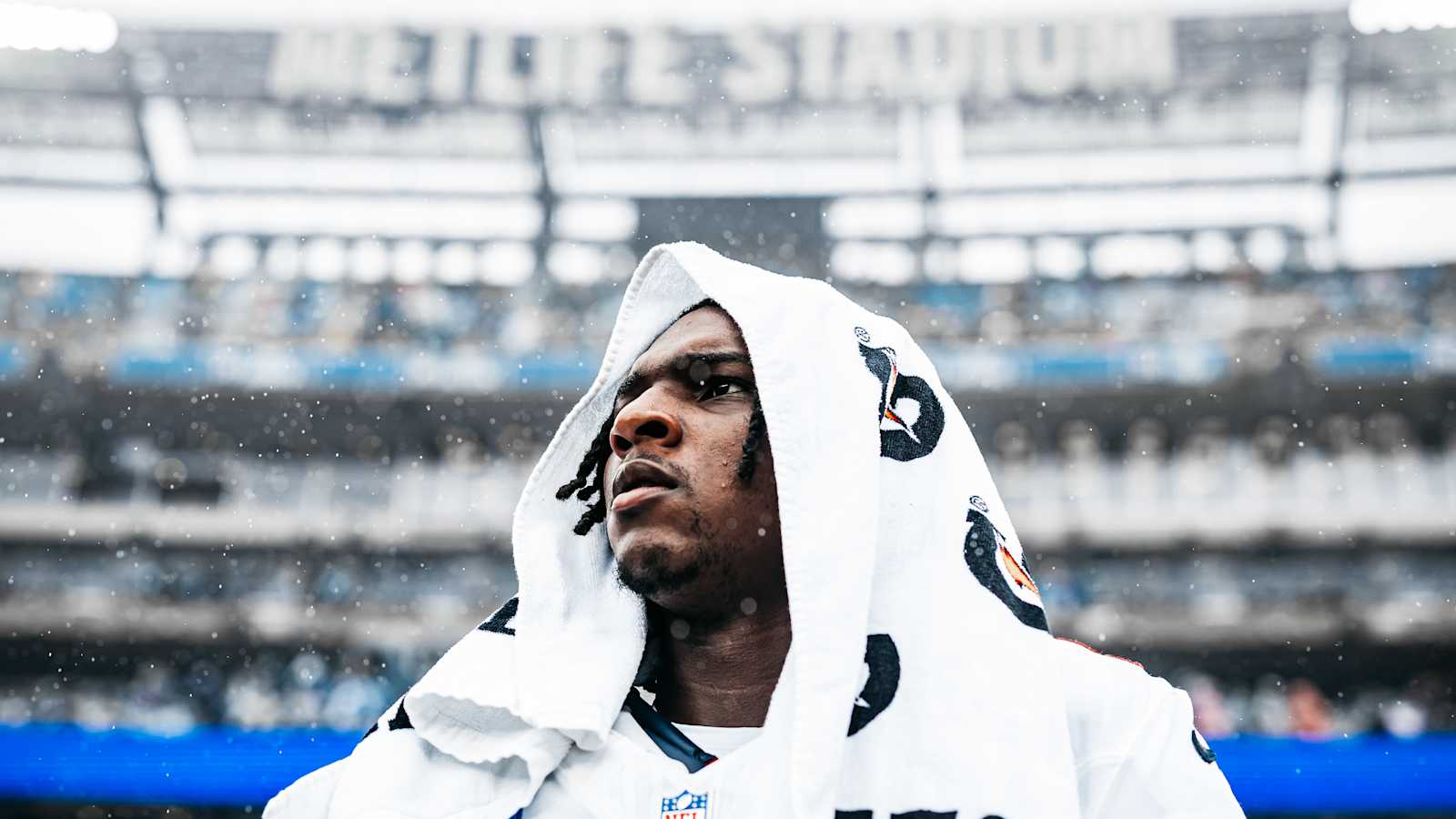
Carnell Tate is better than his numbers look
That does not mean the Ravens can simply assume Ward’s limitations will make every receiver harmless.
Carnell Tate is the player who worries me most.
The fourth overall pick has only 13 catches for 123 yards through three games, numbers that are easy to ignore when attached to the league’s 30th-ranked scoring offense. But the production does not fully reflect how well he has been getting open.
Tate caught six passes for 58 yards against the Giants and repeatedly created separation that Ward failed to turn into larger gains. Tennessee coverage has already identified him as one of the few clear bright spots of the 0-3 start
You do not want to evaluate a receiver only by whether his quarterback has consistently found him. At 6-foot-3 with excellent route detail and a large catch radius, Tate gives Tennessee something different from the quick-game work Wan’Dale Robinson provides. He can win intermediate routes outside the numbers, create separation on curls and comebacks and attack the spaces between outside corners and safeties in zone.
He has been open more often than his statistics indicate, making him a legitimate matchup problem for Nate Wiggins and the rest of Baltimore’s secondary, after they have struggled containing Chris Olave and Ceedee Lamb in recent weeks.
If Ward continues throwing behind him or late, none of it matters.
But if the pass rush fails to arrive and Ward has time to finally connect on some of the routes Tate has already been winning, Tennessee has a path to explosive plays that its first three box scores do not really show.
That is the kind of opponent tendency the Ravens have to take seriously. The objective should still be to force Ward to win the game, but the Ravens should not confuse that with assuming there are no throws available for him to make.
No Hendrickson means the pressure has to come from somewhere else
That brings us to Baltimore’s biggest defensive personnel problem.
Trey Hendrickson is out after undergoing a procedure on the finger injury he had been playing through, removing the Ravens’ most accomplished edge rusher from a matchup against an offensive line that has protected Ward surprisingly well.
Mike Green should receive a larger role, with Tavius Robinson and Zion Young also figuring into the rotation.
But the more favorable matchup may be inside.
Tennessee has lost starting right guard Fernando Carmona and his initial replacement, Jackson Slater, to injured reserve. That leaves the Titans preparing to use another replacement next to an otherwise improved offensive line.
Nnamdi Madubuike returned last week. Calais Campbell was disruptive against Dallas.
That is where Jesse Minter should attack.
The temptation when losing your top edge rusher is to compensate by blitzing more. That may not be necessary here. Ward has already been living on shorter throws, and sending additional rushers can simply open easier answers underneath.
If Madubuike and Campbell can create pressure against the replacement guard while Baltimore drops seven into Ward’s preferred throwing areas, the Ravens can make Tennessee produce offense five and six yards at a time.
That also allows the Ravens to keep help available for Tate rather than repeatedly exposing their corners just to manufacture pressure.
So far, the Titans have not shown they can sustain enough of those long drives.
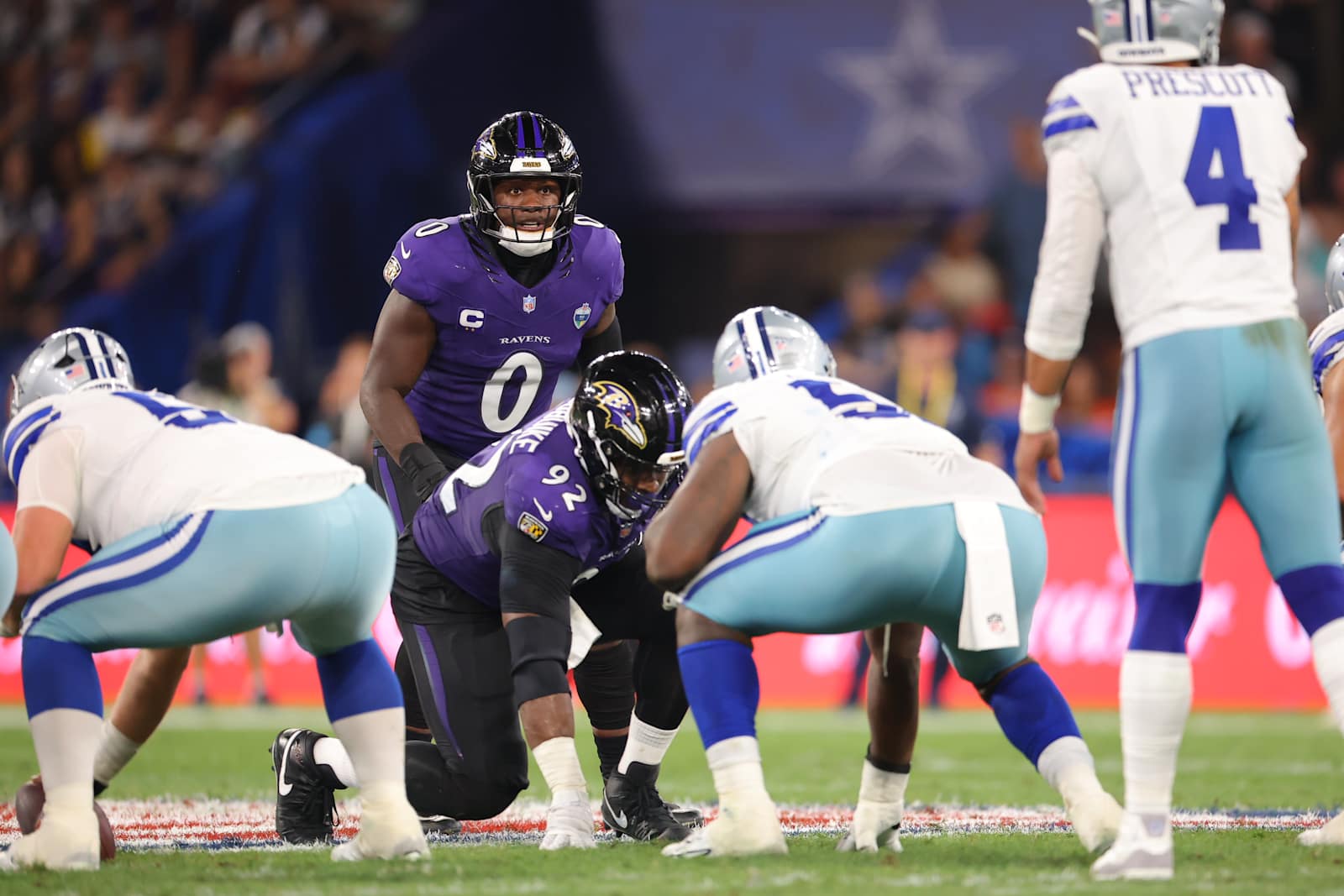
The defense needs to do the little things
Minter does not need to unveil some brilliant new coverage package Sunday.
He just needs his defense to tackle.
Baltimore missed 13 tackles against Dallas while allowing 415 yards and 31 points. The Cowboys ran for 148 yards, and another comfortable Ravens advantage turned into a game that Tyler Loop had to win from 56 yards.
That cannot become the weekly formula.
Tennessee provides a pretty useful test because its offense is currently designed around exactly the plays poor tackling can turn from harmless into dangerous.
Pollard gets five instead of three.
Robinson turns a short completion into a first down.
Ward scrambles out of third-and-long.
Tate catches a comeback, the first defender misses and suddenly an ordinary completion becomes 20 yards.
None of those require Ward to turn into Josh Allen. They simply allow the Titans to avoid the difficult downs that have wrecked so many of their possessions.
If they keep short throws short and fit the run correctly, Tennessee eventually has to prove Ward can make enough difficult throws to sustain drives.
The Ravens defense has spent three weeks flashing enough talent to believe a much better unit is in there somewhere while repeatedly finding ways to make life harder on itself. Indianapolis moved the ball early. New Orleans exposed larger problems. Dallas nearly erased another substantial lead.
Against this offense, there are very few excuses.
The Ravens do not need a defensive masterpiece.
They need a clean game.
How Tennessee keeps this close
There is a version of Sunday that becomes much more nerve-wracking than anyone in Baltimore would like.
Simmons creates early pressure against Ioane.
The Titans stop Henry without committing an extra defender.
The Ravens move the football but settle for field goals.
Pollard keeps Tennessee ahead of the chains.
The Ravens miss a few tackles.
Ward finally hits Tate on one of the opportunities that has been sitting there for three weeks.
Tommy Townsend flips the field a couple of times.
Suddenly it is 16-13 in the third quarter and Tennessee’s defense gets to play exactly the game it wants.
That is the Titans’ realistic path.
They are unlikely to beat Baltimore by trading explosives with Lamar. The Ravens have gained at least 10 yards on 35.8 percent of their pass plays and 15.5 percent of their runs, both among the highest rates in football. Tennessee has shown almost none of that explosiveness in its passing game.
So the Titans need to make the game smaller.
Shorten possessions. Make Baltimore earn 10-play drives. Force field goals. Protect Ward. Run Pollard efficiently. Avoid giving Lamar short fields. Stay within one score long enough that a turnover, special-teams play or one excellent Ward drive can decide it.
No mystical “trap game” explanation is required.
The Ravens can create that situation all by themselves if they repeat the penalties, missed tackles and defensive lapses that have appeared throughout the first three weeks.
Prediction
Tennessee’s defense is good enough to make this more difficult than the records suggest, particularly if Simmons immediately exposes Baltimore’s emergency solution at center.
But the matchup becomes increasingly difficult for the Titans the longer it lasts.
The Ravens have a particularly useful answer for a defense that has managed to stop the run without constantly sacrificing bodies in coverage. Heavy personnel forces Tennessee to respect Henry while giving Lamar opportunities to attack the linebackers and safeties whose aggressiveness makes those lighter run fronts work.
On defense, Baltimore’s assignment is much simpler.
Stop Pollard from keeping Tennessee on schedule. Tackle the quick game. Do not let Tate’s underlying separation finally become explosive production. Make Ward repeatedly deliver accurate, high-value throws.
I think the talent on defense will finally shine this week, while the Titans cause the Ravens offense problems due to the re-shuffled offensive line. The Ravens come out on top, but not with as many fireworks as fans hope.
Ravens 24, Titans 13