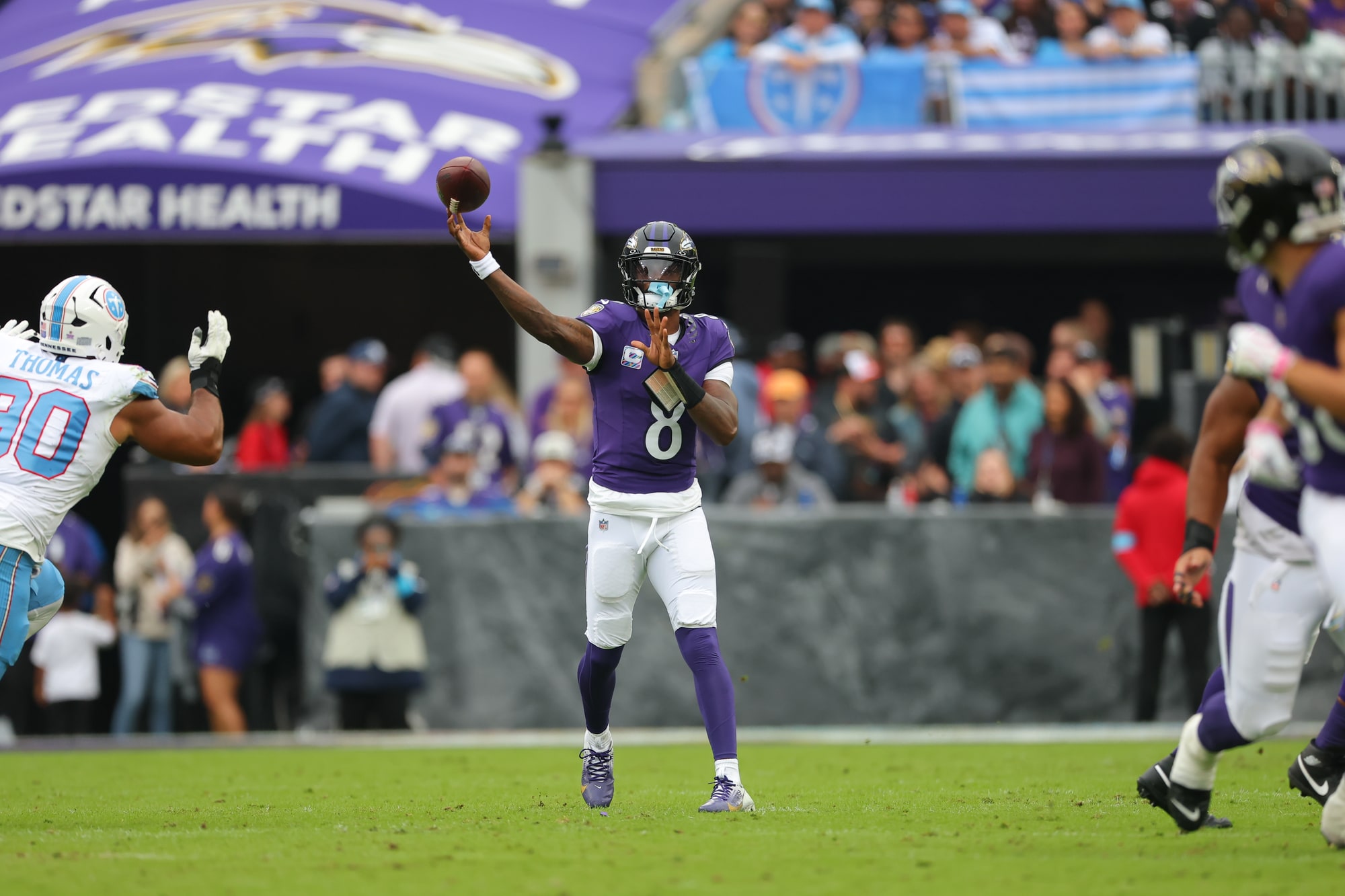
Five immediate takeaways from the Ravens’ 24-18 win over the Titans, before any rewatch.
Follow the season: The Ravens Season Dashboard tracks the record, advanced team metrics, unit trends, injuries and what comes next.
The Ravens beat a dismal Titans team for their first home win of the season and are now 3-1.
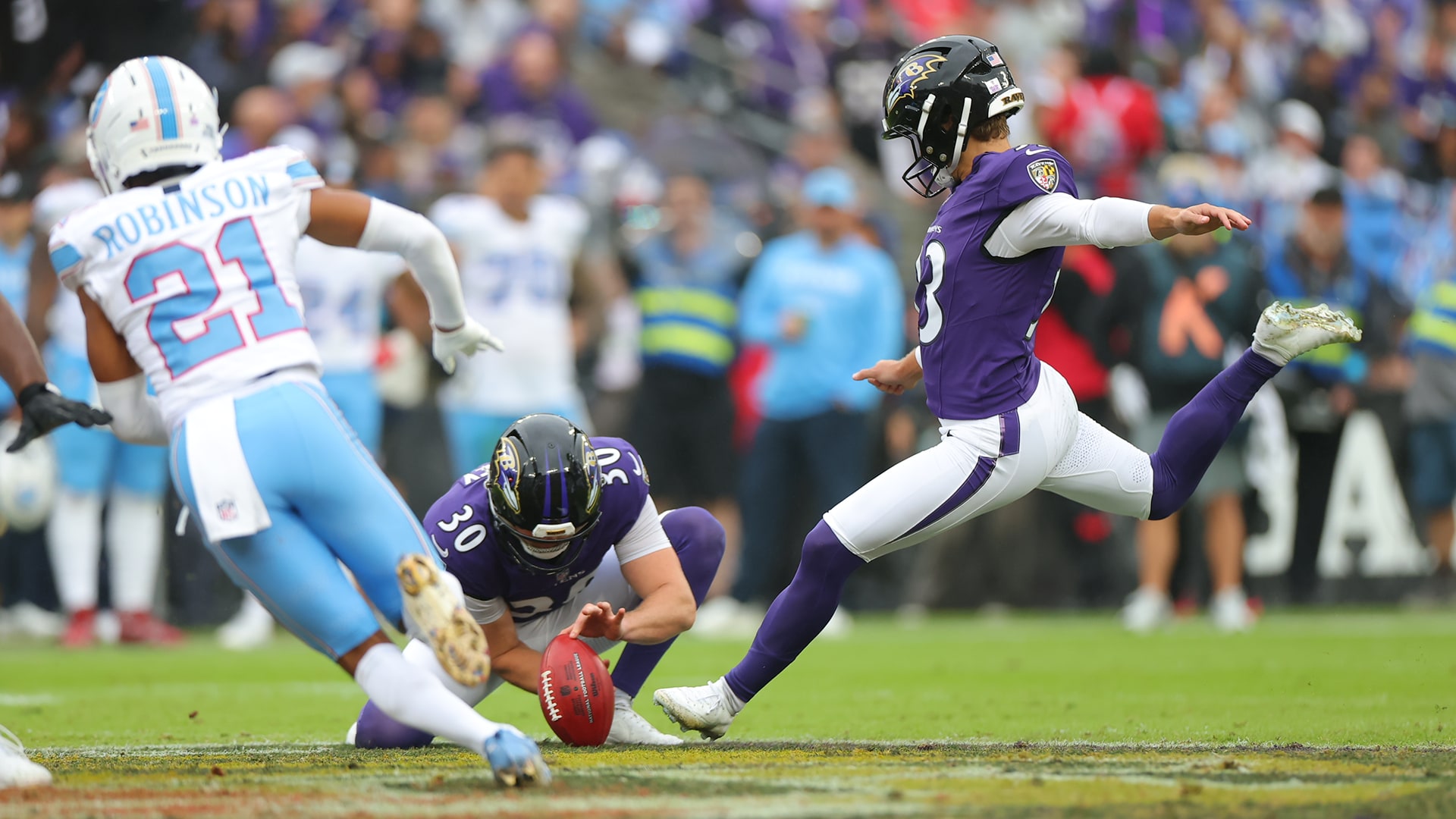
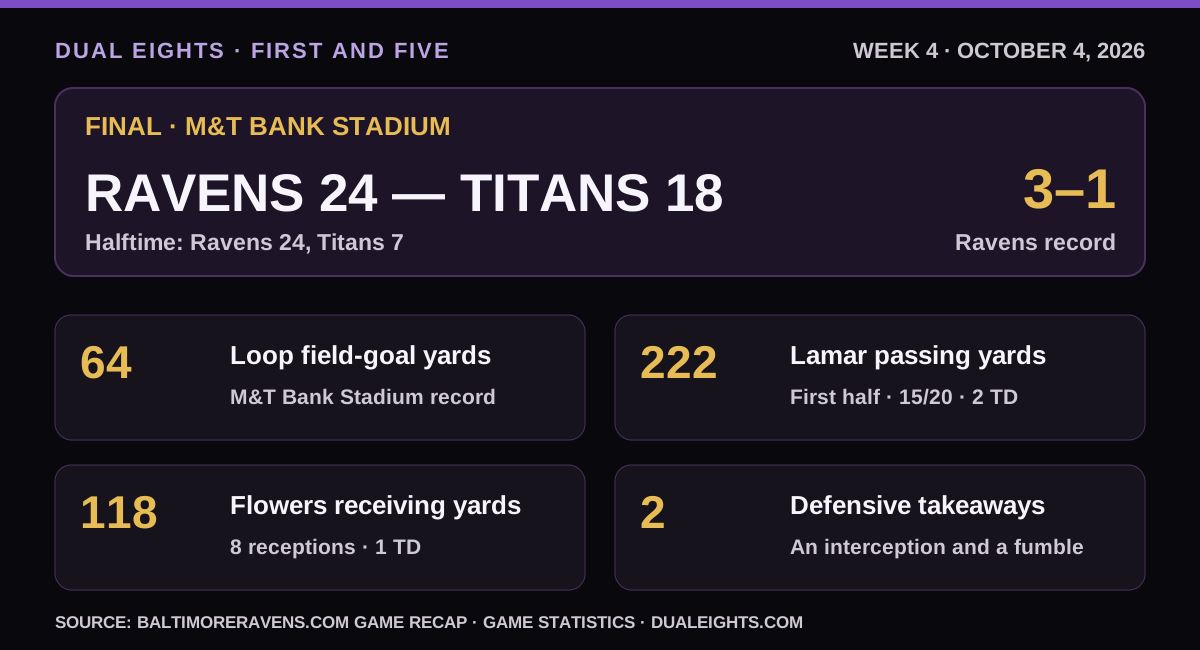
Tyler Loop casually made a 64-yard field goal, the longest ever at M&T Bank Stadium, one week after winning a game from 56 yards in Brazil. Zay Flowers continued to look like one of the most dangerous receivers in football. Ioane making his first NFL start at center essentially erased Jeffery Simmons. The defense created two turnovers and allowed only 18 points.
And none of that is what Ravens fans are thinking about tonight.
Lamar Jackson did not return after halftime because of an ankle injury, turning what had been a comfortable 24-7 lead into two quarters spent watching Tyler Huntley run out the clock while everyone tried not to contemplate what another extended absence would mean.
The early signs are encouraging. Jesse Minter said there were conversations about Jackson returning to the game and expressed optimism afterward. Jackson remained on the sideline for much of the second half before eventually heading to the locker room.
Still.
Its hard not to think back to how last season unfolded and fear for the worst.
Here are my five immediate takeaways from a 24-18 win that felt considerably less comfortable by the end.
1. Now we hold our breath
Before the injury, Lamar was outstanding.
He completed 15 of 20 passes for 222 yards and two touchdowns in the first half while adding another 20 yards on the ground. The Ravens scored 24 points, moved the ball almost whenever they needed to and appeared headed toward a relatively stress-free afternoon against an 0-3 opponent.
Then Jermaine Johnson landed on the back of Jackson’s leg during a sack on the Ravens final offensive possession of the half.
Lamar did not return.
The difference was immediate and dramatic.
In six first-half possessions they generated +14.18 EPA. The five meaningful second-half possessions produced -4.38 EPA and zero points.
The Ravens went punt, punt, punt, punt and missed field goal.
Huntley completed 8 of 9 passes, which looks respectable if you just glance at the box score, but those completions produced only 63 yards. He added 16 more on four carries. The Ravens essentially stopped trying to create anything dangerous and placed the game in the hands of the defense, the clock and a 17-point halftime cushion.
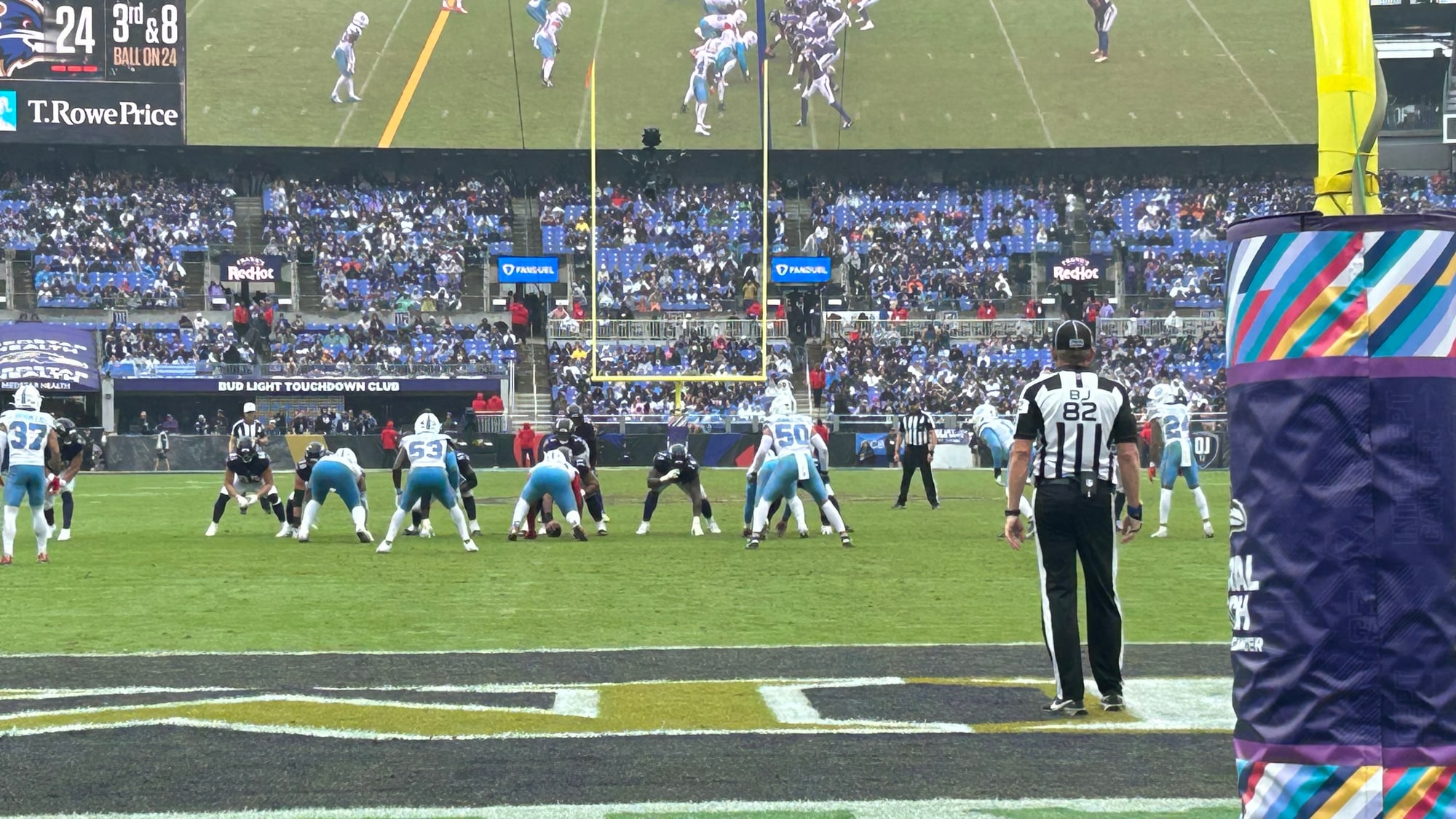
There was no reason for Declan Doyle to ask Huntley to replicate the Lamar offense while protecting a three-score lead in the rain against a Titans team that had spent most of the afternoon hurting itself. A conservative second half does not tell us Huntley is incapable of operating the offense if he has to start next week.
But it does illustrate the obvious.
This team is built around Lamar in a way no backup can replicate.
His value was visible before the injury in more than the passing numbers. Tennessee had to account for him at the mesh point, respect him when he escaped the pocket and defend an offense that could attack every part of the field. Once he disappeared, so did most of the stress Baltimore was placing on the defense.
Minter’s comments afterward should offer some reassurance. Supposedly there were discussions about Jackson returning, and the Ravens apparently decided there was little reason to expose him with the game still under control. That is very different from an immediate diagnosis suggesting a significant injury.
Ravens fans can be forgiven for refusing to exhale just yet.
Last September, Jackson left the Kansas City game with what initially appeared to be another manageable injury. He had suffered a hamstring issue, and there was even uncertainty immediately afterward about whether he might have returned had the score been closer. He ended up missing three games, then spent much of the rest of the season dealing with one physical problem after another.
By the end of the year, the explosive, improvisational Lamar that makes the Ravens different rarely looked fully available.
The Ravens can survive losing almost anyone on this roster for a couple of weeks. Losing Lamar changes what the entire team can reasonably expect to accomplish.
For tonight, we'll take 3-1 and hope for the best.
2. The defense won the important downs without controlling the game
There are two very different ways to describe what the Ravens defense did Sunday.
The flattering version is that Baltimore allowed 18 points (8 coming on a late desperation drive), forced two turnovers, stopped Tennessee on fourth-and-goal from the 2 and held the Titans to 2-of-10 on third down. Trenton Simpson intercepted Cam Ward on Tennessee’s second offensive play. Kyle Hamilton forced a fumble after Carnell Tate had already gained 33 yards, with Malaki Starks recovering.
Those plays were enormous and were well earned.
The less flattering version is that Tennessee moved the football far too comfortably for much of the afternoon.
The Titans had managed only eight first-half first downs combined through their first three games. They had eight in the first quarter Sunday and 14 by halftime. Carnell Tate finished with nine catches for 145 yards, nearly matching his 123 receiving yards from the first three games combined.
Tennessee also produced 12 plays of at least 10 yards, its highest total since December of last season.
The Titans finished at -0.16 EPA per play, which looks like a strong performance from the Ravens defense. But Simpson’s interception and Hamilton’s forced fumble alone accounted for -7.77 EPA. Remove those two snaps and Tennessee was essentially neutral at -0.02 EPA per play.
Turnovers are important of course. Simpson made a terrific play. Hamilton punched the ball out rather than waiting for Tate to politely give it back. The Ravens should receive full credit for both. But if we are trying to figure out how well this defense played rather than simply tallying what happened, the distinction matters.
The Ravens consistently won the highest-leverage moments without consistently winning the ordinary snaps that led Tennessee into those situations.
The goal-line stand was the best example. Tennessee moved 73 yards on 14 plays and reached the 2. On fourth down, Nnamdi Madubuike blew up the direct-snap run to Tony Pollard and the offense immediately answered with an impressive 98-yard touchdown drive.
That sequence changed the game. It was excellent defense when excellent defense was required, but it doesn't totally erase the drive that led up to it.
The pass rush is also worth watching, without Trey Hendrickson. The defense managed only one sack against Cam Ward, a nice play from rookie Ethan Burke. Minter can manufacture disruption with coverage, simulated pressure and Hamilton moving around the formation, but the whole point of adding Hendrickson was to avoid needing schematic help every time the Ravens wanted to bother a quarterback.
Against Tennessee, the explosive defensive plays were enough to cover for the down-to-down leakage. Against better offenses, allowing this many manageable gains and relying upon turnovers to erase drives becomes a much more dangerous formula. Minter will have to assess if the current schematic approach and philosophy needs a tweak or if the players just need to execute better.
3. Vega Ioane might have solved a problem nobody expected him to solve
A week ago, the Ravens lost Jovaughn Gwyn and Ethan Pocic in Brazil and suddenly needed their rookie first-round guard to play center.
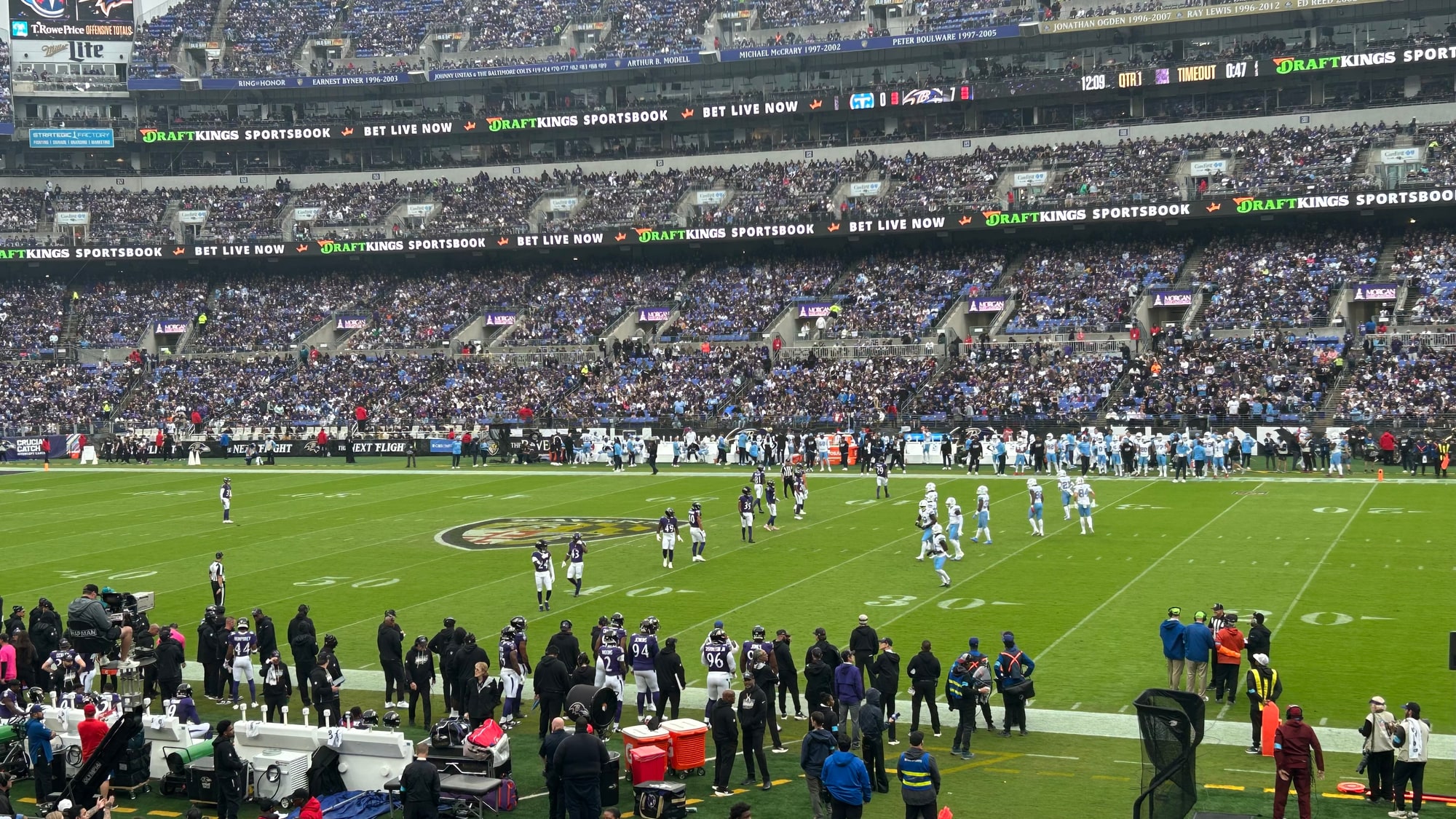
Sunday, Vega Ioane stepped in to fill the void with Jeffery Simmons lined up across from him. That should have been one of the biggest mismatches in Tennessee’s favor. Instead, Simmons was almost invisible.
According to Next Gen Stats, Simmons generated one pressure on 32 pass-rush snaps, a 3.1 percent pressure rate, his lowest since Week 7 of last season. And the one pressure came against Vorhees.
Simmons matched up with Ioane nine times and did not record a pressure on any of them. That is a ridiculous result considering the circumstances.
Ioane was not drafted to play center. The Ravens selected him 14th overall because they believed he could become a difference-making guard. Now Baltimore may have something worth seriously considering.
There is more to playing center than winning individual pass-rush matchups. Ioane has to identify fronts, communicate protections, execute combination blocks, handle exchanges and, rather importantly, get the ball cleanly to the quarterback every snap.
Sunday offered encouragement there, too. His snaps were consistently clean despite the rain and quarterback change. The only exchange that got away from Huntley came on a play where Tennessee was already flagged offsides.
One start does not settle the position. Defenses will test Ioane differently once there is enough NFL film of him at center. They will mug linebackers into both A-gaps, run games across his face, make him change protections and force him to solve problems that Simmons largely tried to win through individual ability.
But this was about as difficult a first test as he could be given.
And he passed it.
4. The Ravens have a penalty problem
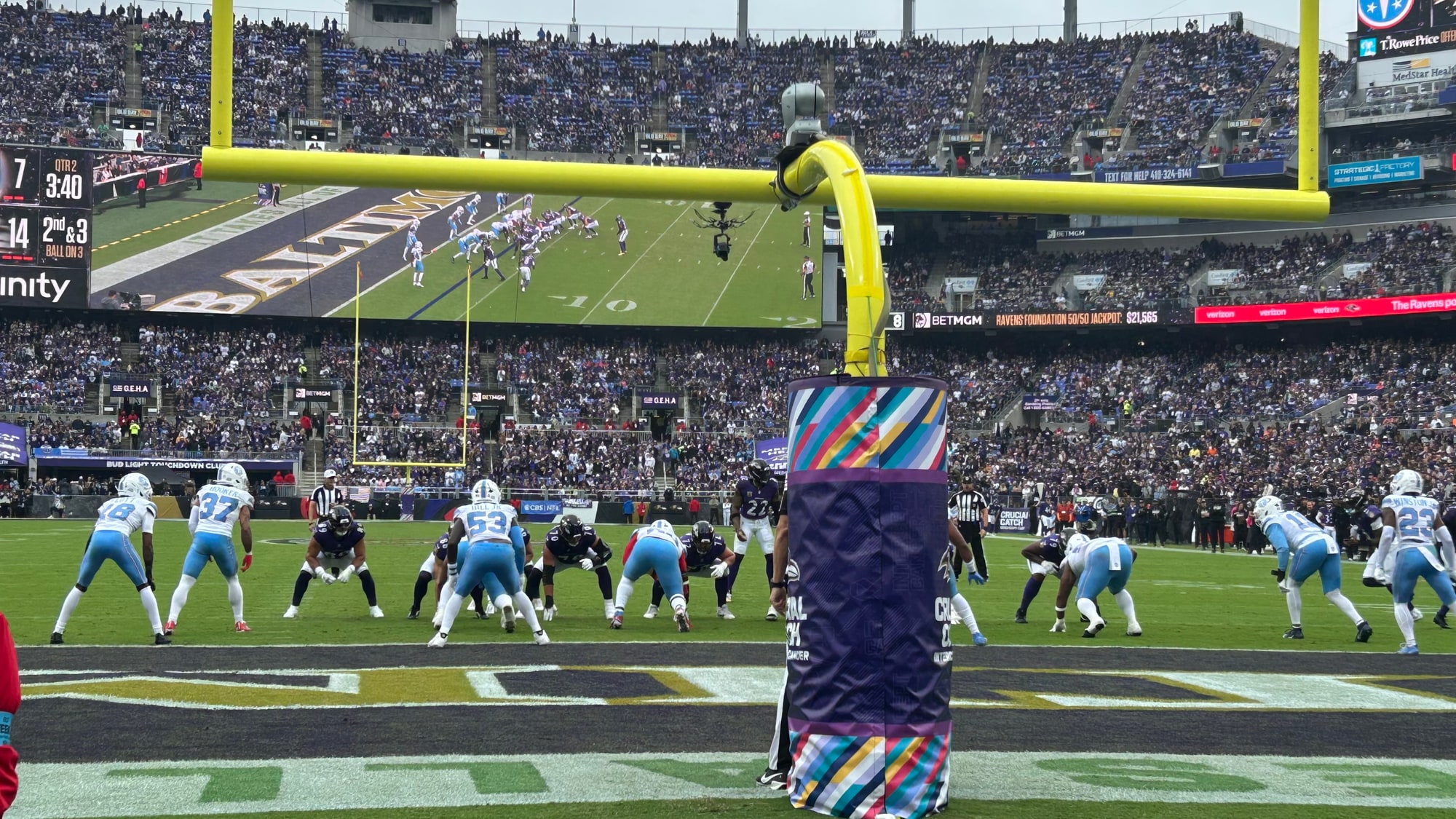
The Ravens entered Sunday with 26 accepted penalties for 198 yards.
They committed 13 more for 131 yards against Tennessee.
That brings the season total to 39 penalties for 329 yards, an average of 9.75 penalties and 82.3 penalty yards per game. This is no longer the occasional holding call or aggressive defensive back getting flagged while competing at the catch point.
It is a team-wide discipline problem.
Eight of Sunday’s penalties came before halftime alone.
The Ravens have been good enough to survive it, still ranking fourth in net EPA per play through Sunday’s games. Lamar has played some of the best football of his career when healthy. Flowers has been absurdly efficient. The defense keeps producing high-leverage plays.
The penalties have functioned like a tax on all of it.
An offense creates a manageable second down, then takes a procedural penalty and suddenly has to operate behind the sticks. A defense wins a snap and gives back the field position. A drive that should require 65 yards requires 75 instead.
Against an 0-3 Tennessee team, Baltimore can absorb some of that.
Against Buffalo, Kansas City or a playoff opponent where possessions become scarce and margins shrink, repeatedly giving away five, 10 or 15 yards becomes a much more serious problem.
Some penalties are the cost of playing aggressively. Corners will occasionally get called for contact. Offensive linemen will hold when the alternative is allowing the quarterback to get hit. One questionable flag should not become a morality play about discipline.
Thirty-nine penalties in four games goes beyond bad luck.
At some point, the coaching staff has to determine whether the problem is technique, communication, pre-snap operation or simply players repeatedly making poor decisions.
Because right now the Ravens are effectively spotting opponents more than 80 yards per week and asking the rest of the roster to overcome it.
5. Declan Doyle has figured out how to weaponize Zay Flowers
Zay Flowers missed Week 2 and played a limited role in Brazil.
He has still produced 18 catches for 352 yards and two touchdowns on 22 targets this season. That is 19.6 yards per reception and 16 yards every time Lamar throws the ball in his direction.
Those are silly numbers.
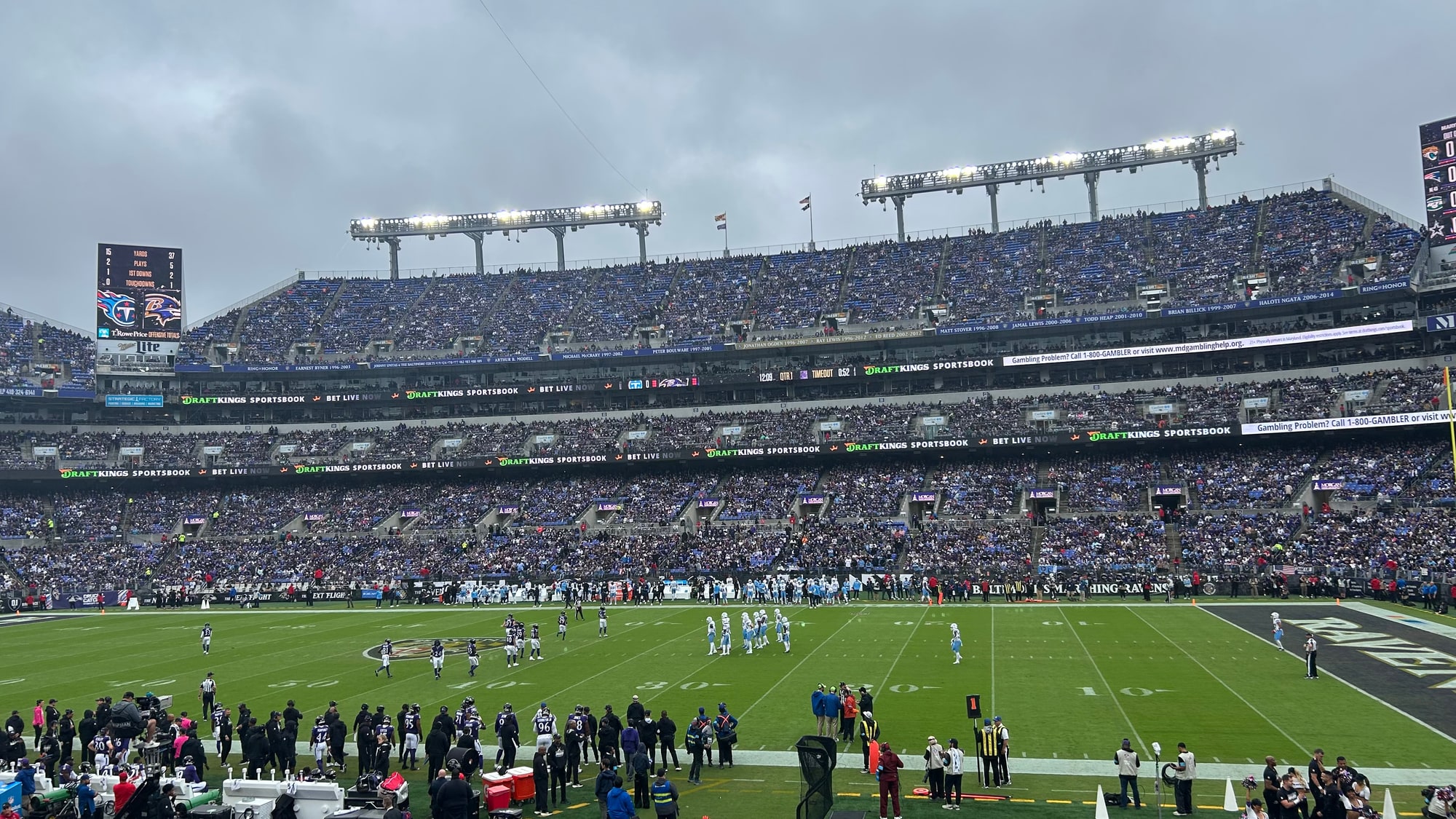
Flowers added eight catches for 118 yards and a touchdown Sunday, giving him his second 100-yard performance in three appearances this season. Before Week 4, he already ranked first among qualified receivers in EPA per target at +1.64, while producing 234 yards on just 12 targets.
He’s been the biggest positive on the offense since inking his large extension.
He can’t conceivably keep up this pace. Nobody averages 16 yards per target over a full NFL season. Defenses will adjust. The schedule will become more difficult. Some of Flowers’ early numbers are being driven by explosive plays and a small sample.
But the interesting part is how the Ravens are creating those opportunities. Flowers should not be a receiver defenses get to identify before the snap, assign their preferred coverage and comfortably carry through the play.
Move him, put him in stacks and bunches. Send him across the formation. Give him free releases. Use motion to force defenses to declare coverage. Let his alignment manipulate defenders even when he is not getting the football. That was one of the clearest potential benefits of Doyle’s offense from the moment he arrived.
Four weeks into the season, Flowers looks like the player benefiting most.
His 52-yard catch Sunday was a beauty. The Ravens created room, Lamar delivered the football and Flowers turned space into an explosive gain.
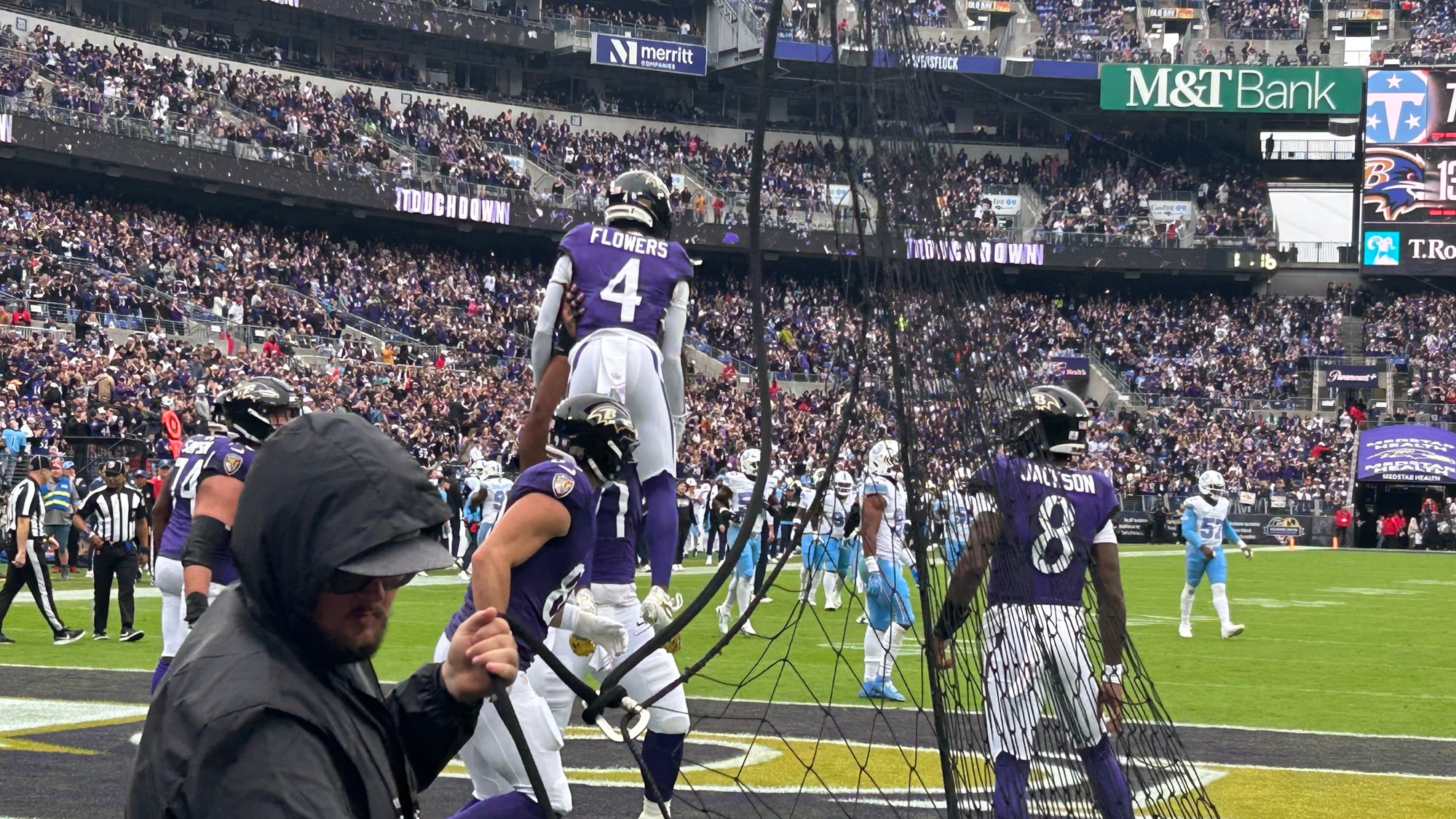
Flowers has always been capable of making defenders miss and turning a normal completion into something considerably more dangerous. The next step was building an offense that created more opportunities for him to receive the ball with leverage already in his favor.
Doyle appears to understand that.