Follow the matchup: Find matchup stats, injuries and Ravens season statistics at the Ravens Season Dashboard.
Week 5 | Sunday, October 11, 2026 | 8:20 p.m. ET | NBC / Peacock
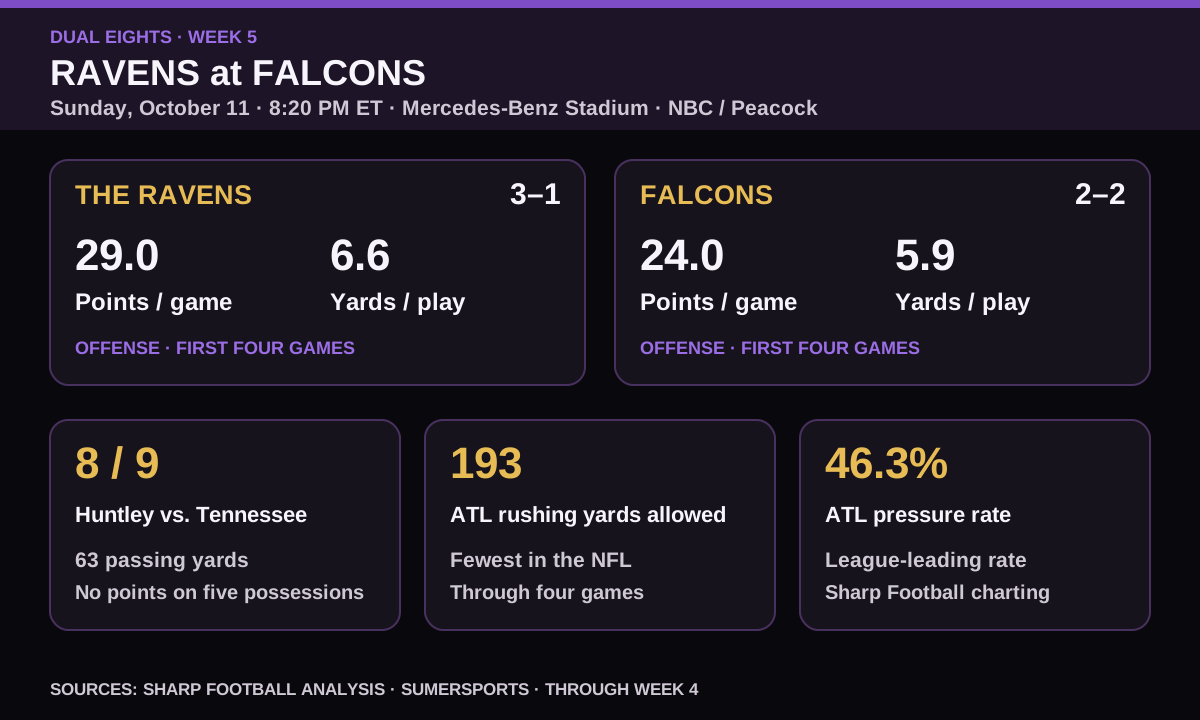
The Ravens are 3-1, have won two straight games and rank fourth in the NFL in offensive efficiency. Under normal circumstances, they would be feeling pretty good heading into a matchup with a 2-2 Atlanta Falcons team.
These are not normal circumstances.
Lamar Jackson is out with an ankle injury. Trey Hendrickson will miss another game. Zay Flowers and Marlon Humphrey are questionable. The Ravens are down to their fourth option at center, although that particular emergency has produced an encouraging development.
And the Falcons might be one of the worst possible opponents to face under these circumstances.
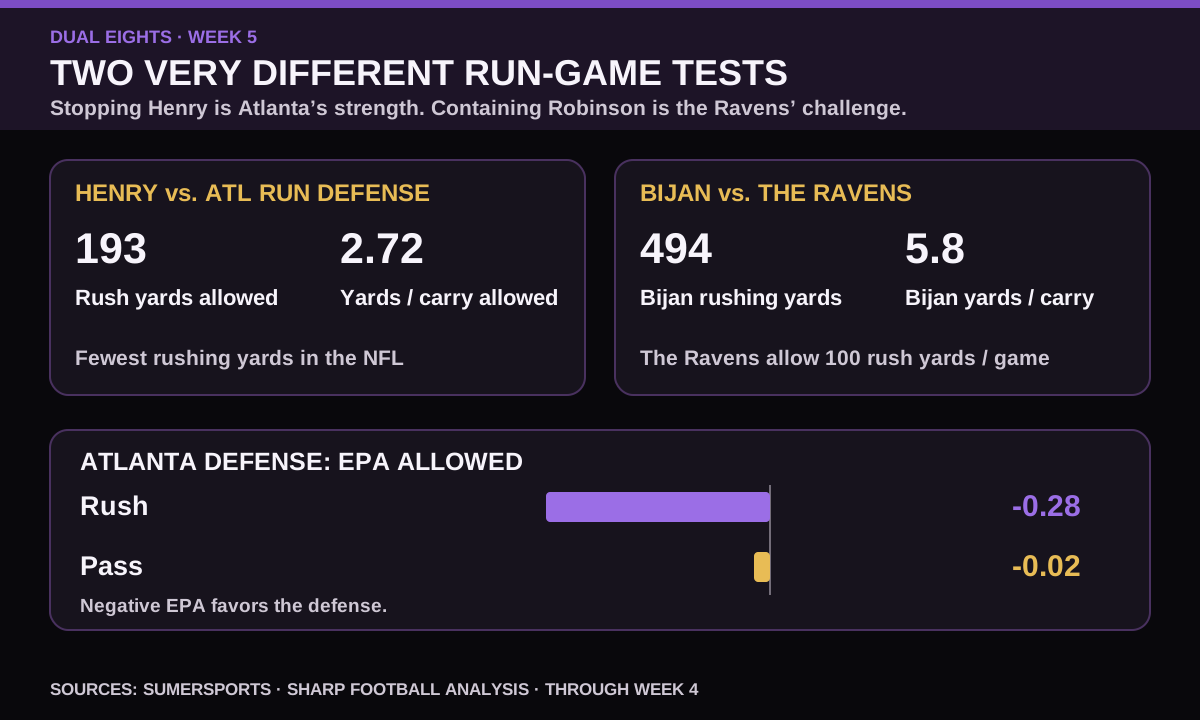
Atlanta has allowed just 193 rushing yards through four games, fewer than any other team in football. Its defense generates pressure on nearly half of opposing dropbacks, according to Sharp Football Analysis. On offense, Bijan Robinson has emerged as one of the league’s most dangerous players, and Michael Penix Jr.’s return has transformed a unit that looked completely dysfunctional through the first two weeks.
The Falcons have scored 80 points in their last two games. The Ravens scored zero points on five possessions after Tyler Huntley replaced Jackson against Tennessee.
Still, the Ravens have enough talent to win this game. Derrick Henry remains capable of taking over a night, Huntley has won meaningful games before, and the defense possesses enough talent to shut down almost anyone if it plays to its potential.
The question is whether Jesse Minter and Declan Doyle can put those players in positions to succeed when the matchup seems designed to expose their current limitations.
Here are the biggest questions heading into Sunday night.
1. Can Declan Doyle make Tyler Huntley threaten the defense downfield?
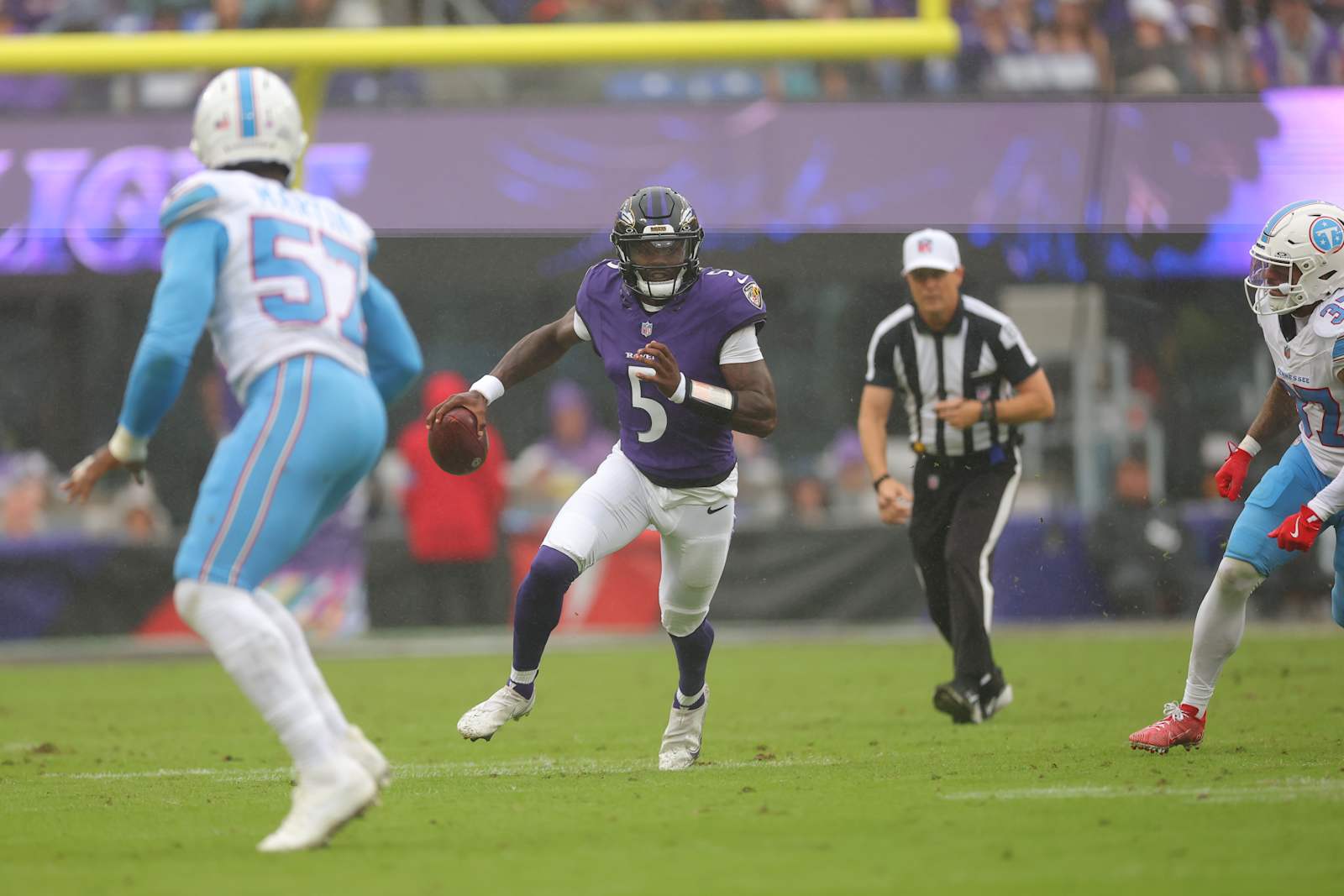
The obvious approach with Huntley replacing Jackson is to lean heavily on Henry, simplify the passing game and ask the backup quarterback to protect the football.
There’s just one problem.
Atlanta is exceptionally good at stopping exactly that kind of offense.
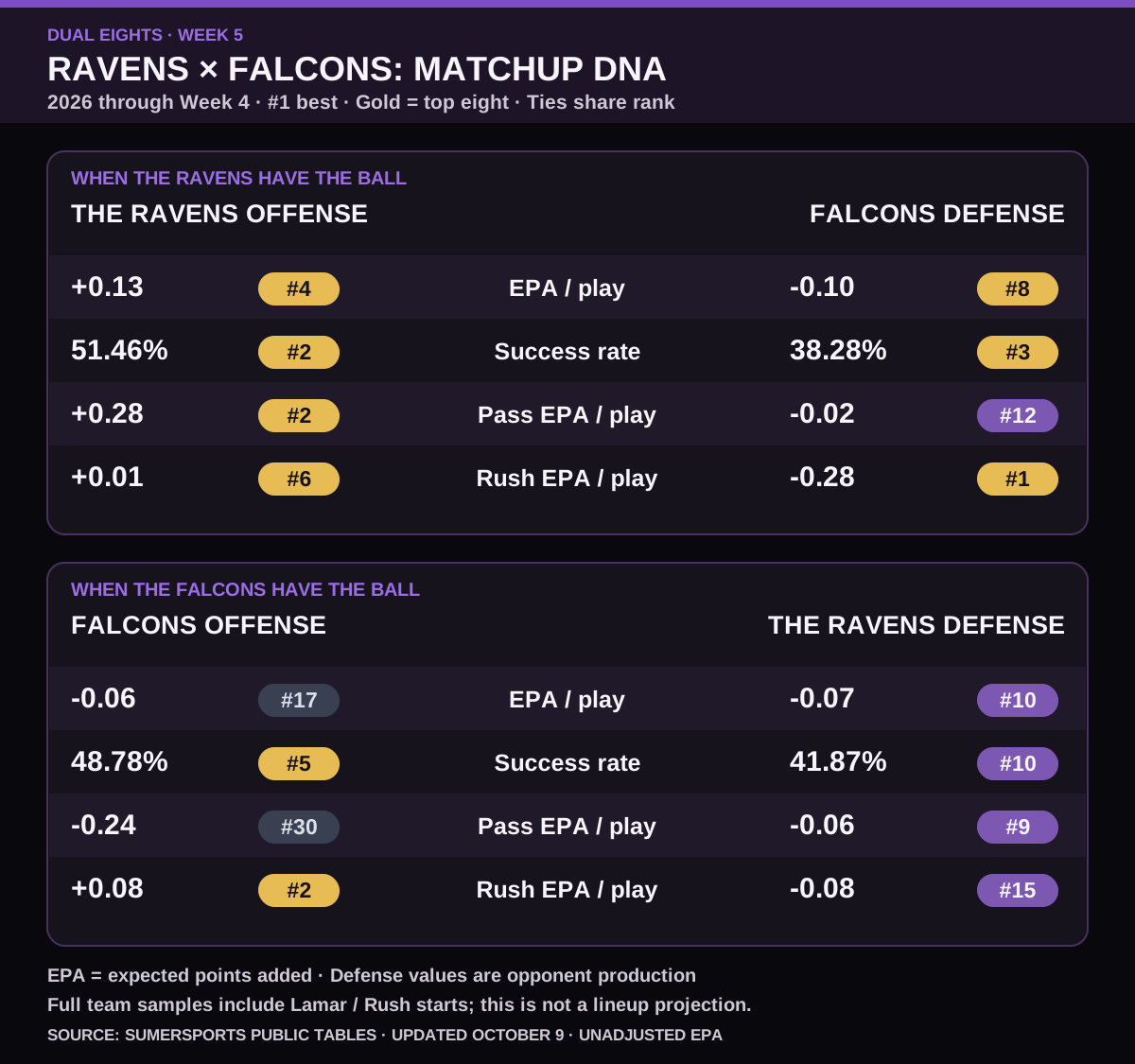
The Falcons have allowed only 2.72 yards per rushing attempt, and their defensive EPA against the run is an impressive -0.28 per play, according to SumerSports. They have also allowed running backs to gain just 0.76 yards before first contact per rush, the sixth-best mark in the league according to Sharp Football.
These are not simply numbers produced by opponents abandoning the run after falling behind. Atlanta is genuinely beating blocks, closing running lanes and preventing explosive runs.
Henry, meanwhile, has started to encounter more resistance. After a dominant opening week, he’s managed just 162 yards on 49 carries over the past two games, averaging 3.3 yards per attempt. Sharp Football charted him getting hit at or behind the line of scrimmage on more than half his attempts in each game.
Without Jackson threatening to pull the ball on a read option or punish an overloaded box with a deep completion, there is little reason for Atlanta to give Henry favorable numbers.
That puts considerable pressure on Doyle.
Huntley completed eight of nine passes for 63 yards against Tennessee, but the Ravens didn’t score after he entered the game. Last season, he won two starts while throwing for just 186 and 107 yards.
He can operate an NFL offense. He can move around the pocket, avoid some pressure and convert first downs with his legs. What he has not consistently demonstrated is the ability to force defenses to respect the entire field as a passer.
Doyle needs to change that, at least enough to keep Atlanta from collapsing everything toward the line of scrimmage.
That doesn’t necessarily mean asking Huntley to attempt six deep passes down the sideline. In fact, that would probably be a poor use of his strengths against this particular defense.
The better answer is a passing game built around timing and defined reads, with selective opportunities to attack vertically.
Atlanta plays predominantly zone coverage and frequently presents a single-high safety structure. That can create opportunities on intermediate crossing routes, seams and throws behind linebackers who have stepped toward the run.
Doyle can use motion to identify coverage, condensed formations to create cleaner receiver releases and play action to open windows behind Atlanta’s aggressive front.
The goal should be to make Huntley’s decisions easier without making his intentions obvious.
Mark Andrews is particularly important. Aligning him as a blocker before releasing him into the middle of the field can create favorable matchups against linebackers. Rookie Matt Hibner offers another receiving option from heavier personnel, while Rashod Bateman should get opportunities on intermediate routes that allow Huntley to throw on rhythm rather than hold the ball waiting for separation.
And if Flowers is healthy enough to play, Doyle has a player who can turn a relatively ordinary completion into an explosive gain.
Flowers has averaged an absurd 6.3 yards per route run through the opening four games. The number will inevitably come down, but his success on crossers and his ability to create yardage after the catch are precisely what a limited vertical passing attack needs.
There is also an intriguing personnel matchup.
Baltimore has used two-tight-end formations on approximately 30.5% of its offensive plays, producing +0.26 EPA per pass from those looks. Atlanta, meanwhile, has allowed +0.30 EPA per pass against opposing 12 personnel while dominating against runs from the same grouping.
Doyle said this week that the offense’s mentality of hunting explosive plays won’t change with Huntley at quarterback. That’s encouraging, but the method almost certainly needs to change.
Huntley should be given a few deliberately designed downfield opportunities, preferably on early downs with additional protection and a clear first read. But the foundation needs to be accurate, on-time throws in the 5-to-15-yard range, supplemented by the occasional shot that keeps the secondary honest.
The Ravens cannot survive on a diet of three-yard completions and hope Henry turns every second down into something manageable.
They also cannot expect Huntley to become Lamar Jackson for one night.
Doyle’s challenge is finding the space between those two extremes.
2. Can Vega Ioane handle Atlanta’s pressure in his second start at center?
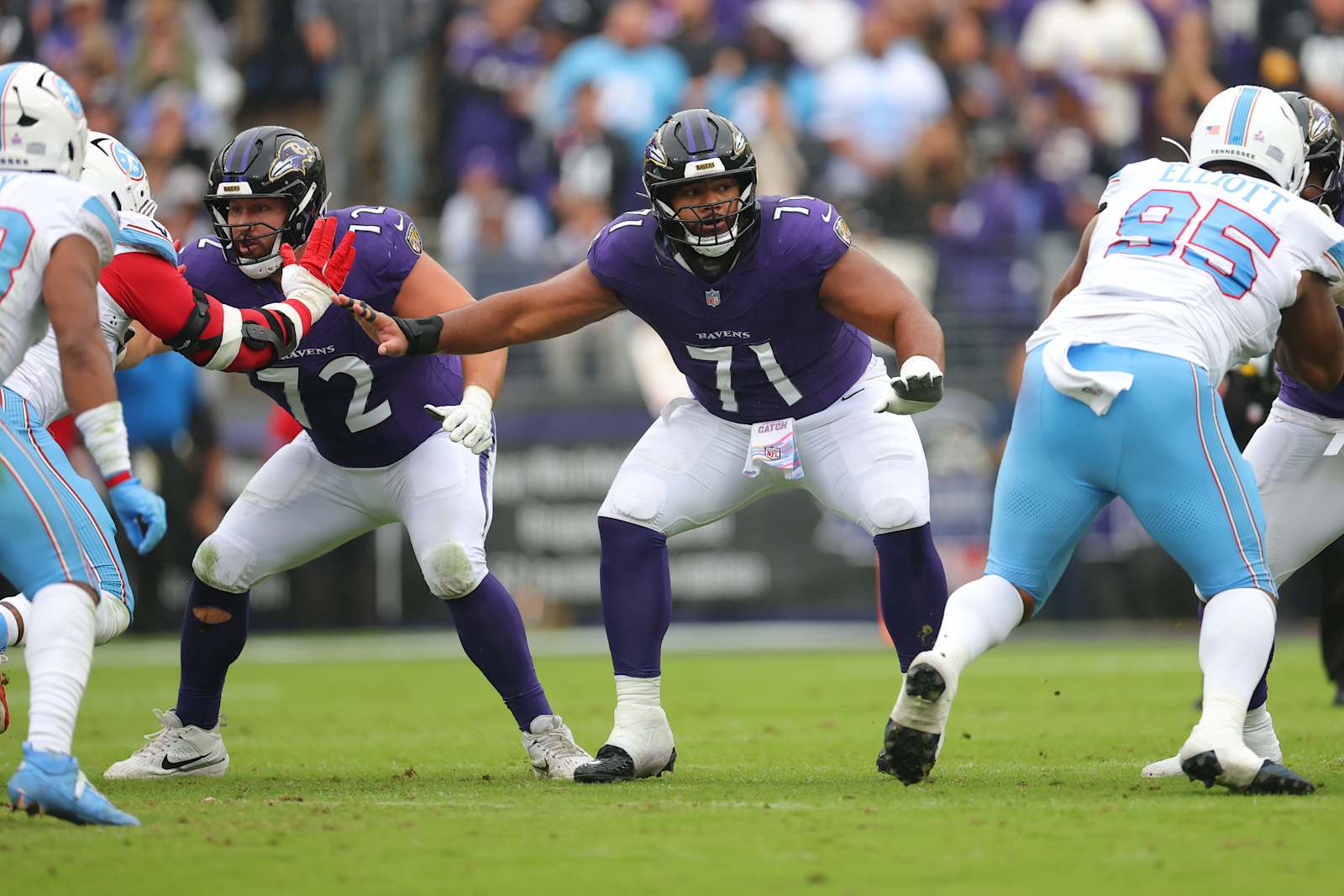
The Ravens entered the season believing Vega Ioane could become an outstanding NFL guard. Four weeks later, he is arguably the most important player on their offensive line, playing a position he was never supposed to occupy.
And his first start at center was surprisingly encouraging.
Ioane played all 64 offensive snaps against Tennessee, including 34 pass-blocking snaps, without allowing a single pressure.
That included multiple matchups against Jeffery Simmons, one of the more disruptive interior defensive linemen in football.
Ioane’s strength, hand placement and ability to absorb contact translated well to center. He did not look like an overwhelmed rookie trying to survive an unfamiliar assignment.
That deserves recognition, but Sunday’s challenge is somewhat different. Atlanta’s defensive front under Jeff Ulbrich has generated a league-leading 46.3% pressure rate according to Sharp Football, and it has accomplished that without relying heavily on blitzes.
Five Falcons defenders entered this week with at least ten quarterback pressures. That variety could cause problems against an inexperienced center because the difficulty is not always winning an individual blocking matchup.
Sometimes it’s figuring out who you’re supposed to block.
Ulbrich can present linebackers near the line of scrimmage, threaten pressure from multiple gaps and then rush only four players. He can run tackle-end stunts that force blockers to exchange assignments or use late movement to change which defender is attacking which gap.
Ioane needs to identify those looks, communicate the protection and coordinate with Huntley before the snap.
A center can be physically dominant and still have issues directing protection toward the wrong defender.
That becomes especially concerning if Andrew Vorhees, questionable with a foot injury, is unable to play. Baltimore could be using another unfamiliar guard combination alongside Ioane.
The Ravens elevated Kyle Hergel and Chuma Edoga on Saturday to provide additional line depth. Cam Jurgens, acquired from Philadelphia to solve the center problem, is not available this week while working through concussion protocol.
There is some encouraging news from Atlanta.
Za’Darius Smith was ruled out Saturday after initially being listed questionable, and Samson Ebukam is dealing with a hamstring injury. Those absences could weaken the Falcons’ edge rotation, although their interior defenders and remaining rushers are still dangerous.
Regardless, Doyle needs to help his offensive line.
Expect additional protection assistance from running backs and tight ends, occasional changes to Huntley’s launch point and quick passing concepts designed to get the ball out before pressure can arrive.
That support becomes more difficult with blocking tight end Durham Smythe on injured reserve. Nick Vannett has been added as a veteran option, but Baltimore will also need Hibner and Josh Cuevas to handle responsibilities that Smythe was expected to perform.
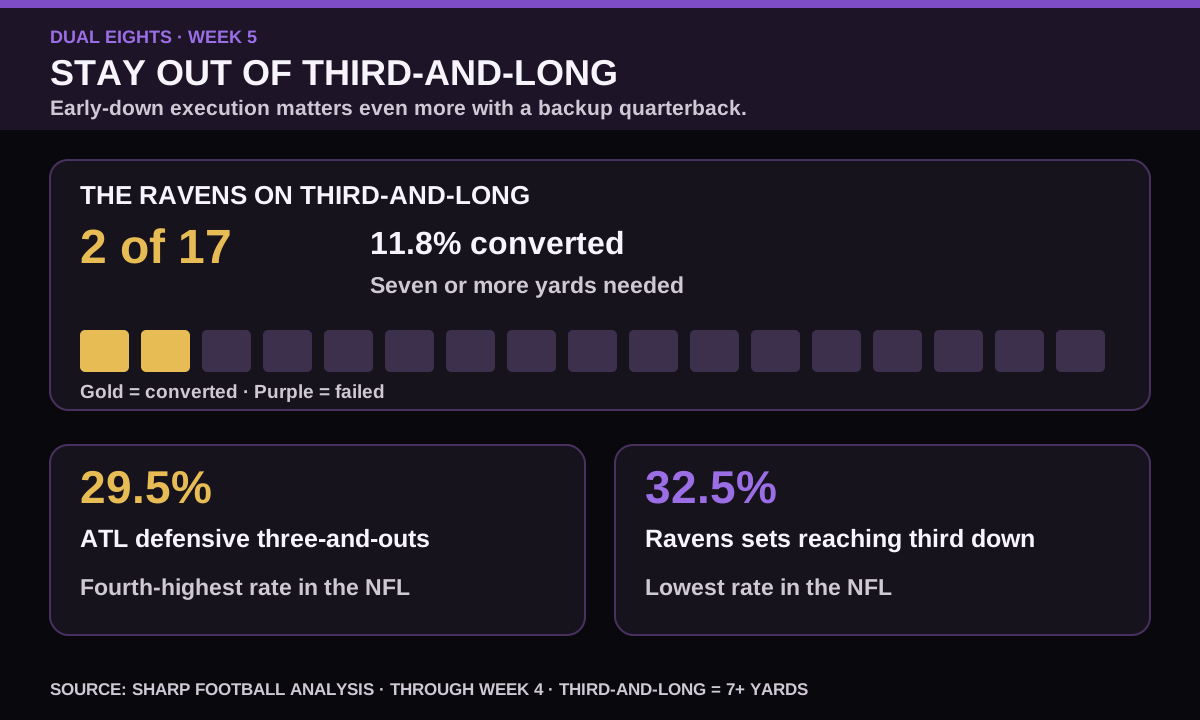
The key is preventing negative plays before they happen. The Ravens have already committed 11 false starts through four games, the second-most in the league. They have converted only two of 17 third downs requiring seven or more yards.
Those numbers are an ugly combination for an offense facing elite pressure with a backup quarterback in a loud road environment.
Ioane doesn’t need to dominate Atlanta’s defensive front. He needs to make sure the Ravens are blocking the correct defenders, snapping the ball cleanly and giving Huntley enough time to execute the calls Doyle makes.
If he can build on last week, it will be another encouraging sign that Baltimore has something special in its first-round pick, even if Jurgens eventually sends him back to guard.
3. Will Jesse Minter put more defenders in the box to stop Bijan Robinson?
This might be the most fascinating tactical matchup of the entire game.
The Ravens have built their defensive approach around versatility, disguised coverages and the ability to defend different offensive looks without constantly changing personnel.
Minter wants defensive backs who can tackle, linebackers who can cover and safeties who can move around before the snap without giving away the coverage.
It is a sensible philosophy, particularly with Kyle Hamilton available to erase the traditional distinction between linebacker and safety.
But Atlanta’s rushing attack presents a rather uncomfortable challenge to that approach.
Through four games, the Ravens have used sub-packages on 84% of opposing rushing plays, the third-highest rate in the league. They have defended runs with light boxes 39.6% of the time, the second-highest rate.
There is nothing inherently wrong with those numbers. A defense that can stop the run with fewer players near the line of scrimmage gains enormous flexibility in coverage.
The problem is what has happened when opponents have successfully attacked the lighter formations.
Atlanta relies heavily on outside-zone concepts, which account for approximately 60% of Bijan Robinson’s rushing attempts.
The Ravens have allowed 4.5 yards per carry against outside-zone runs by running backs, but the more concerning number is its explosive-run allowance. Opposing backs have gained at least ten yards on 17.5% of their outside-zone attempts against the Ravens, the second-worst rate in the NFL. That’s almost one explosive run in every six attempts. And now they face Robinson, who has rushed for 494 yards on 85 carries, averaging 5.8 yards per attempt.
Outside zone is particularly challenging because the running back doesn’t have to attack where the play initially appears to be heading.
The offensive line moves laterally, forcing defenders to maintain their gaps while adjusting to the blocking angles. Robinson can press toward the outside, persuade linebackers to flow in that direction and then plant his foot and cut back through an opening that barely existed a moment earlier.
If an edge defender gets too far upfield, Robinson can turn underneath him. If a linebacker overcommits to the sideline, the cutback lane opens. If a safety takes a poor pursuit angle, a five-yard gain becomes 25.
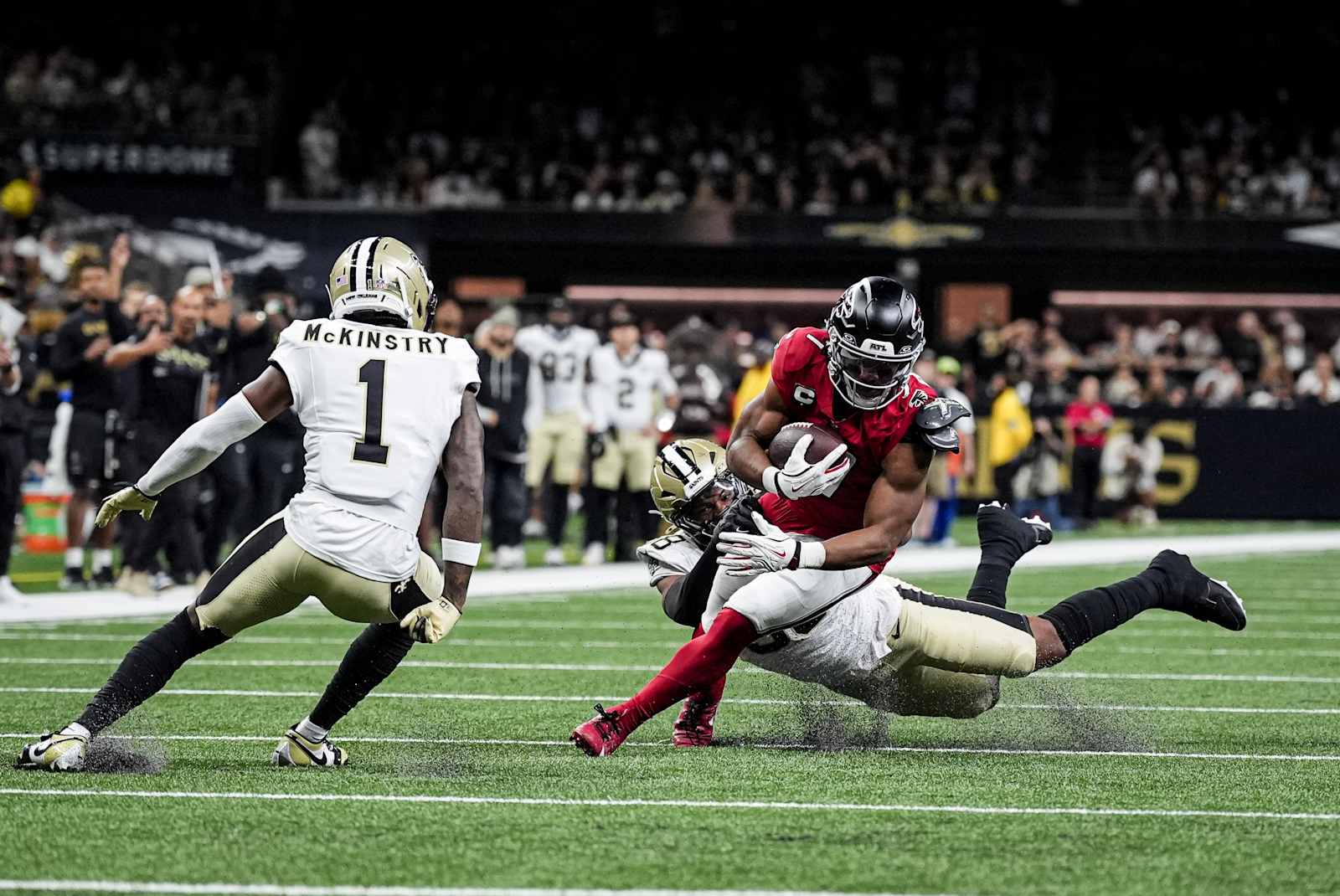
And Robinson is exceptionally good at making the first defender miss.
So how should Minter respond?
The simplest answer is to put another linebacker on the field.
Roquan Smith and Trenton Simpson have played significant roles already, while Teddye Buchanan has recently returned from injury. Defensive coordinator Anthony Weaver acknowledged this week that having three capable linebackers gives the staff additional personnel options.
Against Atlanta’s heavier formations, using more traditional linebacker personnel could help Baltimore set the edge and maintain its interior gaps without asking defensive backs to repeatedly defeat offensive linemen climbing to the second level.
But I wouldn’t expect, or particularly want, Minter to abandon his nickel and dime packages completely. That would surrender one of the advantages the Ravens’ personnel provides.
The more interesting solution involves changing the structure while preserving the disguise.
Minter can keep nickel personnel on the field and move Hamilton closer to the line of scrimmage, effectively adding another linebacker to the run fit. He can align an edge defender wider to prevent Robinson from comfortably reaching the outside. He can bring a safety down after the snap, allowing the defense to present a two-high look before rotating into a more aggressive run structure.
Someone still has to win the edge. Linebackers still have to recognize cutback lanes. Safeties still have to tackle Robinson once he reaches them. And Minter can’t forget about Michael Penix and Drake London while solving the rushing problem.
Loading the box and giving London isolated coverage opportunities is a dangerous trade, particularly if Humphrey cannot play.
The Ravens have allowed only 100 rushing yards per game and rank a respectable tenth in defensive EPA per play. Their -0.08 EPA allowed per rush suggests opponents generally have not generated much expected value running the football.
The defense isn’t fundamentally incapable of stopping the run. It has simply shown a vulnerability to a particular concept that Atlanta happens to execute extremely well.
Minter should be willing to change his personnel and run fits to address it.
The important part is making those adjustments selectively, rather than allowing Atlanta to dictate both the defensive personnel and the corresponding coverage.
4. Can the Ravens defense finally deliver when the offense needs it most?
We’ve spent much of the opening month talking about the inconsistency of the defense.
There have been stretches where the unit looks exactly like the talented, multiple defense Minter was hired to create. There have also been too many missed tackles, extended possessions, surrendered leads and receivers finding space in crucial situations.
The Ravens are tenth in defensive EPA per play, allowing -0.07. That’s hardly the profile of a terrible defense. But the overall efficiency has not always translated into the kind of stops Baltimore needed at decisive moments.
Against New Orleans, the Ravens repeatedly allowed third-down conversions and couldn’t protect a fourth-quarter tie. Against Dallas, they surrendered 31 points and several long drives despite having opportunities to put the game away.
Now they must play without Lamar, which makes those defensive shortcomings considerably more costly.
The defense doesn’t have to shut Atlanta out. It probably does need to prevent the Falcons from producing the explosive, efficient offense they’ve displayed over the past two weeks.
Since Penix returned, Atlanta has scored 35 against Green Bay and 45 against New Orleans. Penix completed 33 of 45 passes for 479 yards and two touchdowns in those games, averaging 10.6 yards per attempt.
The Falcons have averaged 3.64 points per drive during that stretch, best in the NFL. Two games do not establish Atlanta as the most dangerous offense in football. Penix is not going to complete 73% of his passes while averaging nearly 11 yards per attempt for an entire season.
But those numbers are too substantial to ignore, particularly when paired with Robinson’s rushing production. Penix has given the Falcons a credible passing threat that opponents simply couldn’t respect with Rush behind center.
Drake London is the clearest beneficiary, with 370 receiving yards through four games, including a 194-yard performance against Green Bay. He received 43.5% of Atlanta’s targets in Penix’s first start and another 30% in his second.
That concentration makes him a particularly important matchup for Nate Wiggins and potentially Humphrey. The Ravens have already allowed strong receiving performances to Chris Olave, CeeDee Lamb, George Pickens and Carnell Tate. According to Sharp Football, they have surrendered 11.2 yards per target to opposing primary receivers, ranking 26th.
If they commit additional resources to stopping Robinson, London becomes even more dangerous. That’s why they need their pass rush to contribute without constantly requiring extra defenders.
Through four games, the Ravens have generated 58 quarterback pressures but only seven sacks, converting just 12.1% of pressures into sacks.
Against Tennessee, Mike Green generated five pressures and Nnamdi Madubuike added six, according to PFF’s charting cited by Baltimore Beatdown. Their improving form provides some reason for optimism with Hendrickson unavailable.
But Penix has been difficult to bring down. He’s been sacked only once in 46 dropbacks across his two starts. Simply making him uncomfortable isn’t enough if he can deliver the ball to London or another receiver before the rush arrives.
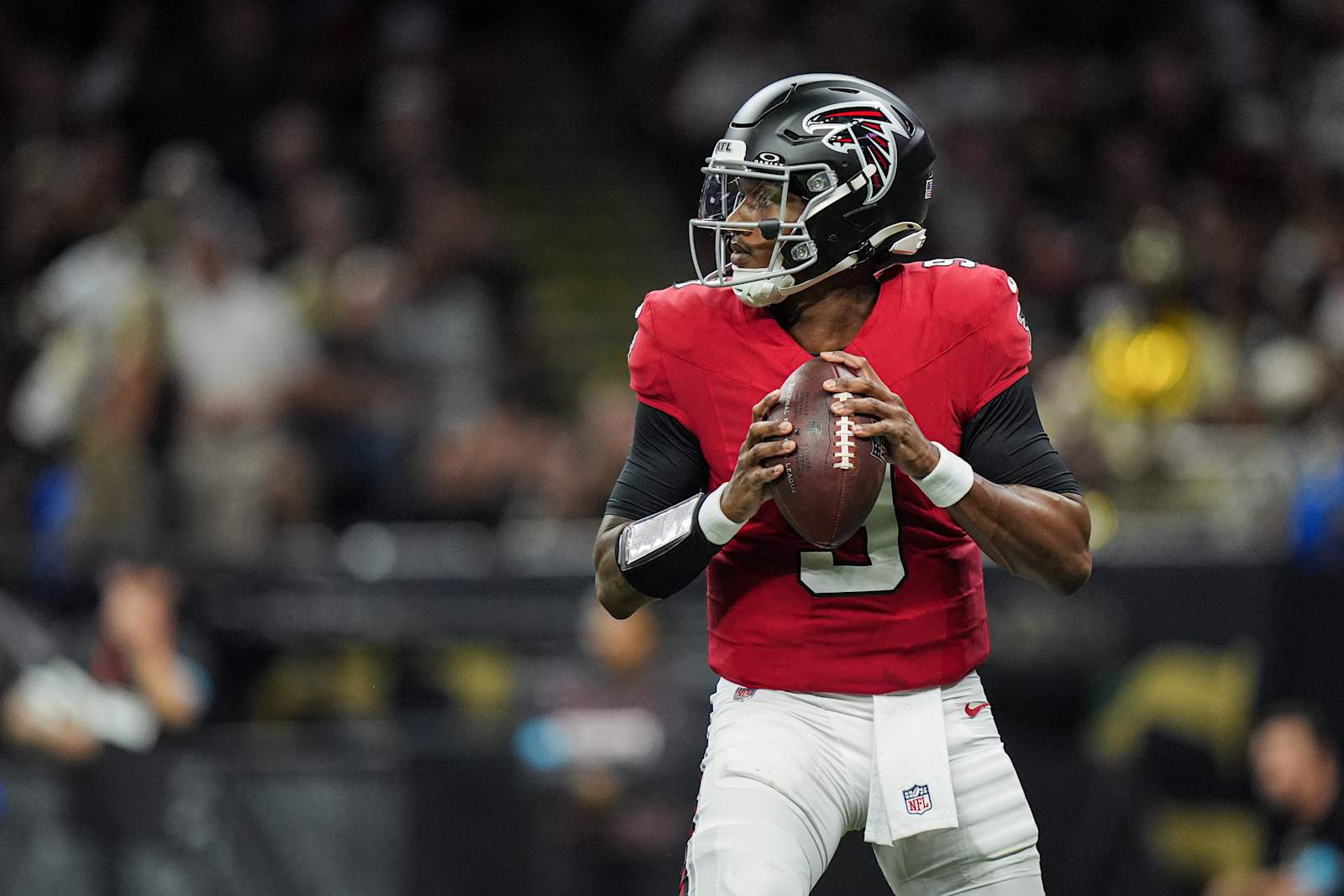
Minter and Weaver need to create situations where Penix cannot comfortably stay on schedule. If the Ravens can force second-and-long, the Falcons become more predictable. The Ravens can preserve their disguised coverage packages, create unfavorable blocking assignments and force Penix to throw into tighter windows.
They also need to finish tackles and get off the field on third down. The defensive talent is there. Roquan Smith, Hamilton, Wiggins, Simpson, Madubuike and the developing edge rotation give Minter enough pieces to compete with this offense.
For the first time this season, the defense may have to be the primary reason they win rather than simply providing enough resistance for Jackson to take over.
This would be an excellent time to demonstrate that Minter’s system can actually produce the kind of defense everyone expected when he was hired.
5. The small mistakes could decide everything
The Ravens have survived a remarkable number of self-inflicted problems through the first four weeks. They have committed 39 penalties for 329 yards, the third-most penalties and second-most penalty yardage in the league.
Twenty-six have come on offense.
The team has already lost 121 yards of offensive production and a touchdown to penalties, not counting a long kickoff return that was wiped out.
With Lamar available, the Ravens could often overcome those mistakes through sheer offensive talent. He could scramble for 15 yards after a penalty. Flowers could turn a quick slant into 30. Henry could break an explosive run.
That margin for error becomes much smaller with Huntley. Atlanta has forced three-and-outs on 29.5% of opposing possessions, the fourth-best mark in football. The Falcons also possess the kind of front that can create an almost immediate disaster after one false start or holding penalty.
The Ravens have been exceptional at avoiding third down this season, reaching it on only 32.5% of their sets of downs, the best rate in the league.
Much of that success came from Lamar’s early-down explosiveness.
What happens when a team accustomed to skipping third down suddenly faces third-and-8 six or seven times in a game?
We have a pretty good indication from the existing numbers.
They have converted just 11.8% of their third downs needing seven or more yards.
That’s a problem Doyle must prioritize.
The Ravens don’t necessarily have to become more conservative. In fact, throwing more frequently on early downs might be the best way to avoid predictable third-down situations.
An incomplete pass on first down isn’t automatically disastrous. A two-yard Henry run into an overloaded front can be just as damaging if the defense knows what is coming.
The goal should be to keep Huntley operating in favorable situations, with access to the complete playbook, rather than allowing Atlanta to dictate when Baltimore must throw.
Field position and special teams could also become unusually important.
Tyler Loop has already made field goals from 56 and 64 yards this season. If he can reliably convert from long range, the Ravens may not need every successful drive to reach the red zone.
But that advantage disappears if offensive penalties repeatedly push them backward.
The Ravens have enough weapons to score points. The concern is whether they can consistently sustain possessions against a front that has been excellent at preventing opponents from doing exactly that.
Prediction: Atlanta has the advantages, but the Ravens have a path
This is not a particularly favorable matchup for Baltimore.
Without Lamar the entire offensive structure has to change. The offensive line is still dealing with injuries, Flowers may be limited and their most productive edge rusher is unavailable.
Meanwhile, Atlanta’s offense looks dramatically better with Penix, and Robinson is particularly well suited to attack the lighter defensive looks Baltimore has been using.
Huntley has stepped up and won games in the past, including two starts last season. He is mobile enough to create something when protection breaks down and experienced enough that the Ravens shouldn’t have to abandon their entire offensive identity.
But the Ravens are going to need the kind of defensive performance they have produced only in stretches so far. They need to make Atlanta earn its points, force Penix into more conventional passing situations and prevent Robinson from turning routine outside-zone runs into explosive gains.
If the Ravens can keep this a one-score game into the fourth quarter, they have a credible chance to steal it.
Under Harbaugh this was the type of game the Ravens would surprise with their effort and determination. I think they can continue that under Minter. I think this is the game that Minter’s defense steps up and carries its weight and I think that Atlanta’s hype train is a little high on its own supply. The Ravens playing as underdogs can be a dangerous proposition.
Prediction: Ravens 20, Atlanta 17