Follow the matchup: Find all the matchup stats and key Ravens season statistics at my Ravens Season Dashboard.
The Ravens probably could not have designed a more favorable offensive matchup for their trip to Brazil.
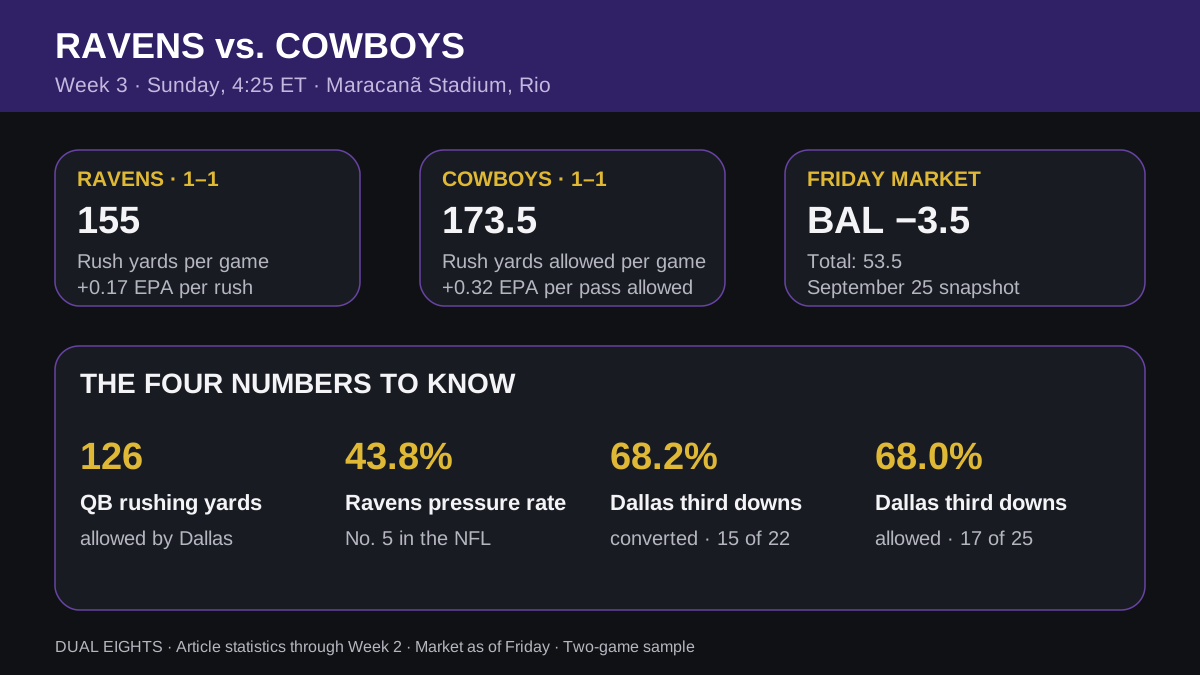
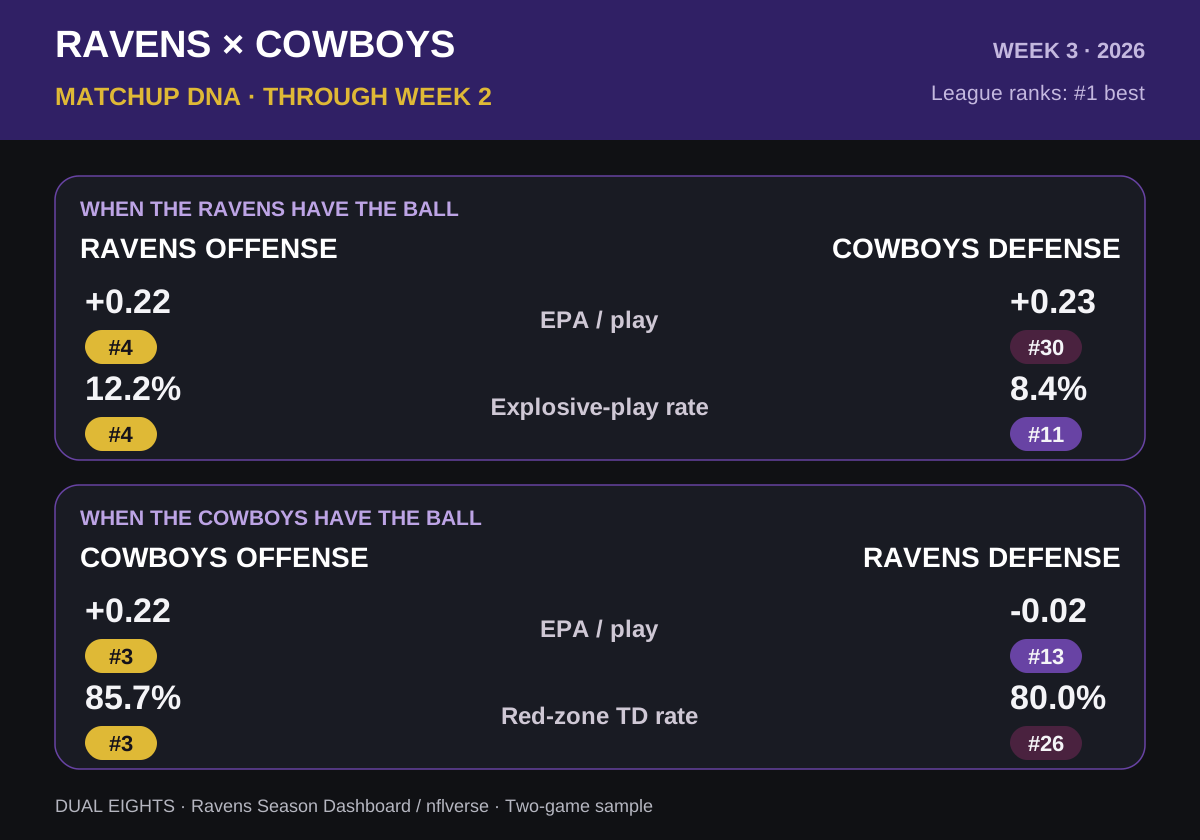
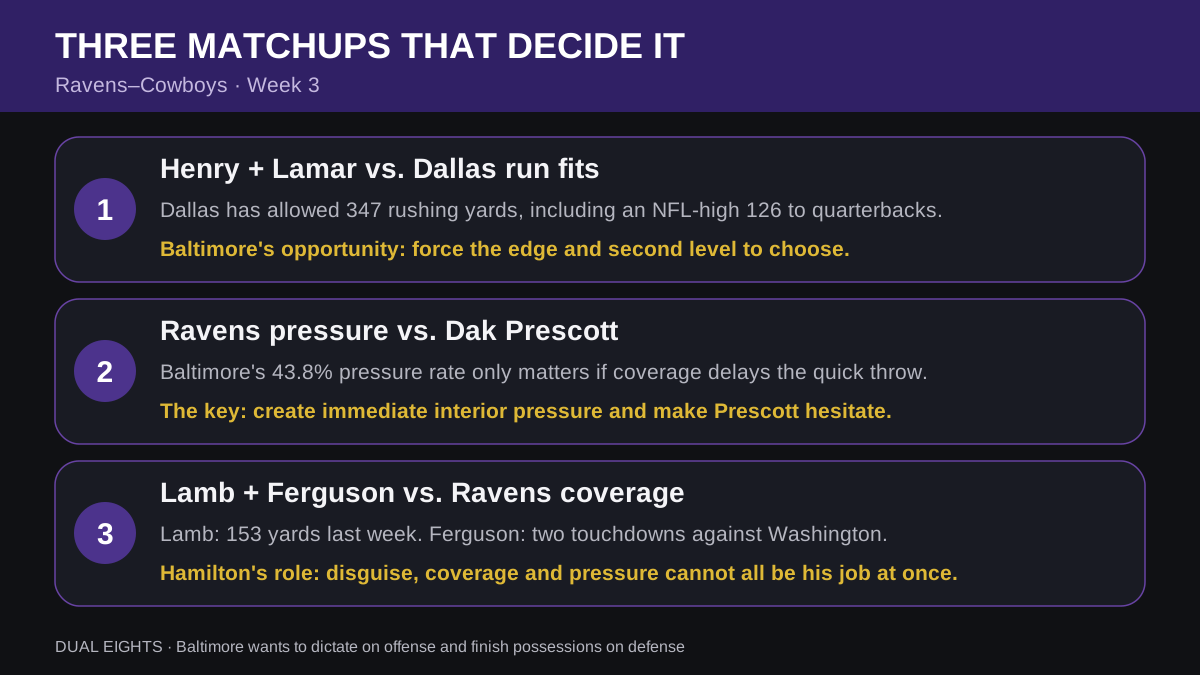
Dallas has allowed 347 rushing yards through two games. No team has surrendered more rushing yards to quarterbacks. Its rebuilt defense ranks 30th in EPA per play, has generated one of the league’s lowest pressure rates and will arrive at the Maracanã without a starting linebacker, cornerback and two safeties.
The Ravens, meanwhile, have been one of the NFL’s most efficient rushing offenses with Derrick Henry and Lamar Jackson, while Declan Doyle has leaned heavily into the multiple-tight-end personnel that creates exactly the type of communication and run-fit problems a new defense does not want to solve.
The other side of the ball may be a different story.
Dallas has produced one of the NFL’s best passing offenses and one of its worst defenses. Dak Prescott shredded Washington for four touchdowns last week, CeeDee Lamb looks elite again, and Dallas enters Sunday converting an absurd 68.2 percent of its third downs. The Ravens third down defensive issues may present Dallas an opportunity.
The Ravens have the more complete team and a considerable offensive advantage against this Dallas defense, but Dallas has exactly the passing game capable of exploiting the Ravens’ Week 2 problems. That tension should define Sunday.
Both teams enter Sunday at 1-1, with the Ravens favored by 3.5 points and the total sitting around 53.5 as of Friday afternoon. So the market is expecting a fairly high-scoring offensive game.
When the Ravens Have the Ball
Make Dallas stop Lamar and Henry first
The Ravens are averaging 155 rushing yards per game, 5.3 yards per carry and +0.17 EPA per rush. Henry has 212 yards and four touchdowns already. Dallas has allowed 173.5 rushing yards per game, about five yards per carry and a 56.1 percent rushing success rate to opponents.
The Cowboys have been outgained by 212 rushing yards through two games.
The Cowboys certainly have some big names up front, with Quinnen Williams and Kenny Clark giving them two accomplished interior linemen. Rashan Gary brings size and pass-rush ability off the edge. Christian Parker’s rebuilt defense was specifically constructed to become bigger and more multiple after Dallas finished last in the league in scoring defense last year. However, thus far none of that has produced a functional run defense.
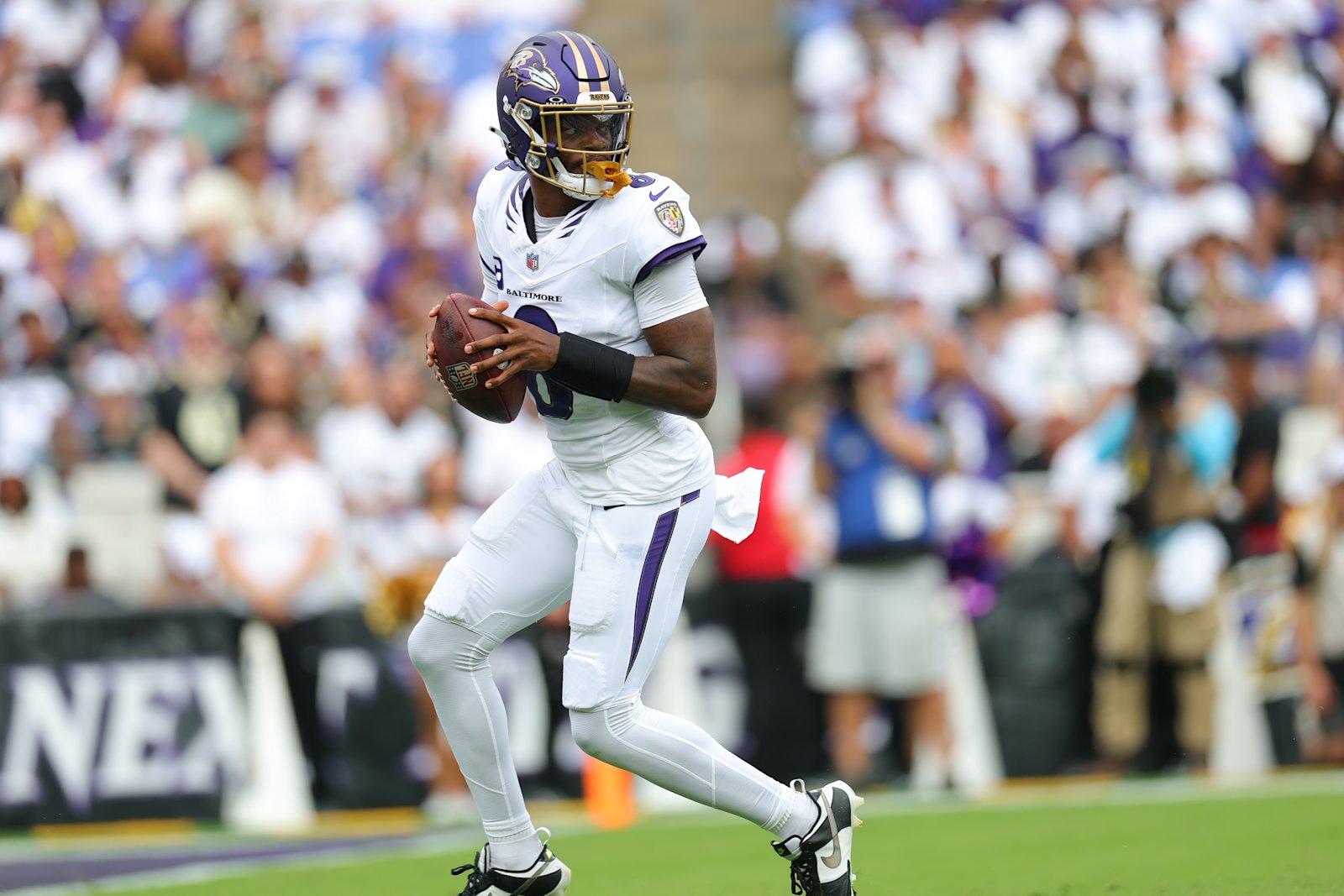
The dual threat of Henry and Lamar presents a special challenge to the Cowboys, who have already allowed an NFL-high 126 rushing yards to quarterbacks on 19 attempts. Jayden Daniels gained 69 yards in the first half last week before leaving the game. Lamar has rushed for 181 yards in his two previous games against Dallas and scored on the ground in both.
That creates difficult conflict for the Cowboys’ edge defenders. Attack aggressively upfield and Lamar can step through the space they vacate. Stay disciplined outside and Henry gets another fraction of a second to press the run and choose his lane. Add read concepts, motions and tight ends changing the strength of the formation, and a young Dallas second level has a lot to process before anyone gets around to actually tackling two of the league’s most difficult runners.
If the Ravens can run effectively and stay ahead of the sticks on early downs, they will set themselves up for a good day.
Heavy personnel could create an even bigger problem
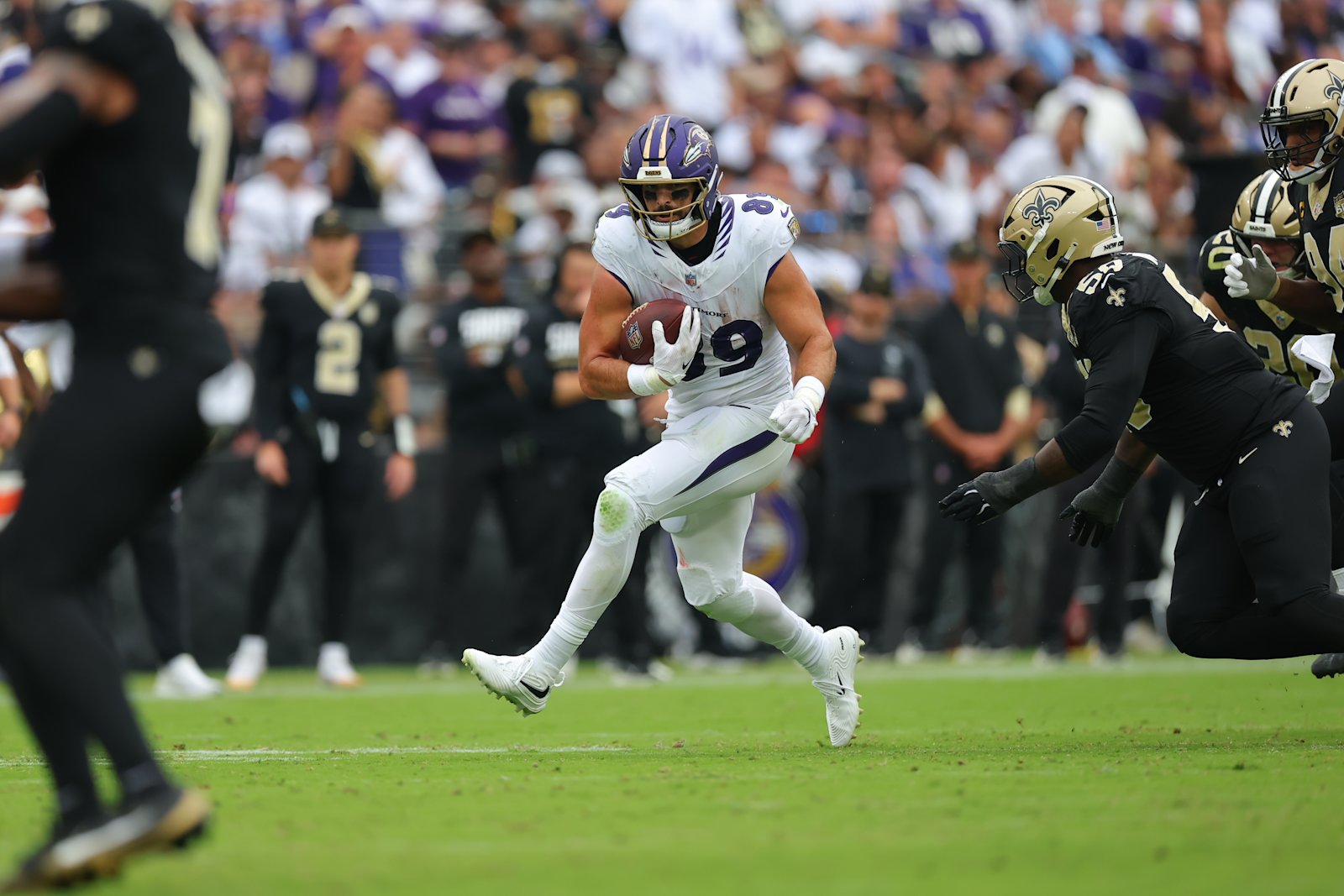
Doyle’s early use of multiple tight ends may be the most interesting schematic part of this matchup.
The Ravens have used 12 personnel on 28.3 percent of their snaps and 13 personnel on another 18.3 percent. The early efficiency numbers are excellent in both groupings, including +0.39 EPA per pass from 12 personnel and +1.05 from 13, although two games is obviously far too small a sample to take the latter number literally.
The concept matters more than the tiny-sample EPA.
Put Henry, Mark Andrews and two other tight ends on the field and Dallas has to choose what kind of defense it wants to play.
Stay light and invite Baltimore to run Henry at a smaller front. Add size and Doyle can spread the formation, detach Andrews or another tight end, use play action and ask linebackers or safeties to cover in space.
This is the personnel ambiguity Doyle was brought to Baltimore to create. The formation can look like power football without requiring the play to be power football.
Now layer in Dallas’ injuries.
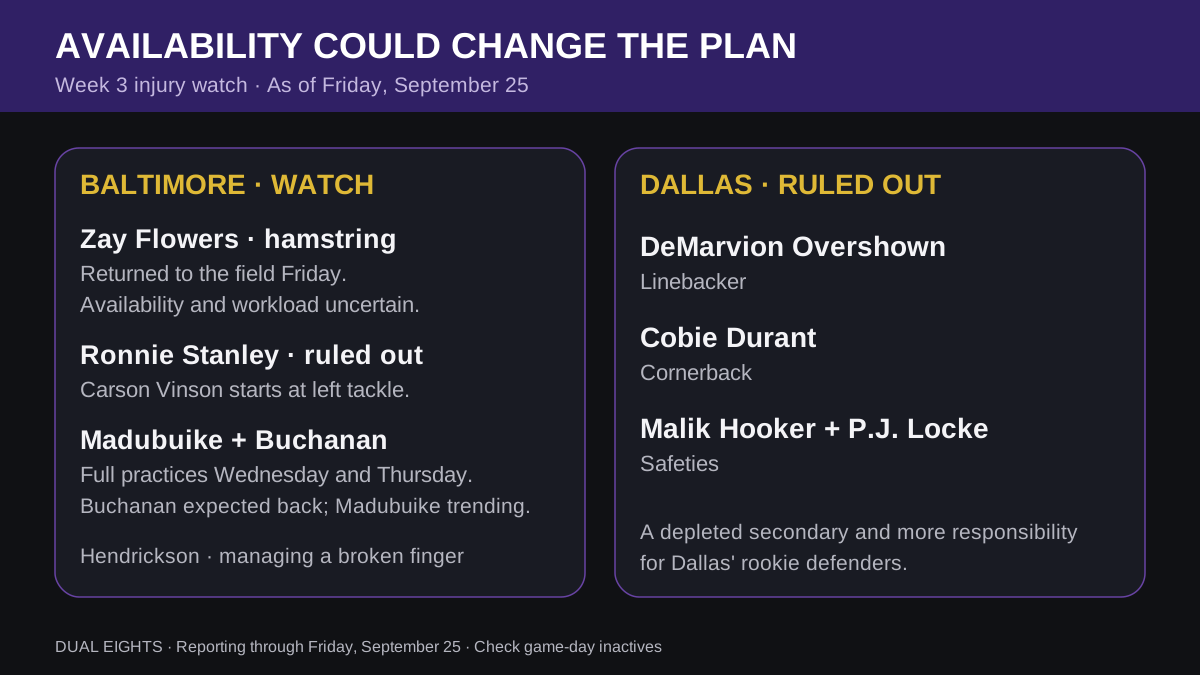
Linebacker DeMarvion Overshown, cornerback Cobie Durant and safeties Malik Hooker and P.J. Locke will not play Sunday. Rookie linebacker Jaishawn Barham has already been given the green dot, while first-round safety Caleb Downs may have to take on more deep-field responsibility when Dallas would presumably prefer using him closer to the line of scrimmage.
The Ravens can force those young defenders to communicate through shifts, motion and unusual formations, then snap the ball before Dallas gets completely comfortable with the picture.
The Zay Flowers question matters, but Ronnie Stanley may matter more
Flowers returned to the field Friday after sitting out Wednesday and Thursday with his hamstring injury, although his availability and expected workload remain uncertain.
There is no question he would make a favorable matchup even better.
Dallas has allowed +0.32 EPA per pass, five passing touchdowns and no interceptions through two games. It plays zone on roughly three-quarters of its defensive snaps and is now missing three members of an already unsettled secondary. Flowers’ ability to move across formations, uncover underneath and turn routine completions into explosives is almost tailor-made for the matchup.
Still, the Ravens managed some success without him last week. Rashod Bateman caught seven passes for 88 yards and a touchdown against New Orleans. The offense as a whole produced a 64.3 percent success rate despite finishing with only 17 points. Its problems were protection, penalties, a tipped field goal, poor field-position opportunities and failures in the highest-leverage moments, not an inability to move the football.
Losing Stanley is different.
New Orleans pressured Lamar on 55.6 percent of his second-half dropbacks after getting to him on only 26.3 percent in the first half. Lamar averaged 1.9 yards per attempt under pressure, threw his interception and took three sacks. From a clean pocket, he went 16-of-22 for 218 yards and a touchdown.
Stanley left that game with his toe injury and has been ruled out for Sunday. Dallas has not rushed the passer particularly well. The Cowboys rank near the bottom of the league in pressure rate and sack rate, but they have better individual pass rushers than those team numbers suggest.
With Carson Vinson starting, Doyle may need to send more protection help, shorten concepts and devote tight ends or running backs to assisting the edge. Suddenly the Ravens are using some of the personnel advantage they wanted to attack Dallas with simply to keep Lamar clean.
When the Cowboys Have the Ball
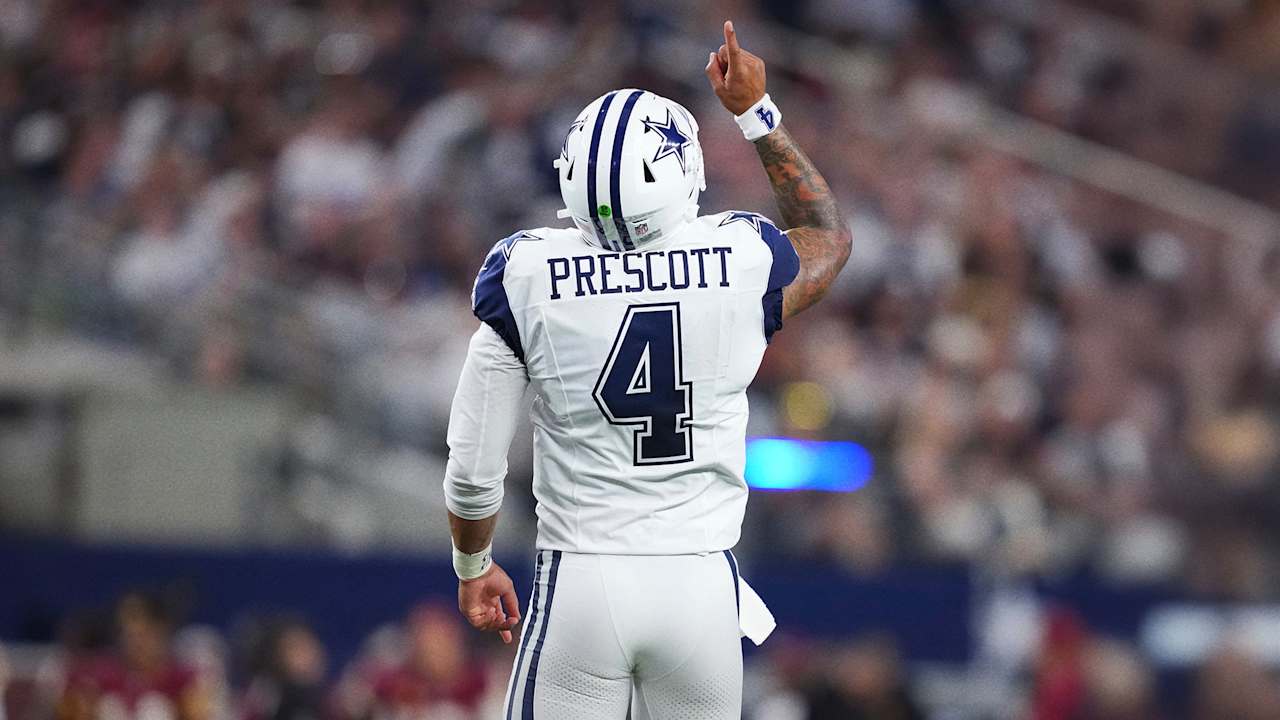
Pressure is not enough against Dak Prescott
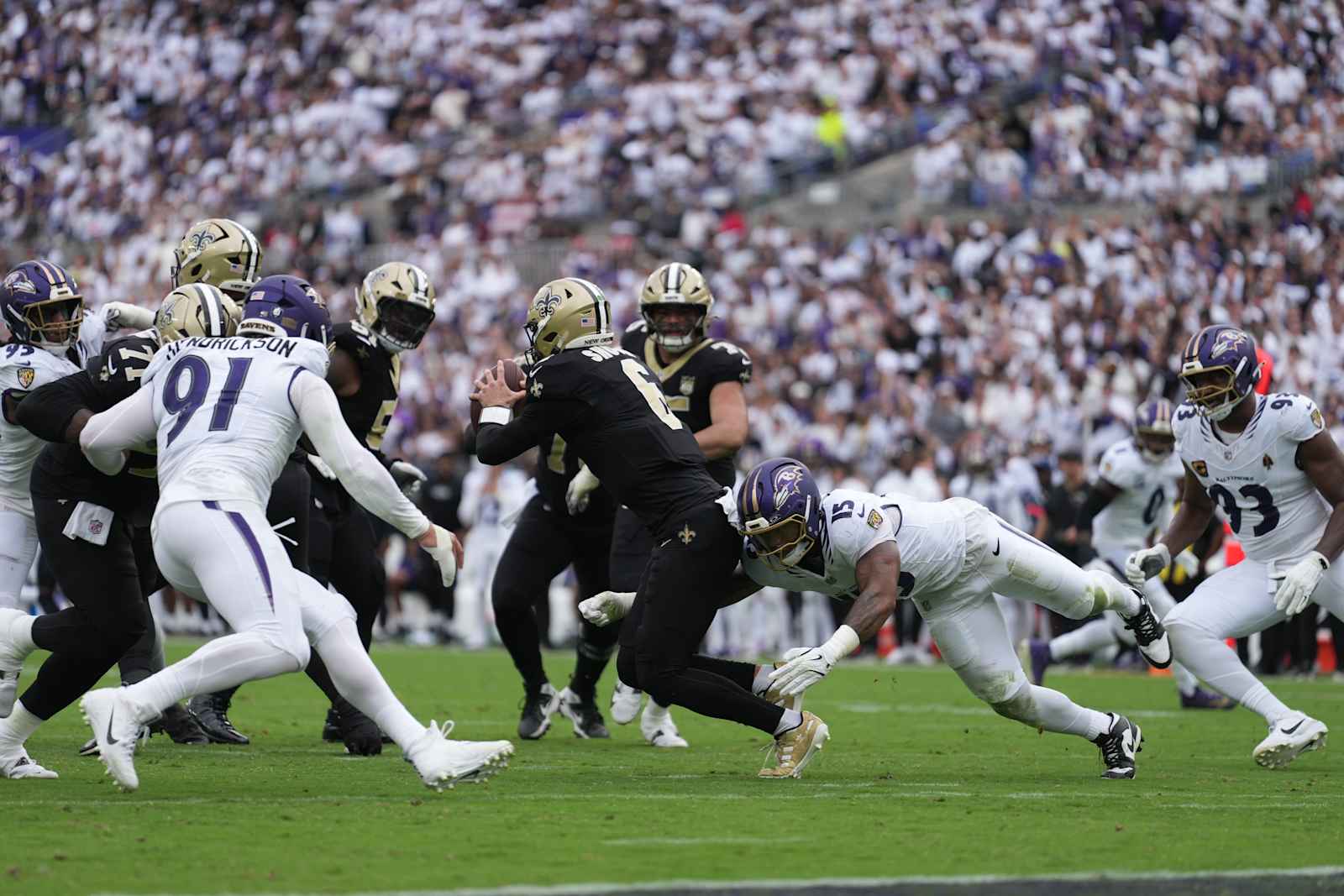
The Ravens have generated pressure on 43.8 percent of opposing dropbacks, fifth-best in the NFL through two weeks. That sounds like a wonderful statistic until you watch the fourth quarter against New Orleans.
They repeatedly bothered Tyler Shough, but New Orleans eventually stopped asking him to hold the ball long enough for the pressure to matter. Quick throws, checkdowns and underneath completions kept drives alive while the Ravens missed tackles or arrived a fraction too late.
Dallas has the personnel to run the upgraded version of that plan.
Prescott has thrown for 454 yards, six touchdowns and one interception through two games. Against Washington he completed 26 of 31 passes for 279 yards and four touchdowns.
More interestingly, Washington pressured him on more than 40 percent of his dropbacks and it barely mattered. Prescott generated +17.9 EPA in the game, the most by a quarterback facing a 40-percent-plus pressure rate over the last two seasons according to Washington’s postgame analysis.
The pressure and coverage have to be cohesive. Hendrickson beating Terence Steele after 2.8 seconds accomplishes little if Prescott has already found Lamb on an option route, and a simulated pressure is a loss if Ferguson simply replaces the blitzer in the vacated zone.
Hendrickson against Steele is the obvious individual matchup to attack. Dallas’ right tackle has been its least convincing pass protector early, while Hendrickson has already generated 10 pressures despite playing through his finger injury. Tavius Robinson and Mike Green give Baltimore additional options, and Nnamdi Madubuike’s potential season debut could finally add the interior component Minter has been missing.
Madubuike and Teddye Buchanan were full participants Wednesday and Thursday, with Buchanan expected to make his season debut and Madubuike trending in that direction.
Getting Madubuike back would matter here more than simply adding another good player to the rotation. The quickest way to disrupt Prescott’s timing is to create immediate interior pressure that prevents him from comfortably stepping into those short throws.
The Ravens have to make Dak hesitate.
CeeDee Lamb cannot be reduced to Nate Wiggins’ assignment
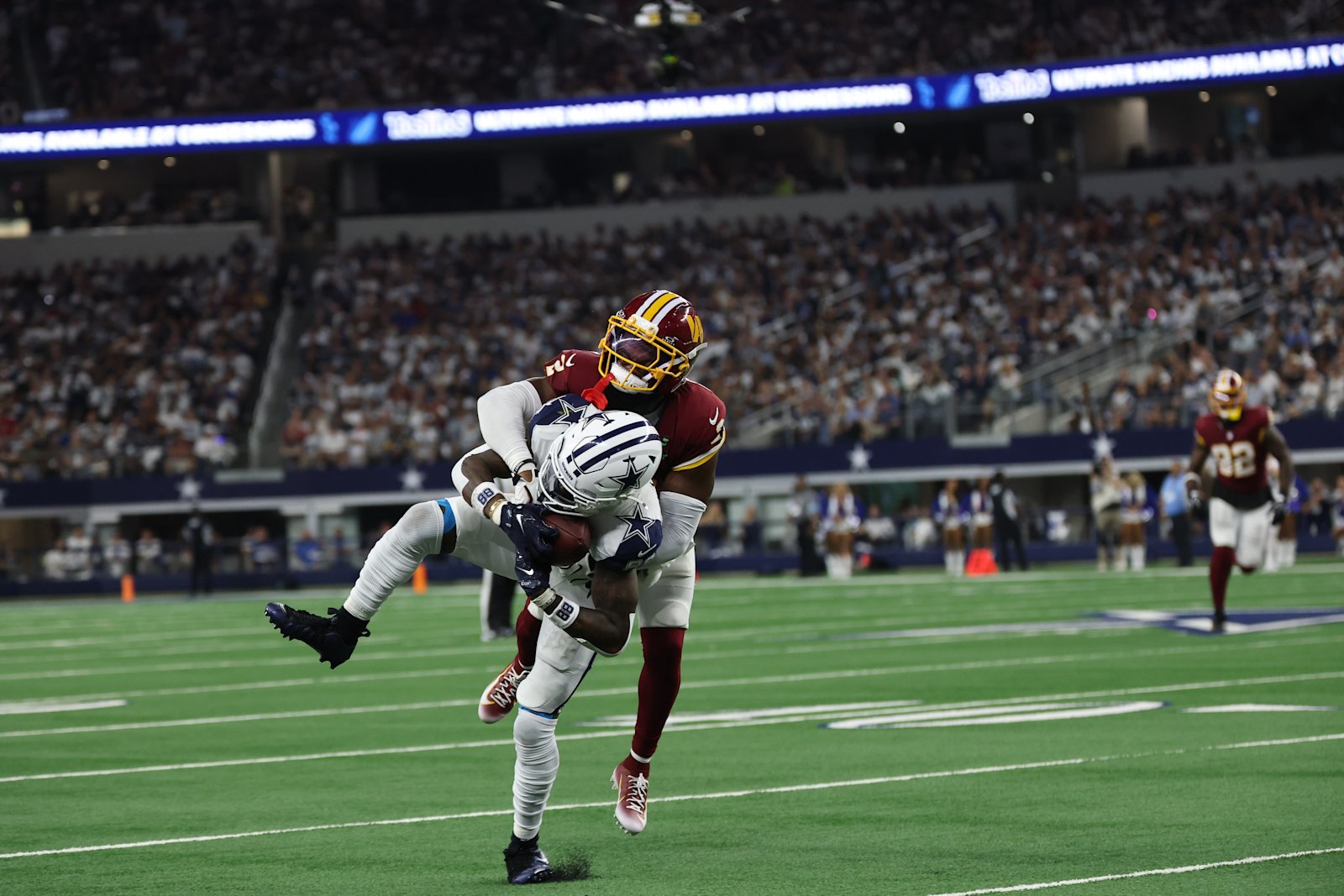
Lamb is the central problem, but thinking about this as Nate Wiggins versus CeeDee Lamb misses how Dallas uses him.
Lamb had eight catches for 153 yards and two touchdowns last week. Dallas moves him around the formation, finds favorable leverage and lets Prescott identify where the defense has created space.
Marlon Humphrey will see him inside. Wiggins will see him outside. Kyle Hamilton will affect his routes in underneath zones. The safeties will have to rotate without giving away the coverage too early.
And occasionally Lamb is simply going to win anyway. The Ravens had major problems containing Chris Olave last week and Lamb presents many of the same challenges.
The goal is to prevent him from becoming Prescott’s automatic answer whenever Baltimore creates a third-and-6. That is where George Pickens and Ferguson complicate the plan.
Pickens has only 68 receiving yards through two games, but his vertical presence keeps outside corners and safeties honest. The Ravens cannot devote every coverage resource to Lamb and assume Wiggins or another corner will spend the afternoon comfortably sitting on underneath routes.
Ferguson may be even more consequential. He caught two touchdowns against Washington and operates in precisely the part of the field Baltimore struggled to defend last week.
Hamilton is the Ravens’ best answer to that problem.
He is also one of their best pressure players, best run defenders and best tools for disguising coverage. He can’t do all four jobs on the same snap.
How Minter deploys him will tell us more about the Ravens’ defensive plan than anything else.
Minter’s dime package gets its first real stress test
The Ravens have used five or more defensive backs on 95.7 percent of their defensive snaps, the highest rate in football.
The philosophy makes sense with this roster.
Hamilton can function like a linebacker without actually being one. Malaki Starks allows Baltimore to rotate safeties without substituting. Humphrey can move inside. Wiggins handles difficult outside assignments. The Ravens can change the coverage picture after the snap while keeping the same personnel on the field.
Week 2 showed the cost.
Light personnel only works if everyone tackles. Zone spacing only works if defenders maintain leverage. Disguise only works if Baltimore’s own defenders understand the coverage as well as the quarterback is confused by it.
New Orleans exploited those details and Dallas is even more dangerous. Prescott processes faster. Lamb creates more problems from more alignments. Ferguson is a better underneath target. Pickens can punish Baltimore if a coverage rotation leaves him isolated outside.
This does not mean Minter should panic and abandon the personnel structure after one bad fourth quarter, but it does mean Trenton Simpson may have earned an interesting role.
Minter said after the Saints game that Simpson was playing like one of the Ravens’ best defenders. If Dallas tries to punish Baltimore’s lighter boxes with the run, Simpson gives Minter the option to use more conventional linebacker personnel without simply conceding athleticism.
Buchanan’s expected return creates another option.
The best version of this defense should not be committed to playing dime because playing dime is clever. It should be able to choose whichever personnel creates the hardest problem for the offense.
Dallas will test whether Minter actually has that flexibility.
The Statistic That Could Decide the Game
No statistic from the first two weeks better captures Dallas than third-down conversion rate.
The Cowboys’ offense has converted 15 of 22 third downs. That is 68.2 percent and first in the NFL. Their defense has allowed opponents to convert 17 of 25. That is 68 percent and last in the NFL. Neither number is remotely sustainable across a full season. Regression is coming.
Sunday may depend on which one regresses first. The mechanisms behind the numbers are at least believable.
Dallas converts because Prescott gets the ball out quickly, Lamb consistently finds leverage, Ferguson provides an easy middle-of-the-field option and the offensive line has protected reasonably well.
Dallas allows conversions because the coverage communication has been inconsistent, its pass rush has struggled to finish, mobile quarterbacks have escaped and the secondary is now even more depleted.
That provides the Ravens plenty of areas to find success on offense.
The problem is what happened against New Orleans.
The Saints converted eight of 15 third downs and both of their fourth downs. Their final touchdown drive lasted 16 plays, covered 66 yards and consumed more than six and a half minutes.
The Ravens did not spend the entire afternoon playing poor defense. New Orleans finished with only 298 yards, 65 rushing yards and 4.7 yards per play. They just could not end possessions.
Dallas is far more capable of turning that specific weakness into an offensive identity.
If the Ravens can get Prescott into third-and-8 instead of third-and-4, Hendrickson, Madubuike and the rest of the pass rush can become the center of the game.
If Dallas continually reaches third-and-manageable, Prescott gets to play fast and the Ravens risk watching another fourth quarter disappear eight yards at a time.
The Rio Variable
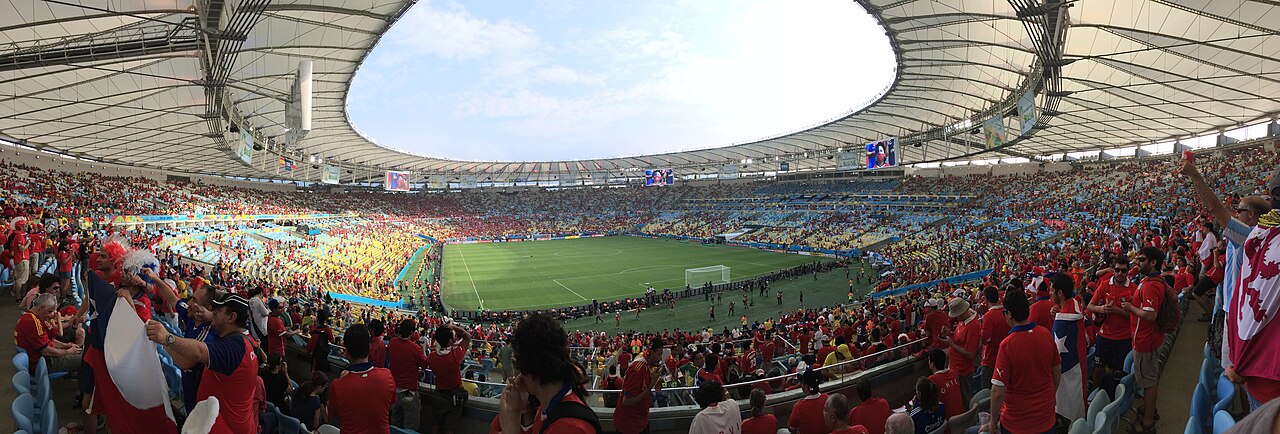
The condition of the Maracanã grass has generated plenty of attention, and not entirely without reason.
Local players criticized the surface after recent matches, the stadium has dealt with heavy use and rain, and emergency repair work was performed ahead of the NFL game. The league has taken operational control of the venue and publicly said it has no concern that would threaten the game.
If the surface is slow, it may marginally favor straight-line running over sharp cuts. Poor footing can affect edge rushers, receivers and kickers. Flowers’ hamstring naturally makes the topic more uncomfortable if he plays. But at the end of the day both teams will be playing on the same grass.

Prediction
The Cowboys have the quarterback and receiving talent to challenge the Ravens.
There is a very realistic version of Sunday in which the Ravens move the football comfortably, settle for a field goal or waste a possession, then watch Dak string together ten-play drives while everyone wonders why a game Baltimore appears to be controlling is tied in the fourth quarter.
We have seen that movie before. Quite recently, actually.
But the matchup on the other side is difficult to ignore. The Ravens should definitely be able to take advantage of a porous Dallas defense. Sunday is a useful test of whether those failures were one bad collection of high-leverage plays or something the new coaching staff will carry forward.
If the offensive line holds up and the secondary bounces back a bit, this matchup should favor the Ravens.
Ravens 27, Cowboys 24