If you watched the US at the World Cup and then stopped checking the player pool every weekend, Mauricio Pochettino’s first roster of the new cycle may require an introduction.
Nearly half the team has never played a senior international. Thirteen of the 28 players are uncapped, 12 are receiving their first senior call-up and the uncapped group averages just 19 years and six months old. Cavan Sullivan is 16. Mathis Albert and Adri Mehmeti are 17. Peyton Miller is 18. Neil Pierre is a 6-foot-7 center back who had barely played MLS soccer at the beginning of the year.
This is not a normal post-World Cup friendly roster with a couple of prospects attached to the end of the bench.
Pochettino is not choosing his 2030 World Cup team four years early. He is opening the competition four years early.
When Pochettino re-signed after the World Cup, one of the most important questions was whether continuity would lead to complacency. Most of the 2026 core is young enough to return in four years, but nobody should enter the next cycle assuming his position belongs to him because he started this summer or plays for a recognizable European club.
This roster is the first indication Pochettino agrees.
There are still enough veterans around to give the camp a real standard. Tyler Adams, Antonee Robinson, Sergiño Dest, Chris Richards, Gio Reyna, Malik Tillman and Yunus Musah are here. The young players will not merely be competing against one another. They get to train beside and, potentially, take minutes from players who just represented the US at a World Cup.
Christian Pulisic is the obvious omission, despite recently returning to action for AC Milan. Pochettino did not provide much detail beyond saying this was the group he wanted to work with. His absence will naturally draw attention, but the more interesting story over these four games is what Pochettino does with the space it creates.
The US opens Saturday against Peru, follows with Chile on Tuesday, then gets Mexico and Canada on October 3 and 6. Four games should give Pochettino enough room to experiment without turning every appearance into a five-minute cameo. See the full camp roster and schedule from U.S. Soccer.
Here are the new faces most worth watching.
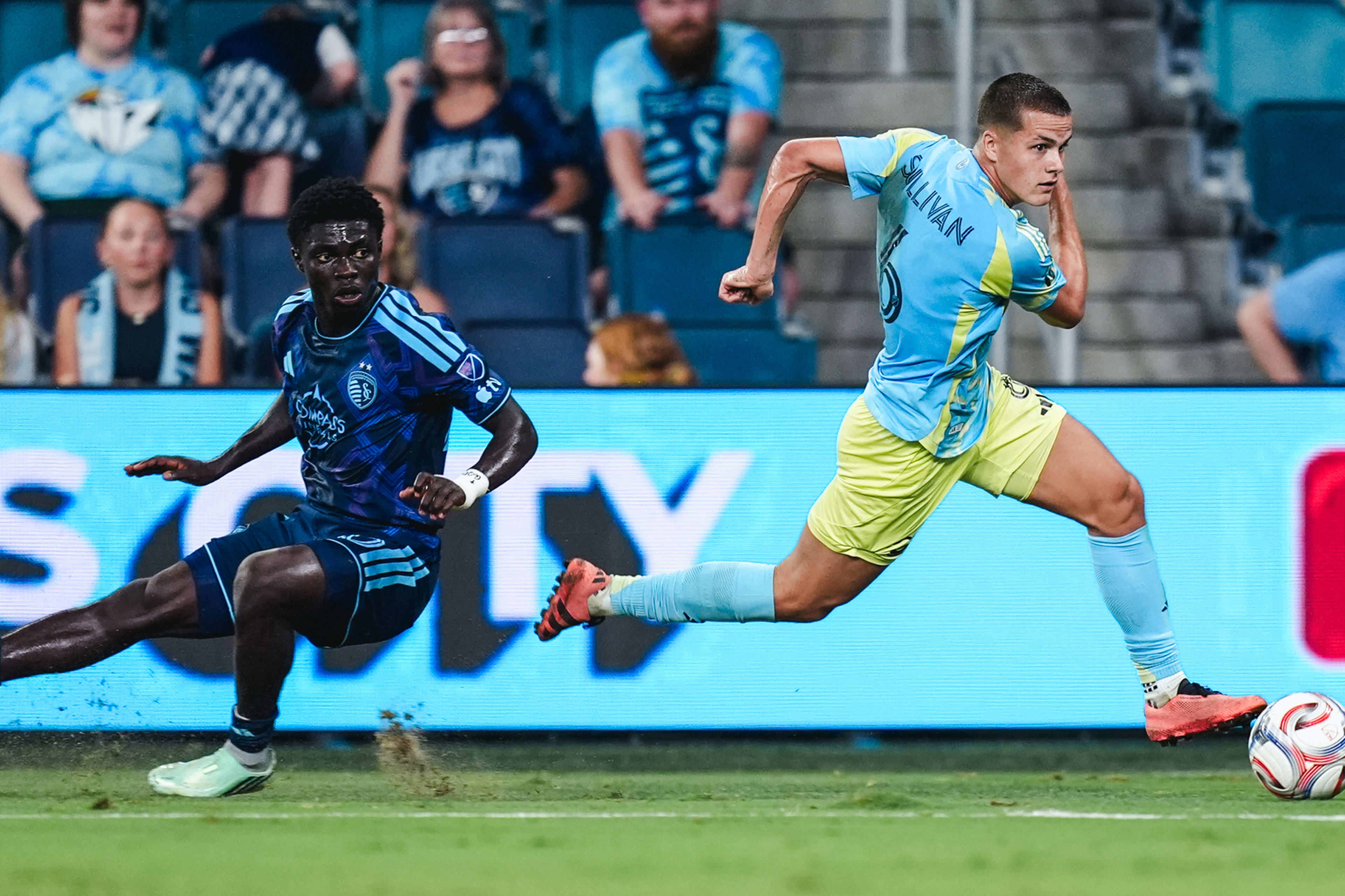
Cavan Sullivan: The Headliner
There is no pretending anyone else will generate the same attention.
Sullivan has been discussed as the future of American soccer for years, which is a strange thing to say about someone who cannot legally vote for another year. Until recently, much of the excitement was based on youth performances, scouting projection and the fact that Manchester City had already secured his future.
That has changed.
Sullivan has become one of Philadelphia’s most productive attackers over the past two months. He sees passing lanes early, handles the ball comfortably in tight areas and increasingly looks capable of turning those ideas into actual production against professional defenders.
The interesting part is not merely the goals and assists.
When I watched him against Inter Miami in August, the most impressive moments came from the way he manipulated defenders after receiving on the right. He repeatedly put Sergio Reguilón in difficult positions, sometimes attacking outside, sometimes cutting centrally and often making the correct pass once the first defender committed.
Now those flashes are appearing every week instead of once every few matches.
The question for this camp is whether the things making him special in MLS still work when the game accelerates.
Can he receive between the lines before pressure arrives? Can he recognize the next pass quickly enough? Can he defend within Pochettino’s press? And perhaps most interestingly, where does Pochettino use him?
Sullivan tends to start wide for Philly, often receiving the ball facing the defense. He does have freedom in the Philly attack to move centrally or even flip sides and often does. If Pochettino continues the setup used at the World Cup, Sullivan would likely slot into one of the tucked-in wing roles, so he would be a little more central. However, his best position may be less important than simply finding ways to put him around the ball.
For now, it will just be fun to see him on the field in a US jersey. But let’s remember he is just 16, turning 17 during the camp.
Zavier Gozo: The Prospect Who Has Already Earned a Premier League Move
Gozo may be the easiest of these selections to understand.
He produced six goals and four assists for Real Salt Lake, made the MLS All-Star team and earned a summer move to Crystal Palace. He has already appeared in the Premier League.
Unlike Sullivan, there is less mystery around his role and capabilities.
Gozo is a direct right-footed wide player who can line up as a winger or wingback, receive facing the defense and accelerate into open space. He can stay wide, make diagonal runs behind a back line or attack the penalty area from deeper positions.
That versatility creates an interesting question for Pochettino.
If Gozo plays as a winger, this is primarily an evaluation of another attacking option. If he receives wingback minutes, the experiment becomes more tactical. Pochettino could be testing whether Gozo’s speed and directness provide a different way to structure the entire right side.
The next step in his development is decision-making after he wins the first matchup. Beating a defender only gets you halfway there. International defenders recover more quickly and the second defender arrives sooner.
Can Gozo turn those advantages into the right shot, pass or cutback?
Among the teenagers in camp, he may have the best combination of senior production and immediate physical readiness.
Peyton Miller: A Left Back Who May Not Actually Be a Left Back
The US already has one of the better left backs in international soccer in Antonee Robinson.
The question behind him is much less settled.
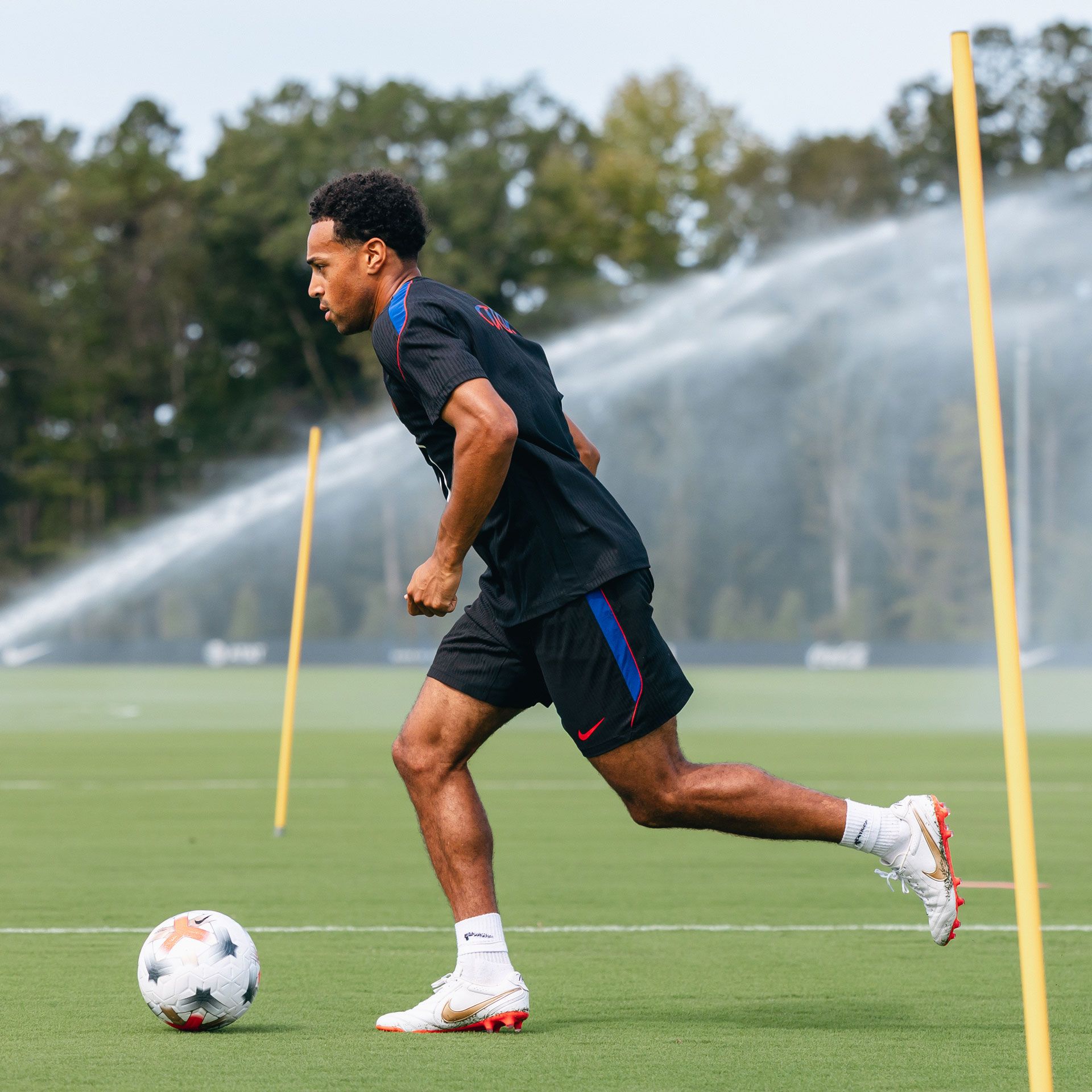
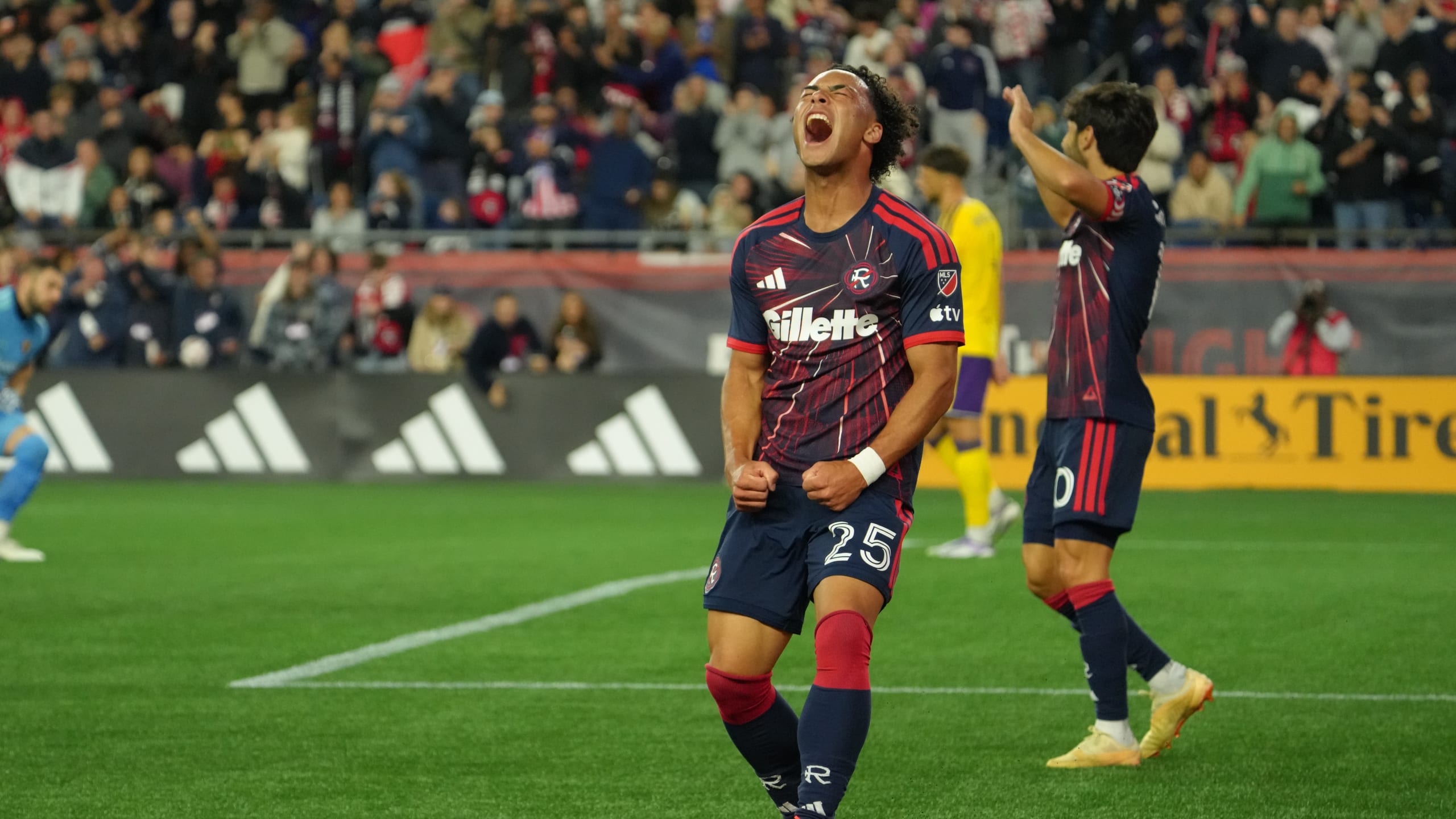
Miller enters camp at 18 after scoring seven goals with four assists for New England, including a two-goal performance against Orlando immediately after receiving his call-up.
He came through as a fullback, but calling him one now does not quite describe how New England uses him. He has played higher on either wing and increasingly looks most dangerous when he can use his acceleration to attack space rather than spending the afternoon worrying about his positioning in a traditional back four.
That does not mean the US should abandon the idea of Miller becoming Robinson’s eventual backup.
It means Pochettino has options.
Miller could get minutes at left back, wingback or as an outright winger. His speed should translate to any of them. The more revealing parts will come after the acceleration: the final pass, his defensive positioning and how he handles the back post when the US does not have the ball.
His attacking development has moved ahead of his defending.
That is the reason this camp is useful.
Mathis Albert: The Pure Upside Bet
Albert is all projection at this point, with limited first-team minutes for Dortmund.
It does say something that Borussia Dortmund believes he is good enough to spend time around its first team at 17.
Albert became the youngest American to appear in the Bundesliga and has since made his first senior start in the German cup. He primarily attacks from the left, using his acceleration to beat defenders outside or cut onto his stronger right foot.
At youth level, the speed can look overwhelming.
The senior game will tell us much more.
This is why judging prospects cannot simply become a spreadsheet of first-team minutes. A teenager breaking regularly into Dortmund’s senior environment is meaningful even if another prospect has played 2,000 more professional minutes elsewhere.
It also does not make Albert ready and this camp is essentially an early stress test. Can he still create separation when everyone is fast? Can he make the right choice once he beats the first defender? Can he contribute to the press and defensive structure when the US does not have the ball?
Albert may be the player on this roster for whom expectations should be lowest and curiosity highest.
Adri Mehmeti and Brooklyn Raines: Two Very Different Midfield Bets
Mehmeti may have the highest ceiling of any player in this group.
The US simply does not produce players with the ability to read the game at his level combined with the touch and calmness in tight spaces.
The 17-year-old Red Bull New York midfielder can play as a No. 6 or No. 8 and already looks unusually calm receiving the ball in central areas. He scans before the ball arrives, anticipates passing lanes and tries to move possession forward quickly rather than taking several touches to decide what comes next.
The obvious comparison is Tyler Adams, especially since both emerged from the Red Bull system and Mehmeti has specifically described Adams as a role model.
The similarities should probably end there for now.
Adams built his reputation around mobility, pressure and ball-winning. Mehmeti’s most intriguing qualities are his awareness and ability to organize possession from deeper areas.
He may lack the physical tools to cover enormous spaces by himself. The question is whether his intelligence and technique can compensate as the speed increases.
I would particularly like to see him next to an established midfielder. Give him Adams, Musah or Tillman and see whether he can receive under pressure without needing the entire team structured around him.
Raines represents a much more proven professional profile, with a lower ceiling.
At 21, he already has 68 MLS appearances and 50 starts. He covers ground, presses aggressively and can carry away from pressure after recovering possession.
There is less mystery about whether Raines can survive professional soccer. The question is whether he has one or two traits strong enough to separate him from a crowded group of American central midfielders.
His best opportunity may come without the ball. If Pochettino wants his midfield to press forward and aggressively close transition space, Raines already knows how to play that game.
Neil Pierre and Frankie Westfield: Philadelphia’s Next Two
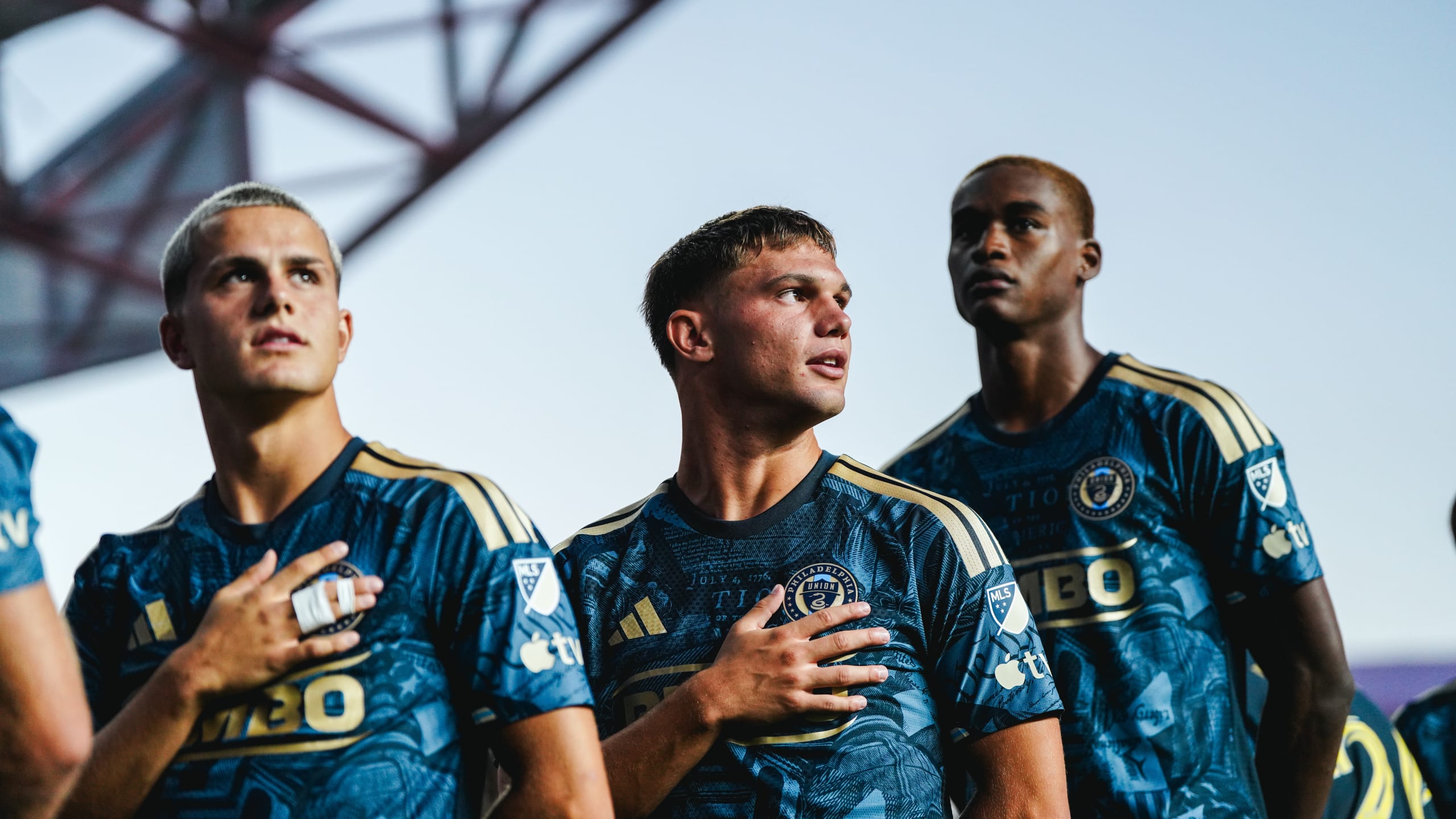
Pierre will not be difficult to identify.
He is 6-foot-7.
That alone makes the 18-year-old an unusual center-back prospect, but his mobility is the reason the USMNT call makes sense.
Pierre can obviously dominate balls in the air and becomes an enormous set-piece target. He already has four MLS goals despite a very small senior sample. More interestingly, he moves well enough for Philadelphia to defend aggressively rather than protecting him inside the penalty area.
International soccer will provide a better test.
Center back is open enough that this experiment has real relevance. Chris Richards enters the cycle as the clearest incumbent, but the rest of the hierarchy can change quickly.
Westfield’s path is more crowded.
The 20-year-old Philadelphia fullback has nine assists and has developed a particularly effective relationship with Sullivan. When Sullivan drifts inside, Westfield supplies the outside run. When defenders collapse toward Sullivan, Westfield is available to receive in the space left behind.
That existing chemistry is one of the underrated parts of this roster.
Eight of the uncapped players participated in the 2025 U-17 or U-20 World Cups, and several know one another from club soccer as well. Pochettino is introducing them to the senior team, not introducing all of them to each other.
Westfield can play on either side, which helps, but Dest, Weah and Alex Freeman make right back especially competitive. His route into the long-term team probably requires versatility to become one of his biggest advantages.
Julian Hall and Justin Ellis: Suddenly Real Striker Minutes Are Available
Ricardo Pepi’s injury changed this camp.
Damion Downs replaced him on the roster, but Pepi was the only established international striker in the original group. That creates a much more realistic opportunity for Hall and Ellis.
They are very different forwards.
Hall, still only 18, already has 10 MLS goals and became the youngest player in league history to score a hat trick. His game is based on movement. He wants to run behind the defense, separate in transition and pressure center backs rather than spending the entire match wrestling with them.
Plenty of talented young attackers dominate youth soccer because they are faster or more technical than everyone around them. Hall is already finding goals against professional defenders.
His long-term position is not completely settled and his back-to-goal game remains a work in progress, but an international team does not need every striker to play the same way.
Ellis provides an almost opposite profile.
Although Orlando lists him as a forward, he often plays more like a second striker or false nine. He drops toward midfield, protects the ball and looks for runners moving beyond him. His 11 assists across all competitions are a better introduction to his game than simply looking at his scoring numbers.
The opening match against Peru is at Orlando’s home stadium, which would be a pretty natural place to give him his first senior minutes.
If Hall wants to make the run behind the center backs, Ellis may be the young forward most likely to find him.
Cole Campbell: From Projection to Actual Bundesliga Minutes
Campbell has been an American prospect for several years.
For most of that time, the question was when the senior soccer would arrive.
It finally has.
After struggling to establish himself at Borussia Dortmund, Campbell moved to newly promoted Elversberg and has started regularly in the Bundesliga. That alone changes how he should be evaluated.
Campbell is quick, direct and comfortable attacking from either side. He can beat a defender and run behind the back line, traits the US can always use from the bench when a match becomes stretched.
The next question is production.
Promising dribbles and dangerous runs only take a winger so far. Eventually they need to become goals, assists and clear chances.
Pochettino will also be evaluating the other side of the position. His US teams have generally asked wide attackers to participate aggressively in the press. Campbell cannot simply wait for the next opportunity to run at a defender.
Brian Schwake: The Prospect Who Isn’t Really a Prospect
Schwake is not the same type of youth prospect as the rest of this group.
He is 25. He never played for a US youth national team. He spent five professional seasons abroad before joining Nashville, became the starter, helped the club win the 2025 U.S. Open Cup and made this year’s MLS All-Star team.
While Sullivan and Albert are being selected partially for what they might become, Schwake is here because of what he is doing right now.
A national-team pipeline should not become so obsessed with identifying the next player at 16 that it stops rewarding the one who develops at 24.
Goalkeeper is particularly suited to late development anyway. Matt Freese begins the cycle with the clearest senior claim, but nobody has locked down the position for the next four years.
Schwake’s competition with Diego Kochen also provides an interesting contrast. Kochen is the 20-year-old Barcelona-developed keeper with perhaps the highest theoretical ceiling of the young group, but this is not his first senior camp. Schwake has taken the completely opposite route.
One represents projection.
The other represents performance.
What Should We Actually Learn From These Four Games?
The inevitable temptation will be to make enormous conclusions from tiny samples.
Sullivan plays 25 exciting minutes and suddenly people will want him starting against Argentina. Pierre loses one footrace and everyone will decide a 6-foot-7 center back cannot defend internationally. Albert might not play at all and somebody will inevitably describe the camp as a wasted opportunity.
That is not a useful way to evaluate any of this.
The first question is whether their club traits survive when the level rises. The second is whether they can help without being featured.
International soccer gives players less training time and often fewer touches than their clubs. Hall may make his case through runs that create space for someone else. Raines might earn another camp by stopping transitions. Westfield could show he understands when to advance without needing ten crosses to announce his presence.
Then there is the competition itself. Peru and Chile provide the first opportunities to rotate and introduce players before the window becomes more difficult. Mexico remains the rivalry game, while Canada is coming off its own trip to the World Cup knockout rounds. By the final two matches, Pochettino should have the opportunity to put whichever newcomers impressed early alongside something closer to his strongest available team.
That will tell us more than watching an entire lineup of teenagers together.
The goal of this camp should be discovering which two or three of these prospects look ready to help immediately. That would be an enormous success. If several others demonstrate enough to return in November, the process is working. Some will go back to their clubs having learned that they are not ready yet.
The 2026 World Cup reinforced an old lesson for the US that having more players at recognizable European clubs does not automatically make the national team elite. Pochettino can improve the structure and put players into useful positions, but eventually the player pool has to become better.
This is the first serious attempt of the new cycle to find out whether it has.
The road to 2030 does not begin by selecting the team four years in advance.
It begins by making everyone compete for a place on it.