Five immediate takeaways from the Ravens’ 34-31 win over the Cowboys in Rio.
Follow the season: The Ravens Season Dashboard tracks the record, advanced team metrics, unit trends, injuries and what comes next.
For a while, it looked like the Ravens were going to lose another game they should have already won.
Dallas had erased an 11-point second-half lead. The Ravens had answered with a touchdown of their own, only for the Cowboys to drive back down the field into the shadow of the end zone before settling for a game-tying field goal.
Then Lamar Jackson stepped up and found Zay Flowers for 27 yards.
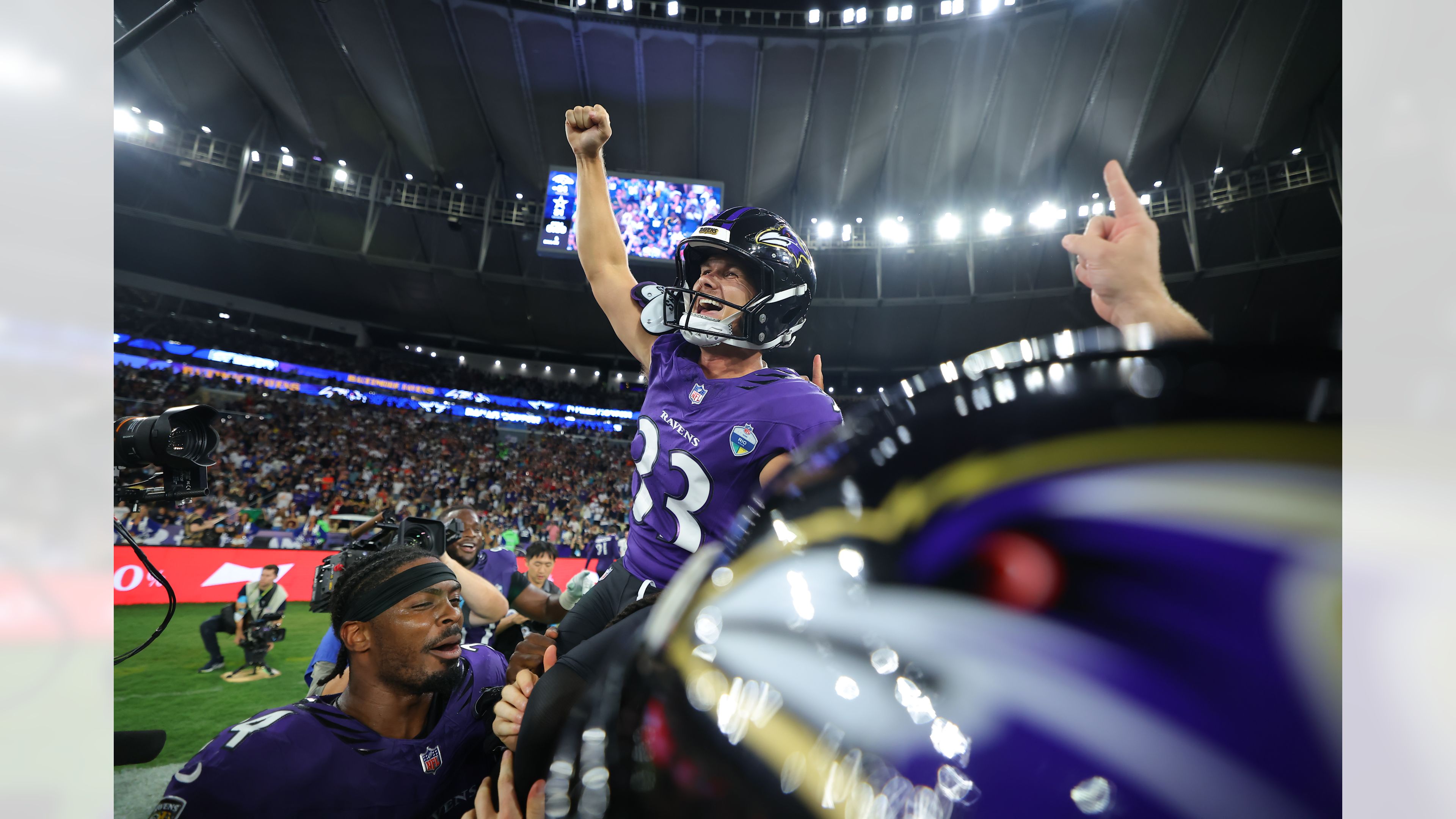
One second. Fifty-six yards. Tyler Loop came through in the clutch.
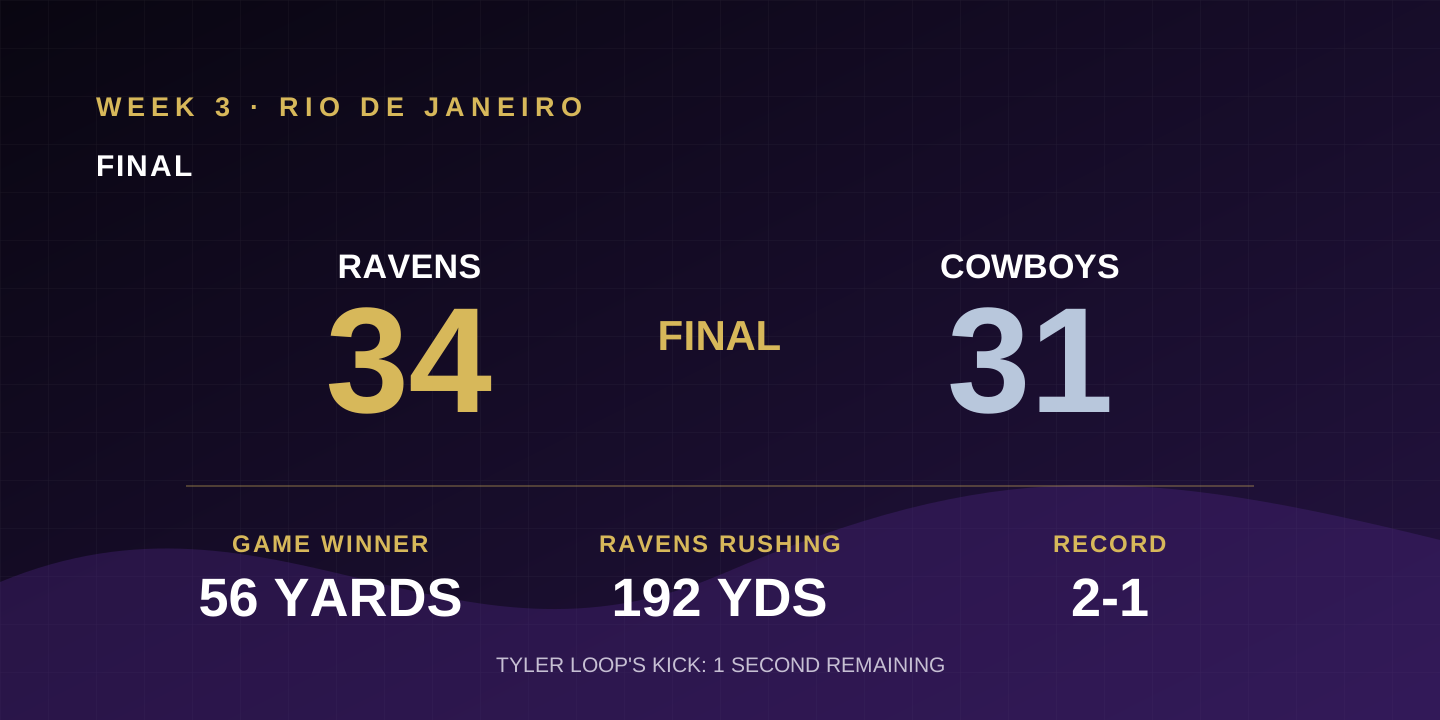
The Ravens escaped Rio with a 34-31 win, improved to 2-1 and, for at least one afternoon, finished on the right side of a late-game comeback.
There are certainly still issues that need to be addressed on both sides of the ball. And they may be completely out of centers on the roster after this game. But at the end of the day, the Ravens come out with a key road win on a long trip to Brazil.
Before going back through the tape, these are the five things that stood out.
1. Loop comes through when it matters
Two weeks ago, Tyler Loop drilled the longest field goal of his NFL career just before halftime against the Colts. It was exactly the kind of long-range kick the Ravens needed to see after his shaky preseason and, obviously, the 44-yard miss in Pittsburgh that ended last season.
But there was one fairly significant qualifier.
There wasn’t much pressure.
They already led comfortably. Missing the kick would have been disappointing, not devastating. I wrote then that eventually Loop was going to have to stand over a kick with a game hanging in the balance before anyone could really know how much progress had been made.
Well, here we are.
Dallas tied the game at 31 with seven seconds remaining. Jackson found Flowers for 27 yards, the Ravens used their final timeout with one second remaining, and Loop walked onto the field for a 56-yard attempt to win the game.
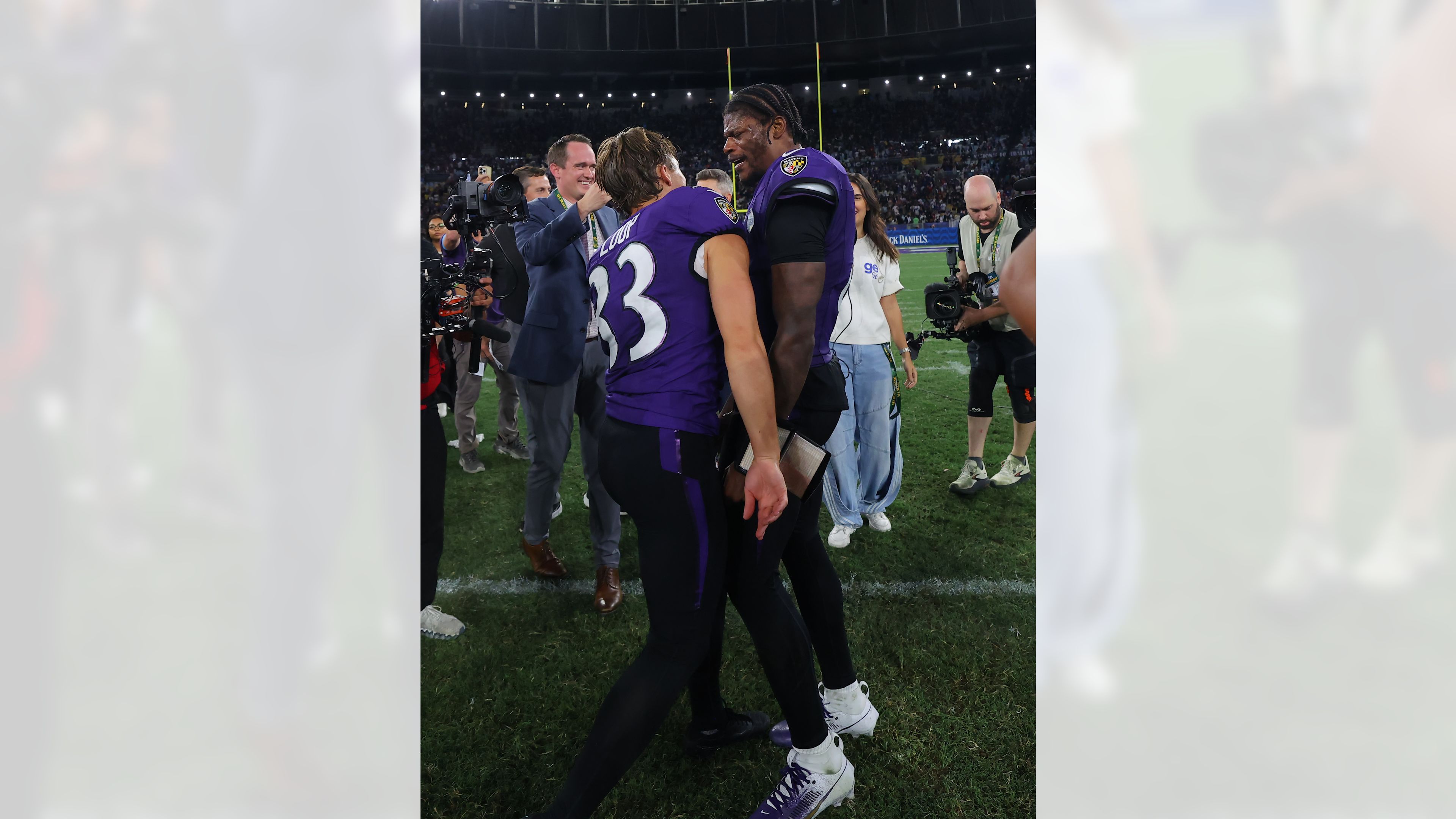
He snuck it inside the left upright. Game over.
One make in September cannot retroactively change what happened in January, and kicker evaluation becomes silly pretty quickly if every individual attempt is treated as proof that a player is either fixed or doomed, but confidence has to come from somewhere.
After Loop made the 57-yarder against Indianapolis, Jesse Minter specifically talked about how successful long-range attempts change the decisions a coach can make near midfield. The more Loop makes those kicks, the more trust he’ll earn from the coaches and fans.
Through three games, Loop has now made five of his six field-goal attempts. His only miss was blocked against New Orleans. He has made from 57 and 56, and now hit one under intense pressure.
More importantly, his teammates just watched him deliver in exactly the situation that had been hanging over him since Pittsburgh.
2. Minter and Weaver need to teach this defense how to tackle
The philosophy only works if you finish the play.
Jesse Minter and Anthony Weaver appear comfortable asking this defense to play from the top down, keep the ball in front of them and make an offense earn its way down the field rather than constantly exposing the secondary in pursuit of negative plays.
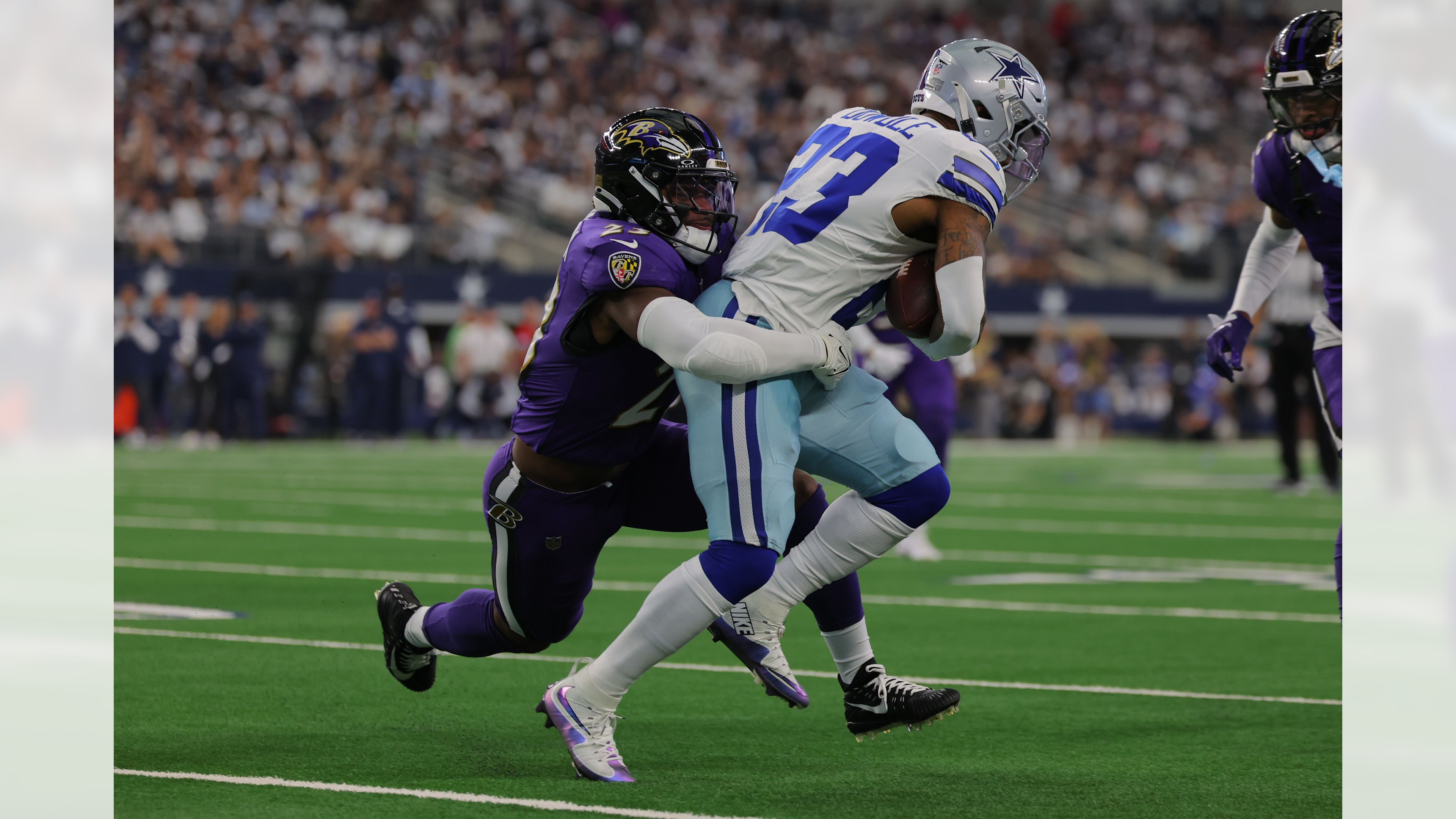
If that is the approach, then you have to be effective coming downhill and making tackles in space.
It does no good to concede a five-yard completion on third-and-10 because the coverage has protected the sticks if the receiver breaks through two defenders and gets 12.
That happened far too often Sunday.
Dallas finished with 27 first downs, 267 net passing yards and 148 rushing yards at 4.9 yards per carry. The Cowboys converted five of 13 third downs.
It does no good to force a short throw on third down if the first defender cannot finish the play. Dallas converted third-and-7 in the first quarter when Dak Prescott hit KaVontae Turpin on a quick throw and Turpin made a defender miss for nine yards.
On a third-and-10 late in the third quarter, Prescott hit George Pickens on a short pass that turned into a 19-yard gain. Later, on Dallas’ 96-yard fourth-quarter touchdown drive, Brevyn Spann-Ford caught another short pass and turned it into 19 yards while making multiple Ravens miss.
Some of those plays will look different after a rewatch. Maybe a defender was put in a terrible leverage position. Maybe the coverage forced a throw exactly where Minter wanted it and the problem began only after the catch.
If the Ravens want to make offenses complete six passes instead of one deep ball, every one of those six snaps creates another opportunity for a defender to miss. The advantage comes from forcing the offense to repeatedly execute while the Ravens repeatedly get the ball carrier on the ground.
The defense is not doing that consistently enough.
There were good defensive moments. Roquan Smith produced a sack near the goal line on Dallas’ opening drive. Travis Jones forced the fumble that stopped another possession. The Ravens held Dallas to a field goal after the absurd late pass interference on Nate Wiggins put the Cowboys at the 2.
But the defense also allowed a 96-yard touchdown drive immediately after the offense failed at the Dallas 1 and gave up 15 straight points after taking a 24-13 lead.
The scheme can limit where the ball goes.
Eventually somebody still has to make the tackle.
3. Lamar’s legs are a factor again
The Ravens were down 10-0 when Lamar Jackson provided a reminder of what makes this offense fundamentally different from almost every other one in football.
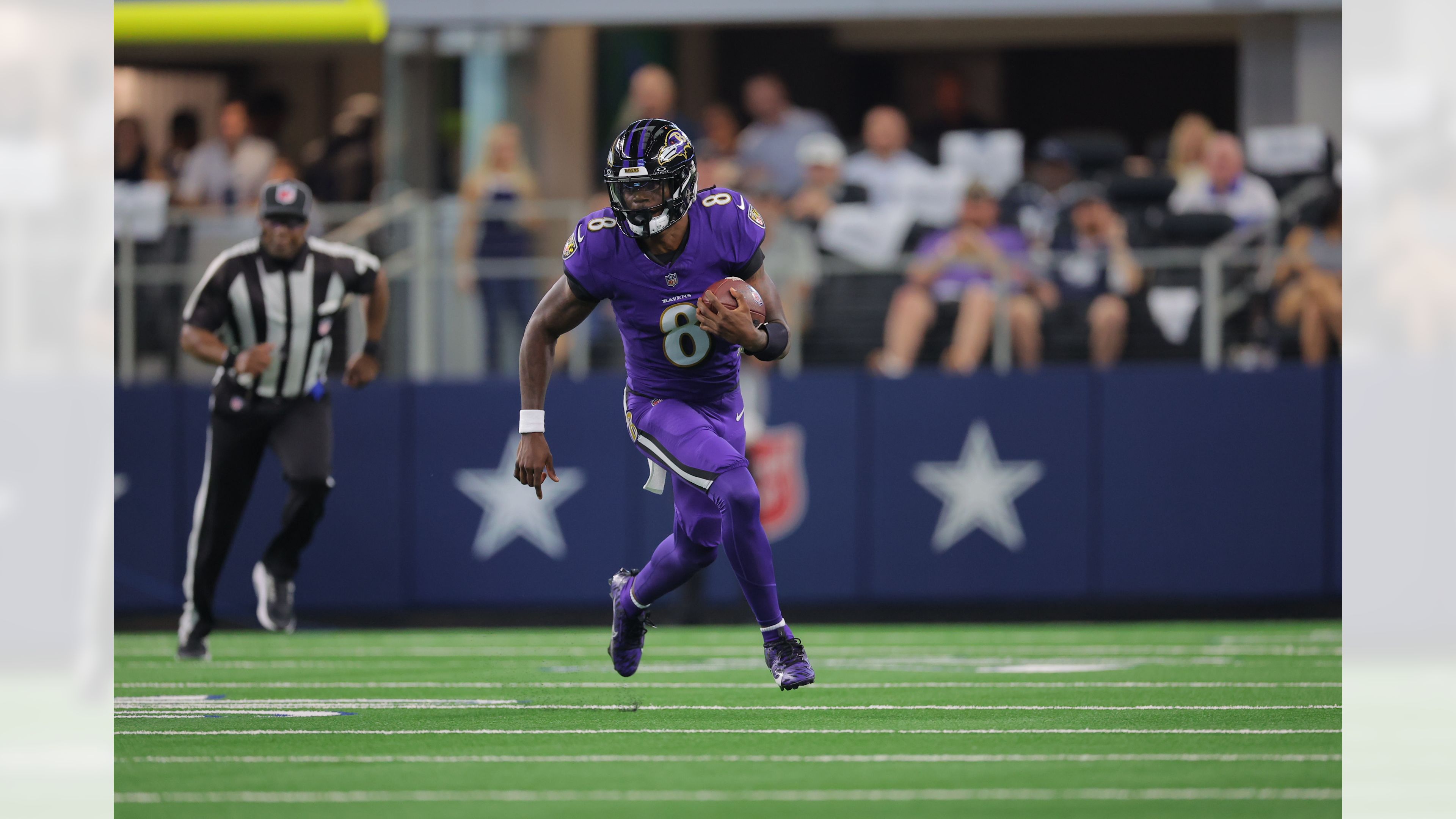
On the next possession, Jackson took off around the right side for 21 yards.
Two plays later, he hit Flowers for another 22. Derrick Henry eventually finished the drive with a touchdown.
Once Lamar demonstrates that he is willing and physically capable of keeping the ball, every defender has that in the back of their mind. The backside defender cannot simply crash toward Henry. Linebackers have to account for Lamar getting outside. Safeties have to fit the run knowing the quarterback can change where the extra blocker is needed.
That’s the version of the Ravens running game that becomes exhausting to defend. Lamar finished with only six carries Sunday, but each of his 50 yards were important. He added a 12-yard run that moved Baltimore to the Dallas 4 before Chris Moore’s third-quarter touchdown, then scrambled for 17 yards to open the Ravens’ eventual go-ahead drive in the fourth.
Designed quarterback runs force defenses to account for Lamar within the blocking math. Scrambles punish man coverage or a pass rush that loses containment. Read concepts make an unblocked defender choose between Henry and Jackson, which is not a particularly enjoyable decision when either answer can be wrong.
The Ravens rushed for 192 yards on 38 carries Sunday, with Henry gaining 89, Justice Hill adding 33 and Flowers another 20 on a jet sweep. Lamar doesn’t have to carry the ball 15 times for his legs to influence those numbers.
Last season, when Jackson was dealing with a collection of injuries, that threat wasn’t consistently the same. It looks like that threat is back now.
The Ravens should be careful about exposing him unnecessarily over a 17-game season, but protecting Lamar cannot mean removing the thing that makes defending this offense so perplexing.
4. Short yardage shouldn’t be this hard
Here is the strange part about the rushing performance Sunday.
The Ravens ran for 192 yards and averaged 5.1 yards per carry.
Then every time they absolutely needed one yard, the offense seemed incapable of finding it.
The first failure came in the first quarter, facing fourth-and-1 at their own 30, when Henry got stuffed up the middle for no gain. Dallas took over on the 30 and scored five plays later to take a 10-0 lead.
Then in the fourth quarter, after Flowers’ 20-yard jet sweep put the Ravens at the Dallas 3, Lamar lost a yard, then Henry gained two, then on third-and-goal from the 2, he appeared to score before replay overturned the touchdown and placed the ball at the 1.
So on fourth down the Ravens went to Henry again, and the defense sliced into the backfield for a three-yard loss.
Dallas then traveled 96 yards in seven plays and took a 28-24 lead.
As if that wasn’t enough, the Ravens later faced third-and-1 at their own 49 and gave Henry another carry. Dallas dropped him for a four-yard loss and forced a punt.
I’m not going to pretend handing the ball to Derrick Henry with one yard to gain is some indefensible strategic blunder. If an offensive coordinator cannot reasonably expect his offense to gain a yard with Henry carrying the football, we have a much bigger problem.
But there is a difference between giving Henry the ball and making the defense’s assignment unnecessarily simple.
This is where Declan Doyle has to find better answers.
Baltimore has Henry, Lamar, motion, heavy personnel and the ability to create uncertainty about who actually has the ball. The entire offense becomes more difficult when a linebacker has to hesitate because Lamar might keep it, a tight end might sift across the formation or the same look might produce play action.
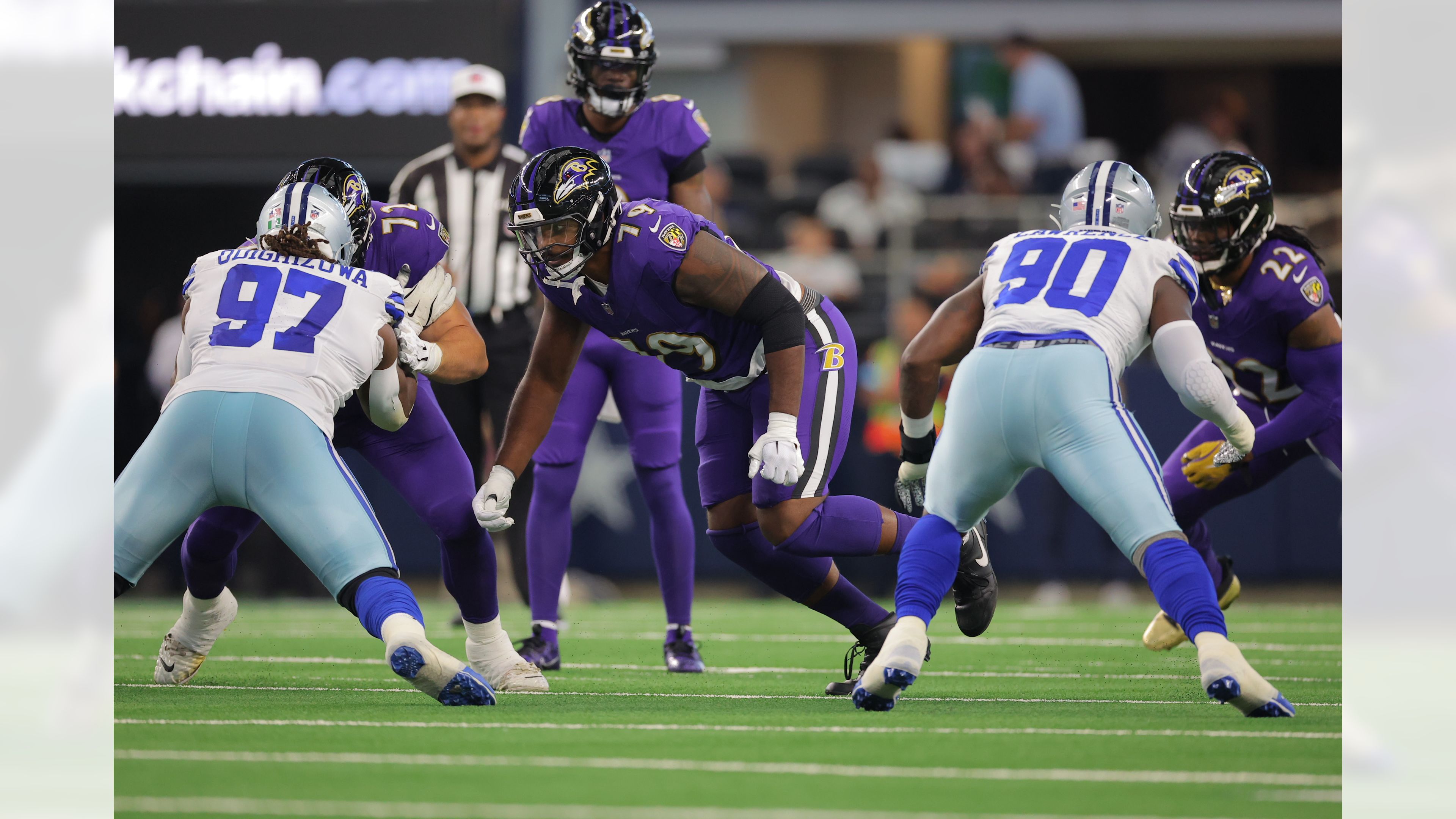
Yet in the biggest short-yardage moments Sunday, Dallas looked like a defense that knew exactly where the ball was going. Execution obviously matters too. The offensive line has to get movement. Henry has to identify the crease. Doyle cannot scheme away a defender winning immediately at the line of scrimmage.
But the Ravens have too many ways to manipulate a defense for short yardage to repeatedly become a contest of whether Henry can run through an overloaded box.
Especially because the rest of the game showed what happens when the defense has to defend everything.
5. Zay Flowers gives this offense a different ceiling
Zay Flowers finished with five catches for 84 yards despite being a game-time decision due to his hamstring injury.
Add the 20-yard jet sweep and Flowers produced 104 yards from scrimmage on six touches. More importantly, look at when those touches arrived.
His 22-yard reception helped ignite Baltimore’s first touchdown drive after Dallas went ahead 10-0. His 20-yard run put the Ravens at the 3 early in the fourth quarter.
Then, with Baltimore trailing 28-24 and needing a touchdown, Lamar found Flowers for consecutive 14-yard completions, the second moving the ball all the way to the Dallas 2. Two plays later, Jackson hit Matt Hibner for the go-ahead touchdown.
And then, of course, the final play that set up the game-winning field goal.
The Ravens did move the ball without him last week, but it was clear this week that having Flowers as an explosive first option makes Lamar look much more comfortable.
Flowers changes what Doyle can ask a defense to defend. He can win as a conventional receiver. He can move into the slot. He can cross the formation before the snap. He can threaten on the jet sweep. His speed forces defensive backs to protect vertically, while his ability after the catch punishes them for giving him too much room underneath.
And moving him around prevents the defense from simply locating the Ravens’ biggest receiving threat and building the coverage around stopping him.
Flowers doesn’t need to get 15 targets every week to lift the ceiling on offense. His presence makes Doyle’s menu considerably more dangerous. Sunday we got another reminder of what this offense can look like when all of its best pieces are available.