Follow the matchup: Find matchup stats, injuries, unit grades and season trends at the Ravens Season Dashboard.
Week 6 | Sunday, October 18, 2026 | 1 p.m. ET | FOX | Huntington Bank Field
The Ravens are 4-1, winners of three straight games and sitting atop the AFC North. Tyler Huntley just engineered an improbable fourth-quarter comeback in Atlanta, the defense is showing encouraging signs of improvement and Trey Hendrickson is expected to return after missing two games.
Things could certainly be worse.
But Lamar Jackson will miss his second consecutive game Sunday, and the Ravens now have to navigate their first divisional matchup without the player responsible for so much of their offensive success.
Cleveland is a particularly interesting opponent under these circumstances.
The Browns are 3-2 under former Ravens offensive coordinator Todd Monken, with all three victories coming by four points or fewer. They have a negative-19 point differential and rank near the bottom of the league in several important offensive categories. Their defense, however, has been considerably better, particularly against the pass.
Cleveland has been one of the NFL's best teams at pressuring quarterbacks and limiting passing efficiency, but one of the worst at preventing explosive runs. The Ravens happen to have Derrick Henry, a quarterback they would prefer not to expose to obvious passing situations, and an offensive line operating with yet another makeshift interior.
Meanwhile, Cleveland's offense has struggled to protect Deshaun Watson and generate anything resembling a consistent running game. That should create opportunities for a Ravens defense looking to build upon its performance in Atlanta.

1. Can the Ravens exploit Cleveland's explosive run problem?
There may not be a more favorable statistical matchup for the Ravens offense this week.
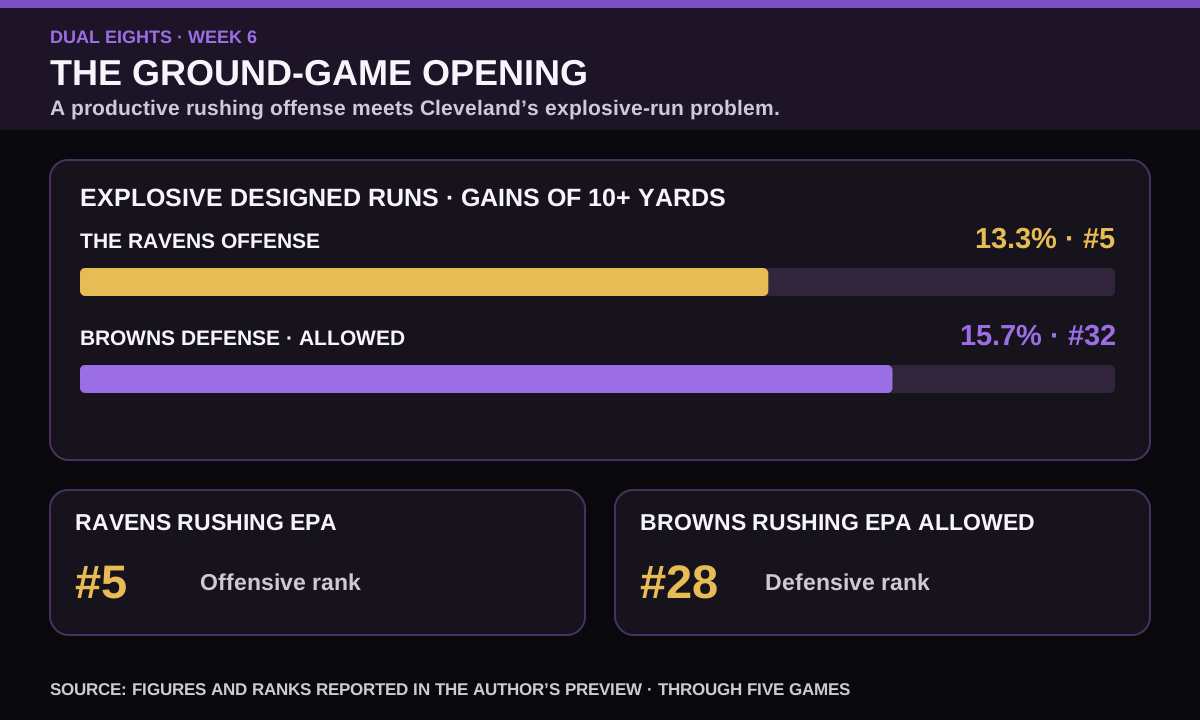
Through five games, Cleveland ranks 28th in defensive rushing EPA, a measure of how much value an offense gains on each rushing play. More revealingly, the Browns have allowed runs of at least 10 yards on 15.7% of designed rushing attempts, the worst rate in the NFL.
The Ravens, meanwhile, rank fifth in rushing EPA and fifth in explosive-run rate, generating gains of at least 10 yards on 13.3% of designed runs.
Those numbers describe a defense that has repeatedly allowed opponents to turn ordinary rushing opportunities into significant gains, meeting an offense capable of doing exactly that.
And with Huntley starting, explosive runs become even more valuable.
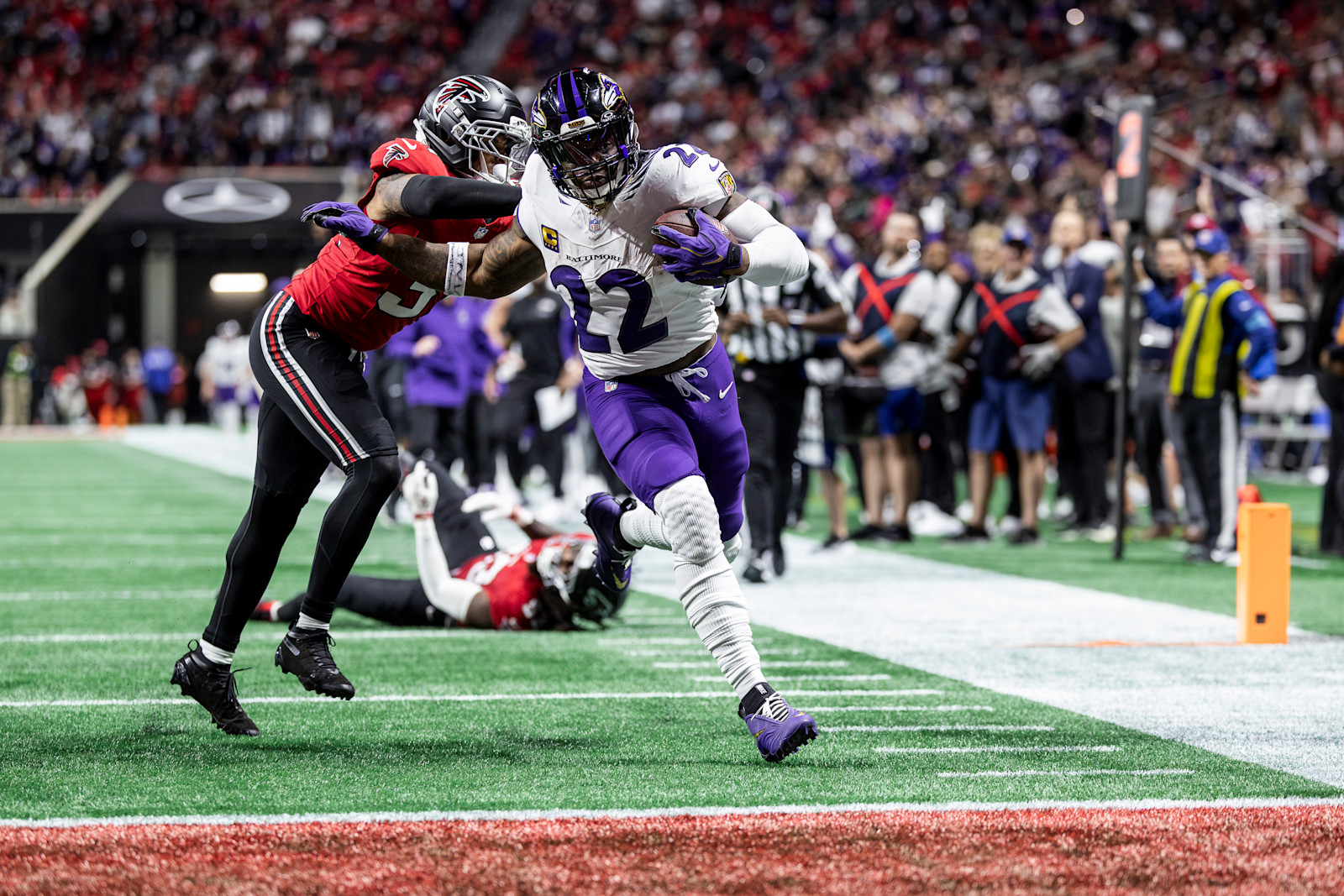
The Ravens ran for 208 yards against Atlanta last Sunday, including 102 from Henry and 73 from Justice Hill. Hill's 47-yard run was particularly important because it demonstrated that Baltimore can still create an explosive rushing play without requiring the defense to worry about Jackson keeping the ball.
Henry has 476 yards on 113 carries this season, averaging 4.2 per attempt. He has been productive, although his individual efficiency has not been quite as impressive as the team's rushing numbers. Much of the Ravens overall rushing advantage has been created through a combination of quarterback runs, secondary backs and explosive gains rather than Henry consistently overwhelming every opponent.
Against Cleveland, Doyle should have opportunities to create those gains deliberately.
The Browns have been vulnerable when opponents get blockers moving into the second level and create poor tackling angles for their linebackers and safeties. The Ravens can attack that with downhill gap runs, counter concepts that change the initial point of attack and occasional outside runs that force Cleveland's defenders to pursue across the formation.
Hill should remain an important part of the plan, too. His speed presents a different problem from Henry's physical running style, and using both backs can prevent the defense from settling into one set of run fits.
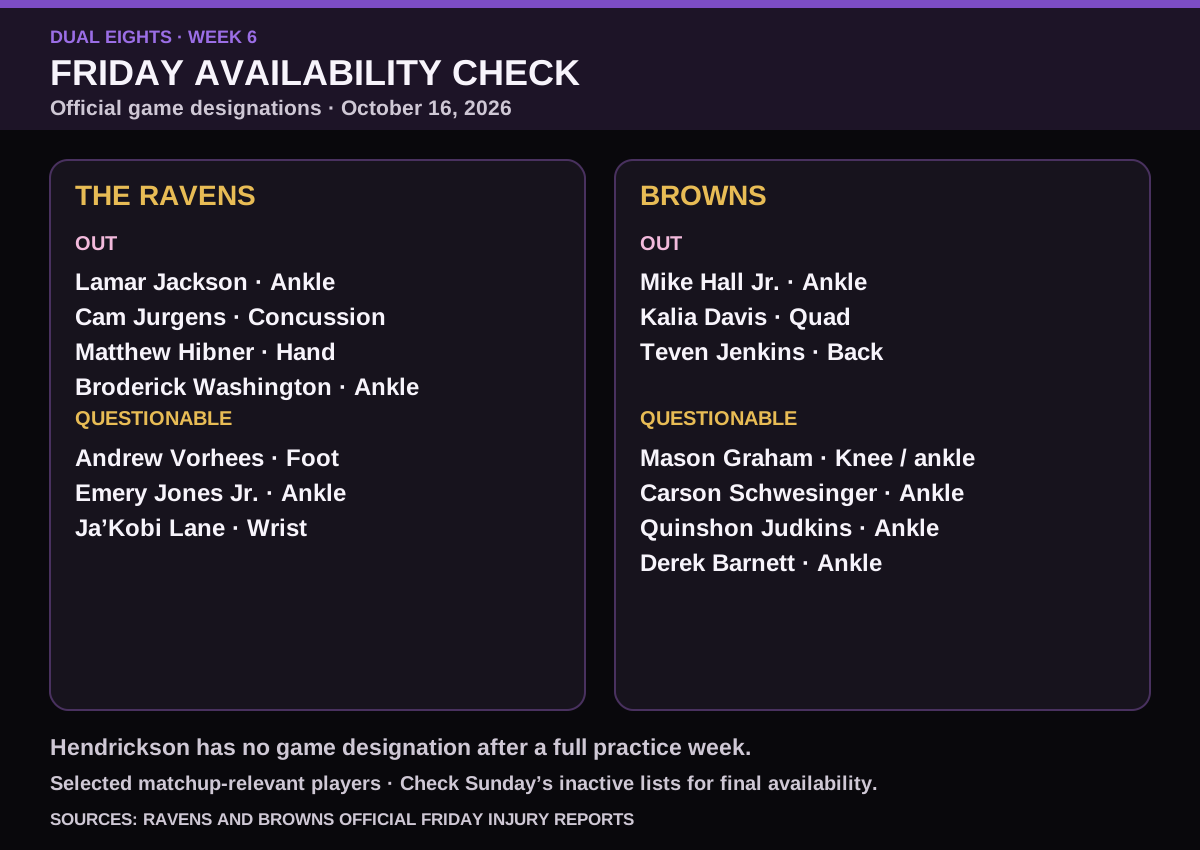
Cleveland's personnel situation could make this matchup even more favorable. Defensive tackle Mason Graham, who recorded four sacks in his first four games, is questionable with knee and ankle injuries. Linebacker Carson Schwesinger, the Browns' leading tackler, is also questionable. Interior defensive linemen Mike Hall Jr. and Kalia Davis have already been ruled out.
Even with those injuries, the Browns have legitimate defensive talent. Jared Verse and Isaiah McGuire can disrupt plays from the edge, while Maliek Collins provides an interior pass-rushing threat.
The more concerning issue for Baltimore is its own offensive line.
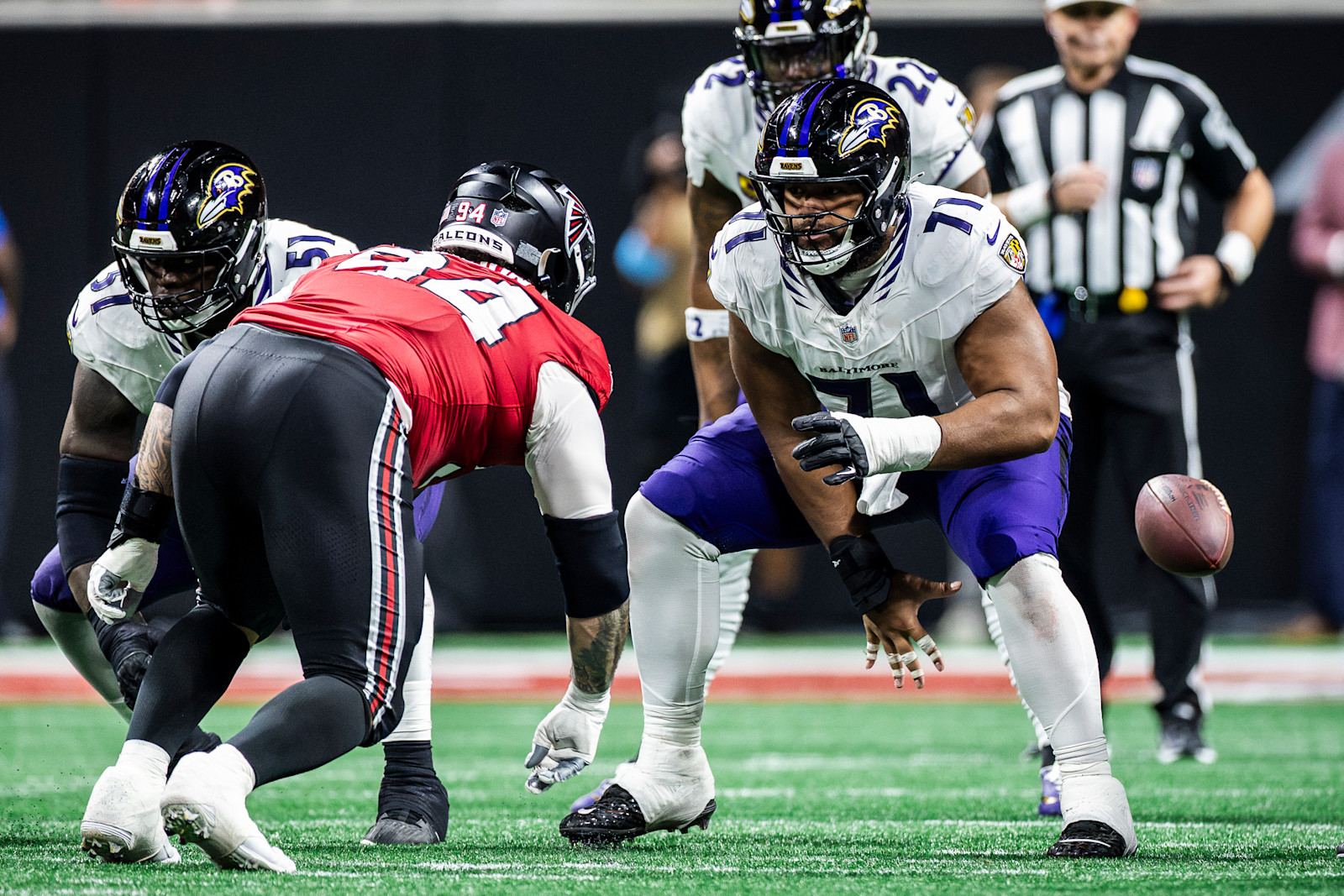
Cam Jurgens’ Ravens debut will be delayed another game while he recovers from a concussion, leaving rookie Vega Ioane at center. John Simpson has been dealing with a groin injury, although he carries no game designation, while Andrew Vorhees and Emery Jones Jr. are questionable.
The encouraging news is that Ioane has been outstanding in his unexpected role. After neutralizing Jeffery Simmons in his first start at center against Tennessee, Ioane followed that performance by allowing zero pressures against Atlanta. According to PFF data, he has now gone consecutive games without surrendering a pressure, bringing his season-long pressure rate allowed down to just 3.7%, the lowest among rookie offensive linemen with at least 125 pass-blocking snaps.
The problem is that winning his individual assignments does not automatically solve the entire offensive line. Cleveland can attack the gaps around Ioane with Collins and potentially Graham, using twists and stunts to test how quickly the guards recognize and exchange assignments. With Huntley less capable of escaping interior pressure than Jackson, one communication failure could derail an otherwise promising possession.
There is also the matter of the Ravens diminishing tight end depth. Durham Smythe is out for the season, and Matthew Hibner will miss Sunday's game with a hand injury. Nick Vannett provided useful blocking against Atlanta, playing 19 snaps, but they have fewer credible combinations available when they want to use multiple tight ends.
That makes execution and presentation particularly important.
Doyle cannot simply line up Henry behind a reshuffled offensive line, repeatedly announce where the football is going and expect Cleveland's season-long rushing numbers to do the work.
The goal should be to create favorable angles and get Henry or Hill into the second level before the Browns can recover.
A handful of 10- and 15-yard runs would do more than improve Henry's box score. They would keep Huntley out of the long-yardage situations where Cleveland's defense becomes considerably more dangerous.
2. Can Declan Doyle and Tyler Huntley open up the offense more?
Huntley deserves plenty of credit for what happened in Atlanta.
He completed 24 of 32 passes for 201 yards and two touchdowns, then scored the game-winning touchdown himself in overtime. After an afternoon of limited offensive production, he found his rhythm late, completing 12 consecutive passes during the comeback.
The Ravens needed their backup quarterback to deliver in the most important moments.
He did.
But the final numbers and dramatic finish conceal a fairly limited passing attack for much of the game.
Huntley averaged only 6.3 yards per pass attempt, and most of Baltimore's passing offense operated close to the line of scrimmage. Zay Flowers caught eight passes for just 53 yards. Mark Andrews contributed four catches for 28.
Huntley was accurate and generally careful with the football, but he rarely forced Atlanta to defend the deeper areas of the field.
That approach is understandable when a backup quarterback is making his first start of the season. Doyle wanted to provide easy completions, minimize the risk of turnovers and allow the running game to carry the offense.
The problem is that Cleveland is much better equipped to attack that approach. The Browns rank fifth in defensive EPA allowed per dropback and fifth in defensive sack rate, bringing down opposing quarterbacks on 8.2% of passing plays.
They also play man coverage more frequently than any other defense in football, using it on approximately 47% of their snaps. That combination could create serious problems if Huntley remains reluctant to push the football beyond the first few yards.
Man coverage allows Cleveland's defensive backs to challenge receivers directly rather than surrendering easy space underneath. If the Browns become convinced that Huntley will consistently settle for short throws, they can crowd those routes and make Baltimore sustain long possessions without a negative play.
That is a dangerous proposition behind the Ravens' current offensive line.
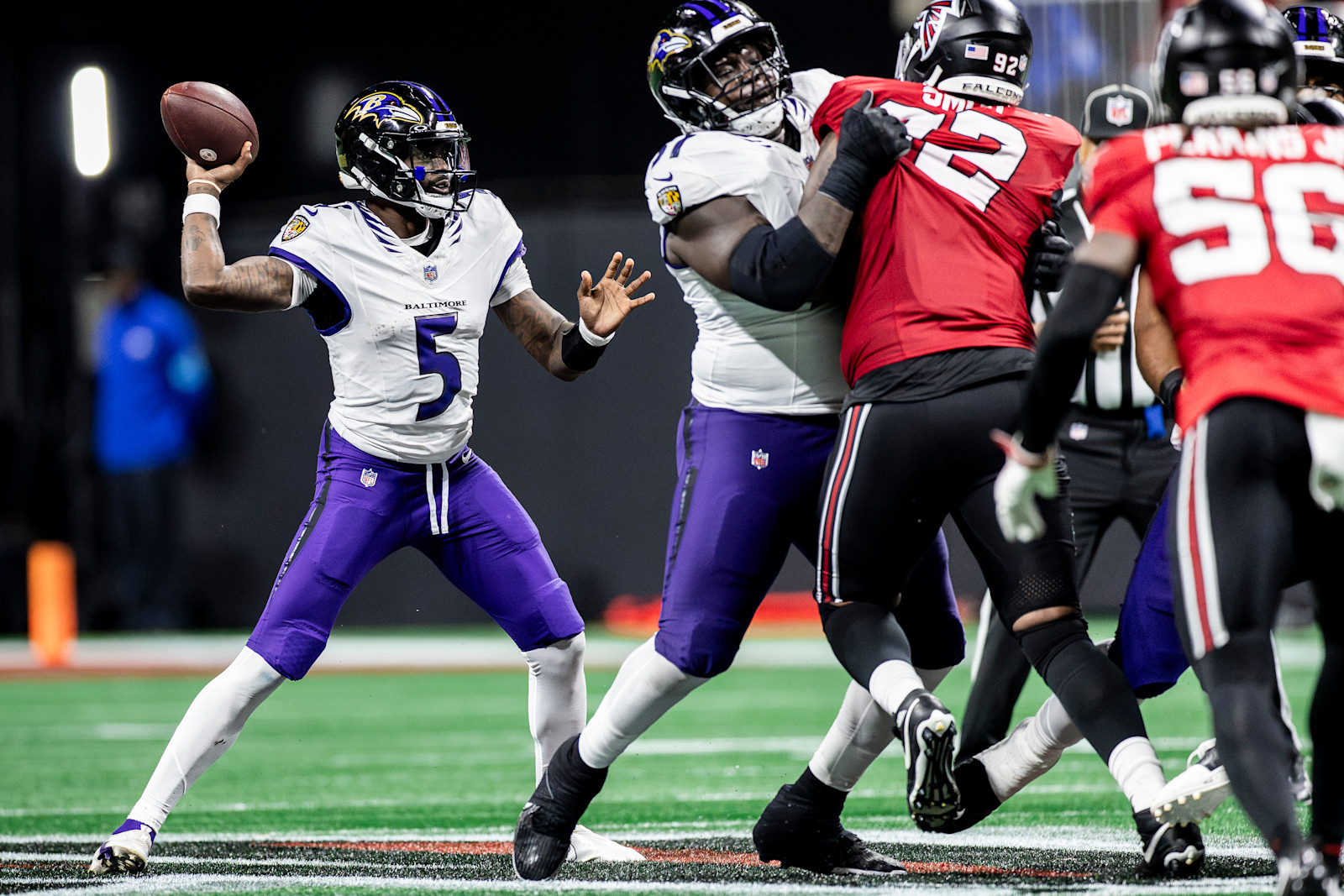
However, there is one particularly interesting matchup that could give Doyle an opportunity to attack Cleveland's biggest passing-defense vulnerability.
Zay Flowers has been one of the best slot receivers in football, and Cleveland has struggled defending the slot.
According to PFF, Flowers has generated 318 receiving yards from the slot this season, the most in the NFL. The Browns rank 25th in yards allowed to opposing slot receivers.
Even more interestingly, Flowers has produced 4.04 yards per route run against man coverage, seventh among NFL receivers.
That is an unusually favorable combination for the Ravens.
Cleveland's defense has generally been excellent against the pass, but its preferred coverage approach happens to create opportunities for the receiver who has been Baltimore's most productive offensive weapon.
Doyle does not need to ask Huntley to suddenly become an aggressive downfield passer to take advantage of Flowers. He can create opportunities within the intermediate areas of the field where Huntley should be more comfortable operating.
Moving Flowers into the slot gives him more room to work in either direction. Stacked alignments and bunch formations can prevent Cleveland's defensive backs from pressing him at the line of scrimmage. Motion can reveal whether the defense is following him in man coverage, helping Huntley identify his target before the snap.
Flowers has also demonstrated that he can turn an ordinary completion into an explosive gain after the catch. A 12-yard completion that becomes a 25-yard gain is every bit as valuable as a beautifully thrown deep ball.
If Cleveland devotes additional coverage attention to Flowers inside, Bateman and Andrews should have opportunities elsewhere. If the Browns maintain their normal coverage assignments, the Ravens should be willing to keep feeding Flowers until Cleveland demonstrates it can stop him.
The bigger question is whether the Ravens can expand their passing offense without taking unnecessary risks.
There is a difference between asking Huntley to throw deep because the offense needs more explosive plays and designing opportunities that make intermediate completions more accessible.
The Flowers matchup suggests Doyle has a realistic path to the latter.
Huntley does not have to reproduce Lamar's explosiveness to win this game. But Baltimore cannot afford to spend three quarters refusing to attack beyond the sticks and assume another late comeback will materialize.
The encouraging part of Atlanta was that Huntley eventually demonstrated he could make the necessary throws.
Now Doyle needs to create those opportunities before the Ravens are desperate.
3. Can Trey Hendrickson turn Cleveland's protection problems into a defensive victory?
This might be the matchup that ultimately decides the game.
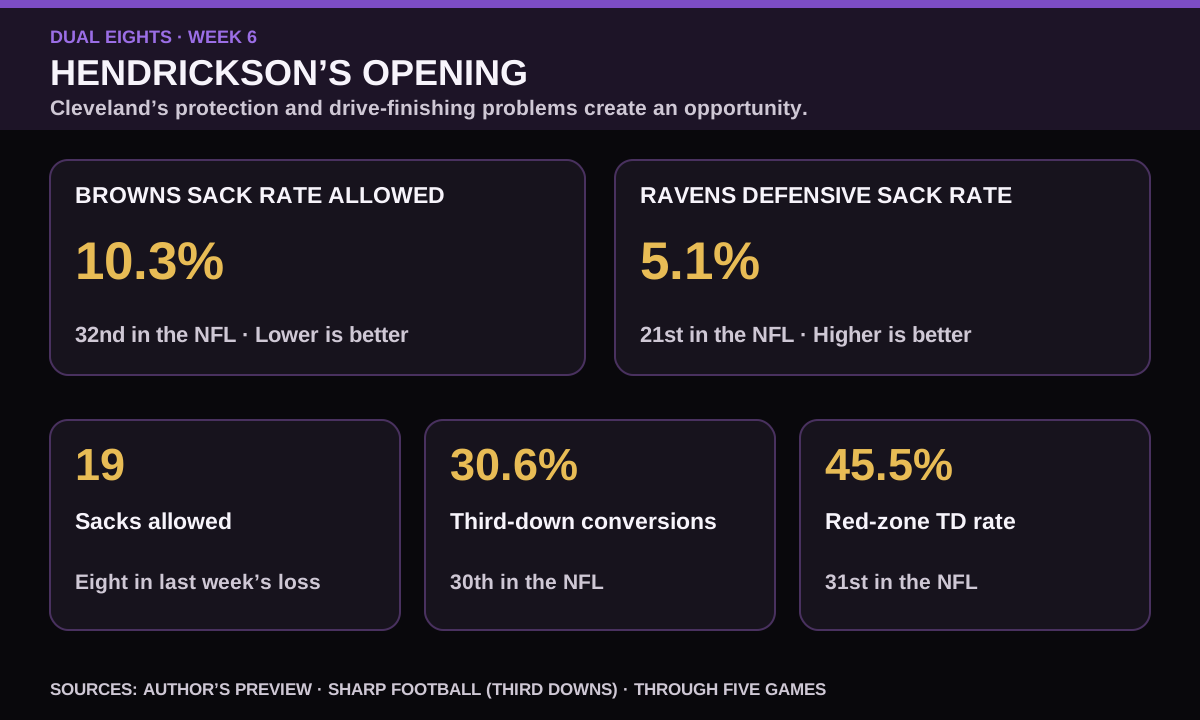
Cleveland has allowed 19 sacks through five games, including eight last week against the Jets. The Browns have surrendered quarterback hits on 20.1% of dropbacks, one of the worst rates in football, and their 10.3% sack rate allowed is the highest in the league.
Deshaun Watson has contributed to the problem with a tendency to hold the football while looking for an escape route or a receiver to uncover, allowing pressure to become sacks rather than incompletions.
That is particularly damaging for an offense that already struggles on early downs.
Cleveland ranks last in rushing EPA, with Quinshon Judkins averaging just 3.0 yards per carry. The Browns are 30th in third-down conversion rate at 30.6% and 31st in red-zone touchdown efficiency at 45.5%.
Put those numbers together and the formula becomes obvious.
If the Ravens can limit Cleveland's early-down rushing success, they should create plenty of passing situations where Watson must operate behind a struggling offensive line.
That is where Hendrickson can smell blood. He was signed to provide exactly the kind of individual pass-rushing threat they have lacked in recent seasons. A defender capable of consistently defeating an offensive tackle without needing a linebacker or safety to create the opening.
His absence has been noticeable.
The Ravens have recorded sacks on just 5.1% of opposing dropbacks, ranking 21st in the NFL. Minter has been able to create occasional disruption through pressure designs and the versatility of Kyle Hamilton, but the defense has not consistently overwhelmed opposing quarterbacks with a conventional four-man rush.
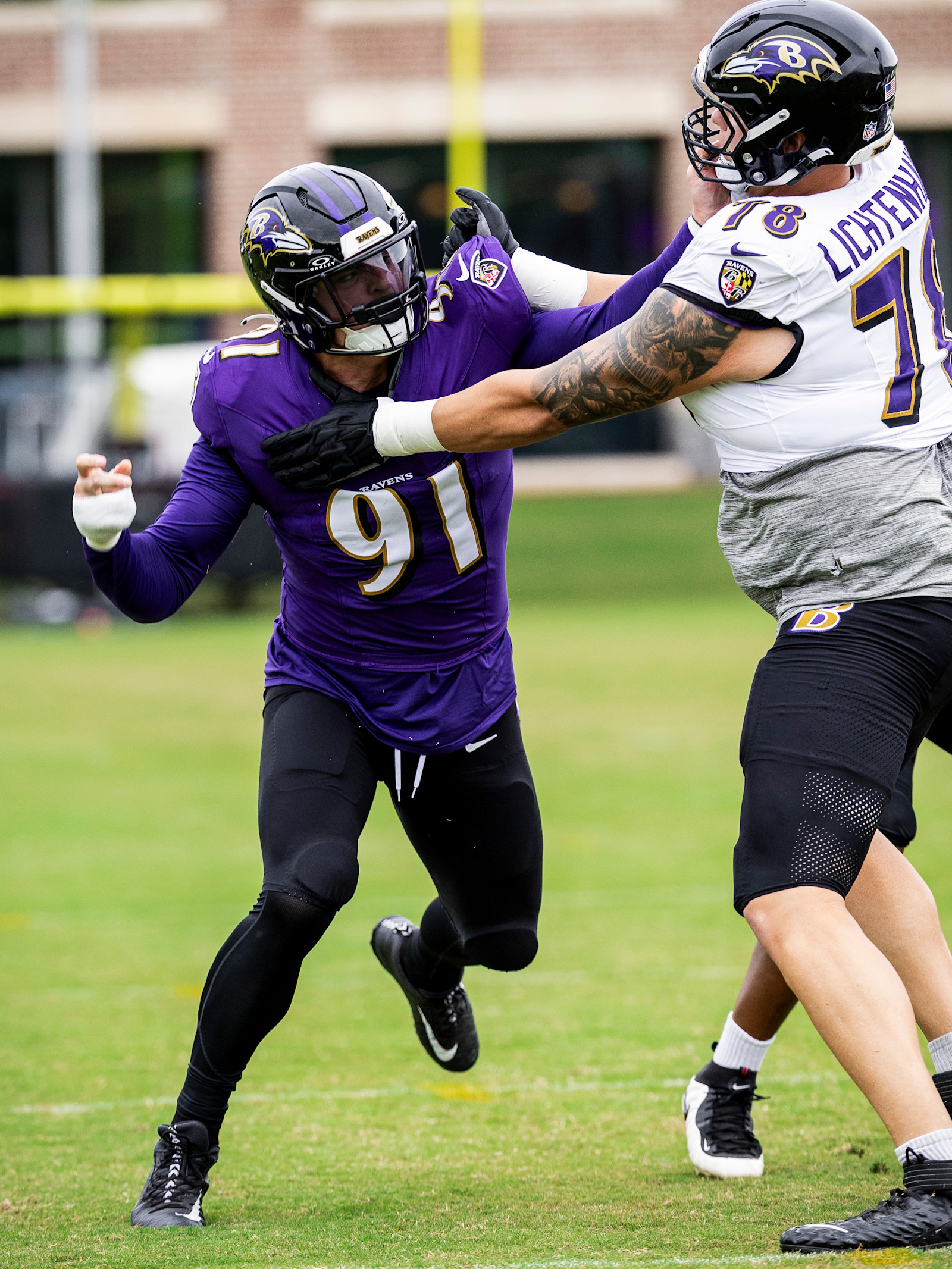
Getting Hendrickson back alongside Mike Green, Tavius Robinson and a healthier Nnamdi Madubuike gives the Ravens considerably more options.
Cleveland is also dealing with offensive-line injuries. Right guard Teven Jenkins has been ruled out, adding to an already vulnerable protection unit.
Minter should be able to create favorable matchups without resorting to constant blitzing.
Watson is capable of hurting a defense in the right circumstances. The last time he faced the Ravens, in November 2023, he produced one of his best performances in Cleveland. Watson completed all 14 second-half passes for 134 yards and a touchdown, helping the Browns erase a 14-point fourth-quarter deficit and beat Baltimore 33-31.
He can still extend a play and deliver an explosive completion if the pass rush loses containment. The Ravens need to avoid allowing Cleveland to compensate for several unsuccessful offensive plays with one long completion.
That makes disciplined pressure preferable to simply sending extra defenders at Watson on every third down. Hendrickson and Green need to win their individual matchups while maintaining rush lanes. The interior defenders need to prevent Watson from stepping comfortably into the pocket. The secondary should be able to protect against deep routes without constantly worrying about covering receivers one-on-one behind aggressive blitzes.
And when Watson does escape, defenders need to finish the play rather than allowing a scramble to erase two successful defensive snaps.
This will be Monken's first game against the Ravens since departing to become Cleveland's head coach. He spent three seasons designing Baltimore's offense, so he understands many of the principles that have made the Ravens successful.
Of course, Baltimore also knows Monken.
Familiarity works both ways, and Minter's defense is not the same unit Monken practiced against over the past three years.
4. Will Minter continue using heavier defensive personnel?
One of the most interesting adjustments against Atlanta was Minter's increased reliance on traditional linebackers and heavier defensive looks.
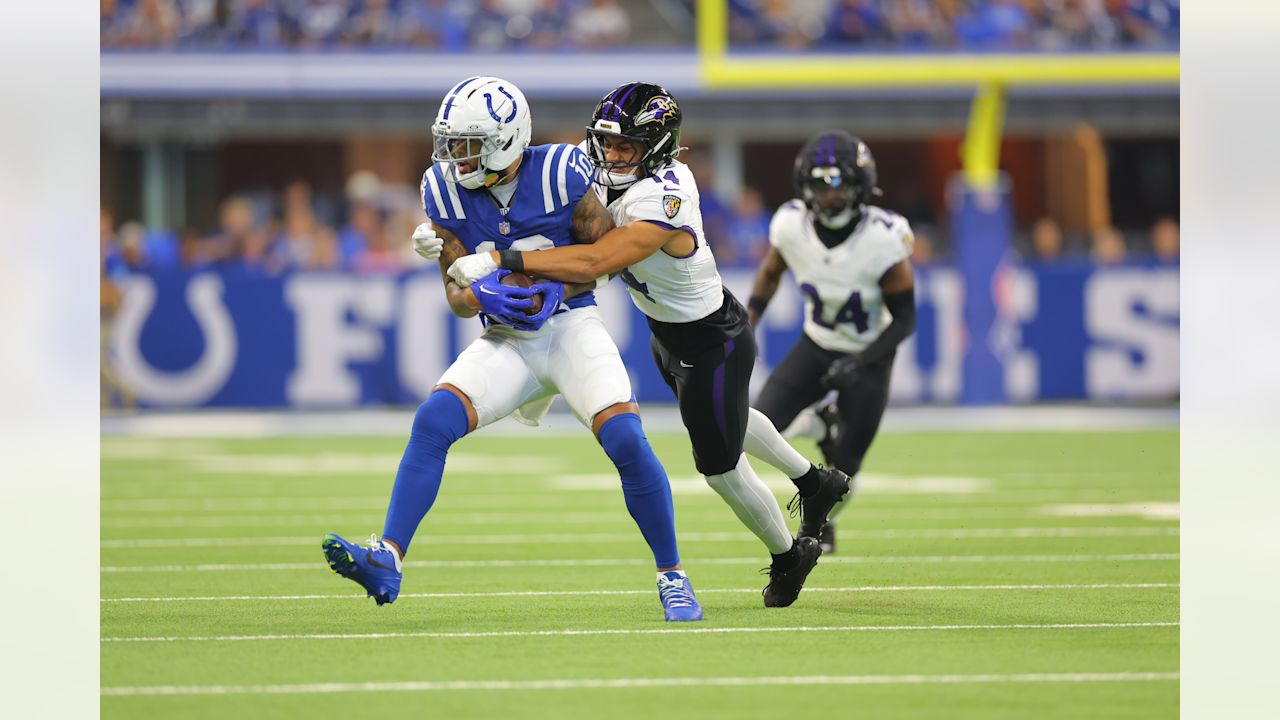
The Ravens spent much of their opener against Indianapolis using nickel and dime packages, including formations with Kyle Hamilton functioning almost like a second linebacker alongside Roquan Smith.
Against Atlanta and its talented rushing attack, they played much heavier, with their highest portion of base defense on the season. And it worked well enough against Bijan Robinson and the Falcons to make the approach worth considering again.
The question is whether Cleveland presents the same kind of problem.
On paper, probably not.
The Browns rank last in rushing efficiency and operate from shotgun on 77.8% of their offensive snaps, the highest rate in football. Monken is considerably more inclined to spread the formation and throw than to build an offense around repeated downhill carries.
That suggests Minter may return to more nickel and dime looks, keeping additional defensive backs on the field to match Cleveland's receivers while using Hamilton and Malaki Starks to provide flexibility against the run.
But Cleveland's passing personnel presents a more complicated challenge than its overall offensive ranking suggests. Rookie Denzel Boston has emerged as one of the NFL's most dangerous vertical receivers, leading the Browns with 330 receiving yards and averaging 20.6 yards per reception. He has already produced three touchdowns and several explosive gains, including receptions of 55 and 60 yards.
At 6-foot-4, Boston presents an uncomfortable combination of size, catch radius and downfield ability. Nate Wiggins has the speed to compete with him vertically, while Marlon Humphrey provides a more physical alternative, but neither matchup is one Minter should simply leave isolated without considering the coverage structure.
The Ravens have generally tried to limit explosive plays by keeping defenders positioned to prevent receivers from getting behind the coverage. Against Boston, that approach makes sense.
The challenge is what happens underneath.
Tight end Harold Fannin Jr. has become a useful part of Monken's passing game, giving Watson a reliable option in the middle of the field. He can settle into open spaces against zone coverage or create separation against linebackers when Cleveland spreads the formation.
KC Concepcion, who cleared concussion protocol Friday and is expected to play, adds another option capable of catching a short pass and creating yardage afterward.
This is where Baltimore's defensive versatility should become an advantage. Hamilton can begin near the line of scrimmage before retreating into coverage. Starks can rotate down to handle underneath responsibilities or remain deep as part of a two-safety structure. Minter can present the same pre-snap alignment and create different assignments after the snap.
That should make it more difficult for Watson to identify where his favorable matchup will be. But the disguise only works if everyone executes the adjustment correctly.
Against Atlanta, the priority was preventing the run game from controlling the offense. Against Cleveland, the priority should be forcing Watson into predictable passing situations and then preventing him from escaping with an explosive play.
5. Can the defense finally be the reason the Ravens win?
For most of the Lamar Jackson era, the Ravens have been at their most dangerous when the offense forces opponents to chase points.
The defense can then attack quarterbacks who have become predictable, knowing Baltimore's offense is capable of answering almost any scoring drive.
That is not the situation this week.
The Ravens probably cannot count on Huntley leading five touchdown drives against a Cleveland defense that excels at limiting passing efficiency.
The defense may need to win this game on its own terms. Last week gave reasons to believe it can. The Ravens surrendered only 16 offensive points. Seven of the Falcons' 23 came on a fumble returned for a touchdown. The defense created negative plays, limited the impact of Atlanta's rushing attack and eventually sealed the game with Hamilton's interception in overtime.
Starks looked far more comfortable in his expanded role. Simpson was productive around the line of scrimmage. Madubuike continued to work his way back into a significant workload, playing 53 snaps.
And now Hendrickson returns.
This is closer to the defensive group the Ravens imagined when they brought Minter back to Baltimore.
It has not all been convincing.
The Ravens still rank only 16th in defensive EPA per play and have allowed opponents to convert 41.5% of third downs, ranking 19th. They have produced important stops and turnovers without consistently dominating opponents from one possession to the next.
But Cleveland offers an opportunity to change that.
The Browns have scored only 18.6 points per game and have struggled to sustain drives. They cannot consistently run the ball, their offensive line has allowed too much penetration and Watson has a tendency to turn manageable passing situations into disastrous negative plays.
The Jets showed last week that Cleveland's offensive line can be overwhelmed, but they also demonstrated how important it is to prevent Watson from compensating with isolated explosive completions.
If the Ravens can do that, Huntley should have enough opportunities to generate the points necessary for a victory.
And perhaps the most encouraging outcome would be a win where the defense does not need the offense to rescue it.
Prediction: Ravens 24, Browns 20
I expect the Ravens to win, but I am considerably less confident than I would be with Lamar healthy.
The Browns weakness on the ground will be their undoing. The Ravens offense is at its best when they can pound the defense on the ground, especially with Huntley under center.
If the Ravens can avoid unnecessary mistakes, this will be another Derrick Henry showcase where they just need Huntley to make enough key plays. The defense will probably continue to give up some frustrating third down conversions. But overall they will get enough pressure on Watson to disrupt the Cleveland offense and force a turnover or two.
I think the Ravens sneak away with another win without Lamar just like they did last week, but it's certainly no guarantee.
Ravens 24, Browns 20.