October 13, 2026 | Through Week 5
Five weeks into the NFL season, the San Francisco 49ers have emerged as the best team in football. At least according to both of our models.
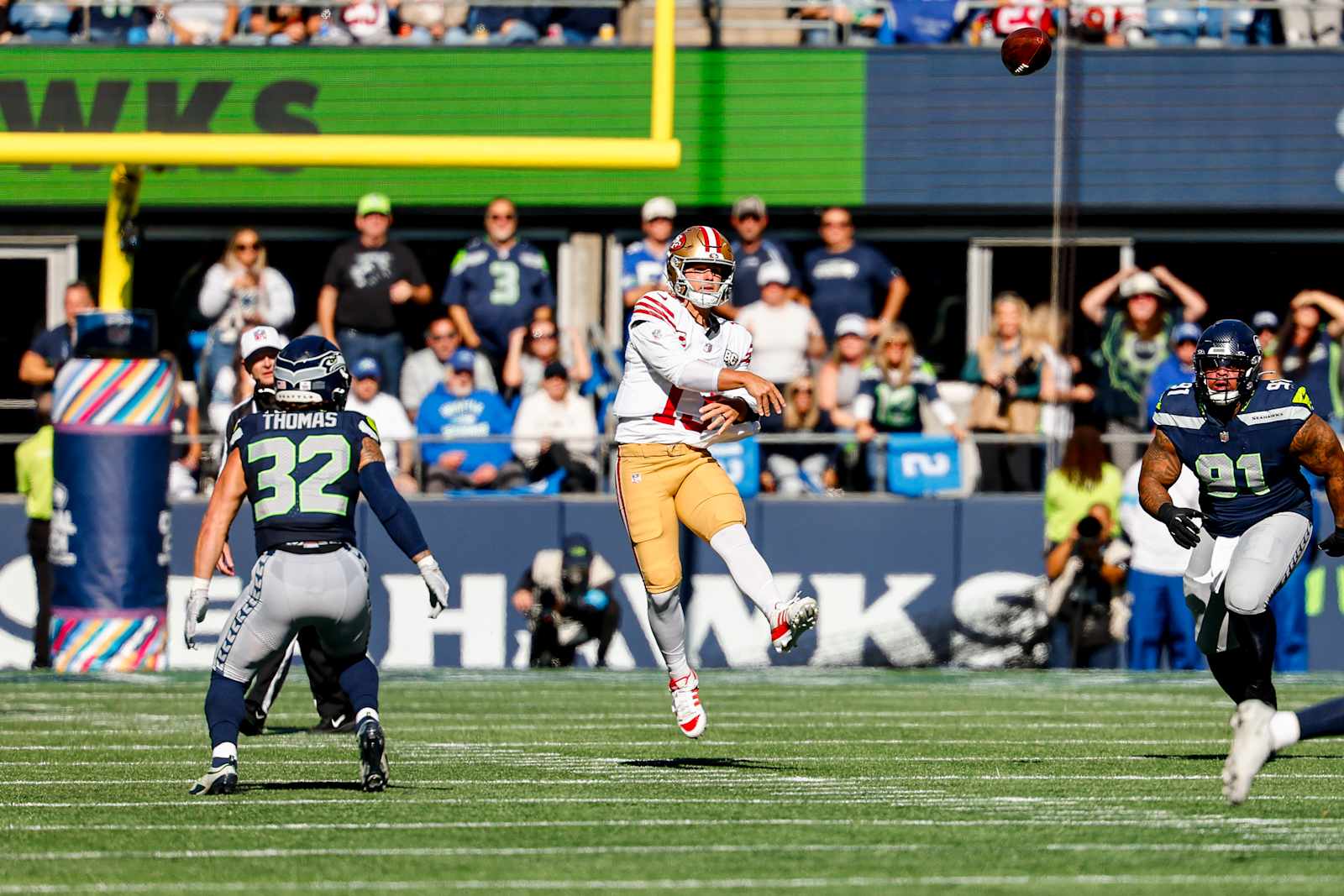
San Francisco’s 32-29 victory in Seattle pushed the undefeated 49ers ahead of Jacksonville in the Dual Eights Efficiency Index, while their offensive dominance has opened a more substantial lead in our new forward-looking Power Index.
The Jaguars remain close behind in Efficiency, Buffalo is surging, and the Ravens have moved back into the top five despite playing without Lamar Jackson.
Elsewhere, the Patriots and Buccaneers have made significant improvements. Minnesota continues to defy conventional logic, reaching 5-0 behind the league’s best defense and special teams despite having its least efficient offense.
And this week, we’re introducing something new.
The Dual Eights Power Index (DEPI) joins our existing Efficiency rankings, giving us a second way to evaluate the league. Rather than simply measuring how teams have performed, we can begin estimating how strong they should be in future games, comparing matchups and identifying differences between our projections and the betting market.
The two models won’t always agree. That’s part of the point.
Introducing the Dual Eights Power Index
The Dual Eights Efficiency Index measures how well a team has actually played this season. The new Dual Eights Power Index (DEPI) asks a different question: how strong should that team be going forward?
DEPI combines opponent-adjusted passing and rushing efficiency, success rates, special teams, historical performance and the expected starting quarterback. Unlike the Efficiency Index’s 0-100 scale, the Power Index expresses team strength in points above or below an average NFL team on a neutral field.
A team rated +5 is projected to be approximately five points better than average. Comparing two teams’ ratings, then applying the model’s home-field adjustment, produces an estimated scoring margin for a matchup.
The important distinction is that Efficiency describes what has happened, while DEPI attempts to project what happens next. The Power Index uses historical information and gives greater weight to recent games while accounting for changes at quarterback.
The Power Index is still a beta model, and its limitations matter. Injuries beyond quarterback, weather, rest and specific personnel matchups are not explicitly modeled. These are estimates, not guarantees, and a disagreement with a sportsbook is not automatically a profitable betting opportunity.
Both indexes are available on our live NFL rankings dashboard.
Week 5 Dual Eights Efficiency Index Top 10
| Rank | Team | Record | Index | Week 4 | O / D / ST |
|---|---|---|---|---|---|
| 1 |  San Francisco 49ers San Francisco 49ers | 5-0 | 68.7 | ↑ 1 | 1 / 12 / 20 |
| 2 |  Jacksonville Jaguars Jacksonville Jaguars | 4-1 | 68.1 | ↓ 1 | 4 / 4 / 19 |
| 3 |  Seattle Seahawks Seattle Seahawks | 3-2 | 63.4 | — | 26 / 2 / 2 |
| 4 |  Kansas City Chiefs Kansas City Chiefs | 4-0 | 62.6 | — | 5 / 13 / 10 |
| 5 |  Baltimore Ravens Baltimore Ravens | 4-1 | 62.5 | ↑ 1 | 6 / 10 / 14 |
| 6 |  Minnesota Vikings Minnesota Vikings | 5-0 | 61.6 | ↑ 1 | 32 / 1 / 1 |
| 7 |  Cincinnati Bengals Cincinnati Bengals | 3-2 | 59.1 | ↑ 4 | 8 / 14 / 13 |
| 8 |  Carolina Panthers Carolina Panthers | 2-2 | 56.8 | — | 12 / 15 / 11 |
| 9 |  Tampa Bay Buccaneers Tampa Bay Buccaneers | 1-4 | 56.7 | ↑ 8 | 21 / 7 / 6 |
| 10 |  Buffalo Bills Buffalo Bills | 4-1 | 56.6 | ↑ 5 | 2 / 29 / 4 |
1. San Francisco 49ers — 68.7
5-0 | Week 4: 2 | Offense: 1 | Defense: 12 | Special teams: 20 | DEPI: +9.86 (No. 1)
The 49ers have finally overtaken Jacksonville, and their case for being the league’s best team is increasingly difficult to dispute.
Their 32-29 win at Seattle was particularly revealing because they faced one of the NFL’s best defensive units and still found enough offense to win.
San Francisco’s first-ranked adjusted offense continues to drive its success. The defense is a more ordinary 12th and special teams rank 20th, so this is not a team dominating every phase of football.
But when an offense is consistently better than everyone else’s, the other units don’t necessarily need to be exceptional.
The Power Index is even more impressed, placing the 49ers first at +9.86, more than 2.5 points clear of second-place Buffalo.
2. Jacksonville Jaguars — 68.1
4-1 | Week 4: 1 | Offense: 4 | Defense: 4 | Special teams: 19 | DEPI: +6.15 (No. 3)
Jacksonville fell out of first place despite beating Philadelphia 19-17 in London, but there isn’t much reason for concern in the overall numbers.
The Jaguars remain the most balanced team in the top two, with both their adjusted offense and defense ranking fourth.
Their 68.1 score is barely different from last week, and the gap to San Francisco is just 0.54 points using the unrounded ratings.
The difference is that San Francisco’s offense has separated itself, while Jacksonville has earned its position through quality on both sides of the ball.
DEPI ranks the Jaguars third at +6.15, suggesting their strong early-season performance is supported by a credible forward-looking profile.
3. Seattle Seahawks — 63.4
3-2 | Week 4: 3 | Offense: 26 | Defense: 2 | Special teams: 2 | DEPI: +2.69 (No. 10)
Seattle remains third despite losing to San Francisco, which is a useful reminder that the Efficiency Index is not simply a weekly reward for winning.
The Seahawks have the second-ranked adjusted defense and second-ranked special teams. Those two units are doing an enormous amount of work to compensate for an offense that ranks 26th.
That imbalance is difficult to ignore.
Seattle has shown it can make life difficult for good opponents, but the offense continues to limit how consistently it can convert those performances into victories.
The Power Index is considerably less enthusiastic, ranking the Seahawks 10th at +2.69.
One model sees a team performing at a top-three level. The other questions whether that performance is sustainable without more offensive production.
4. Kansas City Chiefs — 62.6
4-0 | Week 4: 4 | Offense: 5 | Defense: 13 | Special teams: 10 | DEPI: +2.71 (No. 9)
Kansas City remains undefeated following its bye, with a balanced profile that keeps the Chiefs comfortably inside the top five.
Their offense ranks fifth, defense 13th and special teams 10th.
Interestingly, their Efficiency score dropped from 64.1 to 62.6 despite not playing.
That is not a penalty for taking a week off. The model evaluates opponent strength and team performance together, so new results elsewhere can change the context surrounding games already played.
The Power Index is notably less impressed, placing Kansas City ninth at +2.71. The Chiefs are unquestionably one of the league’s strongest performers so far, but our forward-looking model sees a team closer to the second tier than the very top.
5. Baltimore Ravens — 62.5
4-1 | Week 4: 6 | Offense: 6 | Defense: 10 | Special teams: 14 | DEPI: +5.72 (No. 4)
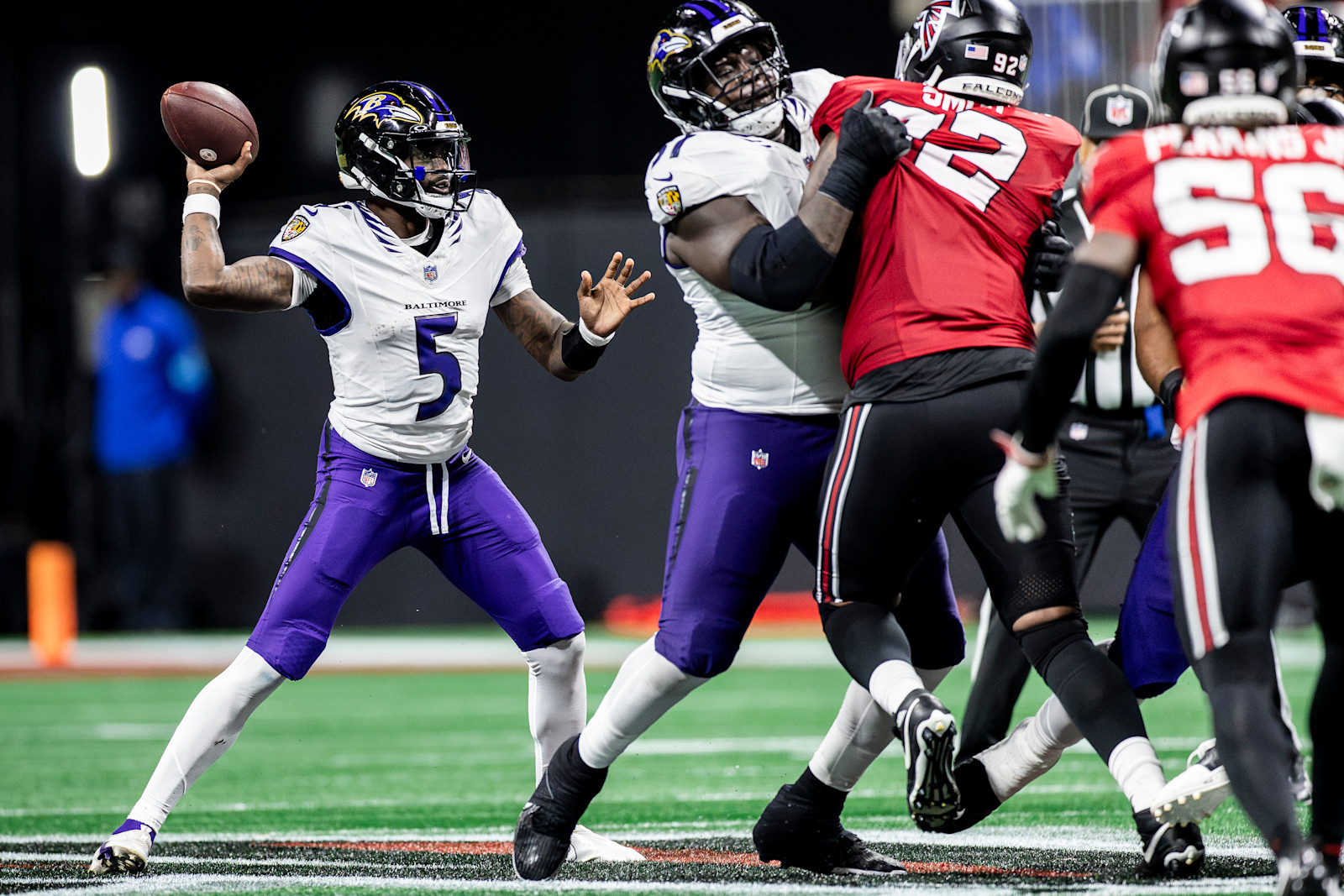
The Ravens climbed into the top five after their 30-23 overtime victory in Atlanta, a particularly encouraging result considering Lamar Jackson wasn’t available.
Baltimore’s adjusted offense ranks sixth, defense 10th and special teams 14th.
That represents a relatively balanced team, even if the week-to-week experience of watching the Ravens hasn’t always felt particularly balanced.
The important distinction is that the Efficiency Index includes Tyler Huntley’s actual performance. It doesn’t pretend Lamar played against Atlanta or substitute hypothetical quarterback production.
The Power Index places the Ravens even higher, fourth at +5.72. However, that projection assumes Jackson is the starting quarterback.
That is an important qualification, and one we’ll return to when examining the Week 6 spread against Cleveland.
6. Minnesota Vikings — 61.6
5-0 | Week 4: 7 | Offense: 32 | Defense: 1 | Special teams: 1 | DEPI: -0.31 (No. 18)
Minnesota might be the most interesting team in football.
The Vikings are undefeated. They have the league’s best adjusted defense and best adjusted special teams.
They also have the worst adjusted offense.
That is a remarkable combination for a 5-0 team.
Their 23-13 win over New Orleans continued the formula that has worked throughout September and into October. Prevent scoring, create favorable field position, make enough plays on offense and avoid asking that offense to carry the team.
There is nothing illegitimate about winning that way. Defense and special teams count, and Minnesota has been exceptional in both.
The question is how long it can continue.
DEPI ranks the Vikings just 18th, with an overall rating of -0.31. Their projected offensive contribution is a dreadful -5.28 points.
Eventually, a team with championship ambitions has to generate offense against quality opponents. Minnesota has been excellent at covering up that weakness, but it hasn’t made the weakness disappear.
7. Cincinnati Bengals — 59.1
3-2 | Week 4: 11 | Offense: 8 | Defense: 14 | Special teams: 13 | DEPI: +4.31 (No. 6)
Cincinnati returns to the top 10 following its 31-24 victory at Miami.
The Bengals gained four places as their adjusted offense climbed into eighth, supported by a defense and special-teams unit that both rank near the middle of the league.
Unlike several other teams in the top 10, there isn’t a significant disagreement between the descriptive and predictive measures.
DEPI ranks Cincinnati sixth at +4.31.
The Bengals have not been dominant, but they have a strong enough offensive foundation to remain dangerous, particularly if their defensive performance stabilizes.
8. Carolina Panthers — 56.8
2-2 | Week 4: 8 | Offense: 12 | Defense: 15 | Special teams: 11 | DEPI: +0.02 (No. 16)
Carolina remains eighth after its bye despite a modest decline in its Index score.
The Panthers are reasonably balanced, with an adjusted offense ranked 12th, defense 15th and special teams 11th.
However, they’ve only played four games, and the Power Index is far less impressed, placing them 16th at almost exactly league average.
The Efficiency Index credits a team that has played relatively well through its opening four games. DEPI isn’t ready to assume that performance represents Carolina’s established level.
The Panthers will have another opportunity to challenge that skepticism against Philadelphia in Week 6.
9. Tampa Bay Buccaneers — 56.7
1-4 | Week 4: 17 | Offense: 21 | Defense: 7 | Special teams: 6 | DEPI: +1.31 (No. 12)
Tampa Bay is the biggest riser in this week’s Efficiency rankings, jumping eight places after beating Dallas 24-16.
Yes, these are the same Buccaneers who are 1-4.
Their seventh-ranked adjusted defense and sixth-ranked special teams are doing much better work than the standings would suggest.
The offense remains 21st, so this is hardly evidence that Tampa Bay has suddenly become a complete team.
But the underlying performance has improved, and the Power Index agrees to a degree. Tampa Bay has climbed five positions there as well, moving from slightly below average to +1.31.
The Buccaneers may not be a particularly good team yet. They are certainly playing better than their record suggests.
10. Buffalo Bills — 56.6
4-1 | Week 4: 15 | Offense: 2 | Defense: 29 | Special teams: 4 | DEPI: +7.22 (No. 2)
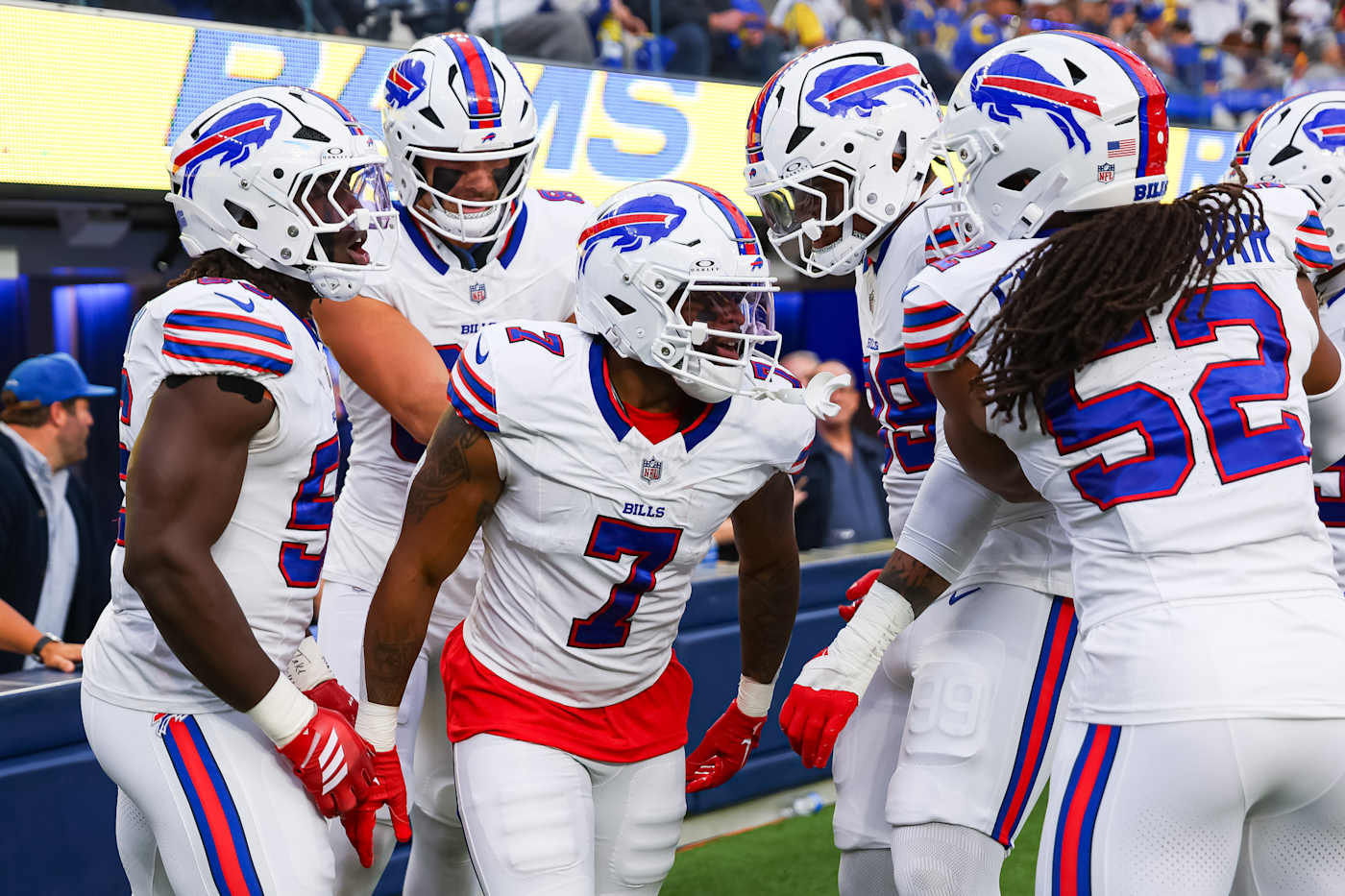
Buffalo rounds out the top 10 after Monday night’s 37-34 victory at the Rams.
The Bills climbed five places, powered by the league’s second-ranked adjusted offense and fourth-ranked special teams.
The defense, however, ranks 29th.
That is a substantial weakness for a team expected to contend for the Super Bowl.
The Power Index places Buffalo second at +7.22, largely because the forward-looking offensive projection is so strong.
Buffalo is a good illustration of the difference between these models. The Efficiency Index sees an excellent offense dragging along a poor defense. DEPI expects that offense to remain dangerous enough for the Bills to be one of the league’s strongest teams.
Whether the defense improves may ultimately determine how far they go.
Biggest Risers: Tampa Bay and New England Lead the Way
Biggest ranking rises
- Tampa Bay Buccaneers+8Week 4: 17 · Week 5: 9
 New England Patriots+7Week 4: 18 · Week 5: 11
 Green Bay Packers+6Week 4: 29 · Week 5: 23
- Buffalo Bills+5Week 4: 15 · Week 5: 10
Biggest ranking falls
 New York Giants-7Week 4: 13 · Week 5: 20
 Las Vegas Raiders-7Week 4: 20 · Week 5: 27
 Chicago Bears-7Week 4: 5 · Week 5: 12
 Los Angeles Rams-7Week 4: 10 · Week 5: 17
The two biggest stories this week are Tampa Bay and New England.
The Buccaneers made the largest ranking jump, climbing from 17th to ninth after their victory in Dallas. Their Index improved by 5.94 points, with the defense and special teams supplying much of the foundation.
But New England made the largest improvement in Efficiency points, gaining 6.86 while climbing seven positions, from 18th to 11th.
The Patriots’ 45-17 demolition of Las Vegas is reflected in both models. New England also climbed from 13th to eighth in DEPI, gaining 2.26 projected scoring-margin points.
That is the strongest combined improvement in the league this week.
Green Bay jumped six positions, from 29th to 23rd, following its 31-7 victory over Chicago. That was a particularly meaningful result for a Packers team that had struggled to establish a convincing statistical profile through the opening month.

Biggest Fallers: Chicago, Las Vegas and the Rams
Four teams fell seven places this week: Chicago, the Rams, Giants and Raiders.
Chicago’s 31-7 defeat at Green Bay produced a 7.56-point Efficiency decline, dropping the Bears from fifth to 12th.
That is a significant correction, although their quarterback situation remains important context when trying to project what happens next.
The Raiders suffered the biggest Index-point decline of the week, falling 8.60 points after their 45-17 loss to New England. Las Vegas dropped from 20th to 27th.
The Power Index was similarly unimpressed, reducing the Raiders’ rating by 2.01 points, with a deteriorating defensive projection responsible for most of the decline.
The Rams present a more complicated case.
They fell from 10th to 17th in Efficiency despite a competitive 37-34 loss to Buffalo. Their current-season performance no longer resembles that of a top-tier team.
But DEPI still ranks Los Angeles fifth at +4.97.
It is possible the Rams remain considerably better than their record and current performance suggest.
It is also possible that the Power Index is taking too long to acknowledge a meaningful decline.
That is exactly the kind of disagreement worth tracking as the season continues.
The New Power Index Top 10
With both rankings now available, we can compare how teams have performed against how strong we expect them to be.
| Rank | Team | Power rating | Week 4 |
|---|---|---|---|
| 1 | San Francisco 49ers | +9.86 | — |
| 2 | Buffalo Bills | +7.22 | ↑ 2 |
| 3 | Jacksonville Jaguars | +6.15 | ↓ 1 |
| 4 | Baltimore Ravens | +5.72 | ↑ 2 |
| 5 | Los Angeles Rams | +4.97 | ↓ 2 |
| 6 | Cincinnati Bengals | +4.31 | ↑ 2 |
| 7 | Chicago Bears | +3.32 | ↓ 2 |
| 8 | New England Patriots | +3.01 | ↑ 5 |
| 9 | Kansas City Chiefs | +2.71 | — |
| 10 | Seattle Seahawks | +2.69 | ↓ 3 |
Power ratings are projected points above or below an average team on a neutral field. Week 4 comparisons are retrospective calculations using the same model, not previously published predictions.
There are some obvious similarities. San Francisco is first in both, Jacksonville remains in the top three, and the Ravens sit comfortably among the league’s strongest teams.
But the disagreements are more interesting.
Minnesota ranks sixth in Efficiency but 18th in DEPI. Seattle is third in Efficiency but only 10th in DEPI. Conversely, the Rams are 17th in Efficiency but fifth in DEPI.
Buffalo also climbs from 10th in Efficiency to second in DEPI.
The common thread is how much weight we should place on the current season versus what we know about the personnel and underlying strength of these teams.
The real value comes from watching whether the gaps begin to close.
Where the Power Index Disagrees Most With Week 6 Betting Spreads
One of the most useful applications of DEPI is comparing our expected scoring margins against the actual betting market.
The calculation is straightforward: subtract the two Power Index ratings and apply a 1.57-point home-field adjustment. Neutral-site games receive no home-field allowance.
That produces our projected margin. We can then compare it against the sportsbook spread to identify where the largest differences exist.
Here are the four biggest discrepancies for Week 6 using FanDuel’s lines checked October 13.
| Matchup | Market spread | DEPI spread | Difference |
|---|---|---|---|
| Steelers at Buccaneers | PIT -2.5 | TB -4.0 | 6.5 pts |
| Commanders at 49ers | SF -7.5 | SF -13.3 | 5.8 pts |
| Texans at Jaguars (London) | JAX -2.5 | JAX -7.6 | 5.1 pts |
| Bills at Raiders | BUF -5.5 | BUF -10.0 | 4.5 pts |
Lines are from the FanDuel Week 6 odds board, accessed October 13, 2026, in the evening ET. DEPI margins use default assumed quarterbacks, not confirmed starters. Figures are rounded, so differences may vary slightly.
Pittsburgh at Tampa Bay: A disagreement worth investigating
This is the biggest disagreement on the board, and it isn’t particularly close.
The market favors Pittsburgh by 2.5 points on the road. DEPI favors Tampa Bay by approximately four points at home.
That’s a 6.5-point difference, with the two sides not even agreeing about which team should be favored.
Some of that difference is easy to understand. Tampa Bay has improved substantially in our ratings, especially defensively, while Pittsburgh sits 19th in the Power Index at -1.11.
But there is a crucial complication.
DEPI’s default quarterback assumption for Tampa Bay is Baker Mayfield, who has been recovering from a dislocated thumb. Rookie Jalon Daniels started the previous two games, and Mayfield’s Week 6 availability has not yet been confirmed.
The model still favors Tampa if Daniels starts, but by a much narrower 1.6 points.
Washington at San Francisco: Is the market underestimating the 49ers?
DEPI makes San Francisco a 13.3-point favorite over Washington. The market line is 49ers -7.5.
That’s a difference of nearly six points.
The 49ers have the best adjusted offense in the Efficiency Index and the strongest overall Power rating by a comfortable margin. Washington, meanwhile, is 22nd in DEPI at -1.83.
The calculation is straightforward, but the question is whether San Francisco’s offensive dominance justifies laying nearly two touchdowns rather than the market’s more modest number.
Large favorites introduce their own complications. Teams with substantial leads can become conservative, reduce possessions and allow late scores that narrow the final margin without meaningfully threatening the result.
Still, this is one of the clearest cases where DEPI sees a much larger talent and performance gap than the betting market.
Houston at Jacksonville: The model prefers the Jaguars
Jacksonville is favored by 2.5 points in London, but DEPI projects the Jaguars to win by approximately 7.6.
That creates a 5.1-point difference.
Importantly, this is a neutral-site calculation. The game is being played at Wembley Stadium, so the model does not award Jacksonville the normal 1.57-point home-field advantage.
The Jaguars’ fourth-ranked adjusted offense and defense support a stronger rating than Houston’s, despite the Texans showing signs of improvement with their 26-3 victory over Tennessee.
There are reasons to be cautious.
Jacksonville will be without starting left tackle Anton Harrison following his knee injury against Philadelphia. Walker Little is expected to replace him. The Jaguars also have the familiarity of a second consecutive London game, something the neutral-site adjustment does not explicitly reward.
The gap is substantial, but the model cannot account for every important change in the matchup.
Buffalo at Las Vegas: The Bills deserve to be bigger favorites
Buffalo’s rise to second in the Power Index has created a substantial difference with the Week 6 line.
The Bills are favored by 5.5 points in Las Vegas. DEPI makes them approximately 10-point favorites.
Buffalo’s projected offensive contribution is +8.05 points, among the strongest in the league, while Las Vegas has fallen to 26th in DEPI after its disastrous defensive performance against New England.
That is a difficult combination for the Raiders.
Buffalo has defensive problems of its own, of course, and those could keep Las Vegas competitive. But the Power Index sees the offensive mismatch as considerably more important.
Of the larger discrepancies, this is one of the cleaner cases where the model’s underlying explanation is easy to follow.
Week 6 Matchup to Watch: Seattle at Denver
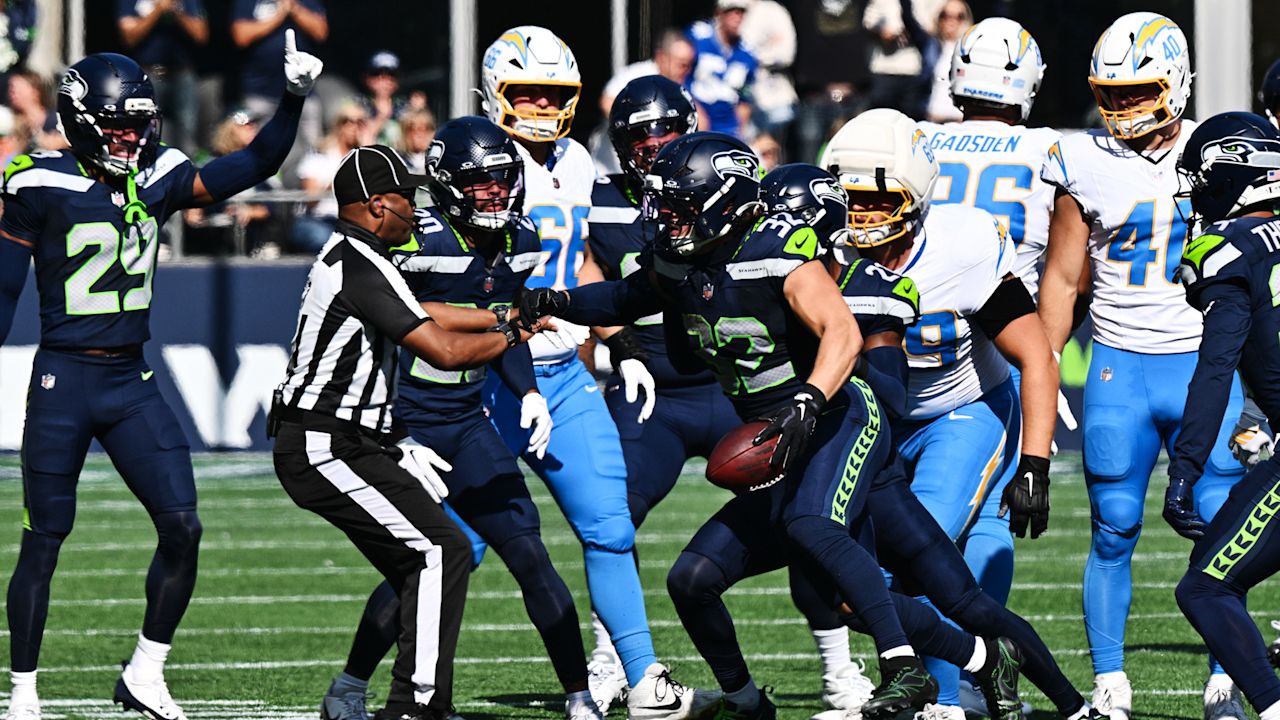
Thursday night’s matchup between Seattle and Denver is particularly interesting because it offers an early test of the differences between the two rankings.
Seattle is third in Efficiency but only 10th in DEPI. Denver ranks 15th in both.
The Seahawks have arguably the most unusual profile among the league’s stronger teams outside Minnesota. Their defense and special teams are exceptional, but their offense ranks 26th.
Denver has been a more conventional middle-of-the-pack team.
DEPI makes Seattle a narrow 1.1-point favorite after accounting for Denver’s home-field advantage. The market also favors Seattle, although by 2.5 points.
That is a relatively small disagreement compared with the other games discussed above.
The bigger question is whether Seattle’s defense and special teams can continue generating enough advantages to overcome its offensive limitations.
San Francisco exposed some of those limitations last week without knocking Seattle out of the top three in Efficiency.
Denver gets the next opportunity.
Explore the full Dual Eights NFL Rankings Dashboard for the latest Efficiency and Power Index ratings, team comparisons and methodology.