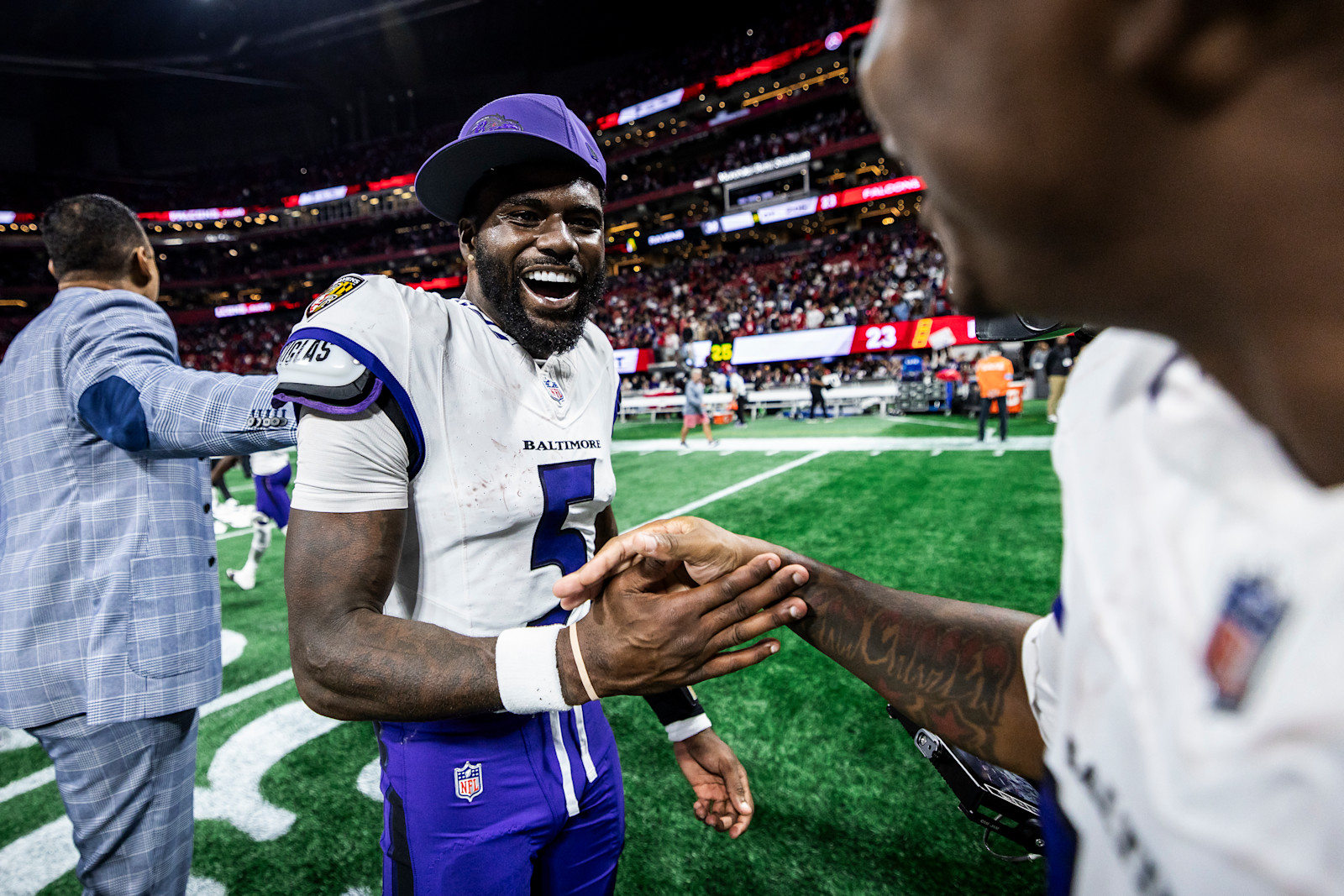
Five immediate takeaways from the Ravens' improbable 30-23 overtime victory over the Atlanta Falcons.
Follow the season: The Ravens Season Dashboard tracks the record, advanced team metrics, unit trends, injuries and what comes next.
I'm not entirely sure how the Ravens won that game.
Missing Lamar Jackson, Trey Hendrickson, with a re-shuffled offensive line, the Ravens went into Atlanta as underdogs against a Falcons team that had looked awfully impressive over the past two weeks. For most of Sunday night, it looked like the injuries were simply too much to overcome.
Tyler Huntley couldn't get the passing game moving. Mark Andrews apparently forgot how to use his hands. The defense kept giving away third-and-long conversions. And despite repeatedly moving the ball into scoring position, the Ravens entered halftime with only nine points.
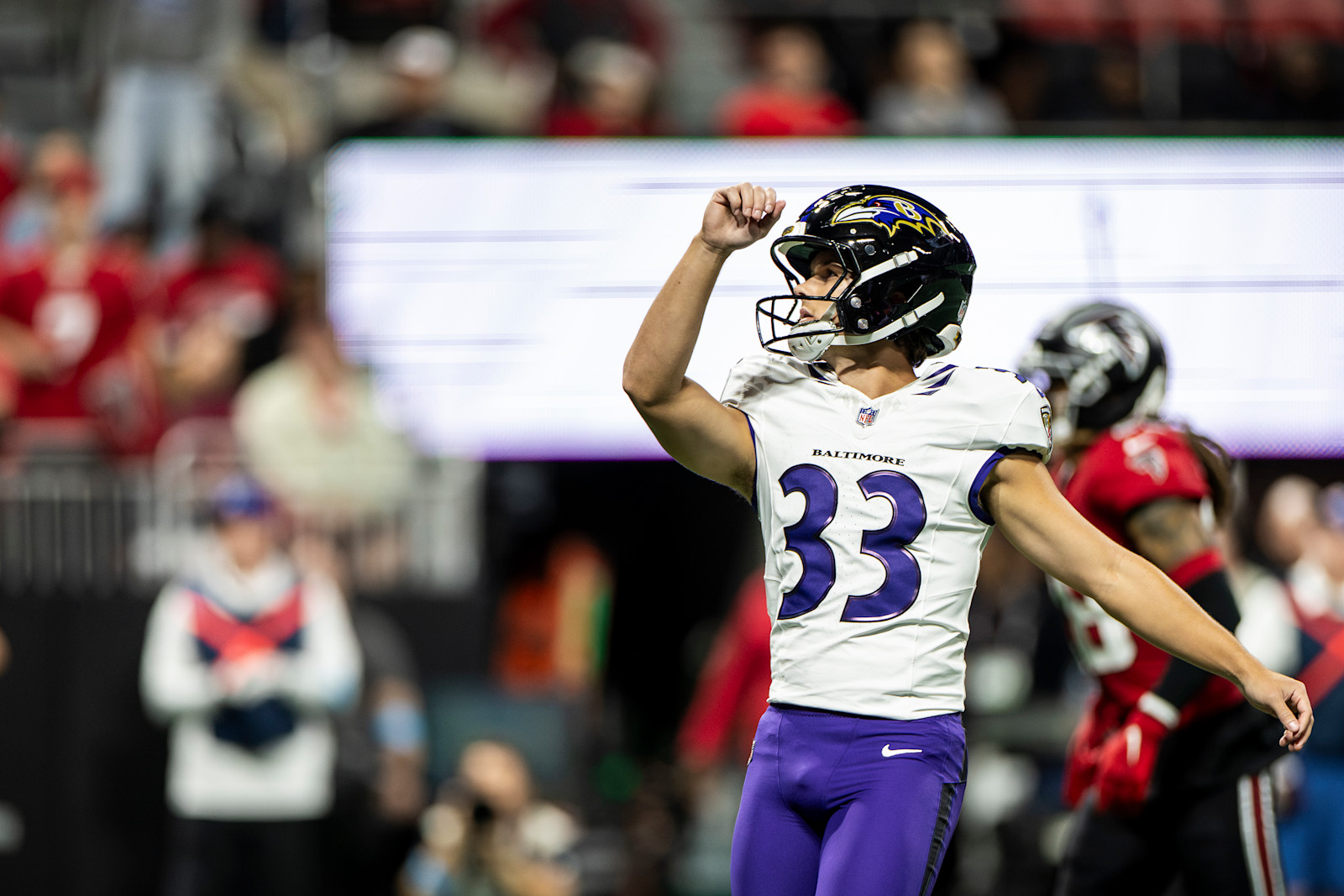
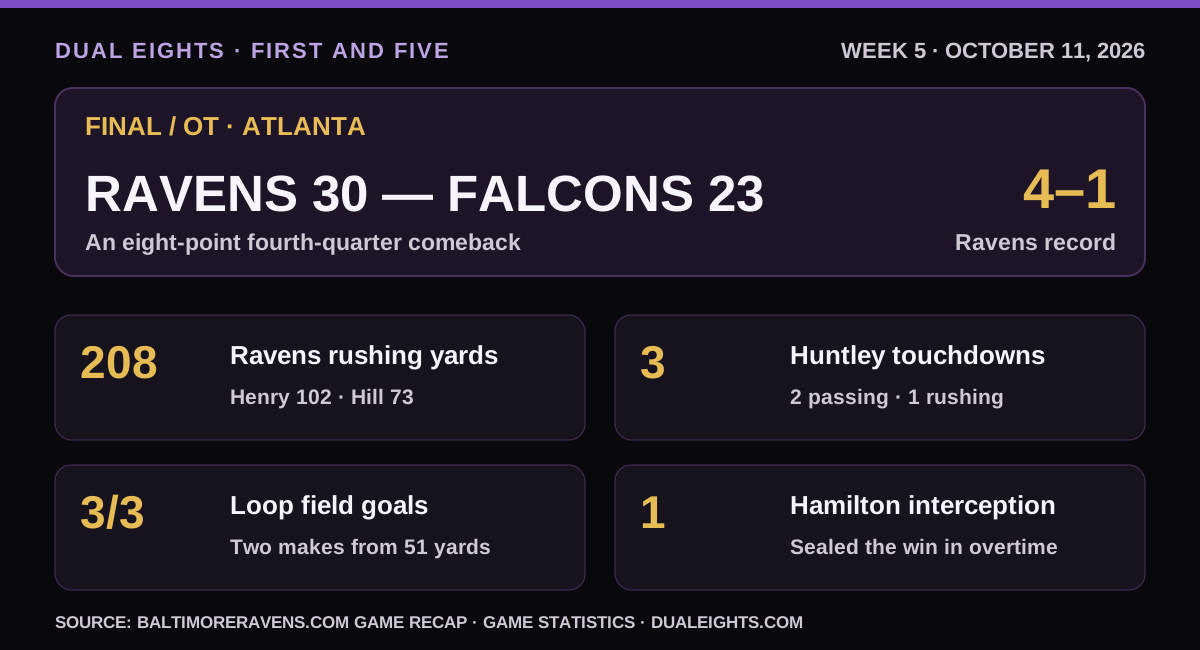
Thank goodness for Tyler Loop, who made all three of his field-goal attempts, including two from 51 yards, and continues to put last season's kicking concerns further into the rearview mirror. He's now a perfect 5-for-5 from beyond 50 yards this season.
Even then, Baltimore trailed 23-15 with 2:31 remaining and needed a touchdown, two-point conversion and another score in overtime to escape with a victory.
And somehow, they got all of it.
Huntley suddenly turned into a completely different quarterback. Declan Doyle kept finding creative ways to manufacture offense. The defense finally delivered the big plays it needed, knocking Michael Penix Jr. out of the game allowing for Kyle Hamilton to seal the deal in his hometown by picking off Tua.
The Ravens finished with 409 total yards, including 208 rushing, against a defense that had been allowing fewer than 50 rushing yards per game. They outgained Atlanta, produced more first downs and held the Falcons to just 16 offensive points.
If Andrews catches a touchdown, holds onto the football and secures a two-point conversion, this game might have ended a lot earlier and with considerably less drama.
Instead, the Ravens found a way to win a game they had every excuse to lose, improving to 4-1 and taking sole possession of first place in the AFC North.
Before going back through the tape, these are my five biggest takeaways.
1. Tyler Huntley made me delete an entire paragraph
For most of Sunday night, Tyler Huntley looked like a quarterback who had no business starting an NFL game.
He was hesitant, rarely looked downfield and seemed content to throw the shortest available pass regardless of the situation. Atlanta increasingly crowded the underneath routes, confident that Huntley wasn't going to make them pay over the top.
By the third quarter, I had written almost an entire paragraph contemplating whether the Ravens should give Joey Fagnano a chance if Lamar Jackson couldn't return next week.
Then the final two drives happened and I had to delete everything and rewrite this.
With the game essentially slipping away, Huntley suddenly became a completely different quarterback.
After completing just 11 of 18 passes for 97 yards in the first half, Huntley went 13-of-14 for 104 yards and two touchdowns in the second half and overtime. He finished the game with 11 consecutive completions.
The most remarkable transformation came on the final possession of regulation. Trailing by eight with just over two minutes remaining, the Ravens needed Huntley to push the football downfield and move the offense quickly.
He responded by completing all six of his passes on a 71-yard touchdown drive.
Rashod Bateman made important catches. Zay Flowers helped move the chains. And with 40 seconds remaining, Huntley delivered his best ball of the night, a beautifully placed seven-yard back-shoulder touchdown pass to Devontez Walker.
Then came overtime.
Rather than reverting to the tentative version we watched for most of regulation, Huntley remained composed. He converted critical third downs and kept the offense moving throughout a 14-play, 68-yard drive that consumed more than seven minutes.
He eventually finished it himself with a one-yard touchdown run.
Huntley ended the night 24-of-32 for 201 yards, two passing touchdowns, another rushing touchdown and a 111.6 passer rating.
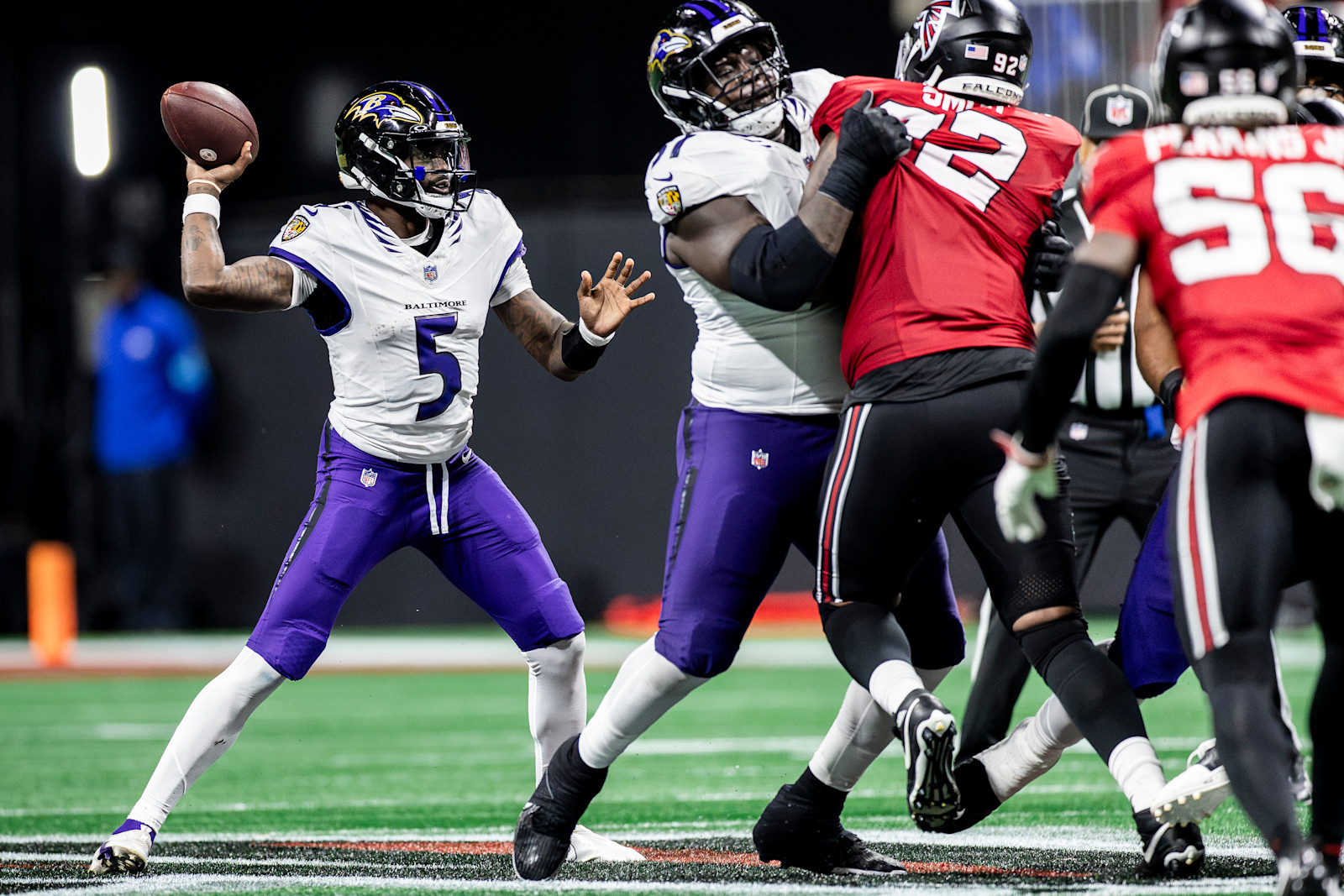
That doesn’t suddenly make the former pro-bowler a franchise quarterback. His limitations were obvious for much of the game, but there is a reason Huntley has remained a trusted backup in Baltimore.
He understands the offense, takes care of the football and is capable of executing when the structure around him provides answers. When he began trusting those answers instead of playing so cautiously, the offense opened up.
For three quarters, I was questioning whether the Ravens could afford to start him again.
By the end of overtime, he had delivered one of the most impressive performances of his Ravens career.
That's quite a turnaround.
2. Declan Doyle is making himself difficult to ignore
Five games into his career as an NFL play caller, Declan Doyle is becoming one of the most encouraging developments of this Ravens season.
There have been mistakes. The short-yardage struggles have been particularly frustrating, and there were stretches Sunday when the offense became overly conservative with Huntley under center. But what continues to impress me is Doyle's creativity and willingness to adapt his offense to the players available.
Against Atlanta, that challenge was considerable. Without Lamar, the Ravens lost the quarterback running threat that normally forces defenses to account for an additional ball carrier on every snap. They also faced the NFL's best rushing defense, which entered the game allowing just 48.3 yards per contest.
Nonetheless, the Ravens ran for 208. Derrick Henry finished with 102 yards on 24 carries, while Justice Hill contributed 73 yards on only four attempts.
Hill's biggest run might have been my favorite offensive design of the night. Facing third-and-1 in the third quarter, Doyle lined Hill up as a fullback directly in front of Henry in an I-formation. I think this was the first time all season they have lined up in the backfield together, though I can’t confirm.
Rather than handing the ball to Henry, the Ravens gave it to Hill, who exploded through the line for 47 yards.
It was a clever way to attack Atlanta's expectations.
With Henry behind him and only one yard needed, Hill's alignment suggested he was there to block for the obvious ball carrier. Doyle instead made Hill the runner, using the defense's attention to Henry to create an opportunity for someone else.
We also saw another example of Doyle's willingness to get Henry into space as a receiver. Trailing 17-9 in the third quarter, Huntley found Henry on a screen pass. The design allowed the big running back to get moving before encountering defenders, and Henry finished the 18-yard touchdown with the kind of stiff-arm that has become his trademark.
Rather than requiring Henry to create everything by repeatedly running through crowded boxes, Doyle is finding ways to get him the football with room to accelerate. Screens, misdirection and changing formations all force defenders to account for Henry in more than one way.
Then on the game-tying conversion, Doyle put Henry in the Wildcat. Taking the direct snap, Henry faked a handoff to Flowers and raced around the edge for the conversion. It was exactly the sort of creative short-yardage answer I wanted to see after the repeated short yardage difficulties.
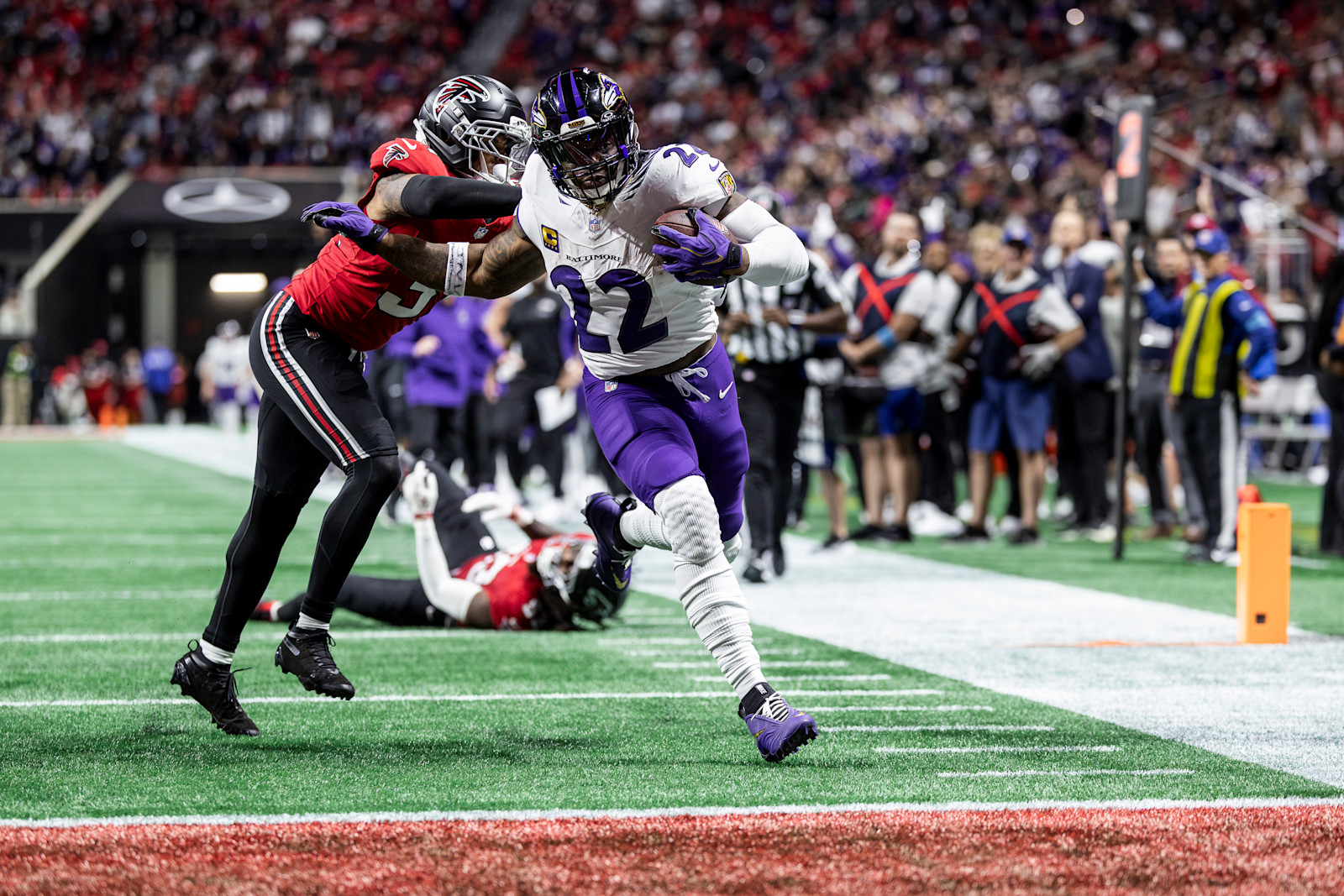
There is still plenty to learn about Doyle's ability to manage an offense over an entire season, but the early evidence is increasingly positive.
The unfortunate part is the rest of the league will be taking notice. If this continues, the Ravens might not get to enjoy their young offensive coordinator for very long. We may look back at this win as the moment we knew Doyle’s time in Baltimore would be short and sweet.
3. The defense stepped up, but there are still some concerns
The defense deserves substantial credit for this victory.
Atlanta entered Sunday having scored 80 points over its previous two games. The Ravens were missing Trey Hendrickson, their biggest offseason addition to the pass rush, and were facing an offense with dangerous weapons at running back, wide receiver and tight end.
Yet Atlanta managed only one offensive touchdown.
The Falcons scored 23 points, but seven came directly from Andrews' fumble being returned for a touchdown. Their offense managed just 16 points, settling for three field goals despite several opportunities to reach the end zone.
There were also some outstanding individual performances.
Malaki Starks probably played his best game of the season (and maybe his career), finishing with a team-high 10 tackles (two for a loss) while playing 62 of 64 defensive snaps. More importantly, his impact went well beyond accumulating tackles downfield.
Starks made several significant plays around the line of scrimmage, including a terrific open-field tackle against Bijan Robinson near the goal line, a third-and-short run stop and another tackle for loss on a short completion.
Those plays demonstrated the instincts and versatility that made Starks such an appealing first-round selection.
We've seen him struggle with positioning and tackling angles at times, particularly when asked to react quickly in space. On Sunday, he generally looked decisive and under control, taking good angles and finishing plays before they developed into something more dangerous.
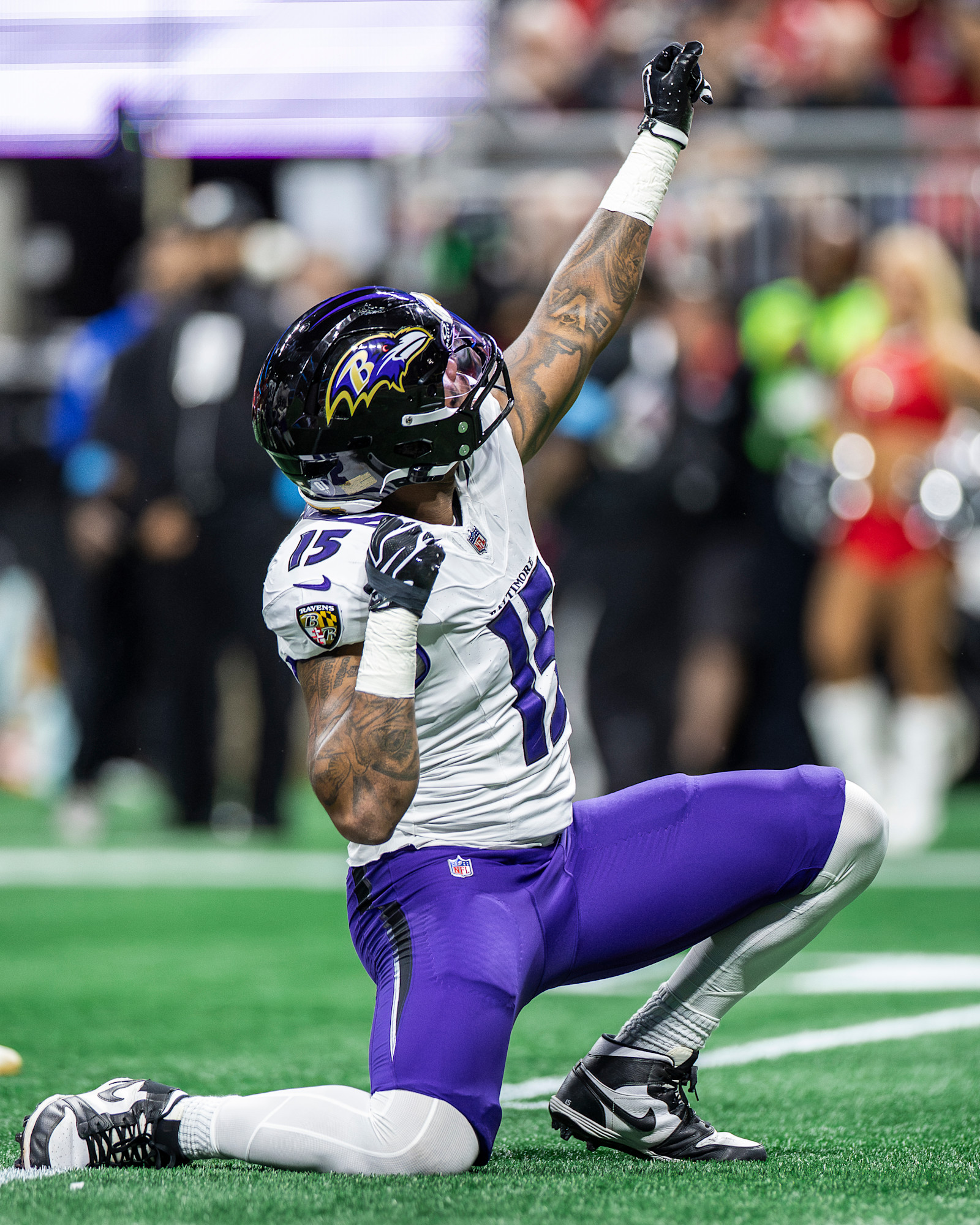
Mike Green was similarly impressive.
With Hendrickson unavailable, Green was asked to shoulder more of the pass-rushing responsibility. He responded with a sack, two tackles for loss and a quarterback hit in 37 defensive snaps.
His fourth-quarter tackle for a five-yard loss on Robinson was particularly impressive. Green attacked the run aggressively, got into the backfield and finished the play before it had a chance to develop.
He's becoming a much more complete defender, rather than simply a young edge rusher who can occasionally threaten quarterbacks with speed.
And then there was Tavius Robinson.
With Atlanta trying to protect its eight-point lead late in regulation, Robinson delivered a huge strip-sack of Penix. The Falcons recovered the fumble, but the hit injured Penix's ribs and eventually forced Tua Tagovailoa into the game.
The Ravens had finally produced the sort of disruptive pass-rush play they had struggled to generate at other critical moments this season. It was a fitting conclusion for a defense that had spent much of the night frustrating us without ever allowing the Falcons to completely take control.
Unfortunately, a few familiar problems persist.
Atlanta converted nine of 17 third downs, including an astonishing four conversions on third-and-10 or longer.
How many times are we going to watch this defense dominate first and second down, put an opponent in an obvious passing situation, and then surrender a conversion?
The Ravens have invested heavily in their secondary and have enough pass-rushing talent that third-and-long should be an advantage. Instead, opposing offenses frequently seem more comfortable throwing against Baltimore when they absolutely have to.
Drake London finished with seven catches for 118 yards, including several important third-down receptions. Apparently every opposing No. 1 receiver gets to schedule a career day against the Ravens this season.
Jesse Minter and Anthony Weaver have to figure this out. Some of the problems are undoubtedly individual. Corners have to cover. Defenders have to tackle. Pass rushers have to win their matchups.
But when the same issue keeps appearing against different opponents, the coaching staff has to examine whether the structure is contributing to it. Are the Ravens conceding too much underneath? Are they protecting against explosive plays at the expense of intermediate routes? Are the rush and coverage working together effectively enough on obvious passing downs?
Those are questions that deserve a closer look.
For now, the broader defensive performance was encouraging. Holding Atlanta to 16 offensive points, with several key starters unavailable, is exactly the kind of contribution the Ravens needed.
They stepped up when it mattered.
But the third-down defense remains a problem that could eventually undo a lot of their good work.
4. Mark Andrews is becoming a problem the Ravens cannot ignore
I don't know what has happened to Mark Andrews' hands.
There was a time when Andrews was one of the most dependable targets in football, particularly when Lamar Jackson needed someone to make a difficult catch in traffic.
That player feels increasingly distant.
Sunday's performance was about as bad as it gets for a veteran tight end.
On the opening possession, Andrews couldn't secure what should have been a touchdown. Later, Sydney Brown knocked the football loose, allowing Jessie Bates to scoop it up and return it 36 yards for an Atlanta touchdown.
Then, after Henry's third-quarter touchdown, Andrews failed to secure a two-point conversion that would have tied the game.
Three enormous mistakes in scoring situations. The Ravens eventually won in overtime, but Andrews very nearly cost them the game. This is becoming more than an occasional dropped pass.
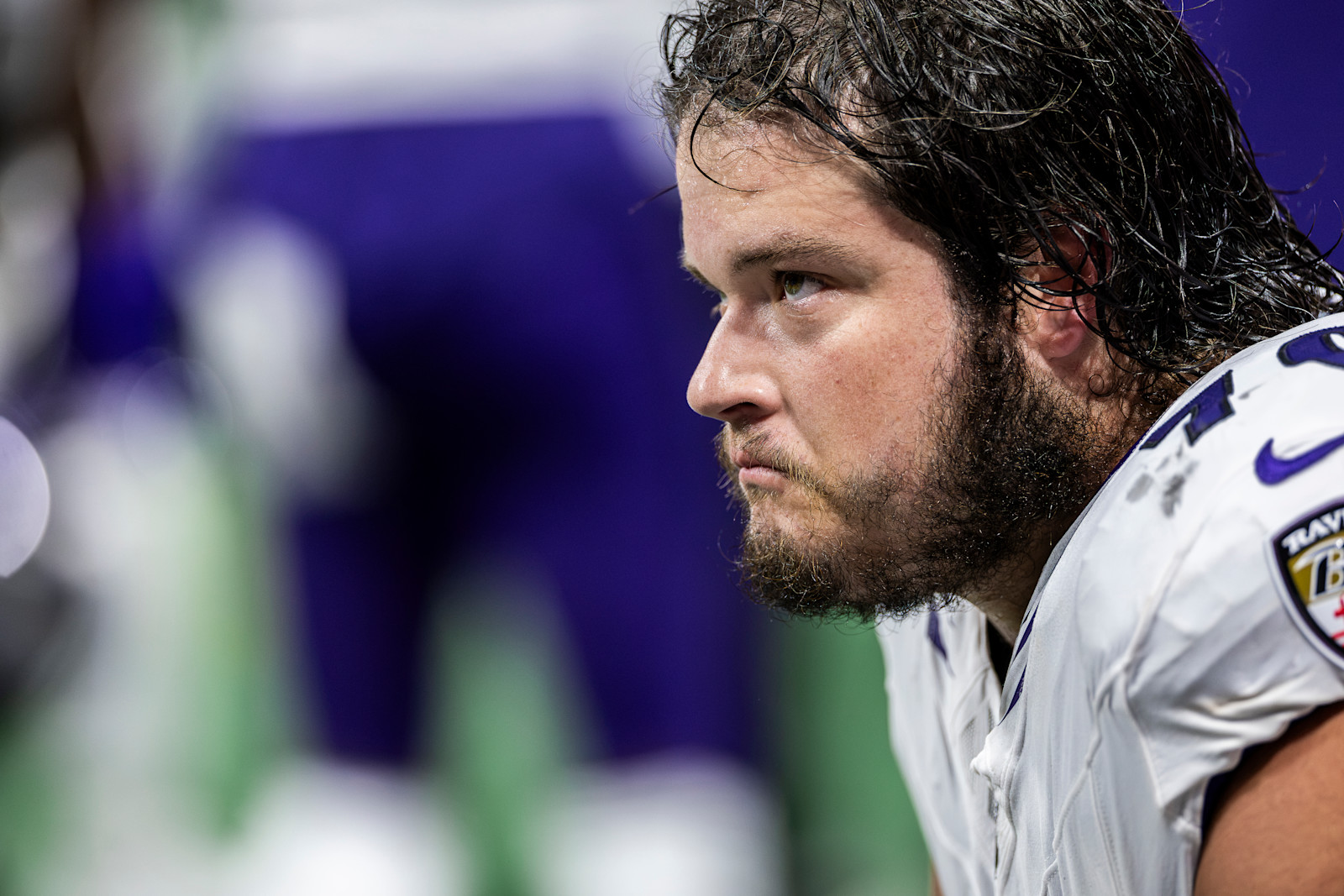
Andrews still understands the offense and can find openings against coverage. He proved that by making two important catches during the overtime touchdown drive.
But the ability to get open is only valuable if the player can reliably finish the play.
Whether it's ordinary drops, contested catches or defenders knocking the football out of his hands, Andrews has become increasingly unreliable in precisely the situations where he once provided the Ravens with a significant advantage.
It's particularly frustrating given the decision Baltimore made this offseason.
The Ravens committed to Andrews with a three-year, $39.3 million extension last December. Isaiah Likely subsequently left for the Giants on a three-year contract worth $40 million.
Essentially the same money.
Through five games, Andrews has caught 22 passes for 177 yards and one touchdown. Likely has 33 receptions for 284 yards and four touchdowns in New York, with mostly a backup quarterback.
We'll never know whether Likely would have agreed to stay in Baltimore, regardless of the contract situation. Perhaps he wanted the opportunity to become the unquestioned starter elsewhere. Maybe there were other considerations behind the scenes.
The organization made its choice. And that choice becomes more baffling with every passing week.
The Ravens are not in a position to simply bench Andrews. Durham Smythe is lost for the season, Matt Hibner dealt with another injury Sunday and the tight-end room doesn't have enough established talent to discard a veteran who still understands the offense.
But Doyle needs to start looking for opportunities to give Hibner and Josh Cuevas more responsibility. Both rookies offer athletic ability and receiving potential. Neither is a finished product, particularly when it comes to the blocking and route adjustments required of an NFL tight end.
Andrews played 55 offensive snaps against Atlanta, compared with 30 for Hibner and 19 for Cuevas. That allocation of playing time needs to become much less automatic.
5. The offensive line deserves some credit. Where does Jurgens fit next week?
The Ravens entered this game with serious concerns about their offensive line.
Ioane was forced to start at center again and Andrew Vorhees' absence forced Emery Jones Jr. into his first career start at right guard. Across from them was an Atlanta defense that had been exceptionally difficult to run against.
Given the circumstances, they delivered an extraordinary performance in the run game. Henry and Hill combined to average 6.25 yards per rushing attempt overall. The Ravens consistently created enough room for their backs to get started, and the running game became particularly important in overtime.
The pass protection remains a different story. Huntley was sacked three times and there were too many snaps when pressure disrupted the timing of the passing game, particularly during the early portions of the contest.
Jones struggled at times in his first start, including on an early sack, and committed a holding penalty on the game-tying drive. There were also some erratic snaps from Vega Ioane that Huntley did well to handle.
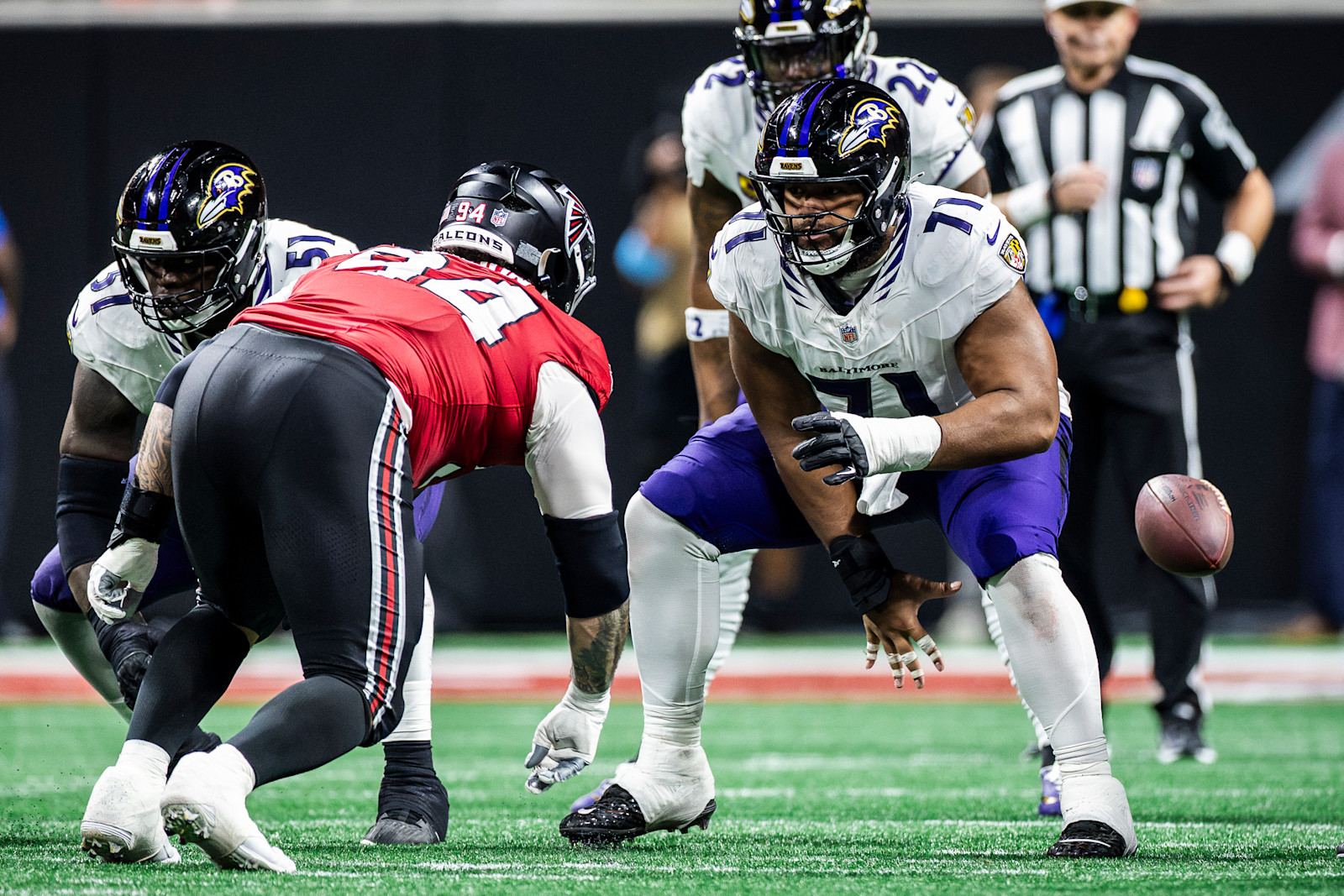
It's difficult to build a consistent passing offense when the quarterback has to worry about both incoming defenders and whether the snap is going to arrive cleanly.
That makes the Cam Jurgens situation particularly interesting. The expectation is that Jurgens will take over at center when he's healthy, allowing Ioane to move back to guard. But I'm not sure the decision should be quite that automatic.
Ioane has been surprisingly effective since moving to center out of necessity. Against Tennessee, he played all 64 offensive snaps without allowing a pressure, despite facing an interior defensive line featuring Jeffery Simmons.
His performance against Atlanta was less convincing in pass protection, but the Ravens still managed to produce an excellent rushing performance against one of the league's toughest fronts.
Meanwhile, Jurgens hasn't been particularly good this season. Some of that can reasonably be attributed to circumstances, as the Eagles moved him from center to left guard after injuries disrupted their offensive line. His previous two seasons at center were considerably better, earning Pro Bowl selections.
But Jurgens is also capable of playing guard, having started at right guard earlier in his career. So the Ravens may have to consider where Ioane’s future lies.
They have already seen Ioane handle difficult interior matchups at center. They know Jurgens has experience at guard. And they still have questions about the performance of both guard positions.
The objective should be finding the five best linemen in the five positions where they collectively function best, not necessarily returning everyone to their original assignment.