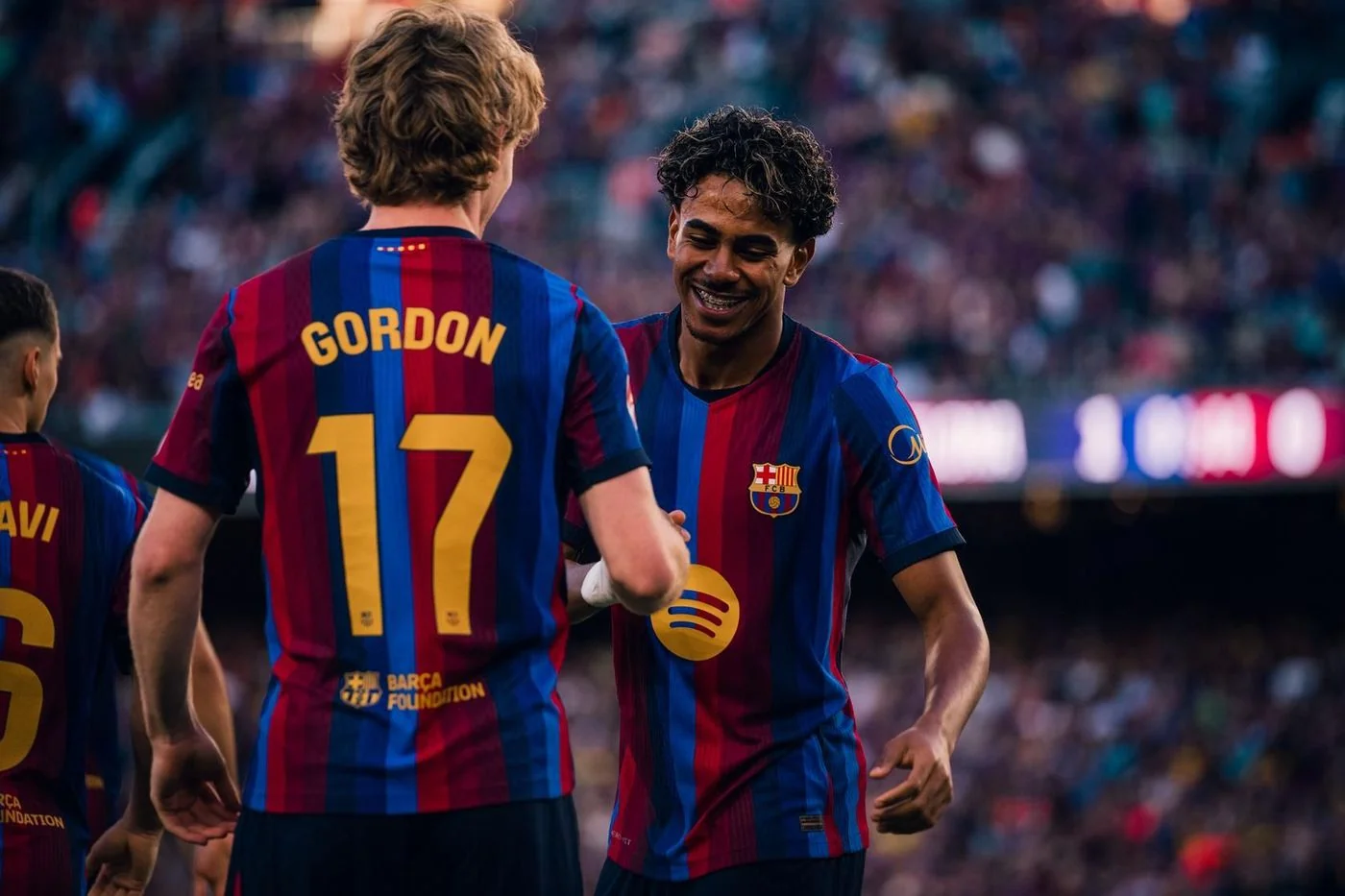
Barcelona continued its ridiculous start to the season this week, collecting two more convincing victories while showing off both the star power and depth that could make this team the favorite to win the Champions League.
On Saturday, Hansi Flick rested several regular starters and watched his rotated lineup comfortably dispatch Getafe 3-0. Three days later, Barcelona traveled to Istanbul for a much tougher Champions League assignment against Galatasaray. After falling behind in the first half, the visitors responded with four unanswered goals and an extraordinary second-half performance from Lamine Yamal to win 4-1.
That makes ten consecutive wins to start the season, eight in La Liga and two in the Champions League, with an absurd 43 goals scored.
Perhaps more impressive is that Barcelona has continued scoring at this pace despite missing Raphinha, who had arguably been the best player in Europe through the opening weeks.
Flick has shuffled his attacking combinations, rested important midfielders and experimented with different players through the middle. So far, virtually everything has worked.
However, the Galatasaray game also provided a reminder that Barcelona isn't quite invulnerable. For a brief stretch in the first half, the hosts exposed some of the same defensive issues that have occasionally haunted Flick's teams.
Against better opposition, those moments could be much more costly.
Galatasaray 1-4 Barcelona: Lamine Yamal Takes Over in Istanbul
Goals: Batrakov 28'; João Cancelo 43', Fermín López 50', Anthony Gordon 53', Karim Adeyemi 65'
Barcelona's visit to Galatasaray presented a substantially different challenge than Saturday's game against Getafe.
The Turkish champions were playing in one of Europe's most intimidating home environments, with an attack featuring Victor Osimhen and Rafael Leão capable of punishing Barcelona's aggressive defensive structure.
Flick made several changes from the weekend but also introduced an interesting tactical wrinkle, starting Dani Olmo as a false nine rather than Gabriel Jesus, who had performed well against Getafe.
The idea was to put another technically skilled midfielder into the attack, helping Barcelona retain possession and play through Galatasaray's pressure.
With Pedri and Rodri anchoring midfield, Fermín operating as the attacking midfielder and Olmo drifting back from the center forward position, Barcelona had four excellent technical players operating through the middle. Gordon and Yamal provided width and the ability to attack defenders individually.
It was a sensible plan against a team looking to pressure Barcelona and attack quickly when possession changed.
For much of the opening half, it worked.
Barcelona controlled possession and created several excellent chances, only to be repeatedly denied by Galatasaray goalkeeper Uğurcan Çakır. Gordon squandered a particularly good opportunity, while Olmo and Cancelo also came close.
There were stretches where Galatasaray seemed barely able to escape its own half, with Rodri and Pedri repeatedly recovering possession and immediately launching another Barcelona attack.
But Barcelona's inability to finish its chances left the game open for exactly the kind of counterattack Galatasaray had been waiting for.
In the 28th minute, Leão accelerated past Eric García down the Galatasaray left side and delivered a ball across the edge of the penalty area for Aleksey Batrakov. His shot deflected off Gerard Martín and beat Joan García to give the hosts an unlikely lead.
It was the type of goal that has become a recurring concern for Barcelona. Flick's aggressive system commits players forward and asks the defensive line to operate high up the field, leaving substantial space behind the fullbacks when opponents break the initial pressure.
Leão is exactly the kind of player capable of exploiting that space. Eric García isn't particularly slow, but he was never going to win a footrace once the Portuguese winger got a running start.
Galatasaray nearly doubled the lead a few minutes later, with a goal eventually disallowed for offside. Suddenly, Barcelona's domination of possession didn't seem quite so convincing.
There was a brief period when the hosts looked capable of turning this into a very uncomfortable evening.
To Barcelona's credit, the response was impressive.
Rather than abandoning its approach and forcing increasingly desperate passes forward, the team gradually reestablished control through Rodri and Pedri. Galatasaray had initially succeeded in creating some disruption around Rodri through Lucas Torreira's aggressive pressure, but the Barcelona midfield increasingly found ways to play through it.
Just before halftime, Olmo helped recover possession near the Galatasaray penalty area and found Cancelo breaking forward. The Portuguese fullback finished confidently to equalize in the 43rd minute.
It was a deserved goal and a crucial one. Barcelona entered halftime level rather than facing the prospect of chasing the game against an increasingly confident opponent and a frenzied crowd.
Lamine Yamal Changes the Game
The second half belonged to Lamine Yamal.
Barcelona had been the better team before halftime, but Yamal had not been particularly influential. He was receiving plenty of defensive attention on the right side and had yet to find the moments that make him such a difficult player to defend.
That changed immediately after the break.
Yamal began receiving the ball in more dangerous positions, repeatedly attacking the Galatasaray left side and forcing defenders to make decisions they were increasingly unable to get right.
In the 50th minute, he delivered a perfectly weighted cross into the penalty area for Fermín López, who headed home to give Barcelona the lead.
Three minutes later came the best individual action of the match.
Yamal attacked from the right, used an audacious fake rabona to deceive his defender and then delivered a pass across the box for Gordon, who finished powerfully to make it 3-1.
The goal was Gordon's second in four days, but the extraordinary part was Yamal's creation. It was the type of improvisation that cannot really be defended through a conventional tactical structure. The defender was positioned to prevent the obvious movement and Yamal simply invented another solution.
Barcelona had turned a potentially dangerous game into a comfortable victory in less than ten minutes.
Flick then introduced Gabriel Jesus and Karim Adeyemi for Olmo and Gordon, adding fresh legs and more direct attacking speed to an already stretched Galatasaray defense.
Adeyemi quickly rewarded the decision, collecting a ball that Jesus couldn't quite control after another Yamal pass and driving a low finish across the goalkeeper in the 65th minute.
Even at 4-1, Barcelona continued pushing for more goals, with Yamal repeatedly setting up opportunities for his teammates.
He finished with two assists, involvement in the fourth goal and a second-half performance that was comfortably the best individual display on the field.
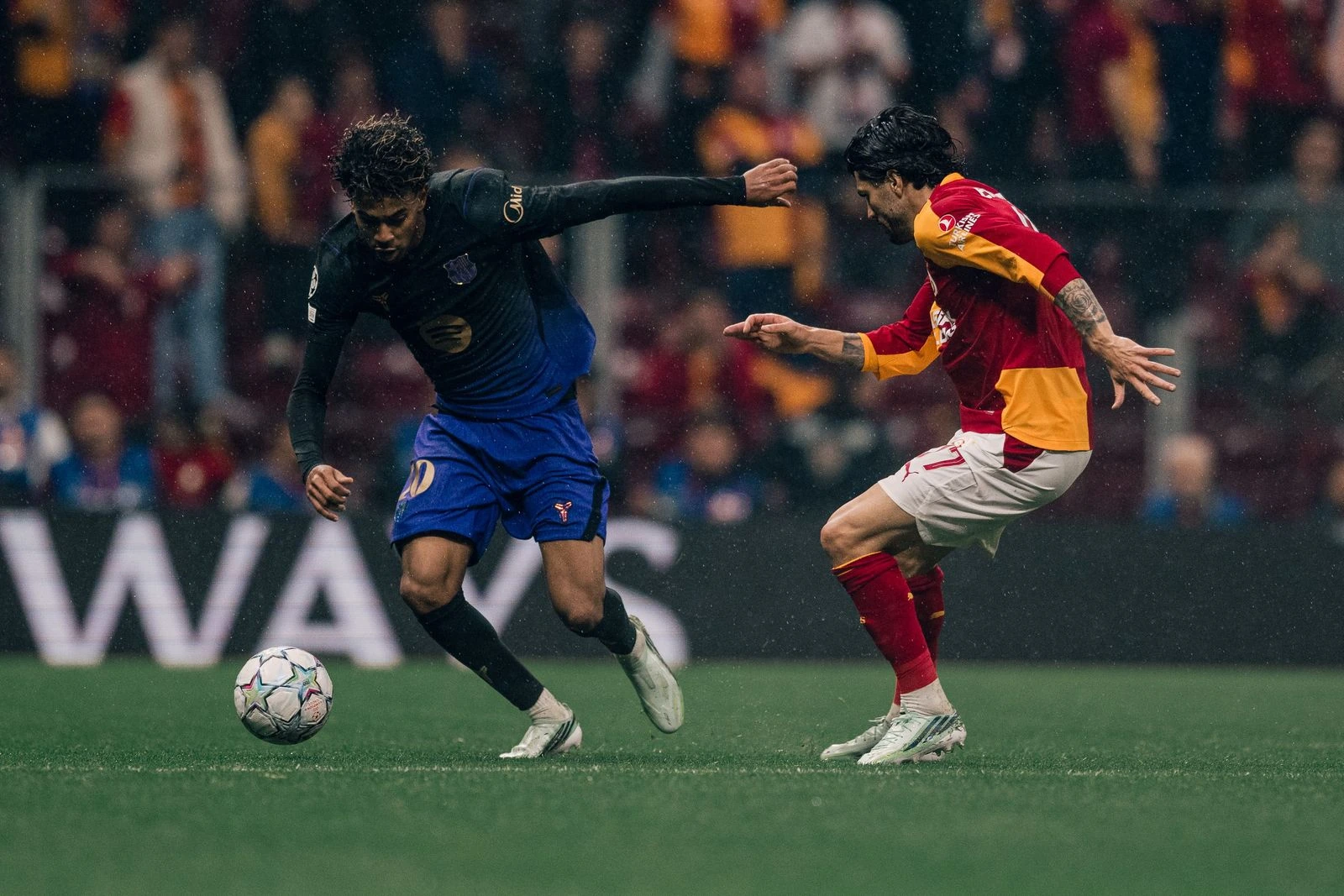
Yamal has been producing excellent numbers all season, although at times he hasn't looked quite as sharp or consistently dangerous as his very best version.
In Istanbul, particularly after halftime, that was no longer the case.
This was Yamal at his most dangerous, capable of beating defenders individually while also recognizing exactly when and where to release the ball.
What Made Barcelona So Difficult to Stop?
The obvious answer is Yamal, but there were several other important elements to the performance.
Rodri and Pedri were exceptional controlling the midfield. Their ability to receive under pressure and play forward prevented Galatasaray from sustaining its pressing efforts. Even when the Turkish side won possession, Barcelona frequently recovered the ball before the hosts could establish a meaningful attacking sequence.
Fermín also deserves substantial credit. His aggressive movement into the box complements Yamal particularly well, as he consistently looks to exploit the space that opens when defenders shift toward Barcelona's right winger.
The decision to use Olmo as a false nine had mixed results but was tactically interesting.
He wasn't a dominant individual performer and missed a couple of opportunities. However, his movement created another passing option in midfield and occasionally pulled Galatasaray's center backs out of their preferred positions. He was also involved in recovering the ball for Cancelo's equalizer.
Galatasaray's defenders seemed uncertain at times about whether to follow Olmo into midfield or maintain their positions, which created opportunities for Gordon, Fermín and Yamal to attack the resulting spaces.
Then, once Barcelona had the lead, Flick switched to the more direct attacking combination of Jesus and Adeyemi.
This flexibility may become one of the team's biggest strengths. Barcelona can use a false nine to dominate possession, a more traditional center forward to occupy defenders or an interchange of explosive wingers to attack space.
And it can move between those approaches without completely changing its underlying structure.
There is also something to be said for the mentality the team demonstrated after falling behind.
Galatasaray had an effective route to threaten Barcelona through Leão and Osimhen, and the visitors were fortunate the potential second goal was disallowed. But Barcelona didn't lose its composure or abandon the approach that had already created several chances.
The adjustment wasn't a dramatic formation change. It was better execution of the original plan, particularly once Yamal began dominating his individual matchup.
That is encouraging, although the defensive vulnerability remains worth monitoring. A team such as PSG or Real Madrid will have the attacking quality to repeatedly exploit the spaces Galatasaray found during that brief stretch.
Barcelona can survive occasional defensive mistakes when it scores four goals. It shouldn't count on doing that against Europe's elite.
Barcelona 3-0 Getafe: Rotation Without Losing a Step
Goals: Anthony Gordon 2', Gabriel Jesus 30', Jules Koundé 73'
If the Champions League win demonstrated Barcelona's ability to respond to adversity, Saturday's victory over Getafe showed how comfortably Flick can now rotate his lineup without sacrificing much quality.
Coming out of the international break with a demanding schedule approaching, Flick rested Pedri and Pau Cubarsí, while Raphinha and Frenkie de Jong were unavailable.
Gavi and Olmo joined Rodri in midfield, with Xavi Espart starting at left back and Eric García and Gerard Martín forming the central defensive partnership. Gabriel Jesus made his first start through the middle, flanked by Gordon and Yamal.
On paper, this was a significantly weakened lineup compared to Barcelona's strongest eleven.
On the field, there was almost no difference.
Gordon opened the scoring less than two minutes into the match, cutting inside from the left and driving a shot that deflected off a defender and past goalkeeper David Soria.
The early goal was particularly damaging to Getafe, a team that prefers to keep matches tight and frustrate opponents with compact defensive positioning and physical play.
José Bordalás set up in a deep 5-4-1 defensive structure, leaving very little room for Barcelona to operate through the middle.
But Barcelona's movement and passing repeatedly found ways around the defensive block.
Espart frequently moved inside from left back to provide another midfield passing option, allowing Rodri to control possession without constantly having to drop toward the central defenders.
On the opposite side, Koundé pushed forward more aggressively, taking advantage of the space created when multiple Getafe defenders shifted toward Yamal.
Olmo drifted into pockets between the midfield and defensive lines, while Gavi provided vertical passing and aggressive pressing whenever Getafe attempted to move forward.
The second goal came directly from that pressure.
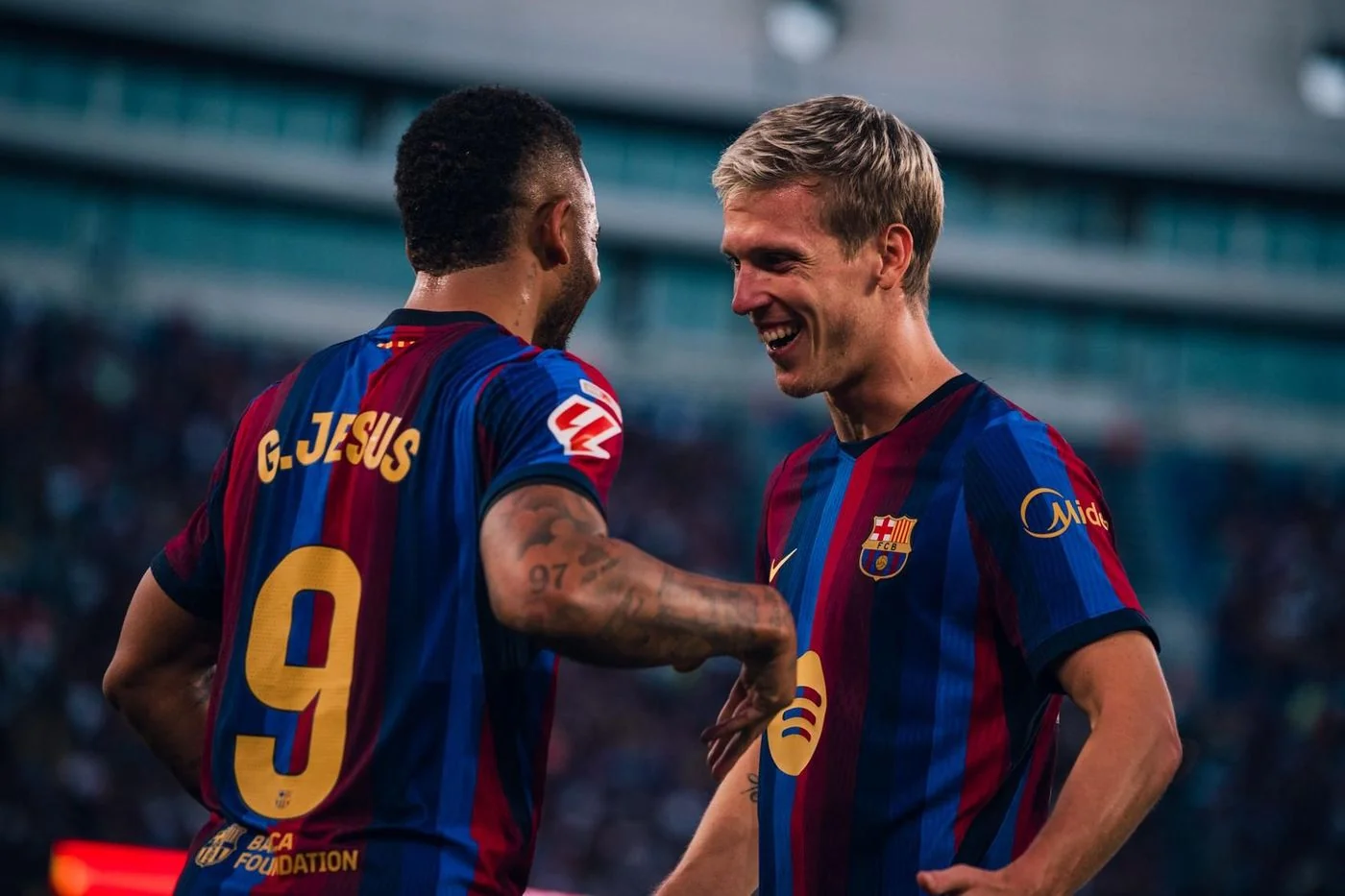
In the 30th minute, Gabriel Jesus pressed Getafe defender Zaid Romero, intercepted his attempt to play out from the back and finished confidently to double the lead.
It was an excellent play from Jesus and another demonstration of why Flick's approach is so difficult for weaker opponents to handle.
Getafe couldn't consistently pass through Barcelona's press, but playing long balls offered little relief either. Rodri and the central defenders were generally able to recover possession and immediately restart another attack.
The visitors finished with just four shots and rarely threatened Joan García.
Koundé eventually completed the scoring in the 73rd minute, getting on the end of a Yamal cross at the back post.
There wasn't much drama, and Barcelona didn't need any.
Gabriel Jesus Gives Flick Another Option
Among the rotated starters, Gabriel Jesus was particularly encouraging.
The Brazilian wasn't simply playing as a conventional striker, waiting between the center backs for an opportunity to finish.
He repeatedly dropped toward midfield, received with his back to goal and connected passes with Olmo, Yamal and Gordon. His ability to operate in tight spaces helped Barcelona move the ball through Getafe's defensive structure.
His pressing was equally important, as demonstrated by his goal.
After the departures of Robert Lewandowski and Ferran Torres, there were legitimate questions about whether Barcelona had enough reliable central finishing to complement all its talented attacking midfielders and wingers.
Jesus offers a useful solution.
He may not reproduce Lewandowski's pure goal-scoring production, but his movement, combination play and defensive work fit Flick's system extremely well.
The fact that Flick could then use Olmo in a completely different version of the central role against Galatasaray demonstrates how many solutions he now has.
Gordon also deserves recognition for his performances across the two matches.
His pace and willingness to attack directly give Barcelona a different element on the left side, and he is beginning to turn those dangerous movements into goals.
With Adeyemi providing another excellent option from the bench, Barcelona no longer needs Raphinha and Yamal to start every match simply to maintain a dangerous attack.
That is a significant improvement over last season.
A Deep Team With an Extraordinary Ceiling
Barcelona has now won its first ten competitive matches, scoring 43 goals and conceding just eight. The team has nine goals through its opening two Champions League matches, following a 5-1 victory over Feyenoord with the comeback in Istanbul.
Those are ridiculous numbers, even accounting for some relatively forgiving early opponents.
Across the two games this week, six different players scored Barcelona's seven goals.
That may be the most interesting development.
Barcelona obviously has individual stars capable of deciding matches. Yamal's second half against Galatasaray was a reminder that very few players in the world possess his combination of creativity, dribbling and passing.
But the team is becoming less dependent on any single attacking player.
Gordon and Adeyemi give Flick different wide options. Fermín and Olmo can operate between the lines or move into central attacking positions. Jesus provides a mobile striker capable of pressing and linking play. Koundé and Cancelo can both contribute goals and creativity from the fullback positions.
Behind all of them is an outstanding midfield, where Rodri and Pedri are rapidly becoming the foundation of everything Barcelona does.
Pedri remains one of the best midfielders in the world at controlling possession and recognizing the next pass. Rodri gives Barcelona the defensive protection and passing stability to let Pedri and the other midfielders play more aggressively.
Having Gavi, Fermín, Olmo and Marc Bernal available around those two is an embarrassment of riches.

The interesting question is whether this collection of players can maintain the same level against opponents who are capable of breaking through Barcelona's press and consistently attacking the space behind its defenders.
Galatasaray showed that the vulnerability is still there, even if it lacked the quality to exploit it more than once.
To be fair, Barcelona also made the Turkish side look substantially worse than it is. Galatasaray has enough attacking talent to trouble good European opponents and isn't accustomed to being dominated this thoroughly at home.
But the next stretch of the schedule will provide a much more revealing test.
Barcelona travels to face Real Betis this weekend before a Champions League showdown at PSG on Tuesday and El Clásico against Real Madrid on October 25.
Those are three opponents with the individual attacking quality to punish defensive mistakes, and Barcelona will probably need to be more disciplined than it was during its first-half wobble in Istanbul.
Still, there is little reason to temper the enthusiasm surrounding this team.
Flick has built a coherent attacking system that appears capable of producing goals through a remarkable number of different players and combinations. The midfield is exceptionally talented, the pressing remains aggressive and the options coming off the bench are considerably stronger than they were a year ago.
Against Getafe, Barcelona showed it can rest important players and win easily.
Against Galatasaray, it showed it can fall behind in a difficult environment, regain control and completely overwhelm its opponent.
The defensive questions haven't disappeared, and winning ten games in October doesn't guarantee anything in May.
But Barcelona isn't merely collecting wins. It is playing some of the best attacking soccer in Europe, with a depth of talent that gives Flick more flexibility than he has had at any point in his tenure.
The next three games should tell us considerably more about whether this extraordinary opening stretch is the beginning of a Champions League-winning season. Next Tuesday they travel to Paris for a showdown with Paris St. Germain, perhaps the two best teams in the world right now.