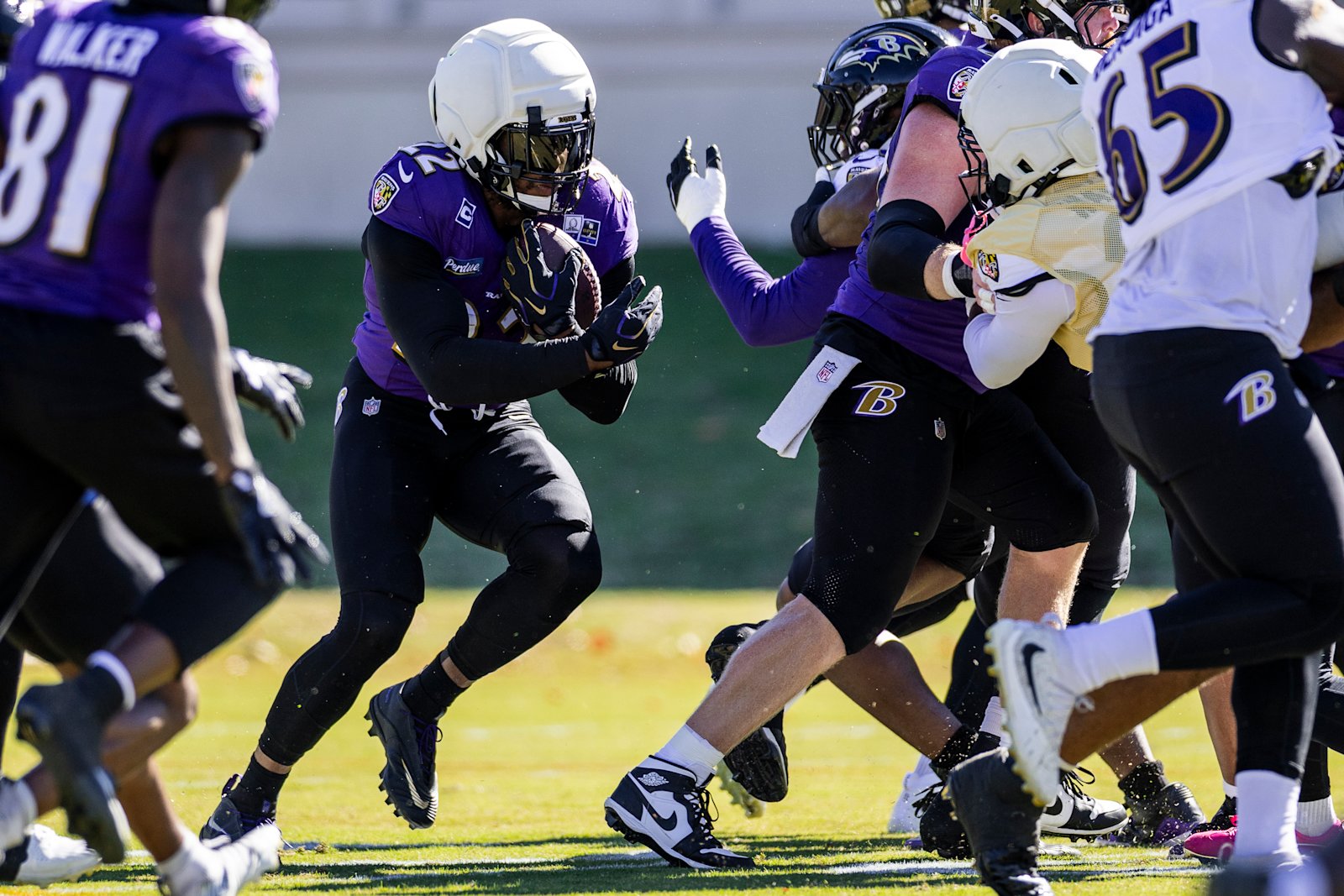
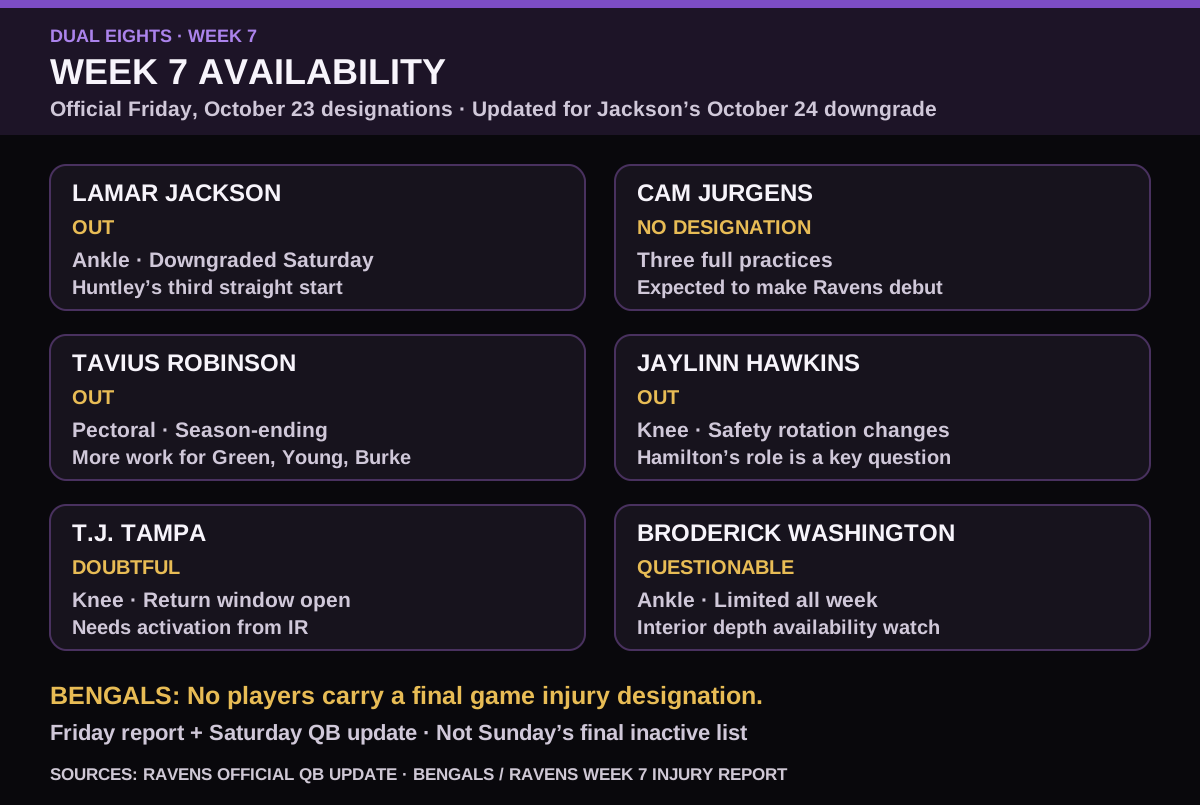
Saturday update · October 24: The Ravens have ruled Lamar Jackson out, confirming Tyler Huntley’s third consecutive start. The original preview below retains the author’s Saturday-morning injury context.
Get ready for the game with the Ravens dashboard at: https://dualeights.com/ravens/dashboard/
Week 7 | Sunday, October 25, 2026 | 1 p.m. ET | CBS | M&T Bank Stadium
The Ravens held Cleveland to 13 points last week and still managed to lose.
The defense largely did its job but now faces a much tougher test with Joe Burrow, Ja’Marr Chase and Tee Higgins coming to Baltimore.
The Ravens can’t rely on another defensive performance like the one in Cleveland. Burrow is playing some of the most efficient football in the league, the Bengals have two outstanding receivers, and Cincinnati is coming off its bye with an extra week to prepare.
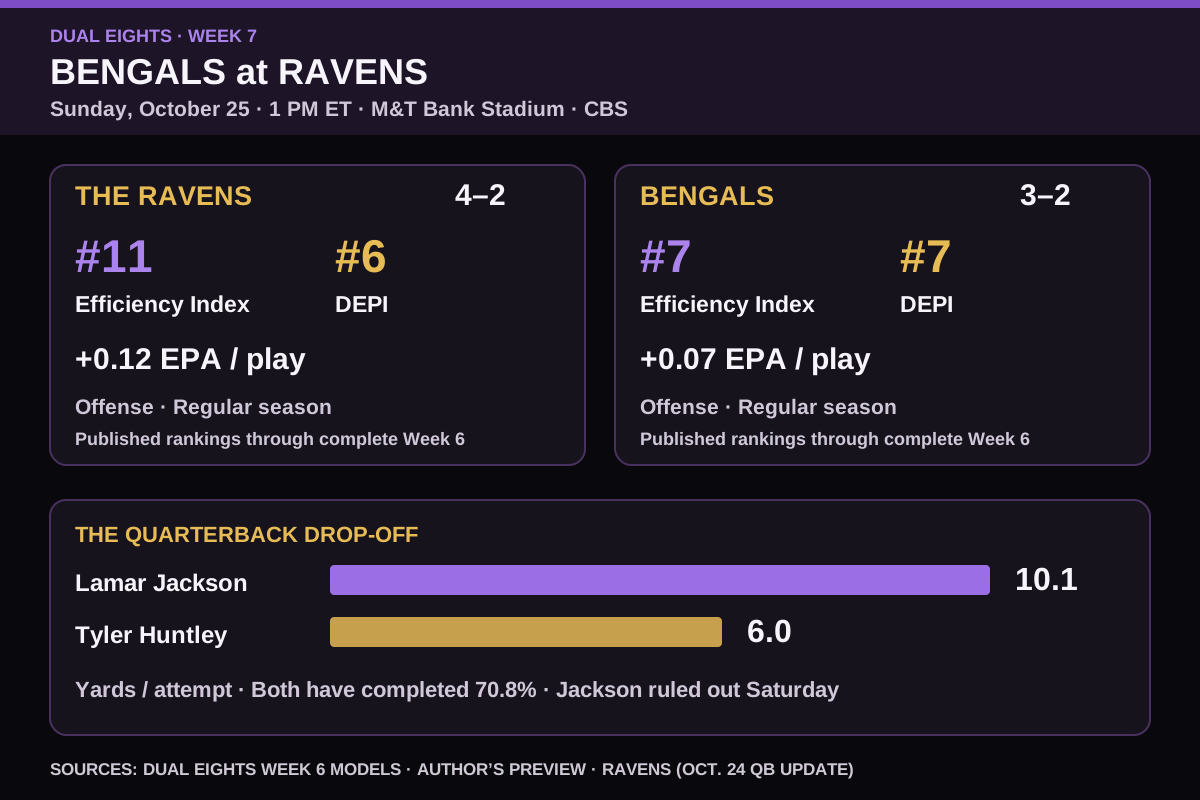
The Ravens are 4-2, the Bengals are 3-2, and the AFC North remains unusually crowded. Cleveland and Pittsburgh are also 4-2, and whoever loses Sunday will fall to 0-2 in division play. There is still plenty of season remaining, but these are exactly the games that determine whether December becomes a fight for home-field advantage or another desperate attempt to make the playoffs.
And the Ravens likely will have to play without Lamar for the third consecutive week.
Fortunately, Cincinnati has some defensive weaknesses that appear particularly well suited to what the Ravens can do offensively. Unfortunately, the Bengals have also rebuilt their defensive front into one of the most disruptive in football.
That creates an interesting matchup. The Ravens may have a legitimate advantage attacking the edges of Cincinnati’s defense, but they’ll have to survive everything happening in the middle to exploit it.
1. Preparing for another week without Lamar
Lamar Jackson returned to practice this week after missing the last two games with a high ankle sprain, but I’m increasingly skeptical that he’ll actually play Sunday.
Jackson was limited in all three practices and remains officially questionable (as of Saturday morning). His comments Friday were encouraging regarding his recovery, but less so regarding his ability to play unrestricted football.
He acknowledged that the ankle still hurts when he runs and explained that simply standing in the pocket without his normal mobility would not help the team.
That doesn’t sound like a quarterback who is ready to return to full speed.
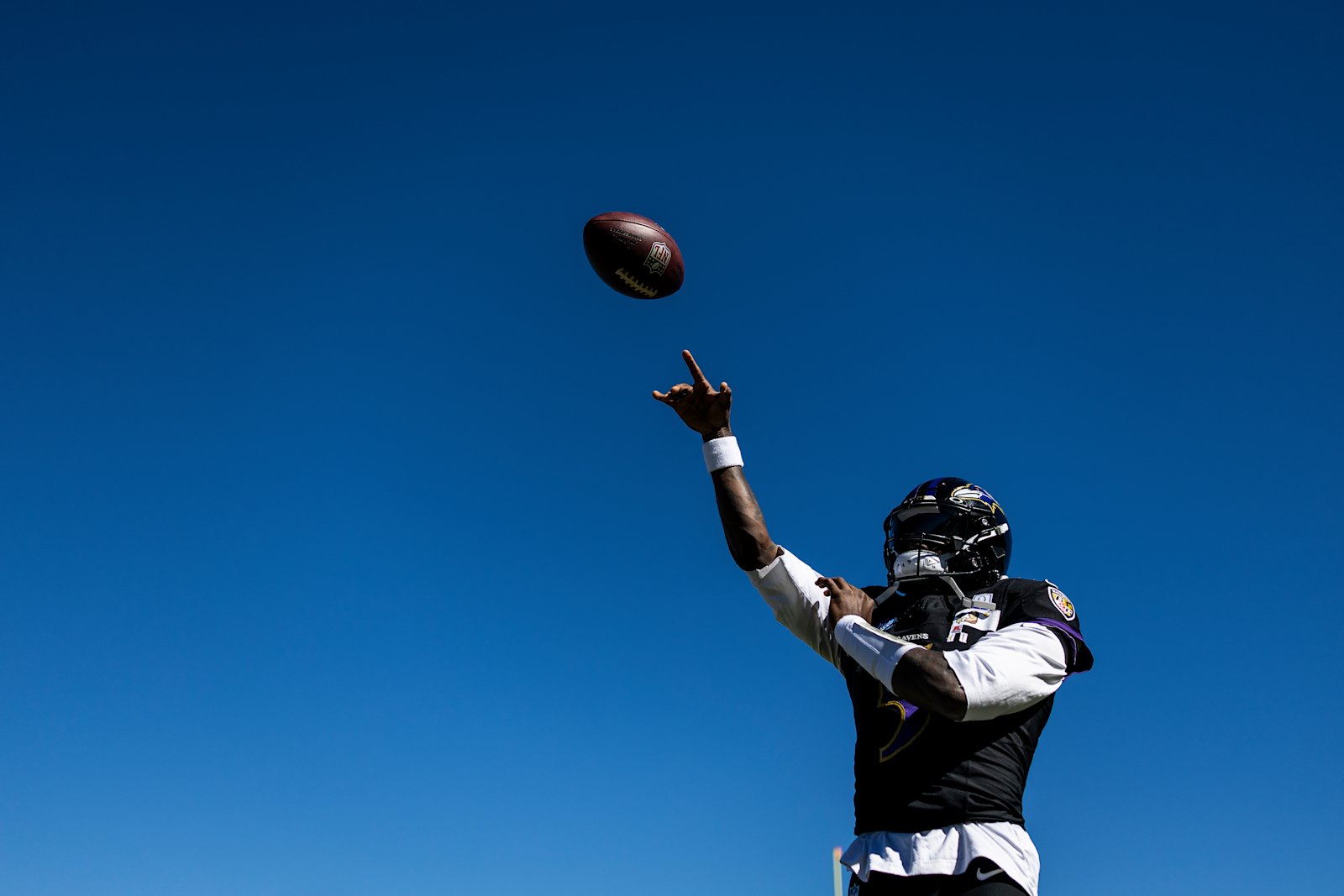
The reasonable expectation is that Tyler Huntley will be preparing for another start.
The difference between the two quarterbacks is obviously vast. Lamar and Huntley have completed exactly the same percentage of their passes this season: 70.8%.
But Lamar is averaging an NFL-best 10.1 yards per attempt, while Huntley is averaging just 6.0.
That 4.1-yard difference is enormous.
Lamar forces defenses to protect every part of the field. His ability to attack vertically prevents safeties from consistently creeping toward the line of scrimmage, while his running threat creates another defender that opponents must account for on virtually every snap.
Huntley is mobile enough to contribute to the running game, but defenses are considerably more comfortable challenging him to throw beyond the first level.
We watched that play out against Cleveland.
The Ravens generated 111 yards on their first two possessions and just 124 on their final nine. Once the Browns adjusted to the running game and short passing attack, Baltimore had no convincing response.
That cannot happen again.
If Huntley starts, Doyle needs an offense that can manufacture explosive plays without relying upon the quarterback to create them individually.
That means motion, misdirection, play-action opportunities and getting Zay Flowers the football with room to run. It also means taking enough intermediate shots that the Bengals cannot simply crowd everything within ten yards of the line of scrimmage.
There is a difference between building a sensible offense around a backup quarterback and building one that gives the defense absolutely nothing to worry about.
Against Cincinnati’s defensive front, the latter would be particularly dangerous.
2. The Bengals fixed their interior defense. The Ravens should attack somewhere else.
Cincinnati spent the offseason rebuilding a defensive front that had become a significant weakness.
The biggest move was trading for Dexter Lawrence, one of football’s premier interior defensive linemen. The Bengals also signed Jonathan Allen and Boye Mafe, adding proven talent throughout the front.
The early returns have been impressive.
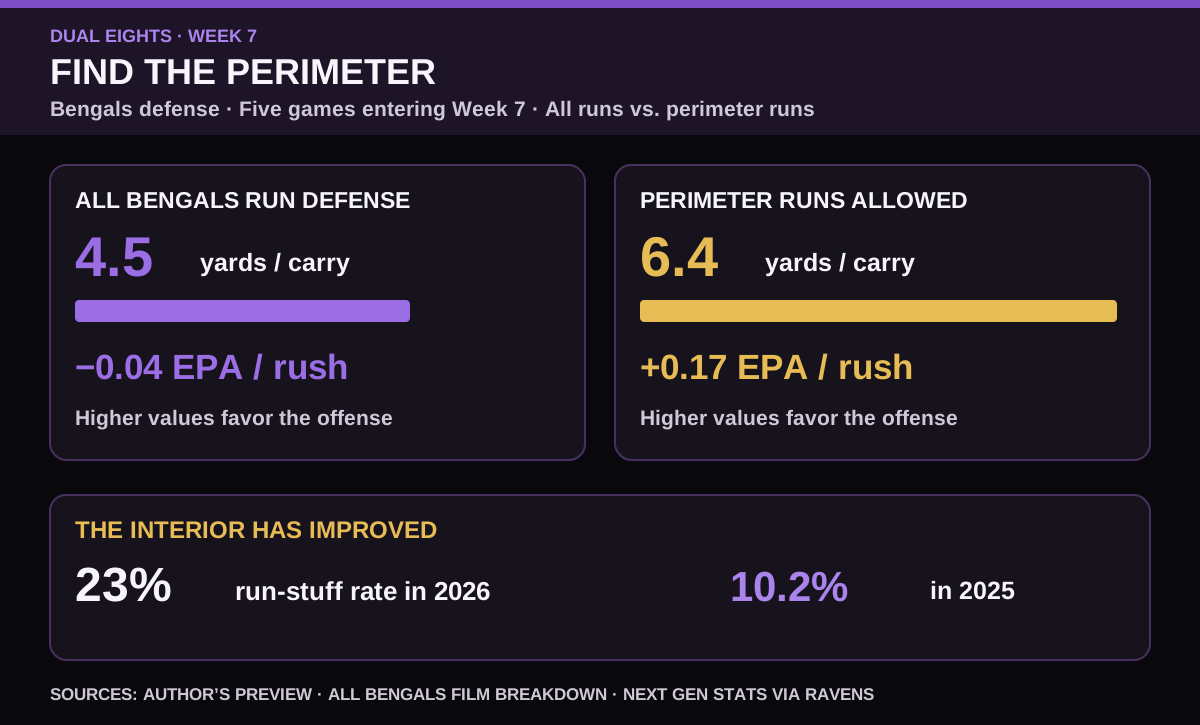
According to Next Gen Stats, Cincinnati has stopped 23% of opposing rushing attempts for no gain or a loss, compared with just 10.2% last season.
Lawrence has made an enormous difference in the middle. He can occupy multiple blockers, penetrate gaps and disrupt a running play before the back has an opportunity to develop any momentum.
For a Ravens offense that has occasionally struggled to create interior rushing lanes, that is a concerning matchup.
But there is another side to Cincinnati’s defense.
The Bengals have been surprisingly vulnerable when opponents get outside.
Cincinnati has allowed 6.4 yards per carry and +0.17 EPA per play on perimeter runs through five games. Overall, the Bengals allowed 4.5 yards per carry and -0.04 EPA per rush.
Cincinnati’s problems have often occurred outside the defensive tackles, where edge defenders fail to maintain leverage, linebackers take poor pursuit angles and defensive backs struggle to defeat blocks or finish tackles in space.
This is exactly the kind of weakness the Ravens should be equipped to exploit.
Henry remains exceptionally dangerous once he gets moving. He doesn’t need to run directly into Lawrence to punish Cincinnati’s defense. They can use tosses, pulling guards and formations that create room for Henry to accelerate before contact.
Justice Hill offers another option, particularly on outside-zone concepts and misdirection. Flowers can threaten the defense on jet sweeps or simply use his motion to move a defender away from the eventual running lane.
Doyle has already demonstrated a willingness to get creative with his backs. Against Atlanta, he used Hill as the apparent lead blocker in front of Henry before handing Hill the football for a 47-yard gain. He also used Henry on a screen and later deployed him in the Wildcat for a critical two-point conversion.
The common thread was making defenders think they knew where the football was going before showing them something else.
That’s what the Ravens need Sunday.
The goal isn’t to abandon interior rushing entirely. It’s to make Lawrence and Allen defend more than the gaps directly in front of them.
3. Cam Jurgens arrives at exactly the right time. Or the wrong time.
The good news is that the Ravens finally appear ready to field something resembling their intended offensive line.
Cam Jurgens is expected to make his Baltimore debut at center, allowing rookie Vega Ioane to return to right guard. After weeks of injuries, emergency substitutions and inconsistent snaps, the Ravens should finally have a more conventional arrangement across the interior.
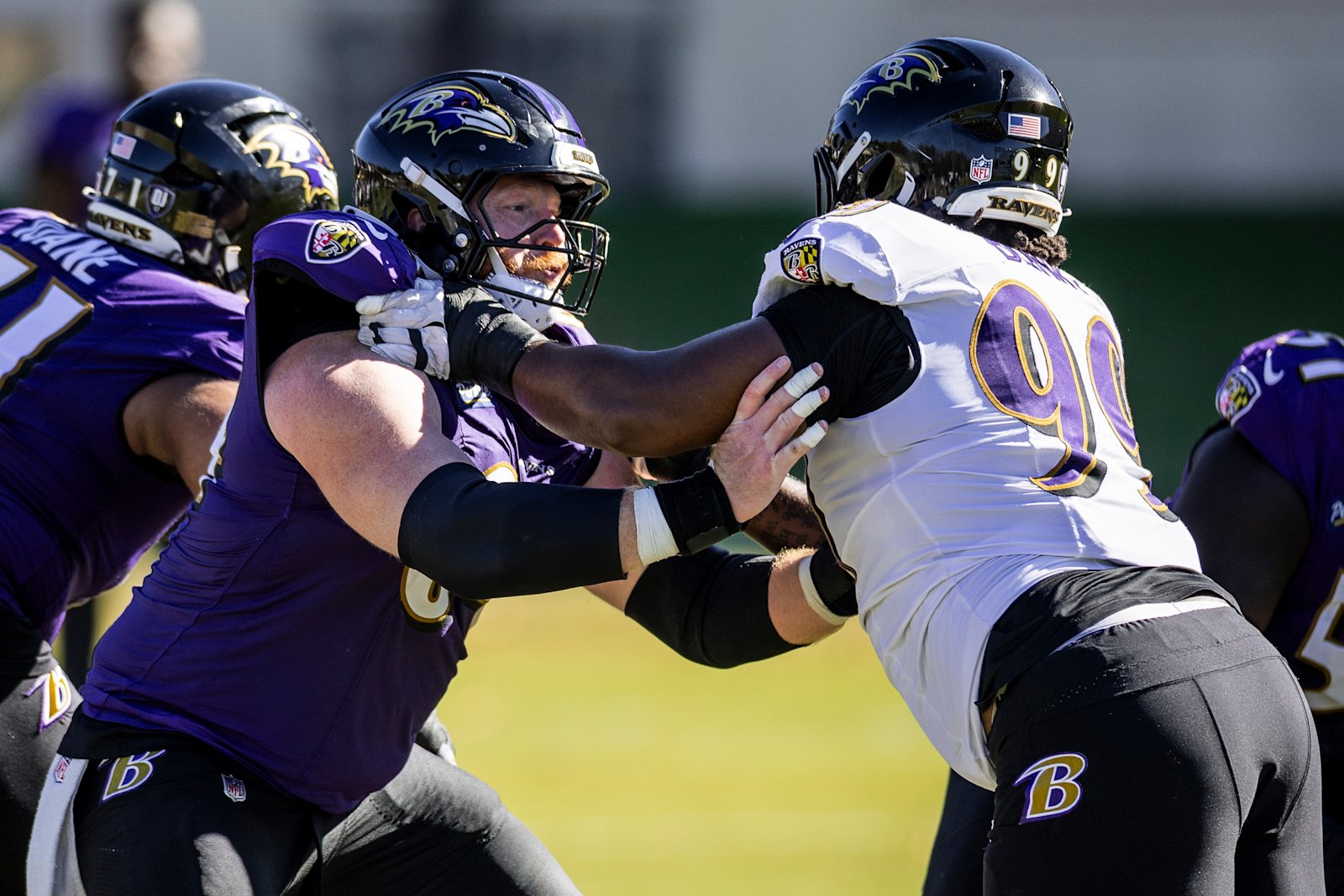
The bad news is that Jurgens’ first assignment involves Dexter Lawrence, Jonathan Allen and one of the NFL’s most productive pass rushes.
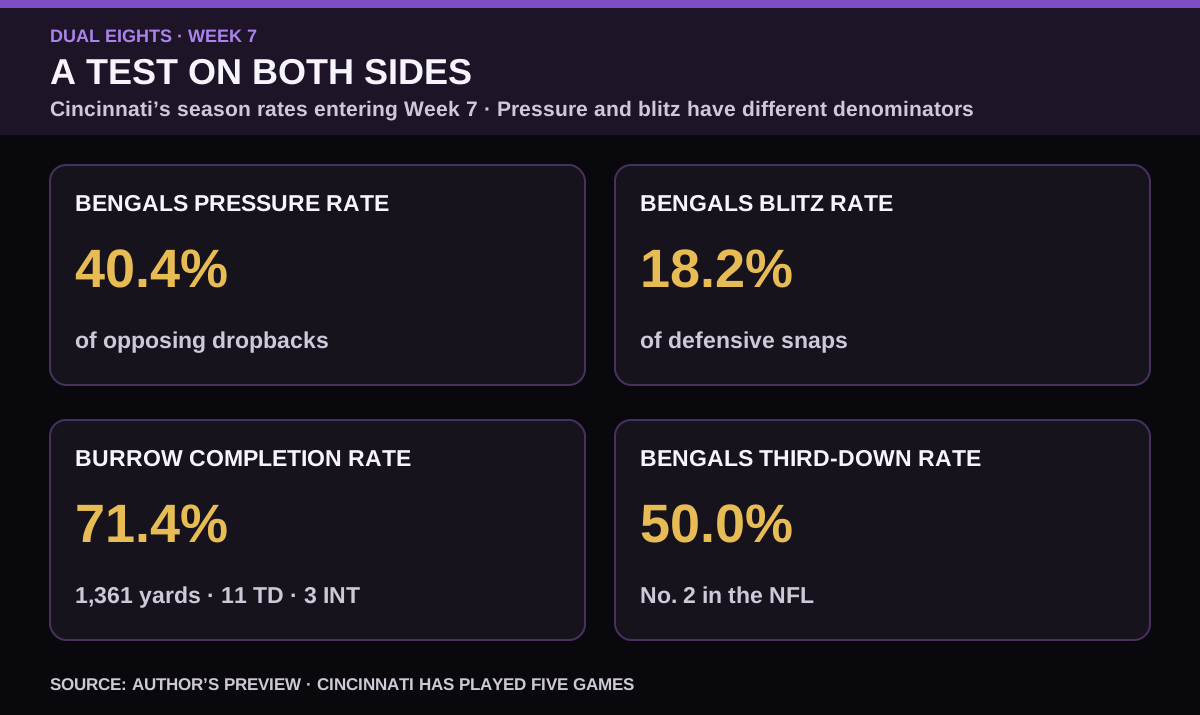
Cincinnati has generated pressure on 40.4% of opposing dropbacks while blitzing on just 18.2% of defensive snaps. The Bengals don’t need to send extra defenders to disrupt the quarterback. Lawrence and Allen can create interior pressure, while Mafe has already produced 25 pressures off the edge.
When four defenders can consistently pressure the quarterback, the other seven can concentrate on covering receivers. That’s a difficult situation for any offense. It’s especially problematic when the quarterback is reluctant to challenge tight coverage downfield.
Jurgens should help in several ways.
First, he is an experienced center who can organize protections, identify defensive fronts and coordinate blocking assignments with the guards. Those responsibilities have been particularly difficult for the Ravens with Ioane learning the position out of necessity.
Second, moving Ioane back to guard should improve the overall configuration of the line. He has demonstrated that he can handle difficult interior opponents, even while playing an unfamiliar position. Returning him to his natural assignment allows the Ravens to benefit from that ability without simultaneously asking him to manage the entire protection operation.
There is no guarantee that the improvement will be immediate.
Jurgens has spent only a short period practicing with these teammates, and communication is as important as individual blocking talent when defenders are attacking both A-gaps or running stunts across the center. A missed assignment against Lawrence can destroy a play before the quarterback finishes his drop.
But the Ravens need more than simply avoiding sacks.
They need clean first-down runs, enough protection for intermediate routes to develop and fewer situations where a penalty or negative play turns a manageable possession into third-and-11.
The Bengals’ improved defensive front is capable of creating those situations without taking unusual risks.
If Jurgens can stabilize the interior and Ioane can become a reliable presence at guard, the improvement could extend well beyond Sunday.
If not, Cincinnati has the personnel to make a difficult afternoon for Huntley considerably worse.
4. Stopping Chase isn’t enough. They have to stop Burrow.
The Ravens held Cleveland to 13 points last Sunday.
That was encouraging, particularly after the defensive inconsistency we watched throughout September. Trey Hendrickson returned and immediately generated eight pressures and a sack, while Kyle Hamilton and the interior defensive line repeatedly disrupted Cleveland’s offense.
But Joe Burrow is not Deshaun Watson.
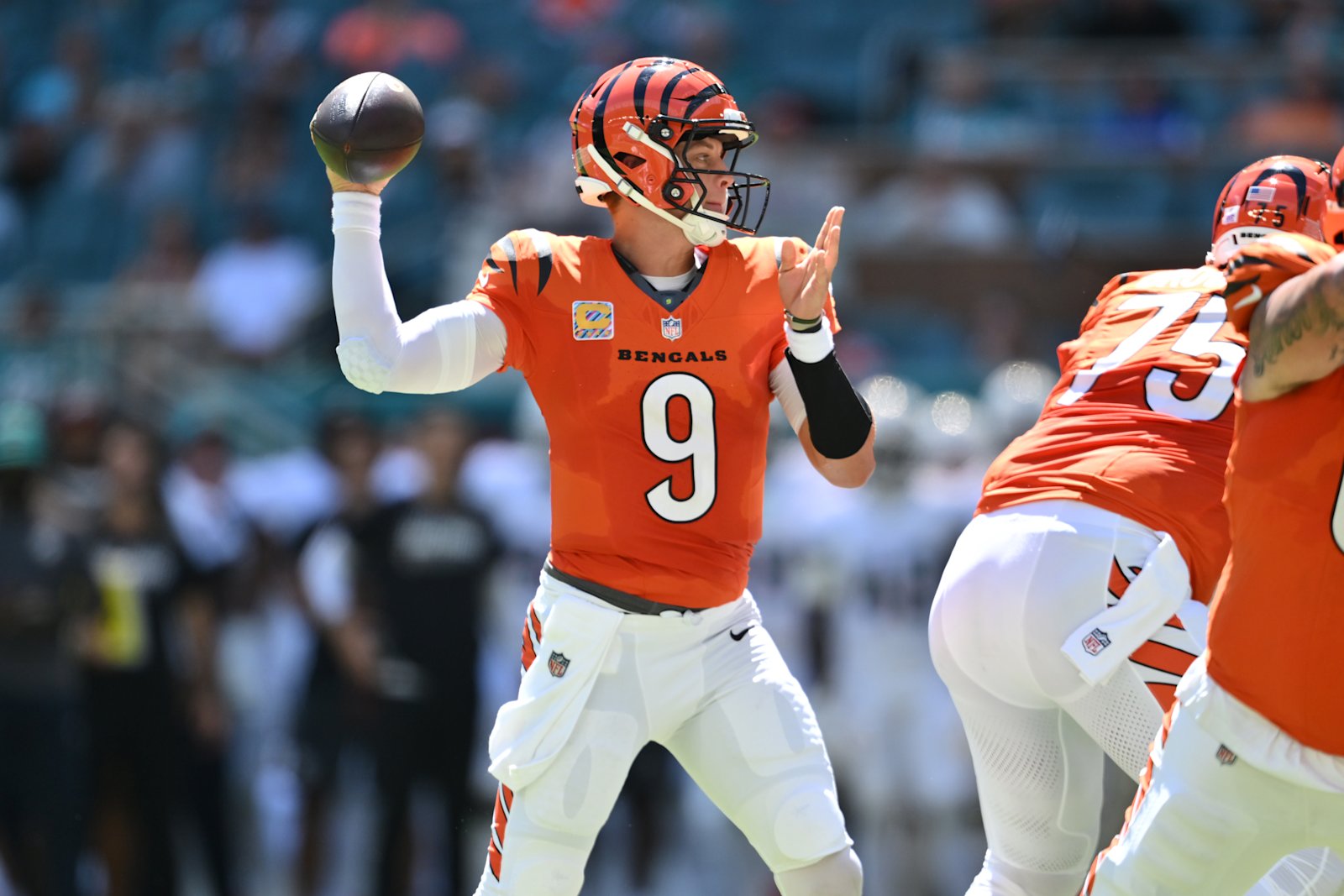
Burrow has completed 71.4% of his passes this season for 1,361 yards, 11 touchdowns and three interceptions. The Bengals rank among the league’s ten most efficient offenses by EPA per play and have converted half of their third-down opportunities, the second-best rate in the NFL.
That last number should concern anyone who has watched the Ravens this season.
They have repeatedly struggled to finish defensive possessions, even after forcing opponents into obvious passing situations. New Orleans converted eight of 15 third downs. Atlanta converted nine of 17, including four conversions on third-and-10 or longer.
Those weren’t simply isolated mistakes against exceptional quarterbacks. The Ravens frequently allowed short completions to become first downs, failed to finish tackles or gave receivers too much space at precisely the wrong moment.
Burrow is particularly well equipped to exploit those issues.
He doesn’t require Cincinnati to produce an endless collection of explosive plays. He can sustain possessions through quick decisions, accurate intermediate throws and a willingness to challenge even well-positioned defensive backs.
And then there are Chase and Higgins.
Chase has repeatedly punished the Ravens, especially when matched up against Marlon Humphrey.
According to Next Gen Stats, Chase has caught 14 of 21 targets for 318 yards across 83 career tracked matchups with Humphrey. Those aren’t all pure one-on-one coverage assignments, and Humphrey has also recorded two interceptions during those matchups, but the production is difficult to ignore.
Nate Wiggins has performed considerably better in his tracked opportunities against Chase, allowing eight catches on 17 targets for 102 yards.
That suggests Wiggins should receive substantial responsibility against Cincinnati’s biggest receiving threat, but simply assigning Wiggins to Chase doesn’t solve the problem.
Higgins has 423 receiving yards through five games and ranks among the league leaders in explosive receptions. He provides Burrow with another outstanding target capable of winning contested catches along the sideline or finding space between coverage levels.
If the Ravens devote additional safety help to Chase, they risk giving Higgins favorable matchups elsewhere. Mike Gesicki can create similar problems underneath, especially when the Ravens are occupied with protecting the boundaries.
Minter needs to vary his coverage without creating confusion for his own defensive backs.
Cloud coverage toward Chase, changing safety rotations and selectively using Hamilton to disrupt underneath routes all make sense. But the Ravens cannot repeatedly leave defenders isolated against Cincinnati’s receivers and expect them to win every assignment.
The pass rush is the other half of the equation.
Hendrickson’s return is enormously important, and facing his former team adds an interesting subplot. But Cincinnati’s offensive tackles have performed well, particularly Amarius Mims, who has allowed pressure on only 4.0% of his pass-blocking snaps according to Next Gen Stats.
Minter needs to create pressure without automatically sending six defenders.
Simulated pressures, late rotations and changing which defenders actually rush can force Burrow to hesitate or make an incorrect protection adjustment while preserving enough coverage behind the rush.
But those tactics only work if the pressure arrives before Burrow finds an open receiver.
The Ravens need to prevent big plays from Chase and Higgins, force longer third downs and actually get off the field when the opportunity arrives.
5. Hawkins is out. Could that actually help the secondary?
Jaylinn Hawkins will miss Sunday’s game with a knee injury, leaving the Ravens without one of the three safeties who have formed the foundation of Minter’s defensive structure.
Normally, losing a starting defensive back before facing Burrow, Chase and Higgins would be an obvious negative, but I’m not entirely convinced that’s the case here.
Hawkins has been the weakest member of the regular secondary rotation, particularly in coverage. Pro Football Focus gives him a 53.1 overall defensive grade and a 47.6 coverage grade through six games, both well below the standard the Ravens should expect from a starting safety.
His run defense has been considerably better, and he does provide experience and familiarity with the scheme. But the coverage concerns are real, including his positioning on the critical late third-down completion to Jerry Jeudy against Cleveland.
There is at least a reasonable argument that getting someone else onto the field could improve the defense.
Of course, that depends on who replaces him.
The simplest solution would be giving Keondre Jackson a larger role as a conventional safety alongside Malaki Starks. That would preserve the flexibility Minter has built around Hamilton, who has aligned in the slot on roughly 33% of his snaps, at linebacker on another 33% and as a traditional safety on only 20%.
Those numbers help explain how the Ravens can play dime defense on 32.4% of its snaps, the second-highest rate in football, without necessarily sacrificing its ability to defend the run.
Hamilton can function almost like a linebacker when the Ravens need him near the line of scrimmage. He can cover tight ends, match up with receivers in the slot, blitz or rotate into deep coverage after the quarterback has already tried to identify the defense.
He also leads NFL defensive backs with seven run stuffs.
I would hate to see the Ravens sacrifice much of that versatility simply because Hawkins is unavailable.
Moving Hamilton into a more conventional deep-safety role is certainly an option. Minter could use Keyon Martin in the slot more often, shift Humphrey inside in certain packages or alter the cornerback rotation with Chidobe Awuzie.
But that creates another problem.
Hamilton is arguably Baltimore’s best defensive weapon, and his impact is greatest when opponents have to account for him near the football. Moving him to the back end makes the defense more conventional and potentially easier to diagnose.
The Ravens spent the offseason imagining all the different ways Minter could deploy Hamilton. It would be disappointing if the entire structure became dependent upon the availability of Jaylinn Hawkins.
Still, trusting a relatively inexperienced replacement against Burrow is not a trivial decision.
Keondre Jackson has barely played a defensive snap this season. K’Von Wallace offers another option, but neither has demonstrated that he can reliably handle the responsibilities Hawkins has been given. One busted coverage against Cincinnati can cost considerably more than a routine missed tackle.
Minter may decide that protecting the back end is more important than preserving Hamilton’s normal role. The ideal solution would be finding enough reliability from Jackson, Wallace or a combination of defensive backs to keep Hamilton doing what he does best.
If the Ravens manage that, Hawkins’ absence might end up being a blessing in disguise.
If they can’t, they could lose some of the flexibility that makes this defense dangerous at exactly the wrong time.
There is another significant defensive absence to consider.
Tavius Robinson suffered a season-ending pectoral injury, removing a player who was quietly having the best season of his career. Robinson leads the Ravens with 3.5 sacks and eight quarterback hits while playing a career-high 72% of defensive snaps.
His injury creates more responsibility for Mike Green, Zion Young and Ethan Burke. Young has already shown promise against the run, but Baltimore now needs him to contribute more consistently as a pass rusher.
The Ravens have enough talent to overcome losing Robinson. Hendrickson, Green and a healthy Nnamdi Madubuike give Minter legitimate ways to attack the quarterback without relying upon blitzes.
But the rotation becomes thinner, and Baltimore loses a reliable defender who could contribute against both the run and pass.
Against a quarterback who can punish even brief breakdowns in coverage, that matters.
6. What will decide the game?
The Ravens enter Sunday with a fairly clear path to winning.
They need to attack Cincinnati’s vulnerable perimeter, prevent Lawrence and Allen from dominating the middle, and create enough passing opportunities that the Bengals cannot simply concentrate on stopping Henry.
Cincinnati has had an extra week to prepare and Doyle cannot afford to spend the afternoon discovering that the Bengals have corrected their perimeter defense without having a counter ready.
Defensively, the Ravens face a different challenge.
Minter has enough talent to make Burrow uncomfortable, especially if Hendrickson continues playing the way he did against Cleveland. But the Bengals are unlikely to spend an entire afternoon unable to move the football.
Cincinnati’s passing attack is simply too good, and its offensive line has improved enough that the Ravens cannot assume their four-man rush will consistently dominate.
The challenge will be limiting explosive plays while refusing to concede endless manageable completions that become third-down conversions.
Without Lamar, I can’t see the offense finding enough answers unless the defense plays lights out.