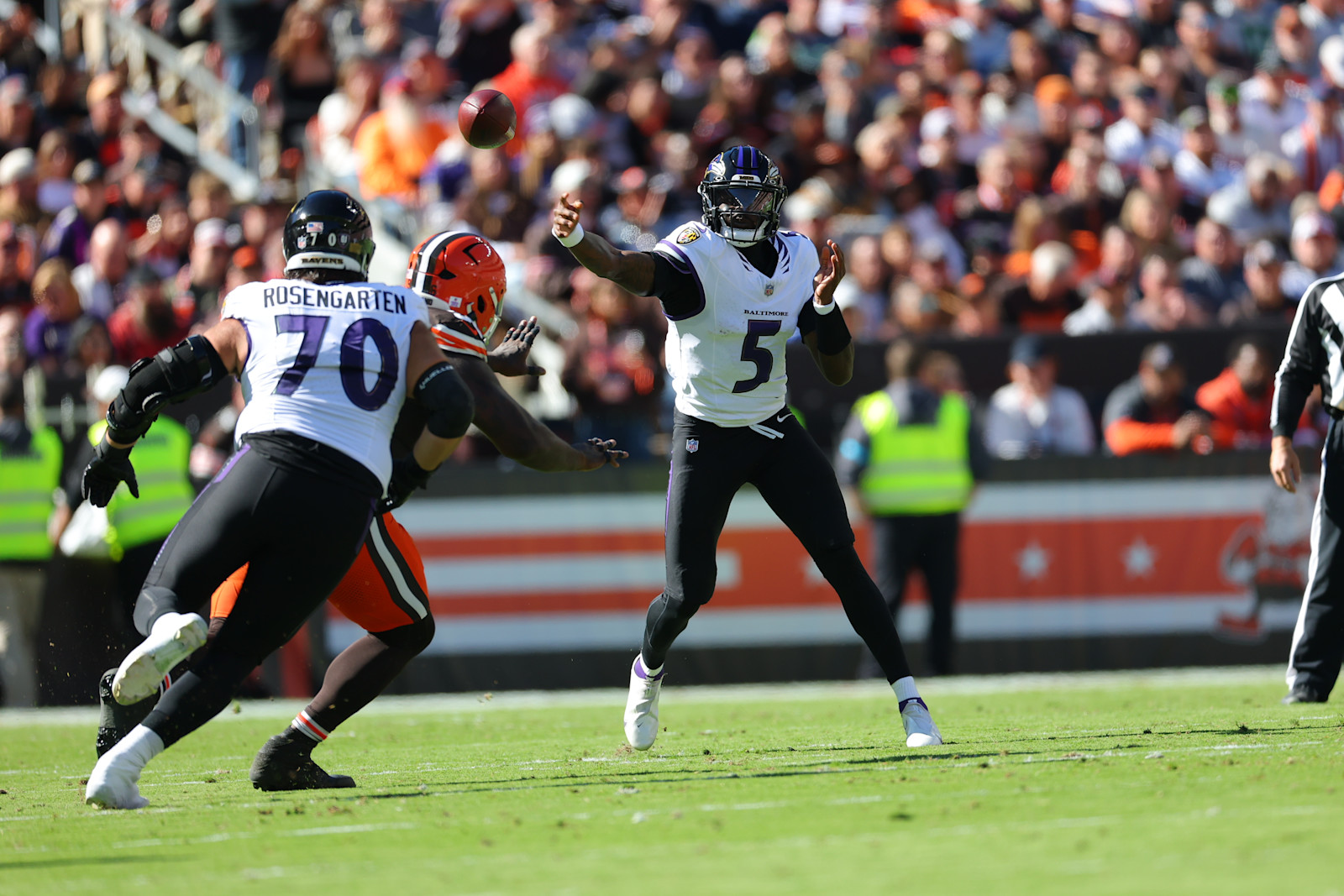
Five immediate takeaways from the Ravens' 13-10 loss to the Cleveland Browns.
Follow the season: The Ravens Season Dashboard tracks the record, advanced team metrics, unit trends, injuries and what comes next.
Go ahead and play the familiar late-game collapse hits.
Another double-digit lead disappeared. Another opponent made the decisive plays in the fourth quarter. Another game the Ravens should have won ended with the other team celebrating a last-second victory.
But this one was a little different.
The Ravens lost 13-10 to Cleveland on Sunday, falling to 4-2 and surrendering control of first place in the AFC North. Tyler Loop missed a 49-yard field goal that would have restored a 10-point lead. Derrick Henry lost a fumble that directly led to Cleveland's tying touchdown. And the defense surrendered a 33-yard completion to Jerry Jeudy on third down that set up the game-winning kick.
All three plays were enormously consequential.
But the real reason the Ravens lost was that their offense completely disappeared after the first two possessions.
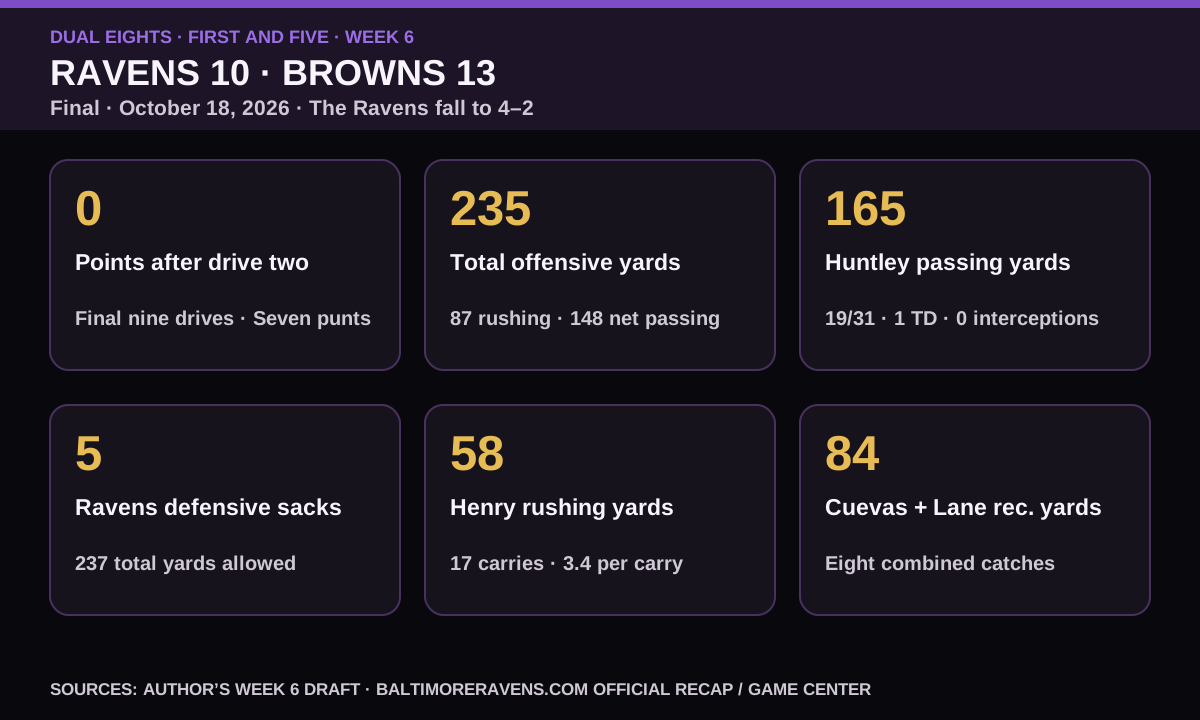
They scored 10 points on the opening two drives, then failed to score on any of their remaining nine. Seven ended in punts, one in Henry's fumble and the other in Loop's missed field goal.
The Browns managed just 237 yards of offense, including 93 on the ground. The Ravens sacked Deshaun Watson five times and made life miserable for him throughout most of the afternoon.
That should have been enough.
At the end of the day, going 1-1 in two road games with your backup quarterback isn't the end of the world. The Ravens are still 4-2, and they demonstrated last week that they can occasionally survive without Lamar Jackson.
But Sunday was another reminder of how little margin this team has when its franchise quarterback isn't available.
With Cincinnati, Buffalo and Jacksonville coming up over the next three weeks, getting a healthy Lamar back is imperative.
Here are my five immediate takeaways.
1. We found the real Tyler Huntley
For the final two drives against Atlanta last Sunday, Tyler Huntley looked like a quarterback capable of leading a productive NFL offense.
Unfortunately, the rest of his playing time this season has looked considerably more familiar.
Huntley completed 19 of 31 passes for 165 yards and a touchdown against Cleveland, finishing with an 86.1 passer rating. He didn't throw an interception, continuing a season-long stretch of protecting the football reasonably well.
Those numbers aren't disastrous on face, but they don't come close to telling the story.
Through three appearances this season, Huntley has completed 51 of 72 passes for 429 yards, three touchdowns and no interceptions. That's a 70.8% completion rate and a 99.8 passer rating.
Pretty respectable, right?
Look a little closer.
Huntley is averaging just 5.96 yards per attempt, with an average target depth of only 5.99 yards. According to SumerSports, his plays have produced -0.01 expected points added (EPA) per play, with a success rate of 46.2%.
Compare that with Lamar Jackson, who has averaged 10.07 yards per attempt, generated +0.30 EPA per play and posted a 56.6% success rate this season.
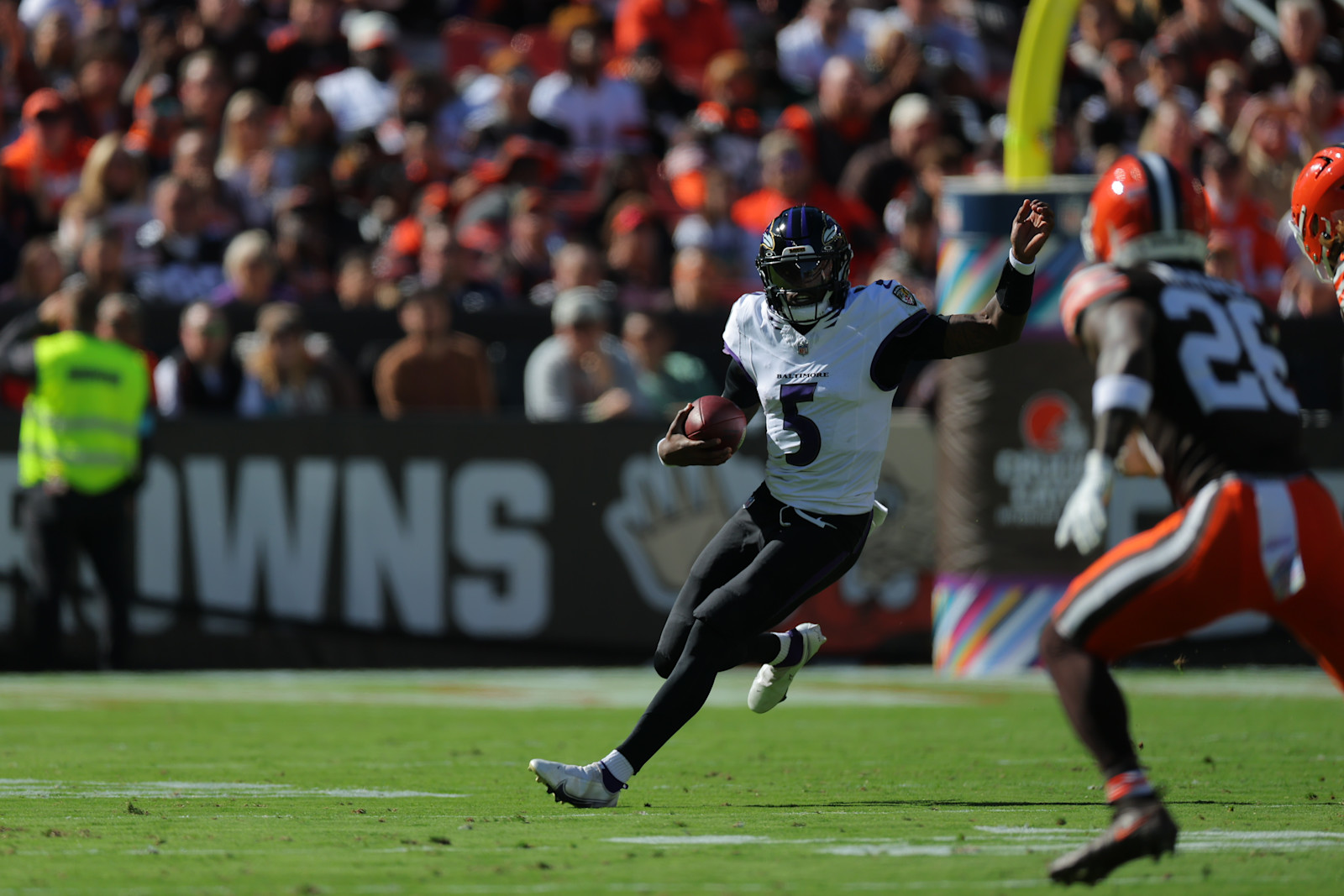
The difference isn't simply that Lamar can make spectacular plays. It's that his presence forces defenses to respect the entire field and account for an additional rushing threat on virtually every snap.
With Huntley, that threat is considerably diminished.
And there probably wasn't anyone in the stadium better prepared to exploit those limitations than Todd Monken.
Cleveland's new head coach spent the previous three seasons coordinating Baltimore's offense. He knows Huntley, understands what he does well and has seen firsthand what happens when defenses begin squeezing the field around him.
Monken wasn’t going to let Derrick Henry beat them while Huntley comfortably distributed short passes underneath. They were going to make Huntley beat them.
Cleveland entered the game playing the highest rate of man coverage in the NFL. That allowed the Browns to bring a safety closer to the line of scrimmage, commit additional defenders to Henry and challenge Huntley to win against tighter coverage.
Huntley never found a consistent answer, completing only two passes for gains of at least 12 yards, one coming on an extended play to Zay Flowers and the other on a cleverly designed reception by Josh Cuevas. Several throws that fell incomplete were dangerously close to becoming interceptions.
The Browns were able to crowd the short passing game without consistently paying for it downfield.
Across roughly two and a half games of football, outside of the late possessions in Atlanta and the opening drive Sunday, the Ravens have struggled to sustain anything resembling a dangerous passing offense.
If Lamar cannot return next week, I think Minter needs to consider giving rookie Joe Fagnano an opportunity. At this point it's pretty clear they aren’t going to beat teams that can put up points on the defense with Huntly under center. The reality is that if Lamar is out for any of the next three games, the Ravens will probably lose. But after an impressive preseason, I’d rather see what Fagnano can give us than sit through another torturous Huntley outing.
Hopefully, we won't have to find out.
2. The opening script worked. Then the offense disappeared.
Declan Doyle deserves credit for how the Ravens opened this game.
The first possession covered 66 yards in 11 plays, with Henry carrying five times for 30 yards before Huntley found Cuevas for a two-yard touchdown.
The second drive featured one of the most creative designs we've seen from Doyle this season.
Cuevas lined up in what appeared to be a guard's position, but was aligned off the line to remain an eligible receiver. The Browns lost track of him, and Huntley found the rookie for a 29-yard gain that helped set up Loop's 34-yard field goal.
Two possessions. Ten points. A 10-0 lead.
Then absolutely nothing.
The Ravens gained 111 yards on their opening two drives and only 124 yards on their remaining nine possessions.
That's a remarkable offensive shutdown lasting the final three quarters of the game.
Cleveland deserves credit for its defensive adjustments. The Browns became increasingly aggressive attacking upfield, disrupting the blocking angles Baltimore wanted to create in its zone running game.
The Ravens entered Sunday averaging 164.4 rushing yards per game, third in the NFL. Against Cleveland, they managed just 87 yards on 23 attempts, an average of 3.8 per carry.
Henry finished with only 58 yards on 17 attempts, averaging 3.4 yards per carry. Huntley accounted for another 28 of Baltimore's 87 rushing yards. The Ravens generated -0.56 EPA per designed run, an extraordinarily poor result for an offense that has been among the league's most dangerous rushing attacks.
The running game wasn't merely failing to produce explosive plays. Too many carries were putting the offense in worse situations than it faced before the snap.
The offensive line was part of the problem today. Emery Jones struggled and Ioane had some more snap issues. Perhaps the debut of Jurgens (either at center or guard) will help clean some of that up next week.
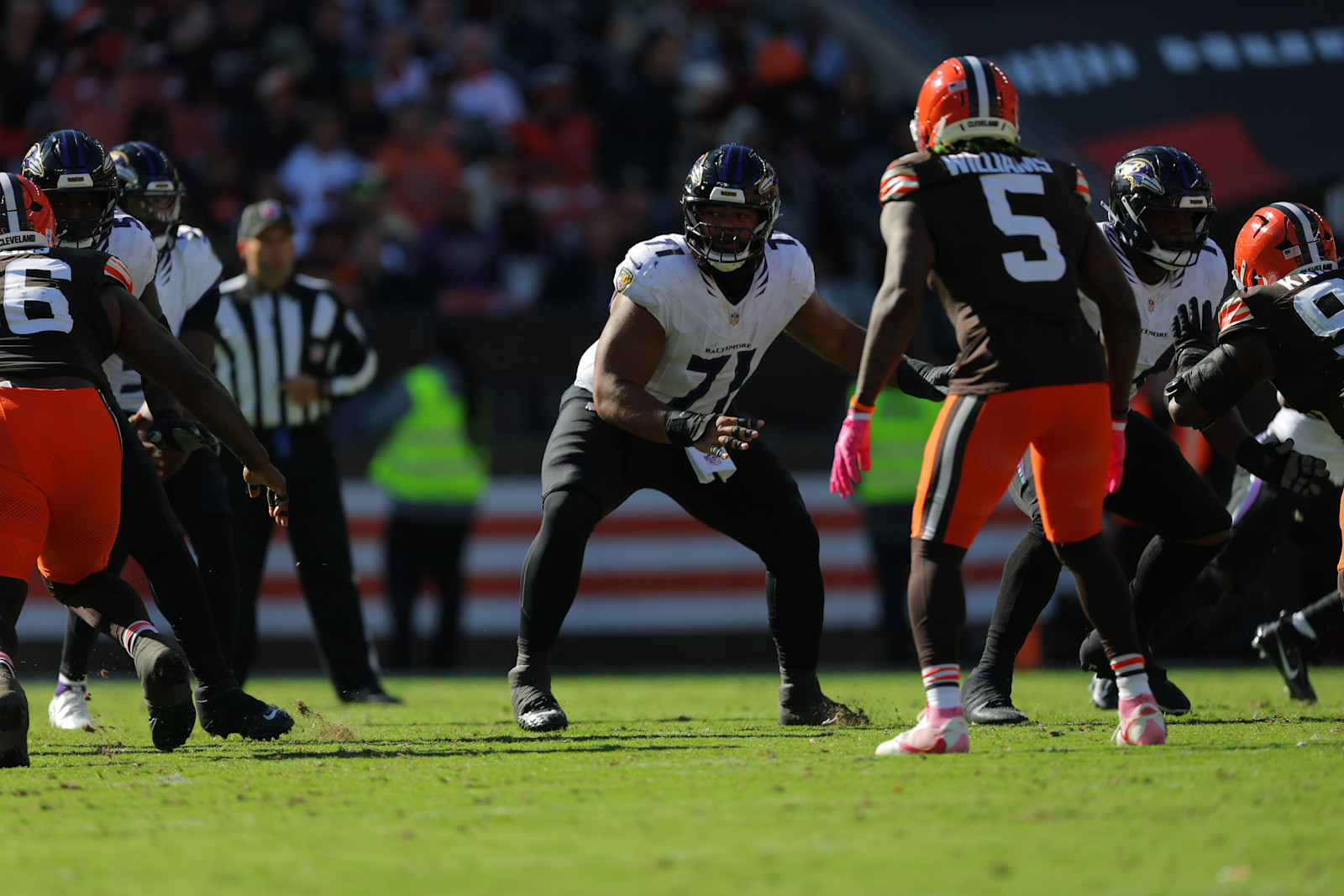
After what Doyle accomplished against Atlanta I expected him to find more answers when Cleveland committed so heavily to stopping the conventional running game. The Browns were attacking aggressively, bringing defenders closer to the line and challenging Huntley to beat man coverage.
Where were the counters that could punish that aggression?
The Ravens looked increasingly predictable and ineffective. Of course, Doyle's playbook becomes considerably smaller when the quarterback cannot consistently threaten the defense downfield. Huntley’s one attempt at a deep ball was badly underthrown, causing Tez Walker to play defense to prevent an interception.
And the Ravens certainly weren't going to abandon Henry while protecting a lead. However, the difference between the first two possessions and everything afterward was alarming.
Then Henry’s fumble topped it off. Leading 10-3 early in the fourth quarter, the Ravens had an opportunity to protect their lead and continue draining the clock. Instead, Carson Schwesinger ripped the football away, giving Cleveland possession at Baltimore's 35.
Seven plays later, the game was tied.
Loop's missed 49-yard field goal was another enormous missed opportunity. Making that kick would have pushed the lead back to 10 points and forced Cleveland into a very different game. It was a kick you expect an NFL kicker to make, but Loop has done enough this season that we don’t need to call for his job after each miss.This is what life with an ordinary NFL kicker looks like. We were spoiled by the peak Justin Tucker years, when even difficult field goals felt automatic.
The larger problem was an offense that scored 10 points in its first two possessions and couldn't manufacture three more over the remaining nine.
Doyle did an excellent job preparing his opening plan.
Now he needs to demonstrate that he can keep finding answers after the defense adjusts.
3. The defense deserved a better result
The Browns finished Sunday with 237 total yards, 14 first downs and 13 points. Deshaun Watson completed 16 of 26 passes for 164 yards. Cleveland ran the ball 29 times for just 93 yards, an average of 3.2 per carry.
The Ravens sacked Watson five times, consistently disrupted the pocket and spent most of the afternoon controlling a Cleveland offense that rarely looked capable of moving the football.
It was a strong defensive performance and there were also several outstanding individual efforts.
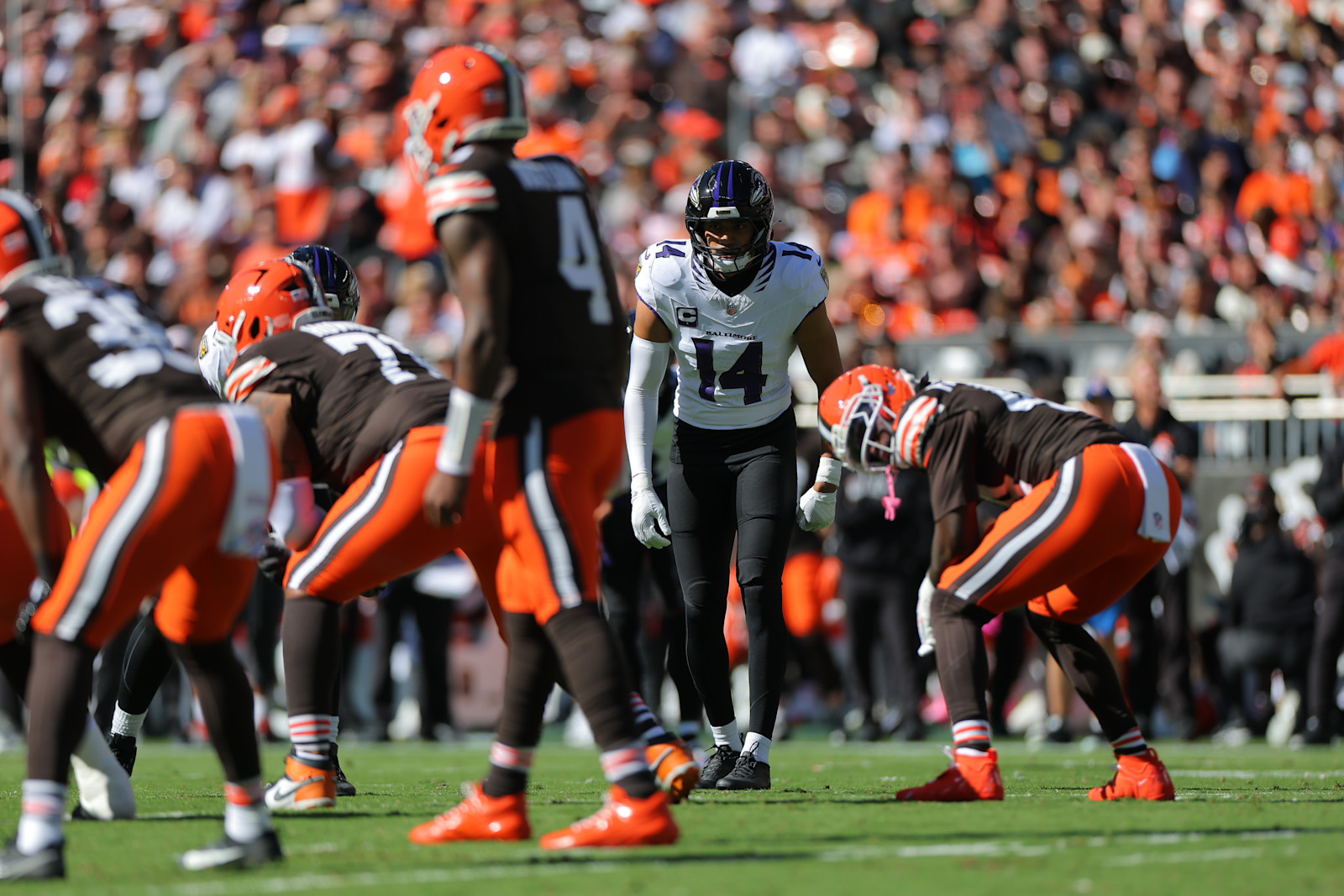
Kyle Hamilton continues to look like one of the most valuable defensive players in football. He finished with three tackles for loss and made some terrific reads against the run, recognizing developing plays and getting into position before Cleveland's backs could find space.
Keyon Martin was another standout.
Back in the slot role in Minter's dime packages after several weeks on the bench, Martin made several impressive plays in coverage and added a sack on a well-timed blitz.
His pass interference penalty on a late third down was particularly frustrating. Sure looked to me like a great, clean play on the football, but I guess the refs (and the only when we feel like it booth review) felt like Cleveland needed some help.
The flag extended the Browns' drive following Henry's fumble and helped Cleveland reach the end zone.
Martin also briefly appeared to save the game by blocking Cleveland's final field goal attempt, only for his own offside penalty to negate the play and give the Browns another chance. He got close again on the subsequent attempt that Szmyt made.
The return of Trey Hendrickson also made an immediate difference. After missing the previous two games following a finger procedure, Hendrickson returned with a sack and multiple pressures, giving the Ravens another legitimate threat off the edge.
Nnamdi Madubuike recorded his first sack in more than a year, while Calais Campbell added another and became one of the few players in NFL history to record a sack after turning 40.
The pass rush looked considerably more dangerous with Hendrickson available.
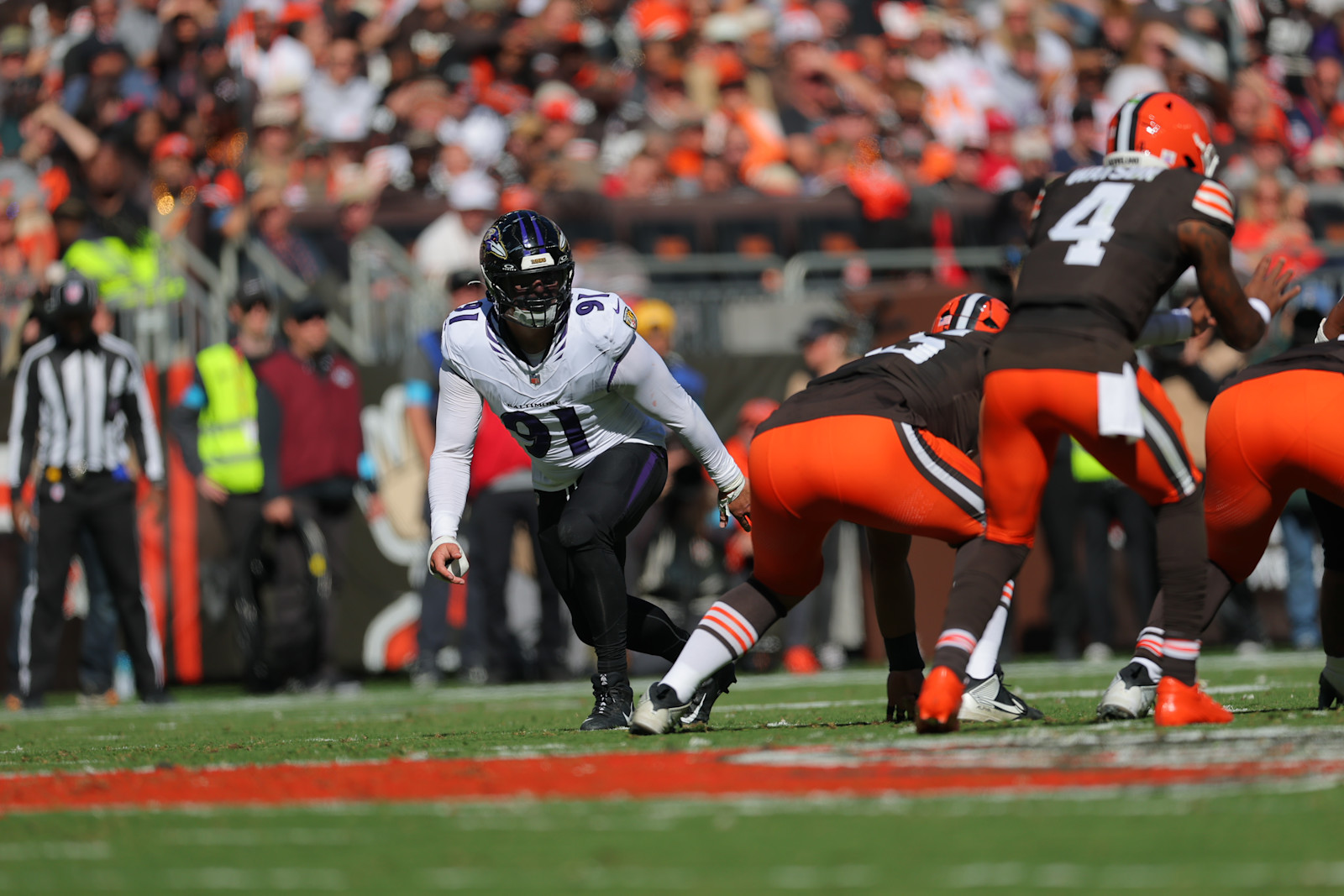
However, there is still one concerning trend that Jesse Minter and Anthony Weaver need to address. The Ravens continue to allow too many critical third-down conversions after dominating the early portions of games.
Cleveland converted just one of its first 10 third-down attempts, but then converted four of their final six. The biggest came on the final drive, with Watson facing third-and-5 from his own 38 and finding Jerry Jeudy for 33 yards.
One play essentially wiped out everything the Ravens had accomplished defensively to that point.
We've seen similar problems against New Orleans and Atlanta. The Ravens can dominate first and second down, put an opponent into an obvious passing situation and then somehow allow the drive to continue.
Nevertheless, I'm not placing much blame on the defense for this loss.
The offense repeatedly handed Cleveland another opportunity, eventually gave it a short field with Henry's fumble and couldn't provide any relief by sustaining possessions of its own.
There is only so much a defense can reasonably be expected to do.
Sunday, the Ravens defense did enough to win.
The offense just didn't.
4. Encouraging signs from the young pass catchers
There weren't many positive developments on offense Sunday, but I thought the performances from Josh Cuevas and Ja'Kobi Lane were encouraging.
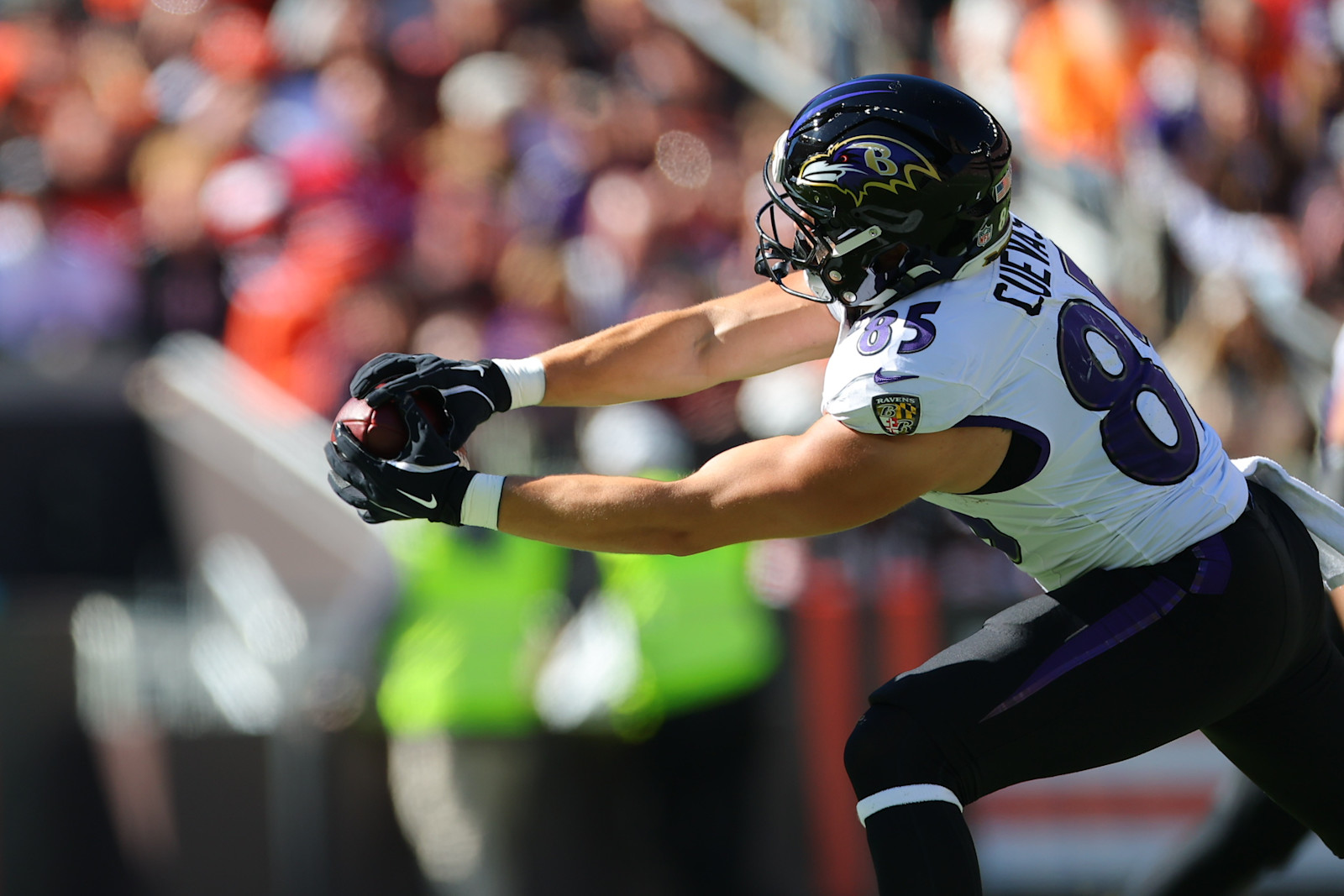
Cuevas finished with four catches for 44 yards and his first NFL touchdown and was involved in some of Doyle’s most creative designs on the day.
Cuevas isn't simply being asked to line up as a conventional tight end and beat coverage with a basic route. Doyle is finding ways to make his alignment part of the deception and create opportunities for him to contribute.
Meanwhile, Lane returned for his first game since suffering a wrist injury in the season opener and immediately looked comfortable. The rookie caught four passes for 40 yards, providing another legitimate receiving option in an offense that has lacked dependable production beyond its established stars.
Combined with Zay Flowers' six catches for 66 yards, those three accounted for 14 of Huntley's 19 completions and 150 of his 165 passing yards.
That's 90.9% of the passing yardage.
Considering how ineffective the offense was throughout most of the afternoon, it's encouraging that the younger targets were producing much of what little success Baltimore managed.
And their emergence may become increasingly important.
Rashod Bateman left Sunday's game in the second quarter with a shoulder injury and did not return. He had been dealing with the same shoulder issue during the week, raising concerns about whether he'll be available against Cincinnati.
Bateman had been enjoying a bounce-back season after last year's disappointing production. Losing him for any extended period would leave an already thin receiving group with even fewer established options.
Lane's return suddenly looks particularly well-timed.
The Ravens spent valuable draft capital addressing their receiving depth. Now some of those young players are beginning to show why.
There's still a considerable difference between producing a few promising catches and becoming a consistently reliable NFL target.
But Sunday offered evidence that Baltimore may have more options than we thought.
And those options could become considerably more valuable when Jackson returns.
5. The Ravens are now in a battle for the AFC North
A week ago, the Ravens were 4-1, riding a three-game winning streak and sitting alone atop the AFC North.
After Sunday's loss, the division suddenly looks considerably more complicated.
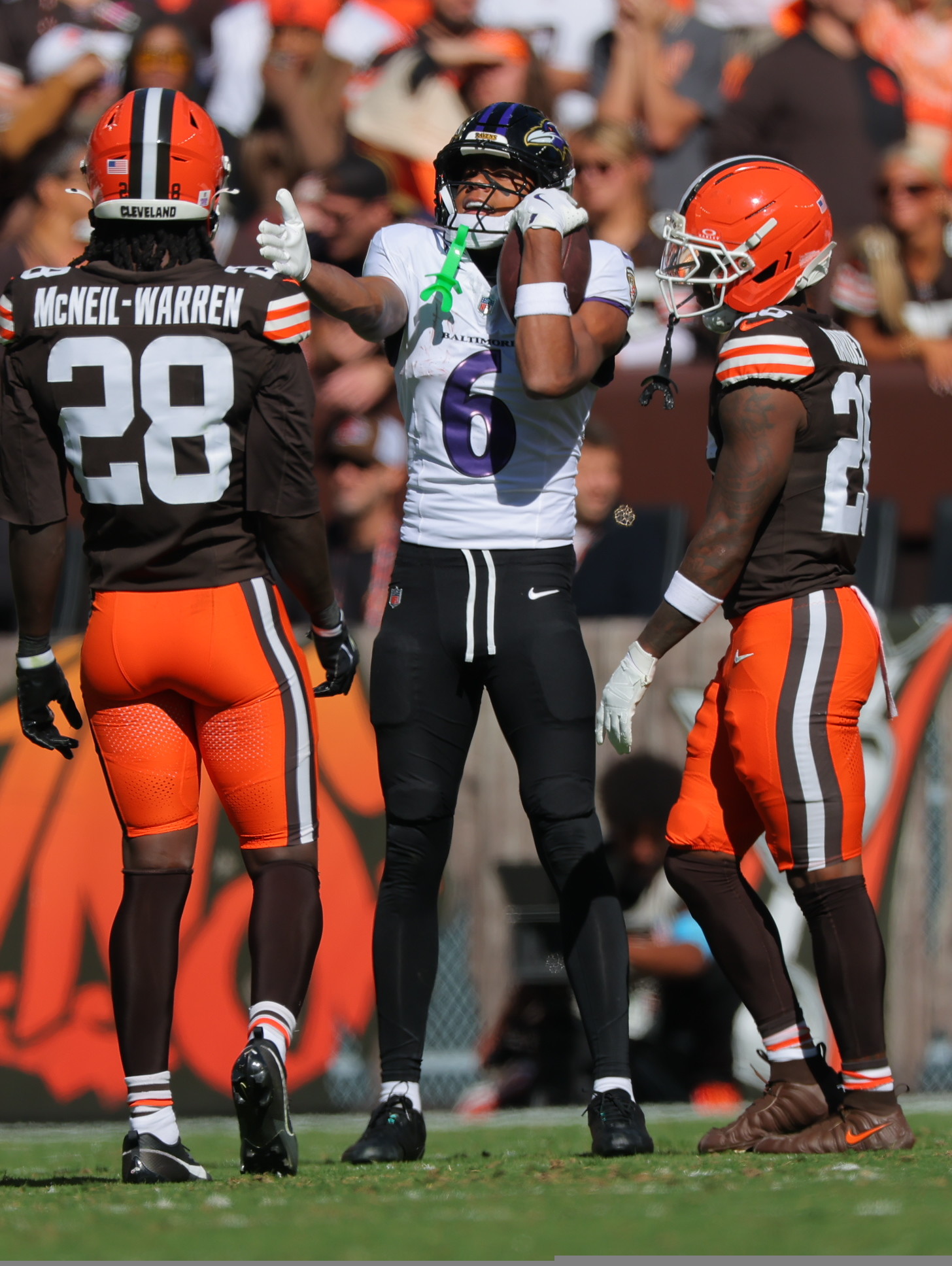
The Steelers staged a late comeback to steal their game in Tampa Bay, leaving Baltimore, Cleveland and Pittsburgh all 4-2, while Cincinnati sits at 3-2 after its bye week.
The Browns currently own the divisional tiebreaker thanks to victories over both the Ravens and Steelers.
The Ravens had a chance to take control of the race with a win in Cleveland and instead find themselves looking up at Cleveland with a dangerous Bengals game looming.
Cleveland deserves credit for finding ways to win, but I'm still skeptical about how good this Browns team really is. Deshaun Watson threw for only 164 yards Sunday and spent most of the afternoon looking thoroughly uncomfortable. The Browns were held scoreless in the first half and needed a short field, a questionable pass interference penalty and a handful of late defensive breakdowns to generate enough offense to win.
Their defense is legitimate, and winning four close games requires making plays when they matter but repeatedly relying on late comebacks to rescue an ineffective offense doesn't strike me as a particularly sustainable formula.
Pittsburgh is a different problem. The Steelers spent much of Sunday getting thoroughly outplayed by a struggling Tampa Bay team before Aaron Rodgers led a furious comeback from a 16-3 fourth-quarter deficit to win 26-19 in overtime.
That's a very Steelers way to win a football game.
They haven't looked particularly dominant this season. The offense can be inconsistent and the roster has some obvious limitations. But they appear to be capable of beating opponents they're supposed to beat, staying competitive against better teams and accumulating enough wins to remain relevant deep into December.
And then there's Cincinnati.
The Bengals are only 3-2, but they have Joe Burrow, a dangerous collection of receiving options and an extra week to prepare for their trip to Baltimore.
That game suddenly carries considerably more significance than it appeared to a week ago.
A Ravens victory would put them at 5-2, hand Cincinnati another loss and restore some control over their position in the division.
A loss would leave them at 4-3, winless in their first two divisional games and potentially staring up at multiple rivals in the standings.
Which brings us back to Lamar Jackson.
The Ravens have now played two full games without him and managed a 1-1 record. Considering both games were on the road and the team has been dealing with significant offensive-line injuries, that's not a catastrophic result.
But the Ravens were built to contend for a championship, not merely survive stretches with a backup quarterback.
Huntley deserves credit for what he accomplished in Atlanta, and the coaching staff deserves credit for finding a way to win without its most important player.
Sunday showed the limits of that approach.
The defense can keep opponents under control. Doyle can manufacture a few creative opportunities. Henry can still punish defenses when the blocking and numbers work in his favor.
But when the opponent begins taking away those advantages, the Ravens need a quarterback capable of forcing the defense to reconsider its entire plan.
That's what Lamar does.
And with the AFC North suddenly wide open and three difficult games approaching, the Ravens desperately need him back.
Sunday's loss was frustrating, but hardly season-defining.
What happens next might be.