The third round of the Champions League delivered perhaps the best collection of games of the young European season, with several heavyweight matchups, a remarkable comeback at Anfield and another enormous statement from the competition's most surprising newcomer.
Paris Saint-Germain handed Barcelona its first defeat of the season with a 4-2 victory that exposed some of the vulnerabilities in Hansi Flick's aggressive approach. Bayern Munich and Arsenal traded punches in a 2-2 draw between two of Europe's best teams, while Real Madrid eventually pulled away from RB Leipzig for a 4-1 victory.
Liverpool produced another memorable European comeback, recovering from a 2-0 deficit to defeat Villarreal 4-3. Meanwhile, Como continued its improbable Champions League debut by dismantling Manchester United 4-1, putting even more pressure on Michael Carrick.
The biggest takeaway from the round is that the gap between Europe's best teams and the next tier is beginning to become apparent. PSG looks capable of beating anyone, Real Madrid continues finding ways to win even when it isn't at its best, and Arsenal and Bayern remain remarkably well matched.
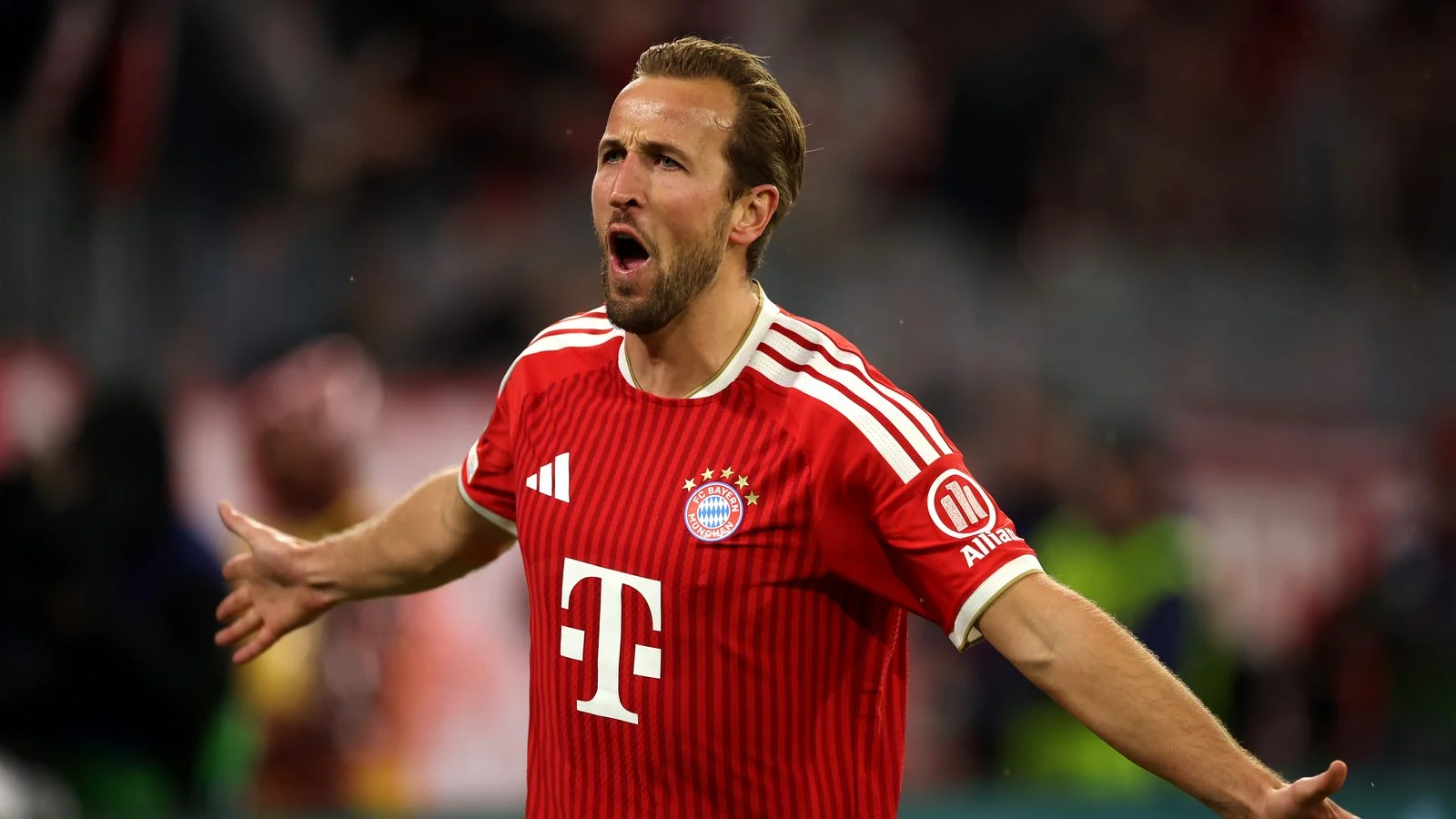
Our Best XI lines up in a 3-4-3, with Harry Kane earning Player of the Round honors for his outstanding performance against Arsenal.
The Biggest Games of Matchday 3
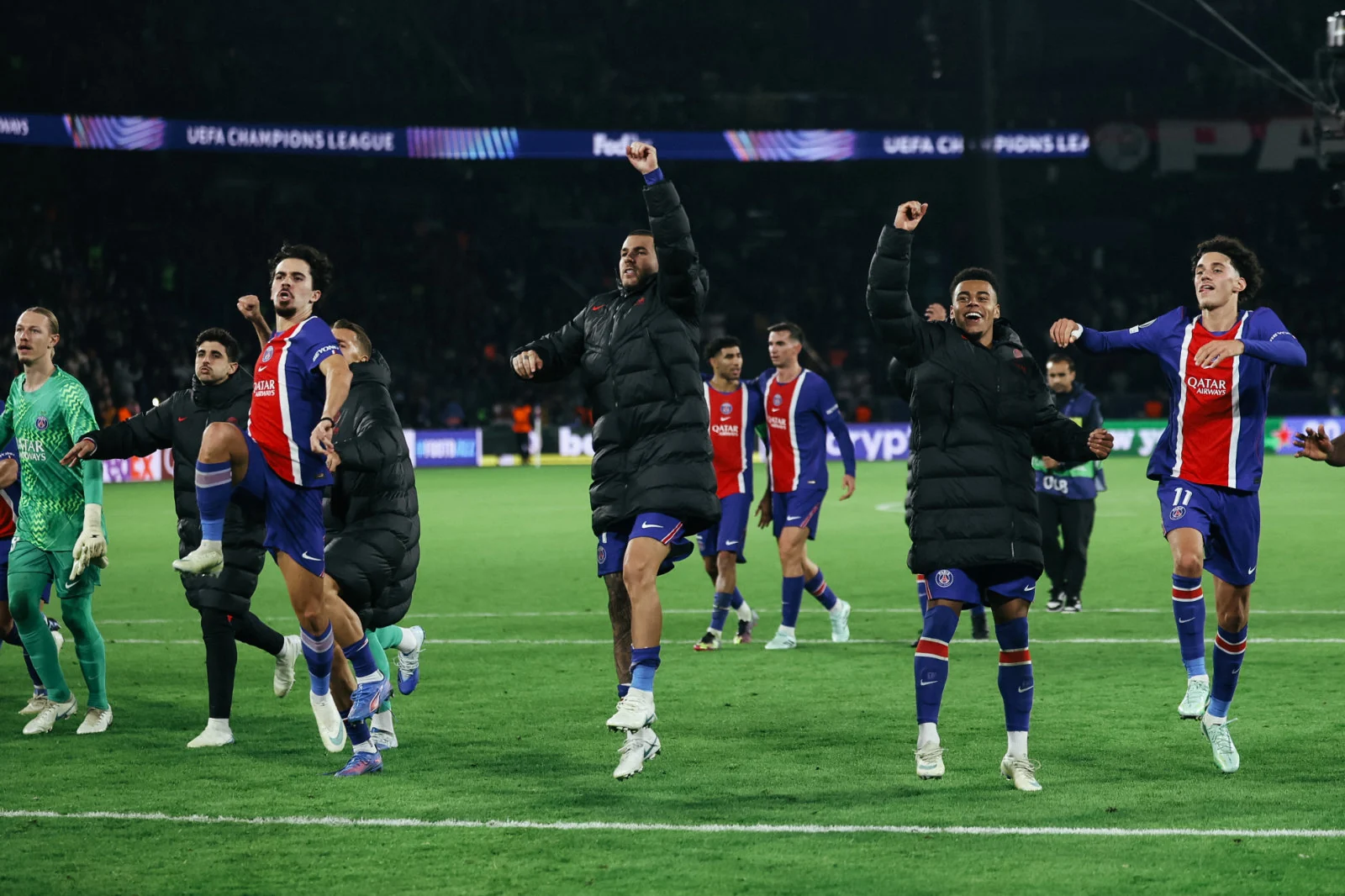
Paris Saint-Germain 4-2 Barcelona
Goals: Doué 38', Hernández 72', Vitinha 81', Fabián Ruiz 86'; Espart 55', Yamal 79'
Barcelona arrived in Paris having won every competitive game this season, and there was growing reason to believe Flick's team might be the best in Europe.
PSG provided a fairly convincing argument against that conclusion.
This was a fascinating matchup between two teams committed to aggressive pressing, quick passing and attacking with numbers. Neither was particularly interested in retreating into a defensive shell, which produced an unusually open game with dangerous chances at both ends.
The biggest difference was PSG's effectiveness pressing Barcelona's buildup.
Luis Enrique used an aggressive man-oriented approach, with Désiré Doué pressing Gerard Martín, Achraf Hakimi advancing onto João Cancelo and Lucas Hernández tracking Lamine Yamal. In midfield, Vitinha and Fabián Ruiz pushed up to pressure Barcelona's deeper midfielders.
Barcelona attempted to create space by drawing PSG's defenders forward, but too often the passes needed to exploit that space were rushed or intercepted.
The first goal was a perfect example. Yamal attempted a clever chipped pass out of the back, but João Neves intercepted it and Doué quickly took advantage, beating his defender and curling a shot past Joan García.
PSG could easily have scored several more before halftime. García produced a string of excellent saves, while Ferran Torres, who replaced an injured Ousmane Dembélé, wasted several opportunities against his former team.
Barcelona had chances of its own but struggled to sustain possession in dangerous areas without exposing its back line to PSG's transitions.
The second half was more encouraging for the Spanish champions.
Barcelona began finding better solutions against the PSG press, most notably by using movement to pull individual defenders away from their assignments. Their equalizer in the 55th minute came when Yamal and Fermín López drew PSG players toward the ball, opening a channel for Xavi Espart to run through from right back and finish.
Flick then introduced Rodri, Gavi and Karim Adeyemi, and Barcelona briefly looked more comfortable controlling the midfield.
However, PSG remained dangerous whenever it recovered possession.
Doué created the opportunity that eventually produced a corner, then delivered the ball for Hernández to head PSG ahead in the 72nd minute.
Yamal responded with an outstanding individual goal seven minutes later, cutting inside from the right and finishing from a difficult angle. Interestingly, it came almost immediately after Hernández, who had contained him well for most of the night, was substituted.
At 2-2, the game appeared headed for a dramatic finish.
Instead, PSG delivered the final two blows.
Vitinha restored the lead in the 81st minute with a spectacular finish after Barcelona failed to clear Hakimi's cross. Five minutes later, Fabián Ruiz arrived unmarked to finish another dangerous ball from the PSG right back.
The final statistics reflected PSG's superiority in the quality of chances, with approximately 3.7 expected goals compared to Barcelona's 2.2.
To be fair, Barcelona was not at full strength, resting Rodri, limiting Pedri’s minutes and missing several defenders with the Clasico this weekend.
But the loss exposed a legitimate concern about Barcelona's approach.
Against most La Liga opponents, Barcelona can afford to commit enormous numbers forward and trust its counterpress to prevent dangerous transitions. PSG has the technical quality to play through that pressure and the attacking speed to punish the space behind it.
Barcelona has enough talent to beat PSG on another night, but it cannot expect to consistently win these matchups by simply playing faster and attacking with even more players.
The defending European champions were sharper in their defensive pressure, more dangerous with the chances they created and ultimately the better team.
Bayern Munich 2-2 Arsenal
Goals: Davies 35', Kane 61' (pen); Eze 25', Rice 82'
The most evenly matched game of the round featured two teams with legitimate Champions League title ambitions.
Arsenal entered Munich looking to build on its impressive victory at Napoli in the opening round, while Bayern arrived with one of the most productive attacks in Europe.
The game did little to separate them.
Arsenal suffered an early blow when Bukayo Saka was forced off after only ten minutes. Eberechi Eze replaced him, with Noni Madueke moving to his more natural right-wing position.
The change paid off almost immediately.
Martin Ødegaard found Eze making a run through the left channel in the 25th minute, delivering a beautifully weighted pass that allowed the substitute to finish past Manuel Neuer.
Arsenal had started well, but Bayern's response was largely driven by Harry Kane.
One of the most impressive parts of Kane's game is his ability to function as both a center forward and a creative midfielder. Rather than constantly occupying the space between Arsenal's center backs, he repeatedly dropped deeper to receive the ball and release runners behind the defense.
That movement created Bayern's equalizer.
In the 35th minute Kane delivered an outstanding through ball for Alphonso Davies, who timed his run perfectly and finished past David Raya.
The game became even more open after halftime, with both teams producing dangerous chances.
Neuer made an excellent close-range save on Bruno Guimarães, while Raya responded with several important stops at the opposite end.
Bayern finally took the lead in the 61st minute when Kane's shot struck Jurriën Timber's arm, producing a penalty that Kane converted.
At that point Bayern appeared to have taken control, but Arsenal continued to find openings.
Mikel Arteta introduced Viktor Gyökeres in the second half, giving Arsenal another player capable of occupying defenders and combining around the penalty area.
The equalizer arrived in the 82nd minute when Madueke helped initiate a quick passing move down the right, Gyökeres laid the ball into Declan Rice's path and the midfielder drove into the box before finishing from a tight angle.
Arsenal nearly stole the victory in stoppage time, but Neuer denied Timber.
There is some temptation to view Arsenal's comeback as evidence that they were the stronger team, particularly considering they were playing away from home and lost Saka so early.
However, Bayern was also missing important players, including the suspended Michael Olise and injured Jamal Musiala. Joshua Kimmich was unavailable as well.
Both teams had stretches where they dictated the match, and both created enough chances to win it.
The biggest difference between this game and many high-profile matches between elite teams was the willingness of both sides to continue attacking after taking the lead.
Bayern repeatedly tried to use Kane's passing to get runners behind Arsenal, while Arsenal continued pushing its midfielders into dangerous positions even after falling behind.
A draw was probably the right result.
These remain two of the leading contenders for the trophy, and there is little reason to believe either would be particularly happy drawing the other in the knockout rounds.
Real Madrid 4-1 RB Leipzig
Goals: Bernardo Silva 44', Güler 52', Mbappé 83', Diomande 87'; Gomis 85'
The final score suggests another comfortable victory for José Mourinho's Real Madrid.
For the first 40 minutes, it was anything but.
RB Leipzig came to the Bernabéu with an aggressive approach, pressing Madrid high and looking to attack before the Spanish giants could establish their defensive shape.
The strategy initially worked.
Leipzig created two excellent first-half opportunities, but Thibaut Courtois denied Rômulo in the 28th minute and Christopher Nkunku in the 41st.
Those saves were crucial because Madrid had not yet established consistent control of the game.
Then the difference in individual quality began to show.
Just before halftime, Federico Valverde delivered a cutback to Arda Güler, whose shot was saved by Maarten Vandevoordt. Bernardo Silva reacted first to the rebound and finished to give Madrid a somewhat flattering 1-0 lead.
The opening goal changed the game.
Madrid began the second half much more aggressively and doubled the advantage in the 52nd minute when Jude Bellingham's cross found Mbappé, who headed the ball back across goal for Güler to finish.
Leipzig continued competing, but the opportunities became increasingly difficult to find as Madrid gained confidence.
Mourinho then introduced Yan Diomande, the former Leipzig winger, in the 70th minute.
He made an immediate impact.
Diomande created Mbappé's spectacular goal in the 83rd minute before scoring a jaw-dropping volley himself four minutes later. Leipzig briefly pulled one back through Tidiam Gomis between those goals, but by then the outcome was settled.
The interesting development for Madrid is that Mourinho appears increasingly comfortable allowing games to unfold without demanding complete possession control.
Against Inter in the first round, Madrid won despite spending most of the game without the ball. Leipzig presented a different challenge, pressing Madrid early and forcing Courtois to make important saves.
In both games, Madrid eventually found the decisive moments.
There is a legitimate concern that better opponents will punish some of the chances Madrid is conceding. Leipzig could easily have taken an early lead here.
But Madrid also possesses an almost ridiculous collection of attacking players.
Mbappé, Vinícius, Bellingham and Güler can all decide games individually, while Diomande gives Mourinho another explosive option from the bench.
Madrid now has three wins from three Champions League games and heads into the weekend's Clásico against Barcelona in outstanding form.
The team's defensive consistency may still be a work in progress, but the attacking ceiling is enormous.
Como 4-1 Manchester United
Goals: Paz 3', 57', Douvikas 49', Ramón 76'; Zirkzee 90+1'
At some point, we probably need to stop treating Como as a charming underdog story and start recognizing that Cesc Fàbregas has built a genuinely dangerous European team.
After dismantling RB Leipzig 4-1 in the opening round, Como produced another identical score against a much more famous opponent.
And once again, the result was entirely deserved.
Manchester United arrived in Italy under increasing pressure after a difficult start to the season. Injuries had forced Michael Carrick into several changes, including the return of Matthijs de Ligt for his first appearance in nearly a year.
But the biggest problems were in midfield.
Como consistently found space between United's midfield and defensive lines, allowing Nico Paz to receive the ball in dangerous positions and attack defenders who were already retreating toward their goal.
The Argentine playmaker opened the scoring after only a few minutes, finding space near the penalty area and curling an excellent shot into the corner.
United struggled to respond.
Como's midfield combination of Máximo Perrone and Luis Milla provided a platform for the attackers to move around, while Paz and Martin Baturina continually offered passing options between the lines.
The home side did not need to dominate every possession. It simply needed to move the ball quickly enough to exploit United's poor defensive spacing.
The second half demonstrated how badly United was struggling.
In the 49th minute Paz slipped Douvikas through behind the defense, and the striker finished emphatically after De Ligt stumbled trying to recover.
Eight minutes later, Carlos Baleba played a blind pass that Paz intercepted before breaking forward and scoring his second.
By the 57th minute it was 3-0, and the game was essentially over.
Center back Jacobo Ramón added a fourth from a cross in the 76th minute before Joshua Zirkzee scored a meaningless consolation in stoppage time.
The statistical picture was nearly as damning as the score. Como generated approximately 2.0 expected goals from 11 attempts, putting eight shots on target. United managed about 1.1 expected goals from 12 shots.
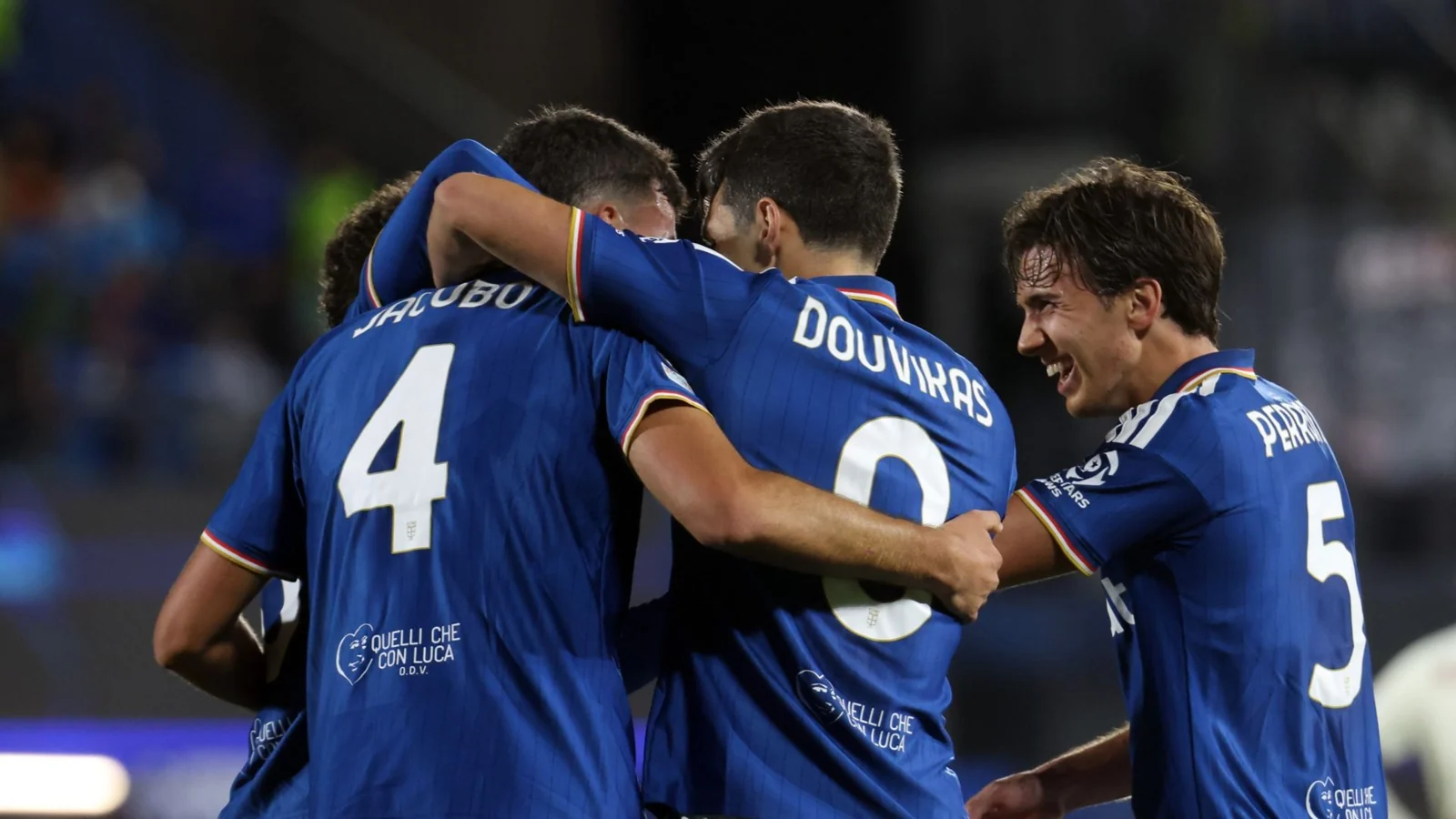
Fàbregas has developed a team with a coherent identity. Its midfielders know where to receive, its attackers recognize when to move between defenders, and its players are comfortable taking risks in possession.
United has more expensive players and considerably greater European pedigree.
Como looked like the better-coached and more cohesive team.
The Italian club now has two emphatic home victories in its first Champions League campaign. While it would be premature to declare Como a serious title contender, there is no longer much reason to doubt that it belongs at this level.
For United, the questions surrounding Carrick are becoming increasingly difficult to ignore.
Liverpool 4-3 Villarreal
Goals: Mac Allister 36', 65', Araújo 45', Wirtz 68'; Mikautadze 4', Cardona 29', Oluwaseyi 86'
Liverpool has developed a habit of producing dramatic Champions League games under Andoni Iraola.
This one was particularly ridiculous.
The Reds fell behind 2-0 inside half an hour, recovered to lead 4-2 and then allowed Villarreal to make the final minutes uncomfortable.
The opening goal came from an uncharacteristically poor mistake by Virgil van Dijk. The Liverpool captain misjudged a header back toward Alisson, allowing Georges Mikautadze to steal possession and finish after only four minutes.
The second goal was more revealing tactically.
Villarreal repeatedly overloaded the middle of the field, using three deeper midfielders and Alberto Moleiro drifting inside to create additional passing options.
Liverpool struggled to close those spaces, allowing Villarreal to play through the press and attack its high defensive line.
In the 29th minute Sergi Cardona made an aggressive run from left back and was released behind the Liverpool defense before finishing to make it 2-0.
Liverpool eventually found its way back into the game through two headers.
Alexis Mac Allister scored from a Kostas Tsimikas corner in the 36th minute, and Ronald Araújo equalized with practically the final action of the first half, heading home Rio Ngumoha's cross at the back post.
The second half brought the decisive tactical adjustment.
Iraola removed Araújo, introduced Florian Wirtz and moved Ryan Gravenberch to right back.
It was an unusual solution, but it addressed two problems simultaneously. Gravenberch could follow Villarreal's midfield runners more comfortably than a traditional center back while also providing another player capable of progressing the ball behind Ngumoha on Liverpool's right side.
Liverpool suddenly looked much more dangerous.
Ngumoha was outstanding, repeatedly beating defenders on the right and creating opportunities with his movement and delivery.
His best sequence came in the 65th minute when he collected Mac Allister's pass, beat two Villarreal defenders and pulled the ball back for the Argentine midfielder to finish his second goal of the game.
Three minutes later Wirtz added a fourth, finishing a passing sequence involving Tsimikas and Cody Gakpo.
Villarreal got one back late through Tani Oluwaseyi, but Liverpool survived to maintain its perfect Champions League record.
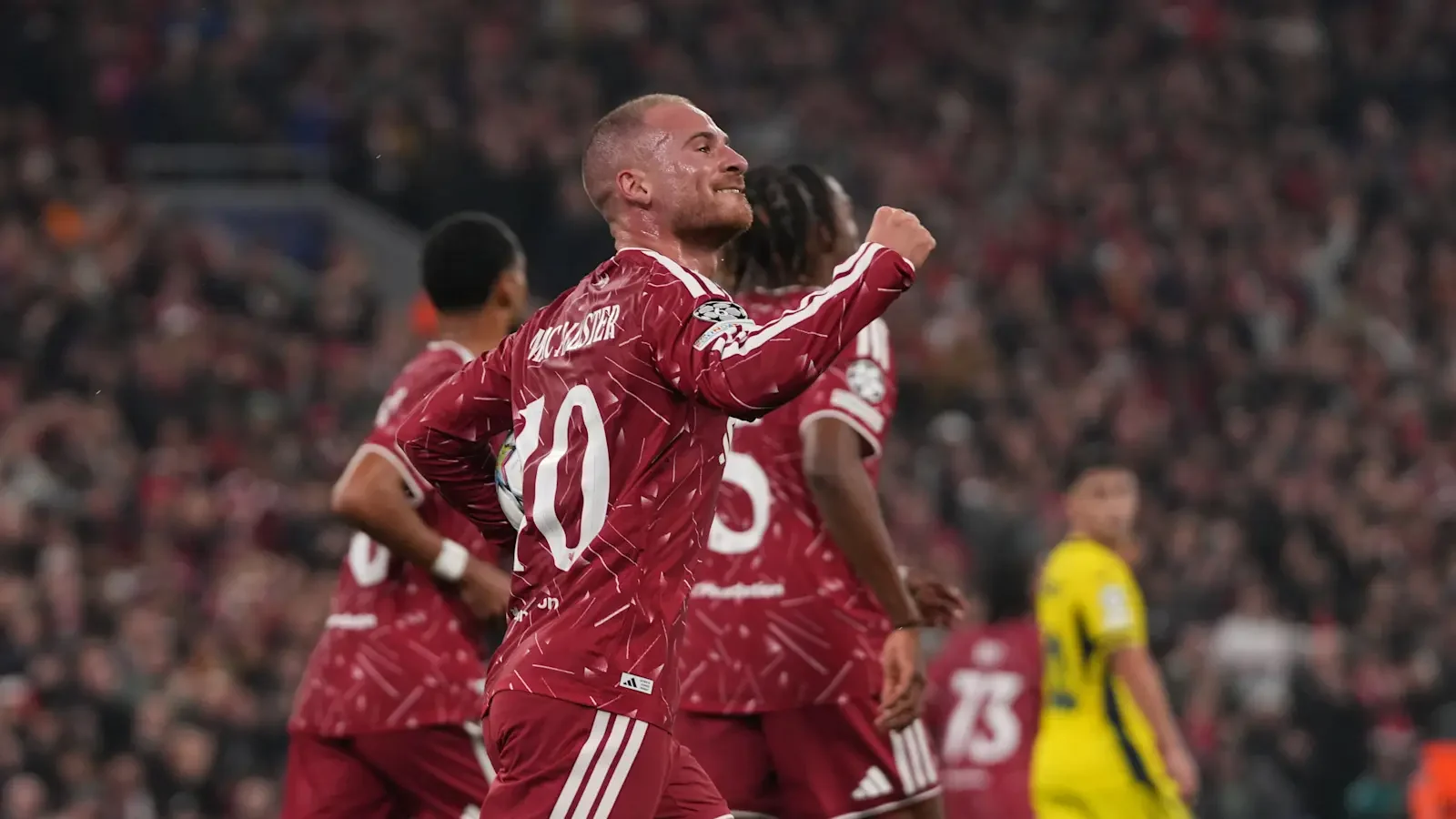
The comeback was impressive, particularly considering Iraola had rotated several important attacking players out of the starting lineup.
Ngumoha's performance may have been the most encouraging individual development. The 18-year-old produced two assists and consistently created danger in one-on-one situations against an experienced European opponent.
However, Liverpool cannot continue relying on dramatic comebacks to overcome defensive mistakes and poorly organized opening stretches.
Iraola deserves credit for recognizing the midfield problem and making a successful adjustment.
He also deserves some responsibility for the initial setup that allowed Villarreal to control so much of the first half.
Liverpool remains perfect through three European games, but the defensive performances have been considerably less convincing than the results.
Player of the Round: Harry Kane, Bayern Munich
There were several excellent candidates this week.
Nico Paz scored twice and added an assist in Como's destruction of Manchester United. Alexis Mac Allister scored two crucial goals in Liverpool's comeback. Désiré Doué produced a goal and an assist against Barcelona.
Kane gets the nod because of the level of opposition and the influence he had beyond his goal contribution.
Against one of the best defensive teams in Europe, Kane was Bayern's most important attacking player.
He assisted Alphonso Davies' equalizer with an outstanding pass through Arsenal's defensive line, then scored from the penalty spot to put Bayern ahead in the second half.
But the most impressive aspect of his performance was how consistently he helped Bayern progress the ball.
Kane repeatedly dropped into midfield, attracting defenders and then finding runners moving into the space behind them. His range of passing meant Arsenal could not simply defend him as a conventional center forward.
If Gabriel and Ezri Konsa followed him too aggressively, Bayern could exploit the space they abandoned. If they remained deep, Kane had the freedom to turn and pick out attacking passes.
That is what makes him such an unusual striker.
His penalty was also his goal in a tenth consecutive Champions League appearance, putting him one game away from equaling Cristiano Ronaldo's competition record.
Bayern ultimately settled for a draw, and Rice deserves plenty of credit for denying Kane the winning moment.
But against one of the strongest opponents anyone faced this week, Kane demonstrated why he remains one of the most complete attacking players in Europe.
Champions League Best XI: Matchday 3
Formation: 3-4-3
Goalkeeper: Thibaut Courtois, Real Madrid
Madrid eventually beat Leipzig comfortably, but Courtois was the reason it reached halftime with a lead rather than a deficit.
The Belgian made two enormous first-half saves, first denying Rômulo and then stopping Nkunku when the forward broke through one-on-one.
Madrid scored only minutes after the second save, fundamentally changing the game.
There were goalkeepers with clean sheets this week, but few made saves against such dangerous opportunities at such consequential moments.
Courtois continues to provide an enormous safety net for Mourinho's aggressive approach.
Defender: Lucas Hernández, Paris Saint-Germain
Perhaps the most impressive defensive performance of the round considering the assignment.
Hernández spent much of the night matched against Lamine Yamal, one of the most difficult attackers in the world to defend individually.
He did an excellent job staying close enough to prevent Yamal from consistently turning into space while also participating in PSG's aggressive press.
As a bonus, he scored the crucial second PSG goal with a powerful header from Doué's corner.
Yamal eventually produced a spectacular equalizer, but notably it came after Hernández had left the field.
Containing Yamal for more than an hour and adding a goal in a victory over Barcelona makes Hernández an easy selection.
Defender: Willian Pacho, Paris Saint-Germain
Pacho did not have a flawless evening, particularly during the early stretches when Raphinha was able to create problems around the penalty area.
However, he recovered well and provided much of the defensive security that allowed PSG to continue attacking aggressively.
Barcelona's movement continually forced the PSG defenders to decide whether to follow attackers into midfield or protect space behind the defensive line.
Pacho handled those responsibilities increasingly well as the game progressed, using his positioning and physicality to prevent Barcelona's attackers from consistently turning dangerous possession into clear chances.
Conceding twice prevents this from being a perfect defensive performance, but he was an important part of PSG's biggest victory of the season.
Defender: Xavi Espart, Barcelona
It is unusual to include a defender from a team that conceded four goals, but Espart's performance deserves recognition.
The 19-year-old was given a difficult assignment against PSG's explosive attack and generally acquitted himself well despite Barcelona's defensive problems.
His biggest contribution came in the 55th minute when he recognized the space created by Yamal and Fermín López, made an aggressive run from right back and finished confidently for Barcelona's equalizer.
That movement demonstrated exactly what an attacking fullback can provide against a man-oriented defense.
Espart left the game in the second half after suffering ankle discomfort, but his performance was another encouraging indication that Barcelona's academy continues producing first-team-caliber talent.
Midfielder: Fabián Ruiz, Paris Saint-Germain
Ruiz was one of the central figures in PSG's midfield superiority against Barcelona.
His defensive positioning and pressure helped disrupt Barcelona's attempts to establish possession, while his passing consistently moved the ball forward once PSG recovered it.
He also repeatedly joined attacks around the penalty area, although his finishing let him down on several earlier opportunities.
Eventually he got his reward in the 86th minute, arriving unmarked to finish Hakimi's cross and put the result beyond doubt.
His goal completed an excellent collective midfield performance by PSG, which was arguably the biggest reason the French champions won.
Midfielder: Alexis Mac Allister, Liverpool
Two goals in a dramatic comeback are more than enough to earn a place in the team, especially when they come from a midfielder.
Mac Allister began Liverpool's recovery with an excellent header from a corner, then scored the go-ahead goal after timing his run perfectly to meet Ngumoha's cutback.
The second goal was particularly impressive because Mac Allister helped initiate the move before continuing forward into the penalty area.
Liverpool needed players capable of attacking spaces beyond Villarreal's midfield rather than simply circulating the ball in front of it.
Mac Allister provided that movement, along with the finishing to make it count.
Midfielder: Declan Rice, Arsenal
Rice produced another performance that demonstrated his value at both ends of the field.
Facing Bayern's dangerous midfield and the unusual movement of Harry Kane was a difficult assignment, particularly without Arsenal's full complement of attacking players.
Rice helped provide defensive balance while continuing to support Arsenal's buildup.
Then, with Arsenal trailing late, he made the decisive attacking run.
His movement into the penalty area and excellent finish from a tight angle earned Arsenal a valuable road point against one of the competition's strongest teams.
Rice's ability to combine defensive responsibility with increasingly dangerous attacking contributions makes him one of the most complete midfielders in Europe.
Midfielder: Vitinha, Paris Saint-Germain
Vitinha continues to be the player who determines how PSG moves the ball through midfield.
Against Barcelona, his ability to receive under pressure and find quick forward passes was especially valuable because of the aggressive way both teams defended.
He helped PSG escape pressure without immediately resorting to hopeful long balls, allowing the attackers to receive possession while Barcelona's defenders were still moving into position.
Then he provided one of the goals of the round.
Only two minutes after Yamal had equalized, Vitinha controlled a partially cleared cross near the edge of the box and hammered an outstanding finish past García.
It was a spectacular individual moment at exactly the point PSG needed one.
Forward: Nico Paz, Como
There may not have been a more impressive individual attacking performance in the round than Paz's demolition of Manchester United.
The Argentine playmaker scored twice and assisted another as Como dismantled United 4-1, and he was the player at the center of nearly everything dangerous the Italian side created.
His opening goal was an outstanding individual effort, finding space near the edge of the penalty area before curling his shot into the corner. Early in the second half, he recognized Douvikas' run behind United's back line and slipped a perfectly weighted pass through for Como's second.
Then he effectively ended the game himself.
Paz anticipated Carlos Baleba's blind pass, intercepted it and drove forward before finishing confidently for his second goal.
What made the performance so impressive was the variety of ways he influenced the attack. Paz could drop into midfield to receive the ball, turn into space between the lines, create opportunities for his teammates and finish chances himself.
United never figured out how to defend him.
Paz has been one of the most interesting young playmakers in Serie A, but performances like this against a major European opponent suggest he may already be developing into something more than a promising prospect.
Forward: Kylian Mbappé, Real Madrid
Mbappé continues to produce decisive moments almost every time Madrid needs them.
He helped create Güler's second-half goal with a header back across the penalty area, then added a spectacular goal of his own late in the match.
The finish was outstanding, curling the ball into the far corner from outside the box after Diomande found him near the edge of the area.
His movement throughout the game also forced Leipzig's defenders to constantly account for the threat of runs behind their defensive line.
Madrid has an almost absurd collection of attacking options, but Mbappé remains the player opponents are most concerned about giving space.
Forward: Désiré Doué, Paris Saint-Germain
Doué may have been the best pure attacking player of the round.
The French winger was consistently dangerous against Barcelona, particularly when he could receive near the penalty area and attack defenders with quick changes of direction.
He opened the scoring with an outstanding individual effort after PSG recovered possession high up the field.
Then he created Hernández's goal from a corner after repeatedly threatening Barcelona's defensive line.
His performance was not simply about the goal contributions. Doué was involved throughout PSG's most dangerous attacking sequences, repeatedly forcing defenders to make difficult decisions about whether to close him down or protect the space behind them.
Against a Barcelona team loaded with some of the best young attackers in Europe, Doué looked like the most dangerous player on the field.
What Comes Next
Three rounds into the league phase, PSG, Real Madrid and Liverpool have all collected nine points, although they have arrived there in very different ways.
PSG has produced perhaps the most convincing performances against elite opposition. Madrid has relied more heavily on individual quality and timely defending, while Liverpool has shown impressive attacking resilience without consistently controlling games.
Arsenal and Bayern remain among the strongest contenders despite dropping points against each other.
The most interesting outsider may be Como. Two 4-1 home victories against Leipzig and Manchester United provide considerably more evidence than a single opening-round surprise.
The league phase is still young, and none of these results guarantees anything about the knockout rounds.
But the leading contenders are beginning to separate themselves, and the number of teams capable of legitimately challenging for the trophy looks larger than it did when the competition began.
Best XI
Formation: 3-4-3
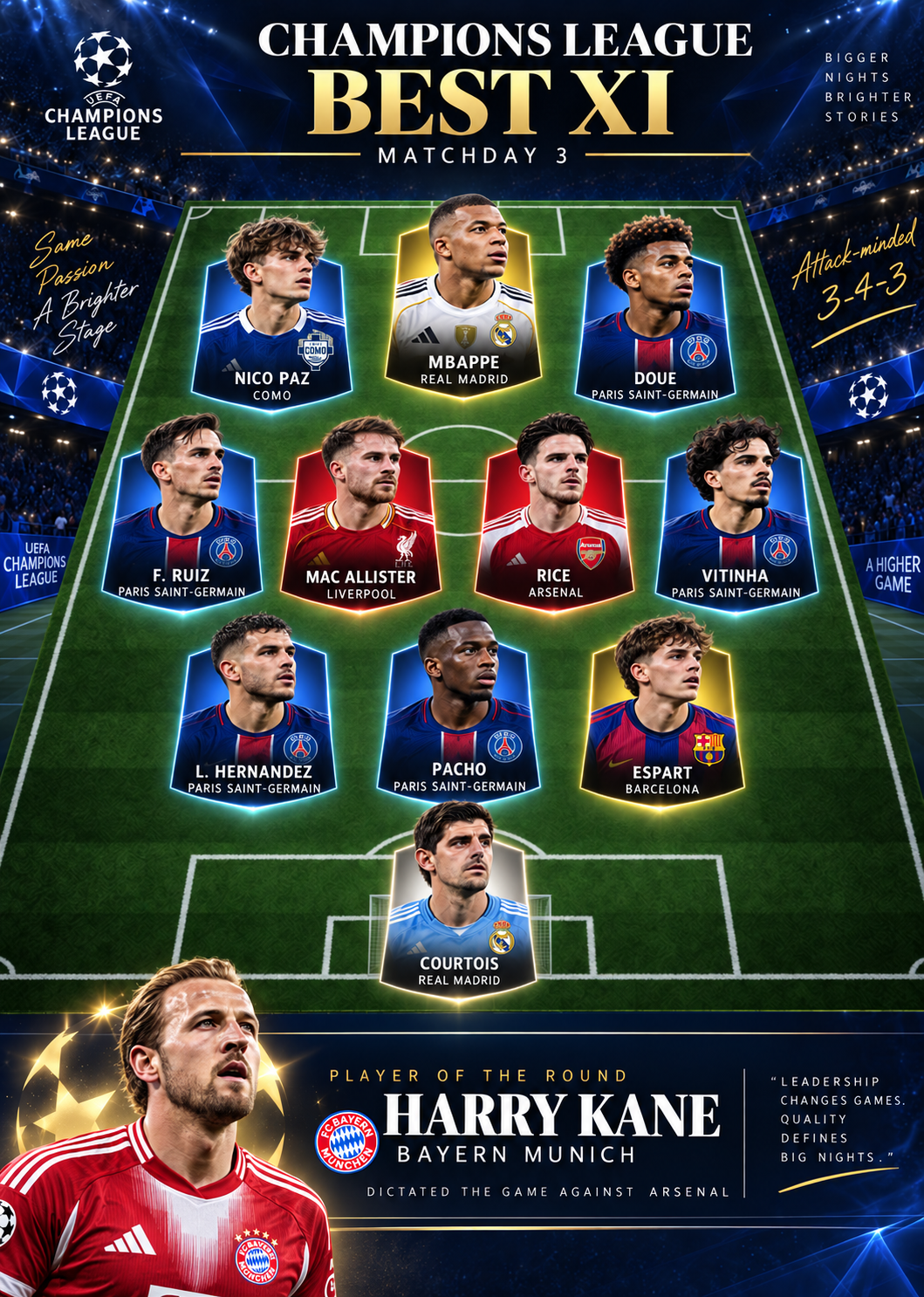
Player of the Round: Harry Kane, Bayern Munich