October 20, 2026 | Through Week 6
Six weeks into the NFL season, the San Francisco 49ers have separated themselves from the rest of the league.
At 6-0, San Francisco sits atop both the Dual Eights Efficiency Index and our forward-looking Power Index (DEPI). The 49ers have the NFL's most efficient adjusted offense, a 2.3-point lead over Jacksonville in Efficiency, and an even more substantial advantage in projected team strength.
But the biggest story this week is Chicago.
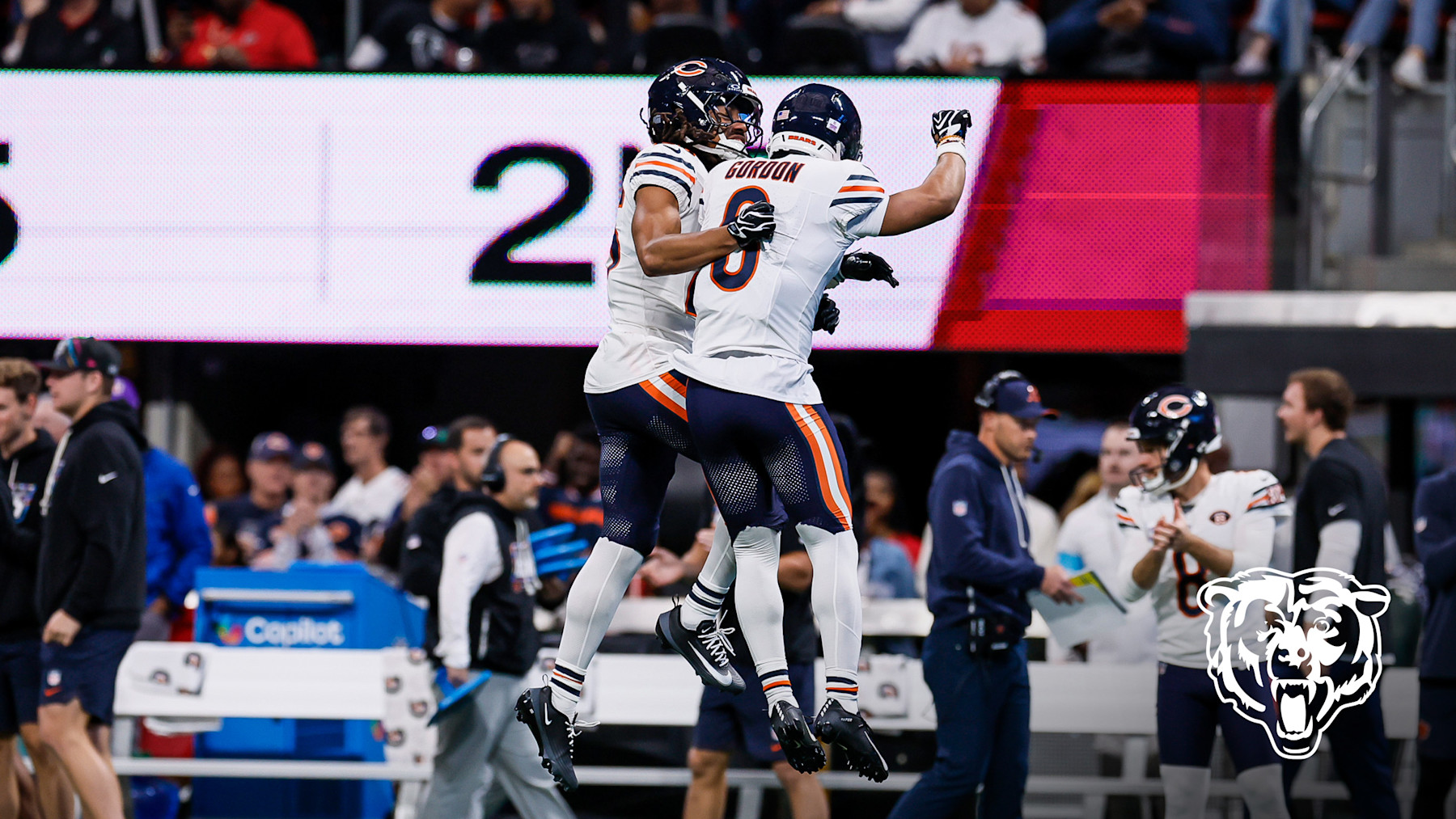
The Bears responded to last week's embarrassing loss in Green Bay by beating Atlanta 31-23, climbing eight places to fourth in Efficiency and four places to third in DEPI. No team improved more in either index.
Kansas City also continues to climb, with its defense joining Patrick Mahomes and the offense among the league's top units. The undefeated Chiefs are now third in Efficiency, although DEPI remains considerably more skeptical.
And then there are the Ravens.
After surviving two games without Lamar Jackson, Baltimore finally paid the price in Cleveland. The 13-10 loss dropped the Ravens from fifth to 11th in Efficiency, their largest decline of the season. DEPI remains more optimistic about their underlying strength, but that optimism comes with a fairly significant condition.
Lamar has to play.
The expanding gap between the two models is becoming one of the more interesting parts of our weekly rankings. Efficiency measures how well teams have actually performed. DEPI estimates how strong they should be going forward, incorporating historical performance, recent form and quarterback availability.
Sometimes the models agree completely. San Francisco is first in both. Other times they produce dramatically different assessments, particularly for teams such as Minnesota, Buffalo and the Rams.
Those disagreements give us something useful to examine beyond another weekly list of 32 teams.
Week 6 Dual Eights Efficiency Index Top 10
| Rank | Team | Record | Index | Change | O / D / ST | DEPI |
|---|---|---|---|---|---|---|
| 1 |  San Francisco 49ers | 6-0 | 69.4 | — | 1 / 13 / 23 | 1st (+8.17) |
| 2 |  Jacksonville Jaguars | 4-2 | 67.1 | — | 3 / 6 / 14 | 4th (+4.42) |
| 3 |  Kansas City Chiefs | 5-0 | 65.3 | ↑1 | 5 / 7 / 13 | 9th (+2.77) |
| 4 |  Chicago Bears | 4-2 | 63.6 | ↑8 | 6 / 15 / 5 | 3rd (+4.65) |
| 5 |  Seattle Seahawks | 3-3 | 61.9 | ↓2 | 26 / 2 / 4 | 11th (+1.73) |
| 6 |  Minnesota Vikings | 5-0 | 61.8 | — | 31 / 1 / 1 | 14th (+0.11) |
| 7 |  Cincinnati Bengals | 3-2 | 59.1 | — | 7 / 12 / 12 | 7th (+3.36) |
| 8 |  Carolina Panthers | 3-2 | 58.4 | — | 11 / 11 / 11 | 13th (+0.64) |
| 9 |  Buffalo Bills | 5-1 | 56.9 | ↑1 | 2 / 30 / 2 | 2nd (+5.14) |
| 10 |  New England Patriots | 4-2 | 56.7 | ↑1 | 12 / 10 / 20 | 8th (+2.79) |
O / D / ST represent opponent-adjusted offensive, defensive and special-teams rankings within the Efficiency model. DEPI figures are projected points above an average NFL team on a neutral field. Rank changes compare with Week 5.
1. San Francisco 49ers — 69.4
6-0 | Week 5: 1st | Offense: 1 | Defense: 13 | Special teams: 23 | DEPI: 1st (+8.17)
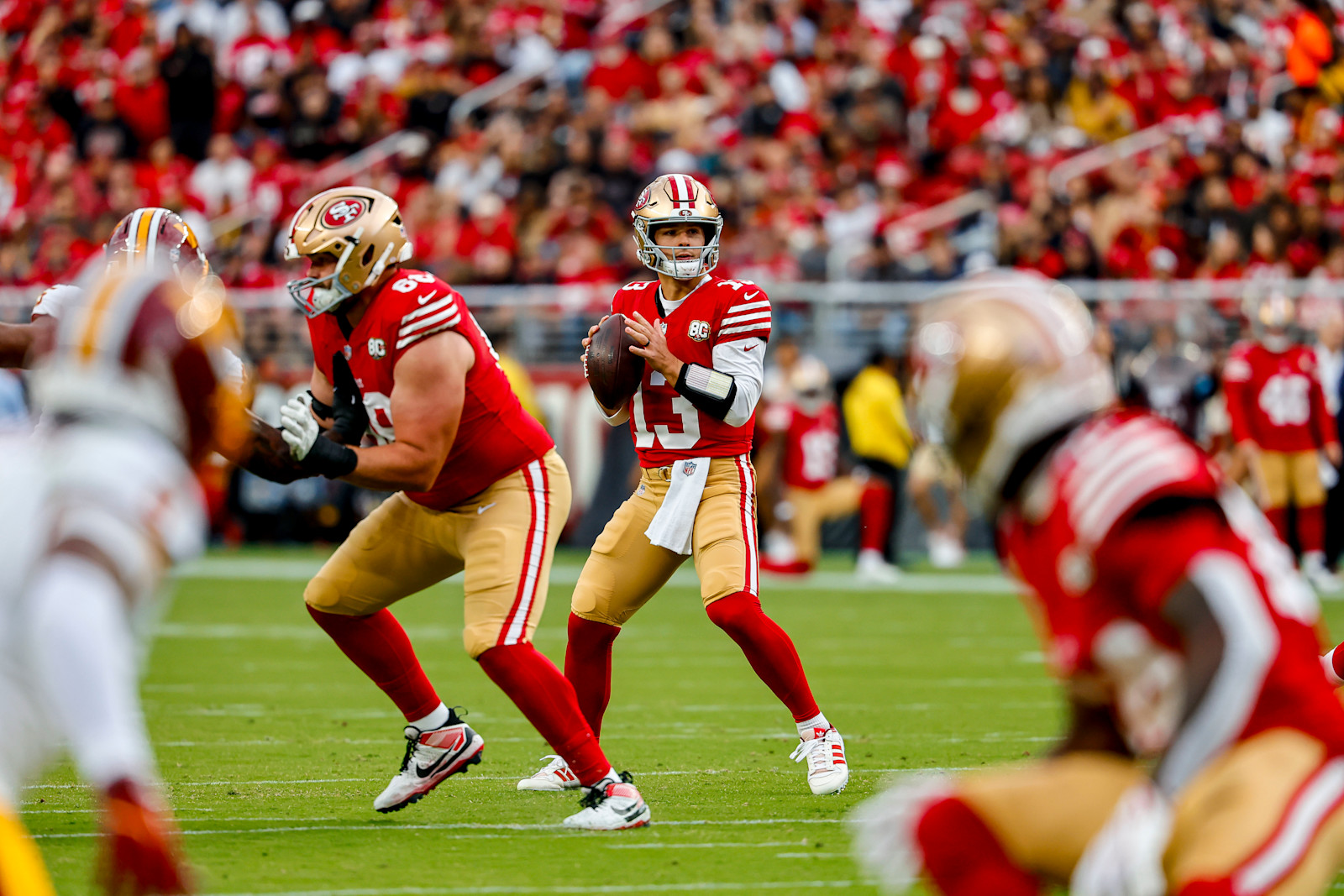
San Francisco continues to build the strongest statistical case for being the best team in football, beating Washington 23-17 on Monday night, to maintain their unbeaten record and increase their Efficiency advantage over Jacksonville to 2.33 points.
San Francisco leads the league with a 52.7% offensive success rate and ranks second in raw offensive EPA at +0.207 per play. More importantly for this index, its opponent-adjusted offense remains first.
The defense is considerably less imposing at 13th, and special teams rank 23rd. This is not a particularly balanced team, but an offense this consistently productive can cover for plenty of ordinary play elsewhere.
DEPI agrees emphatically, ranking San Francisco first at +8.17, more than three projected points ahead of second-place Buffalo. The offensive component alone accounts for +6.81 of that rating.
There is little disagreement between the models about San Francisco. Both see an exceptional offense that has made the 49ers the strongest team in the league through six weeks.
2. Jacksonville Jaguars — 67.1
4-2 | Week 5: 2nd | Offense: 3 | Defense: 6 | Special teams: 14 | DEPI: 4th (+4.42)
Jacksonville lost 34-31 in London to Houston and somehow remained second in Efficiency.
That is not a mistake.
The Jaguars still possess arguably the most balanced profile among the leading contenders, ranking third offensively and sixth defensively. Their special teams have also improved, climbing from 19th to 14th.
Giving up 34 points to the Texans certainly hurt. Jacksonville's defensive ranking slipped from fourth to sixth, and its overall index declined by 1.06 points.
But its adjusted offense actually improved from fourth to third. Across six games, the cumulative performance remains strong enough to keep the Jaguars comfortably ahead of Kansas City.
The Power Index is slightly less enthusiastic, placing Jacksonville fourth at +4.42. Its projected offense and defense both make substantial positive contributions, so there is no obvious weakness driving that modest disagreement.
Jacksonville is still a legitimate contender by either measure. The question is whether the defense can return to its earlier form after a disappointing afternoon against Houston.
3. Kansas City Chiefs — 65.3
5-0 | Week 5: 4th | Offense: 5 | Defense: 7 | Special teams: 13 | DEPI: 9th (+2.77)
Kansas City keeps winning, and the underlying numbers are beginning to look increasingly impressive.
The Chiefs improved to 5-0 by holding the Chargers to six points in a 22-6 victory. That performance pushed their adjusted defense from 13th to seventh and moved Kansas City into the top three overall.
Their offense remains fifth.
That is now a top-seven team on both sides of the football, rather than an offense dependent upon Mahomes to overcome deficiencies elsewhere.
The interesting part is that DEPI remains unconvinced Kansas City belongs among the league's very best.
The Power Index ranks the Chiefs ninth at +2.77, six places below their Efficiency standing. Its projected offensive contribution of +1.80 is solid, but considerably less impressive than their fifth-ranked adjusted offense this season.
Part of that difference comes from DEPI incorporating more historical information and smoothing performance rather than treating the current sample as a definitive measure of future strength.
The counterargument is becoming stronger every week. Kansas City has won all five games, improved defensively and established a much more balanced statistical profile.
At some point, a forecasting model has to recognize sustained improvement rather than remain anchored to its earlier expectations.
The Chiefs have another opportunity to force that adjustment Sunday night in Seattle.
4. Chicago Bears — 63.6
4-2 | Week 5: 12th | Offense: 6 | Defense: 15 | Special teams: 5 | DEPI: 3rd (+4.65)
What a difference a week makes.
Last Sunday, Chicago was coming off a 31-7 loss in Green Bay that sent the Bears tumbling from fifth to 12th.
This Sunday, with Caleb Williams back under center, they beat Atlanta 31-23 and immediately climbed back into the top five. Their 8.16-point Efficiency improvement was the largest in the NFL, and the eight-place ranking jump was equally impressive.
Unlike some of the more unusual profiles near the top of these rankings, Chicago improved in every phase. The offense climbed from ninth to sixth. The defense jumped from 20th to 15th. Special teams improved from ninth to fifth.
Chicago's adjusted offensive ranking deserves some context. The Bears are producing only +0.026 raw offensive EPA per play, which is closer to league average than elite. Their stronger adjusted standing comes from opponent and venue context, along with a respectable 46.7% success rate.
DEPI is also buying the improvement.
Chicago rises from seventh to third in the Power Index at +4.65, with increases of +0.83 projected points on offense and +0.95 on defense.
There is still considerable volatility in a six-game sample. The same team has now experienced dramatic movement in opposite directions in consecutive weeks. But unlike last week's rankings, where Efficiency and DEPI were diverging after the Green Bay loss, both models now consider Chicago one of the NFL's strongest teams.
Thursday's matchup with New England should offer another useful test.
5. Seattle Seahawks — 61.9
3-3 | Week 5: 3rd | Offense: 26 | Defense: 2 | Special teams: 4 | DEPI: 11th (+1.73)
Seattle remains one of the strangest teams in the top 10.
The Seahawks dropped two places after losing 17-14 at Denver, but their overall efficiency is still fifth despite a .500 record.
The explanation remains largely unchanged.
Seattle has the second-ranked adjusted defense and fourth-ranked special teams, but its offense sits 26th. The offense is producing negative raw EPA per play at -0.079, while the defense consistently gives Seattle an opportunity to remain competitive.
DEPI is less willing to believe that formula makes the Seahawks an elite team going forward. It ranks them 11th at +1.73, with the projected offense actually subtracting 1.83 points from their overall rating.
Efficiency recognizes how much Seattle has accomplished defensively. DEPI questions whether that production can consistently compensate for a bottom-tier offense against quality opponents.
Sunday night's visit from Kansas City should help provide an answer.
6. Minnesota Vikings — 61.8
5-0 | Week 5: 6th | Offense: 31 | Defense: 1 | Special teams: 1 | DEPI: 14th (+0.11)
Minnesota somehow remains undefeated with the NFL's second-worst adjusted offense.
The Vikings are first in both defense and special teams, which is an extraordinary combination. Their defense leads the NFL in raw EPA allowed at -0.215 per play and opponent success rate allowed at just 33%.
They are exceptionally difficult to move the ball against, and their special teams consistently help control field position.
The offense remains a different story. Even after improving from 32nd to 31st during the bye, Minnesota is nowhere close to producing at the level normally associated with an undefeated contender.
DEPI is particularly skeptical, ranking the Vikings 14th at just +0.11, essentially an average team on a neutral field. Its offensive projection is a dreadful -3.74 points.
That eight-place difference between the two indexes is among the largest in the league.
Minnesota deserves credit for winning games with defense and special teams, but relying on those units to cover for an offense this limited becomes increasingly difficult when opponents are capable of protecting the ball and generating even modest production.
7. Cincinnati Bengals — 59.1
3-2 | Week 5: 7th | Offense: 7 | Defense: 12 | Special teams: 12 | DEPI: 7th (+3.36)
Cincinnati had its bye and barely moved.
The Bengals remain seventh in Efficiency with a 59.1 rating, essentially unchanged from last week. Their adjusted offense ranks seventh, while defense and special teams are both 12th.
Cincinnati has a good offense supported by two units performing around the upper middle of the league.
DEPI ranks the Bengals seventh as well, at +3.36.
For a ranking exercise increasingly defined by substantial differences between observed performance and projected strength, Cincinnati offers a refreshing lack of controversy.
The Bengals have been good, if not dominant, and both models agree about where they belong.
They visit Baltimore on Sunday in what should be a consequential early AFC North matchup. Depending upon Lamar Jackson's availability, the Power Index sees either a narrow Ravens advantage or a slight Bengals edge.
8. Carolina Panthers — 58.4
3-2 | Week 5: 8th | Offense: 11 | Defense: 11 | Special teams: 11 | DEPI: 13th (+0.64)
Carolina has achieved a rather unusual statistical accomplishment.
The Panthers rank exactly 11th in adjusted offense, defense and special teams. That may be the most balanced profile in the NFL. Their 25-14 victory in Philadelphia improved their overall Efficiency rating by 1.54 points, although they remained eighth.
The defense made the most significant improvement, climbing from 15th to 11th.
There is no individual unit carrying Carolina the way Minnesota's defense and special teams carry its struggling offense. The Panthers have simply been consistently above average across the board.
DEPI remains more cautious, ranking Carolina 13th at +0.64.
The five-place difference reflects uncertainty about whether this year's balanced performance represents a sustainable improvement over the team's historical baseline.
Still, Carolina is moving in the right direction by both measures. Its Power Index rating improved as well, and the Panthers have given themselves a credible foundation without depending upon a single exceptional unit.
That is not the flashiest way to become a playoff contender.
It might be one of the more sustainable ones.
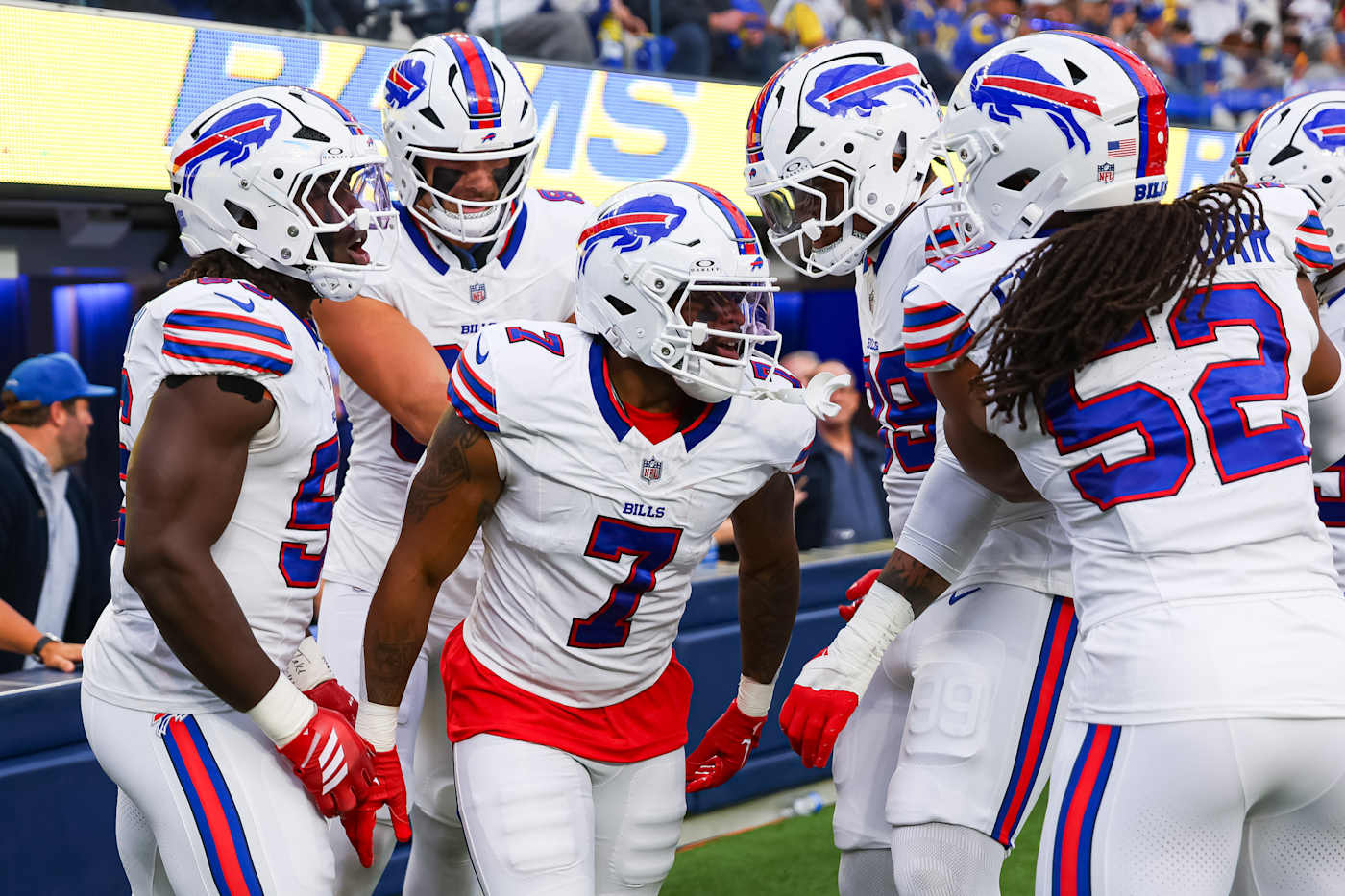
9. Buffalo Bills — 56.9
5-1 | Week 5: 10th | Offense: 2 | Defense: 30 | Special teams: 2 | DEPI: 2nd (+5.14)
Buffalo remains one of the largest disagreements between the two models.
The Bills are 5-1 and have the NFL's second-ranked adjusted offense and special teams, but they also have the 30th-ranked defense.
Their 33-30 victory in Las Vegas was another demonstration of the problem. Buffalo can produce enough offense to overcome a great deal, but allowing 30 points to the Raiders is hardly encouraging.
The Bills are surrendering +0.135 raw EPA per defensive play, a concerning number for a team with legitimate championship expectations. Efficiency therefore ranks Buffalo only ninth.
DEPI takes a substantially more optimistic position, placing the Bills second at +5.14.
Josh Allen and the offense provide much of the explanation. Buffalo's projected offensive contribution is +5.72 points, while the defensive component subtracts 1.60.
Importantly, DEPI does recognize the defensive weakness. It simply considers the offense valuable enough to overcome it more consistently than the overall Efficiency ranking suggests.
The Bills remain one of football's most dangerous teams, but their defense is beginning to look like a weakness that could eventually become very expensive.
10. New England Patriots — 56.7
4-2 | Week 5: 11th | Offense: 12 | Defense: 10 | Special teams: 20 | DEPI: 8th (+2.79)
New England returns to the top 10 following a 26-19 victory over the Jets.
The Patriots don't have a particularly spectacular profile, but they are increasingly well-rounded.
Their adjusted offense ranks 12th and defense 10th. Special teams remain below average at 20th, although that unit improved six places this week.
New England's Efficiency score climbed to 56.7, placing it just 0.37 points ahead of the Ravens for the final top-10 position.
DEPI is slightly more optimistic, ranking the Patriots eighth at +2.79.
That agreement is encouraging for a team that continues to improve. New England no longer looks like an early-season surprise living off one outstanding performance.
The Patriots have become a credible top-10 team across both measures.
Thursday night's visit to Chicago is particularly interesting because it is the only Week 7 matchup between two teams ranked in the top 10 of both indexes.
Biggest Risers: Chicago Leads, Cleveland Makes Its Move
Chicago was comfortably the biggest winner in this week's rankings.
The Bears gained 8.16 Efficiency points and eight ranking positions, climbing from 12th to fourth. Their DEPI improvement was similarly impressive, moving from seventh to third.
But Cleveland deserves some attention as well. The Browns jumped from 24th to 20th after holding the Ravens to 10 points. Their adjusted defense improved from 16th to ninth, an enormous change driven by Baltimore's inability to move the football.
Cleveland is now 4-2, tied with the Ravens and Steelers atop the AFC North. The interesting qualification is that the Browns still rank just 20th in Efficiency and 25th in DEPI. Their record is considerably better than their underlying performance.
Pittsburgh also climbed three places to 19th after its comeback victory at Tampa Bay. The Steelers improved defensively but remain below average in overall Efficiency despite their 4-2 record.
The AFC North is becoming particularly interesting. Three teams are tied at 4-2, but only the Ravens remain inside DEPI's top 10.
The standings say the division is tightly contested. The underlying ratings say the teams are not nearly as equal as those records suggest.
Biggest Fallers: Atlanta Collapses, Ravens Drop Out of the Top 10
Atlanta suffered the largest decline in both indexes this week.
The Falcons fell from 13th to 22nd in Efficiency, losing 8.84 points after their 31-23 defeat to Chicago. Their offense dropped from 15th to 21st and special teams fell to 31st. The defense remains fifth, but Atlanta's earlier balance has largely disappeared.
DEPI is similarly unimpressed, dropping the Falcons 10 places to 23rd.
That represents a remarkable reversal for a team that looked so dangerous offensively just two weeks ago.
The Giants also had a difficult week, falling four places to 24th after allowing 34 points to New Orleans.
But the most interesting decline for this audience belongs to Baltimore.
What happened to the Ravens?
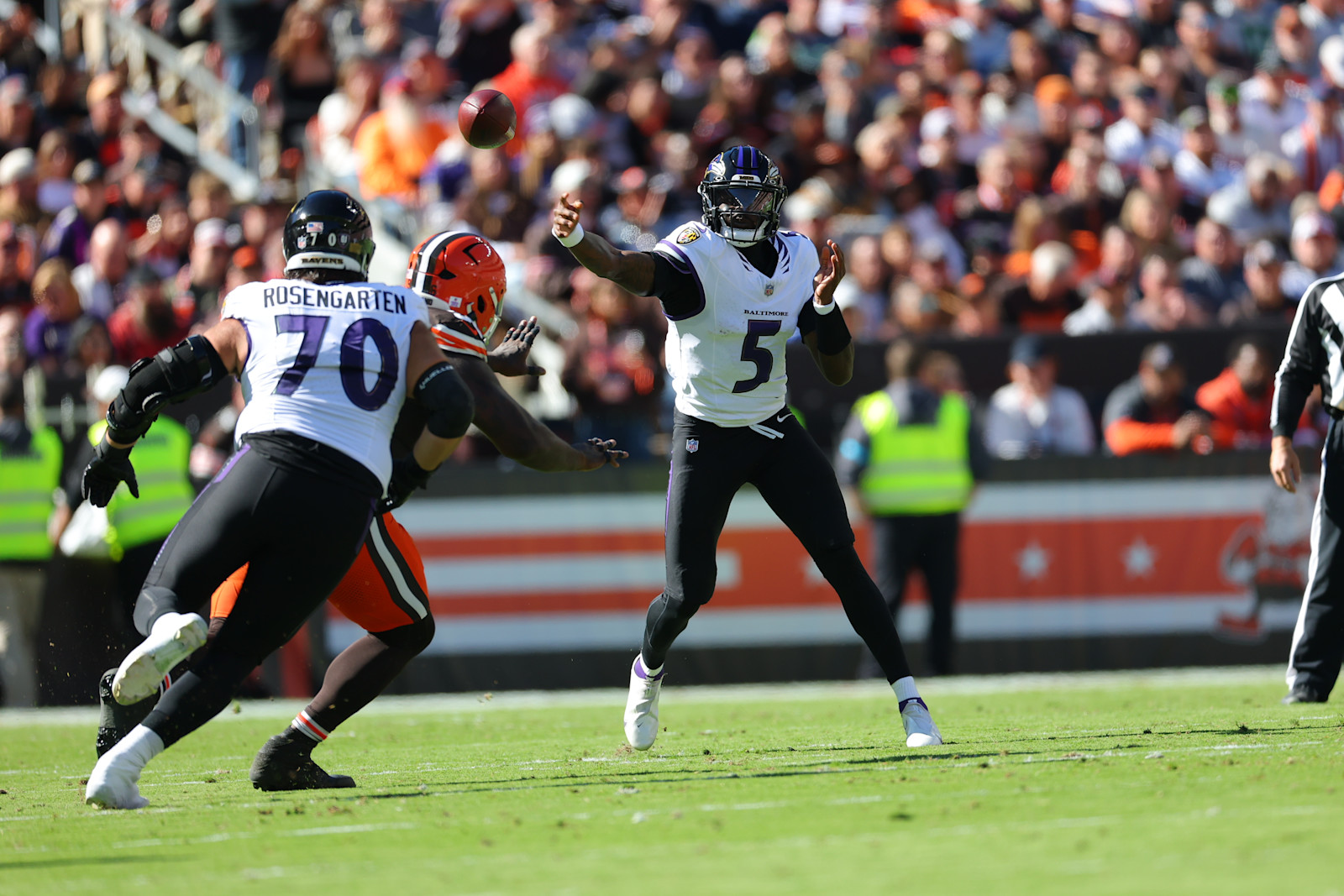
The Ravens went into Cleveland ranked fifth in Efficiency, having survived two games without Lamar Jackson and escaped Atlanta with an improbable overtime victory.
They left Cleveland ranked 11th.
Their 13-10 loss produced a 6.23-point Efficiency decline, the second-largest in the league.
The offense managed just 235 yards and a 33.9% success rate. Baltimore's adjusted offensive ranking dropped from sixth to eighth.
The defense also declined, falling from 10th to 14th, while special teams took the biggest hit, dropping from 14th to 24th after another missed 49-yard field goal from Tyler Loop.
This was not simply the offense struggling because Huntley is not Lamar.
The Ravens deteriorated in all three phases.
The offensive decline is understandable given the absence of their franchise quarterback. Huntley can execute parts of the offense, and his remarkable finish against Atlanta demonstrated he can produce when given manageable answers, but the offense is fundamentally different without Jackson.
The other two units do not get the same excuse.
Baltimore invested heavily in its defense precisely so it could remain competitive when the offense encountered difficulty. And after Loop appeared to have put his kicking concerns behind him, another miss from 49 yards is a frustrating regression.
DEPI remains more optimistic, ranking the Ravens sixth at +3.47.
For Sunday's game against Cincinnati, the default DEPI projection has the Ravens favored by 1.6 points at home. With Huntley instead of Lamar, the matchup flips to approximately Cincinnati by 1.4.
The Ravens aren't suddenly a bad football team because they lost in Cleveland. Their healthy roster remains capable of competing with almost anyone.
But two consecutive weeks without Lamar have demonstrated how quickly the rest of the team's margin for error disappears.
At 4-2, there is no reason for panic. There is plenty of reason to be concerned about Lamar's availability.
The Dual Eights Power Index: A Different Top 10
The Efficiency Index looks backward, measuring actual performance through six weeks.
DEPI tries to estimate future strength.
It incorporates opponent-adjusted performance, historical results, greater weighting of recent games and an adjustment for the expected starting quarterback.
The rating is expressed in points relative to an average NFL team on a neutral field.
A +5 team is approximately five points stronger than average. A -5 team is approximately five points weaker.
One important methodology update: DEPI has been refitted for Week 6, with stronger statistical regularization and a more conservative rating scale. Ratings are therefore compressed compared with the original Week 5 model.
San Francisco's published rating has moved from +9.86 last week to +8.17, for example, but that is not evidence that the 49ers suddenly deteriorated. Much of the difference comes from the revised formula.
For meaningful comparisons of weekly performance, the movement discussed here uses the new formula applied retrospectively to Week 5 as well. The live dashboard's movement column instead compares against the previously published rankings, so a few positions differ.
Week 6 DEPI Top 10
| Rank | Team | Power rating | Efficiency rank |
|---|---|---|---|
| 1 | San Francisco 49ers | +8.17 | 1 |
| 2 | Buffalo Bills | +5.14 | 9 |
| 3 | Chicago Bears | +4.65 | 4 |
| 4 | Jacksonville Jaguars | +4.42 | 2 |
| 5 |  Los Angeles Rams | +3.60 | 16 |
| 6 |  Baltimore Ravens | +3.47 | 11 |
| 7 | Cincinnati Bengals | +3.36 | 7 |
| 8 | New England Patriots | +2.79 | 10 |
| 9 | Kansas City Chiefs | +2.77 | 3 |
| 10 |  Detroit Lions | +2.17 | 13 |
The two rankings agree that San Francisco is the clear leader, that Chicago has become a legitimate contender and that Jacksonville belongs among the league's strongest teams.
But there are several substantial differences.
The Rams remain DEPI's biggest mystery
Los Angeles is 2-4, ranks 16th in Efficiency and just lost 18-16 at home to Arizona.
DEPI nevertheless ranks the Rams fifth at +3.60.
That is an 11-place difference, the largest between the two models.
The explanation is primarily offensive. DEPI still projects Matthew Stafford and the Rams offense as a substantial strength, worth +3.71 points, supported by both current underlying indicators and historical performance.
The Efficiency Index is far less impressed with their actual season, particularly their dreadful special teams, which rank last in the NFL.
It is possible the Rams are much better than their record and current performance suggest.
It is also possible DEPI is giving too much weight to an established offense that has not performed well enough to justify the benefit of the doubt.
Six games into the season, the Rams remain a useful test of whether the forecasting model can distinguish a temporary slump from a more permanent decline.
Buffalo, Minnesota and Kansas City illustrate the other disagreements
Buffalo ranks ninth in Efficiency but second in DEPI. The Power Index trusts Josh Allen and an elite offense to overcome a terrible defense.
Minnesota ranks sixth in Efficiency but only 14th in DEPI. The model doubts that the Vikings can maintain their perfect record while relying so heavily on defense and special teams.
Kansas City represents the opposite problem. The Chiefs rank third in Efficiency but ninth in DEPI, even after their defense improved substantially.
These aren't necessarily contradictions.
Efficiency rewards what teams have demonstrated. DEPI attempts to determine how much of that performance should be expected to continue.
The next several weeks will tell us whether the forecasting model is appropriately skeptical or simply too slow to recognize genuine changes.
Where DEPI Disagrees Most With Week 7 Betting Spreads
One of the more useful applications of DEPI is comparing projected margins with the betting market.
The calculation starts with the difference between the two teams' Power Index ratings, then adds a 1.54-point home-field adjustment. International neutral-site games receive no home-field advantage.
That produces a projected scoring margin for each matchup.
We can compare it with the market spread to identify games where our assessment differs most from the consensus.
Here are the three largest discrepancies for Week 7.
| Matchup | Market spread | DEPI spread | Difference |
|---|---|---|---|
| 49ers at Falcons | SF -3.0 | SF -8.2 | 5.2 pts |
| Broncos at Cardinals | DEN -4.5 | ARI -0.3 | 4.8 pts |
| Colts at Vikings | MIN -6.5 | MIN -1.9 | 4.6 pts |
Market figures are nflverse schedule snapshots retrieved October 20, 2026, not live sportsbook quotes. Projections use DEPI's default listed quarterbacks and do not explicitly account for every injury, weather condition or matchup-specific factor.
San Francisco at Atlanta: The market isn't nearly as impressed with the 49ers
This is the largest disagreement on the board.
The market makes San Francisco a three-point road favorite against Atlanta.
DEPI believes the 49ers should be favored by 8.2.
That is a 5.2-point difference, a substantial gap in an NFL spread.
The underlying explanation is fairly straightforward.
San Francisco is first in both models, with the league's best adjusted offense and the strongest projected overall rating by a comfortable margin.
Atlanta, meanwhile, has fallen to 22nd in Efficiency and 23rd in DEPI after consecutive concerning performances.
The Falcons still have a top-five adjusted defense, which provides one reasonable argument for keeping the game competitive. But the offense and special teams have deteriorated badly.
DEPI sees an enormous difference between the two teams' overall strength.
The obvious risk is that even a superior team does not always produce a dominant scoring margin. An early lead can change play calling, reduce the number of possessions and give an inferior opponent opportunities to narrow the final score.
Atlanta's defense could also be capable of creating the kind of game that limits San Francisco's offensive advantage.
Still, this is a considerable disagreement.
The market treats San Francisco as a conventional road favorite. DEPI sees something much closer to a mismatch.
Denver at Arizona: The models can't even agree on the favorite
This might be the most interesting disagreement of the three.
Denver is favored by 4.5 points on the road.
DEPI actually favors Arizona by 0.3 points at home.
That produces a 4.8-point gap, and the disagreement is not simply about how much better one team is than another.
They don't agree on which team should win.
Denver enters the matchup at 4-2 after beating Seattle 17-14. The Broncos rank 14th in Efficiency and 16th in DEPI, with a projected rating of -0.17.
Arizona is 2-4, ranks 21st in Efficiency and 22nd in DEPI, with a -1.39 rating.
The Broncos are the stronger team on a neutral field, but DEPI sees the difference as relatively small. Once Arizona receives the home-field adjustment, the projected margin flips narrowly in the Cardinals' favor.
The market apparently sees a much more meaningful gap between the teams.
That could reflect factors DEPI doesn't fully capture, including specific matchup advantages, recent form or personnel considerations.
The Cardinals did just win at the Rams, however, and their underlying performance has improved.
This is exactly the kind of discrepancy that deserves further investigation rather than an automatic wager.
DEPI considers the game essentially a toss-up.
The market considers Denver a fairly comfortable road favorite.
Both cannot be right about the underlying margin, but determining which is wrong requires more than simply trusting the larger number.
Indianapolis at Minnesota: How much is elite defense worth?
Minnesota is undefeated and playing at home against a 2-4 Colts team that just lost to Tennessee.
The market favors the Vikings by 6.5 points.
That seems reasonable enough at first glance.
DEPI is considerably more cautious, projecting Minnesota by just 1.9.
The 4.6-point difference comes directly from Minnesota's unusual team profile.
The Vikings have the NFL's best adjusted defense and special teams, but their offense ranks 31st.
DEPI sees that offense as such a substantial weakness that Minnesota's overall projected rating is only +0.11.
Indianapolis is hardly an impressive opponent. The Colts rank 18th in Efficiency and 17th in DEPI after their embarrassing home loss to the Titans.
But the Power Index sees two relatively ordinary teams once Minnesota's offensive limitations are fully incorporated.
That is the central disagreement.
The market is giving considerable credit to an undefeated team with dominant defense and special teams. DEPI is reluctant to project a comfortable victory when the favored team's offense has been so poor.
There is a legitimate counterargument.
Minnesota's defense and special teams have been consistently exceptional, and those units can create scoring opportunities or field-position advantages that make the offense's job substantially easier.
Perhaps DEPI is undervaluing that combination.
Or perhaps the Vikings are heading toward a game where their offense finally has to produce independently.
Either way, this is another useful test of whether Minnesota's undefeated record reflects sustainable overall strength.
Week 7 Matchup to Watch: Kansas City at Seattle
Sunday, October 25 | 8:20 p.m. ET
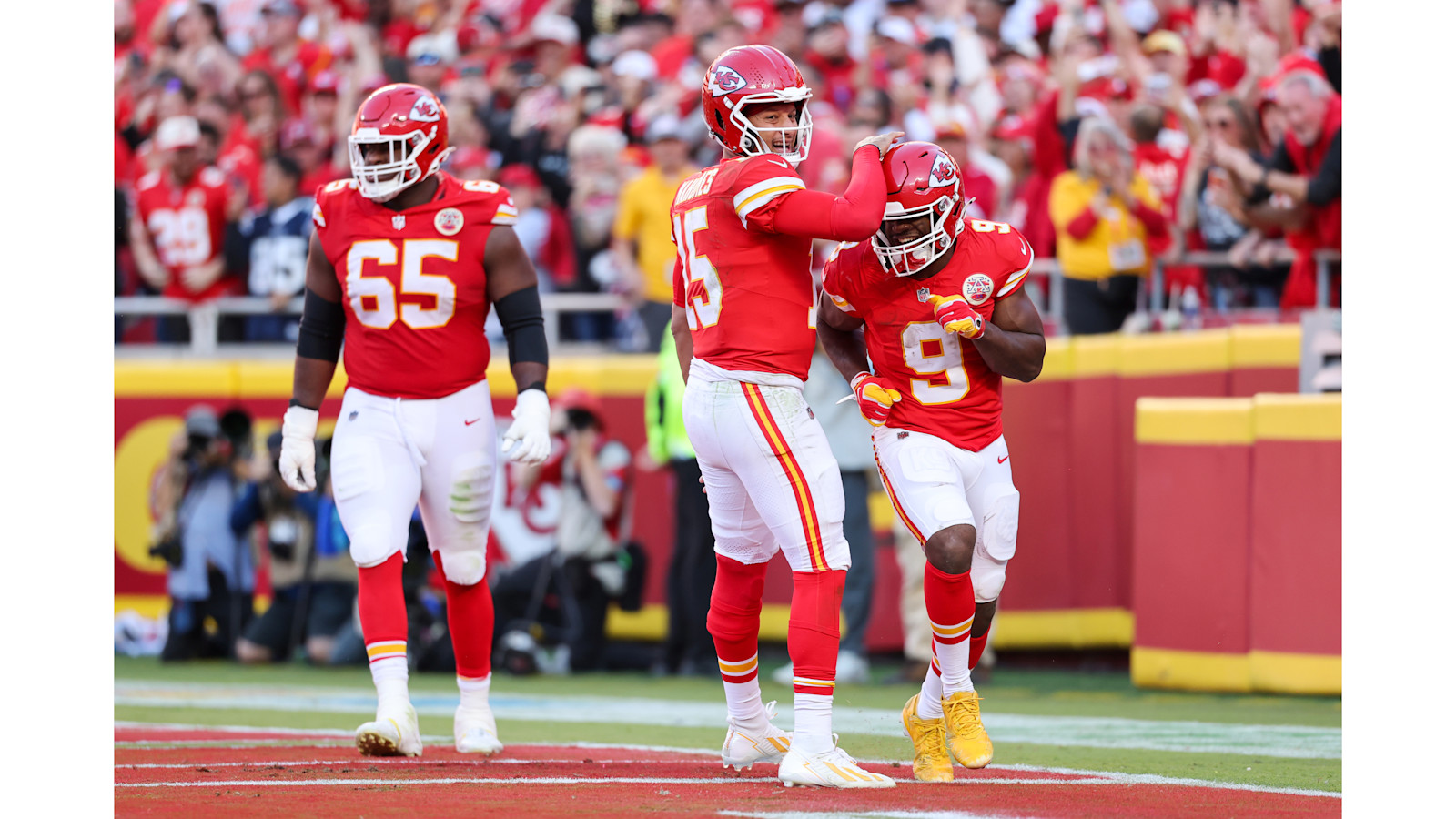
Kansas City at Seattle is the best Efficiency matchup of Week 7.
The Chiefs rank third. The Seahawks rank fifth. Their combined Efficiency score of 127.3 is the highest of any game on the schedule.
It also provides a fascinating contrast in how the two teams have reached those positions.
Kansas City now has a fifth-ranked adjusted offense and seventh-ranked defense. The Chiefs have become one of the most balanced teams near the top of the rankings.
Seattle is almost the opposite.
The Seahawks have the second-ranked defense and fourth-ranked special teams, but the offense remains 26th.
The most important matchup is straightforward: can Seattle's outstanding defense limit Mahomes and a top-five Chiefs offense enough to protect its own struggling offense?
And when Seattle has the football, can the Seahawks find enough production against a Kansas City defense that just held the Chargers to six points?
The Power Index considers this essentially a coin flip.
Kansas City carries the higher neutral-field rating at +2.77 compared with Seattle's +1.73, but home-field advantage flips the projected margin.
DEPI projects Seattle by 0.5 points.
The market snapshot favors the Seahawks by 2.5.
That relatively modest two-point disagreement is less interesting than the matchup itself.
Kansas City enters undefeated and increasingly well-rounded. Seattle has the defensive ability to frustrate almost anyone, but its offensive limitations continue to create an extremely narrow path to victory.
If the Seahawks win, it strengthens the case that their unusual formula can work against elite opposition.
If the Chiefs win comfortably, it will raise further questions about how long Seattle can survive without meaningful offensive improvement.
Either result should tell us something useful.
Explore the complete Dual Eights NFL Rankings Dashboard, the Week 7 projected spreads and the full methodology for all 32 teams, unit comparisons and quarterback scenarios.