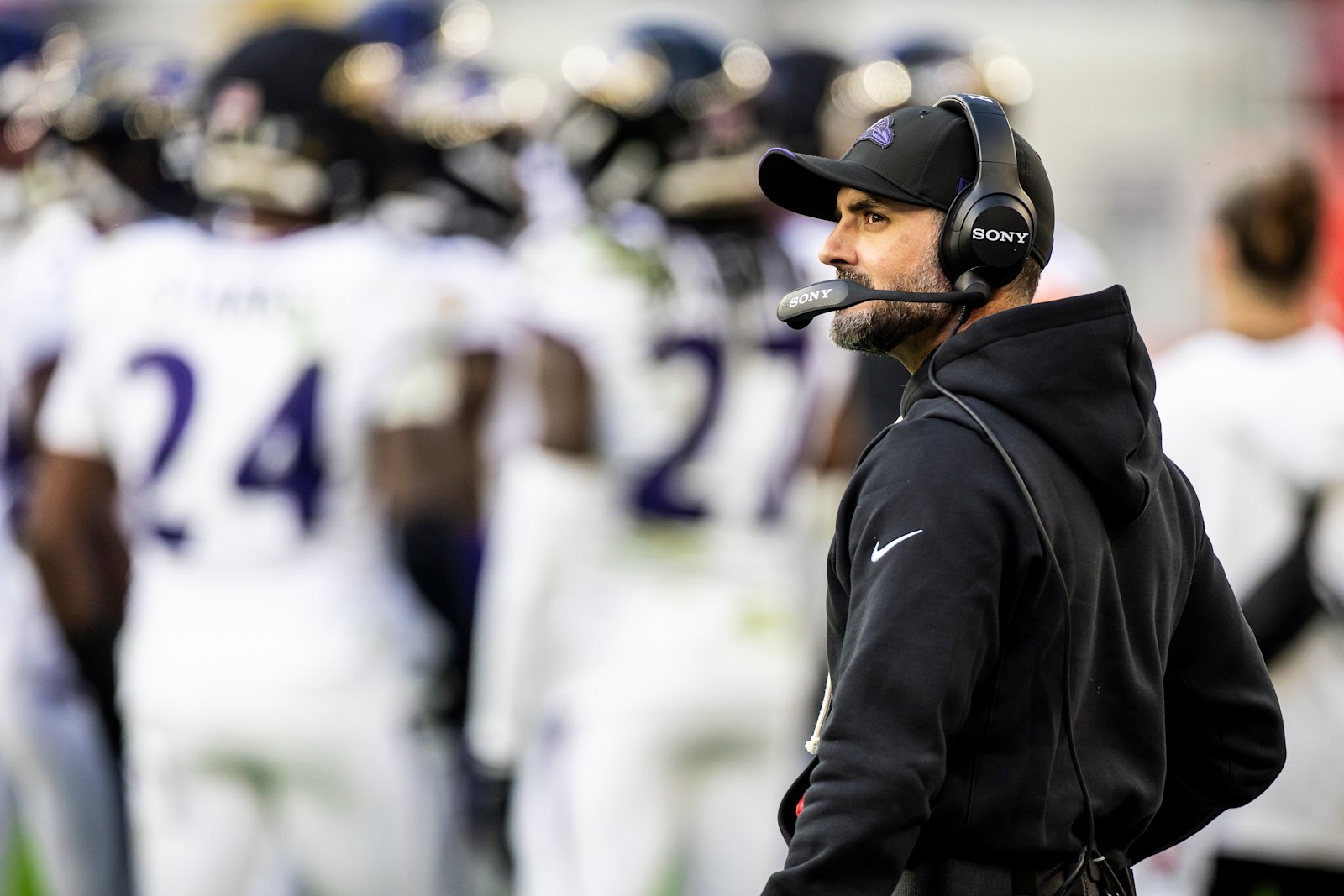
The Ravens have gone from 4–1 and looking like contenders to 4–5 and desperately trying to survive until a possible Lamar Jackson return. Nine games into the Jesse Minter era, we’re handing out grades to every position group and the coaching staff.
Five weeks into the season, the Ravens were 4–1, ranked fifth in the Dual Eights Efficiency Index and looking like one of the top Super Bowl contenders.
Four games later, they’re 4–5, sitting in last place in the AFC North and facing the likely possibility that their season could be over by the time Lamar Jackson returns, if he returns at all.
The collapse has been extraordinary.
The Ravens averaged 29.2 points during their first five games. They’ve averaged just 10.8 during their four-game losing streak. After being tied with their opponents 33–33 at halftime across those four losses, they’ve been outscored 84–10 after halftime.
The last three defeats have come by 22, 26 and 23 points. It’s the first time in franchise history the Ravens have lost three consecutive games by at least 20.
It’s tempting to explain everything through Lamar’s injuries. The offense was among the league’s best when he was healthy and has become almost completely nonfunctional without him. That’s obviously the biggest story of the season.
But it doesn’t explain why the defense has continued to struggle. It doesn’t explain the recurring second-half collapses, the penalties or the lack of adjustments.
Those were supposed to be among the problems that Jesse Minter’s arrival would solve.
There have been legitimate positives. Zay Flowers was playing at an All-Pro level before the quarterback situation deteriorated. The defensive line has been strong against the run. Declan Doyle has shown more than enough creativity to suggest the Ravens found a promising young offensive coordinator.
Unfortunately, none of those things has been enough to keep the team afloat.
Through nine games, the Ravens rank 17th in the Dual Eights Efficiency Index. Their adjusted offense ranks 16th, defense 14th and special teams 24th.
That’s the profile of a mediocre football team, not a championship contender.
Here are my midseason grades for every position group and the coaching staff, along with what each needs to do over the final eight games.
Offense
Quarterbacks: B−
This is really two grades merged together.
It’s essentially an A for Lamar Jackson and something closer to a D for the Tyler Huntley and Joe Fagnano combination that has attempted to replace him.
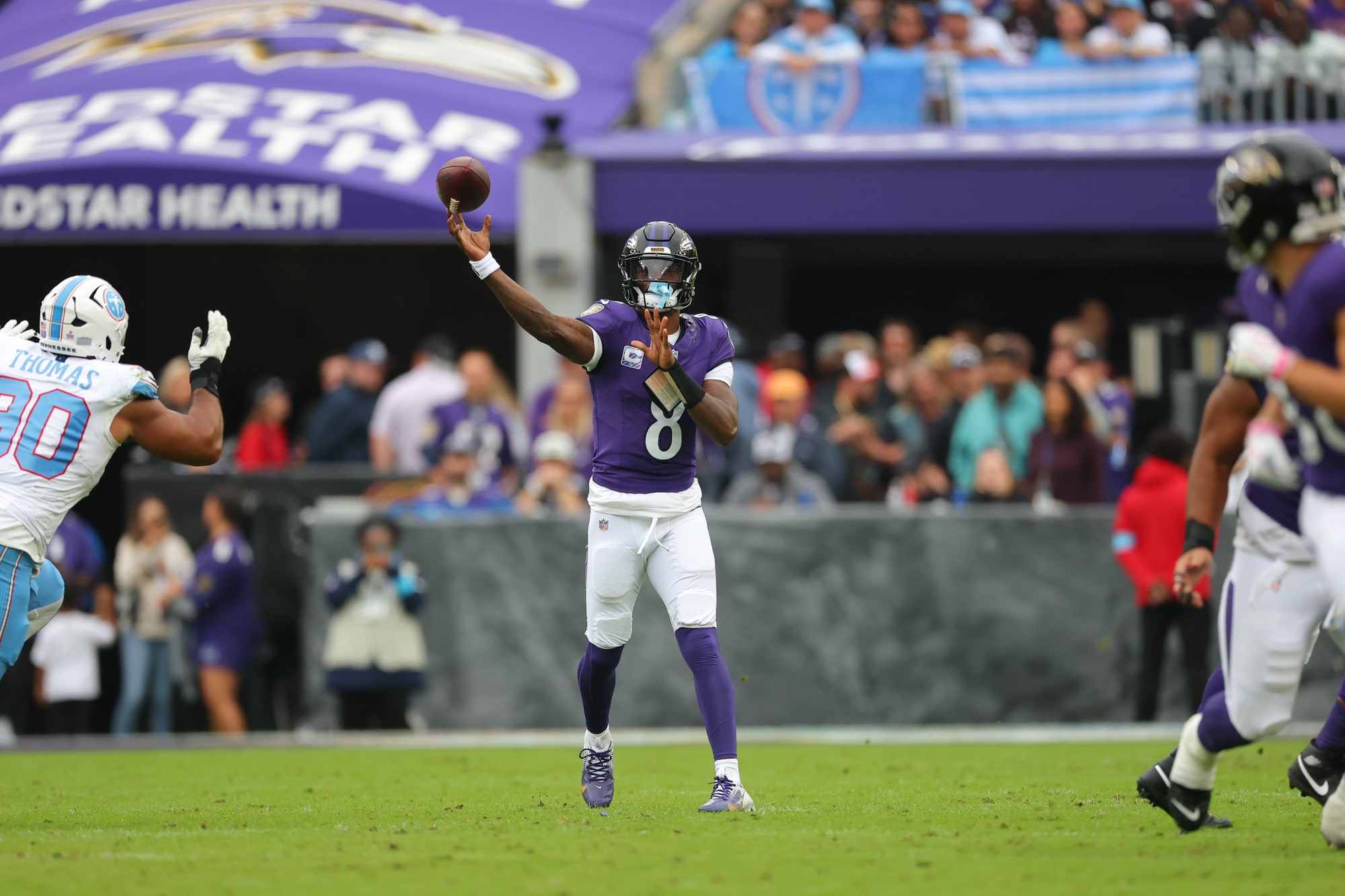
Before suffering his ankle injury against Tennessee, Lamar was back to his best pre-2025 injury form, arguably the best quarterback in the league through the early season..
He completed 70.1% of his passes for 967 yards, six touchdowns and one interception, producing a 118.4 passer rating. He averaged +0.367 expected points added per dropback, with a 57.1% success rate.
Those are elite numbers. And that doesn’t even account for the way his legs affect the run game and contort the defense.
Without him, the entire offense has collapsed.
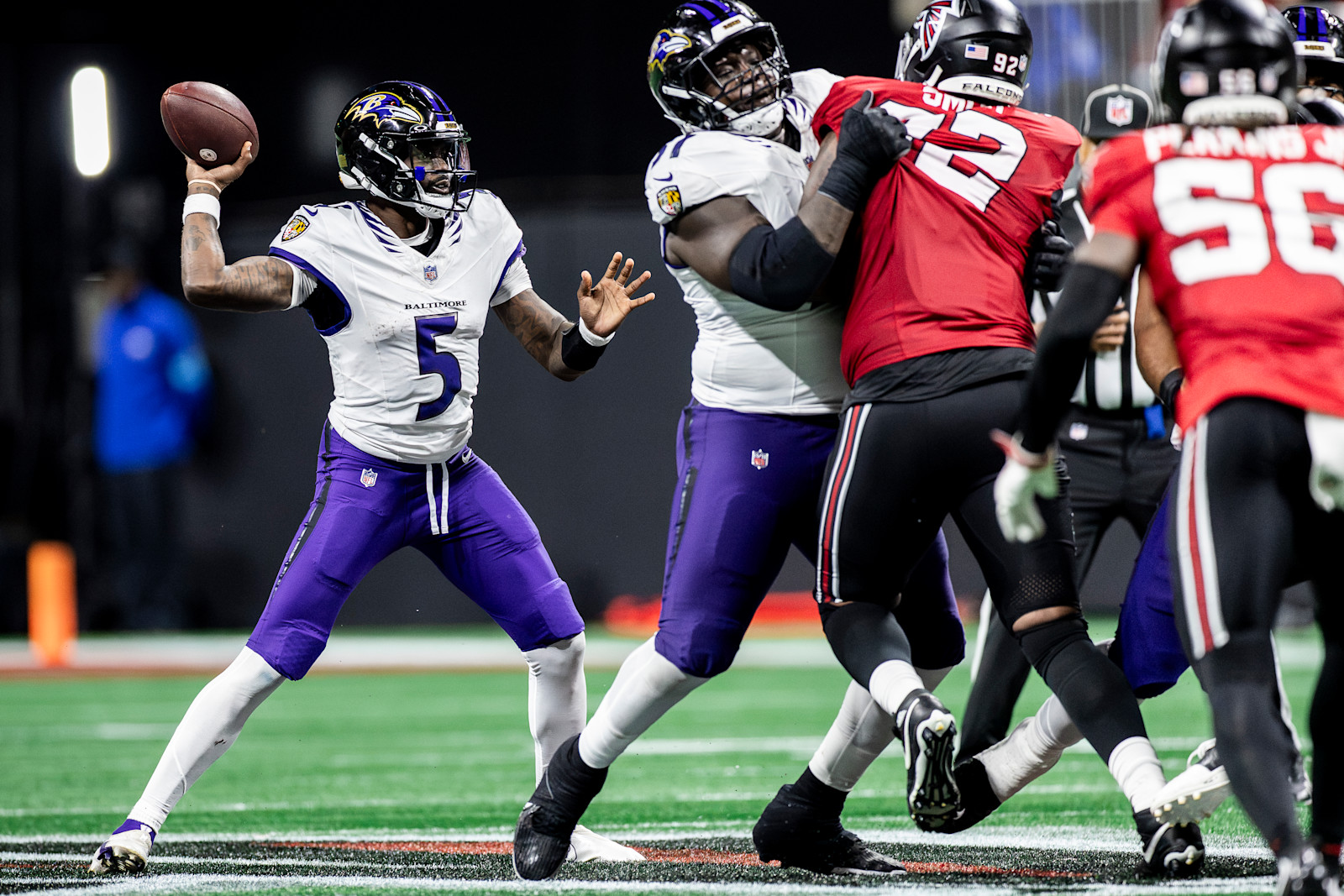
Huntley has had his moments, particularly his remarkable comeback against Atlanta. He deserves credit for leading the Ravens to a victory that looked almost impossible late in regulation. His 95.5 passer rating also suggests he hasn’t been completely hopeless.
But the underlying production tells a different story. Huntley generated negative EPA per dropback, and the offense struggled to threaten defenses consistently beyond the short passing game.
Fagnano was worse in his one start, although expecting an undrafted rookie to operate this offense successfully under these circumstances was never particularly realistic. His three interceptions against zero touchdowns and 28.9 passer rating illustrate just how far the position has fallen.
The Ravens have gone from having one of football’s most dangerous quarterbacks to a situation where successfully completing a 15-yard pass feels like a minor miracle.
Now comes Jacoby Brissett.
He’s not going to replace Lamar’s explosive ability, but he offers something the Ravens desperately need: a credible NFL quarterback.
Brissett has 73 career starts, and his +4.5 percentage-point completion percentage over expected with Arizona this season suggests he can still deliver accurate passes when the offense creates reasonable opportunities.
If Brissett can provide a solid C-level performance, the Ravens might have enough talent around him to survive if Lamar can make a miraculous December return as he reportedly intends to. Brissett’s job is to make sure there are still meaningful games to play if that happens.
Running Backs: B−
Derrick Henry has eight rushing touchdowns and 689 yards through nine games. Those aren’t terrible numbers for a 32-year-old running back. However, anyone watching the Ravens over the past month knows the running game has been in decline during the losing streak.
Henry averaged 4.21 yards per carry during the first five games. During the four-game losing streak, that’s fallen to 3.44. His rushing success rate has dropped from 43.4% to 30.6%, and he hasn’t produced a single run of at least 20 yards during the skid.
Some of that is certainly Henry. He’s not consistently creating the explosive opportunities we saw during his better stretches last season. But the offensive line has been in constant flux, and losing Lamar fundamentally changes the defensive numbers Henry encounters. Opponents no longer have to devote the same attention to the quarterback keeping the football, allowing defenders to attack Henry more aggressively.
The Ravens also keep finding themselves in situations where the defense knows the run is coming and the blocking simply isn’t good enough to overcome it.
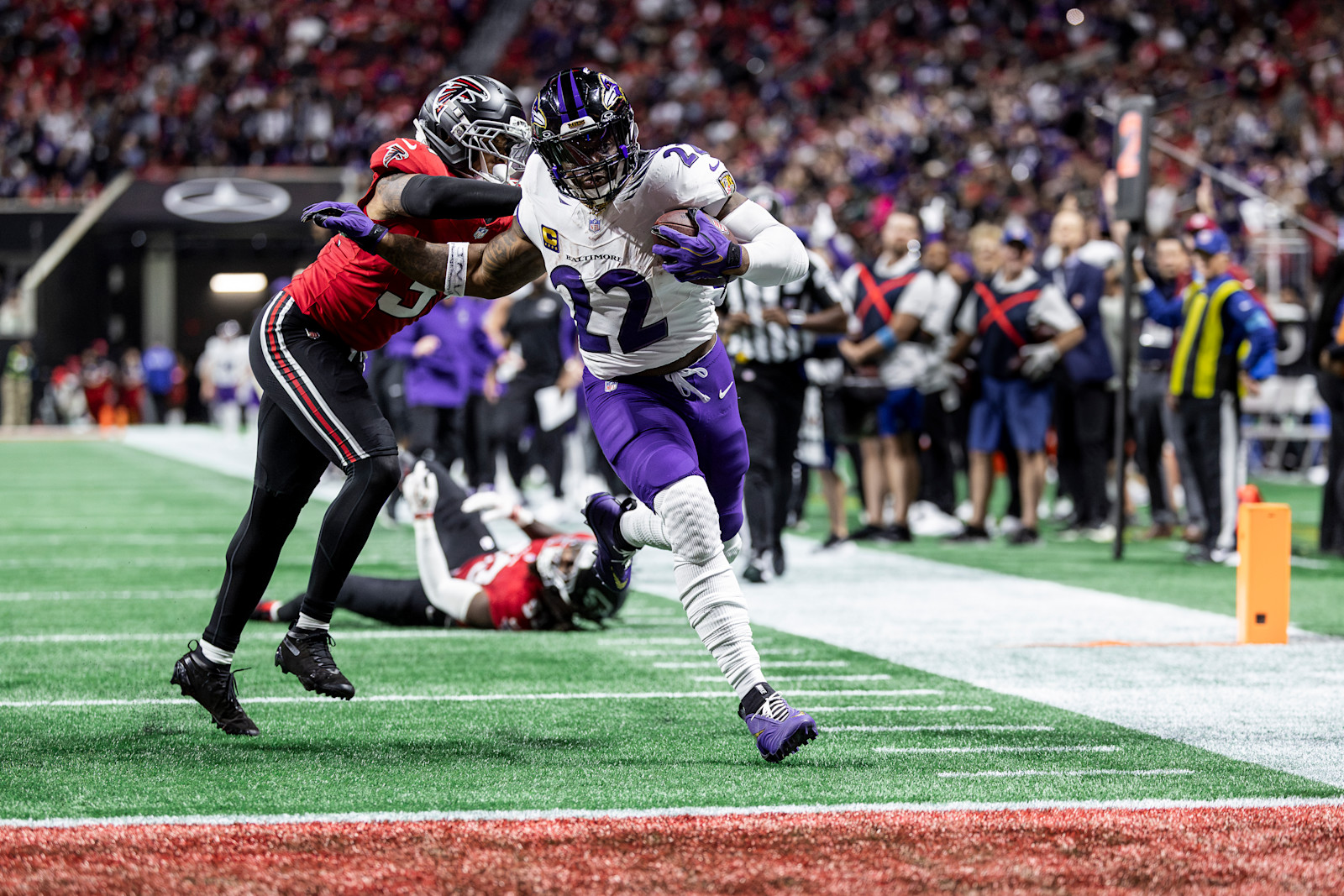
Justice Hill has provided a few terrific moments, most notably his 47-yard run against Atlanta and 65-yard touchdown against Jacksonville. However, those two plays account for nearly half of his 240 rushing yards, and the Jacksonville touchdown came with the outcome already decided.
Hill remains valuable as a change-of-pace back and receiver, but he hasn’t provided a consistent alternative to Henry.
Adam Randall looks set to debut as early as Monday’s Chargers game, and could provide some additional boost.
Doyle needs to find better ways to use the talent at his disposal, particularly with Brissett taking over and defenses likely to continue crowding the running lanes.
Wide Receivers: B
Zay Flowers has been one of the clearest bright spots of the Ravens season.
Through nine games, he has 43 catches for 614 yards and three touchdowns, accounting for roughly one-third of Baltimore’s passing yardage.
His 2.90 yards per route run still ranks fifth in the league even after two down weeks, while his yards after catch over expected ranks third among qualifying wide receivers.
Those numbers confirm what was obvious watching the early games. Flowers wasn’t simply catching more passes. Doyle was consistently finding ways to get him the football with space to operate.
Motion, condensed formations, stacks and screens created opportunities for Flowers to receive the ball with favorable leverage rather than requiring him to beat a defender from a static alignment.
And Flowers was making the most of those opportunities.
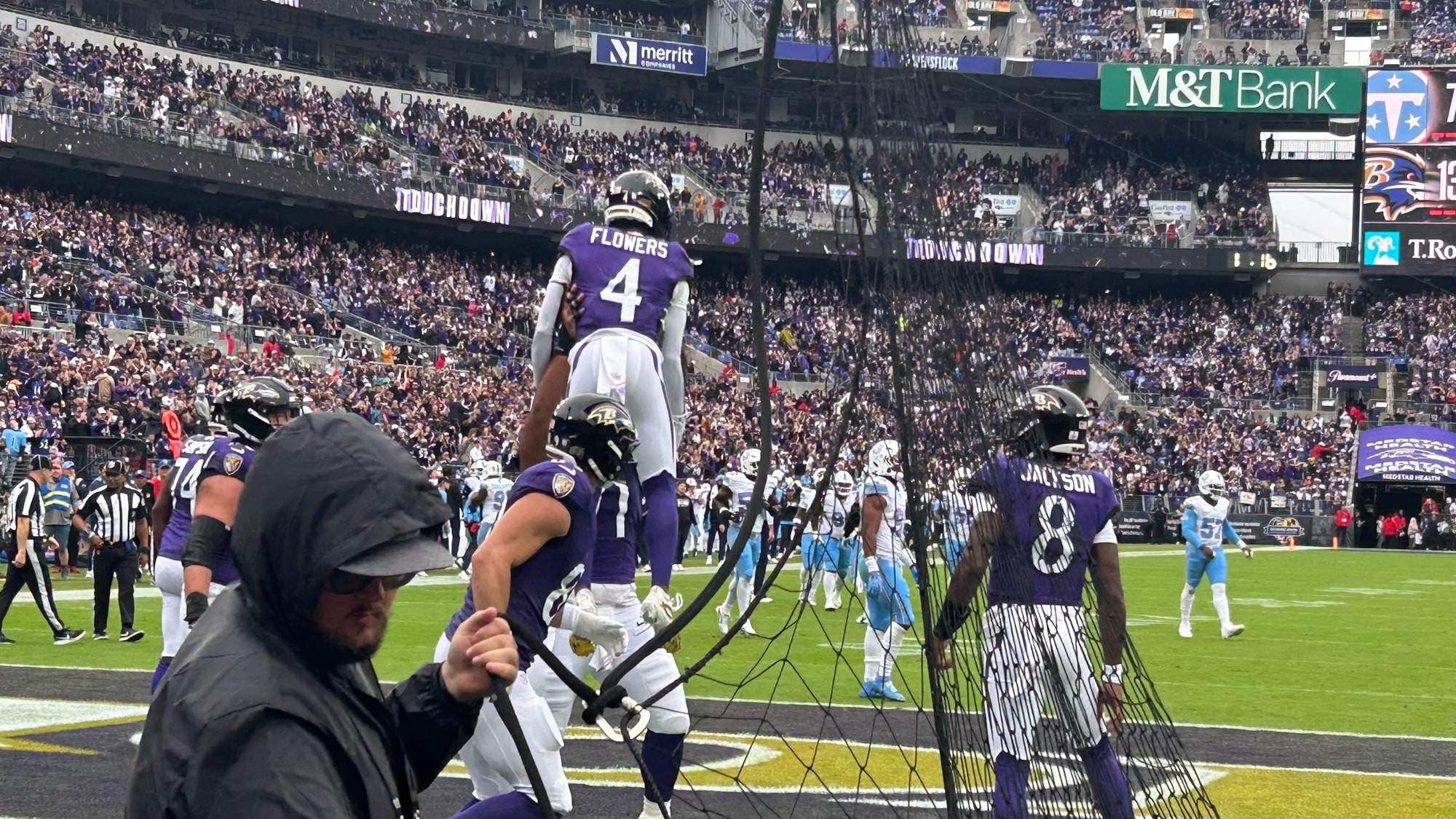
Unfortunately, the quarterback situation has essentially erased his production. He managed just three catches for six yards over the Buffalo and Jacksonville games, including zero receptions against the Bills.
That’s an extraordinary waste of one of the league’s most dangerous offensive players.
Beyond Flowers, the results have been mixed.
Rashod Bateman has 20 catches for 294 yards and one touchdown, with occasional impressive performances but nowhere near the consistent production the Ravens need from their second receiver.
Ja’Kobi Lane has shown some encouraging flashes, while Devontez Walker, Chris Moore and LaJohntay Wester have contributed intermittently. There still isn’t a convincing second weapon defenses must respect every week.
The grade would be higher if Flowers’ brilliance were the only consideration, but it’s difficult to give the entire receiving group an A when the production falls off so sharply behind him.
Still, I’m reluctant to punish the receivers too severely for their recent disappearance. Even excellent receivers need a quarterback capable of getting them the ball.
Brissett should at least give Doyle a chance to restore some of the passing offense that made Flowers so dangerous early in the season.
Tight Ends: C
There may be key details behind the scenes that we’ll never know as to why the Ravens chose to sign Mark Andrews over Isaiah Likely, but purely from a football standpoint it has looked like a horrible decision.
Andrews has 31 catches for just 237 yards and one touchdown. His longest reception is 17 yards, and he’s averaging only 7.6 yards per catch.
The explosiveness that once made Andrews one of the NFL’s premier receiving tight ends has largely disappeared.
More concerning has been his reliability. The Atlanta game was particularly ugly. Andrews dropped a potential touchdown, lost a fumble that was returned for a score and failed to secure a two-point conversion.
To be fair, Andrews remains an experienced route runner who understands how to find openings against coverage, and the quarterback injuries have certainly affected his production. But the Ravens gave him a significant contract extension to remain a central part of this offense. So far, he hasn’t justified that investment.
The encouraging development has been the rookie tight ends.
Josh Cuevas has 10 catches for 134 yards and a touchdown, while Matt Hibner has six catches for 75 yards and another score. Both are averaging more than 12 yards per reception, albeit on limited opportunities.
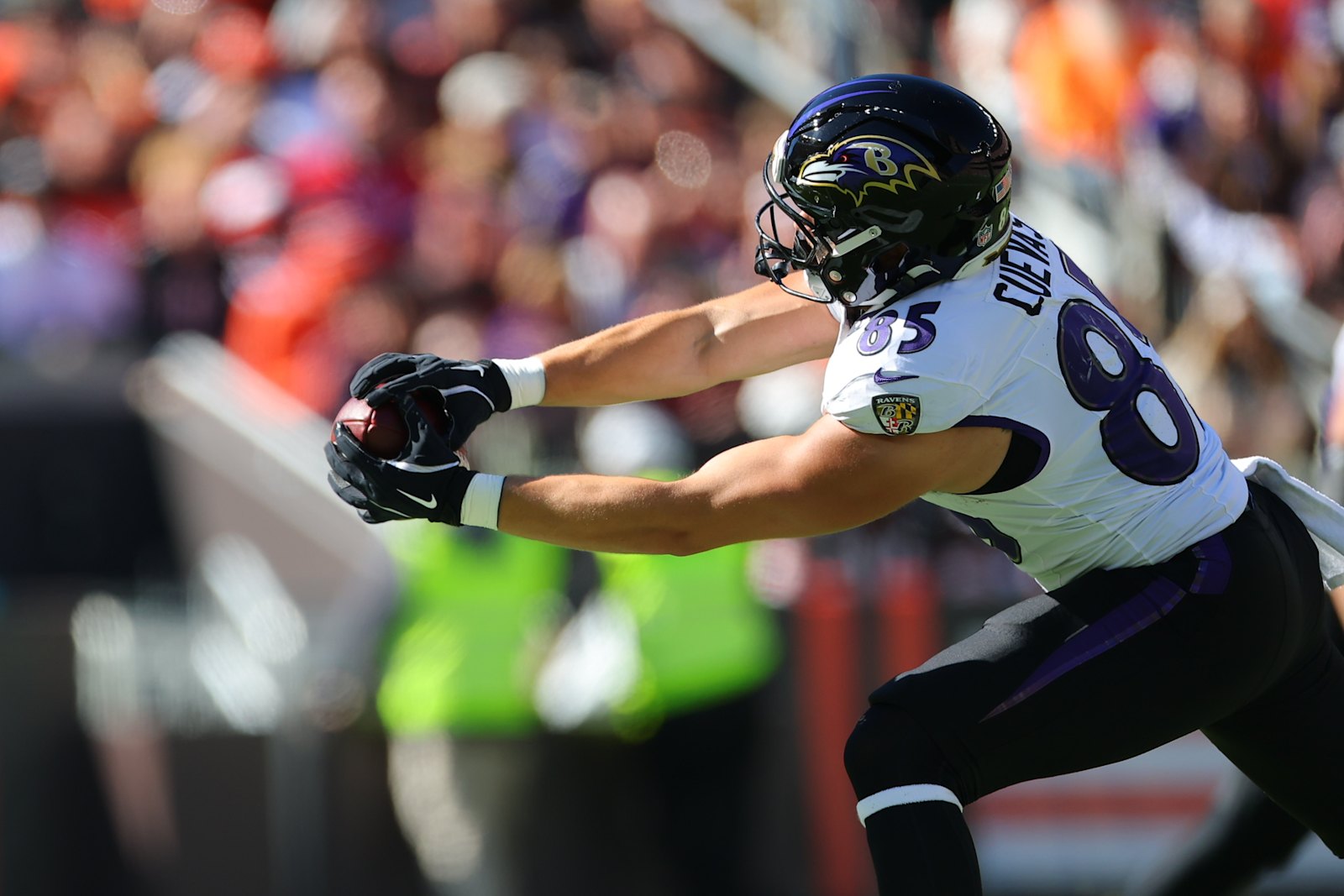
Neither is a finished product, particularly as a blocker or when asked to handle the entire assignment menu that comes with playing tight end in Doyle’s system.
Nevertheless the Ravens need to start shifting more opportunities toward the younger players.
Andrews doesn’t necessarily need to disappear from the offense, but his role should reflect what he currently provides rather than what he accomplished several seasons ago.
Offensive Line: C
I’m not sure there’s a unit on the roster that’s had more legitimate excuses than the offensive line.
The Ravens lost multiple centers early in the season, forced rookie Vega Ioane into an unfamiliar position, acquired Cam Jurgens and have repeatedly reshuffled the interior because of injuries.
Ioane has been the most encouraging development, particularly during his unexpected stint at center. His performance against Jeffery Simmons and Tennessee was remarkable given the circumstances.
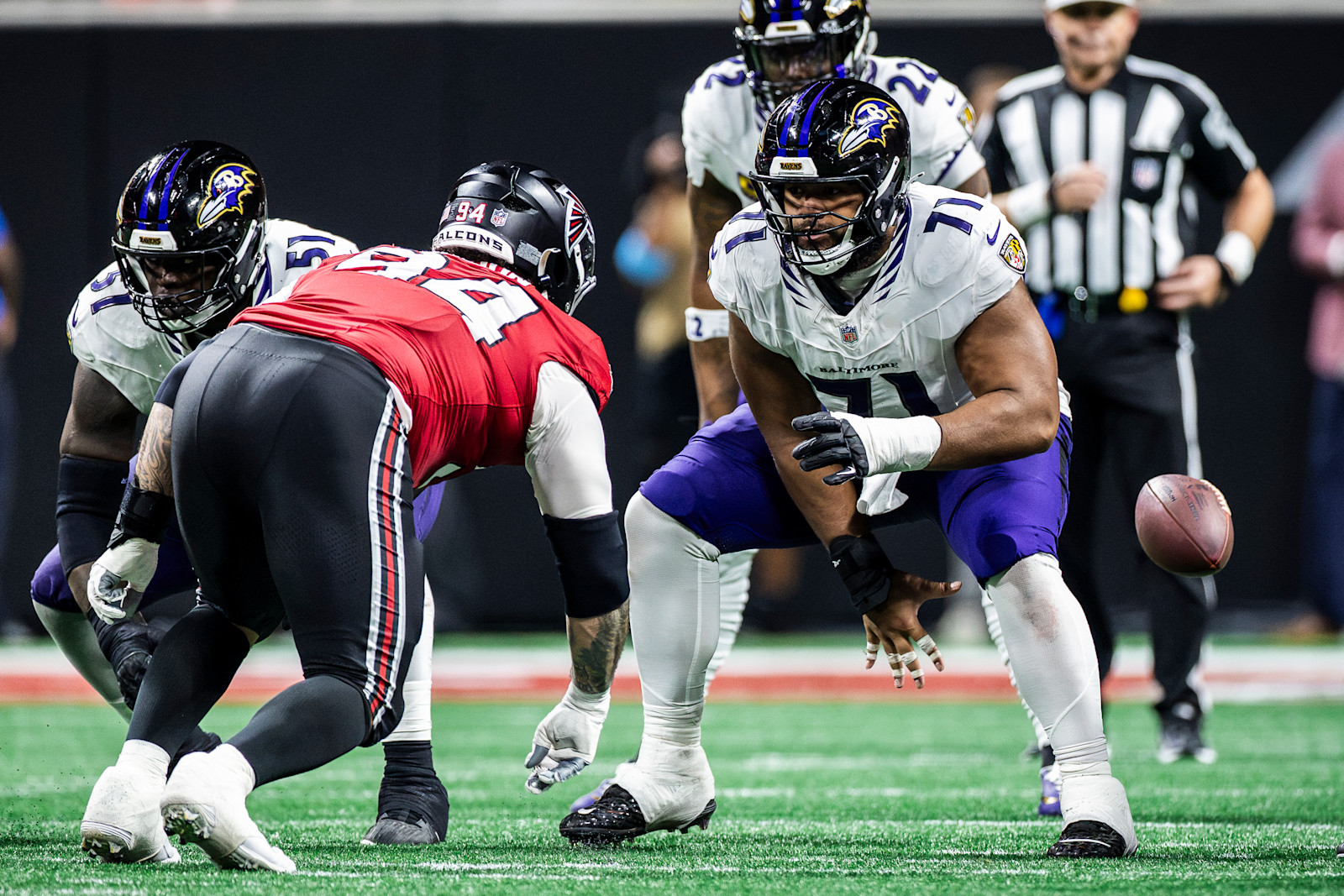
Roger Rosengarten has also generally provided more encouraging play than some of his teammates, but the overall performance has not been good enough.
The Ravens have allowed 23 sacks, and their pass-block win rate ranks 21st in the league at 47%. The pass-play hit rate in our tracked sample has almost doubled, from 13.7% during the first five games to 25.4% during the four-game losing streak.
The problems extend beyond pass protection. The rushing attack has become increasingly inefficient, with interior penetration repeatedly disrupting plays before Henry can build momentum.
Then there are the penalties.
The Ravens have committed 74 penalties for 539 yards, including an NFL-leading 24 false starts. Those aren’t exclusively offensive-line mistakes, but the entire offensive operation has been embarrassingly undisciplined.
At this point, the Ravens should not still be repeatedly turning second-and-5 into second-and-10 because someone can’t get the snap count right.
The acquisition of Ryan Neuzil from Atlanta provides another experienced option and should help stabilize the depth. But the Ravens need more than simply finding five healthy players.
They need a unit capable of providing enough protection for Brissett to operate a conventional passing offense and creating reasonable running lanes without Lamar changing the defensive math.
A C acknowledges the difficult circumstances without pretending the results have been acceptable.
Defense
Defensive Line: B+
The defensive line has probably been the Ravens most consistently effective position group.
They are allowing just 3.6 yards per rushing attempt, with opponents producing negative EPA on rushing plays and the team’s run defense ranking 11th by that measure.
Travis Jones has continued to develop into a strong interior presence. Nnamdi Madubuike has returned from last season’s serious neck injury, and Calais Campbell has provided valuable veteran contributions. Against Jacksonville, the Ravens held the Jaguars to just 77 yards on 30 carries.
Of course, stopping the run is only part of the assignment and the Ravens haven’t consistently generated the interior pressure they were hoping for with Madubuike’s return, and the pass rush as a whole has struggled to finish plays.
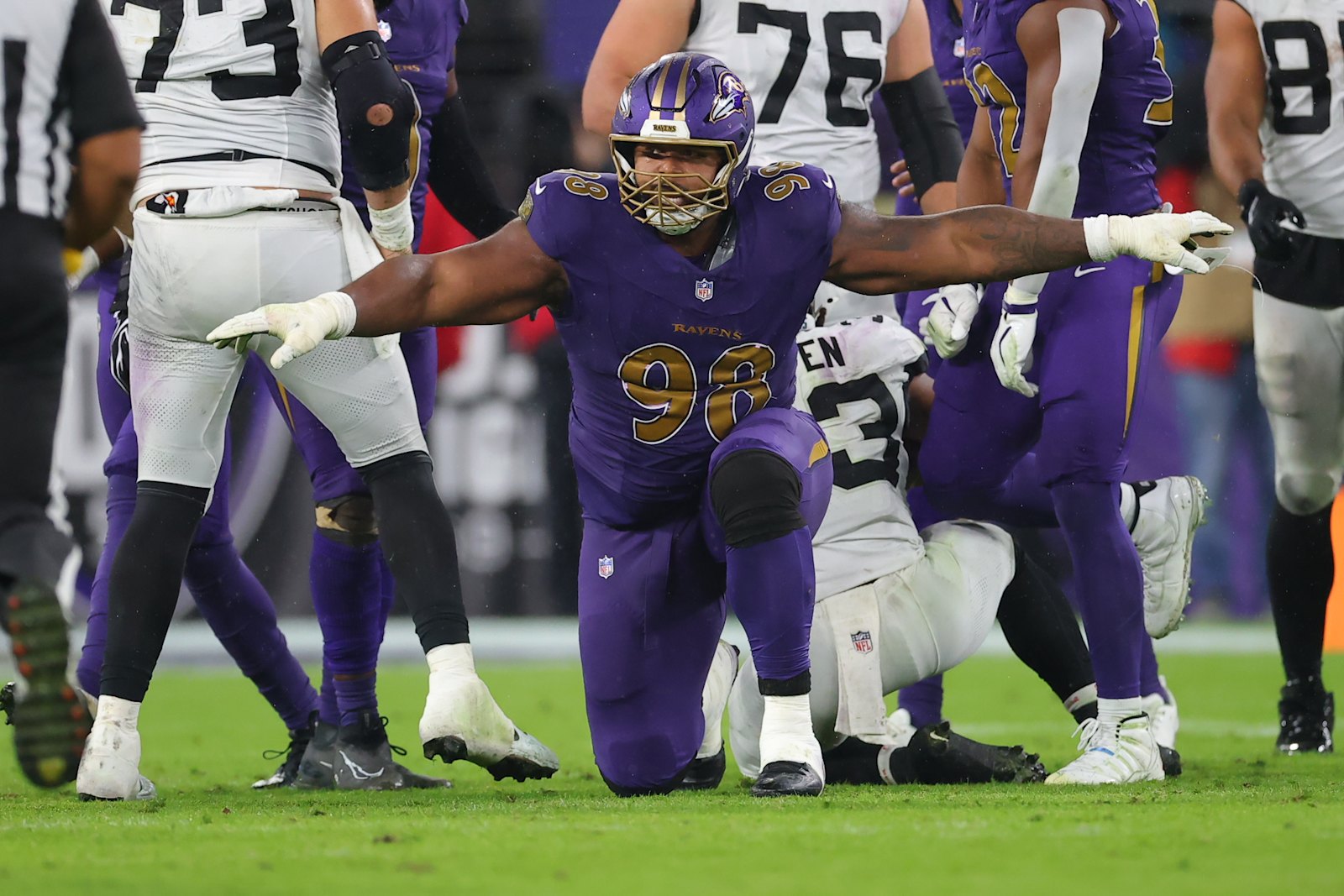
Madubuike has just one sack through nine games, a disappointing total considering the impact he made before his injury. There is still room for improvement, particularly in creating pressure that forces quarterbacks away from the middle of the pocket.
But the Ravens have generally been strong against the run, and Jones has been one of the defense’s most reliable performers.
That deserves recognition, even on a defense that has otherwise disappointed.
Edge Rushers: C+
The Ravens added Trey Hendrickson because they wanted a pass rusher capable of consistently winning individual matchups without requiring the defensive coordinator to manufacture pressure through elaborate designs.
In some respects, Hendrickson has delivered exactly that. His 27% pass-rush win rate ranks fourth among qualifying edge defenders in ESPN’s tracking data. Unfortunately, winning individual matchups hasn’t consistently translated into finished plays.
Hendrickson has just two sacks, while Mike Green and the injured Tavius Robinson lead the team with 3.5 each. The Ravens have only 17 total sacks through nine games, including just two over their final three games.
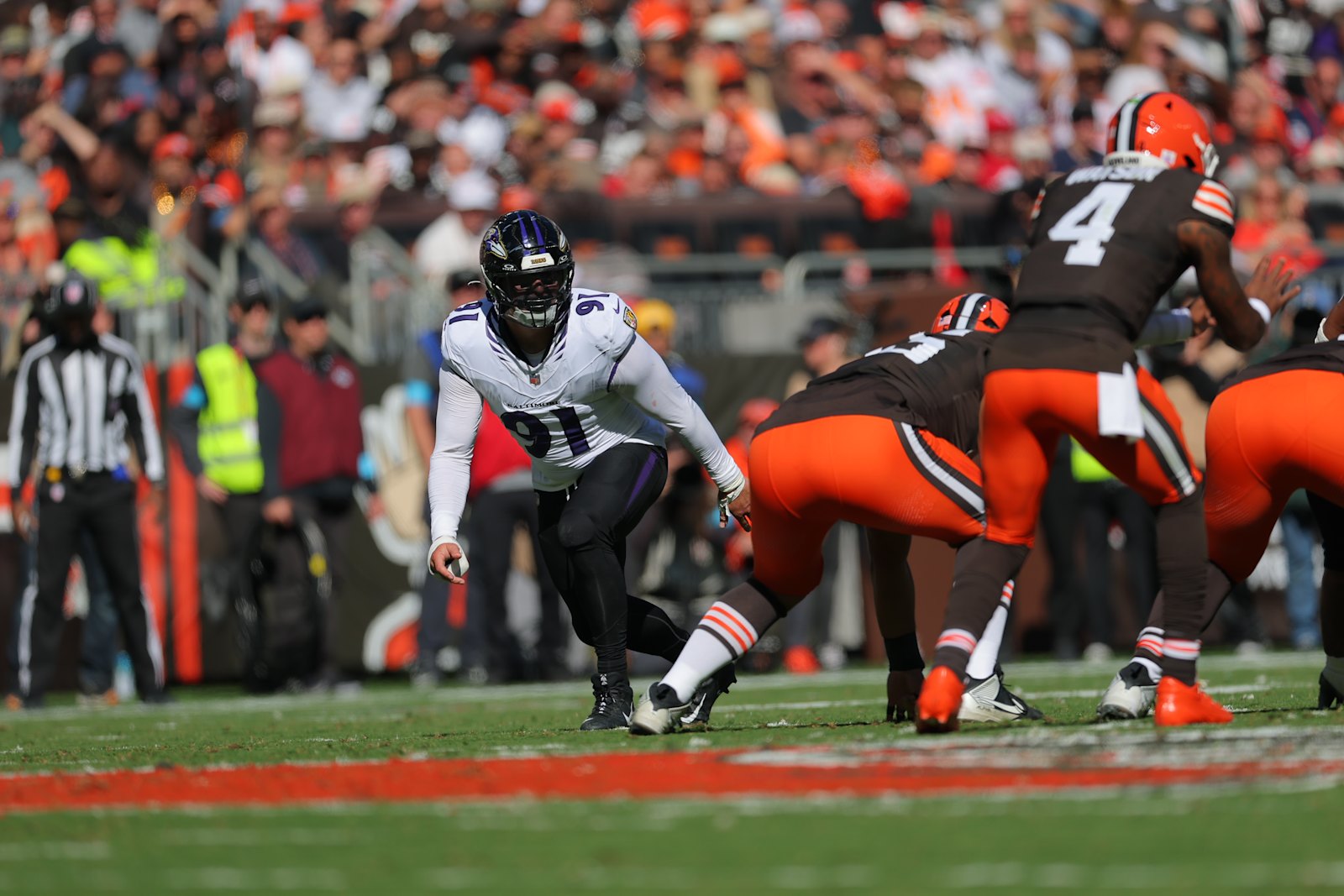
There are some encouraging individual developments, with Green becoming a more complete defender, contributing against the run rather than serving exclusively as a situational pass rusher. Robinson was also having a productive season before suffering his pectoral injury.
Hendrickson has missed time and may be playing hurt, complicating any judgment of the group’s overall performance. Either way, the Ravens simply haven’t generated enough disruption in critical situations.
Against Cincinnati, Joe Burrow wasn’t pressured once in the second half. Jacksonville surrendered zero sacks to Baltimore, and Trevor Lawrence repeatedly had opportunities to attack downfield.
Pressure and sacks aren’t interchangeable. A defender can win quickly and force an early throw without receiving credit for a sack, but the purpose of investing heavily in the pass rush is to prevent opposing quarterbacks from operating comfortably.
That hasn’t happened consistently enough.
Linebackers: B−
Roquan Smith leads the Ravens with 74 tackles, two sacks, two forced fumbles and an interception.
Trenton Simpson has added 57 tackles, a sack and an interception.
Those aren’t bad contributions, and the linebackers deserve some credit for the defense’s strong performance against the run. Still, this unit hasn’t been as dependable as its reputation suggests.
The Ravens have repeatedly struggled to defend the middle of the field, particularly when opponents begin attacking underneath coverage and forcing linebackers or defensive backs to finish tackles in space.
The Cincinnati game was the most obvious example. The Ravens controlled Joe Burrow and the Bengals through the first half, then completely lost its ability to disrupt the passing game or limit yards after the catch.
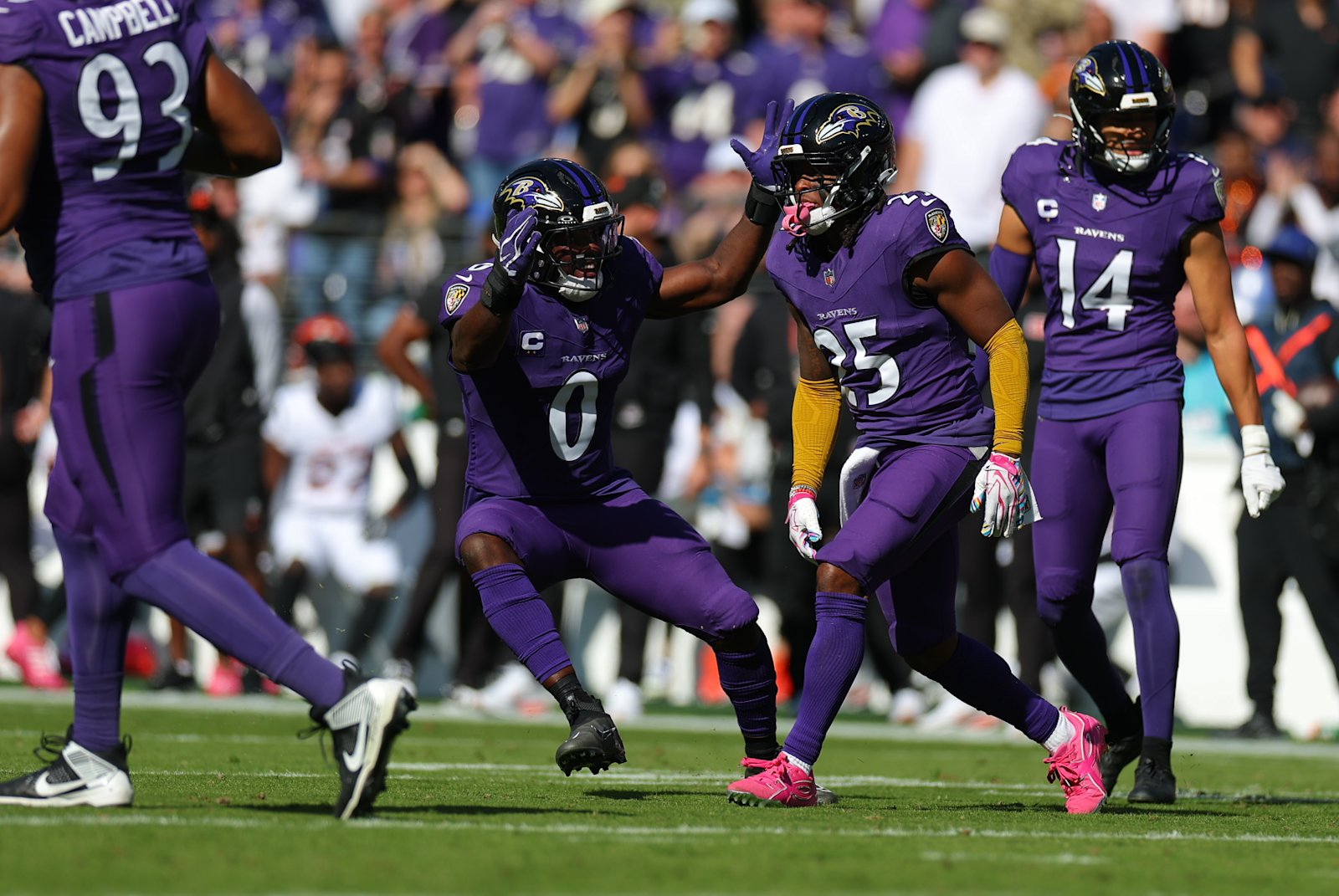
Not every completion over the middle is a linebacker failure. Coverage responsibilities depend on the call, and the defensive structure sometimes asks Smith and Simpson to cover enormous amounts of space.
But the group hasn’t consistently provided the reliability expected from a defense with this much veteran talent.
Smith remains a very good player. Simpson has made valuable contributions.
The collective performance simply hasn’t been exceptional.
Secondary: C+
This is the most disappointing position group relative to expectations.
The Ravens entered the season with Kyle Hamilton, Nate Wiggins, Marlon Humphrey, Malaki Starks, free agent signing Jaylinn Hawkins and enough depth to give Jesse Minter considerable flexibility.
We spent the offseason imagining how Minter could move Hamilton around the formation, disguise coverages and create difficult decisions for opposing quarterbacks.
Some of that has worked.
Hamilton remains one of the league’s most versatile defenders, and Minter has successfully used him in the slot, near the line of scrimmage and as an interchangeable part of the safety rotation.
But the collective results haven’t come close to expectations.
Opposing quarterbacks have completed 65.2% of their passes for 2,177 gross yards and 12 touchdowns. The Ravens rank 22nd in defensive EPA allowed per pass play and 25th in pass-defense success rate.
More concerning is the recent increase in explosive plays. The defense allowed just one completion of 40 or more yards during its first five games. It has allowed six during the last four.
Against Jacksonville, Trevor Lawrence’s two longest completions accounted for 102 of his 242 passing yards. Those weren’t simply spectacular throws against outstanding coverage. There were clear breakdowns that left receivers with far too much room.
The secondary has dealt with a few injuries, most notably Nate Wiggins missing the Jacksonville game. But the absence of an underperforming Hawkins is not much of an excuse.
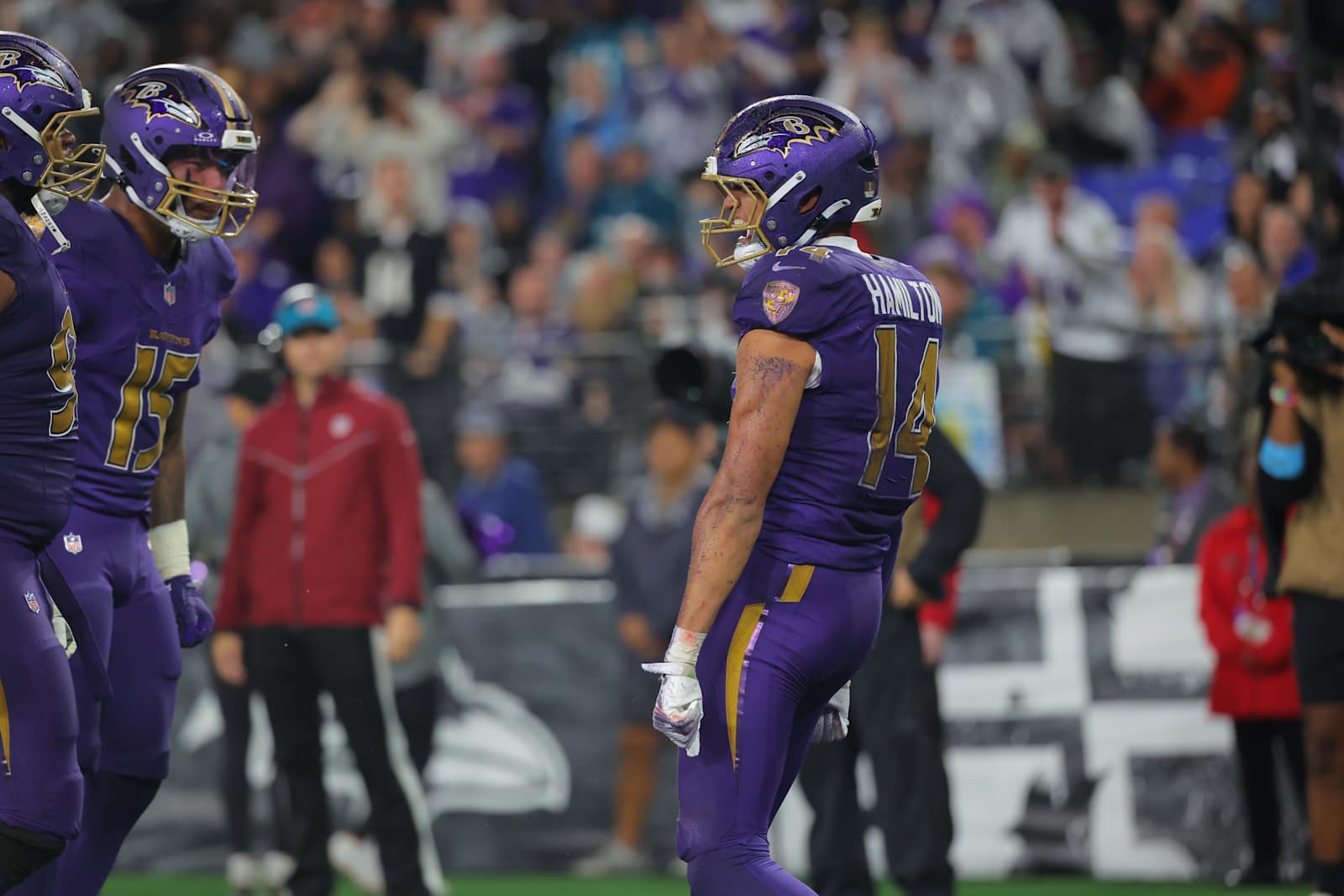
Outside of Hamilton, no member of the secondary has lived up to their expectations and a few have been noticeably worse. Marlon Humphrey appears to be completely washed up or disinterested. He is making the case for Bill Belichick’s philosophy of wanting to cut ties with a player one season too early rather than one season too late.
If I had to split this grade up it would be something like a B+ for the safeties and a D for the corners.
The secondary was supposed to be one of the team’s greatest strengths.
Instead, it’s become one of the reasons opponents have been able to dismantle the defense after halftime.
Special Teams: B−
I was probably as concerned as anyone about Tyler Loop entering the season. After his missed field goal ended the Ravens’ 2025 season, I wasn’t convinced the team could trust him in another important situation.
For the first several weeks, he appeared determined to make that concern look ridiculous, hitting a 57-yard field goal against Indianapolis, then a 56-yard game-winner against Dallas and a remarkable 64-yarder against Tennessee.
He made all five of his attempts from 50 yards or longer before landing on injured reserve. Unfortunately, the rest of his kicking has been less consistent. He went just 2-for-5 from 40 to 49 yards and finished 13-for-17 overall.
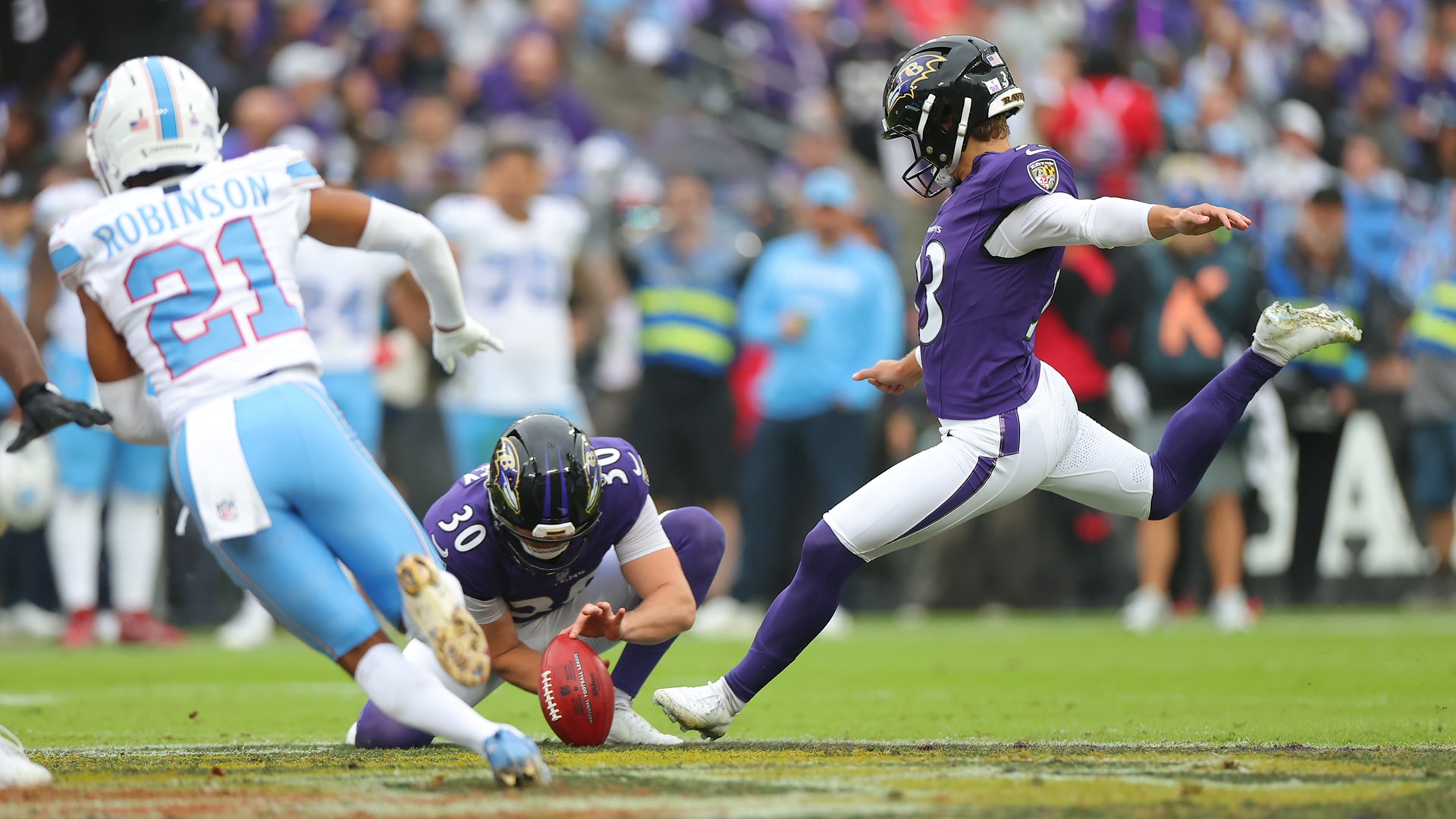
After the Falcons signed Jake Moody off the Ravens practice squad, they are temporarily without a kicker.
Ryan Eckley has been serviceable as a punter, averaging 47.6 gross yards and 42.0 net yards per punt, with 18 punts inside the 20.
The return game has produced occasional positives, but also costly mistakes, including LaJohntay Wester’s lost kickoff-return fumble against Jacksonville.
The Dual Eights model ranks Baltimore’s special teams just 24th in context-adjusted value, which is less flattering than the cumulative editorial grade.
The Ravens spent much of the offseason wondering whether they could trust their kicker.
They finally started getting some encouraging answers.
Now they have to solve the position all over again.
Coaching Staff
Jesse Minter, Head Coach: C+
Nine games isn’t enough to reach a definitive conclusion about Jesse Minter as an NFL head coach. However, most of what we have seen so far has been mildly disappointing at best.
The Ravens beat most of the opponents they were expected to beat before Lamar went down and looked like a Super Bowl contender.
There were promising signs in Minter’s approach. He occasionally demonstrated a willingness to trust analytics, showed creativity with his defensive personnel and delivered an impressive road victory in Atlanta despite significant injuries.
But too many of the problems that contributed to John Harbaugh’s dismissal are still here. The blown leads. Poor second-half adjustments. Questionable game management. Penalties. An inability to stop mistakes from turning into complete collapses.
The New Orleans loss was particularly concerning. With the game tied late in the fourth quarter, the Ravens faced fourth-and-1 from their own 37-yard line with Lamar Jackson and Derrick Henry available.
Minter punted.
The public fourth-down models strongly favored going for it, with an estimated win-probability advantage of roughly four percentage points.
That’s not a marginal difference.
Minter also wasted a valuable timeout on a questionable challenge earlier in the quarter, further limiting the Ravens’ options during the final minutes. He hasn’t always been conservative, which is encouraging. But his willingness to trust the math has been inconsistent, and several of his mistakes have come in particularly consequential situations.
Then there’s the issue of leadership.
I don’t know whether the problem originates with Minter, his assistants or the veteran players. Probably some combination. Either way, this team has repeatedly looked unable to respond when the chips are down.
The Ravens have outscored opponents 128–86 in the first half of games this season. After halftime, including overtime, they’ve been outscored 150–61. Minter acknowledged after the Cincinnati loss that the Ravens have become too dependent upon momentum.
He’s right, but identifying the problem isn’t the same as solving it. Harbaugh deserved criticism for the recurring failures of previous seasons. Watching those same problems continue under an entirely different staff should probably make us reconsider whether he deserved all the blame.
Minter inherited a talented veteran roster with championship expectations. He wasn’t hired to oversee a rebuilding project.
The injuries have been severe, and he deserves some patience.
But the standard hasn’t changed.
At 4–5, with the team coming off three consecutive blowout losses, a C+ feels appropriate.
Jesse Minter / Anthony Weaver, Defensive Leadership: D+
This is where my evaluation of Minter becomes considerably harsher.
The Ravens hired one of football’s most respected defensive minds, gave him a roster featuring Kyle Hamilton, Roquan Smith, Nate Wiggins and Nnamdi Madubuike, and added Trey Hendrickson to address their biggest pass-rushing weakness.
The expectation was that Minter, working with defensive coordinator Anthony Weaver, would improve a defense that had been frustratingly inconsistent under Zach Orr.
That hasn’t happened.
To be precise, the aggregate efficiency metrics show some modest improvement. The Ravens are allowing slightly less EPA per play than they did last season, and their overall explosive-play rate allowed has declined.
But those numbers don’t tell the whole story.
Opponents are scoring touchdowns on 65.6% of their red-zone trips, compared with 50.8% last season. The Ravens rank 25th in points allowed per game and 22nd in passing EPA allowed.
And the defense has become considerably worse as the season has progressed.
During the first five games they allowed −0.022 EPA per defensive play. During the four-game losing streak, that has deteriorated to +0.065.
The defense has had some excellent stretches, like the first half against Cincinnati when they held Joe Burrow to 43 passing yards and shut out the Bengals while building a 13-point lead. However they have consistently failed to counter once opposing offenses adjust.
They did play a complete game against Cleveland and were let down by the offense, but in general they have not been able to step it up when facing a higher quality of competition.
And the defense has shown no consistent ability to carry the team when the offense is struggling.
There are legitimate questions about whether Minter and Weaver are asking too much of the secondary, whether the rush and coverage are working together effectively and whether the defensive structure becomes too vulnerable when opponents identify its weak points.
But it's also becoming clear that we simply overestimated the personnel.
Perhaps Hendrickson is just not a game-wrecking pass rusher. Perhaps the secondary isn’t as talented as its collection of draft positions and reputations suggests. Perhaps Roquan Smith and some of the other veterans are declining faster than expected. Maybe the younger players aren’t ready for the responsibilities they’ve been given.
If that’s the case, Minter will need to spend the offseason working closely with Eric DeCosta to determine which players actually fit the defense he wants to run.
And that distinction is why this grade is a D+ rather than an F.
It’s difficult to know precisely how much responsibility belongs to the coaching staff and how much belongs to players who haven’t performed to expectations.
But either way, the results are unacceptable.
Minter wasn’t hired merely to install an interesting defense.
He was hired to make it better.
Nine games in, he hasn’t.
Declan Doyle, Offensive Coordinator: B+
Of the three major coaching evaluations, Doyle gets the strongest grade.
And I think he’s earned it.
Doyle entered the season as a first-time NFL play caller with an enormous challenge: take an offense that had already been among the best in football under Todd Monken and find ways to make it even more dangerous.
The early results were extremely encouraging. With Lamar healthy, the Ravens looked like a top-tier offensive unit. They averaged +0.152 EPA per play during the first five games, with a 50.7% success rate and 40 explosive plays.
Doyle did an excellent job using movement, formations and misdirection to create opportunities for his best players. He especially deserves credit for fully unlocking the potential of Zay Flowers.
The opening scripts were frequently outstanding. The Ravens scored 128 first-half points through nine games, and during the early portion of the season, the offense often looked particularly sharp before opponents began adjusting.
We’ve also seen some genuinely innovative plays.Against Atlanta, Doyle lined up Justice Hill as a fullback in front of Derrick Henry, creating the appearance of an obvious Henry run before handing Hill the football for a 47-yard gain.
He used Henry on an 18-yard screen touchdown and later put him in the Wildcat for a critical two-point conversion. Against Cleveland, Doyle lined up rookie tight end Josh Cuevas in the left guard position before sending him into a route that produced a 29-yard catch-and-run.
Those aren’t just gimmicks, they’re examples of using personnel and formations to manipulate what defenders expect before the snap. Doyle has demonstrated an understanding of how to make the defense prepare for one possibility and then attack somewhere else.
The biggest concern is what happens after the opening plan stops working. The Ravens have been substantially less effective in second halves, and several opponents have made successful adjustments without receiving a convincing response.
Some of that falls on Doyle. Short-yardage execution has also been inconsistent, and the offense continues to commit far too many procedural penalties. But I have a difficult time being overly critical of his offensive production since Lamar was injured.
Huntley has significant limitations, and Fagnano simply isn’t ready to run an NFL offense against quality competition. No amount of creative play design can consistently overcome a quarterback who cannot execute the basic passing game.
The real test comes now. Jacoby Brissett isn’t Lamar, but he’s an experienced and reasonably competent quarterback who should allow Doyle to operate something resembling a conventional NFL offense.
Doyle needs to adjust his approach accordingly.
That means making better use of play action, building efficient intermediate passing concepts, getting Flowers the football and finding rushing opportunities that don’t depend upon Lamar freezing an extra defender.
It also means recognizing that Brissett isn’t going to rescue broken plays with spectacular improvisation.
The offense needs to function within its original structure.
If Doyle can produce league-average offensive performance with Brissett, that would be a significant accomplishment under these circumstances.
It might also save the Ravens’ season.
And how he handles that assignment will go a long way toward determining his final grade.
The Final Eight Games: Can the Ravens Save Their Season?
At 4-5, the Ravens playoff hopes are damaged, but not totally dead.
Obviously if Lamar doesn’t return, none of it will matter. But his comments this week and the schedule offer an opportunity.
The next four games come against the Chargers, Panthers, Texans and Buccaneers, all of whom enter this stretch with losing records. That’s followed by a brutal closing sequence of four consecutive AFC North games, including two against Pittsburgh.
If the Ravens can somehow navigate the next month with two or three victories, they’d keep alive the hope of a late run with a healthy Lamar.
That isn’t an unreasonable objective with Brissett under center. However, it requires a substantially better collective performance than anything we’ve seen during the last four games.
Minter, Weaver and Doyle now have an opportunity to demonstrate whether they can improve the team without relying upon their franchise quarterback to solve every problem.
If they can right the ship on defense, find a cohesive offensive line and get competent play from the new quarterback, perhaps Lamar will return to a team with something meaningful left to play for.
If they can’t, the second half of the season will become less about chasing a championship and more about determining who should return and who should be sent packing at the end of the season.