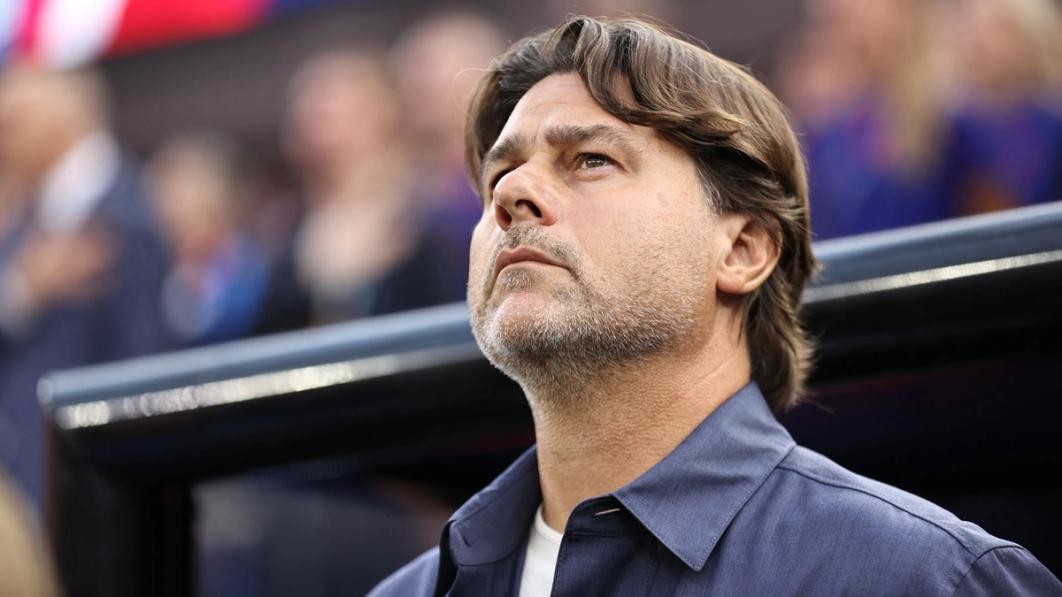
Mauricio Pochettino is officially leaving the USMNT for Manchester United, just over three months after signing a four-year contract extension that was supposed to keep him in charge through the 2030 World Cup.
The move was confirmed Friday, with Pochettino agreeing to a two-and-a-half-year contract to replace Michael Carrick at Old Trafford. He will remain with the US through its two CONCACAF Nations League quarterfinal matches against Haiti on November 14 and 17 before departing for Manchester.
It is an awkward ending to a tenure that seemed to be entering an encouraging new chapter. Pochettino didn’t deliver the breakthrough World Cup run many Americans hoped for, but he established a coherent, attack-minded style and got the team playing some of its best soccer in years. The embarrassing Round of 16 loss to Belgium exposed some familiar limitations, but there was enough progress to justify continuing the project.
Now U.S. Soccer needs to find someone capable of building on that work.
The good news is that the federation should have some financial flexibility. Manchester United will reportedly pay approximately $10 million to release Pochettino from his contract, with additional compensation potentially coming from the departures of his assistants. U.S. Soccer has also demonstrated an ability to attract wealthy benefactors willing to finance a high-profile coaching appointment.
There is an important lesson from the last search. When Gregg Berhalter was dismissed in 2024, few people believed the US could attract a manager with Pochettino’s European résumé. The federation aimed higher than expected and ultimately landed one of the most accomplished coaches in the program’s history.
There is no reason it shouldn’t try again.
The following are my five preferred candidates, ranked by whom I would most like to see coaching the USMNT, rather than how likely the federation is to hire them. Some would require an extraordinary sales pitch, while others are already connected to the program. But the first calls should go to the best coaches, not necessarily the easiest ones to hire.
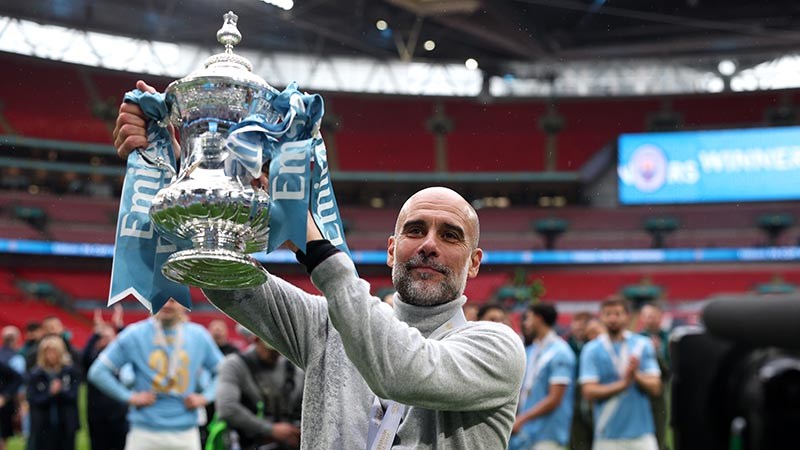
1. Pep Guardiola: The Dream Hire
Why would the US want him?
There is only one place to begin.
Pep Guardiola is not merely one of the most successful club coaches of his generation. He is one of the most influential managers in the history of soccer, a coach who fundamentally changed how the sport is played at its highest level.
At Barcelona, he helped revolutionize modern possession soccer, combining positional discipline, relentless pressure after losing the ball and extraordinary technical execution. He subsequently won league titles at Bayern Munich before spending a decade transforming Manchester City into one of the most dominant teams in European soccer.
The influence extends well beyond the trophies. Guardiola’s use of inverted fullbacks, positional rotations, numerical advantages in midfield and aggressive counterpressing has shaped how countless other coaches approach the game. Much of what we now consider standard practice among elite European teams was either pioneered, popularized or refined by Guardiola.
There are legitimate reasons to wonder how his approach would translate to international soccer. Guardiola has generally worked with some of the most technically gifted players in the world, and his systems depend on precisely coordinated movements developed through extensive training. The USMNT doesn’t possess Manchester City’s technical quality, and national-team coaches don’t get to work with their players every day.
Guardiola would have to simplify aspects of his approach and adapt to the available talent. He couldn’t simply install his Manchester City system and expect the US to start playing like a European superpower.
But that is also what makes the possibility so fascinating. What could one of the greatest tactical minds in the history of the sport accomplish with a reasonably talented American roster, particularly if he had four years to develop it?
There is also the larger potential impact on American soccer. Guardiola’s influence on coaching education, youth development and the federation’s broader technical philosophy could extend well beyond the senior national team.
Why would he consider the job?
Remarkably, Guardiola is available.
He stepped away from Manchester City following last season (perhaps he knew what was coming down the line at City), and U.S. Soccer reportedly already has him at the top of its wish list. Recent reporting suggests the federation could hold exploratory talks with Guardiola as soon as next week. Whether those discussions lead to anything substantial is another question entirely.
Guardiola has previously expressed interest in managing a national team, and the US could offer a very different challenge from anything he has experienced during his club career.
After winning just about everything available at the club level, taking over a developing national team and attempting to elevate it into genuine international contention would be a new type of accomplishment.
The US would also provide an opportunity to work with a promising generation of young players, with the freedom to shape the program’s longer-term development. Given his influence on the modern game, he could leave a legacy that extends far beyond whatever happens at the 2030 World Cup.
And unlike taking another elite European club job, the international schedule would allow considerably more time away from the daily grind that Guardiola has spent nearly two decades navigating.
The federation could also make a compelling financial offer, particularly if its benefactors are as ambitious as they were when recruiting Pochettino.
This would be an extraordinarily difficult appointment to pull off.
Still, U.S. Soccer should make him say no. And perhaps make him say it a few times.
2. Julian Nagelsmann: Another Chance at an Elite European Coach

Why would the US want him?
If Guardiola is the dream, Julian Nagelsmann might be the most intriguing alternative.
At only 39, Nagelsmann has already assembled a remarkably accomplished coaching résumé. He emerged as one of Europe’s most promising young managers at Hoffenheim, took RB Leipzig to the Champions League semifinals, won the Bundesliga with Bayern Munich and subsequently took charge of Germany.
His German national-team tenure ended disappointingly after a surprising Round of 32 elimination against Paraguay at the 2026 World Cup. That was obviously a failure by German standards, but one poor result doesn’t erase nearly a decade of impressive coaching work.
Nagelsmann is known for tactical flexibility and his willingness to experiment with different formations and player roles. His best teams have generally pressed aggressively, attacked quickly when opportunities presented themselves and used coordinated movement to create openings between defensive lines.
He also has experience adjusting his approach to significantly different levels of talent. His success at Hoffenheim and Leipzig was not simply the product of inheriting an overwhelming collection of elite players.
That could make him an especially interesting candidate for the US. Rather than trying to reproduce one rigid system, Nagelsmann could develop multiple approaches depending on the opponent and the players available.
Against weaker CONCACAF opposition, the US could continue using an aggressive approach that presses high and attempts to dominate territory. Against the best European and South American teams, Nagelsmann could employ a more compact structure designed to create chances through quick transitions.
The concern is whether his systems might become too complicated for international soccer. Germany’s disappointing World Cup offers at least some reason to question whether all his tactical sophistication consistently translates into tournament results.
Why would he consider the job?
Nagelsmann is currently unattached following his departure from Germany, making him at least theoretically available.
The US would offer him an opportunity to return to international management with a promising young player pool and considerably different expectations from those he faced coaching his home country.
Managing Germany comes with an expectation of competing for every major trophy. The US is in a different position. A successful 2030 cycle that elevates the program beyond its traditional ceiling could substantially enhance Nagelsmann’s reputation, particularly after his disappointing conclusion with Germany.
He could also view the job as an opportunity to demonstrate that his tactical methods can elevate a team without the overwhelming technical advantages enjoyed by Europe’s biggest clubs.
There is a young core to work with, several interesting prospects emerging and a federation that should be willing to give him considerable control over the team’s development.
However, the obstacles are substantial as Nagelsmann is young enough to have another two decades of coaching ahead of him. He could reasonably expect opportunities at major European clubs, where he would have greater access to top players and considerably more training time.
And after his experience with Germany, would he even want another national-team position?
A return to club soccer would probably be the more conventional career decision. Taking the US job would require genuine enthusiasm for the project, rather than simply an attractive contract.
That seems like a tough sell. But with his track record and availability, he absolutely deserves a phone call.
3. Pellegrino Matarazzo: The Rising American in Europe
Why would the US want him?
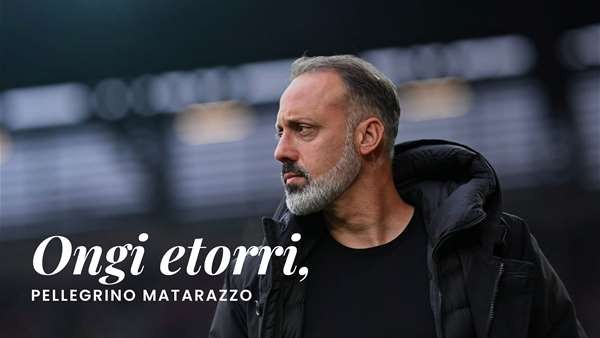
Pellegrino Matarazzo represents perhaps the most compelling intersection of American connections and European coaching credentials.
The New Jersey native has spent most of his professional career in Germany, working his way through the coaching ranks before earning Bundesliga managerial positions at Stuttgart and Hoffenheim. He also worked alongside Nagelsmann at Hoffenheim, providing another connection to the aggressive, modern tactical approaches that have developed in German soccer.
His career took another significant step when he became manager of Real Sociedad in December 2025.
Matarazzo inherited a team struggling near the bottom of La Liga and promptly turned its season around, culminating in a surprising Copa del Rey championship. The accomplishment made him the first American coach to win a major trophy in one of Europe’s Big Five leagues.
It was the kind of breakthrough that can completely change a coach’s career trajectory.
Matarazzo’s teams generally emphasize aggressive defending, winning possession in advantageous areas and moving the ball forward quickly. His tactical approach is not identical to Pochettino’s, but there are enough similarities that he could continue developing the proactive style the US began implementing during the last cycle.
He also has much more extensive experience preparing teams to face elite European opposition compare fro any other American candidate.
Matarazzo understands the American soccer environment, but his coaching education and experience have been almost entirely European. That combination is appealing for a national team trying to close the gap between its regional dominance and its ability to compete against the world’s best.
Why would he consider the job?
The strongest argument for Matarazzo is relatively straightforward: he would have an opportunity to return home and lead his own country’s national team.
He has built his reputation almost entirely in Europe, but the possibility of becoming the first American-born manager to lead the US to a genuine World Cup breakthrough could carry a different appeal from another European club position.
He would also arrive with considerable credibility. After his success in Germany and Spain, he wouldn’t be an American coach attempting to prove he belongs at the highest level. He would be an accomplished European manager choosing to bring that expertise back to the national team.
The job could offer him a degree of long-term stability and influence over the American player-development pathway that is difficult to find in European club soccer, where even successful managers are often only a few poor results away from dismissal.
The problem is that this might be the worst possible time to convince him to make that move.
After years of working his way up the European coaching ladder, Matarazzo has finally established himself at a prominent La Liga club and won a major trophy. He signed a contract extension through 2028 and could reasonably believe he is positioning himself for an even bigger European opportunity.
Leaving that situation to manage the USMNT, with considerably less day-to-day coaching and a player pool that remains limited compared to Europe’s top teams, could feel like a step backward.
That is a significant obstacle, perhaps even more difficult to overcome than persuading an unattached coach like Nagelsmann.
Still, Matarazzo may represent the best American-born coaching candidate the federation has ever had an opportunity to pursue.
If U.S. Soccer cannot land Guardiola or Nagelsmann, he would be my preferred alternative.
4. Steve Cherundolo: The Internal Succession Plan
Why would the US want him?
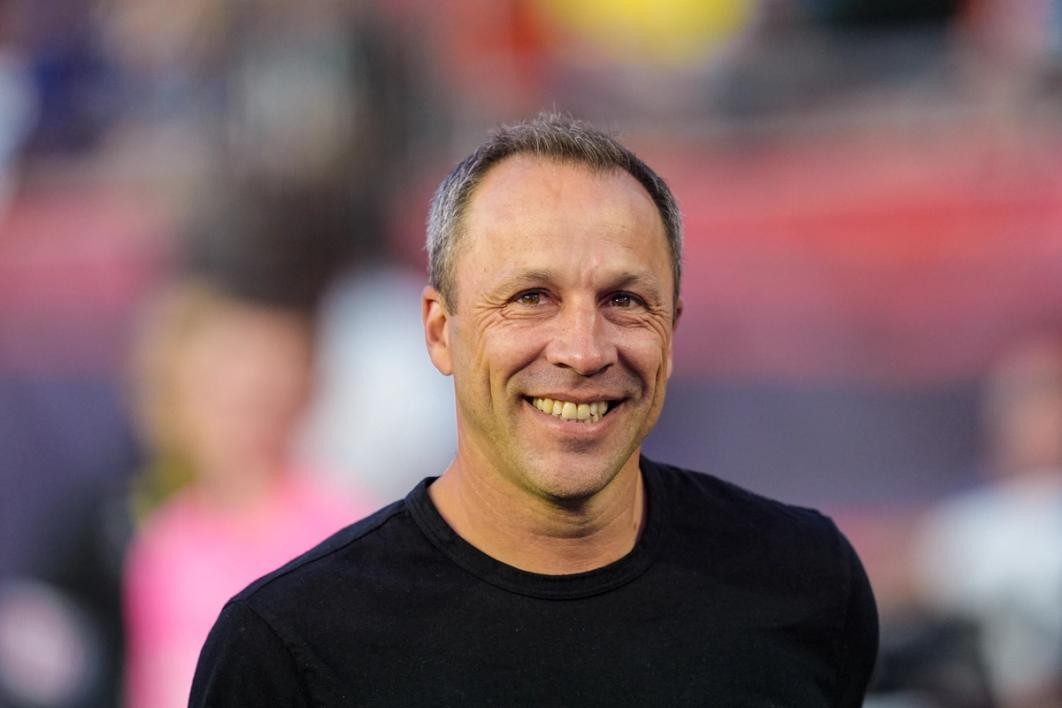
Steve Cherundolo is the most obvious candidate if U.S. Soccer wants to promote from within.
The former USMNT defender was appointed coach of the U-23 national team this summer, with the primary objective of preparing for the 2028 Los Angeles Olympics. Before that, he enjoyed considerable success managing LAFC, winning MLS Cup and the Supporters’ Shield in 2022 and adding another U.S. Open Cup title.
Cherundolo also spent most of his playing career in Germany, where he subsequently began coaching, giving him a combination of American national-team familiarity and European experience.
His recent appointment makes him a particularly convenient option. He is already working within the federation, understands its plans for the next generation and should be familiar with many of the players expected to compete for senior national-team roles over the next four years.
The biggest question is stylistic.
Although Cherundolo initially maintained much of the aggressive, possession-oriented approach established at LAFC under Bob Bradley, his teams gradually became more pragmatic. They increasingly emphasized defensive organization, compactness and exploiting opponents on the counterattack rather than controlling games through sustained possession.
There is nothing inherently wrong with that approach. In fact, considering how thoroughly Belgium exposed the Americans in the World Cup, there is a legitimate argument that the US would benefit from becoming more pragmatic against elite opponents.
But Pochettino had the US playing a more aggressive, front-foot style than we had seen consistently from previous national-team coaches. The team pressed with purpose, advanced the ball quickly and attempted to take the initiative rather than simply reacting to opponents.
Would Cherundolo continue developing that identity, or would the US revert toward a more conservative counterattacking approach?
Perhaps the answer should be some combination of the two. The US needs to be capable of controlling games against weaker teams while recognizing when a more defensive strategy gives it a better chance against superior opposition.
Cherundolo has demonstrated that he can win with a pragmatic approach. Whether he can build on Pochettino’s attacking framework is less certain.
Why would he consider the job?
For Cherundolo, the appeal is obvious. After representing the US in three World Cups as a player, becoming the senior national-team coach would be the natural pinnacle of his coaching career.
He is also already working within the federation and has begun developing relationships with the next generation of players. Moving into the senior position would provide an opportunity to continue that work with a much larger platform.
Unlike the European candidates, Cherundolo would not be choosing between an established high-profile club position and international management. He has already committed to working within the American national-team structure.
That should make negotiations considerably more straightforward.
The primary complication is the Olympics.
Cherundolo was hired specifically to prepare the U-23 team for the 2028 tournament in Los Angeles, a rare opportunity for American soccer to compete for a major international prize on home soil. Abandoning that project before it really gets underway would be disappointing, both for him and for the federation.
Still, it would be impossible to imagine Cherundolo declining the senior position if it were offered.
He offers continuity, familiarity and a credible coaching résumé. There would be considerably less risk in the transition than with an outsider unfamiliar with the federation.
Whether he would be the best coach for the next four years is another question.
5. B.J. Callaghan: The Intriguing Middle Ground
Why would the US want him?
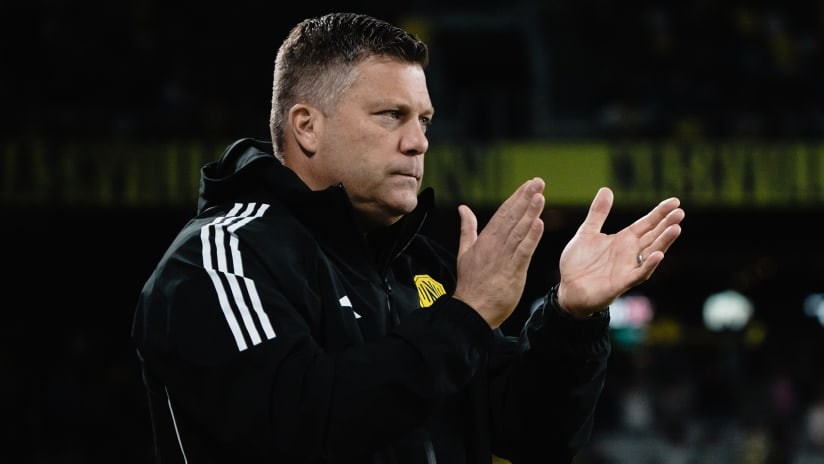
B.J. Callaghan may ultimately represent the best combination of tactical ambition, experience with the USMNT and realistic attainability.
Callaghan became something of an unlikely national-team coaching success story in 2023 when he took over on an interim basis following the departure of Gregg Berhalter. Despite having no previous experience as a senior head coach, he guided the US to a convincing CONCACAF Nations League championship, including impressive victories over Mexico and Canada.
He subsequently left the national-team setup for Nashville SC, where his coaching career has taken off.
Callaghan led Nashville to the 2025 U.S. Open Cup title before producing a record-breaking 2026 MLS regular season. Nashville won the Supporters’ Shield with 77 points, setting league records for wins, points and fewest losses.
More importantly, the results have come with a coherent tactical approach.
Callaghan has developed a team that combines aggressive pressure, intelligent positional movement and attacking fluidity with excellent defensive organization. His Nashville teams can control stretches of possession, but they are also dangerous attacking directly after turnovers.
That combination sounds particularly appealing for the USMNT.
Unlike Cherundolo, Callaghan has demonstrated a more consistently proactive attacking style with his current club. Unlike the European candidates, he already knows the American player pool and has experience managing the senior national team in meaningful tournament games.
He also appears to be a coach whose career is still developing rapidly. The Nashville job has given him an opportunity to establish his own tactical identity rather than simply implement someone else’s system, and the early returns have been extraordinary.
The main concern is the level of competition.
MLS is improving, but dominating the league does not prove that a manager can successfully prepare a team to face France, Spain, Argentina or Brazil. Callaghan’s international experience was encouraging, but his interim tenure was relatively brief and largely involved opponents the US was expected to beat.
Why would he consider the job?
Of the five candidates, Callaghan may have the most straightforward combination of personal motivation and professional opportunity.
He has already experienced coaching the USMNT, albeit on an interim basis, and demonstrated that he could handle the expectations surrounding the senior team.
Returning as the permanent head coach would be an enormous step in his career, particularly after proving himself at the club level.
Unlike Cherundolo, he would not be abandoning an important national-team developmental project. Unlike Matarazzo, he would not be stepping away from a hard-earned position in one of Europe’s top leagues.
There is still a reason for hesitation.
Callaghan has built something genuinely impressive at Nashville, where he recently signed a contract extension through the 2028–29 season. He has a stable position, strong organizational support and an opportunity to continue developing his methods through daily coaching.
Leaving now would mean sacrificing much of that stability for the unpredictability of international soccer. It would also put him under considerably more scrutiny, where a few poor performances in major tournaments could erase years of positive work.
But the chance to lead the US through an entire World Cup cycle would be too compelling to decline.
Callaghan wouldn’t generate the excitement of Guardiola or Nagelsmann, and he doesn’t have Matarazzo’s European credentials. But he may offer the most sensible middle ground between an ambitious outside appointment and simply promoting someone already working for the federation.
Along with Cherundolo he would also provide an option that could be expected to continue on for the next cycle of the team is successful. That seems much less likely if a prominent European coach is brought in.
A Few Wildcard Candidates
There are several other names worth keeping in the conversation, including:
Roberto Martínez: Available after leaving Portugal following its Round of 16 elimination at the 2026 World Cup. His international experience with Belgium and Portugal makes him one of the more credible alternatives, and he has reportedly emerged as another potential U.S. Soccer target.
Ange Postecoglou: Currently managing Saudi Arabian club Al Nassr, where he signed a two-year contract in July. His aggressive attacking philosophy and previous experience coaching Australia make him interesting, but securing his release could be expensive.
Bob Bradley: Unattached since leaving Norwegian club Stabæk in 2024. The former USMNT manager would bring extensive international experience and familiarity with American soccer, although at 68 he would represent a return to a previous generation of leadership.
Thierry Henry: Currently without a coaching position after leading France to silver at the 2024 Olympics, while continuing his work as a television analyst. He has expressed interest in the USMNT position in the past and has strong connections to American soccer from his MLS playing and coaching careers.
Didier Deschamps: Available after ending his remarkable 14-year tenure with France following the 2026 World Cup, when Zinedine Zidane succeeded him. A World Cup-winning coach with extensive international experience, although his generally conservative approach would represent a significant stylistic change from Pochettino.
What Should U.S. Soccer Do?
The federation should begin by attempting to land one of the first three candidates on this list.
Guardiola and Nagelsmann would require extraordinarily ambitious recruiting efforts, but that shouldn’t disqualify them. U.S. Soccer already demonstrated with Pochettino that it can attract a more accomplished manager than conventional wisdom suggests.
Matarazzo is another difficult target, perhaps even more so because his European club career appears to be reaching a new level. But his combination of American roots and proven European coaching ability makes him worth pursuing.
If those efforts fail, Cherundolo and Callaghan offer two credible options who could take the program in slightly different directions.
There is also no need to panic about the timing. Losing Pochettino just three months after his extension is unfortunate, but the next World Cup is still more than three years away. The federation has an established player core, several exciting young prospects and enough time for a new coach to develop his own approach.
The greater concern should be getting the right manager rather than getting someone in place immediately.
To be fair, even a coach of Guardiola’s stature would face some of the same limitations Pochettino encountered. The American player pool is talented, but its European club pedigree has not always translated into a corresponding leap in national-team performance. There are positions where the US simply doesn’t have players comparable to those available to the world’s elite national teams.
The right coach can improve the structure, identify better tactical combinations, develop younger players and make the team more difficult to beat. He cannot manufacture world-class talent that doesn’t exist.
Pochettino demonstrated both sides of that equation. His work helped make the US a more coherent and dangerous team, but the defeat to Belgium showed how quickly those improvements could be overwhelmed when the players struggled to execute against elite opposition.
The next coach should be expected to build on that foundation, not magically eliminate the talent gap.
U.S. Soccer shouldn’t limit its ambitions before the search even begins. It has money, an increasingly attractive player pool and the opportunity to offer a manager an entire World Cup cycle.