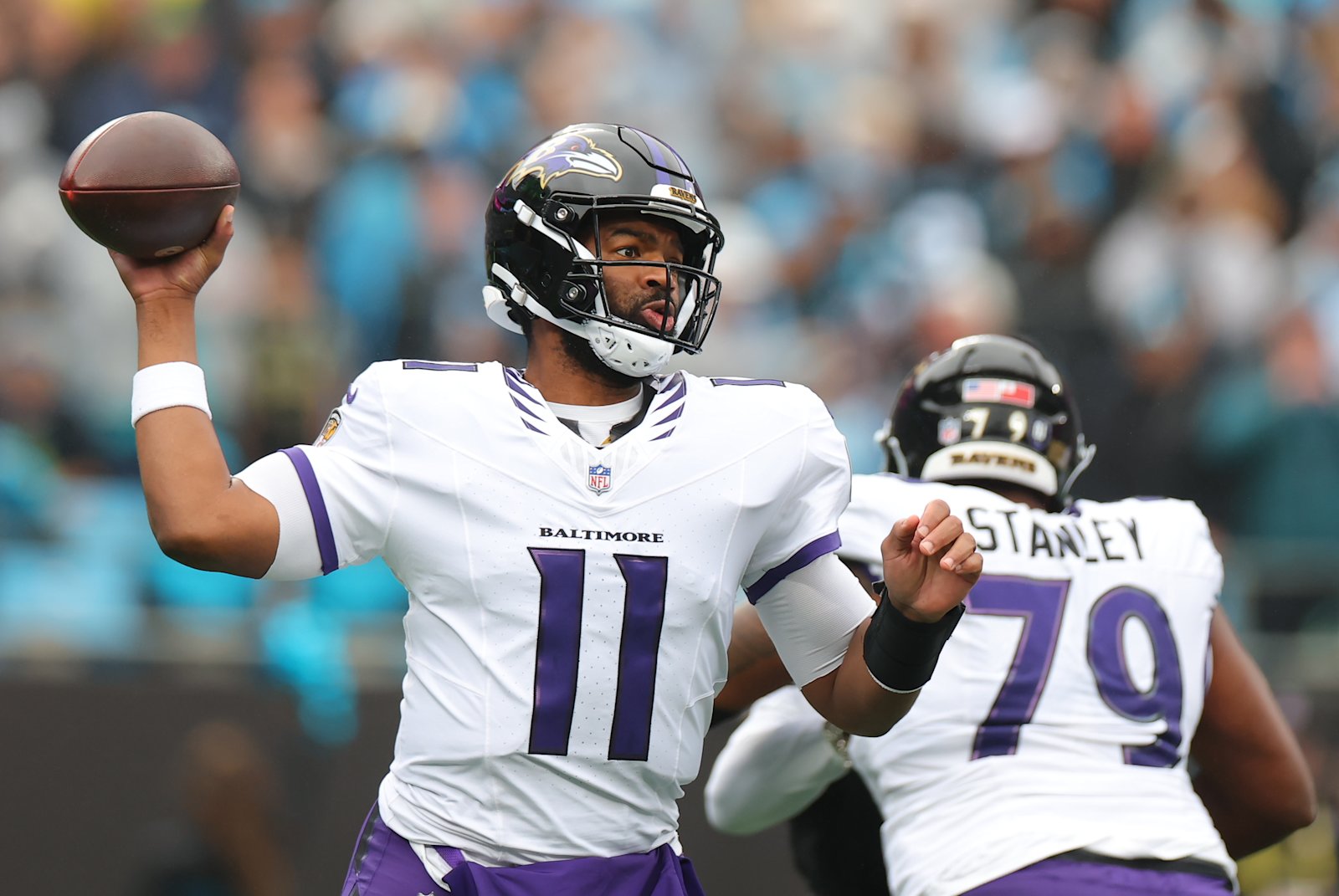
Five immediate takeaways from the Ravens' 35-33 loss to the Carolina Panthers, their sixth consecutive defeat.
Follow the season. The Ravens Season Dashboard tracks results, advanced team metrics, unit grades, injuries and the next matchup.
It’s time to stop sugar coating it. Right now, the Ravens are a poorly coached football team in all phases.
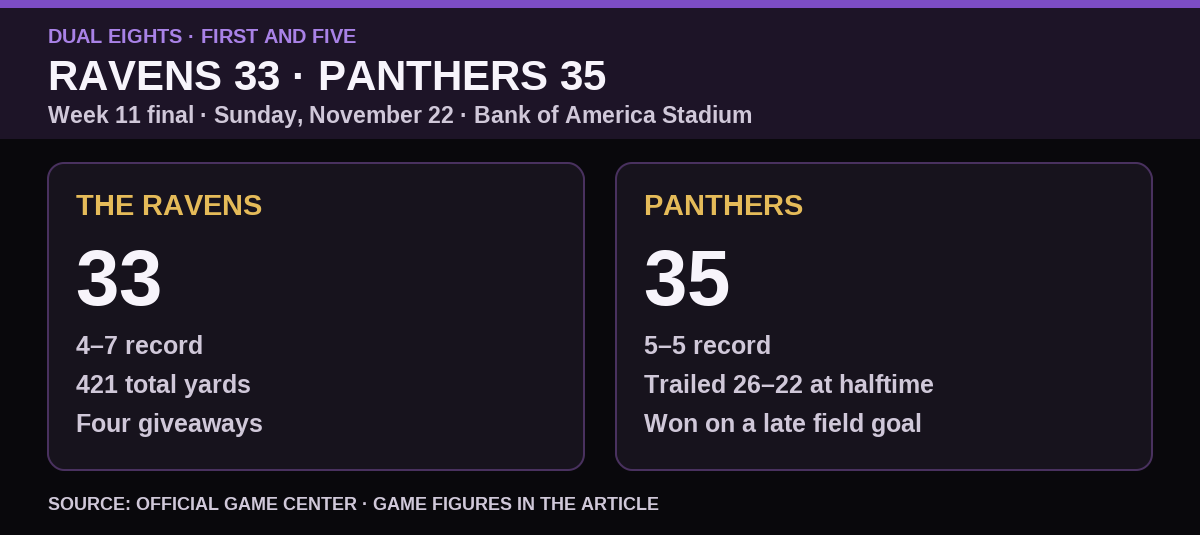
The Ravens lost 35-33 to the Carolina Panthers on Sunday, falling to 4-7 and extending their losing streak to six games. They haven't won since October 11, when they were 4-1 and looking like a legitimate contender.
While the team is probably better off in the long term giving a decent effort and losing the game, that doesn’t make it less frustrating to watch in real time.
Once again on Sunday, it wasn't one catastrophic failure that cost them the game. It was a little bit of everything.
The defense surrendered 35 points to an ordinary Carolina offense. The offense moved the ball beautifully for most of the first half before disappearing after halftime. There were dropped passes, costly penalties, three lost fumbles and another interception at the worst possible moment. The special teams were a complete mess, somehow managing to be a net negative despite an 86-yard kickoff return touchdown.
Despite all of that, the Ravens actually took the lead with six minutes remaining, but completely on-brand for this season, found a way to squander it.
Before we get to the five observations, two other results from around the league worth pondering.
The New York Jets went into Los Angeles and beat the Chargers 27-24. Yes, the same Chargers who arrived in Baltimore last Monday without a win and left with their first victory of the season.
Meanwhile, the New York Giants beat the Jaguars 23-18 to improve to 6-3-1 under their new head coach. The same Jaguars who decimated the Ravens 33-10 just a few weeks ago.
Before going back through the tape, here are my five biggest takeaways from another miserable Ravens Sunday.
1. It's time to stop sugarcoating it. The Ravens are a poorly coached football team.
Eleven games into the Jesse Minter era, I think it's time to stop treating every mistake as an isolated incident or another unfortunate consequence of losing Lamar Jackson.
Right now, the Ravens are a poorly coached football team.
That doesn't mean Minter is incapable of becoming a successful head coach. It doesn't mean Declan Doyle can’t design an offense or Anthony Weaver doesn't understand defensive football. But whatever this staff is teaching, emphasizing and preparing during the week is lost in translation on Sunday.
The evidence is everywhere.
The Ravens repeatedly commit procedural penalties that sabotage possessions. They fumble at critical moments. Receivers drop passes they should catch. Defensive backs lose assignments. Pass rushers abandon their responsibilities. The offensive line struggles to communicate. The defense looks prepared for the opening plan but increasingly helpless as opponents make adjustments.
And perhaps most frustratingly, many of these problems are getting worse rather than better.
Sunday's turnovers were particularly ridiculous.
Justice Hill was about to put the Ravens in position to extend their lead to 19-7 in the second quarter when he fumbled near the goal line. The football rolled through the end zone for a touchback (yes it's a dumb rule, but nonetheless it is the rule).
Carolina went three-and-out on the ensuing possession, giving the Ravens an immediate opportunity to recover from the mistake.
Then LaJohntay Wester muffed the punt.
Carolina recovered at the Ravens' 23 and scored two plays later to take a 14-12 lead. Two consecutive possessions, two disastrous mistakes, and an early game that the Ravens appeared to control had completely changed.
Wester wasn't finished. He was inexplicably allowed to return another punt just before halftime and he muffed that one as well. This time he was fortunate that Keyon Martin recovered before Carolina could take advantage.
Derrick Henry added another costly fumble in the fourth quarter, and Jacoby Brissett finished the afternoon with a puzzling interception on the final drive.
The penalties weren't as numerous as in some previous games, with five accepted flags for 41 yards, but they still managed to be damaging. Trey Hendrickson extended a Carolina scoring drive with a roughing-the-passer penalty. Ethan Burke committed an unnecessary roughness penalty on an extra point that allowed the Panthers to move closer and successfully attempt a two-point conversion.
Anthony Levine Sr. needs to be facing some serious questions about his future as special teams coordinator.
Yes, Devontez Walker delivered an outstanding 86-yard kickoff return touchdown, the Ravens' first since 2022. But one exceptional individual return doesn't excuse the repeated problems elsewhere. Throwing Wester back out there after he had muffed yet another punt was beyond baffling.
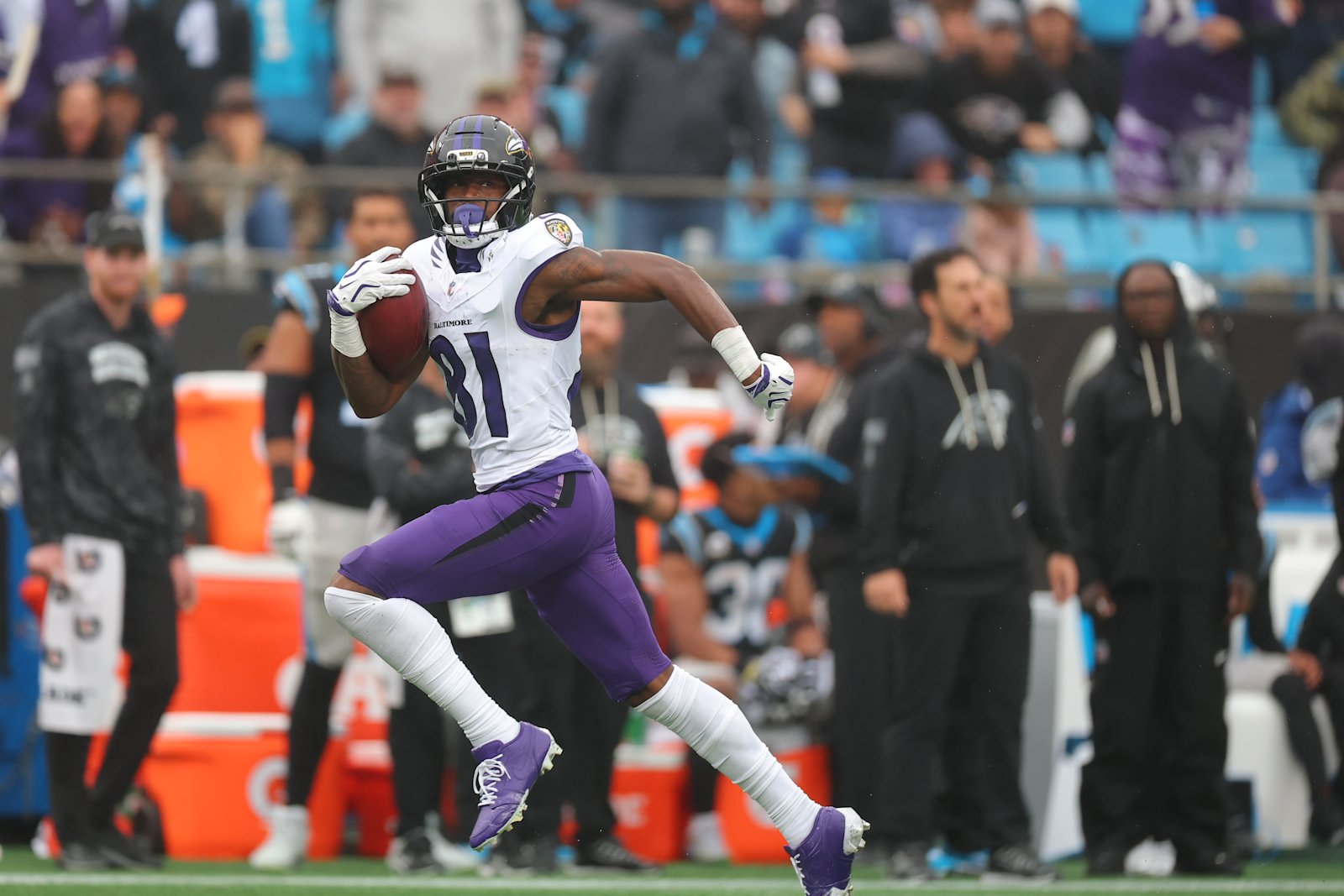
In addition to the muffed punts and the extra point penalty, the kickoff coverage was poor, repeatedly allowing Carolina favorable starting field position. The return-game mistakes have become a recurring problem, not something that suddenly appeared Sunday.
I'm not someone who believes firing a coach after every disastrous game accomplishes much. However, when a unit repeatedly makes the same mistakes, the person responsible for preparing that unit needs to be accountable.
The same standard has to apply to Minter as well. He cannot personally catch the football, hold onto it or tackle Bryce Young. Players have responsibilities, and they deserve plenty of criticism for failing to execute them. But when the same fundamental mistakes keep appearing across different players and different opponents, the explanation eventually has to extend beyond individual execution.
The Ravens have now lost six consecutive games. We keep hearing the same tired cliches after every one of them, but nothing changes, nothing gets cleaned up. There needs to start being some real accountability.
2. Apparently the Ravens only practice for the first half
I'm beginning to wonder what exactly the Ravens do at halftime.
For the second time in recent weeks, they came out with an effective offensive plan, moved the football almost at will and then completely collapsed after the break.
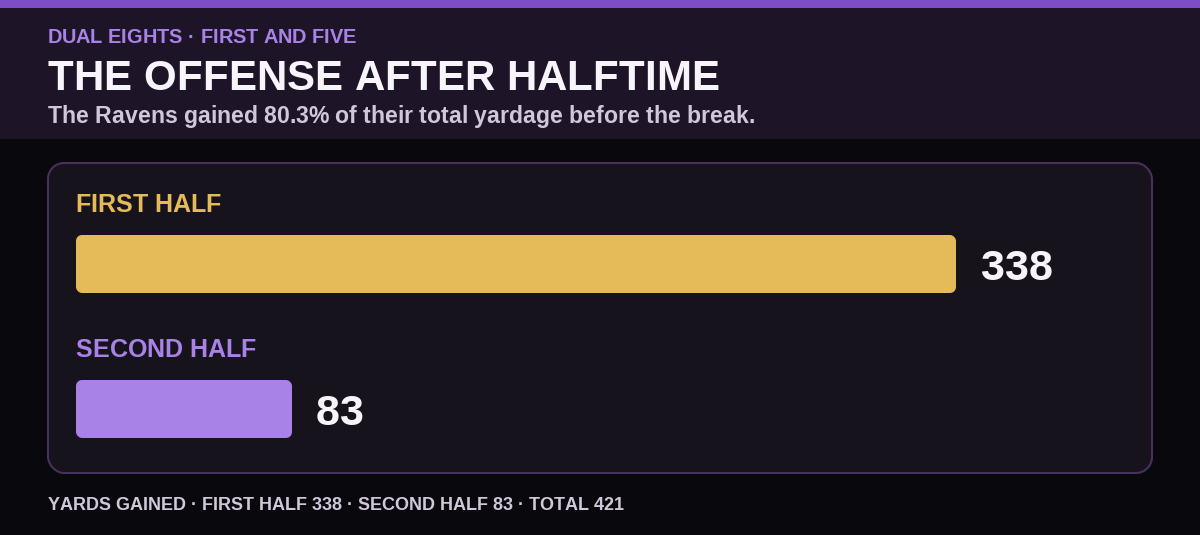
The numbers against Carolina are astonishing. The Ravens generated 338 of their 421 total yards before halftime. That's 80.3% of their entire offensive production in the first two quarters.
They managed just 83 yards after halftime.
That wasn't because Carolina suddenly became the 1985 Bears. The Ravens were having considerable success early with creative formations, misdirection and a running game that looked nothing like the lifeless version we watched against the Chargers.
The 52-yard touchdown pass to Rashod Bateman was a perfect example. The play began with a direct snap to Derrick Henry before the football eventually found its way back to Brissett, who hit Bateman downfield for the score. It was a clever design that took advantage of Carolina's attention to Henry while creating an explosive opportunity in the passing game.
The running game was even more encouraging. After the Ravens managed an almost incomprehensible 16 rushing yards on 15 attempts against the Chargers, they exploded for 157 yards on just 22 carries Sunday.
That's a jump from 1.1 yards per carry to 7.1, an improvement of more than six yards per attempt in one week. Henry looked much more like himself, gaining 94 yards on 13 carries for an impressive 7.2 yards per attempt. Hill was even more explosive, contributing 69 yards on six carries, including a 19-yard touchdown (and the almost-touchdown).
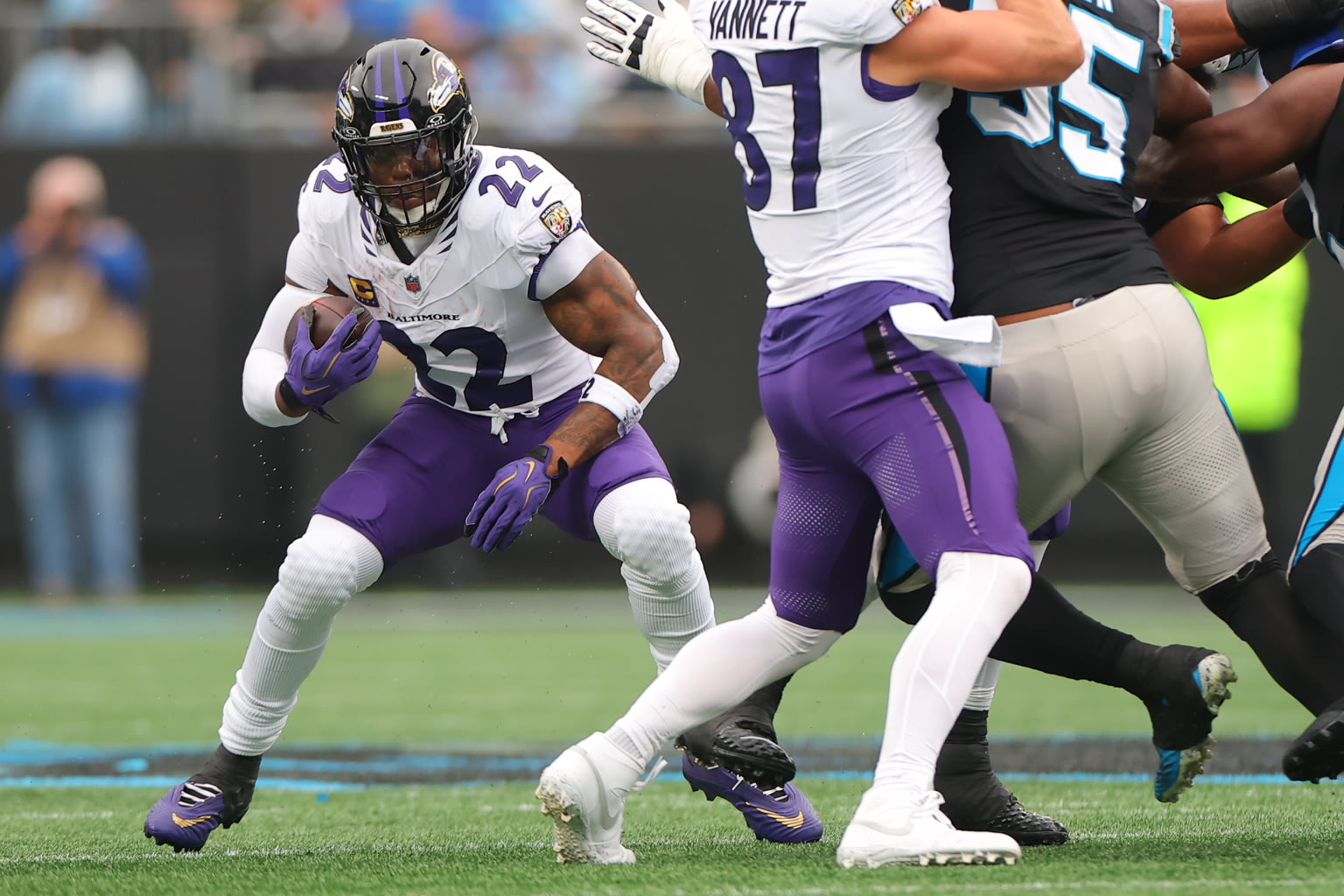
The Ravens rushed for 116 yards before halftime.
Then the Panthers adjusted.
The Ravens had absolutely no response.
Their rushing production dropped to 41 yards after halftime. Brissett, who threw for 222 yards before the break, managed only 54 afterward. The offensive line, which had generally held up reasonably well early, began struggling to protect him.
And the offense failed to score a single point in the third quarter.
Again.
This is becoming too consistent to dismiss. The Ravens' opening plans have frequently been effective this season. Against Cincinnati, they dominated the first half before being outscored 35-0 after halftime. Against Jacksonville, their early creativity eventually became ineffective once the Jaguars recognized the offense's limitations.
Sunday was another variation of the same problem.
Which raises an uncomfortable question about Doyle's offense.
How much of its early success comes from scripted plays and deception, and how much comes from a structure that can consistently beat defenses once they've seen the initial plan?
There's nothing wrong with using clever designs. That's part of what made Doyle's early performances so encouraging, but an NFL offense needs answers when the opponent adjusts. It needs to execute conventional concepts, protect its quarterback and move the chains without depending upon another trick play or an explosive run.
Doyle demonstrated in the first half that he can still find ways to make this offense dangerous without Lamar.
Now he needs to demonstrate he can sustain it for four quarters.
3. Both sides of the ball had their chance to win. Neither delivered.
Here's what makes Sunday's loss especially frustrating.
Despite everything that went wrong, the Ravens had two separate opportunities to win the game in the final six minutes.
They failed both.
First came the defense.
After another miserable third quarter, the Ravens finally put together a sustained offensive possession in the fourth. They drove 80 yards in ten plays, converting a critical fourth down along the way, before Henry scored from 15 yards out.
The Ravens led 33-32 with 6:32 remaining.
At that point, the defense had one job.
Get a stop.
Carolina responded with a 12-play, 55-yard drive that consumed 4:48 and ended with Ryan Fitzgerald's 37-yard field goal. The most damaging plays came on third down, an all-too-familiar problem for this defense.
Facing third-and-5 from its own 42, Carolina found Tetairoa McMillan for 13 yards and a first down. A few plays later, facing third-and-6 from the Ravens' 41, Bryce Young connected with tight end Tommy Tremble for 18 yards.
That effectively put Carolina in position to take the lead. Neither completion was especially spectacular. Young simply found the available receiver in the middle of the field and delivered the football.
Then the offense got its opportunity.
With 1:44 remaining, the Ravens took possession at their own 22, trailing by two points. They didn't need a touchdown. They needed to move into field-goal range. With all three timeouts, it was more than enough time for most teams to accomplish that.
Brissett had played reasonably well for much of the afternoon. He finished with 276 passing yards and made several impressive throws, particularly in the first half. Given how recently he joined the team and the protection problems surrounding him, he has provided a significant improvement over the quarterback play of the previous few weeks.
But the final possession was dreadful.
The offense moved with the type of urgency my young kids demonstrate when I need them to leave the house on time for school. The clock management was completely inept.
Brissett opened with a nine-yard completion to Mark Andrews. Then he took a five-yard sack. On third-and-6, he threw a five-yard checkdown to Hill, keeping the clock running and forcing the Ravens to burn a timeout with 59 seconds remaining.
A quarterback sneak gained the necessary yard on fourth down.
Then, with 36 seconds left, Brissett came under pressure and heaved a desperation pass (or was he trying to throw it away?) that was tipped and intercepted to seal the Ravens fate.
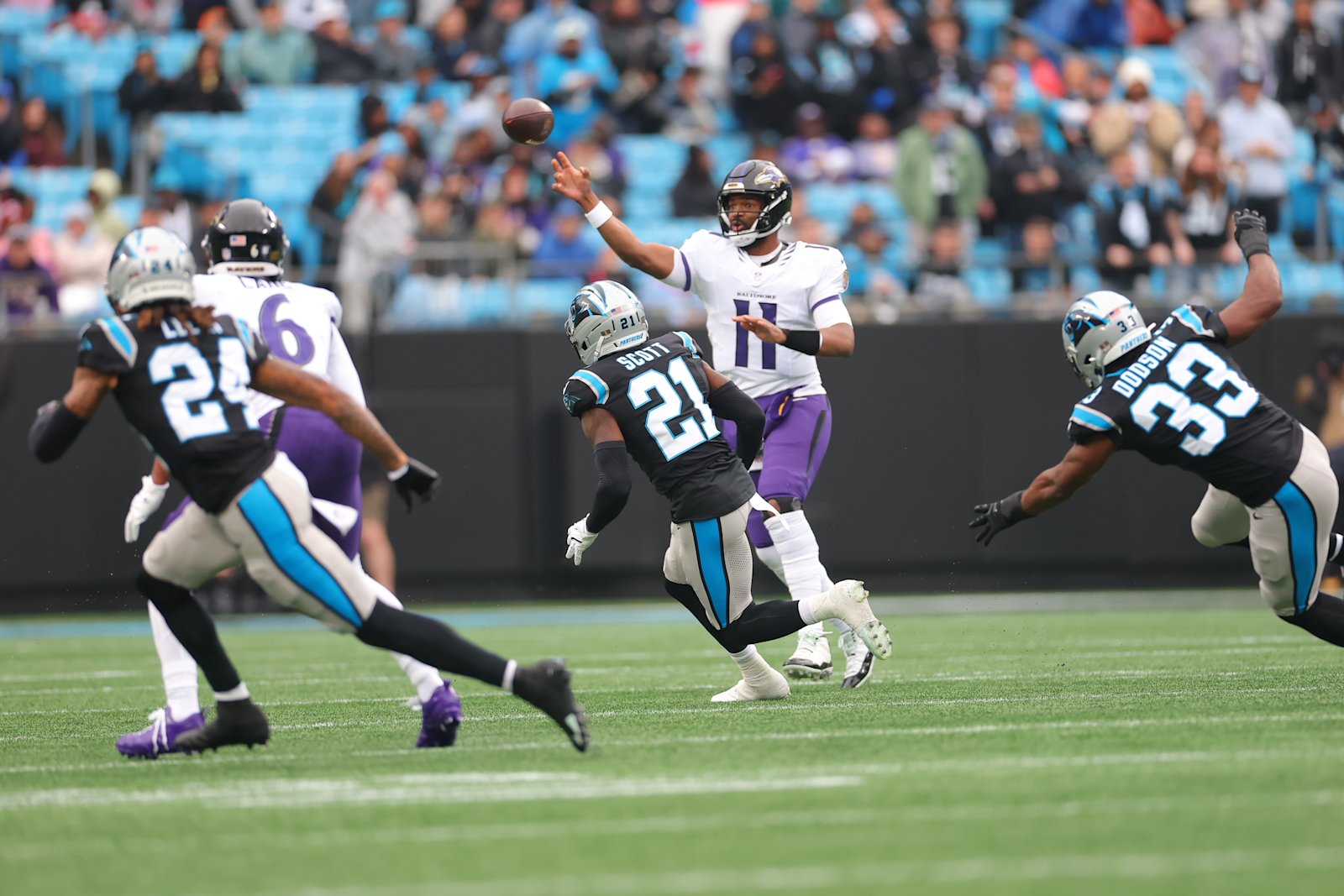
The throw was a curious decision with plenty of time still on the clock and downs to spare. That throw is on Brissett, while the offensive line deserves criticism for the protection breakdowns that contributed to the entire sequence.
But the broader point is that the Ravens had plenty of opportunities to win and could not seize the moment.
That has become the defining characteristic of this team.
4. Mike Green and T.J. Tampa provided a few reasons for optimism
It wasn't all bad.
Actually, it was mostly bad. But there were a couple of young defenders who deserve recognition.
Mike Green continued his development into one of the most encouraging players on the roster.
He recorded two sacks Sunday, giving him four over the past two games. His first came on Carolina's opening possession, when he brought down Bryce Young in the end zone for a safety. Meanwhile his more heralded partner Hendrickson now has as many roughing the passer penalties as sacks on the season.
Green has now produced consecutive two-sack games, following another excellent performance against the Chargers. More importantly, he's showing signs of becoming a more complete pass rusher. Earlier in the season, he occasionally looked dependent upon winning around the edge with speed. He's increasingly demonstrating the ability to attack different gaps, use his hands effectively and create pressure even when his initial move doesn't win.
There's still plenty of development ahead, but Green is beginning to look like a legitimate long-term solution at one of the most important positions on the defense.
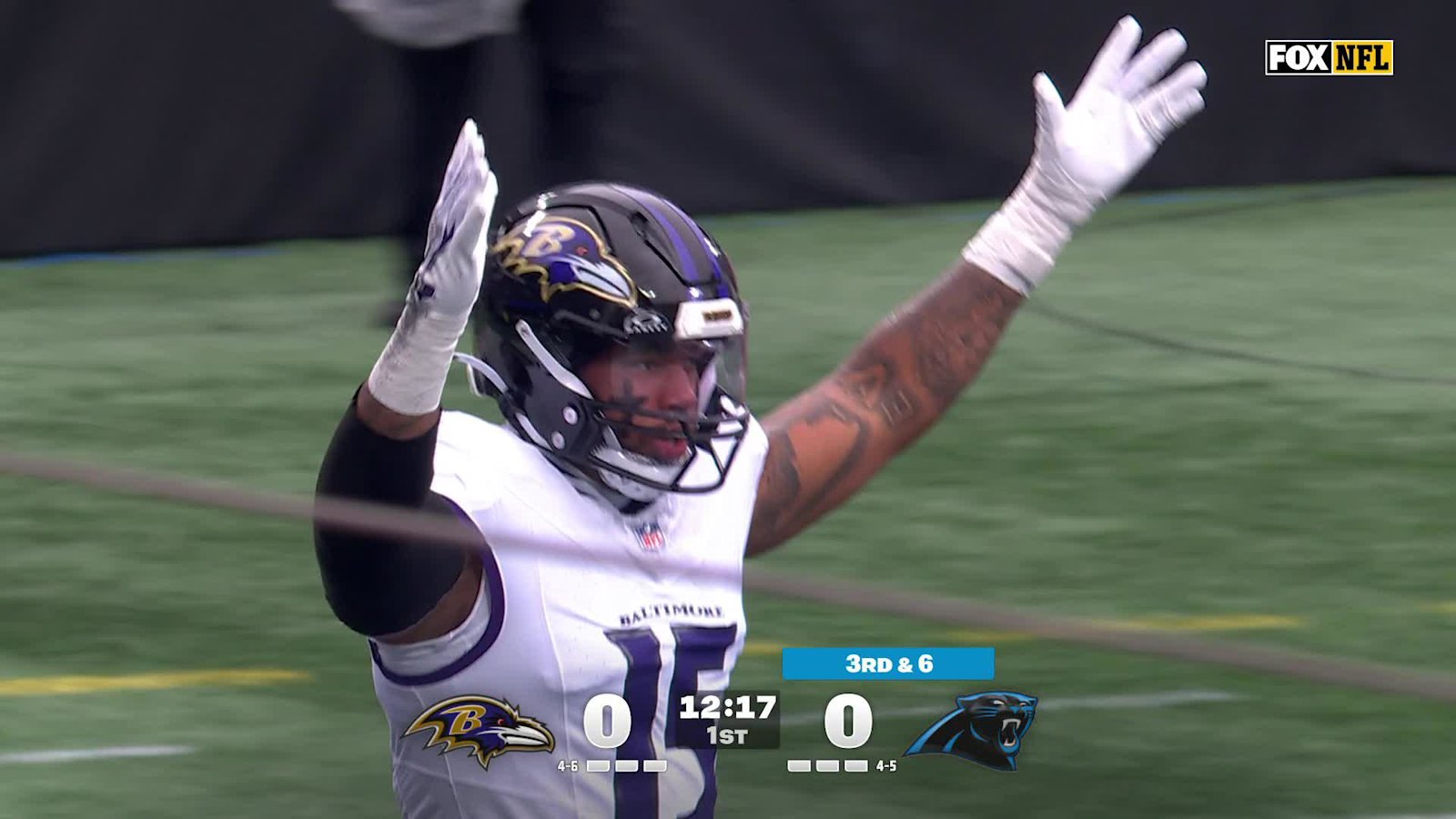
T.J. Tampa also deserves credit, playing an increased role with the dismissal of Marlon Humphrey this week. With Carolina threatening to extend its lead in the third quarter, the Panthers reached the Ravens' 4-yard line.
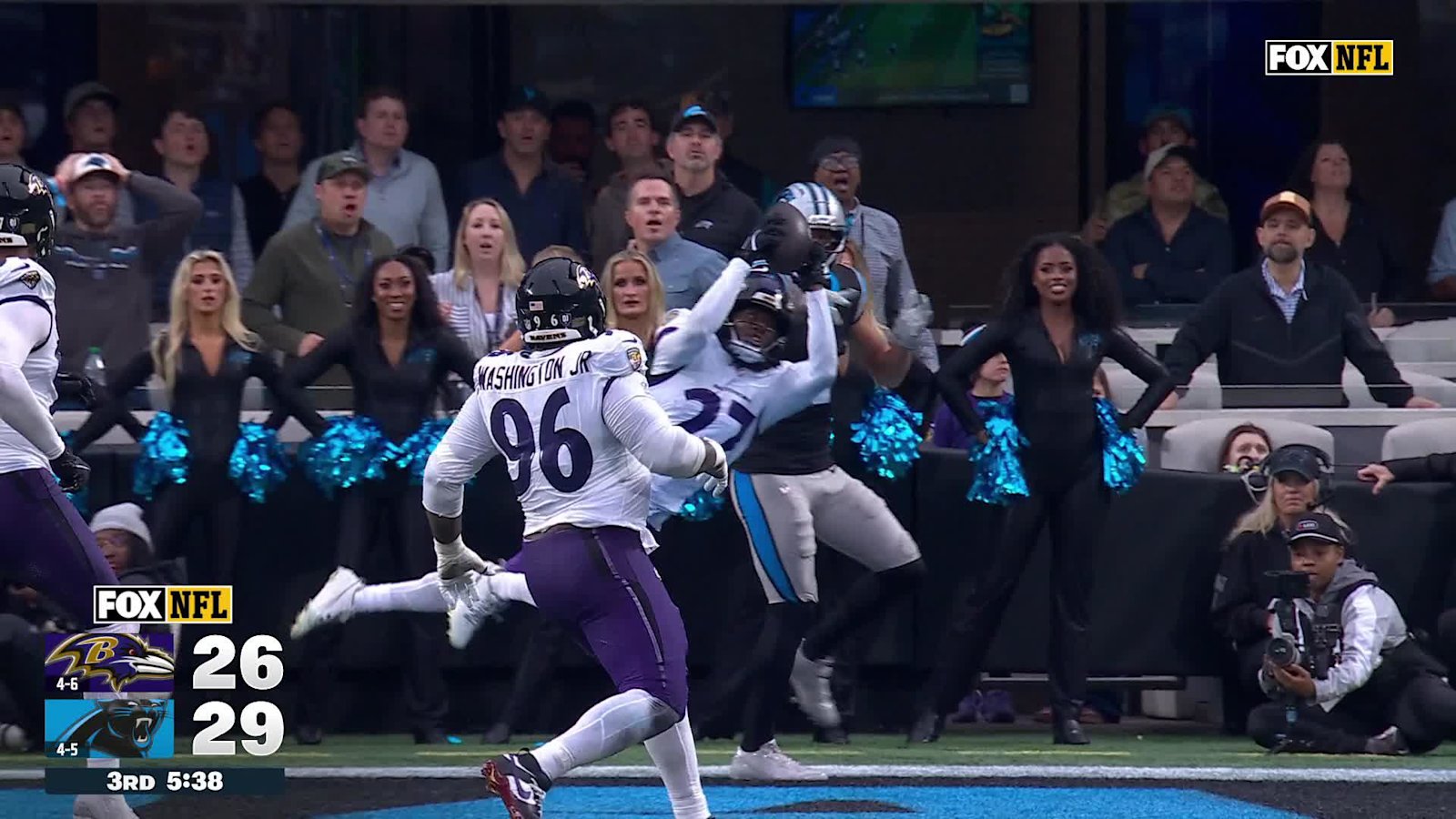
Tampa helped break up a first-down pass intended for Jalen Coker. Two plays later, with Carolina facing third-and-goal from the 3, he intercepted Young in the end zone. Instead of giving Carolina an opportunity to take a two-possession lead, Tampa ended the drive and handed the football back to the offense.
It was only the second interception of Tampa's career and, rather embarrassingly, just the second interception by a Ravens defensive back all season. For a secondary featuring Kyle Hamilton, Malaki Starks, Nate Wiggins and several other highly regarded players, that's an astonishing lack of production.
Tampa hasn't had many opportunities to establish himself as a consistent contributor. Sunday was an encouraging indication that he deserves a closer look.
One performance doesn't prove he's ready for a major starting role, and the Ravens will need to evaluate his coverage responsibilities beyond the interception. But with the season rapidly slipping away, developing young players should become a priority.
Green and Tampa are exactly the sort of players the Ravens need to identify as potential building blocks for next season.
There are plenty of reasons to be pessimistic about the current team.
Those two aren't among them.
5. The season is effectively over. The coaching staff still has plenty to prove.
The Ravens are all but mathematically eliminated after this loss.
At 4-7, they could theoretically win their final six games, finish 10-7 and sneak into the postseason if enough other results break their way.
But come on.
This team has lost six consecutive games, hasn't won in more than a month and continues to invent new ways to lose to opponents it should be capable of beating.
The playoffs are no longer a realistic expectation.
And in some ways, perhaps that's for the best.
Not just because the Ravens should suddenly start trying to improve their draft position. But because the illusion that this season can still be rescued has probably delayed some uncomfortable conversations about what needs to change.
The organization needs to start evaluating this coaching staff with 2027 in mind.
I don't think there's any realistic chance that Jesse Minter gets fired after one season, regardless of how badly the final six games go. The Ravens made a substantial organizational commitment when they replaced John Harbaugh, and abandoning that decision after ten months would be an extraordinary reversal.
Nor am I suggesting that Minter deserves to be fired. But he absolutely needs to give the organization some reason to believe he's capable of leading this team through what will be a pivotal season when Lamar Jackson returns next year.
Right now, that confidence is difficult to find. Minter arrived with an outstanding defensive reputation. He was supposed to modernize the Ravens' approach, maximize an expensive and talented defense and eliminate some of the recurring problems that had frustrated fans under Harbaugh.
Instead, many of those problems have become worse. The second-half collapses are more dramatic. The penalties have been ridiculous. The defensive communication remains inconsistent. The roster has been unable to overcome mistakes that well-coached teams routinely avoid.
And the defense, Minter's supposed area of expertise, has now surrendered 162 points over the past five games.
That is 32.4 points per game.
It's an unacceptable performance from a defense with this much money invested in it.
It’s time for Minter to seriously consider handing defensive play-calling duties to Anthony Weaver for the remainder of the season. That isn't necessarily an indictment of Minter's defensive intelligence. His track record suggests he understands how to build and call an effective defense.
But he isn't the defensive coordinator anymore.
He's the head coach.
And right now, the entire team needs his attention.
Weaver was hired as defensive coordinator for a reason. Let him take full responsibility for calling the defense and see whether Minter can devote more energy to the preparation, discipline, game management and organizational issues that have undermined this season.
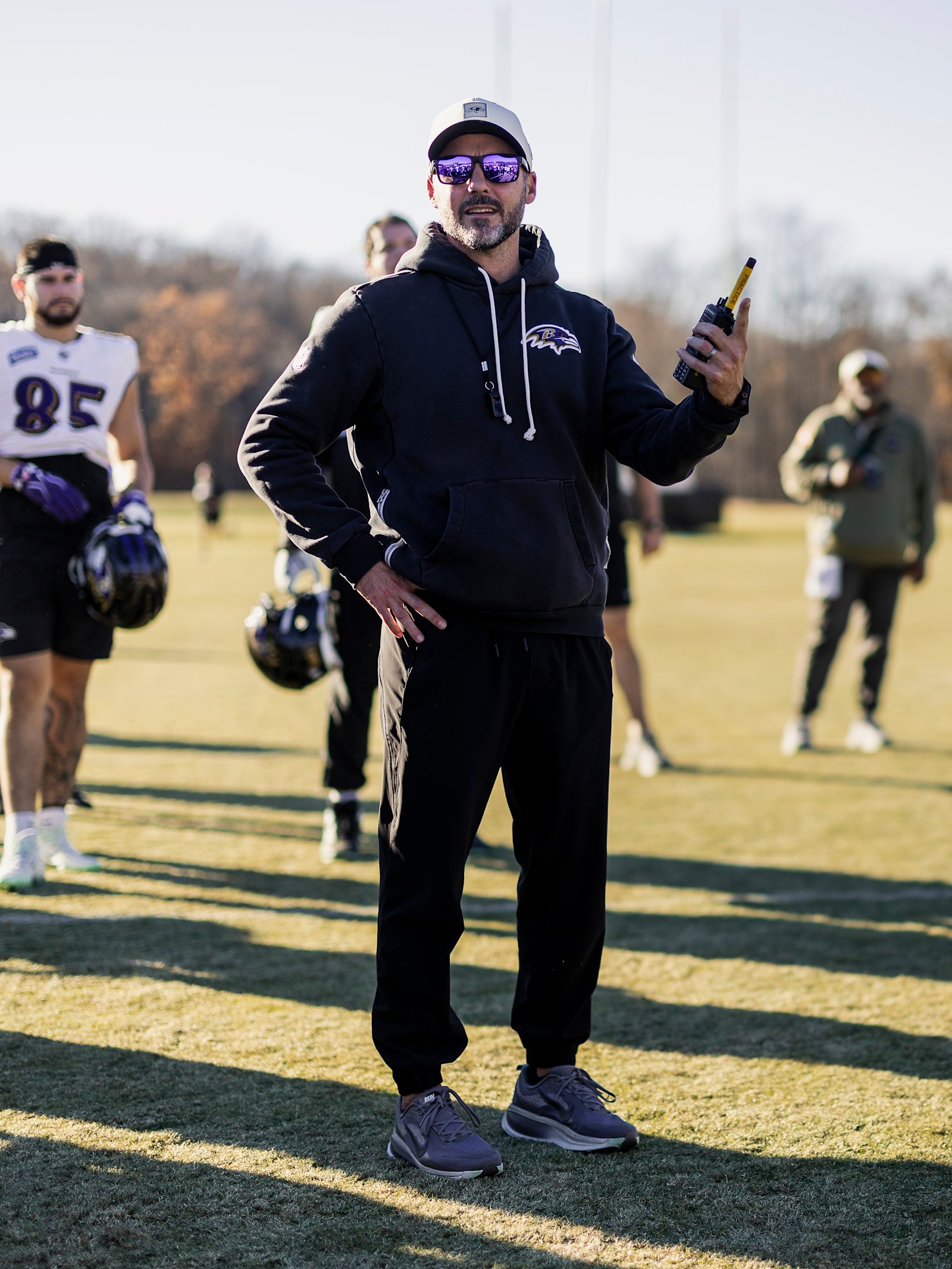
It might not work. Weaver has been part of the same staff responsible for these defensive failures, and simply changing the voice calling plays doesn't automatically improve execution.
But what exactly do the Ravens have to lose at this point?
The final six games should be about finding answers.
Can Doyle simplify the offense enough to eliminate some of the procedural mistakes while preserving the creativity that made his early performances so promising?
Can the defensive staff establish reliable communication and eliminate the coverage breakdowns that have appeared throughout the season?
Can Anthony Levine fix the special teams, or does Minter need to find somebody else who can?
Can the offensive line develop enough continuity to stop making life unnecessarily difficult for whoever happens to be playing quarterback (or keep Lamar from getting hurt next year)?
And can the entire team finally stop turning routine situations into disasters through penalties, drops, fumbles and missed assignments?
Nobody is expecting the Ravens to suddenly turn it around and win their final six games.
At this point, winning isn't even necessarily the best measure of whether progress is being made. But they need to start looking like a team that understands what it's trying to accomplish and can execute it consistently.
The Ravens replaced one of the most successful coaches in franchise history because they believed Jesse Minter could take this organization to another level.
Eleven games into his tenure, they're nowhere close to that standard.