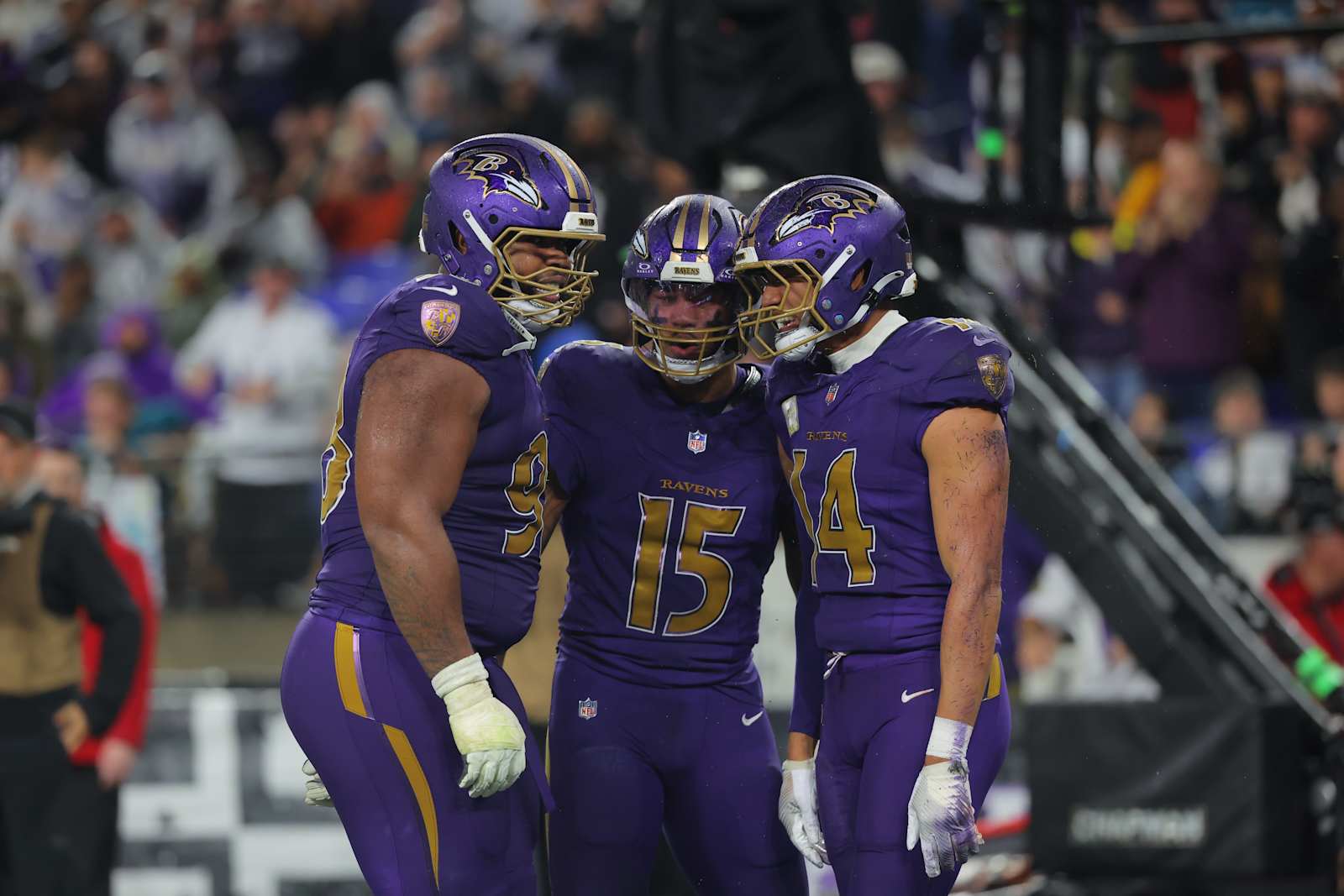
Five immediate takeaways from the Ravens' 33-10 loss to the Jacksonville Jaguars.
Follow the season. The Ravens Season Dashboard tracks results, advanced team metrics, unit grades, injuries and the next matchup.
The Ravens lost their fourth consecutive game Thursday night, falling 33-10 to the Jacksonville Jaguars in another performance that was as frustrating as it was predictable.
For the first time in franchise history, they have lost three consecutive games by at least 20 points. The Ravens have also scored fewer than 14 points in four straight games, another franchise first.
After starting the season 4-1, they're now 4-5 and sitting at the bottom of the AFC North.
It's difficult to get too upset about losing a game with a banged up, undrafted rookie quarterback making his first NFL start on a short week, in the rain, against one of the better teams in the AFC. Joe Fagnano was never supposed to be in this position, and the Ravens were never constructed to win football games with him under center.
But the quarterback situation is becoming a convenient explanation for an increasingly troubling collection of problems elsewhere.
The penalties are ridiculous. The secondary continues to get torched. The defense can't consistently pressure opposing quarterbacks despite substantial investments in its defensive front. And the second-half collapses that were supposed to disappear with the coaching change have somehow become even worse.
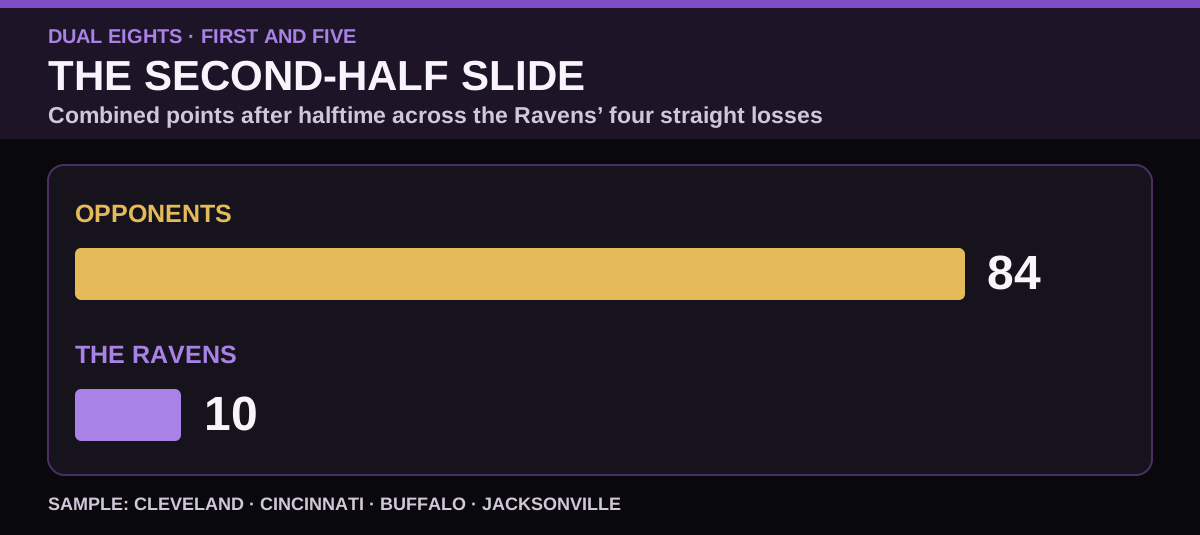
The Ravens have now been outscored 84-10 after halftime during their four-game losing streak.
Lamar Jackson's absence explains a lot. It doesn't explain everything.
Before going back through the tape, here are my five biggest takeaways from another miserable Ravens performance.
1. Fagnano showed why he was an emergency quarterback
There is a reason Joe Fagnano entered this season as the Ravens' third-string quarterback, and Thursday night provided a fairly comprehensive demonstration.
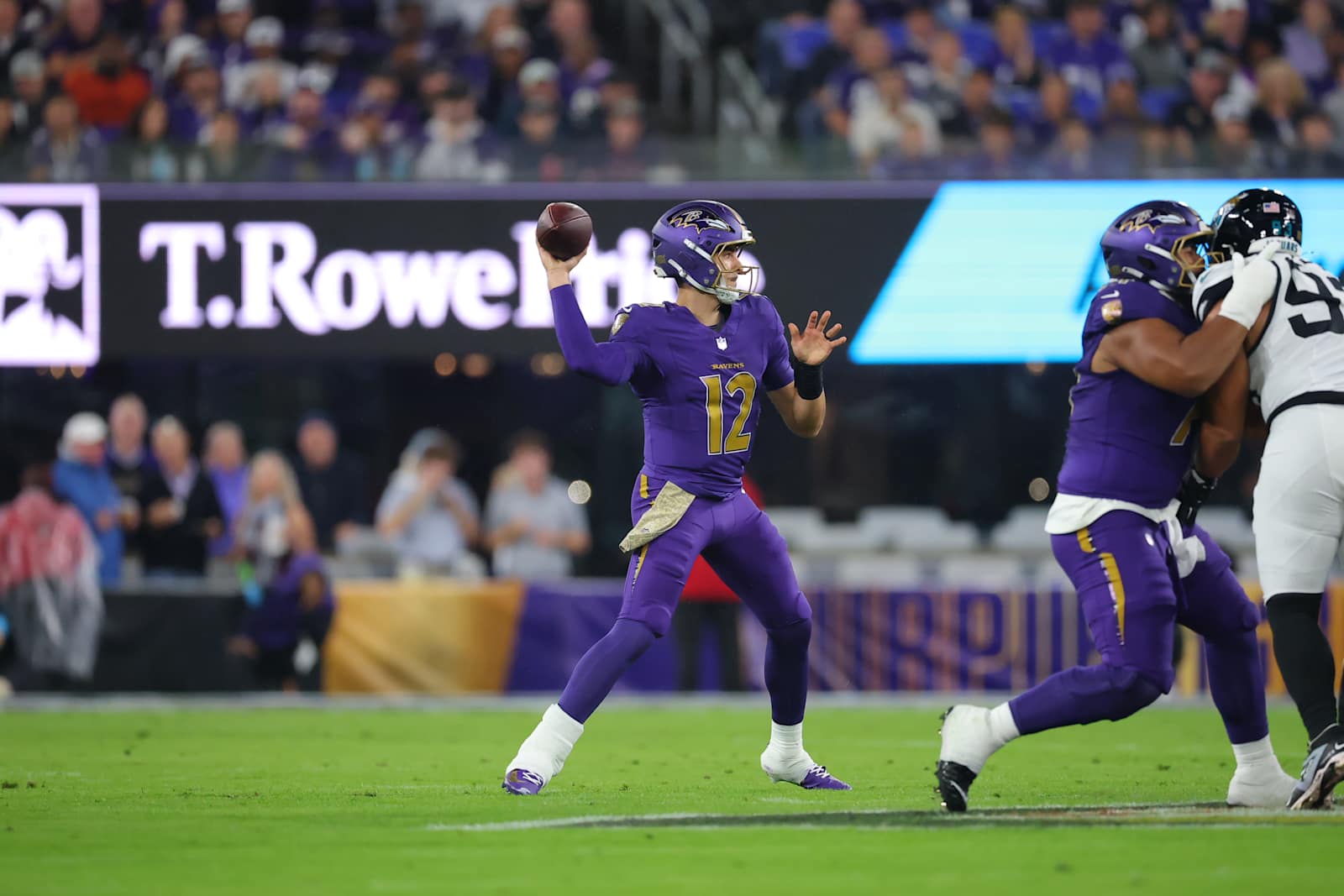
Fagnano completed 10 of 18 passes for 60 yards and two interceptions. His longest completion went for 14 yards, and the Ravens attempted just one pass that traveled at least 10 yards beyond the line of scrimmage.
That's not a sustainable NFL passing offense.
To be fair, Fagnano was put in an almost impossible situation. Lamar Jackson and Tyler Huntley were both on injured reserve, Fagnano was dealing with an ankle injury of his own, and he had only a few days to prepare for his first career start against an excellent Jacksonville defense.
It was never reasonable to expect him to play anything resembling a competent NFL starter.
Declan Doyle certainly understood that.
Rather than asking Fagnano to execute a conventional offense, Doyle emptied the playbook of just about every unusual formation and running concept he could find.
Derrick Henry took 10 direct snaps, twice his previous career high. The Ravens mixed in Wildcat formations, misdirection, quarterback movement and different backfield alignments to create uncertainty about who would actually receive the football.
Some of it was pretty clever.
The opening possession demonstrated the idea. The Ravens moved the ball far enough to get Jake Moody a 53-yard field-goal opportunity, which he converted. For a moment, it looked like the Ravens might be able to shorten the game, move the chains and give their defense enough opportunities to keep Jacksonville within reach.
But the limitations became obvious.
Jacksonville coach Liam Coen acknowledged afterward that the Jaguars had practiced extensively against the Wildcat during the week. They weren't particularly surprised by Baltimore's approach.
More importantly, Jacksonville had very little reason to respect the Ravens' passing game.
When a defense doesn't believe the quarterback can consistently threaten anything beyond the underneath routes, it can crowd the line of scrimmage, attack the running lanes and force the offense to execute against unfavorable numbers.
That's exactly what happened.
The Ravens were occasionally able to create a favorable matchup or fool a defender with misdirection. But there was no reliable way to recover from a negative play. A false start, a run stuffed for a loss or an incomplete pass could effectively end a possession.
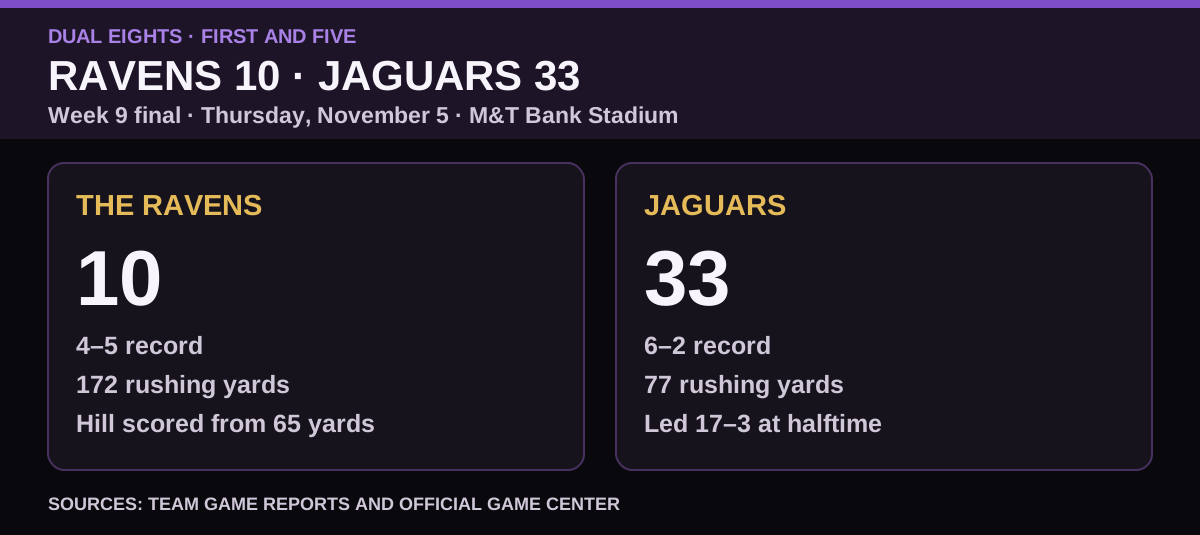
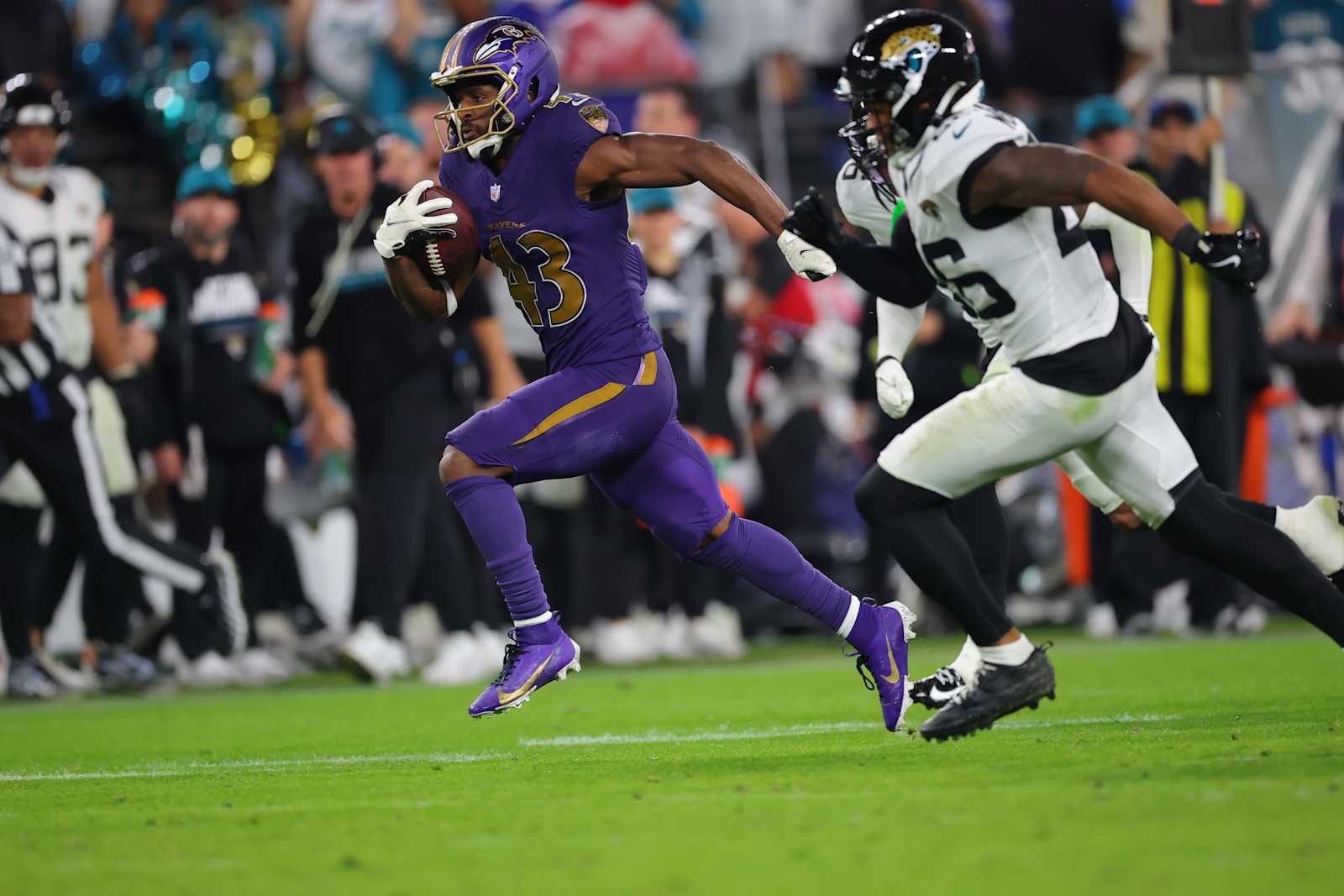
Henry finished with 57 yards on 17 carries. The Ravens' final rushing total of 172 yards looks considerably better until you remember that 65 of those yards came on Justice Hill's fourth-quarter touchdown run with Jacksonville already leading 33-3.
Even the creative plays eventually became less effective. Mark Andrews was stopped for no gain on a direct snap, and another Wildcat attempt ended with a mishandled fourth-down snap.
Doyle deserves credit for trying to manufacture offense under extraordinary circumstances. Not every design worked, but the Ravens at least had a coherent approach to dealing with a quarterback who couldn't reasonably be expected to carry a normal passing attack.
The problem was that Jacksonville eventually realized there wasn't much to fear once the tricks stopped working.
Fagnano is an interesting developmental quarterback who earned his roster spot with a strong preseason. None of that means he was ready to start an NFL game against a legitimate contender.
He wasn't.
And without a functional passing game, everything else had to go almost perfectly.
It didn't come close.
2. The penalties have become indefensible
I feel like I've written some version of this section every week.
The Ravens have a penalty problem.
They committed seven accepted penalties for 46 yards against Jacksonville, including four false starts. That brings their season total to an NFL-leading 24 false starts through nine games.
Twenty-four.
This is no longer a case of an offensive lineman occasionally anticipating the snap or a defender getting called for an aggressive play.
It's a team-wide failure of preparation and execution.
Thursday's most infuriating sequence came in the second quarter when Ronnie Stanley and Mark Andrews committed consecutive false starts, turning a manageable second-and-5 into second-and-15.
With Lamar Jackson, that's frustrating but potentially recoverable.
With Joe Fagnano?
You might as well send the punter onto the field.
The Ravens actually managed to gain some of those yards back before eventually punting, but that was precisely the kind of situation they couldn't afford to create. They needed to remain ahead of the chains, keep Jacksonville guessing and avoid obvious passing downs.
Instead, two experienced veterans made consecutive procedural mistakes.
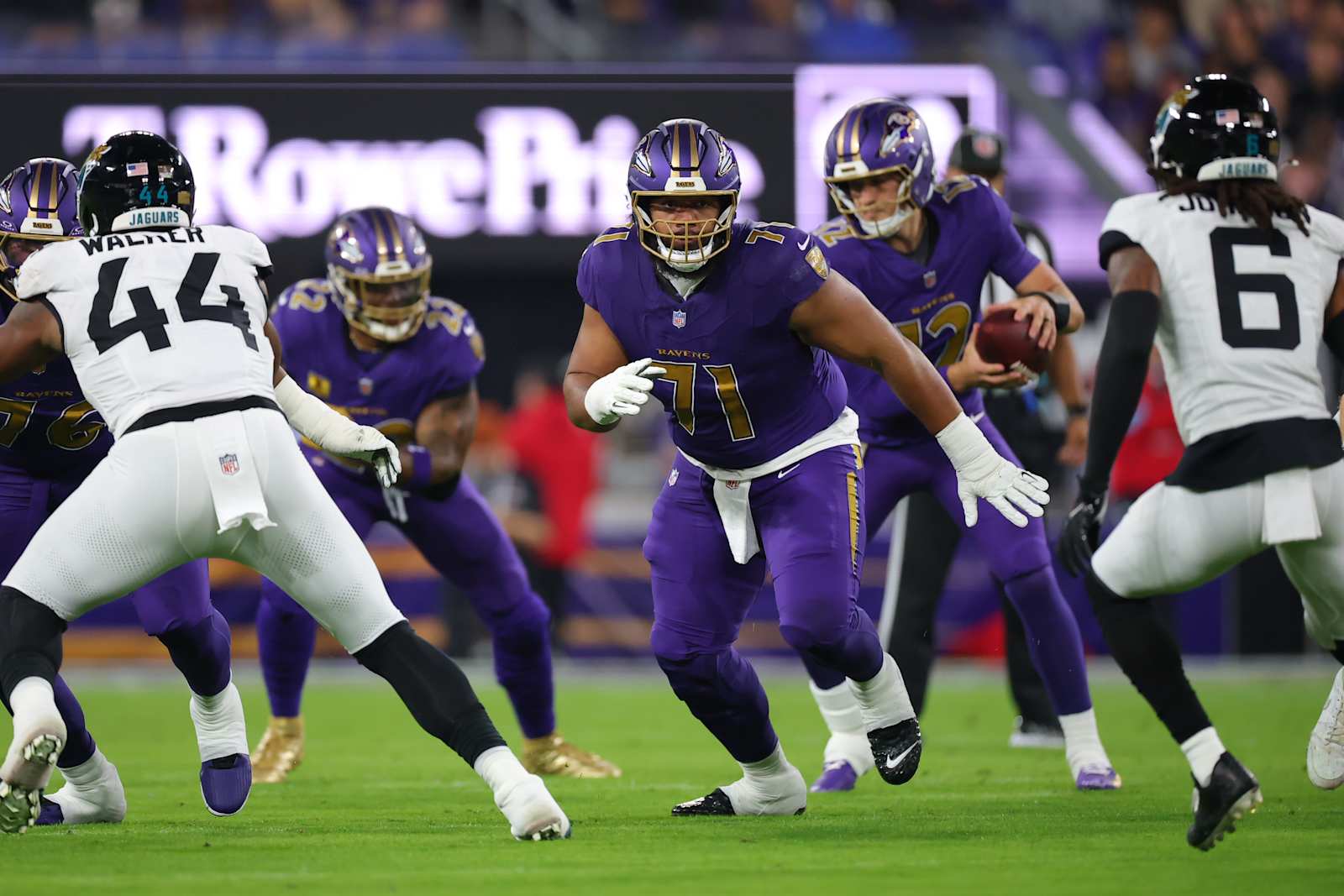
And the offense wasn't the only unit contributing.
On Jacksonville's second possession, the Jaguars faced fourth down and appeared content to try drawing Baltimore offside before settling for a field goal.
Nnamdi Madubuike obliged, jumping into the neutral zone and giving Jacksonville a first down.
The Jaguars eventually kicked the field goal anyway, but not before consuming additional time and extending a possession the Ravens had already stopped. There are few more infuriating mistakes in football than jumping offside when an opponent is clearly trying to get you to do exactly that.
Jesse Minter called the pre-snap penalties unacceptable afterward and acknowledged that the responsibility belongs to both players and coaches.
He's right.
But we've reached the point where acknowledging the problem is becoming almost as repetitive as the problem itself. These penalties were happening when Lamar was healthy. They continued with Huntley. They're still happening with Fagnano. They've involved veterans, rookies, offensive linemen, receivers and defenders.
Doyle's offense features substantial movement, shifting and cadence variation, all of which can make defensive assignments more difficult. But complexity only creates an advantage if your own players can execute it reliably.
The Ravens are nine games into the season. They aren't learning a new offense in May.
At some point, the coaching staff has to simplify the operation, change how these situations are practiced or reconsider whether certain players can reliably execute what they're being asked to do.
Baltimore entered Thursday knowing it had almost no margin for error.
Then it spent the evening manufacturing its own mistakes.
3. The Ravens can stop the run. Apparently they can't stop anyone from throwing.
There were parts of Thursday's defensive performance that were genuinely encouraging.
Jacksonville rushed 30 times for only 77 yards, averaging 2.6 yards per carry. The Jaguars converted just four of 12 third downs and finished with 319 total yards.
Those are not the numbers of an offense that completely dominated the game from start to finish.
In fact, Jacksonville needed only 56 offensive plays to score 33 points, and three Baltimore turnovers handed the Jaguars favorable scoring opportunities. The defense deserves some credit for limiting the running game and forcing Jacksonville into field goals rather than touchdowns on several possessions.
Unfortunately, almost every time the Jaguars needed a big play through the air, somebody in the Ravens secondary was available to provide one. On Jacksonville's second offensive snap, Trevor Lawrence found blocking tight end Nate Boerkircher wide open for 52 yards after he got behind Marlon Humphrey.
Let that sink in.
A blocking tight end ran past a former All-Pro cornerback for a 52-yard gain.
Humphrey has been a terrific player for the Ravens for years, but I don't know how much longer we can pretend that the version we're watching this season is anywhere close to the player he used to be.
He looks totally washed.
Maybe there is still a role for him in certain packages or matchups. Perhaps he can remain useful closer to the line of scrimmage, where his physicality and experience still provide value. But the Ravens cannot keep treating Humphrey like a cornerback who can handle whatever coverage responsibility they give him.
The more damaging breakdown came just before halftime.
Jacksonville led 10-3, and the Ravens had actually managed to keep the game competitive despite the offensive limitations.
Then Minter sent pressure that Jacksonville handled with ease, allowing Lawrence to find Parker Washington matched against Malaki Starks in man coverage, and Washington ran away for a 50-yard touchdown.
Suddenly it was 17-3 and it was pretty much ballgame.
There is some responsibility to distribute here. Starks has to execute the coverage assignment, but Minter also chose to expose his secondary with pressure in a situation where preventing an explosive touchdown should have been a particularly important consideration.
Minter explained afterward that he wanted to be aggressive because he understood how difficult it would be for his offense to recover from another Jacksonville score.
I understand the logic. Aggression itself wasn't necessarily the mistake.
But the blitz didn't get home, the protection held up and the coverage behind it failed spectacularly. Lawrence completed only nine passes in the first half. Those nine completions produced 197 yards and six gained at least 15 yards.
That's a remarkable amount of damage for a defense that was otherwise doing a reasonable job limiting Jacksonville's opportunities.
The pass rush didn't help. Despite having Trey Hendrickson and Nnamdi Madubuike on the field, the Ravens failed to sack Lawrence once. The Ravens spent the offseason adding premium defensive talent specifically to avoid being so dependent upon blitzing to create disruption and the pass rushers are just not getting it done with any kind of consistency.
There was one defensive player who consistently stood out positively.
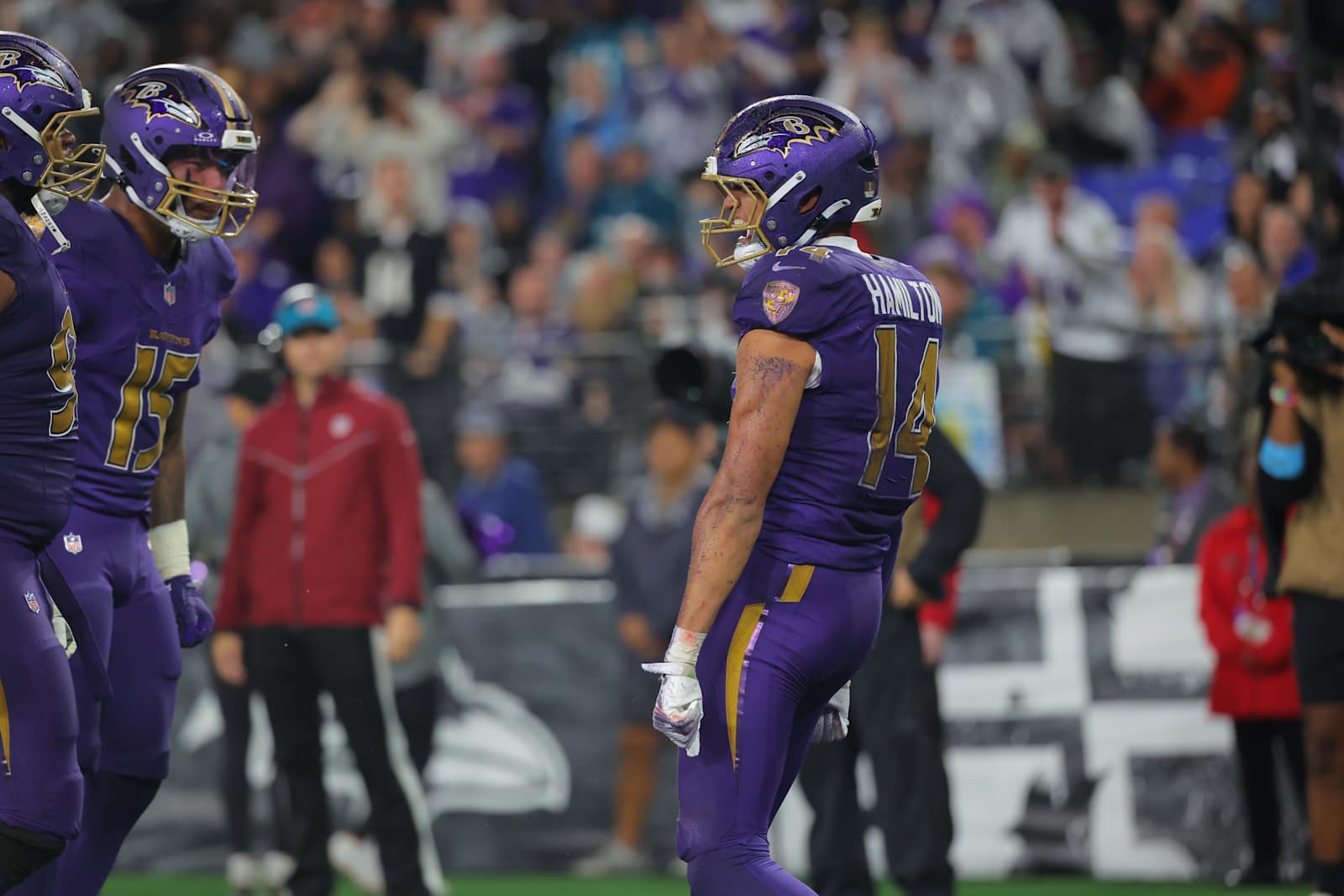
Kyle Hamilton was excellent before leaving with a hip injury. He nearly produced a safety with an outstanding tackle for loss near Jacksonville's goal line and later came close to intercepting Lawrence. Hamilton remains the player most capable of changing a game defensively, whether he's attacking near the line of scrimmage, covering a receiver or disguising his assignment before the snap.
Unfortunately, he was ruled out during the third quarter. Minter didn't have an update afterward, so we'll have to see what the injury means for the upcoming schedule.
The defense has some legitimate injury problems, including Nate Wiggins' absence Thursday.
But there's a larger issue that injuries alone cannot explain. The Ravens have invested heavily in their defensive backs, have multiple first-round selections throughout the secondary and hired a head coach whose reputation was built around sophisticated defensive football.
Yet opponents continue to create enormous passing plays with alarming ease. It's especially frustrating because the defense occasionally demonstrates exactly what it should be capable of doing. The front can control the running game. Hamilton can disrupt almost anything. There are stretches when the coverage and pressure work together effectively.
Then somebody gets isolated, loses his assignment or gives up a ridiculous amount of space.
And another promising defensive possession disappears.
4. Brissett might make the offense functional. That won't make the Ravens good.
The Ravens are reportedly finalizing a trade with Arizona for Jacoby Brissett, who is expected to become their starting quarterback against the Chargers.
That should represent a substantial improvement over what we watched Thursday.
Brissett has spent more than a decade in the NFL. He understands protections, can operate a conventional passing offense and has enough experience to recognize what defenses are presenting before the snap.
He won't require Doyle to turn half the playbook into an elaborate collection of direct snaps and misdirection, but we should also recognize what kind of quarterback the Ravens are getting.
Brissett completed 63.3% of his passes for 1,719 yards, 10 touchdowns and seven interceptions in eight starts with Arizona this season. He averaged only 5.6 yards per attempt and posted a 79.7 passer rating.
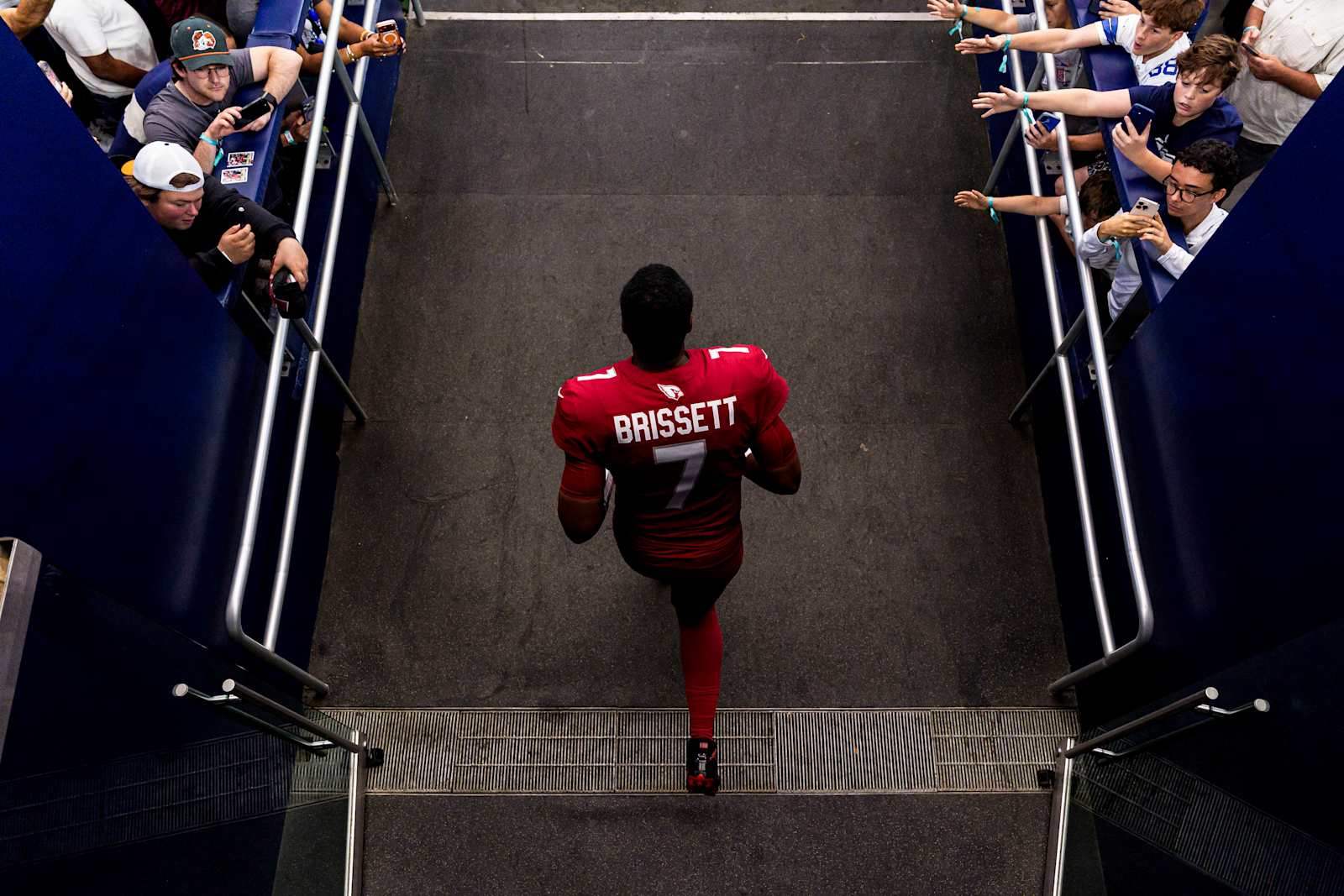
He was recently benched by the Cardinals.
Those are not the numbers of a quarterback likely to rescue a disappointing season. However, he should allow Doyle to return to more conventional formations, attack intermediate areas of the field and give Zay Flowers opportunities to do something other than collect a two-yard completion with multiple defenders waiting nearby.
Derrick Henry should also benefit from opponents having to respect an actual passing game.
But Brissett isn't Lamar Jackson, and replacing Fagnano won't address the problems everywhere else.
Brissett can't stop Ronnie Stanley from false-starting.
He can't prevent Humphrey from getting beaten downfield.
He can't make the pass rush finish its assignments or teach the secondary how to handle an opponent's halftime adjustments.
And he can't magically turn the Ravens' offensive line into a consistent unit.
This season has exposed something uncomfortable about the currently constructed roster.
We knew Lamar was exceptional. We knew his unique abilities covered for occasional protection failures and created rushing opportunities that other quarterbacks couldn't manufacture. But the expectation was that the Ravens had built a team around him that was strong enough to survive stretches without him.
A talented defense. A dominant running back. Experienced veterans. A creative coaching staff.
Instead, the quarterback injuries have revealed how fragile everything else can be.
The Ravens aren't simply missing the extra plays Lamar creates.
They're missing the margin for error his presence provides.
Brissett may make the next eight games considerably more watchable. He may even help Baltimore win enough games to remain on the fringes of the playoff conversation.
But there is little reason to believe that adding a mediocre veteran quarterback will suddenly transform the rest of this team into a championship contender.
The only glimmer of hope would be that he can keep them close enough to contention that a potential late-December return by Lamar could matter. But with no confirmation Lamar has even had the surgery or any indication of a timeline, you have to wonder if the Ravens wouldn’t be better off taking their lumps and getting the best draft position possible.
5. Jesse Minter deserves a grace period. He doesn't deserve immunity.
I'm not going to sit here and suggest Jesse Minter should be fired nine games into his first season as an NFL head coach.
He inherited a roster with legitimate championship expectations and then watched his franchise quarterback get injured, his backup quarterback get injured and his offensive line spend much of the season operating with an assortment of emergency replacements.
Those circumstances matter.
Minter will reasonably receive a pass for much of what has happened this season because of the injuries and because this is his first opportunity to run an NFL team.
But there is a question we need to start asking.
What exactly has Jesse Minter improved?
Think about the criticism that surrounded John Harbaugh and Zach Orr at the end of last season.
The Ravens were undisciplined. They couldn't protect leads. Their defense surrendered too many big plays. Opponents adjusted after halftime and Baltimore frequently struggled to respond. Too much depended upon Lamar Jackson rescuing the offense.
Harbaugh was fired after 18 seasons because the organization believed a different coaching staff could do better with this roster.
Now we're watching the same problems under entirely different leadership.
If Harbaugh and Orr were still here, producing these results, even without Lamar, Ravens fans would be calling for their jobs.
And the criticism would be justified.
The most disappointing part is the defense.
Minter arrived with a reputation as one of football's brightest defensive minds. The Ravens gave him a supposedly talented collection of defensive backs, brought back Nnamdi Madubuike after his injury-plagued 2025 season and signed Trey Hendrickson to provide the kind of individual pass-rushing threat that had been missing.
The expectation wasn't merely that the defense would remain respectable.
It was supposed to become one of the strengths of a championship contender.
Instead, let's examine the numbers.
Under Orr in 2025, the Ravens allowed 23.4 points per game, ranking 18th in the NFL.
Through nine games this season, Minter's team is allowing 26.2 points per game, ranking 26th.
Points allowed can be misleading when the offense repeatedly gives opponents short fields, and we've certainly seen plenty of that recently. So the underlying efficiency numbers provide a better comparison.
In 2025, the Ravens allowed +0.020 EPA per defensive play, compared with +0.021 through the first eight games of 2026, before the Jacksonville loss.
That's essentially no improvement whatsoever.
The defensive success rate allowed has actually deteriorated slightly, from 44.1% last season to 44.7% entering Thursday. Opponents are succeeding on a greater share of their offensive plays.
There are some improvements worth acknowledging.
Baltimore's EPA allowed per opposing dropback improved from +0.107 in 2025 to +0.077 this season. The overall rate of explosive plays allowed also dropped from 9.9% to 7.6%.
So not everything has gotten worse, but there hasn’t been any stark improvement.
The rushing efficiency numbers moved in the opposite direction. The Ravens allowed -0.142 EPA per rush last season compared with -0.072 through eight games this year. That's substantially less effective despite Thursday's excellent performance against Jacksonville's running game.
Even the opponent-adjusted numbers show only modest improvement, from +0.018 EPA allowed per play in 2025 to +0.012 entering this game.
The overall picture is not a defense that has been transformed by a new coaching staff and significant personnel upgrades. It's a defense producing roughly the same underlying results as the group whose performance contributed to the previous staff losing their jobs.
And the problems are especially obvious when opponents find something that works.
Against Cincinnati, the Ravens held Joe Burrow to 43 passing yards in the first half, then surrendered 249 passing yards and four touchdowns to him after halftime.
The Ravens have now been outscored 84-10 after halftime during this four-game losing streak. Some of that is obviously the offense's fault. Without Lamar, the Ravens struggle to sustain possessions, which means the defense spends more time on the field and has fewer opportunities to rest.
But the defensive breakdowns have not been limited to the second half of blowouts. They were happening against New Orleans with Lamar healthy. They happened in Dallas when the Cowboys erased an 11-point lead. They happened against Cincinnati when the Ravens had complete control of the game before halftime.
Different opponents. Different circumstances. Similar results.
And that brings us back to the coaching staff.
Minter and defensive coordinator Anthony Weaver have to figure out whether the problems are caused by personnel, scheme, communication or some combination of all three.
Maybe Humphrey simply can't perform the responsibilities the Ravens keep asking him to handle.
Maybe some of the younger defenders aren't ready for the complexity of the coverage system.
Maybe the pressure packages are leaving the secondary exposed too frequently.
Maybe the defense has become too dependent upon Hamilton making extraordinary plays to compensate for everyone else's mistakes.
Whatever the explanation, the responsibility for identifying and fixing those problems belongs to the coaching staff.
And if the current players aren't capable of executing the system, Minter needs to find players who are.
That may require some uncomfortable roster decisions this offseason.
The Ravens have several established veterans whose reputations are beginning to exceed their actual contributions. They can't continue giving players prominent roles simply because they were excellent two or three seasons ago.
Minter also needs to evaluate his assistants honestly. If the same mistakes persist throughout the season, then the coaches responsible for those position groups deserve scrutiny.
This team wasn't supposed to require a rebuild. The Ravens replaced Harbaugh because they believed the roster was good enough to compete immediately with better coaching.
Nine games into the experiment, that assumption looks increasingly questionable.
Minter deserves another offseason to identify the right personnel, eliminate the dead weight and put his own stamp on the organization.
But he needs to get it right.
If this defense remains mediocre next season, if the penalties continue and if opposing teams keep dismantling Baltimore after halftime, then Minter could very easily end up as one of the shortest-tenured head coaches in Ravens history.