The fourth round of the Champions League produced some extraordinary scorelines, with Como putting nine goals past Lens, Paris Saint-Germain destroying Villarreal 6-0 and Barcelona handing previously unbeaten Aston Villa a convincing 3-0 defeat.
Bayern Munich delivered arguably the most impressive tactical performance of the round, going to Atlético Madrid and controlling the game on its way to a 2-0 victory. Liverpool, meanwhile, suffered its first Champions League defeat of the season in a wild 3-2 loss at Fenerbahçe, a game in which the English side twice took the lead and twice failed to protect it.
There were several other notable results. Manchester United recovered from two goals down to beat Roma 3-2, Manchester City escaped Leipzig with a 3-2 victory, and Porto beat Napoli 4-1. Arsenal and Real Madrid also collected road victories, although neither was especially convincing.
PSG continues to look like the most complete team in Europe, while Barcelona is beginning to rediscover the defensive stability needed to complement its ridiculous collection of attacking talent. Bayern is making a compelling argument that it belongs right alongside them.
The Team of the Round features four Barcelona players, three from PSG and two from Bayern, but Como's Anastasios Douvikas earns Player of the Round honors after scoring three goals and assisting another in one of the most remarkable Champions League victories ever.
Spotlight Games
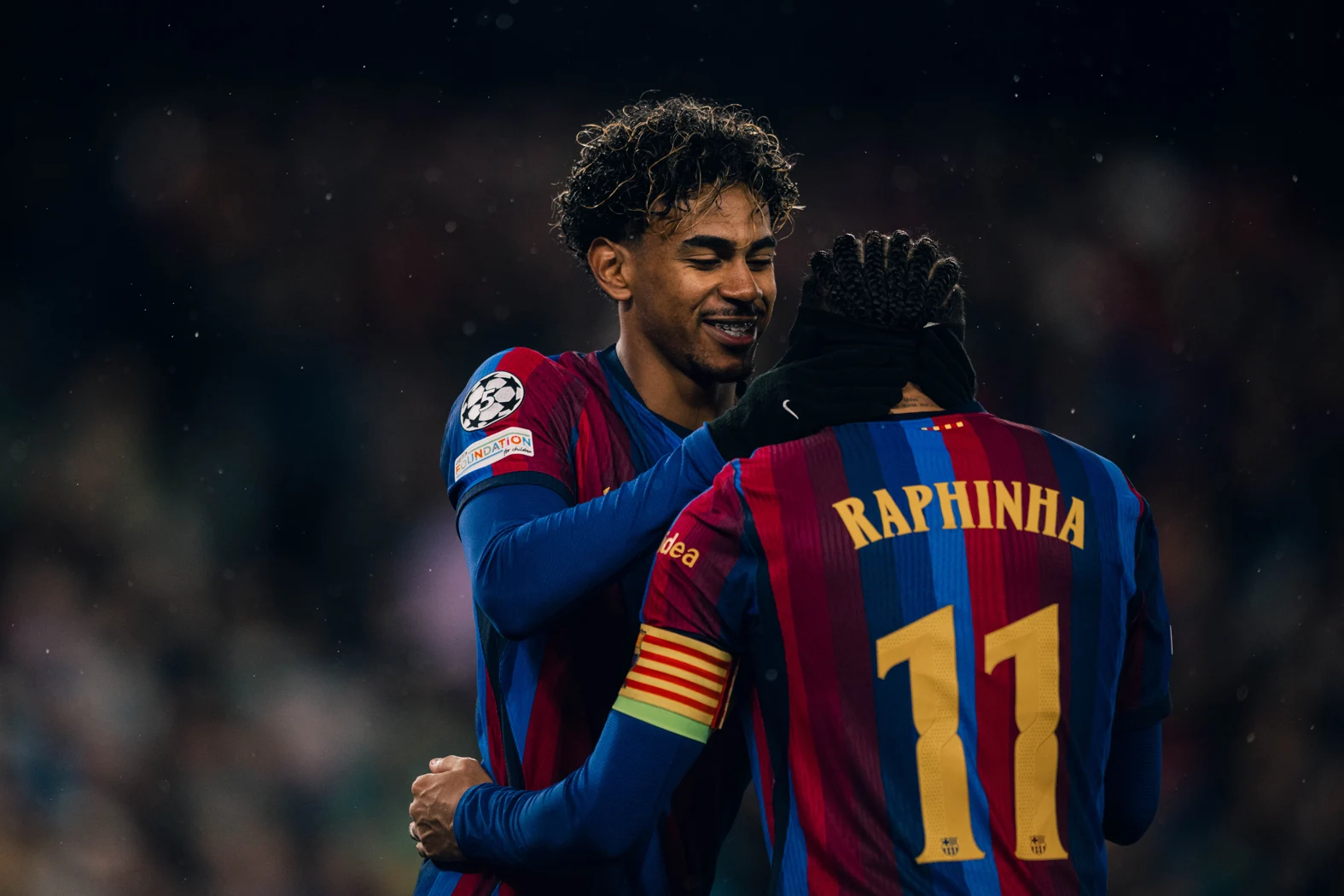
Barcelona 3-0 Aston Villa
Goals: Lamine Yamal 7', Raphinha 52', 64'
Barcelona handed Aston Villa its first Champions League defeat of the season, with Lamine Yamal opening the scoring and Raphinha adding two second-half goals. The final score suggests a comfortable evening for the Spanish champions, but that wasn't entirely the case.
Barcelona started aggressively, pressing Villa's buildup and looking to force turnovers before Unai Emery's team could move the ball through midfield.
The approach paid off almost immediately.
In the seventh minute, Villa attempted to play out from the back, but João Gomes misplaced a pass with Yamal lurking nearby. The teenager anticipated the ball, stepped in to intercept it and calmly curled a finish past Zion Suzuki.
It was a familiar Barcelona goal, created as much by its aggressive defensive positioning as by its attacking talent.
The early lead didn't prevent Villa from causing problems, however.
Emery had a sensible plan for dealing with Barcelona's high defensive line. Rather than attempting to match the home side's possession, Villa looked to play quickly behind the defense, particularly through Nicolas Jackson and Johan Manzambi.
John McGinn and Emiliano Buendía frequently moved into narrower positions, creating opportunities for Manzambi to drift away from Barcelona's midfield and attack the spaces behind its fullbacks.
The approach created several dangerous moments.
Jackson broke into space and set up Manzambi for an excellent opportunity that he put wide. Later, Jackson threatened to get behind the defense again, only for Joan García to race off his line and intervene. García also made an important save from Manzambi, while Pedri and João Cancelo produced crucial defensive blocks.
For much of the first half, the match was more competitive than Barcelona would have liked. Villa was not controlling possession, but it was finding ways to exploit Barcelona's defensive aggression.
The biggest change came after halftime.
Barcelona became more effective at controlling the middle of the field and limiting Villa's opportunities to attack immediately after regaining possession. The home side continued to push forward, but the game became less stretched.
Seven minutes into the half, Fermín López found Raphinha between Villa's defenders. The Brazilian shifted the ball onto his left foot and fired toward goal, with a deflection helping the shot beat Suzuki.
Then came the best goal of the match.
In the 64th minute, João Cancelo isolated John McGinn on the left side, beat him with a sharp move and delivered an excellent outside-of-the-foot ball across the penalty area. Raphinha arrived in exactly the right position to finish from close range.
At 3-0, the contest was effectively finished.
The most encouraging development for Barcelona was the defensive performance, even if it wasn't quite as flawless as the score suggests.
Pau Cubarsí was particularly good helping Barcelona progress possession from the back while dealing with Villa's attempts to attack behind the defensive line. García was also essential in the first half, using his positioning and willingness to leave the penalty area to prevent dangerous situations from becoming goals.
Barcelona finished with 65 percent possession and a 16-9 advantage in shots, although Villa managed only one attempt on target.
The clean sheet was Barcelona's first in the Champions League in 19 matches.
To be fair, Villa squandered several promising opportunities and could have made the game considerably more interesting with better execution in the first half. But Barcelona was clearly superior after the break and deserved the victory.
Raphinha's brace took him to an extraordinary 19 goals in just 13 appearances this season. He remains the most effective finisher in this Barcelona attack, even with Yamal producing an extraordinary level of creativity alongside him.
The other important development is how naturally Barcelona has adapted to playing without a traditional striker. Raphinha's movement through the middle, Fermín's runs into the box and Yamal's ability to create from wide positions make the attack extremely difficult to defend.
Barcelona has plenty of offensive firepower. If the defense can continue improving, it has everything necessary to win this competition.
Atlético Madrid 0-2 Bayern Munich
Goals: Lennart Karl 54', Konrad Laimer 74'
Bayern delivered one of the most complete performances of the round, going to the Metropolitano and beating Atlético Madrid in a game it controlled for long stretches.
The Germans weren't especially spectacular in attack during the first half, but their defensive organization and pressing gradually wore Atlético down.
This was not simply a case of Bayern dominating possession against a team content to defend deep. Diego Simeone's Atlético has become considerably more ambitious with the ball this season, but Bayern's pressure made it extremely difficult for the home side to establish its normal buildup.
The key was how quickly Bayern reacted when possession changed.
Joshua Kimmich and Tom Bischof controlled central areas, while Michael Olise, Lennart Karl and the other attackers aggressively pressured Atlético's defenders whenever the ball moved backward.
Instead of allowing Atlético to settle into possession and find its more creative midfielders, Bayern repeatedly forced rushed passes and turnovers.
UEFA recorded 58 ball recoveries and 30 tackles for Bayern, the highest tackle total of the evening's Champions League matches.
The first half remained scoreless, largely because Atlético defended reasonably well around its penalty area and Bayern struggled to convert its territorial advantage into clean opportunities.
Julian Álvarez and Alexander Sørloth also had a couple of promising looks for the home side, but Atlético rarely sustained an attack long enough to put Bayern under serious pressure.
The breakthrough came in the 54th minute.
Atlético attempted to clear the ball inside its own penalty area, but Karl pressured Robin Le Normand, won possession and immediately finished past Jan Oblak.
It was an excellent individual play, but also a direct product of Bayern's collective approach.
The second goal was even more representative.
Alphonso Davies aggressively pressured Marcos Llorente and recovered possession high up the field. Harry Kane then found Laimer, who drove an emphatic finish past Oblak to double Bayern's advantage.
Both goals came from turnovers in advanced positions.
Bayern's press didn't just prevent Atlético from attacking. It actively created the opportunities that decided the game.
Laimer was particularly impressive at right back, defending aggressively, providing width in possession and repeatedly supporting the attack. His goal was the reward for an outstanding all-around performance.
Kimmich deserves plenty of credit as well. He attempted more than 100 passes, helped Bayern consistently recycle possession and maintained the team's structure behind the attacking players.
There is a difference between having most of the ball and actually controlling a match. Kimmich's positioning helped ensure that Bayern could press immediately after losing possession without leaving enormous spaces behind its midfield.
Atlético deserves some credit for keeping the game scoreless until the second half, but the home side never really found a consistent answer to Bayern's pressure.
The major takeaway is that Bayern looks like a team with a very clear understanding of how it wants to play.
Its midfield organization supports the press, its attackers recognize when to close down opponents, and its defenders are comfortable advancing high enough to keep the opponent pinned in its own half.
Beating Atlético away from home is an impressive result under any circumstances.
Doing it with this level of control puts Bayern firmly among the leading Champions League contenders.
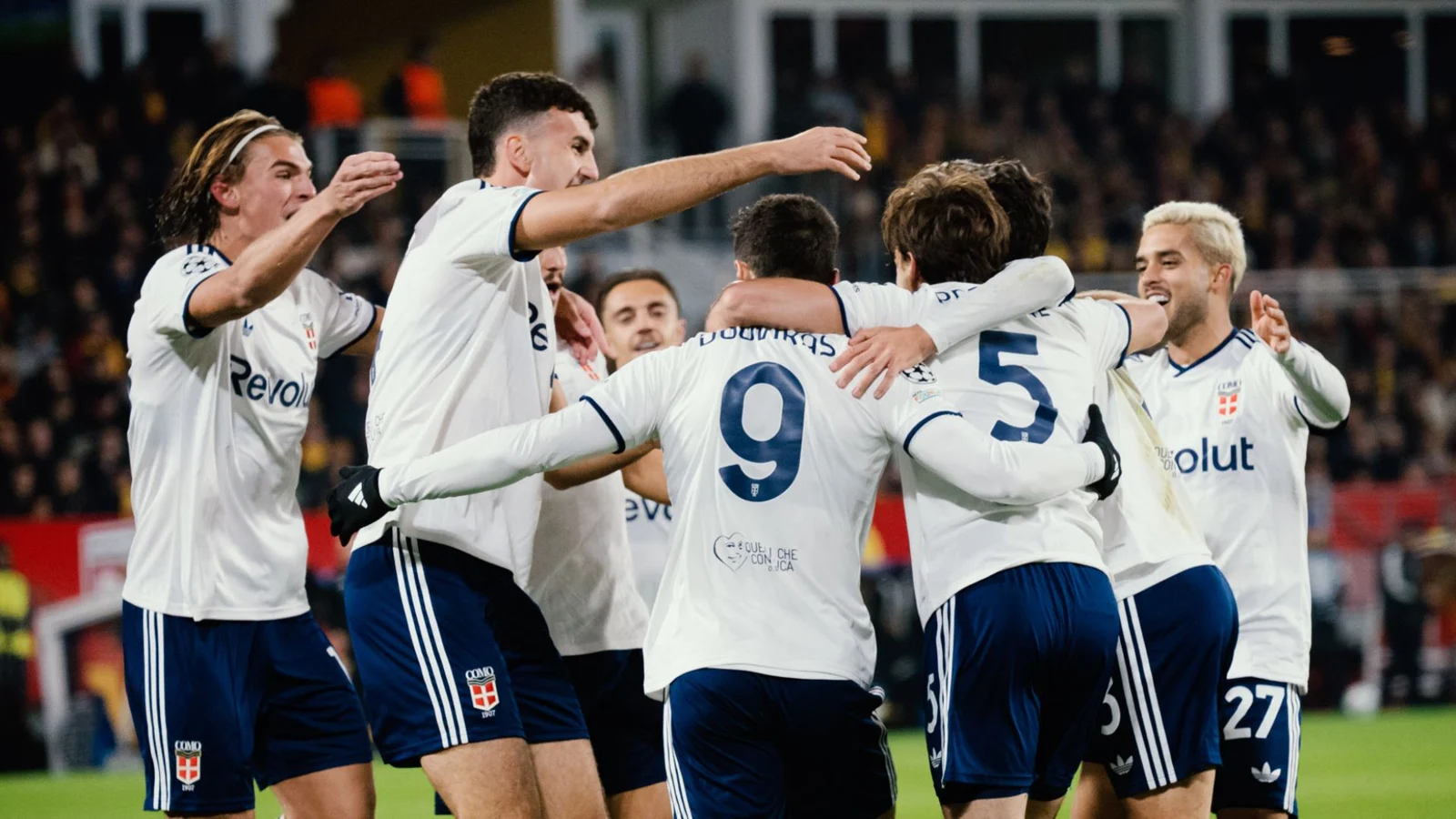
Lens 1-9 Como
Goals: Douvikas 7', 32', 57'; Nico Paz 40'; Lucas Da Cunha 47'; Marc-Oliver Kempf 54'; Mattia Liberali 62'; Ruben Aguilar 67'; Martin Baturina 69'; Matteo Papaccioli 90+1'
Nine goals.
Away from home.
In the Champions League.
It is difficult to know exactly what to make of Como's 9-1 destruction of Lens, other than that it was one of the most astonishing results in the competition's history.
The Italian club, playing its first season of European soccer, has already demonstrated that it belongs at this level. Cesc Fàbregas has built a team that wants to control possession, play through pressure and attack with creativity rather than simply relying on defensive organization.
Against Lens, pretty much everything worked.
Como took the lead after seven minutes when Anastasios Douvikas reacted quickly to redirect Máximo Perrone's header into the net following a corner.
The second goal in the 32nd minute was a much better demonstration of the team's attacking approach.
Como worked the ball forward from its goalkeeper through a series of quick passes, eventually finding Nico Paz on the right. Paz carried the ball forward and found Álex Valle making a run into the box. Valle redirected the ball across goal for Douvikas to finish from close range.
It was an outstanding team goal.
Eight minutes later, Douvikas returned the favor for Paz.
Como broke forward quickly, Douvikas received in space and recognized Paz advancing into the penalty area. He released the Argentine, who finished confidently to make it 3-0.
Lens had opportunities to make the first half more competitive, including a penalty decision that was overturned by VAR. But the French side couldn't take advantage of its few promising moments.
The second half became an absolute demolition.
Lucas Da Cunha scored just two minutes after the restart, Kempf added another seven minutes later and Douvikas completed his hat trick in the 57th minute.
Mattia Liberali scored Como's seventh in the 62nd minute, and even the Italian club's substitutes continued creating chances. Baturina added another before Papaccioli completed the scoring in stoppage time.
Lens managed one consolation goal through Ruben Aguilar, but that was about the only positive the home side could take from the evening.
The most impressive part of Como's performance was the variety of ways it scored.
There were set pieces, quick combinations through midfield, counterattacks and excellent individual finishes. The goals weren't simply a product of Lens repeatedly making the same mistake.
Paz was exceptional in his attacking midfield role, scoring once and providing two assists. His ability to receive between the lines, turn and immediately find teammates running behind the defense was a recurring problem Lens couldn't solve.
Douvikas was equally effective, combining excellent movement around the penalty area with clinical finishing.
Of course, there needs to be some perspective. Lens completely fell apart defensively, particularly after halftime. Nine goals are not a realistic measure of the normal difference between these two teams.
But Como deserves considerable credit for continuing to attack and consistently exploiting the space available rather than settling for a comfortable victory.
Fàbregas has built one of the most interesting young teams in Europe, and the Champions League is quickly becoming another stage on which it can demonstrate that.
Fenerbahçe 3-2 Liverpool
Goals: Trey Nyoni 25', Mason Greenwood 29', Alexander Isak 69', Archie Brown 73', Vedat Muriqi 79'
Liverpool suffered its first Champions League defeat of the season, twice taking the lead against Fenerbahçe before conceding three goals and leaving Istanbul empty-handed.
It was another concerning defensive performance for Andoni Iraola's team.
Liverpool entered the match having won its first three Champions League games, although its defensive record had already suggested that the results were masking some real problems.
The team conceded three goals against LASK and another three against Villarreal. Fenerbahçe became the third consecutive European opponent to put three past Liverpool.
That is a difficult trend to ignore.
Liverpool actually began the game well, creating several early opportunities as its wide players attacked Fenerbahçe's defense.
Trey Nyoni opened the scoring in the 25th minute, reacting quickest to a loose ball inside the penalty area and finishing after a Dominik Szoboszlai delivery caused problems for the home defense.
But Fenerbahçe responded almost immediately.
Four minutes later, Mason Greenwood hit a free kick that deflected past Alisson to level the score.
The game settled into a more recognizable pattern in the second half, with Liverpool controlling more possession and Fenerbahçe looking for opportunities to attack quickly when it recovered the ball.
Iraola introduced Alexander Isak, Cody Gakpo and Florian Wirtz in the 66th minute, and the substitutions appeared to have the desired effect.
Gakpo delivered a cross from the left, and Isak headed home with his first touch to restore Liverpool's lead in the 69th minute.
At that point, Liverpool should have been in an excellent position to manage the final 20 minutes.
Instead, its defensive problems resurfaced.
Only four minutes later, Fenerbahçe worked a short corner and N'Golo Kanté delivered a cross toward the back post. Archie Brown arrived completely unmarked and finished past Alisson.
It was poor defensive awareness from Liverpool, which failed to recognize Brown's movement and left an enormous opening at the most dangerous point of the attack.
Then came the winner.
In the 79th minute, Fenerbahçe delivered a high ball into the penalty area following a throw-in. Substitute Vedat Muriqi attacked the delivery, beat multiple Liverpool defenders in the air and headed into the corner.
Two goals conceded in six minutes. Both from crosses into the box.
For Liverpool, this was not a failure to create enough chances or a case of an opponent simply overwhelming its midfield. The visitors had more of the ball and enough attacking opportunities to win.
The problem was their inability to defend basic situations after taking the lead.
Fenerbahçe deserves credit for continuing to attack and for exploiting those weaknesses. Interim manager Dirk Kuyt, facing his former club, made an important decision introducing Muriqi, whose aerial presence eventually produced the decisive goal.
But Liverpool's defensive record is becoming a major concern.
Ten goals conceded in four Champions League games is an extraordinary number for a club with ambitions of winning the competition.
Iraola has made Liverpool dangerous going forward, but the team is leaving too many opportunities for opponents to attack its penalty area.
Until that changes, Liverpool is going to have a difficult time consistently beating Europe's strongest teams, no matter how talented its attackers are.
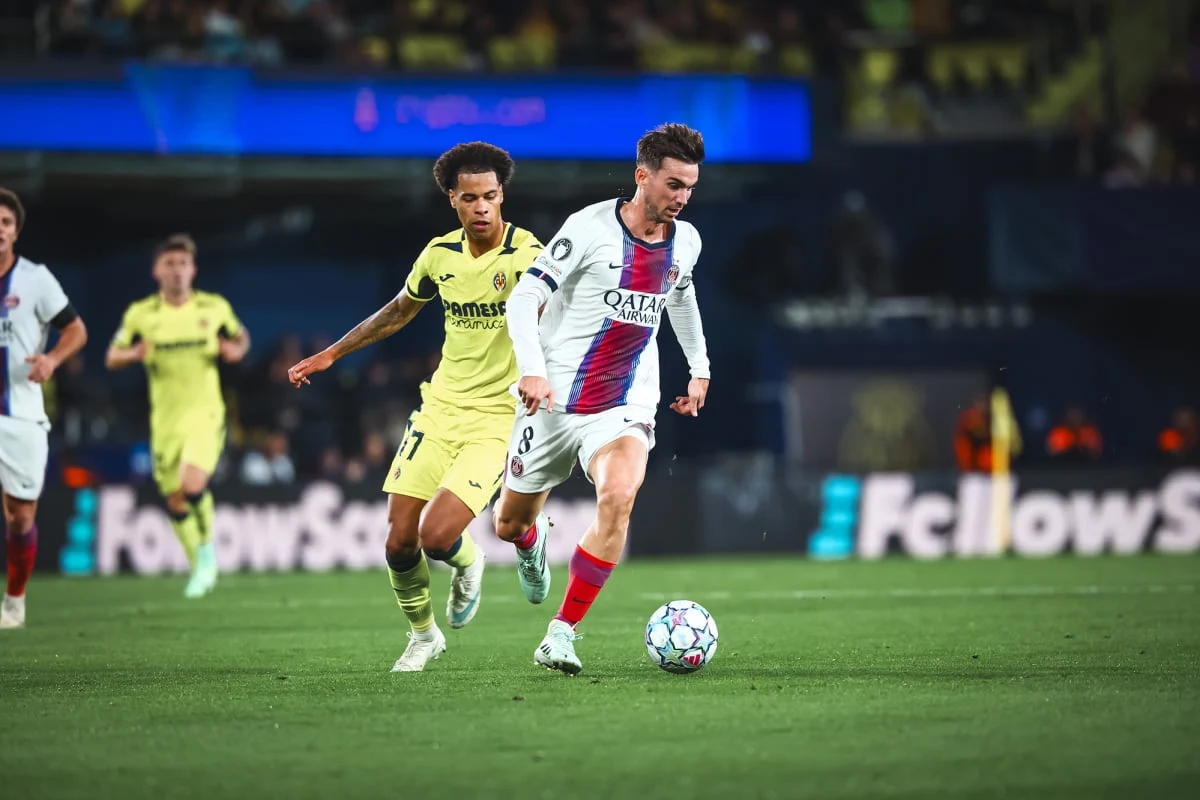
Villarreal 0-6 Paris Saint-Germain
Goals: João Neves 9', Désiré Doué 12', Senny Mayulu 13', Fabián Ruiz 16', 50'; David Boly 78'
If Como produced the most remarkable scoreline of the round, PSG delivered the most devastating opening stretch.
The defending European champions scored four goals in the first 16 minutes at Villarreal, effectively ending the match before the Spanish side had settled into the game.
It was an extraordinary demonstration of attacking quality.
PSG has become one of the most impressive collective teams in Europe under Luis Enrique. The talent level is enormous, but the more notable achievement has been how effectively its midfield and attacking players operate together.
Vitinha, João Neves and Fabián Ruiz can all receive under pressure, move the ball quickly and recognize when the opponent's defensive shape has become vulnerable.
Against Villarreal, the combinations were almost effortless.
Neves opened the scoring in the ninth minute, reacting first to a loose ball following a corner.
Three minutes later, Maghnes Akliouche found Doué in a dangerous position, and the winger finished confidently to make it 2-0.
Then came two more goals in the next four minutes.
Senny Mayulu created space inside the penalty area and drove a finish into the upper corner. Akliouche then produced another assist, finding Ruiz for a low shot that made it 4-0.
Four goals in 16 minutes is an astonishing start against any Champions League opponent, but Villarreal is not some European minnow.
The Spanish club finished third in La Liga last season and has an established group of players accustomed to competing against Barcelona, Real Madrid and Atlético.
Yet it looked completely overwhelmed.
Villarreal's midfield struggled to deal with PSG's movement. When the home side attempted to press, PSG frequently found passes through the pressure and immediately attacked the exposed defense.
When Villarreal dropped deeper, PSG had enough creativity to work through compact areas and generate dangerous chances anyway.
The second half brought more of the same.
Ruiz added his second goal shortly after halftime, finding space in the penalty area, moving past Renato Veiga and finishing past Péter Gulácsi.
Substitute David Boly completed the scoring in the 78th minute following another dangerous attacking sequence.
The numbers reflected the disparity. PSG controlled roughly 71 percent of possession and generated 22 shots, including 12 on target.
American defender Alex Freeman started at right back for Villarreal and was part of a defensive unit that had an extremely difficult evening.
There is little value in singling out Freeman for a collective collapse this severe. Villarreal's problems began in midfield, where the team repeatedly failed to disrupt PSG's buildup, leaving the defensive line to deal with attackers receiving in dangerous positions.
Still, this was a harsh lesson for a young defender trying to establish himself at the Champions League level.
For PSG, the result continued a remarkable European start.
The defending champions have won all four Champions League games, including victories over Manchester City and Barcelona. They have scored 20 goals in the process.
PSG doesn't merely have the individual talent to overpower opponents. Its movement and passing are coordinated enough that defenders are frequently forced to react to situations that have already developed beyond their control.
The only meaningful caveat is that Villarreal offered almost no resistance once the opening goals went in.
That makes the 6-0 margin somewhat less informative than PSG's victories over City and Barcelona.
But combined with those earlier performances, the result makes the larger conclusion difficult to avoid.
PSG is still the team to beat in Europe.
Champions League Best XI: Matchday 4
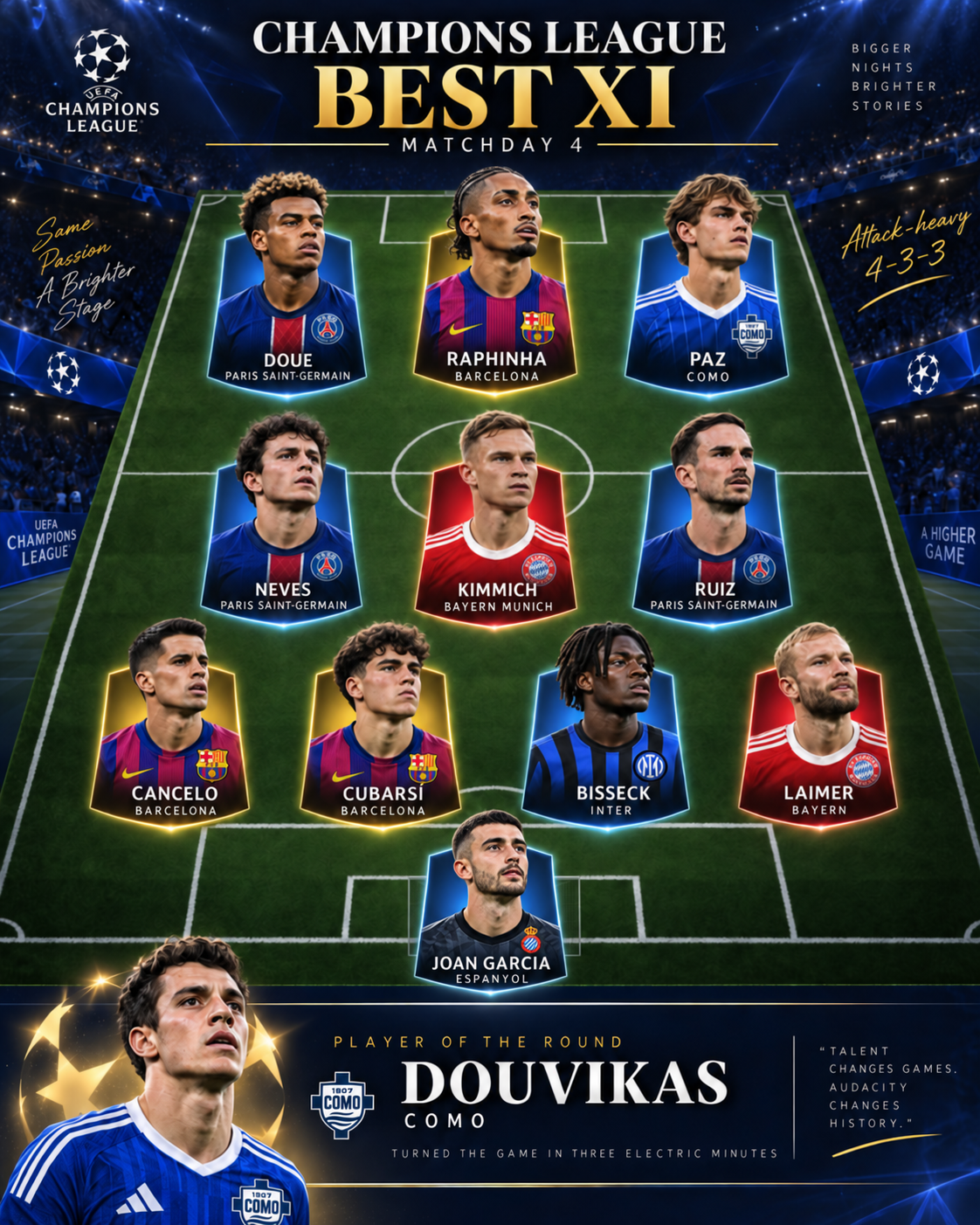
The Team of the Round lines up in an attack-heavy 4-3-3, featuring four players from Barcelona, three from PSG, two from Bayern and one each from Inter and Como.
There were several outstanding performances from players not included, particularly Lennart Karl at Bayern and Archie Brown at Fenerbahçe. But the final selections reflect the combination of individual quality, defensive responsibility, attacking production and the strength of the opponent.
Player of the Round: Anastasios Douvikas, Como
There were several outstanding individual performances this week, including braces from Raphinha and Fabián Ruiz and excellent all-around performances from Bayern's midfield.
But scoring three goals and assisting another in a 9-1 Champions League victory is about as strong a case as a player can make.
Douvikas scored Como's first two goals, assisted the third and completed his hat trick in the 57th minute before being substituted shortly afterward.
What stood out wasn't simply the finishing.
The Greek striker demonstrated excellent anticipation around the penalty area, repeatedly recognizing where a pass or loose ball was going to arrive before the defenders reacted.
His first goal came from reacting quickly to a redirected header from a set piece. His second was a simple finish, but only because he had positioned himself perfectly to receive Valle's cross.
Then he showed his ability to create for others, recognizing Nico Paz's run and delivering the pass that produced Como's third goal.
Douvikas doesn't have the superstar reputation of many of the other forwards in this competition, but his movement and ability to connect with Como's creative midfielders make him extremely effective in Fàbregas' system.
There is a reasonable argument for discounting some of the production because Lens defended so poorly.
That is fair.
But Douvikas had scored twice and created another goal before the match completely got away from the home side.
Four direct goal contributions in approximately an hour of Champions League soccer is an extraordinary performance.
He takes Player of the Round honors.
Goalkeeper: Joan García, Barcelona
Barcelona's eventual 3-0 victory over Aston Villa was built partly on García's ability to prevent the visitors from capitalizing on their promising first-half opportunities.
Villa repeatedly attempted to exploit the space behind Barcelona's high defensive line, with Nicolas Jackson and Johan Manzambi making dangerous runs.
García was particularly important coming off his line to intercept balls played behind the defense. His intervention against Jackson prevented a potential one-on-one situation, while he also produced an important save against Manzambi.
He finished with only one recorded save, but that doesn't completely capture his influence on the game.
A goalkeeper in Barcelona's system has to do considerably more than stop shots. He needs to recognize danger early and help cover the large spaces behind the defenders.
García did that extremely well, helping Barcelona secure its first Champions League clean sheet in 19 matches.
Defender: João Cancelo, Barcelona
Cancelo delivered one of his most complete performances of the season against Aston Villa.
He was comfortable moving between the left flank and more central positions during Barcelona's buildup, providing another passing option and helping the team advance possession through pressure.
His best contribution came on the third goal.
Cancelo isolated John McGinn, beat him with a sharp movement and delivered a beautiful outside-of-the-foot pass for Raphinha to finish.
It was the sort of attacking action that makes Cancelo so valuable. He can create from areas where most fullbacks would be content to recycle possession.
He also contributed defensively, including an important block in the first half when Villa was threatening an equalizer.
His offensive creativity and improved defensive discipline made him one of Barcelona's most influential players.
Defender: Pau Cubarsí, Barcelona
Cubarsí continues to demonstrate why he has become such an important part of Barcelona's defense despite his age.
Against Villa, his passing was particularly valuable.
With Villa attempting to pressure Barcelona's midfield, Cubarsí frequently stepped forward from the defensive line to carry possession into space and create an extra player in the buildup.
That movement helped Barcelona feed Yamal on the right side, where the teenager consistently threatened Villa's defense.
Defensively, Cubarsí had a difficult assignment dealing with Jackson and Manzambi attacking behind Barcelona's aggressive defensive line.
He wasn't flawless, and Villa did find some dangerous opportunities during the first half.
But he generally maintained his positioning, recovered well and helped Barcelona become considerably more secure after halftime.
A clean sheet against a strong Premier League opponent, combined with his contribution progressing the ball, earns him a place in the team.
Defender: Yann Bisseck, Inter Milan
Bisseck scored an outstanding goal to open Inter's 3-0 victory at Feyenoord, curling a left-footed shot into the far corner after being set up by Djed Spence.
It was an unusual finish for a center back, but Bisseck contributed considerably more than the goal.
Inter was comfortable defending for most of the evening, with its back line limiting Feyenoord's opportunities to attack central areas.
Bisseck was particularly effective using his physical presence to win challenges and prevent the home side from developing sustained pressure.
The combination of an excellent opening goal and a clean sheet in a convincing road victory is enough to put him in the team.
Defender: Konrad Laimer, Bayern Munich
Laimer was one of the best players on the field in Bayern's 2-0 victory at Atlético Madrid.
Operating at right back, he combined aggressive defensive work with excellent movement into attacking positions.
He was regularly involved in Bayern's pressing, closing space quickly and making it difficult for Atlético to play through its midfield.
His attacking contribution was equally impressive.
Laimer created several dangerous moments before finally scoring Bayern's second goal in the 74th minute, arriving in an advanced position to finish a pass from Harry Kane.
The goal was a direct result of Bayern's aggressive pressing, with Alphonso Davies winning the ball high up the field before Kane found Laimer.
Scoring in a road victory against Atlético is a strong case on its own.
Combining that with an outstanding defensive performance makes Laimer one of the easiest selections of the round.
Midfielder: João Neves, Paris Saint-Germain
Neves opened the scoring in PSG's 6-0 demolition of Villarreal, reacting quickest to a loose ball inside the penalty area following a corner.
He also assisted PSG's sixth goal, finding substitute David Boly in a dangerous position late in the second half.
But the more impressive part of his performance was his midfield work.
Neves is an excellent example of how PSG has built a team around technically gifted players who can also defend aggressively and cover space.
He consistently provides an outlet when PSG moves through pressure, while his defensive anticipation allows the team to recover possession quickly and maintain attacks.
Against Villarreal, he was involved at both ends and helped maintain PSG's midfield superiority throughout the game.
A goal, an assist and a dominant midfield performance earn him a place in the XI.
Midfielder: Joshua Kimmich, Bayern Munich
Kimmich didn't score or record an assist against Atlético Madrid, but he was central to Bayern's ability to control the match.
Playing alongside Tom Bischof, Kimmich helped organize possession while providing the structure that allowed Bayern's more attacking players to press aggressively.
He attempted more than 100 passes and rarely allowed Atlético to establish sustained control of the midfield.
His positioning was particularly important when Bayern lost possession.
Rather than allowing the center of the field to become exposed, Kimmich repeatedly moved into positions where he could intercept passes or provide immediate defensive support.
That helped Bayern keep Atlético pinned in its own half for extended periods.
There were midfielders with better statistical production this week, but relatively few who played such an important role in a convincing victory against a high-quality opponent.
Midfielder: Fabián Ruiz, Paris Saint-Germain
Ruiz scored twice as PSG destroyed Villarreal, but his influence extended well beyond the two finishes.
He was constantly involved in PSG's buildup, helping connect possession through midfield and recognizing opportunities to move the ball forward before Villarreal could settle defensively.
His first goal came in the 16th minute, when Akliouche found him inside the penalty area and Ruiz finished confidently to make it 4-0.
The second arrived shortly after halftime, with Ruiz collecting a pass, moving past Renato Veiga and finishing past Gulácsi.
Ruiz's ability to combine intelligent positioning with technical quality makes him an ideal fit for Luis Enrique's midfield.
He doesn't need to dominate the ball individually or attempt spectacular passes on every possession.
He simply keeps moving into useful positions and making the right decisions, while possessing the finishing ability to punish opponents when opportunities arrive.
Two goals from midfield in a Champions League match are outstanding production, and Ruiz was one of the central figures in arguably the best team performance of the round.
Forward: Désiré Doué, Paris Saint-Germain
Doué was one of PSG's most dangerous attackers against Villarreal, scoring the second goal and repeatedly threatening the Spanish defense with his speed and dribbling.
His goal came in the 12th minute when Akliouche found him in space and Doué directed a well-placed finish into the bottom corner.
He continued to create dangerous situations throughout the match, frequently receiving in wide areas before attacking defenders directly.
What makes Doué so difficult to defend is his ability to move in either direction.
He can beat a defender on the outside, cut inside to shoot or recognize the opportunity to combine with teammates moving into the penalty area.
Against Villarreal, those options were available almost every time he received the ball.
The opposition's defensive performance was extremely poor, but Doué consistently took advantage of the opportunities rather than simply contributing to a team-wide rout.
Forward: Raphinha, Barcelona
Raphinha continues to make a compelling argument that he is one of the best attacking players in Europe.
He scored twice against Aston Villa, with both goals illustrating the intelligent movement that has become such a central part of his game.
On the first, he recognized the space opening between Villa's defenders, received Fermín's pass and shifted the ball quickly onto his left foot before shooting.
The finish benefited from a deflection, but the initial movement and ability to create the shot were excellent.
His second goal was more straightforward, arriving in the penalty area to convert Cancelo's outstanding delivery.
Again, the important part was his anticipation.
Raphinha doesn't simply wait in the middle for passes to arrive. He moves between defenders, recognizes where attacking sequences are developing and repeatedly puts himself in positions where he can finish with one touch.
Barcelona has an extraordinary collection of creative players, but Raphinha remains the one most consistently turning all that creativity into goals.
Two goals against an unbeaten Champions League opponent comfortably earn him a place in the team.
Forward: Nico Paz, Como
Paz delivered another outstanding performance in Como's 9-1 victory at Lens, scoring once and providing two assists.
The Argentine was central to Como's attacking movement, frequently receiving in pockets between midfield and defense before turning and releasing teammates into space.
His best contributions came during the first half, when the match was still competitive.
Paz helped create Douvikas' second goal with an excellent attacking sequence down the right side, then finished Como's third after Douvikas recognized his run into the penalty area.
He continued finding dangerous positions after halftime, providing another assist for Douvikas to complete his hat trick.
Paz is becoming one of the most exciting young attacking midfielders in Europe.
His close control and ability to recognize passing angles allow him to create danger without needing to dominate possession through constant dribbling.
He can receive under pressure, turn quickly and immediately move the ball into spaces opponents are struggling to defend.
Against Lens, that combination was devastating.
Best XI Summary
Formation: 4-3-3
GK: Joan García, Barcelona
Defense: João Cancelo, Barcelona; Pau Cubarsí, Barcelona; Yann Bisseck, Inter Milan; Konrad Laimer, Bayern Munich
Midfield: João Neves, PSG; Joshua Kimmich, Bayern Munich; Fabián Ruiz, PSG
Forwards: Désiré Doué, PSG; Raphinha, Barcelona; Nico Paz, Como
Player of the Round: Anastasios Douvikas, Como
The Biggest Takeaway
Four rounds into the Champions League, the leading contenders are beginning to separate themselves.
PSG remains the most convincing team in Europe, combining extraordinary attacking quality with a midfield that appears capable of controlling games against almost anyone.
Barcelona may have the most dangerous collection of attacking players in the competition, but its ability to compete for the title will depend on whether the defense can consistently hold up against elite opponents.
Bayern is looking increasingly impressive as well. Its victory at Atlético was probably more meaningful than either of the big blowouts, demonstrating that the Germans can impose their style against a strong, organized opponent away from home.
Real Madrid and Manchester City remain dangerous, but both have been less convincing. Liverpool's defensive problems are becoming a serious obstacle to its ambitions.
Then there is Como.
Nobody should expect nine-goal performances to become a regular occurrence, but Fàbregas' team is demonstrating that it can compete with established European clubs rather than simply enjoying a novelty appearance in the competition.
The major question over the next several rounds will be whether anyone can consistently disrupt PSG's midfield and attacking movement.
Bayern's pressing may offer one possible answer, while Barcelona has the offensive talent to make even the strongest defense uncomfortable.
With the league phase now halfway complete, those three look like the strongest contenders.
The next several months should tell us whether that early hierarchy holds up when the stakes become considerably higher.