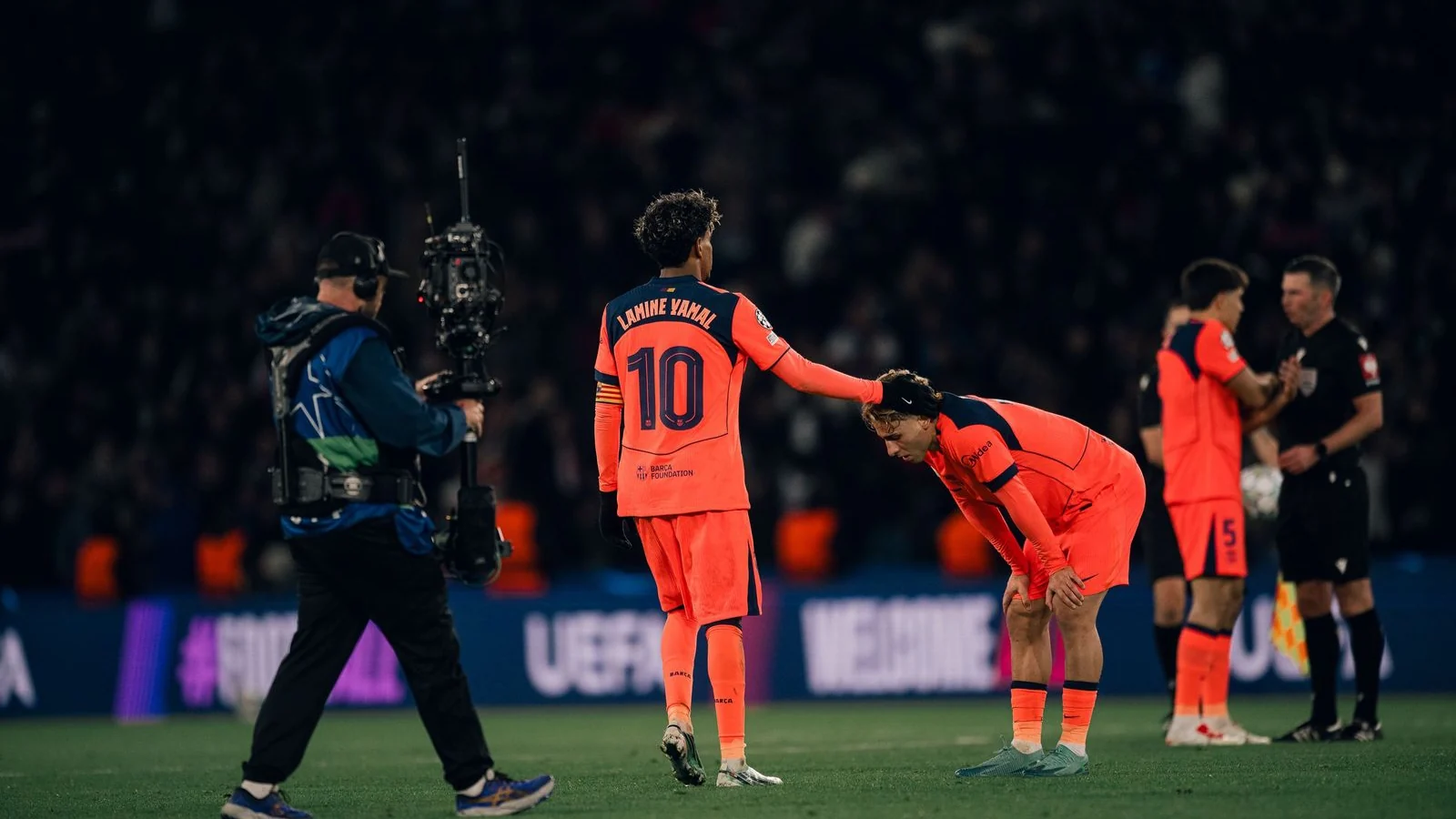
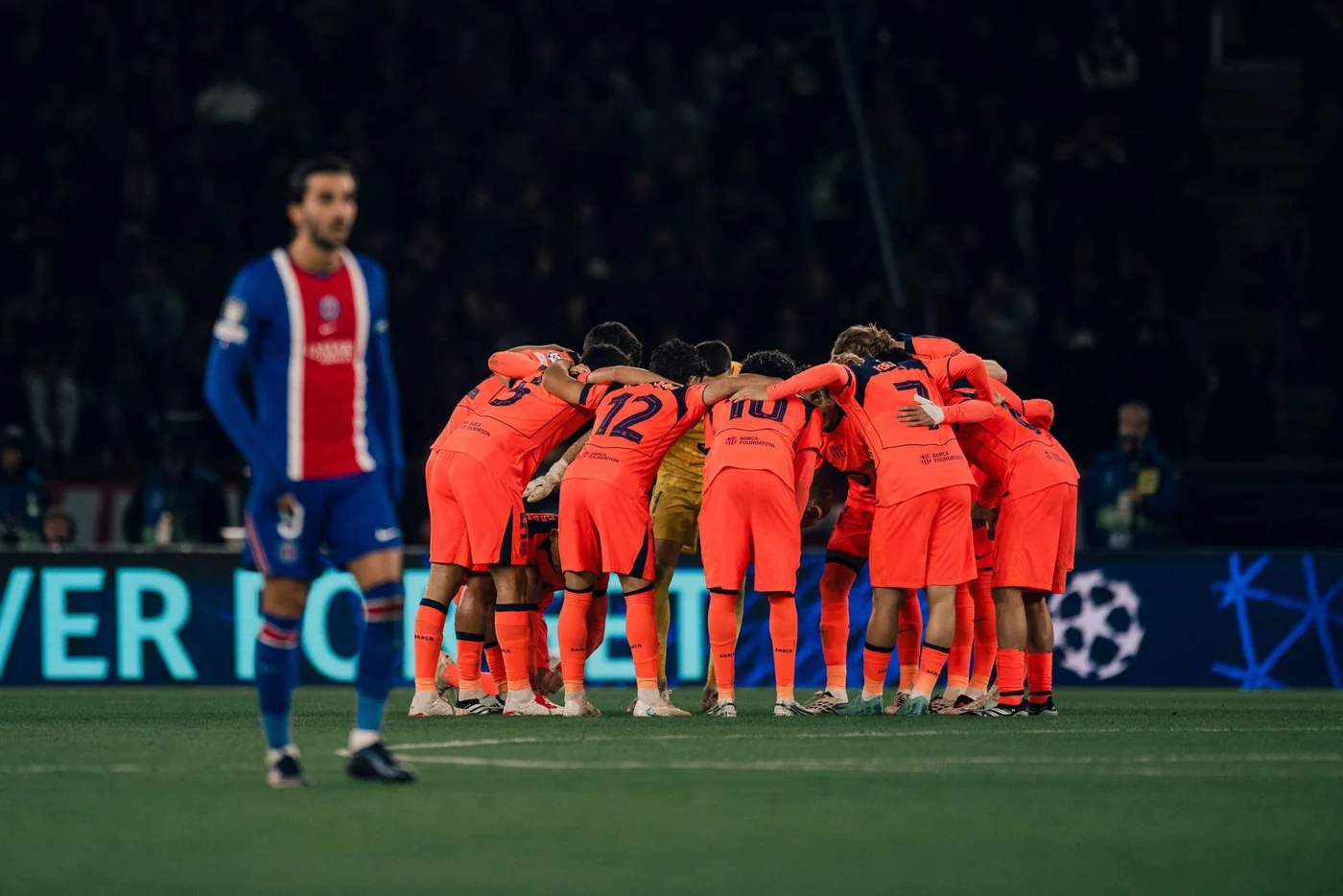
Barcelona's perfect start to the season finally came to an end Tuesday night in Paris, as reigning European champions PSG handed Hansi Flick's team a 4-2 defeat in one of the most entertaining games of the young Champions League season.
The matchup delivered exactly what was promised. Two of Europe's most aggressive, attack-minded teams went after each other from the opening whistle, producing six goals, 40 shots and numerous spectacular individual moments. There were also plenty of defensive mistakes, particularly from Barcelona, which eventually proved decisive.
PSG was the better team and deserved the victory. The French champions generated 3.73 expected goals (xG) compared to Barcelona's 2.19, and probably would have won more comfortably if not for an outstanding performance from Joan García in goal.
Still, Barcelona had stretches where it looked capable of beating arguably the best team in Europe. There were encouraging individual performances, most notably from Pedri and emerging teenager Xavi Espart, and moments when Barcelona's attacking quality was every bit as impressive as PSG's.
The loss ends Barcelona's remarkable 11-game winning streak to open the season, but there is little time to dwell on it. The Catalans host Real Madrid in the first Clásico of the season on Sunday, with an opportunity to extend their six-point advantage over their biggest rivals to nine.
That looming matchup had a significant influence on Flick's decisions against PSG, and it is difficult to argue with his priorities.
PSG Wins the Battle in Midfield
Flick entered the game with several difficult personnel decisions. Injuries to Eric García and Jules Koundé had already limited his defensive options, while Rodri had played eight consecutive games and was not at full strength physically.
With the Clásico only five days away, Flick reasonably chose to rest Rodri, starting Marc Bernal alongside Pedri in midfield. He also gave Dani Olmo the start over Fermín López, with Raphinha returning to the lineup after recently missing time with an injury.
PSG had its own problems. Ousmane Dembélé was forced off with a hamstring injury after just 19 minutes, replaced by former Barcelona forward Ferran Torres. Marquinhos and Khvicha Kvaratskhelia also left injured in the second half, with Kvaratskhelia subsequently diagnosed with a torn ACL.
Neither team was operating at full strength, but that did not diminish the quality of the contest.
PSG was the sharper side early, pushing its defensive line high and pressing Barcelona aggressively whenever the visitors attempted to build from the back.
The problem for Barcelona wasn't simply that PSG was winning the ball high up the field. It was that even when Barcelona escaped the initial pressure, the attackers often failed to provide clean connections to move the ball forward.
Luis Enrique's midfield trio of Vitinha, João Neves and Fabián Ruiz did an excellent job closing passing lanes and preventing Barcelona from establishing its normal rhythm. The forwards contributed aggressively to the press, while PSG's defenders were comfortable stepping forward to challenge Barcelona players trying to receive between the lines.
Barcelona's preferred approach relies on playing through that initial pressure, then attacking the space left behind. When it works, the opposition's aggressiveness becomes a liability. Against PSG, those combinations broke down too frequently, allowing the French team to recover possession and attack a defense that was already stretched.
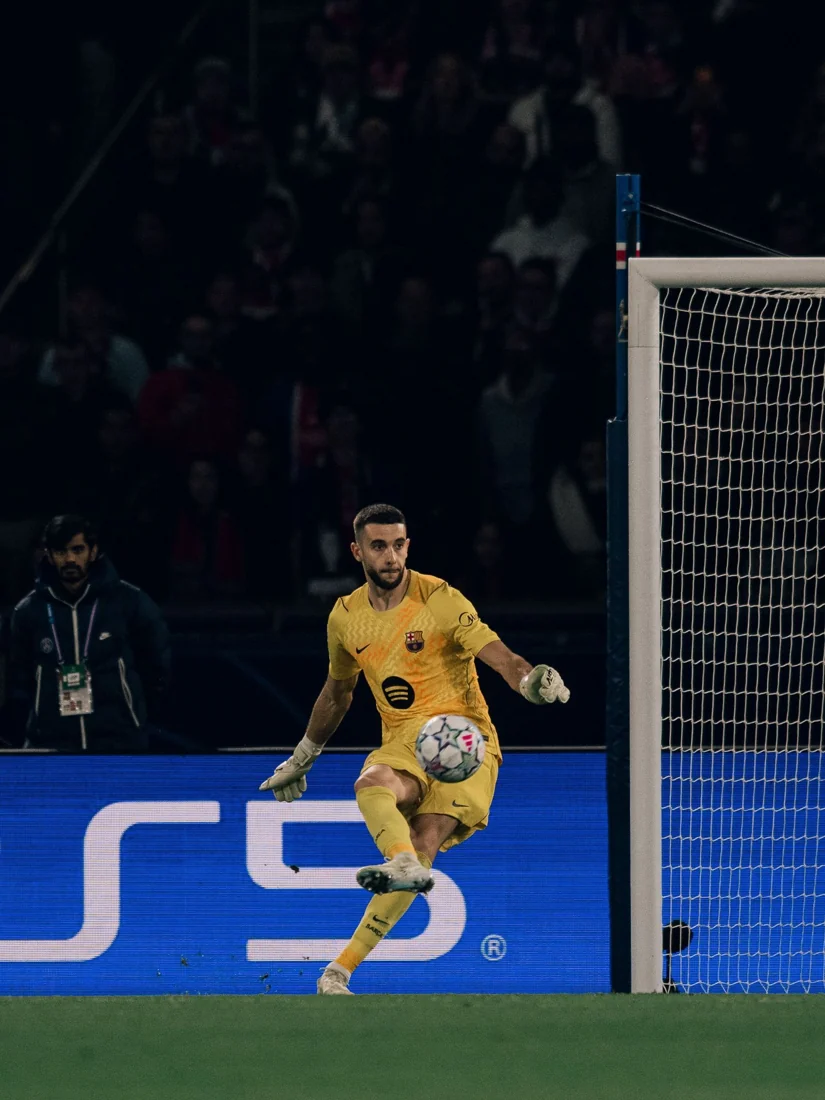
PSG pinned Barcelona into its own end for long stretches of the first half, producing several excellent scoring opportunities. Joan García repeatedly came to the rescue, including an outstanding sequence of saves to deny Ferran Torres and Fabián Ruiz.
The breakthrough finally came in the 38th minute when Lamine Yamal attempted an ambitious pass out of the defensive third that was intercepted. Désiré Doué collected the ensuing possession, moved inside and curled a beautifully placed shot past García.
It was a perfect example of how PSG's pressure was creating danger. Barcelona was not giving up chances because it refused to defend. It was giving them up because attempts to play through pressure were leaving the team exposed when possession broke down.
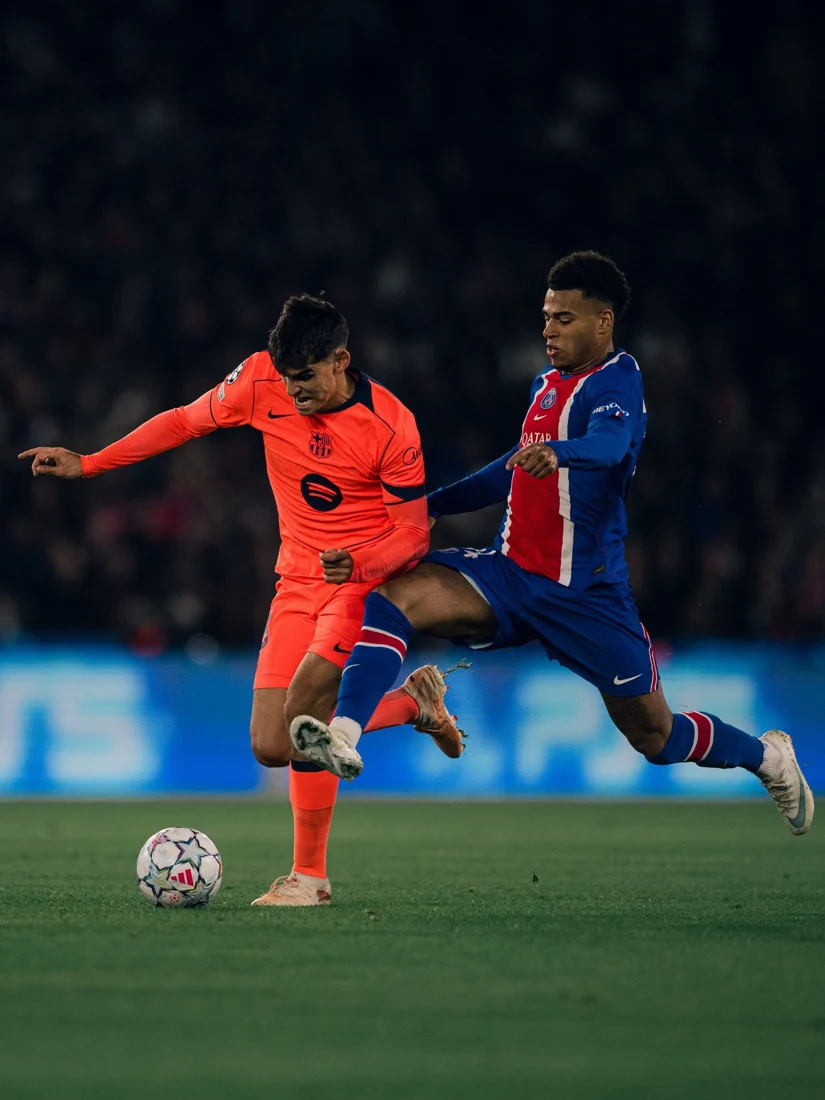
There was also a noticeable difference between the teams' defensive composure. PSG's back line, led by the experienced Marquinhos and supported by Willian Pacho, Lucas Hernández and Achraf Hakimi, generally showed better anticipation of danger and awareness of the spaces Barcelona's attackers were trying to exploit.
They certainly weren't flawless, as Barcelona's two goals demonstrated. But when possessions became scrambled, PSG usually looked better prepared to recover.
Pedri and Espart Lead Barcelona's Response
Despite PSG's advantage, Barcelona was hardly without opportunities.
Pedri was once again spectacular in midfield, producing several moments of technical quality that few players in the world could replicate.
His most impressive contribution came almost immediately after PSG took the lead. Pedri anticipated a pass and intercepted possession before threading a gorgeous through ball between the PSG defenders to send Fermín López one-on-one with goalkeeper Matvey Safonov.
Fermín tried to lift his finish over the keeper, but Safonov read the attempt and made the save.
It was a tremendous piece of soccer from Pedri that deserved an assist, and an opportunity Barcelona could not afford to waste..
What continues to distinguish Pedri is his ability to recognize the next attacking action before anyone else. He doesn't need to beat three defenders on the dribble or play a spectacular 40-yard pass to change a possession. Often, a slight adjustment of his body position and one quick pass are enough to eliminate multiple opponents.
Barcelona began the second half looking considerably more comfortable, with its midfield finally finding better passing angles and the team spending longer stretches in PSG's end.
The equalizer came in the 55th minute from perhaps the most encouraging individual performance of the night.
Xavi Espart was phenomenal.
The 19-year-old fullback has been one of Barcelona's biggest early-season revelations, and Tuesday may have been his most convincing performance yet.
He showed excellent defensive awareness, competing aggressively for loose balls while maintaining his positioning against some of the most dangerous attackers in Europe. In possession, he was equally impressive, displaying the composure to receive in tight spaces, evade pressure and connect passes rather than simply clearing the ball when challenged.
His best moment combined those qualities with an aggressive attacking run.
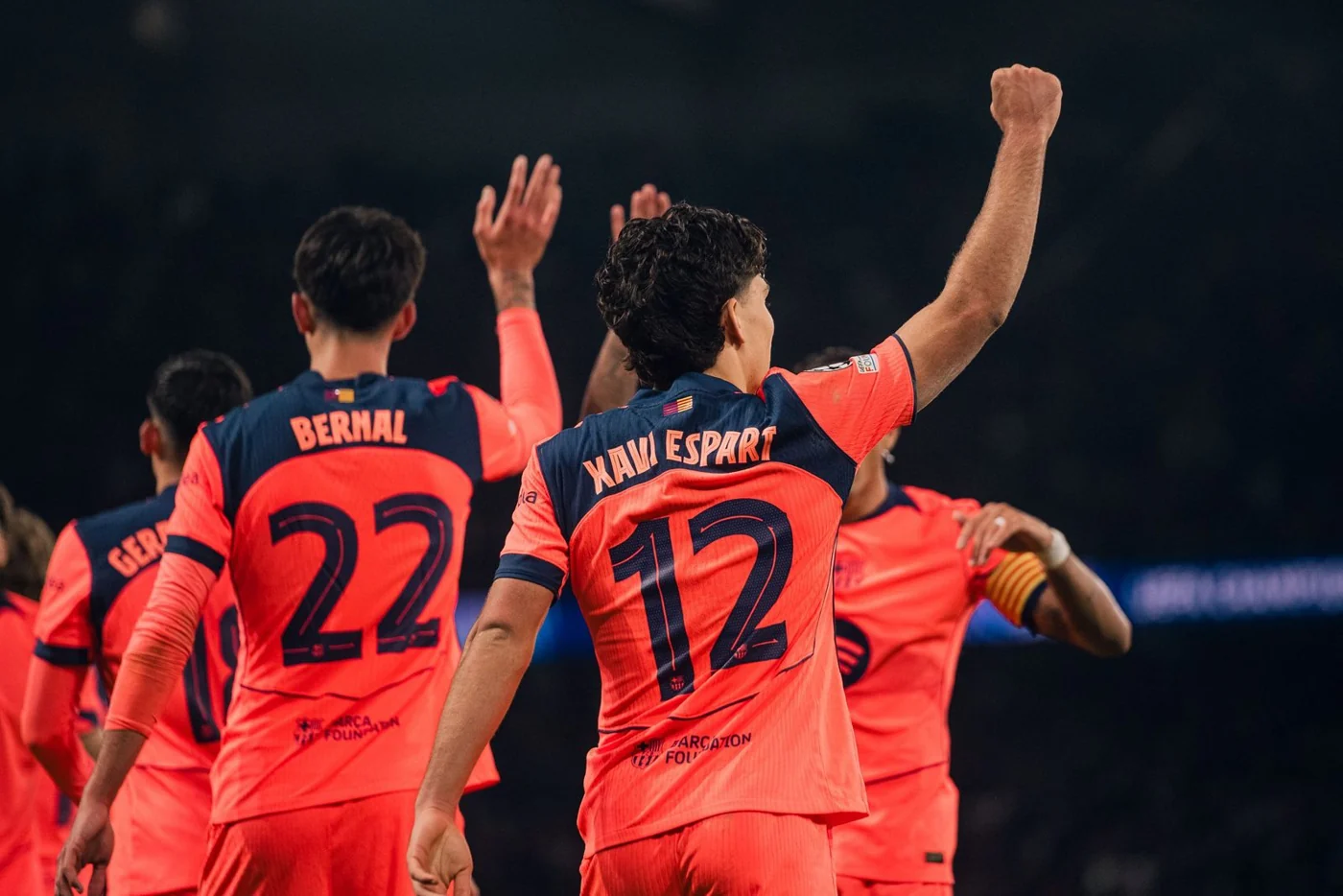
Espart advanced from midfield, exchanged passes with Fermín and continued his run into the PSG penalty area before driving an excellent finish past Safonov to tie the game.
The goal was spectacular, but it was not a case of a defender having one great attacking moment in an otherwise ordinary performance. Espart repeatedly showed why Flick trusts him in such an important role.
He finished with eight ball recoveries and two clearances in addition to the goal, and his ability to contribute at both ends may have solidified his place in Barcelona's preferred lineup even after the injured defenders return.
For a club that already boasts one of the most impressive collections of young talent anywhere in Europe, Espart's rapid emergence is almost getting ridiculous.
Flick's Changes and PSG's Late Takeover
Barcelona was probably enjoying its best stretch of the game when Flick began making substitutions.
In the 60th minute, he removed Pedri, Raphinha and Marc Bernal, introducing Gavi, Karim Adeyemi and Rodri.
There was an understandable rationale behind the changes. Raphinha was still working his way back into full match fitness, Pedri has carried an enormous workload and Rodri needed minutes without necessarily being asked to play a full 90.
Flick was also clearly protecting players for Sunday's Clásico.
Nevertheless, removing Pedri had a noticeable effect on Barcelona's ability to control the game.
Rodri provided greater defensive presence and helped stabilize the midfield, but Barcelona lost some of the ability to evade pressure and advance possession that Pedri had been providing. Gavi brought energy and aggression, but he could not reproduce Pedri's timing and ability to recognize the next pass.
The momentum gradually moved back toward PSG, which continued attacking the spaces around Barcelona's fullbacks and testing the defensive line.
PSG regained the lead in the 72nd minute when Lucas Hernández rose to head home a corner. It was another frustrating concession for a Barcelona team that has occasionally struggled with basic defensive awareness despite its overall dominance this season.
Then Lamine Yamal finally announced himself.
Yamal had been relatively quiet by his standards, struggling to consistently beat PSG's defensive attention and finding fewer opportunities to dictate the attack than he normally enjoys. He had contributed some dangerous passes, but had not been the central figure Barcelona needed.
In the 79th minute, he provided another reminder that he doesn't need to dominate 90 minutes to decide a game.
Receiving on the right side, Yamal accelerated past Warren Zaïre-Emery, drove toward the goal and produced an outrageous finish from a tight angle to beat Safonov at his near post.
It was a moment of individual brilliance that seemed to have rescued Barcelona a valuable point.
Unfortunately, the celebration barely lasted two minutes.
PSG immediately attacked again, and after Barcelona failed to adequately clear a cross, Vitinha controlled the loose ball near the top of the penalty area and drove an excellent finish past García.
The final goal arrived in the 86th minute and highlighted another of Barcelona's defensive vulnerabilities.
Achraf Hakimi got forward on PSG's right and delivered a ball across the goalmouth for Fabián Ruiz, who finished from close range at the far post.
João Cancelo was caught ball-watching as Ruiz moved into position, losing track of the runner and allowing him an uncontested finish.
Cancelo offers enormous technical ability and attacking creativity, but this was an unfortunate reminder of his defensive limitations. Against opponents with PSG's quality, a momentary lapse in concentration is frequently all they need.
PSG finished with a deserved 4-2 victory, although the score doesn't fully capture how competitive the game was at various stages.
García deserves special praise despite conceding four times. He made ten saves, several of them exceptional, and had almost no realistic chance to prevent most of the goals.
Raphinha, meanwhile, looked a little short of his best rhythm. His movement and positioning were generally good, but some of the sharpness in his combinations and final actions appeared to be missing. Given his recent injury absence, that isn't particularly concerning unless it continues into the coming weeks.
The major takeaway is that Barcelona remains capable of producing outstanding attacking soccer against elite opponents, but its approach still leaves the defense vulnerable when the midfield loses control.
PSG has the quality, experience and collective understanding to punish those weaknesses consistently.
Barcelona is not quite there yet.
Clásico Preview: Barcelona vs. Real Madrid
Sunday, October 25 | 4:00 PM ET | Spotify Camp Nou | ABC, ESPN+ and ESPN Deportes
Barcelona enters the first Clásico of the season having won all nine of its La Liga games, scoring at a remarkable pace and building a six-point advantage over Real Madrid.
José Mourinho's return to Madrid has produced a less consistent start, with Real sitting third in the table on 21 points, one behind Atlético Madrid and six behind Barcelona.
However, Madrid has begun looking considerably more dangerous in recent weeks.
They have won three consecutive games, including an impressive 4-1 victory over Sevilla last weekend in which Kylian Mbappé scored twice and young winger Yan Diomandé delivered another excellent performance.
The two Spanish giants enter this matchup with contrasting situations. Barcelona has been the more coherent and successful team this season, but is coming off its first defeat and dealing with an increasingly concerning injury list.
Madrid has more ground to make up, but Mourinho appears to be discovering combinations that make better use of his exceptionally talented roster.
Madrid's Attack Is Built to Exploit Barcelona's Biggest Weakness
The most intriguing tactical question is whether Mourinho will attempt to reproduce PSG's aggressive pressure or instead focus on exploiting the space behind Barcelona's high defensive line.
Madrid has the players to do either, but the second approach may be particularly attractive.
Mbappé is arguably the most dangerous player in the world when he can make runs behind an aggressive defense. His combination of acceleration, movement and finishing makes him exceptionally difficult to defend when opponents leave space between their center backs and goalkeeper.
The concern for Barcelona is that those opportunities are often created by exactly the type of mistakes that PSG forced on Tuesday.
When Barcelona loses possession attempting to build through midfield, its fullbacks are frequently already positioned high up the field. If the opponent can release an attacker quickly, Cubarsí and his defensive partner are left trying to defend large areas without much support.
Mourinho has emphasized quick transitions throughout his career, and this Madrid roster is especially suited to that approach.
The biggest difference from their preferred lineup is that Vinícius Jr. will miss the Clásico due to suspension.
Normally, having both Vinícius and Mbappé available would create a nightmare for Barcelona's defense. Madrid could attack behind either fullback, forcing the center backs to constantly adjust their positioning.
Fortunately for Mourinho, Diomandé has demonstrated that he can provide much of the same speed and direct attacking threat.
The young winger has become increasingly influential in recent games, including against Sevilla, where he scored and assisted Mbappé.
If Mourinho positions Diomandé on Madrid's left, he will frequently encounter Cancelo, which suddenly makes the fourth PSG goal look like particularly relevant viewing.
Cancelo cannot afford to lose track of his defensive assignments when Diomandé attacks the space behind him. Barcelona will need Rodri and its right-sided center back to provide cover, particularly if Cancelo is encouraged to join attacks.
Can Rodri and Pedri Control the Middle?
The best way for Barcelona to prevent Madrid's dangerous transitions is to avoid giving the ball away in the first place.
That is where the combination of Rodri and Pedri becomes so important.
Rodri's summer arrival has given Flick a true defensive organizer capable of controlling the space in front of his back line. He is also extremely comfortable receiving under pressure, something Marc Bernal struggled to reproduce consistently against PSG.
With Rodri providing the defensive balance, Pedri has greater freedom to move forward and connect the attack.
That partnership should give Barcelona a much better chance of avoiding the midfield problems that undermined much of Tuesday's first half.
Madrid has its own impressive collection of midfield talent.
Jude Bellingham remains one of the most complete attacking midfielders in Europe, capable of dropping deep to help progress possession before suddenly appearing in the penalty area.
Federico Valverde provides enormous defensive coverage and can drive forward with the ball, while Arda Güler has become increasingly important to Madrid's buildup and attacking creativity.
Güler was particularly effective against Sevilla, helping Madrid move the ball through midfield rather than relying exclusively on long passes and individual attacking brilliance.
The challenge for Mourinho will be balancing that creativity with defensive stability.
If Madrid commits too many players forward, Pedri and Rodri have the quality to play through the press and release Barcelona's attackers into space.
If Madrid sits too deep, Barcelona can establish sustained pressure around the penalty area, with Yamal and Raphinha searching for the individual matchups they thrive on.
There is also a personnel complication for Flick. Dani Olmo has been ruled out for approximately a month with an adductor injury suffered against PSG. Eric García is unavailable, Koundé remains questionable with an ankle injury, and Andreas Christensen is also sidelined.
That likely means Fermín will get a significant role in the attack, while Espart should remain an important part of the defense.
Yamal and Raphinha Against Madrid's Defense
Barcelona's biggest attacking advantage may be the variety of ways Flick can deploy his forwards.
The absence of a conventional striker has hardly slowed the team this season.
Raphinha's movement through the middle has allowed Barcelona to create space for its wingers and attacking midfielders. He frequently pulls away from the opposing center backs, forcing them to decide whether to follow him into midfield or remain deeper and leave room for Pedri and Fermín to operate.
Lamine Yamal presents a different problem.
Even when he isn't dominating the ball, he demands defensive attention. Opponents are reluctant to leave him isolated against a fullback, which creates opportunities elsewhere.
Against Madrid, he will likely face a combination of Marc Cucurella or Álvaro Carreras at left back, with help arriving from midfield.
Mourinho will have watched how PSG limited Yamal's involvement for much of Tuesday's match, but also how quickly that plan can be undone by one successful dribble.
Barcelona also has Anthony Gordon and Karim Adeyemi to provide speed and attacking runs on the opposite side.
Both have shown they can be extremely dangerous attacking the space behind a defense, though Adeyemi has generally looked the more threatening of the two when given opportunities.
The question will be whether Flick wants that additional vertical speed from the start or prefers Raphinha centrally with Gordon maintaining greater width.
Either approach can create problems for Madrid, particularly when Barcelona successfully plays through the first line of pressure.
For all its attacking talent, Madrid's defense has not been entirely convincing this season. Mourinho has improved the structure in recent weeks, but the team remains vulnerable when opponents can isolate its fullbacks or force the center backs into open-field defending. It seems likely he will move Valverde back to right-back to strengthen the defensive line in this one.
Who Wins?
Despite the loss in Paris, Barcelona remains my favorite for Sunday's Clásico.
The Catalans have been the better team throughout the opening two months of the season, and the combination of Rodri and Pedri should provide more midfield control than Barcelona managed against PSG.
Playing at home is another advantage, and Vinícius' suspension removes one of Madrid's most dangerous weapons.
Still, Mourinho's team is capable of causing serious problems.
If Madrid can prevent Barcelona from establishing a comfortable rhythm through midfield and consistently release Mbappé or Diomandé behind the defense, it could turn the game into the type of open contest where its attacking talent thrives.
Barcelona should not interpret its league dominance as evidence that it can simply play through any opponent.
PSG demonstrated that the best teams in Europe can match Barcelona's attacking quality while exploiting its defensive risks. Madrid has enough talent to do the same, even if it has not yet established the same collective identity as Luis Enrique's side.
The major question is whether Barcelona can control more of the game without sacrificing the aggressive attacking style that has made it so successful.
Flick's decisions in Paris were clearly influenced by this matchup, and that calculation will be justified if Barcelona produces a strong performance Sunday.
Prediction: Barcelona 3-2 Real Madrid.
I expect another open, attacking game with both teams generating plenty of dangerous chances. Barcelona's midfield cohesion and more established attacking system should give it a slight advantage, but it would be surprising if Mbappé didn't find opportunities against this defense.
A Barcelona win would stretch its lead over Madrid to nine points after just ten league games, a substantial advantage that would already leave Mourinho's team facing a difficult title chase.
Losing to PSG was disappointing, but it was also a useful reminder of the standard Barcelona must reach to become Europe's best team.
Sunday provides an immediate opportunity to demonstrate that the first defeat of the season was a setback rather than the beginning of a larger problem.