October 27, 2026 | Through Week 7
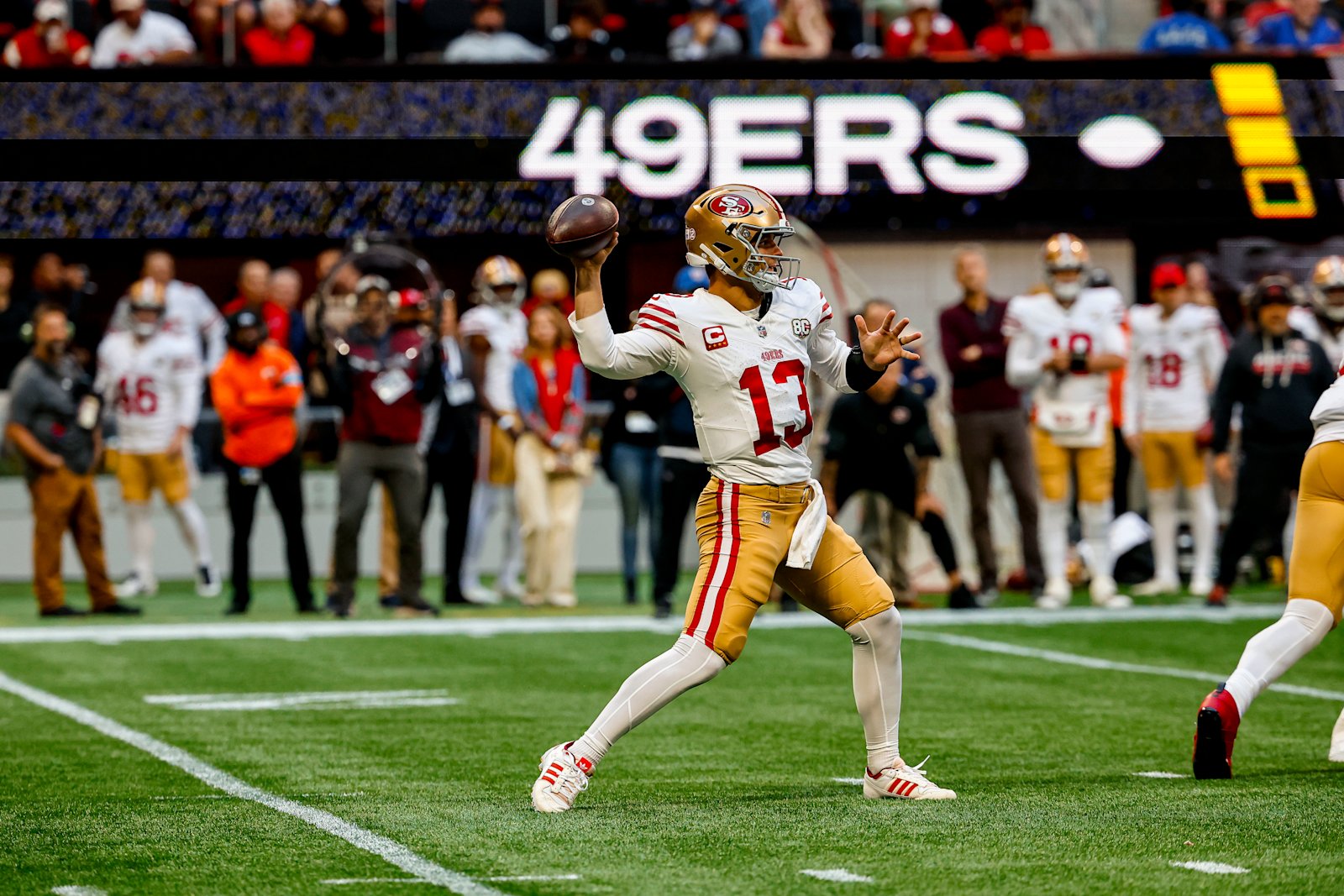
The San Francisco 49ers finally lost a football game Sunday. According to the Dual Eights Efficiency Index, they're still the best team in the NFL.
San Francisco's 29-20 loss in Atlanta trimmed its lead, but seven weeks of consistently strong offensive performance have given the 49ers enough of a cushion to remain first in both our Efficiency and Power rankings.
Elsewhere, Week 7 produced some significant movement.
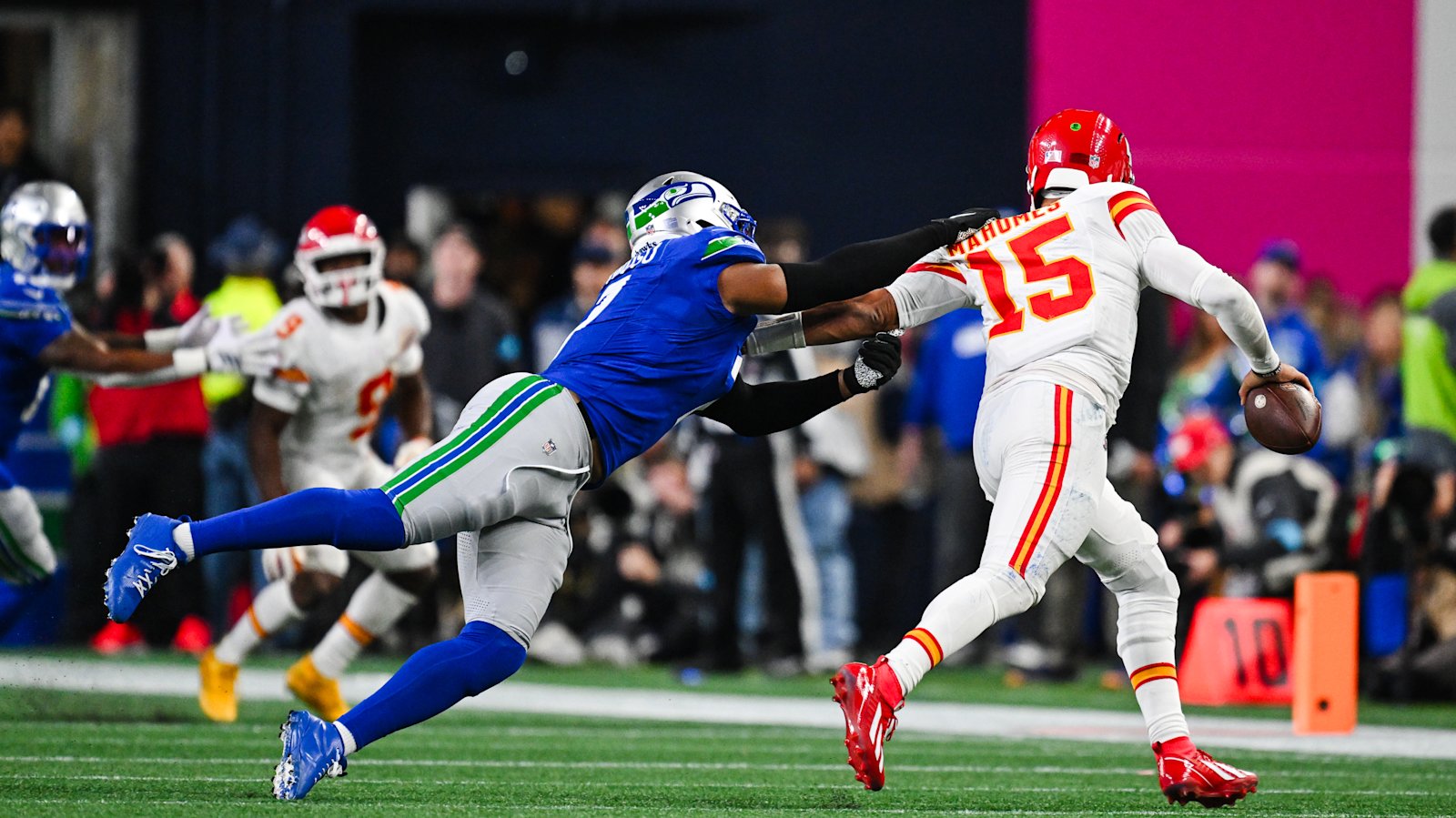
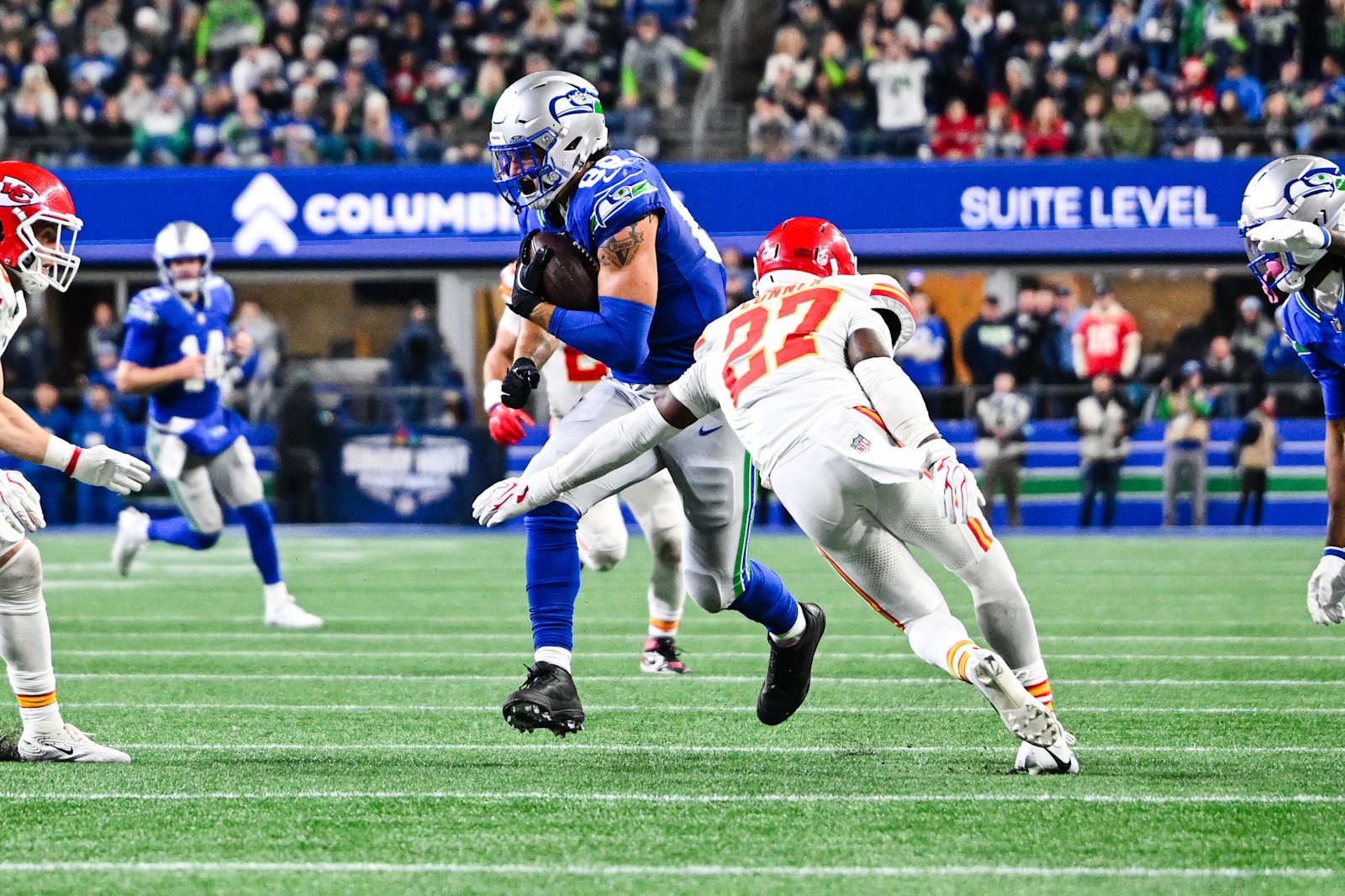
Seattle's defense delivered the most impressive performance of the week, holding the previously unbeaten Kansas City Chiefs to three points and pushing the Seahawks into third. Tampa Bay demolished Carolina 43-13 and jumped six places into the top 10, despite having a 2-5 record.
The Buccaneers are now sixth in Efficiency. Yes, sixth.
Meanwhile, Minnesota remains undefeated at 6-0 but continues to rank considerably lower in our forward-looking Power Index. The Vikings have one of the league's best defenses and one of its worst offenses, a combination that keeps winning games without entirely convincing the model that Minnesota belongs among the NFL's elite.
And then there are the Ravens.
Baltimore's 35-13 collapse against Cincinnati dropped the Ravens three positions to 14th, their lowest Efficiency ranking since we introduced the Power Index. However, DEPI still places them eighth, provided Lamar Jackson is healthy enough to return.
That distinction between what teams have actually produced and what we expect them to do next is becoming increasingly important.
Week 7 Dual Eights Efficiency Index Top 10
| Rank | Team | Record | Index | Week 6 | DEPI Rank |
|---|---|---|---|---|---|
| 1 |  San Francisco 49ers |
6-1 | 68.6 | 1 (—) | 1 |
| 2 |  Jacksonville Jaguars |
4-2 | 67.1 | 2 (—) | 6 |
| 3 |  Seattle Seahawks |
4-3 | 65.4 | 5 (↑2) | 9 |
| 4 |  Chicago Bears |
5-2 | 63.3 | 4 (—) | 4 |
| 5 |  Cincinnati Bengals |
4-2 | 62.7 | 7 (↑2) | 5 |
| 6 |  Tampa Bay Buccaneers |
2-5 | 61.3 | 12 (↑6) | 10 |
| 7 |  Kansas City Chiefs |
5-1 | 60.1 | 3 (↓4) | 12 |
| 8 |  Minnesota Vikings |
6-0 | 59.5 | 6 (↓2) | 16 |
| 9 |  Detroit Lions |
4-2 | 58.3 | 13 (↑4) | 7 |
| 10 |  Buffalo Bills |
5-1 | 56.7 | 9 (↓1) | 2 |
Index scores are rounded to one decimal. Movement compares with Week 6.
1. San Francisco 49ers — 68.6
6-1 | Week 6: 1 | DEPI: 1 (+7.37)
The 49ers finally stumbled, but their first defeat wasn't enough to knock them from the top.
Atlanta's 29-20 victory reduced San Francisco's Efficiency rating by 0.84 points, narrowing its lead over Jacksonville to 1.46. That's a meaningful difference, but not enough to overcome everything the 49ers accomplished through their opening six victories.
San Francisco's offense remains the foundation. The 49ers are averaging +0.175 expected points added (EPA) per offensive play, with a success rate of 53.3%. That means they are consistently creating positive situations rather than depending entirely on occasional explosive plays.
Interestingly, the model's opponent-adjusted offensive component actually improved slightly this week. The decline came primarily from defense and special teams.
There are legitimate reasons to reassess a team after its first loss, particularly when the defense struggles. But there is little reason to discard six weeks of excellent performance because Atlanta produced an upset.
DEPI agrees, keeping the 49ers first at +7.37 points. That rating did decline by approximately 0.78 points.
San Francisco remains the team everyone else is chasing.
2. Jacksonville Jaguars — 67.1
4-2 | Week 6: 2 | DEPI: 6 (+4.06)
Jacksonville didn't play in Week 7, but the Jaguars remain close enough to San Francisco that another strong performance could restore their position at the top.
The Jaguars' offensive efficiency stands at +0.158 EPA per play, with the defense allowing -0.033. That's a particularly appealing combination because it doesn't require one unit to compensate for severe weaknesses elsewhere.
Jacksonville's second-place Efficiency ranking makes sense based on its current production.
The Power Index is a little more cautious.
DEPI ranks the Jaguars sixth at +4.06, indicating that their current-season performance is stronger than the model's expectation for future games.
That isn't necessarily a criticism. Jacksonville has demonstrated that it can play at an elite level. The question is whether seven weeks provide enough evidence to assume that level will continue.
The Jaguars fell from fourth to sixth in DEPI during their bye, a change driven by the model's reassessment of team strength across the league rather than anything Jacksonville did on the field.
3. Seattle Seahawks — 65.4
4-3 | Week 6: 5 | DEPI: 9 (+2.76)
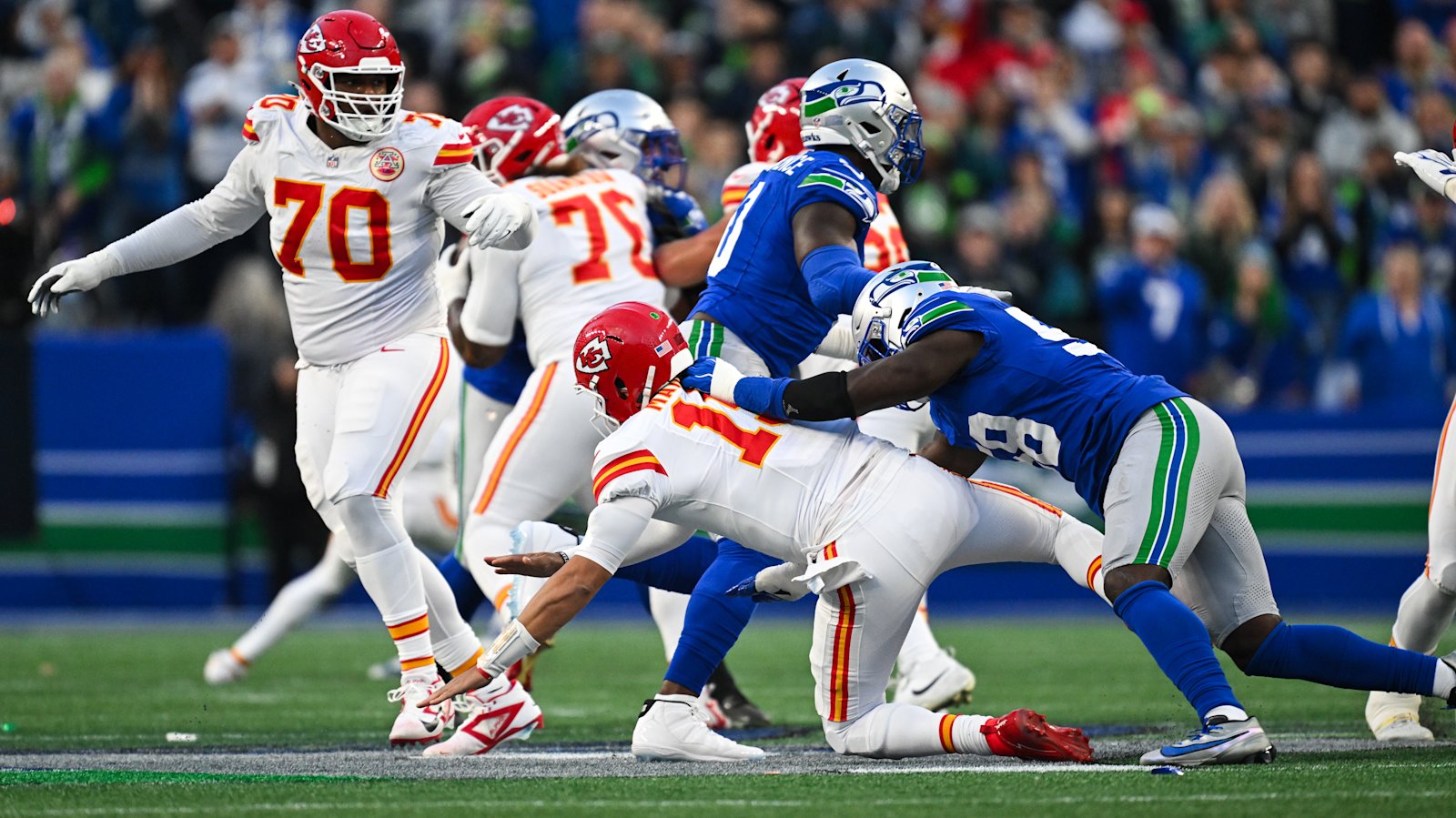
Seattle made the loudest statement of Week 7.
Holding the undefeated Chiefs to three points in a 20-3 victory is impressive under almost any circumstances. Doing it against an offense that had averaged +0.121 EPA per play entering the updated rankings is even more convincing.
Seattle's defense has now allowed -0.134 EPA per play this season, while opposing offenses have succeeded on just 36.5% of their snaps. The Week 7 performance improved Seattle's opponent-adjusted offense and defense, lifting its overall Efficiency score by 3.45 points.
What keeps the Seahawks from being ranked higher in DEPI is their offense.
The forward-looking model values Seattle's defense at +3.08 points and special teams at +0.79, but projects the offense to contribute 1.10 points below average.
That leaves Seattle ninth in DEPI despite ranking third in Efficiency.
There is a reasonable argument that an exceptional defense and strong special teams can carry a team further than the model currently expects. Seattle just demonstrated that against one of the NFL's best opponents.
But there is also a difference between winning games with dominant defense and consistently beating other elite teams when the defense isn't having its best afternoon.
The Seahawks have established their defensive credentials. Their offensive limitations remain the question.
4. Chicago Bears — 63.3
5-2 | Week 6: 4 | DEPI: 4 (+4.60)
Chicago continues to look like one of the NFC's more credible contenders, improving to 5-2 with a 30-24 victory over New England.
The Bears remain fourth in Efficiency, although their score actually declined slightly following the victory.
The primary reason was a weaker opponent-adjusted defensive performance. Chicago's defense is allowing opposing offenses to succeed on 41.2% of plays, while its own offense has generated +0.049 EPA per play.
Those numbers are solid rather than overwhelming, but the Bears have assembled a balanced enough profile to consistently compete.
Unlike Seattle or Minnesota, there isn't a substantial disagreement between the two indexes.
DEPI also ranks Chicago fourth at +4.60. The Rams are third at +4.63, a difference of less than four hundredths of a point.
For practical purposes, those teams are virtually tied.
Chicago's Week 8 trip to Seattle should be particularly interesting. The Efficiency rankings favor the Seahawks, while the Power Index gives Chicago a slight advantage even after accounting for Seattle's home field.
We'll return to that matchup later.
5. Cincinnati Bengals — 62.7
4-2 | Week 6: 7 | DEPI: 5 (+4.16)
The Bengals provided Ravens fans with an extremely unpleasant demonstration of their offensive capabilities Sunday. Cincinnati entered halftime trailing 13-0, then scored 35 unanswered points to turn what appeared to be a promising afternoon for Baltimore into a blowout.
The Bengals' offense generated approximately +0.331 EPA per play against the Ravens, an exceptional single-game number. Their opponent-adjusted defense also improved, though that performance needs to be viewed in the context of Tyler Huntley starting instead of Lamar Jackson.
The result added 3.62 points to Cincinnati's Efficiency rating and lifted the Bengals two positions into the top five. For the season, Cincinnati's offense is averaging +0.109 EPA per play with a 48.5% success rate.
The more encouraging development for Cincinnati is that both sides of the ball contributed to the improvement. The offense has enough talent to overwhelm opponents when the protection and timing are functioning. If the defense can consistently put opposing offenses into difficult situations, the Bengals become considerably more dangerous.
DEPI ranks Cincinnati fifth at +4.16, making it one of the teams where current production and future expectations align almost perfectly.
That's not great news for the Ravens.
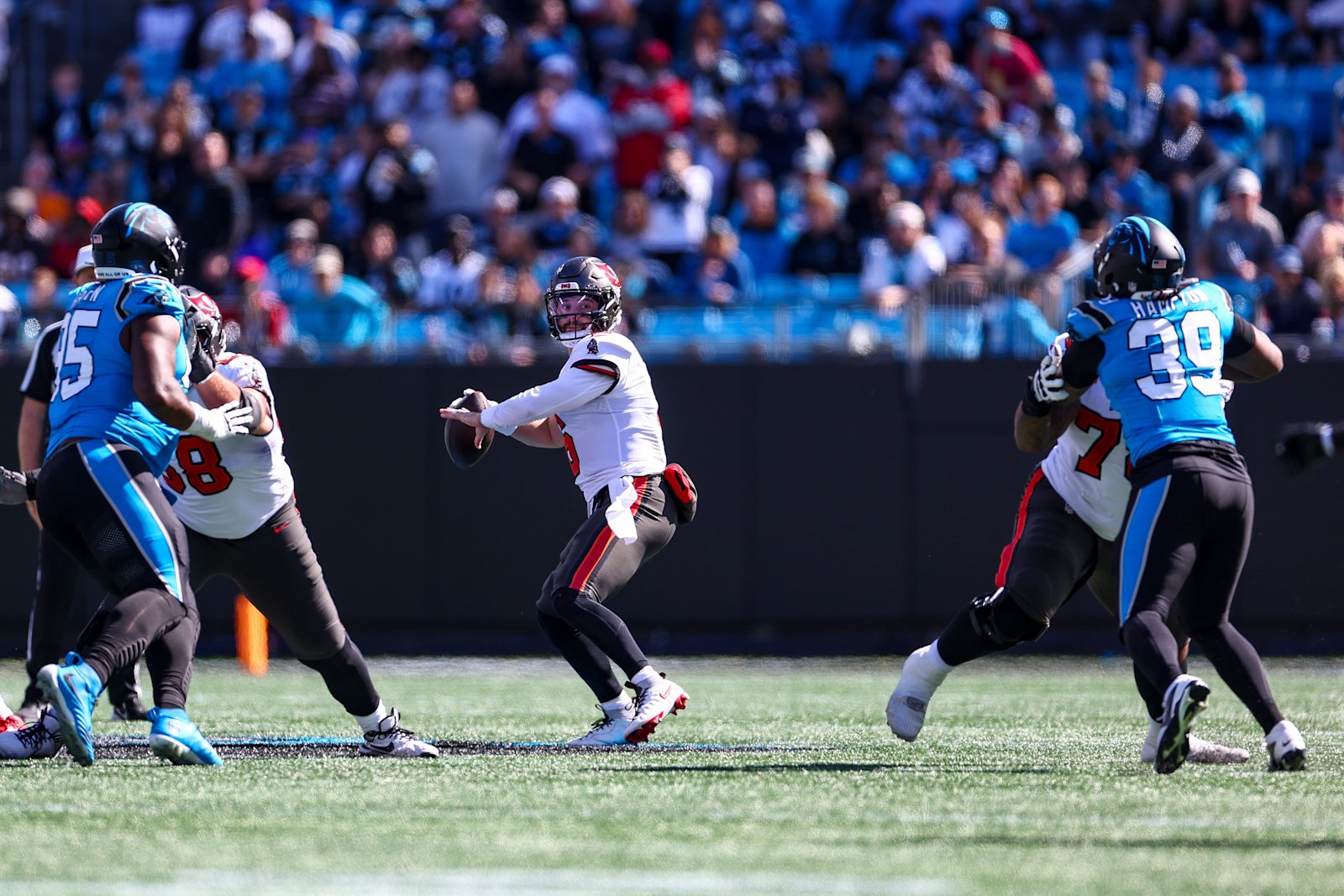
6. Tampa Bay Buccaneers — 61.3
2-5 | Week 6: 12 | DEPI: 10 (+2.10)
Tampa Bay might be the most confusing team in football.
The Buccaneers are 2-5. They are also sixth in our Efficiency Index following the largest improvement of Week 7.
Their 43-13 demolition of Carolina improved the index by 6.16 points and moved Tampa Bay up six positions.
What makes the improvement particularly encouraging is that all three components contributed. The defense supplied the biggest gain, the offense wasn't far behind, and special teams also improved.
Tampa Bay's defense is now allowing -0.109 EPA per play over the season, which is the strongest argument for taking the Buccaneers seriously despite their record. The offense, however, is still averaging -0.081 EPA per play. One excellent afternoon doesn't erase an otherwise inefficient start.
The Buccaneers have demonstrated enough defensive ability, and enough improvement elsewhere, to suggest they are better than their record. Though DEPI is somewhat less enthusiastic, ranking them 10th at +2.10.
But both models now view Tampa Bay as an above-average team.
At some point, the Buccaneers need to translate that underlying improvement into actual victories. A 2-5 record still creates a difficult path to the postseason, regardless of how impressive the efficiency numbers become.
7. Kansas City Chiefs — 60.1
5-1 | Week 6: 3 | DEPI: 12 (+1.27)
Kansas City's unbeaten start came to an abrupt end in Seattle, and the Efficiency Index responded.
The Chiefs lost 5.21 index points, dropping four places to seventh.
The model recorded deterioration in all three components, with the opponent-adjusted defense contributing the largest share of the decline.
Of course, the offense scoring three points wasn't exactly a ringing endorsement of its afternoon, either.
Kansas City still averages +0.121 offensive EPA per play for the season, which is a reminder that one awful outing does not erase everything the unit has done.
But the Power Index has been skeptical of the Chiefs for several weeks.
Despite a 5-1 record, Kansas City ranks only 12th in DEPI at +1.27. That rating fell from approximately +2.75 entering the week.
This is a substantial disagreement between reputation, record and underlying projections.
The Chiefs have demonstrated they can win games. What they haven't consistently demonstrated, according to our models, is the level of dominance we normally associate with a top-tier championship contender.
Seattle exposed that gap rather dramatically.
8. Minnesota Vikings — 59.5
6-0 | Week 6: 6 | DEPI: 16 (-0.22)
Minnesota remains undefeated.
The Vikings are also one of the league's least efficient offensive teams.
Both statements are true, and figuring out how long they can coexist is becoming one of the more interesting questions of the season.
Minnesota beat Indianapolis 16-10 to improve to 6-0, but its Efficiency score declined by 2.31 points.
The defense remains extraordinary.
The Vikings allow -0.197 EPA per play, with opposing offenses succeeding on just 34.9% of snaps. That's the kind of defensive performance that can win games almost independently.
Unfortunately, the offense appears increasingly willing to test that theory.
Minnesota is averaging -0.090 EPA per offensive play with a success rate of just 36.0%.
DEPI quantifies the imbalance. It projects the offense at -4.05 points, partially offset by a +2.81 defensive contribution and +1.00 from special teams.
The result is a Power Index rating of -0.22, placing the undefeated Vikings 16th.
There is a legitimate counterargument here.
Minnesota has won six games. Defense and special teams are real football, not statistical inconveniences. And continually forcing opponents into inefficient possessions can be a sustainable formula when the defensive talent and execution are good enough.
But championship-caliber offenses eventually find ways to score, even against excellent defenses. When that happens, can Minnesota consistently answer?
The Vikings have earned every one of their victories. They haven't yet demonstrated that their current formula provides a realistic championship ceiling.
9. Detroit Lions — 58.3
4-2 | Week 6: 13 | DEPI: 7 (+3.05)
Detroit returns to the top 10 following a hard-fought 20-17 victory over Green Bay.
The Lions climbed four positions and gained 3.53 Efficiency points, with the defense and special teams providing most of the improvement.
That's encouraging because Detroit's offense has never really been the biggest concern.
The Lions are averaging +0.164 EPA per offensive play with a 50.0% success rate. Those are excellent numbers, comparable to the production of teams ranked considerably higher.
The defense remains the problem.
Detroit is allowing +0.140 EPA per play, a poor number for a team with serious championship ambitions.
One encouraging defensive performance doesn't suddenly resolve a season-long weakness. But the Lions don't necessarily need their defense to become dominant. They need it to become competent enough that their offense isn't constantly forced to overcome what happens on the other side of the ball.
DEPI ranks Detroit seventh at +3.05, slightly ahead of its current Efficiency position.
The Power Index sees an offensive foundation strong enough to keep the Lions among the NFC contenders.
If the defense continues improving, Detroit has considerable room to climb.
10. Buffalo Bills — 56.7
5-1 | Week 6: 9 | DEPI: 2 (+4.95)
Buffalo rounds out the top 10 despite spending Week 7 on a bye.
The Bills are another team whose offensive and defensive profiles point in dramatically different directions.
Buffalo averages +0.215 offensive EPA per play, one of the strongest figures in the league.
Defensively, the Bills are allowing +0.135 EPA per play and a 47.7% opposing success rate.
That's an enormous disparity.
The Efficiency Index sees a team whose exceptional offensive performance is being dragged down by a defense that hasn't consistently held up.
DEPI is far more optimistic, ranking Buffalo second at +4.95.
The Power Index expects the Bills' offense to remain dangerous enough to compensate for many of those defensive problems. There is no question that Buffalo can beat almost anyone when its offense is functioning at a high level.
Whether the defense can become reliable enough to support a serious postseason run remains the much bigger question.
Buffalo is also barely holding onto its top-10 Efficiency position, sitting just 0.11 index points ahead of the Rams.
Its Week 8 matchup with Baltimore should be especially revealing, particularly if Lamar Jackson returns.
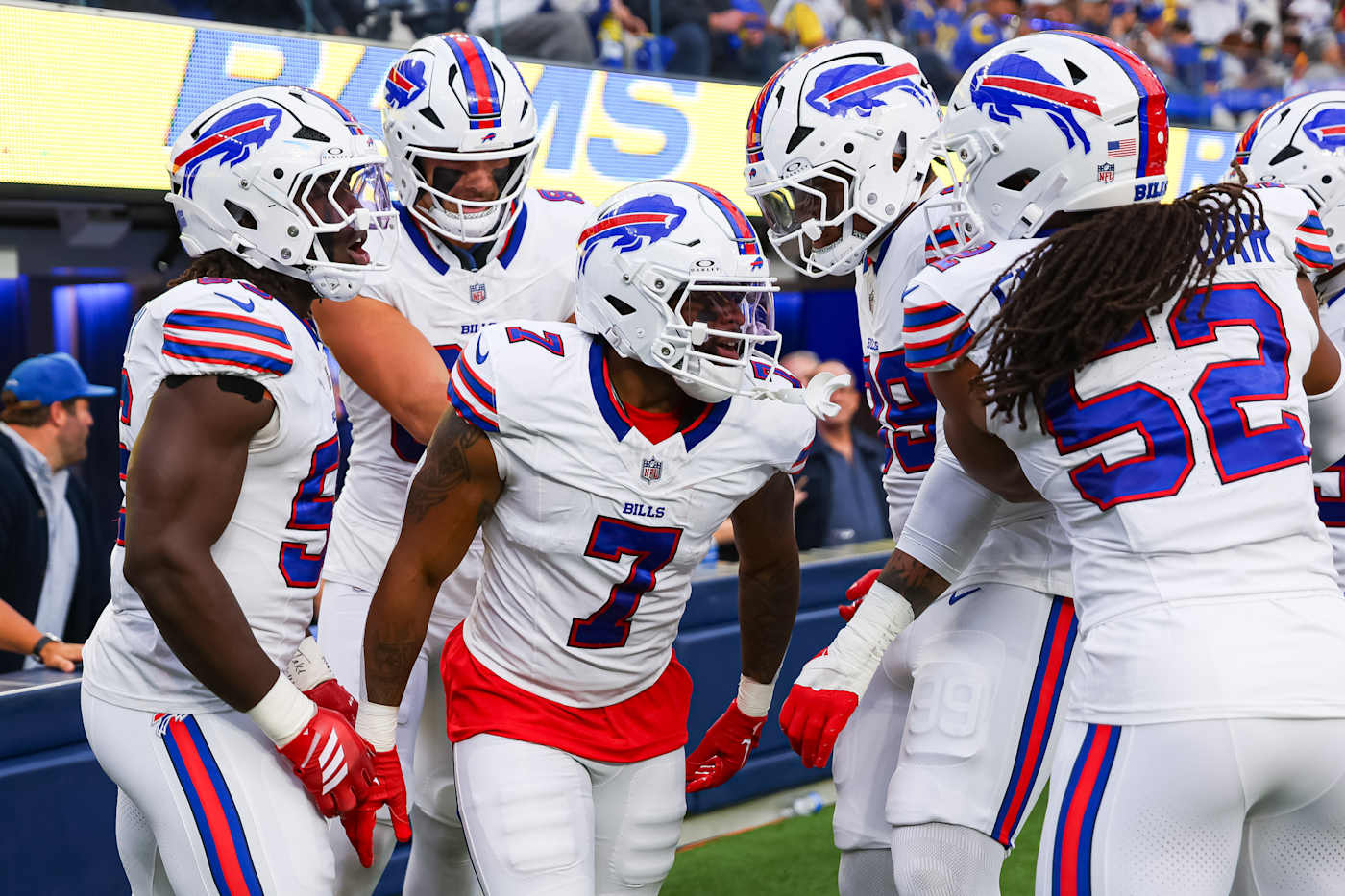
Where Are the Ravens? A Fall to 14th With a Major Quarterback Qualification
The Ravens were fifth in Efficiency after Week 5.
Two consecutive losses have dropped them all the way to 14th.
Their 35-13 defeat against Cincinnati produced another 2.60-point decline, moving Baltimore three places from its Week 6 position of 11th.
That is obviously concerning, and the manner of Sunday's defeat only makes the situation more frustrating.
The Ravens entered halftime leading 13-0. They had controlled much of the opening half despite playing with Tyler Huntley at quarterback.
Then Cincinnati scored 35 unanswered points.
This wasn't merely an offense struggling without Lamar Jackson. The defense allowed Joe Burrow and Cincinnati to repeatedly move the football and score during the second half. The Ravens failed to turn an excellent opening 30 minutes into anything resembling a competitive finish.
Read the Ravens' official Week 7 recap.
The Efficiency Index doesn't give Baltimore credit for having Lamar Jackson on the roster. It evaluates the football the Ravens actually played, and the last two weeks haven't been good enough.
The Power Index takes a different approach.
DEPI still ranks Baltimore eighth at +2.78, reflecting the model's expectation of what the Ravens should look like with Jackson as their starting quarterback. The eighth-place rating is not a prediction of how a Huntley-led Ravens team would perform next Sunday. It assumes Lamar's return to the lineup.
The Ravens have fallen to 4-3, including an 0-2 record in the AFC North. Their second-half performances have become particularly concerning, and the defense has repeatedly struggled to finish possessions.
Those are problems that don't automatically disappear when Lamar returns.
For now, Baltimore's placement reflects two competing realities: a team that has played like a middle-of-the-pack contender over seven weeks, and a roster that the forward-looking model still believes is capable of considerably more.
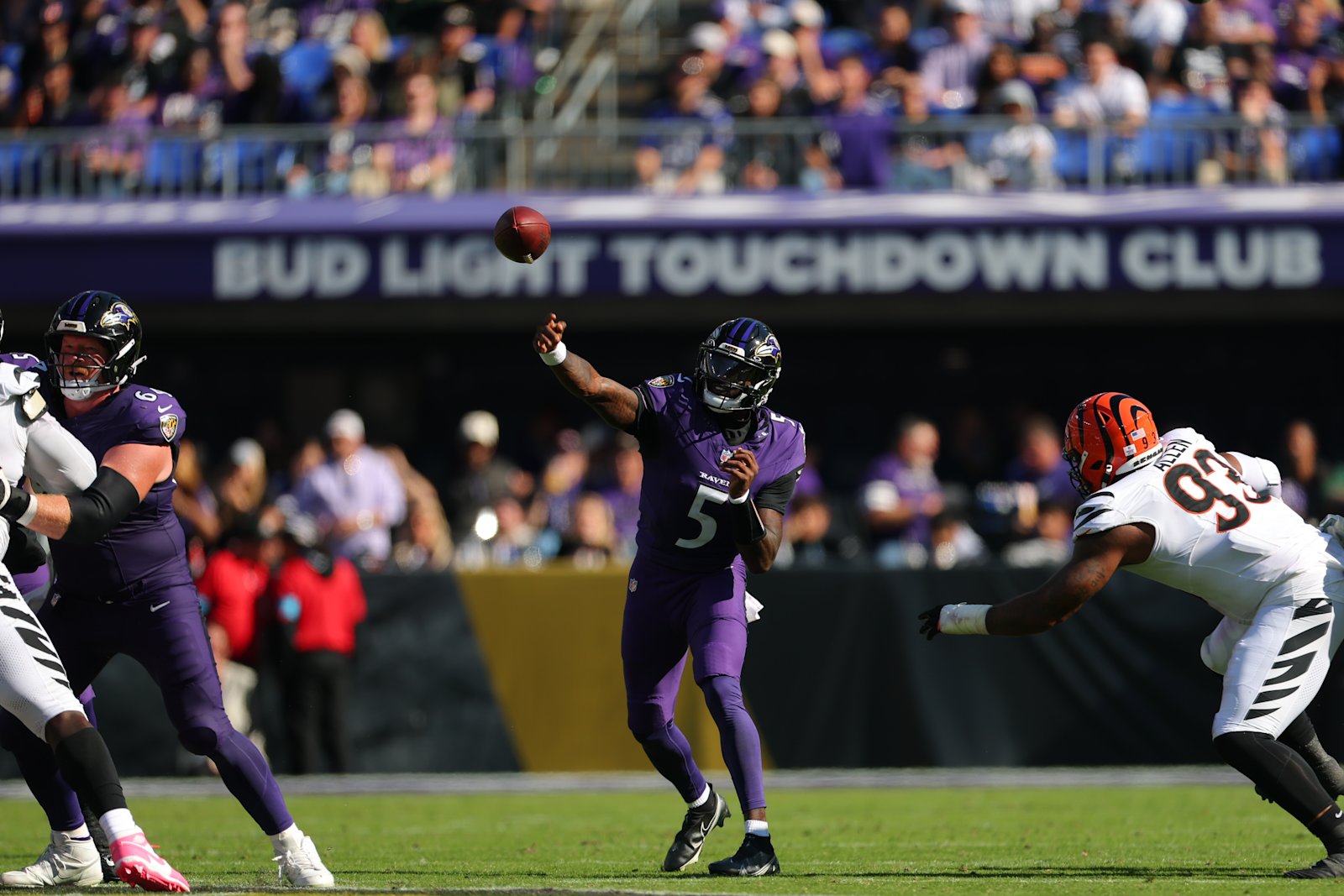
Biggest Risers: Tampa Bay Makes the Biggest Move
| Team | Week 6 → Week 7 | Change | Index Gain |
|---|---|---|---|
| Tampa Bay Buccaneers |
12 → 6 | ↑6 | +6.16 |
 Los Angeles Rams |
16 → 11 | ↑5 | +5.68 |
| Detroit Lions |
13 → 9 | ↑4 | +3.53 |
 Dallas Cowboys |
28 → 24 | ↑4 | +3.39 |
 Atlanta Falcons |
22 → 18 | ↑4 | +2.47 |
Tampa Bay's climb is the headline, but the Rams deserve attention.
Los Angeles jumped five places to 11th after beating Las Vegas 35-21. The Rams gained 5.68 Efficiency points and now sit just 0.11 points outside the top 10.
DEPI is even more optimistic, ranking the Rams third overall.
That suggests the model still believes Los Angeles has substantial underlying strength, even if its current-season results haven't consistently supported that conclusion.
Detroit's improvement is also significant because it came primarily from the defense and special teams rather than another exceptional offensive performance.
Dallas, meanwhile, produced its best result of the season on Monday night.
The Cowboys defeated Philadelphia 38-21, rushing for 204 yards while Dak Prescott threw three touchdown passes. Dallas moved up four places in Efficiency, although its 24th-place position shows how much work remains to repair its season-long profile.
Atlanta's jump is particularly interesting.
Beating San Francisco 29-20 was one of the week's most impressive results, and the Falcons climbed four positions in Efficiency. The Power Index responded even more strongly, moving Atlanta six places from 23rd to 17th.
Pittsburgh also deserves mention after rising three places in Efficiency to 16th. The Steelers gained 3.76 index points and climbed six places in DEPI.
Biggest Fallers: Carolina and Kansas City Take the Biggest Hits
| Team | Week 6 → Week 7 | Change | Index Loss |
|---|---|---|---|
 Carolina Panthers |
8 → 15 | ↓7 | -6.62 |
| Kansas City Chiefs |
3 → 7 | ↓4 | -5.21 |
 Indianapolis Colts |
18 → 22 | ↓4 | -1.15 |
 New York Jets |
17 → 20 | ↓3 | -2.70 |
 Baltimore Ravens |
11 → 14 | ↓3 | -2.60 |
 New England Patriots |
10 → 13 | ↓3 | -2.39 |
Carolina's seven-place decline was the largest of Week 7.
The Panthers were eighth in Efficiency entering the week, but their 43-13 loss to Tampa Bay exposed problems throughout the team.
Carolina committed three offensive turnovers and allowed five sacks, repeatedly putting its defense in difficult positions.
The Efficiency Index registered deterioration in offense, defense and special teams. That resulted in a 6.62-point decline, easily the largest in the league.
The Chiefs suffered the second-largest score decline following their loss in Seattle.
New England was the other team to fall out of the top 10, dropping three positions after losing in Chicago.
One additional team deserves attention even though its ranking movement wasn't particularly dramatic.
Las Vegas slipped just two places, from 27th to 29th, but its Efficiency score fell 5.18 points.
That's nearly as large a deterioration as Kansas City's.
Rank movement can sometimes disguise significant changes in performance. When several teams are clustered close together in the ratings, a considerable score decline might translate into only a modest change in position.
That is why the underlying index movement matters as much as the arrows.
The Dual Eights Power Index: San Francisco Leads, Buffalo and the Rams Remain Strong
Seven weeks into the season, the Power Index has developed some interesting disagreements with the current-season Efficiency rankings.
Here are the top 10 teams heading into Week 8.
| Rank | Team | DEPI Rating | Week 6 | Efficiency Rank |
|---|---|---|---|---|
| 1 | San Francisco 49ers |
+7.37 | — | 1 |
| 2 | Buffalo Bills |
+4.95 | — | 10 |
| 3 | Los Angeles Rams |
+4.63 | ↑2 | 11 |
| 4 | Chicago Bears |
+4.60 | ↓1 | 4 |
| 5 | Cincinnati Bengals |
+4.16 | ↑2 | 5 |
| 6 | Jacksonville Jaguars |
+4.06 | ↓2 | 2 |
| 7 | Detroit Lions |
+3.05 | ↑3 | 9 |
| 8 | Baltimore Ravens |
+2.78 | ↓2 | 14 |
| 9 | Seattle Seahawks |
+2.76 | ↑2 | 3 |
| 10 | Tampa Bay Buccaneers |
+2.10 | ↑2 | 6 |
Ratings represent estimated points above or below an average NFL team on a neutral field, using the model's assumed starting quarterbacks.
The Biggest Differences Between Efficiency and DEPI
Four teams stand out.
Buffalo: 10th in Efficiency, second in DEPI.
The model expects Buffalo's exceptional offensive production to carry forward, even though the defense has been a significant weakness. The Bills have the profile of a team that can win a shootout against almost anyone but may have trouble consistently controlling games.
Los Angeles Rams: 11th in Efficiency, third in DEPI.
The Rams have been inconsistent this season, but the Power Index continues to project considerably better performances than their results alone would suggest. Their five-place Efficiency climb this week offers some support for that optimism.
Whether this is an accurate projection of a team beginning to recover or a model giving too much weight to historical strength remains an open question.
Seattle: third in Efficiency, ninth in DEPI.
The Seahawks have produced some of the best defensive football in the NFL. The Power Index simply isn't convinced that their offense can consistently support that performance.
Sunday's domination of Kansas City strengthens Seattle's case, but one game doesn't entirely resolve the offensive concerns.
Minnesota: eighth in Efficiency, 16th in DEPI.
The Vikings have the most unusual profile of the group.
Six victories and an excellent defense deserve respect. An offense producing negative EPA with a 36% success rate deserves skepticism.
The Power Index remains unwilling to treat Minnesota as an elite team until there is more evidence that its offense can consistently contribute.
There are compelling arguments on both sides. That's precisely why comparing the two indexes is useful.
Rather than automatically accepting one ranking over another, the gaps help identify what each team's future performance needs to demonstrate.
Where DEPI Disagrees With the Week 8 Betting Market
The most interesting application of the Power Index is comparing its projected margins against the market.
DEPI calculates expected scoring margins using the difference between team ratings, adjusted for home-field advantage. The current fitted home-field adjustment is approximately 1.54 points.
Here are several of the largest discrepancies heading into Week 8.
| Matchup | Market Spread | DEPI Spread | Difference | Model Preference |
|---|---|---|---|---|
| Chargers at Rams | LAR -6.5 | LAR -10.8 | 4.33 pts | Rams |
| Bears at Seahawks | SEA -3.5 | CHI -0.3 | 3.81 pts | Bears |
| Cardinals at Cowboys | DAL -6.0 | DAL -3.2 | 2.84 pts | Cardinals |
| Panthers at Packers | GB -3.5 | GB -1.1 | 2.43 pts | Panthers |
| Patriots at Dolphins | NE -7.5 | NE -5.1 | 2.40 pts | Dolphins |
Market snapshot: October 27, 2026, at 9:26 a.m. ET. These comparisons assume each team's default starting quarterback. Spreads and availability can change, and a model discrepancy is not necessarily a profitable betting opportunity.
Week 8 Matchup to Watch: Chicago at Seattle
The most interesting matchup from a model perspective is Monday night's meeting between the Bears and Seahawks.
Both teams rank among the top four in Efficiency.
Seattle just held Kansas City to three points. Chicago has improved to 5-2 and ranks fourth in both indexes.
Yet the market favors Seattle by approximately three to three and a half points at home, while DEPI makes Chicago a very slight favorite.
The explanation comes from the Power ratings.
Chicago is fourth at +4.60, while Seattle sits ninth at +2.76. That gives the Bears a neutral-field advantage of approximately 1.84 points, slightly more than Seattle's 1.54-point home-field adjustment.
The projected result is essentially a toss-up, with Chicago favored by about 0.3 points.
The difference is Seattle's offense.
The Seahawks' defense is already playing at an elite level, and Sunday's performance suggests it can disrupt even the best offenses in the league.
But Seattle's offensive projection remains below average. The Power Index questions whether the Seahawks can consistently produce enough scoring to take advantage of what their defense provides.
Chicago represents another useful test.
Can the Bears generate enough efficient offense against Seattle's defense to force the Seahawks into a game where their own offense must create points?
Or will Seattle's defense once again control the terms of the matchup, creating favorable field position and allowing its offense to operate without carrying the entire burden?
A Seattle victory wouldn't automatically mean the Power Index was wrong. At these ratings, either team winning a competitive game would be perfectly plausible.
What will be more revealing is how each offense performs.
If Seattle can consistently move the ball against a legitimate opponent, the gap between its Efficiency ranking and Power rating may finally begin to close.
If the Seahawks need another extraordinary defensive performance to survive, the model's skepticism may be justified.
Explore the complete Dual Eights NFL Rankings Dashboard for all 32 teams, updated Efficiency and Power ratings, unit comparisons and methodology. You can also compare upcoming games using our NFL Spreads and Projections.