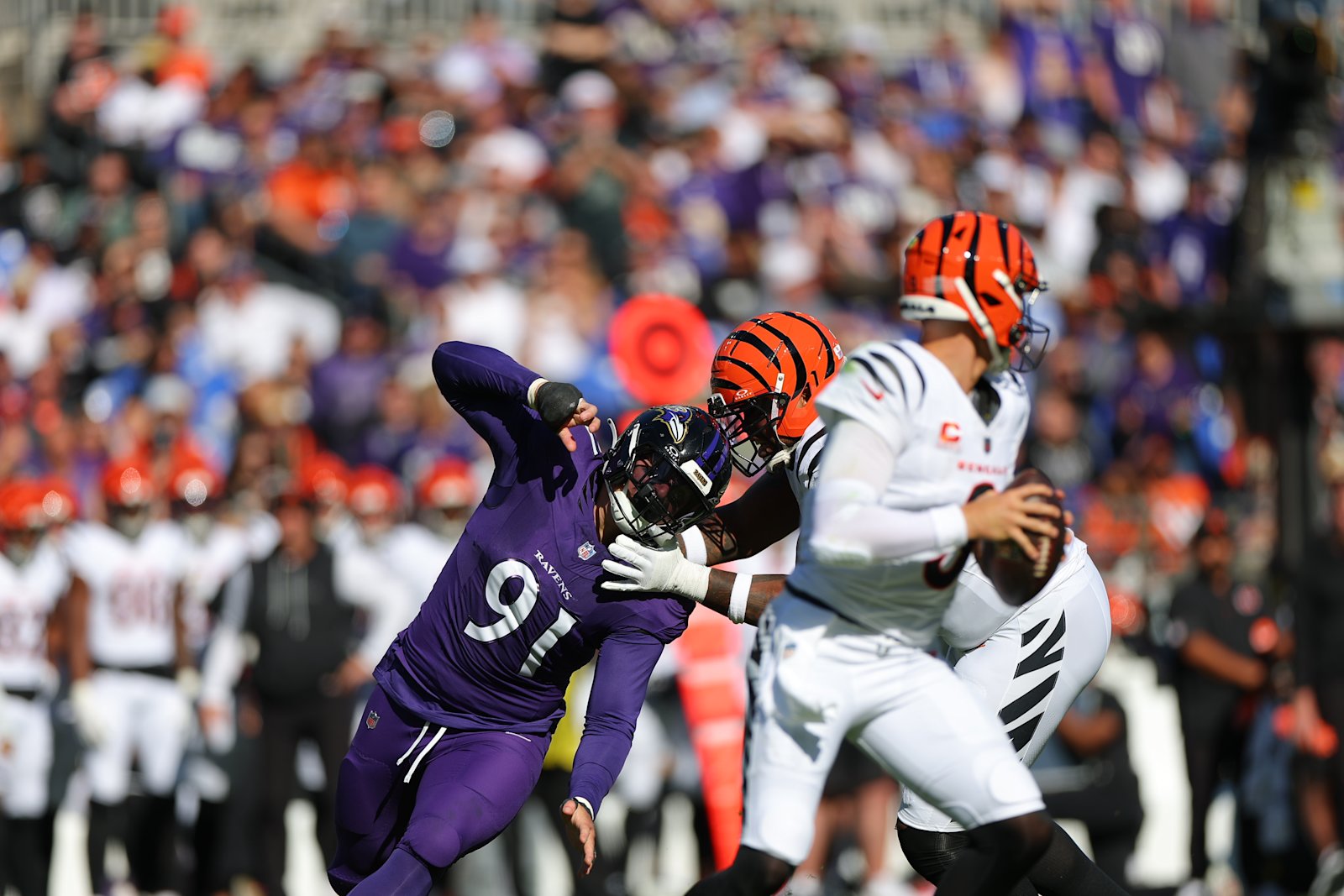
Five immediate takeaways from the Ravens' disastrous 35-13 loss to the Cincinnati Bengals.
Follow the season: The Ravens Season Dashboard tracks the record, advanced team metrics, unit grades, injuries and what comes next.
There is a simple fact in the modern NFL. If you have one of THE GUYS at QB, you have a chance to win it every year. And you do everything you can to keep them around. The downside is when your elite QB on a big contract gets hurt, you are screwed.
Maybe if you have an all time defense you can still compete. But most teams are not going to beat other good teams without their starting QB. This Ravens team is no exception, and these past few weeks have laid bare all the cracks that Lamar covers over.
But if the Ravens think getting Lamar back will magically solve all their problems, they may be in for a rude awakening in the coming weeks
For 30 minutes Sunday, the Ravens looked like a team perfectly capable of beating the Cincinnati Bengals without Lamar Jackson.
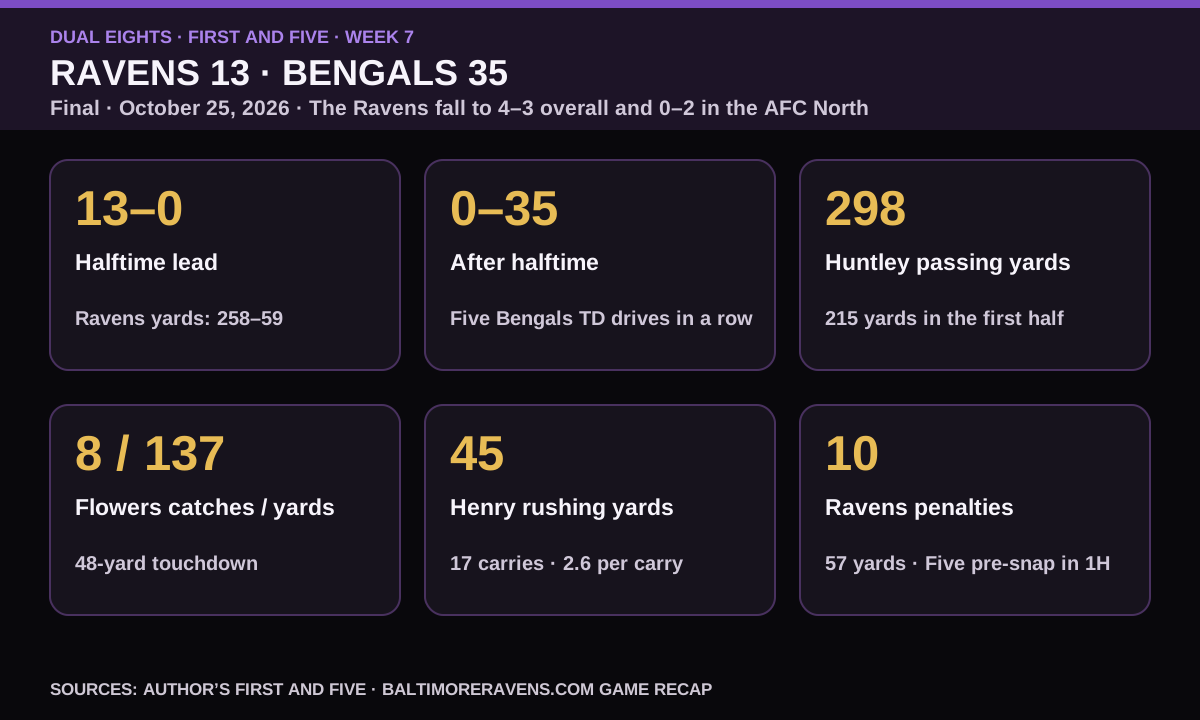
They dominated the first half, outgaining Cincinnati 258-59, converting eight of 11 third downs and holding the ball for more than 22 minutes. Joe Burrow had just 43 passing yards. Tee Higgins didn't have a catch. The Ravens led 13-0, and if anything, the margin should have been considerably larger.
Then halftime happened.
The Bengals scored touchdowns on five consecutive possessions. Burrow became virtually unstoppable. The Ravens couldn't move the football, couldn't tackle and couldn't get anywhere near the quarterback. Cincinnati outscored them 35-0 over the final 30 minutes.
Thirty-five to nothing. In one half. At home. Against a division rival.
Somehow, the Ravens turned one of their most impressive first halves of the season into perhaps their most embarrassing defeat.
1. Without Lamar, the Ravens are playing a different sport
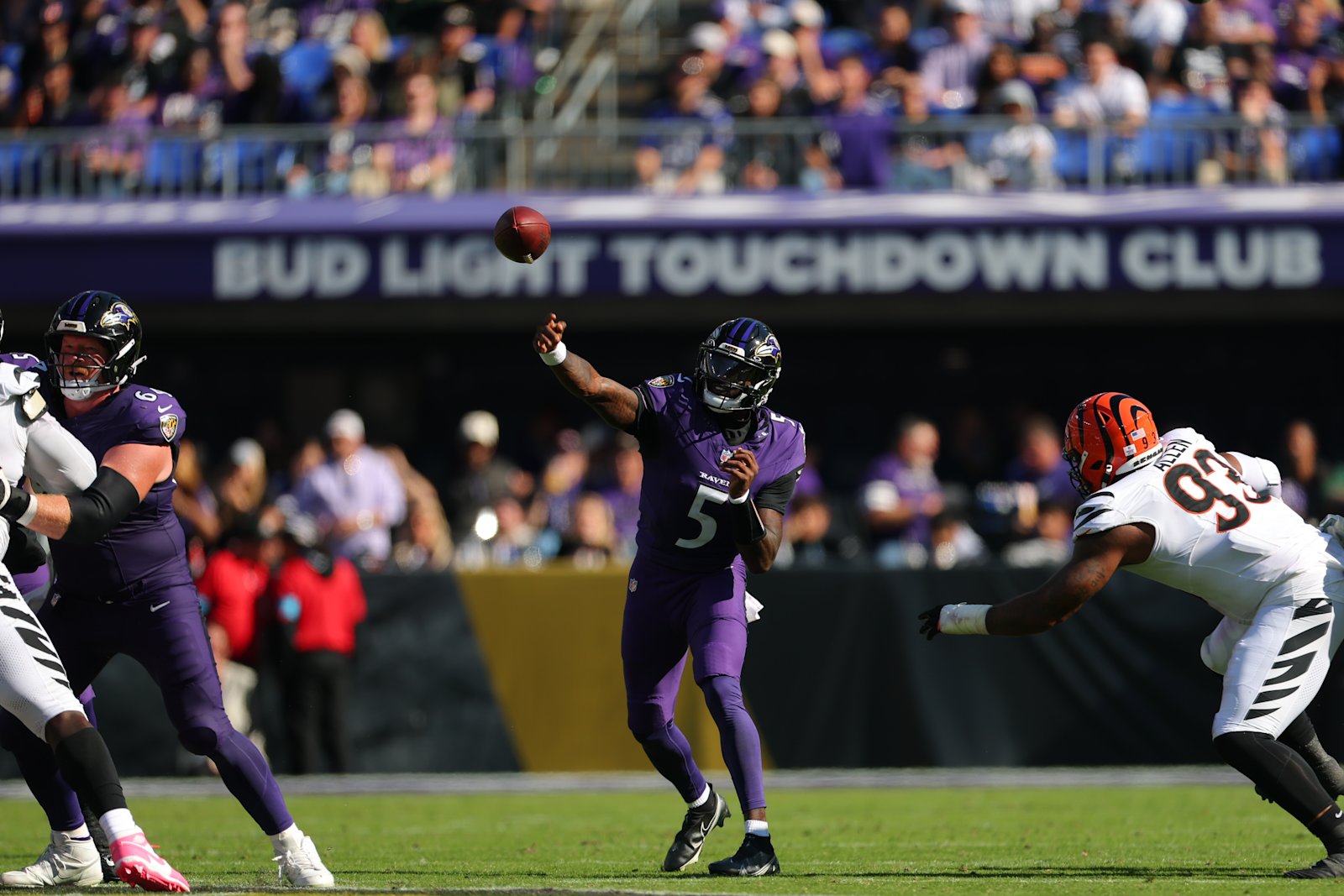
Tyler Huntley deserves credit for keeping Baltimore competitive at times. He led an impressive comeback in Atlanta and played one of the better first halves of his career Sunday, throwing for 215 yards before halftime. He finished with a career-high 298 passing yards.
But he's not Lamar Jackson.
The entire structure of the offense changes without Lamar's running ability. Defenses no longer need to account for an additional ball carrier on every snap. Edge defenders can attack Derrick Henry more aggressively. Linebackers can flow toward the football without worrying about Jackson pulling it away and escaping around the corner.
And when protection breaks down, Huntley cannot consistently turn a defensive victory into a 20-yard gain the way Lamar can.
The result is an offense with considerably less margin for error. That margin gets even smaller when the offensive line is falling apart.
By Friday, I had become convinced Jackson wasn't playing against Cincinnati. His comments were not those of a quarterback who sounded ready to take the field Sunday. He openly acknowledged that running still caused pain and that he couldn't help the team if he couldn't move normally.
I even made a small wager on Cincinnati because I thought the odds still reflected too much optimism about Lamar's availability.
Yet the Ravens continued to treat his status as a legitimate game-time decision. He practiced on a limited basis throughout the week, was officially listed as questionable Friday, and then was ruled out Saturday afternoon.
I understand the competitive advantage of making Cincinnati prepare for two quarterbacks. There is a reason teams don't volunteer more injury information than the league requires.
But this approach does Lamar absolutely no favors.
When the organization spends the week suggesting he might play, only to declare him unavailable the day before the game, it creates the impression that Jackson is backing out of an opportunity to play. His comments Friday suggested something entirely different. He was still dealing with an ankle that wouldn't allow him to function like himself.
That is not a question of toughness. It's a question of whether the Ravens want their most important player limping around the pocket, unable to use the very abilities that make him exceptional.
And that brings us to next week’s showdown with Josh Allen and the Bills. The two quarterbacks are often held up against each other as the two challengers to Mahomes spot in the hierarchy. Unfortunately, at this point you have to concede that Allen has the better chance to take that crown, simply because of his durability.
That is not to question Lamar’s toughness or anything of that nature, but the simple fact is that availability matters and Allen has been on the field more in his career.
Allen hasn't missed a regular-season start since his rookie season in 2018. Jackson has repeatedly lost meaningful stretches of seasons to injuries. That difference matters enormously when your franchise's championship ambitions depend upon having one of the best quarterbacks in football.
The Ravens may face an especially difficult decision in Buffalo next Sunday.
Do they rush Lamar back to try to fix the offense even if he’s not 100% healthy and confident in his ankle? They have a short-week looming with a Thursday night game against Jacksonville to follow.
I wouldn't rush Lamar back for Buffalo if he still cannot move properly. The Ravens other problems make it unlikely they can beat Bills with a compromised Lamar anyway, and having him suffer another setback with a Thursday game immediately afterward would be disastrous.
It is better to get Lamar fully right before getting him back on the field so the team can make the run they need when he returns. There are reasons to believe they can be among the top offenses in the league with Lamar in peak form, and that should be enough to make a push for the playoffs even if they drop the next game or two.
If he can function normally against Jacksonville, fine. Otherwise, the longer break before the November 16 game against the Chargers offers another opportunity to get him healthy and make a run through the second half of the season.
At 4-3 and 0-2 in the division, the Ravens cannot afford to keep losing games. But they also cannot afford to turn a three-week injury into a three-month problem.
Their season still depends upon Lamar.
That doesn't mean every other problem disappears when he returns.
2. Minter's defense has to be better than this
The lack of in-game adjustments on both sides of the ball are starting to become a concern. Declan Doyle at least has the excuse of being stuck with a backup quarterback. The defensive collapses are much more puzzling.
It's seven games into Jesse Minter’s first season as a head coach. That's obviously not enough to make a definitive judgment about his coaching ability, but it is enough to start evaluating what we've actually watched.
And what we've watched is a defense that frequently looks excellent early in games before becoming completely helpless once opponents begin finding answers.
Sunday was the most extreme example yet.
The Ravens were terrific defensively in the first half. Cincinnati managed just 59 yards and couldn't get anything going against Baltimore's pressure looks and coverage disguises.
Burrow completed only six of 12 passes for 43 yards. Higgins was completely erased from the game.
Then Cincinnati made adjustments.
The Bengals began operating more efficiently on early downs, using their conventional passing concepts and getting the football to their best receivers. They improved protection, prevented the Ravens from creating obvious passing situations and eventually started attacking downfield.
Burrow completed 16 of 18 passes for 249 yards and four touchdowns after halftime, producing a perfect 158.3 passer rating.
He wasn't pressured once in the second half, according to the Bengals' postgame statistics.
That's almost impossible to comprehend after what we watched in the first half.
Higgins finished with six receptions for 148 yards, including gains of 44 and 43 yards. Cincinnati generated 298 yards and 18 first downs after halftime.
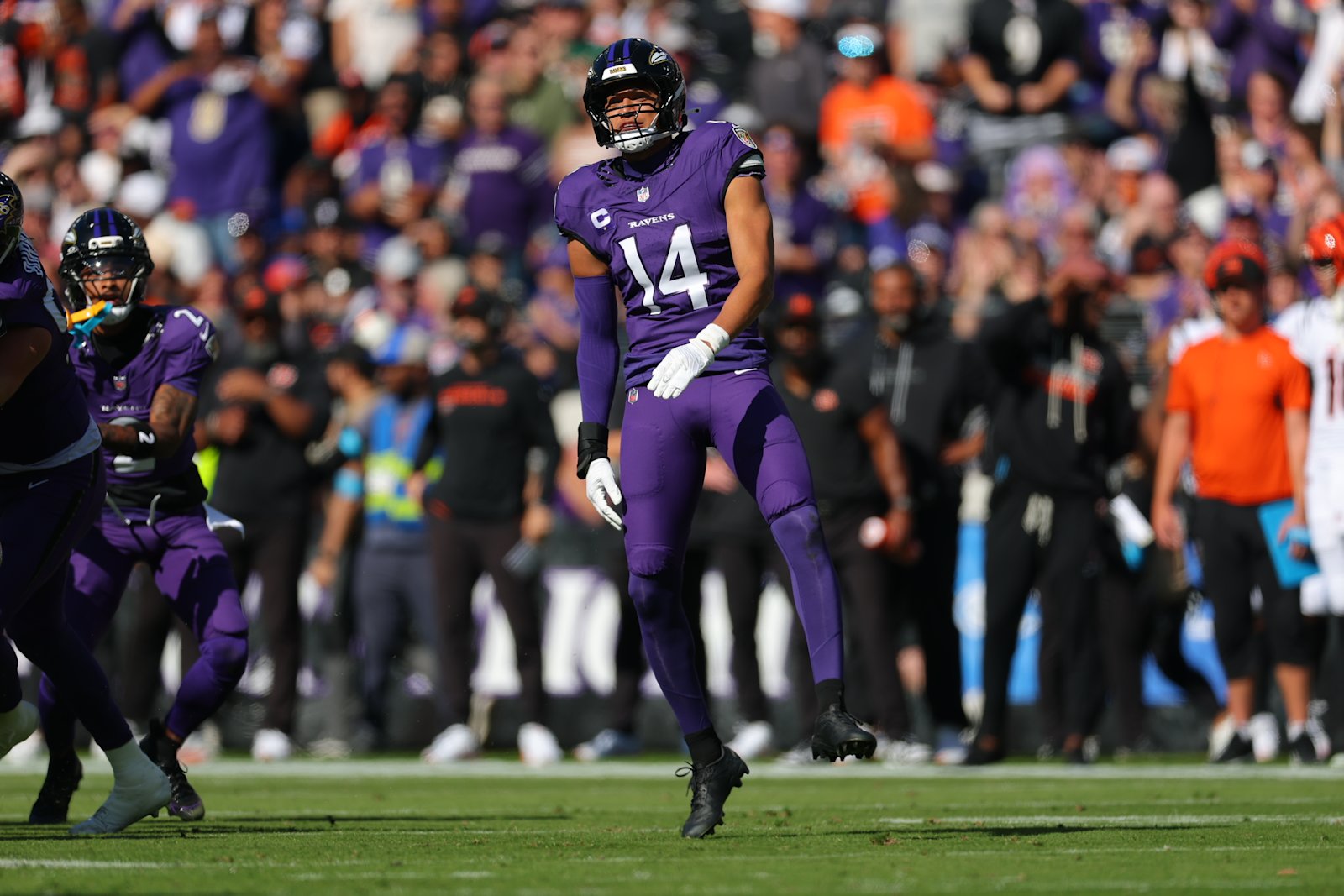
The Ravens defense was completely dismantled while the game was still competitive. Minter and defensive coordinator Anthony Weaver have some legitimate personnel concerns. Jaylinn Hawkins was unavailable, forcing the Ravens to alter their safety rotation and Roquan Smith also suffered a knee injury in the fourth quarter.
But Hawkins' absence doesn't explain why the Ravens were so effective in the first half and so terrible in the second. Smith's injury certainly doesn't explain the two touchdowns Cincinnati scored in the third quarter.
The players deserve plenty of criticism. Hamilton missed opportunities to stop plays in the backfield. Trenton Simpson had a chance to sack Burrow and couldn't finish. Tackling and coverage deteriorated throughout the half.
Minter and Weaver were brought here to fix exactly those problems.
We spent the offseason imagining what Minter could accomplish with Kyle Hamilton, Roquan Smith, Nnamdi Madubuike, Trey Hendrickson and an exceptionally talented collection of defensive backs. We weren't expecting perfection, but we certainly expected a defense capable of handling a few injuries without completely falling apart.
We hoped Minter could be another version of Mike Macdonald. One of the things that made Macdonald exceptional was his ability to recognize what offenses were doing, change the defensive picture and make life progressively more difficult as games developed.
With Minter, we're increasingly seeing the opposite. The opening plan works then the opponent adjusts and the Ravens can’t find an answer.
Maybe the biggest issue is execution. Maybe the injuries are forcing Minter to simplify his coverage. Maybe some of the younger defenders simply aren't ready to handle everything being asked of them.
But when the same thing keeps happening against different opponents, eventually the explanation has to extend beyond individual players missing tackles.
Cincinnati's halftime adjustments weren't particularly revolutionary. Burrow said afterward that the Bengals returned to their basic concepts, protected better and focused on getting Chase and Higgins the football.
The Ravens had no response.
3. Do we owe John Harbaugh an apology?
Remember how many of us blamed John Harbaugh for the Ravens' seemingly endless collection of second-half collapses?
Bad adjustments. Conservative coaching. Poor clock management. An inability to put teams away.
Well, Harbaugh is gone.
The collapses are not.
In fact, this season has taken the problem to an almost comical extreme.
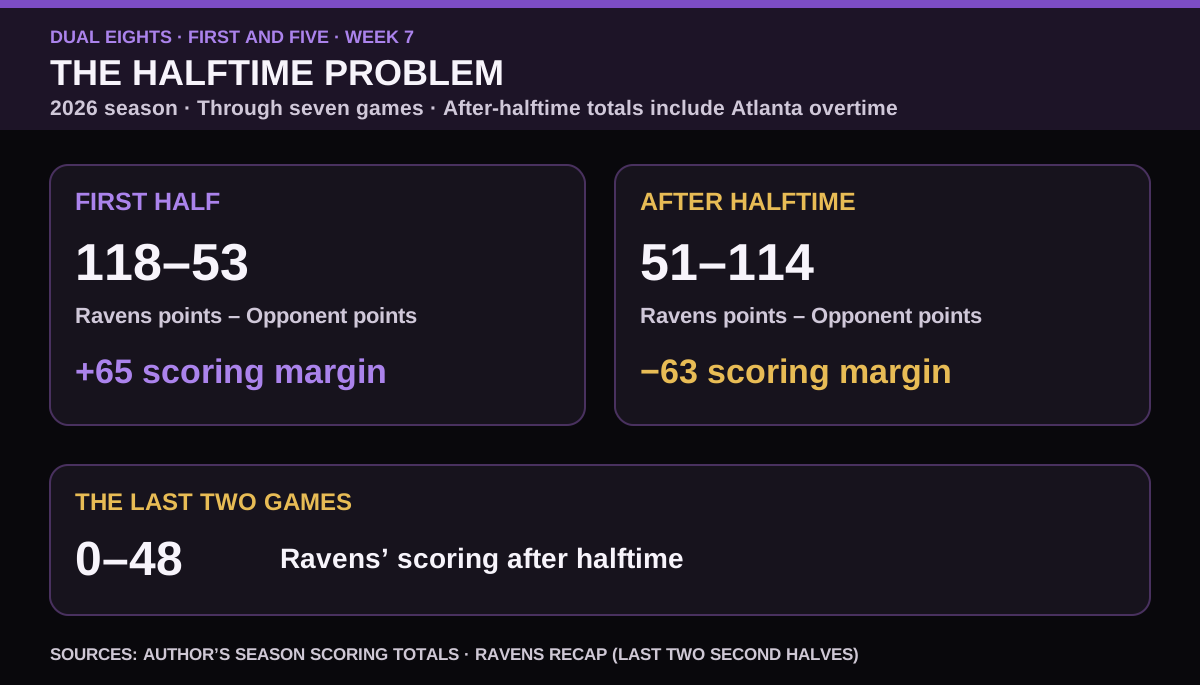
Through seven games, the Ravens have outscored their opponents 118-53 in the first half, a remarkable 65-point advantage.
After halftime, including overtime in Atlanta, they have been outscored 114-51.
That is a 128-point swing between their first-half and second-half scoring margins. The Ravens have now been outscored 48-0 in the second half of their last two games, both against AFC North opponents. They haven't scored a single point after halftime since their dramatic comeback in Atlanta two weeks ago.
This is becoming an organizational specialty nobody ordered.
There is obviously a significant Lamar Jackson caveat. The offense is not nearly as dangerous without him, and Huntley has limitations that eventually become apparent when defenses begin adjusting their approach.
But this problem existed before Lamar got hurt.
The Ravens squandered an eight-point second-half lead against New Orleans with Jackson on the field. They also allowed Dallas to erase an 11-point advantage before Lamar and Tyler Loop rescued them in Brazil.
Minter acknowledged after Sunday's loss that the Ravens have become too dependent upon momentum, playing well when things are going their way and allowing mistakes to snowball when opponents begin making plays.
He's right.
The question is why a coaching staff responsible for managing those situations has been unable to stop the bleeding.
We blamed Harbaugh for years because the team repeatedly failed to protect leads, make adjustments and finish games. Watching those same problems continue under an entirely different staff should probably make us reconsider whether the old coach deserved all the blame.
Harbaugh certainly made mistakes. Some of the criticism was justified, but perhaps the problems were never exclusively about Harbaugh. Maybe there are deeper issues with the personnel, decision-making and veteran leadership on this team.
Maybe the organization was too quick to assume a new voice would solve problems that have persisted through multiple seasons and different coordinators.
Whatever the explanation, the standard hasn't changed.
The Ravens didn't replace an 18-year head coach to become a team that plays excellent football for 30 minutes.
They made the change because they believed a new staff could take an enormously talented roster further.
Right now, they're getting many of the same failures with a different person standing on the sideline.
4. The offensive line is falling apart, and the offense isn't helping itself
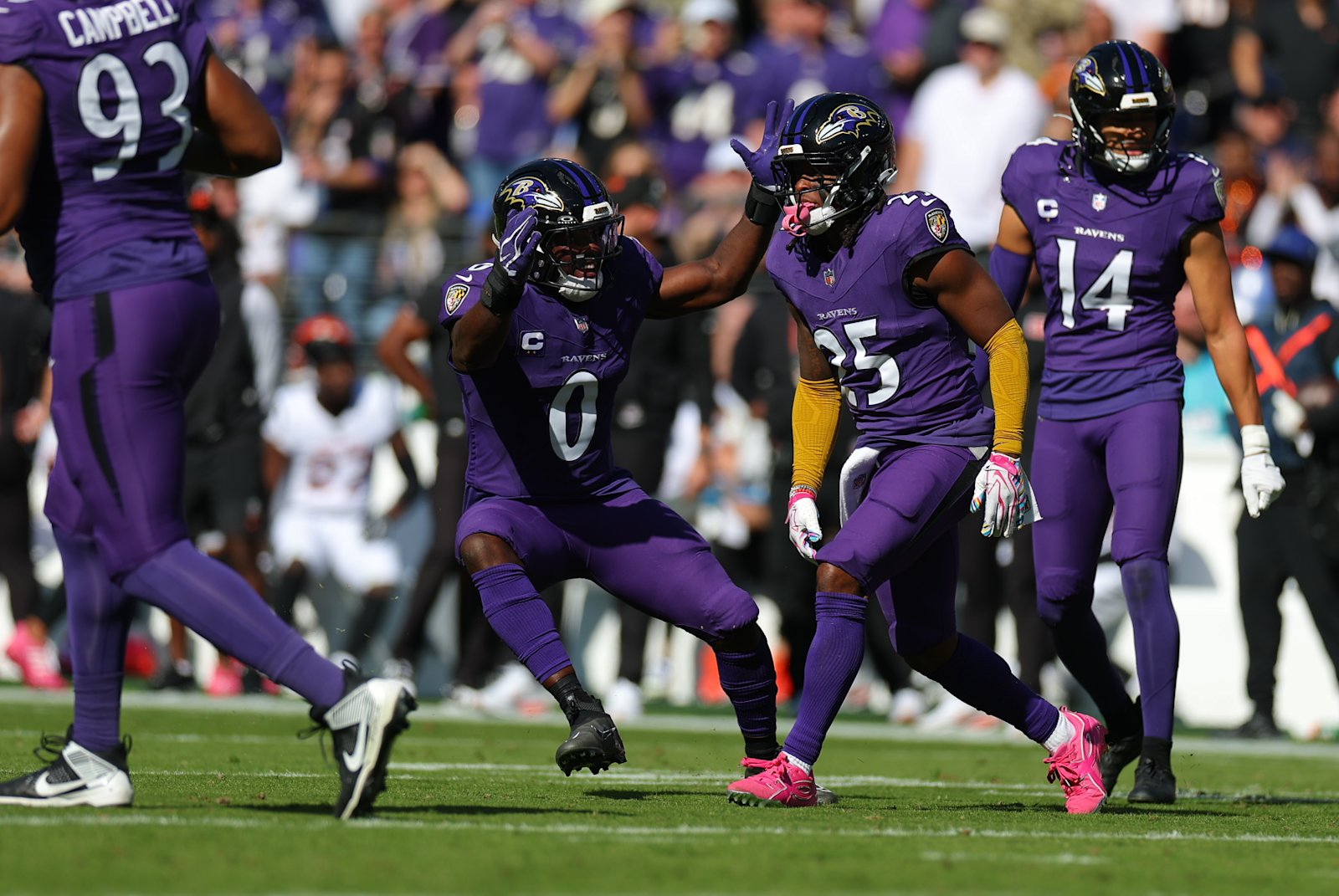
The Ravens finally had something resembling their preferred offensive line Sunday, for less than a quarter.
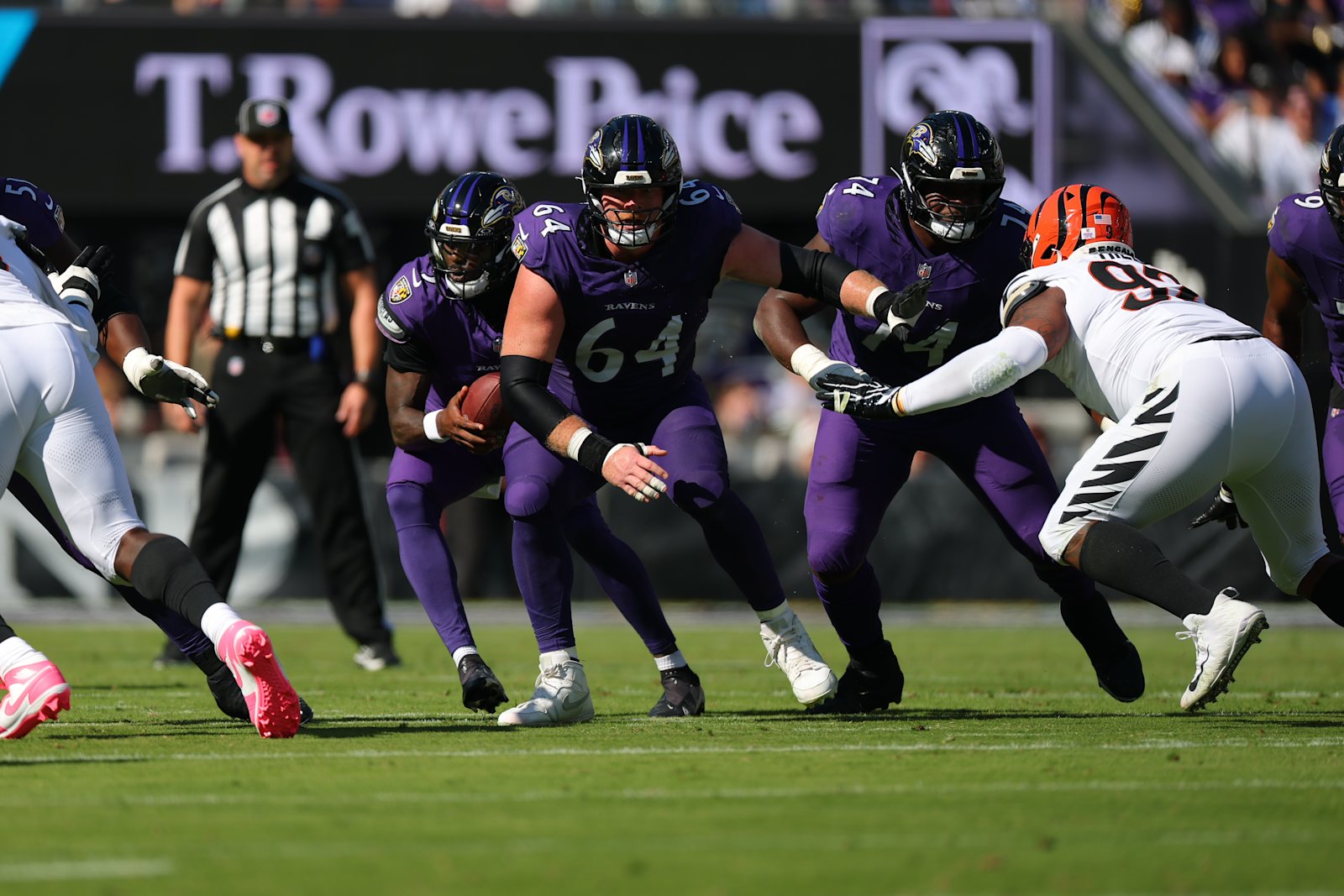
Cam Jurgens made his Baltimore debut at center, allowing Vega Ioane to move back to right guard after his surprisingly effective three-game stretch filling in at center.
Then Ioane suffered a knee injury after 16 offensive snaps and was replaced by Emery Jones Jr. With Andrew Vorhees already unavailable, the Ravens were once again improvising along the interior offensive line. At this point, keeping five healthy linemen on the field for an entire afternoon would qualify as a significant achievement.
Ioane's injury is particularly concerning because he has been the Ravens' best interior lineman this season. His versatility helped stabilize the offense during the center injury crisis, and his move back to guard was supposed to provide another upgrade.
Instead, the Ravens are right back where they started.
The immediate effect of Ioane's injury is difficult to isolate without reviewing the individual blocking assignments. Baltimore continued to move the ball for much of the first half even after he departed, including two lengthy drives that consumed more than 17 minutes combined.
But the running game was an absolute disaster.
Derrick Henry finished with just 45 yards on 17 carries, averaging a miserable 2.6 yards per attempt. The Ravens managed only three rushing first downs all afternoon.
According to PerThirtySix's play-by-play analysis, the Ravens averaged -0.39 expected points added (EPA) per designed run, compared with +0.09 EPA per Huntley dropback.
In other words, every time the Ravens called a conventional running play, they were losing nearly four-tenths of an expected point on average. Meanwhile, the passing game, despite being operated by a backup quarterback behind a makeshift offensive line, was actually generating positive value.
That's an extraordinary imbalance for an offense built around Derrick Henry.
For comparison, Cincinnati averaged -0.11 EPA per designed run and an outstanding +0.59 EPA per dropback. The Bengals also finished with a 56.9% offensive success rate compared with Baltimore's 41.5%, and doubled the Ravens in explosive plays, four to two.
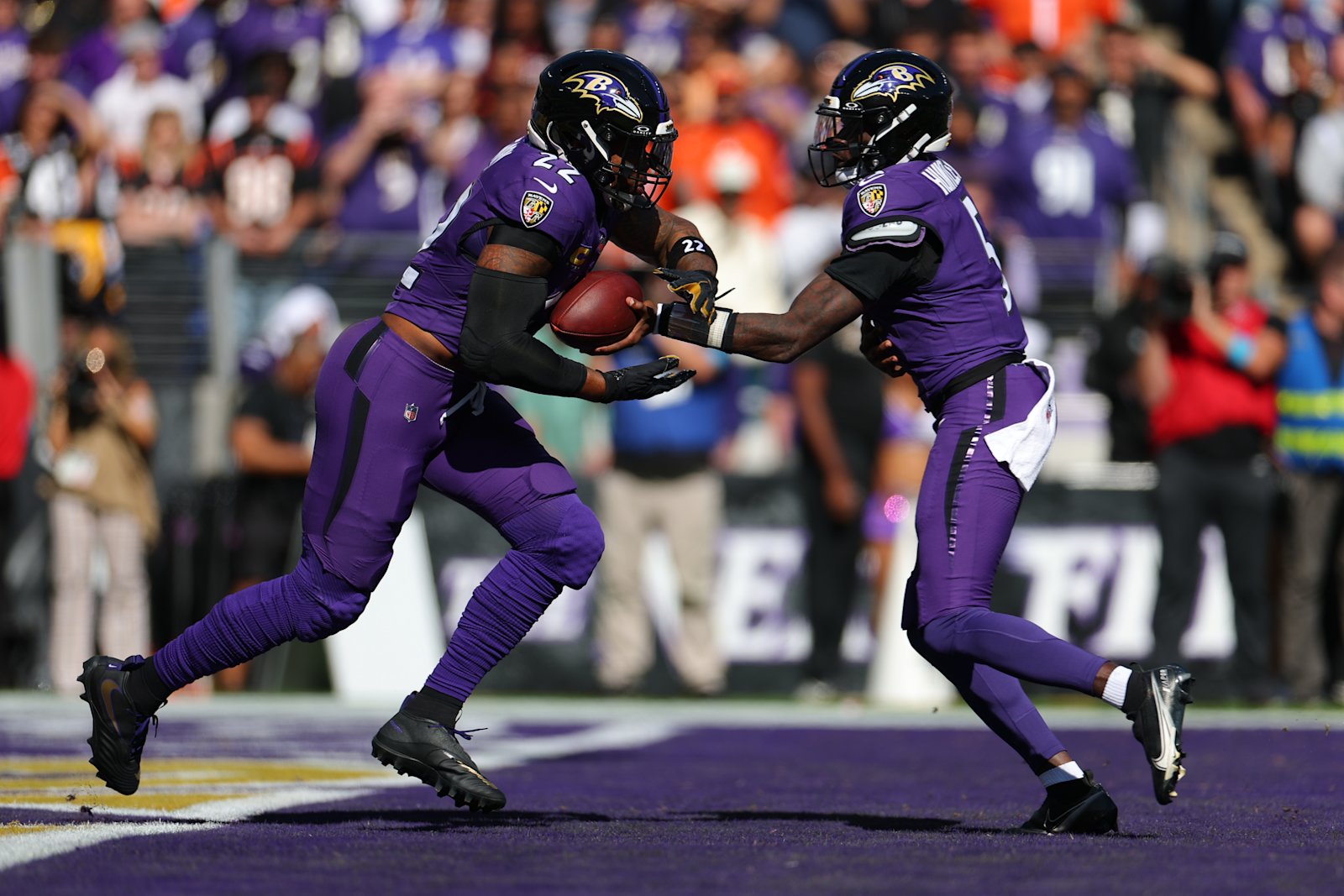
Doyle has to find ways to create efficient rushing opportunities even when Lamar isn't available. We've already seen him do those things successfully this season. His creative use of Justice Hill against Atlanta was a perfect example.
Sunday, none of it worked consistently enough.
Still, the offensive line doesn't deserve all the blame for Sunday's offensive performance.
The procedural mistakes were infuriating as well.
The Ravens committed 10 penalties for 57 yards, including five pre-snap penalties before halftime. Cincinnati was flagged just once all afternoon.
How many times are we going to watch the Ravens create a manageable short-yardage situation, then immediately turn it into something more difficult with a false start or delay of game?
At some point, that's not bad luck. It's bad preparation and bad execution.
The final meaningful red-zone opportunity came as the Ravens trailed 14-13 early in the fourth quarter. Facing fourth-and-2 at the Cincinnati 12, Doyle called a pass intended for rookie Josh Cuevas that fell incomplete after contact disrupted the route.
I don't have a problem with going for it. The Ravens needed to regain control of the game, and keeping the football with a chance to score a touchdown was perfectly reasonable.
But the bigger question is why an offense with Derrick Henry, a creative coordinator and a collection of capable receivers keeps struggling to gain one or two yards in the most important situations.
Doyle has to develop an offense capable of functioning when the defense knows they need one yard and is determined not to surrender it.
5. Zay Flowers deserves better
The one player I have almost nothing negative to say about is Zay Flowers.
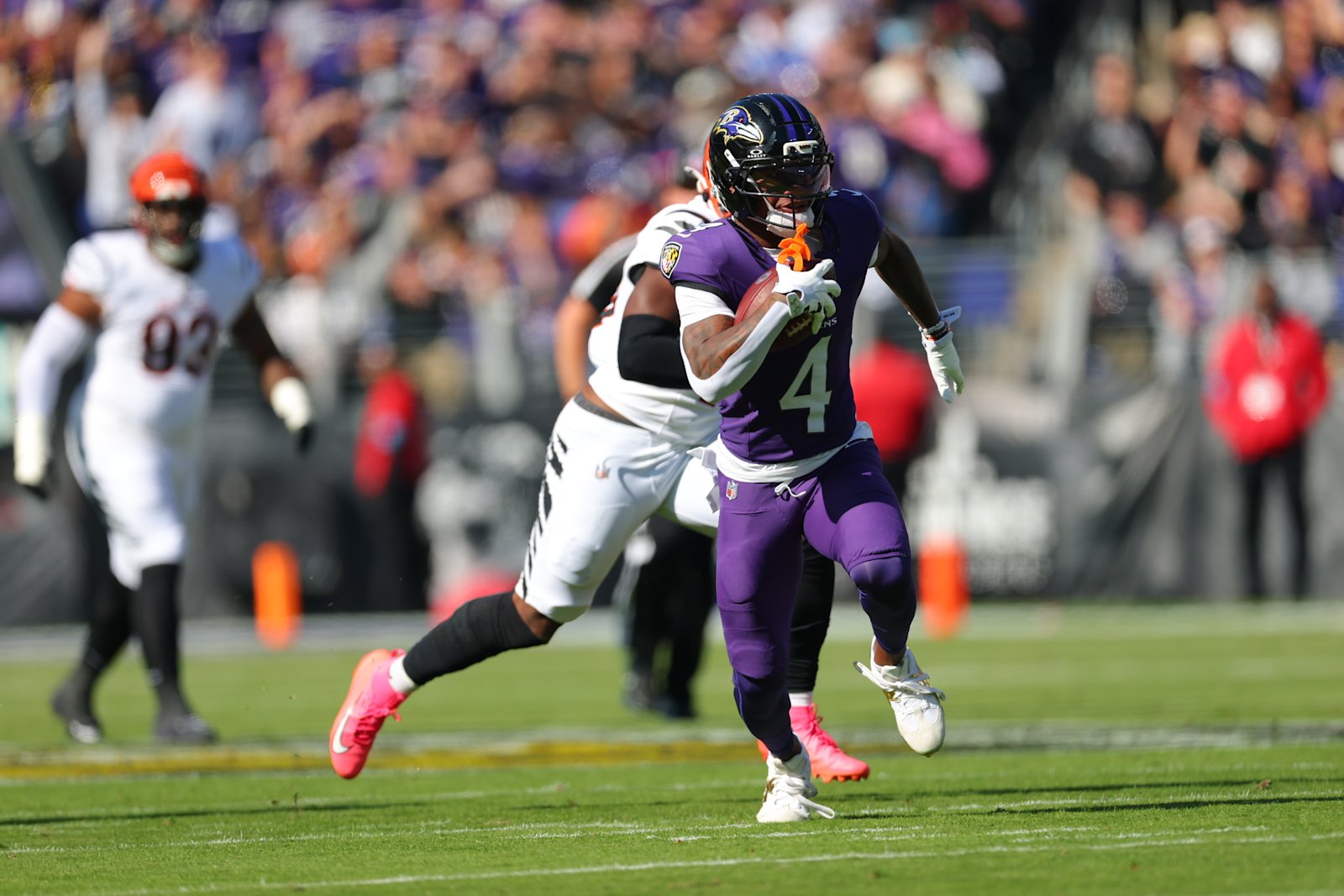
Again Flowers was phenomenal Sunday, finishing with eight receptions for 137 yards and a touchdown on 11 targets.
He accounted for nearly half of Huntley's passing yardage and produced the only touchdown, a 48-yard screen in the first quarter.
The touchdown was a terrific example of what Doyle has done well with Flowers this season.
Rather than simply asking him to beat coverage on a conventional route, the Ravens created an opportunity to get him the football in space. Devontez Walker, Roger Rosengarten and John Simpson delivered excellent blocks, and Flowers did the rest.
That's how you maximize an explosive receiver.
Flowers has always been dangerous after the catch. What has changed under Doyle is how consistently the offense creates opportunities for him to receive the football with defenders already at a disadvantage.
We've seen that approach repeatedly produce big plays this season, but Sunday also demonstrated how the offense can undermine that success.
Flowers had six catches for 120 yards before halftime.
Then he didn't touch the football again until the fourth quarter.
How does that happen?
The Ravens had one receiver consistently creating problems for Cincinnati. Their offense was struggling to generate anything after halftime. And somehow their best playmaker essentially disappeared from the game plan during the stretch when the Bengals were taking control.
Huntley was asked about it afterward and didn't offer much of an explanation beyond working through his reads.
Maybe Cincinnati changed its coverage to take Flowers away. That's something worth examining when the film becomes available. But Doyle also has a responsibility to manufacture opportunities for the best player on his offense, especially when his backup quarterback is struggling.
There should be ways to get Flowers involved without requiring Huntley to make difficult throws against tight coverage. Flowers shouldn't need to wait for the perfect coverage matchup to get the football.
He's rapidly becoming one of the best receivers in the NFL, and the Ravens are wasting too many of his performances.
The encouraging part is that the offseason investment in Flowers looks increasingly justified. He's creating explosive plays, producing with different quarterbacks and becoming the centerpiece of the passing game that Baltimore envisioned.
The discouraging part is that his individual excellence increasingly seems disconnected from the team's ability to win football games.
Flowers has done his job.
The Ravens need to start doing theirs.
The season isn't over, but something has to change
The Ravens are 4-3. There are still 10 games remaining, and a healthy Lamar Jackson is capable of changing the outlook of this team in a hurry.
Getting him back would immediately make the offense more dangerous, give Henry more favorable rushing opportunities and allow Doyle to use the full range of his playbook.
But Lamar's return is not going to fix everything.
It won't suddenly teach defenders how to tackle in space. It won't make the defensive coaching staff better at responding to halftime adjustments. It won't stop false starts or repair an offensive line that seems to lose another starter every week.
And it certainly won't explain how a defense talented enough to completely shut down Joe Burrow for 30 minutes could then allow 35 unanswered points.
The Ravens are now 0-2 in the AFC North, with Buffalo looming next Sunday and a difficult stretch of games ahead.
The division is still very much in play, but they have already wasted two opportunities to establish an early advantage against its closest competitors.
At some point, the Ravens have to start looking like a Championship contender for a full game instead of just a half.
This roster was built to compete for a Super Bowl. The new coaching staff was hired to eliminate the recurring weaknesses that prevented the previous regime from getting there.
Seven games into the new era, those weaknesses look as bad as ever.
Maybe Lamar returns, the injuries settle down and Minter finally figures out how to keep this defense functioning after halftime.
There's still time.
But if the Ravens are waiting for Lamar Jackson to save them from all of their problems, they're going to be waiting for a lot more than his ankle to heal.