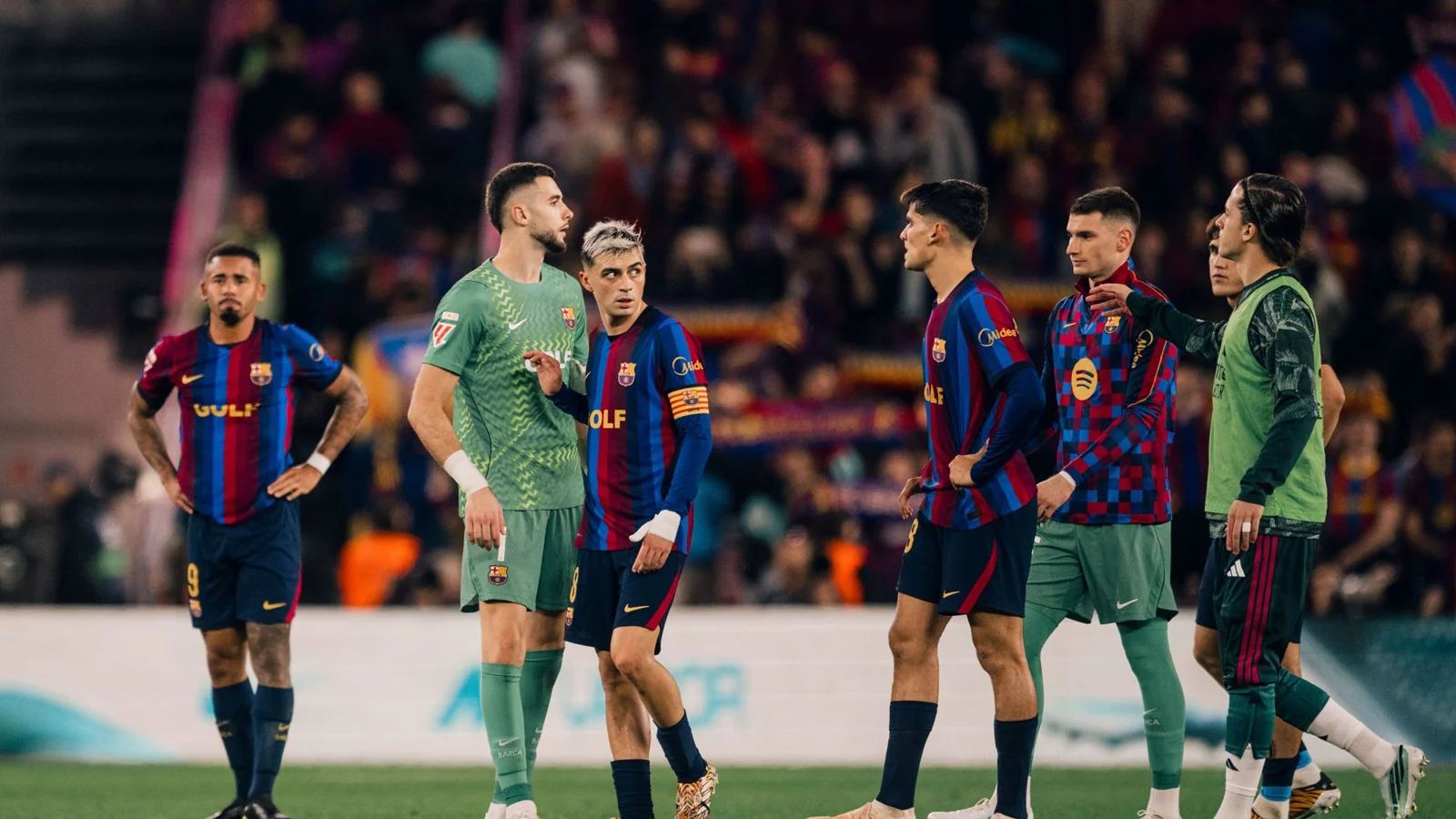
Barcelona's perfect start to the La Liga season came crashing down Sunday as Real Madrid claimed a 2-1 victory at Camp Nou, handing Hansi Flick's team its second defeat in five days and suddenly turning what looked like a runaway title race into a three-team battle.
Kylian Mbappé scored twice, including the 87th-minute winner, while Raphinha provided Barcelona's only goal. The result ended Barcelona's run of nine consecutive league victories and cut its lead over Madrid from six points to three, with Atlético Madrid now sitting between them in second place.
Hay Liga, as they say in Spain.
The defeat was especially painful because Barcelona had opportunities to win the game, only to be undone by two defensive mistakes. Young center backs Pau Cubarsí and Gerard Martín both produced stretches of excellent defending against a dangerous Madrid attack, but each committed a critical error that directly contributed to a Mbappé goal.
The loss follows Tuesday's 4-2 defeat at Paris Saint-Germain in the Champions League, where Barcelona also conceded twice in the final ten minutes after fighting back to level the match.
Just a week ago, Barcelona looked almost unstoppable, having won its first 11 games across all competitions while scoring at a ridiculous rate. Now, after facing two of the best teams in Europe, some familiar defensive concerns have resurfaced.
Mourinho's Plan Frustrates Barcelona
José Mourinho deserves considerable credit for Madrid's performance. His team did not simply sit back and hope to catch Barcelona on the counter. Madrid pressed selectively, disrupted Barcelona's midfield connections and repeatedly found opportunities to attack quickly when possession changed.
The most important matchup was on Barcelona's right wing, where former Barcelona defender Marc Cucurella was tasked with containing Lamine Yamal.
Cucurella was outstanding.
He defended aggressively, consistently closed down Lamine's preferred route onto his left foot and rarely allowed the teenager to isolate him in favorable one-on-one situations. Just as importantly, he received frequent assistance from Aurélien Tchouaméni and Yan Diomandé, who helped close the interior passing lanes and prevented Lamine from easily combining with his teammates.
There were some complaints that Cucurella escaped a deserved yellow card after several first-half fouls, and there is some validity to that argument. However, his performance was about much more than physical defending. His positioning and timing consistently frustrated one of the world's most dangerous attackers.
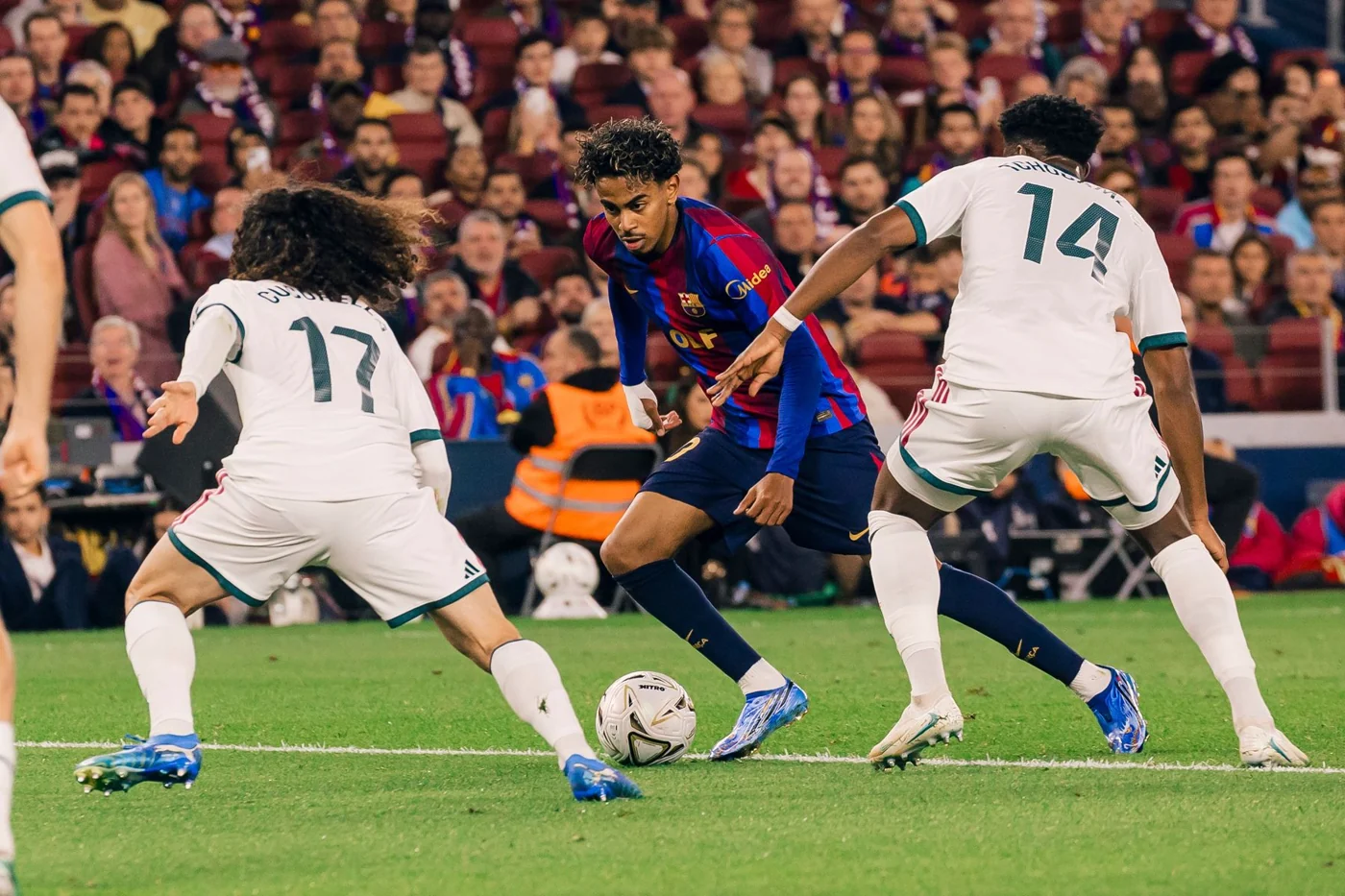
Lamine did escape for a golden opportunity shortly after Madrid opened the scoring, finding himself with an excellent look from close range. It was the sort of chance he has been converting routinely, but he badly mishit his effort wide.
For Barcelona, there was also a broader problem in midfield.
Madrid's defensive organization made it difficult for Rodri and Pedri to receive the ball facing forward. Jude Bellingham, Bernardo Silva and Tchouaméni were particularly effective in restricting Barcelona's central passing options. Fermín López also spent stretches playing so high that he was occupying much of the same space as Raphinha, limiting the available connections between midfield and attack.
Barcelona still had plenty of possession, but it wasn't producing the sort of fluid attacking combinations that have characterized its season.
At the other end, Madrid found its greatest success down the left through Diomandé, whose speed and directness created problems for Barcelona throughout the first half.
One significant turning point came in the 30th minute when Xavi Espart was forced off injured. The youngster had done an admirable job defending Diomandé, but his departure forced João Cancelo to switch to right back while Alejandro Balde entered on the left.
The adjustment immediately made Barcelona more vulnerable.
In the 41st minute, Cucurella and Diomandé combined down that flank, with Diomandé eventually sending a low ball across the box. Gerard Martín had a reasonable opportunity to clear it but completely botched the attempt, driving the ball directly into Mbappé, who redirected it into the net with his thigh.
It was a fortunate finish for Madrid, but the opportunity resulted from a well-executed attacking sequence that exposed Barcelona's reshuffled defense.
Pedri Leads the Second-Half Response
Barcelona was considerably better after halftime, particularly once Pedri began finding more opportunities to dictate the game.
Although he had some uncharacteristically loose moments early, Pedri was outstanding as Barcelona worked its way back into the contest. His ability to receive under pressure, turn into space and advance the ball through midfield was essential to the team's improved attacking rhythm.
With Madrid dropping into a more compact defensive shape, Pedri increasingly found opportunities to move possession into the attacking third instead of simply circulating the ball in front of the defense.
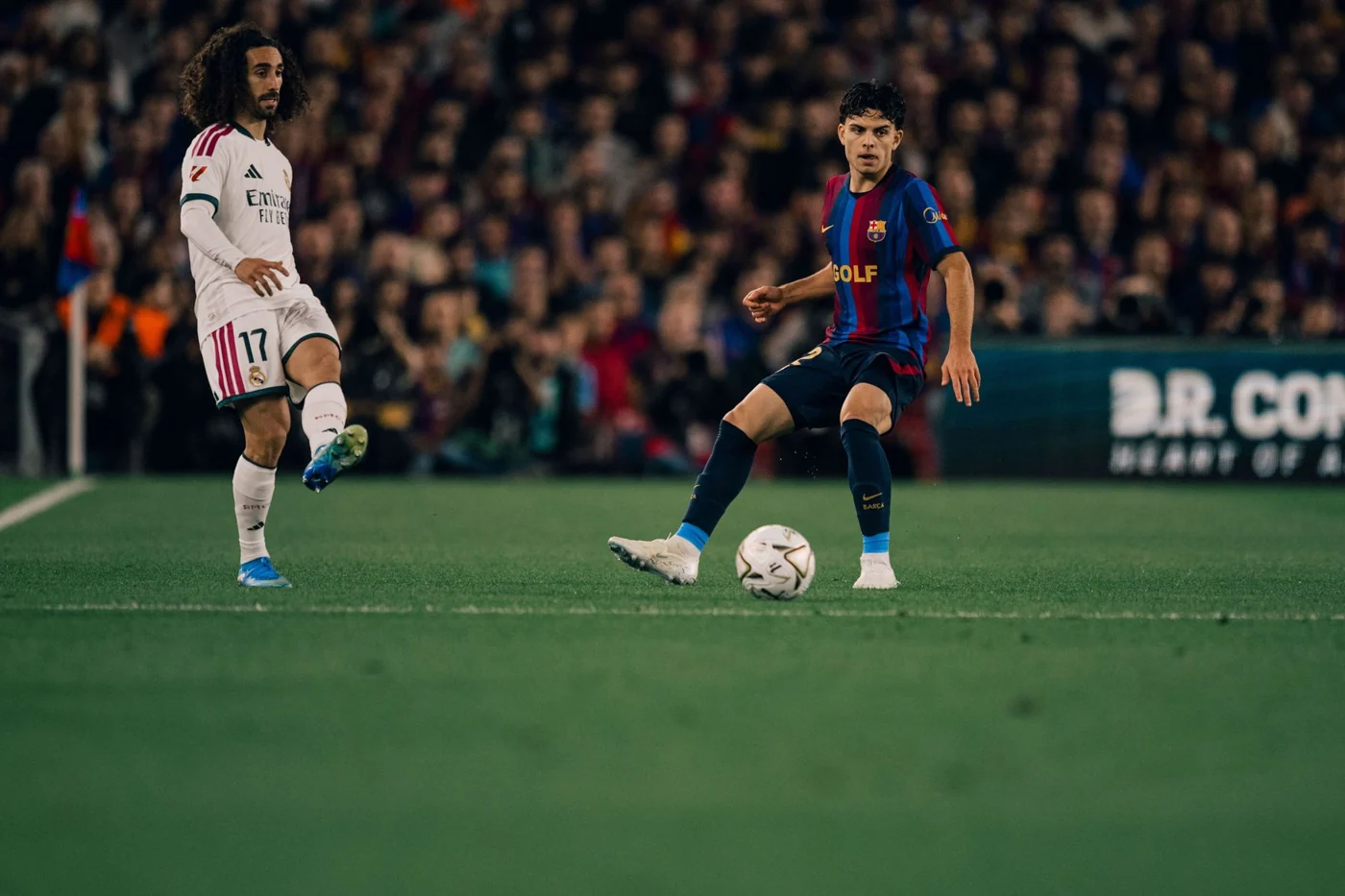
He also created Barcelona's equalizer in the 61st minute.
After a short corner, Pedri received possession on the right side and cleverly found Raphinha with a reverse pass into the penalty area. The Brazilian quickly turned the opportunity into his 13th La Liga goal of the season, beating Andriy Lunin to level the match.
At that point, Barcelona looked the more likely winner.
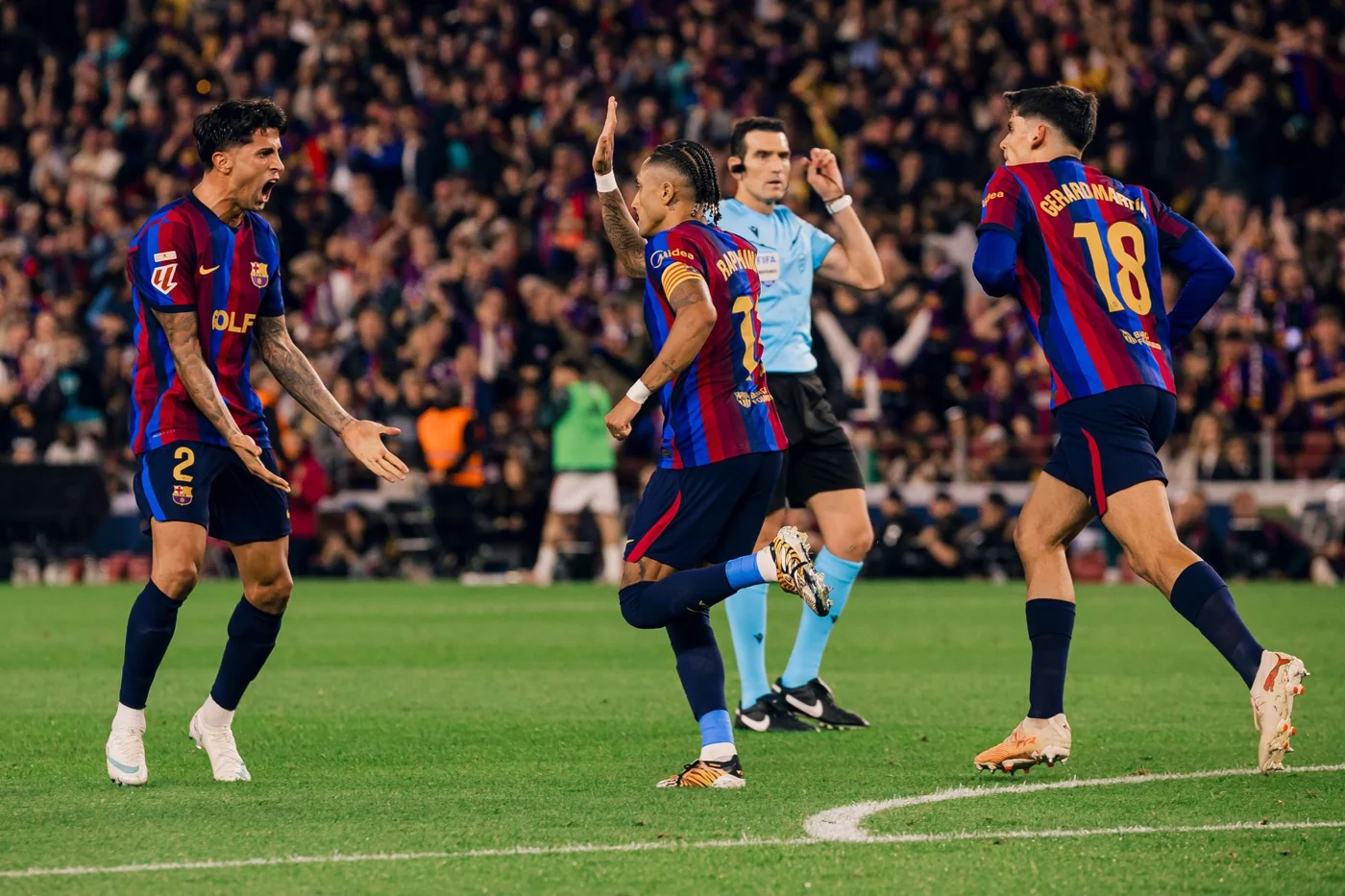
Just five minutes later, Gerard Martín nearly completed his redemption story by getting onto a corner and directing a powerful header toward goal. Lunin produced an excellent reflex save, reaching out with one hand to prevent what looked like a certain goal.
There had been considerable concern surrounding the absence of Thibaut Courtois, who missed the match through illness. However, his Ukrainian replacement was excellent, making several important saves and looking comfortable in one of the most demanding games a Madrid goalkeeper can face.
His stop against Martín may have ultimately saved Madrid's victory.
Flick also welcomed Frenkie de Jong back from injury in the 74th minute, replacing Fermín. His introduction gave Barcelona another composed passer in midfield and helped sustain the team's territorial advantage.
Still, despite Barcelona's improvement, Madrid never completely abandoned its attacking threat. Even when pinned deeper in its own end, Mourinho's team remained capable of breaking forward with Mbappé, Bellingham and its wide attackers.
That threat ultimately decided the game.
One More Defensive Mistake Decides the Clásico
With the score tied entering the final minutes, Barcelona appeared to be pushing toward a winner when Madrid produced the decisive counterattack.
The move started after substitute Gabriel Jesus lost possession in midfield. Bellingham escaped pressure with an excellent turn and helped move the ball forward through Arda Güler, who released substitute Eduardo Camavinga into space on the right side of Barcelona's defense.
Cubarsí came across to challenge but took a poor angle, allowing Camavinga to slip past him and deliver a relatively simple pass across the box to Mbappé, who finished into an open net.
It was a frustrating mistake from a defender who had otherwise been excellent for much of the game.
To be fair to Cubarsí, the breakdown was not entirely his responsibility. Barcelona had already allowed Madrid to break through its initial pressure, Rodri failed to track Camavinga's forward movement and Cancelo lost track of Mbappé as the play developed.
Nevertheless, Cubarsí had an opportunity to stop the move and failed to do so.
The sequence perfectly illustrated the difficulties of playing Flick's aggressive defensive system against opponents with elite attacking talent.
Barcelona's center backs are frequently asked to defend large spaces and make difficult individual decisions with little margin for error. Most of the time, Cubarsí and Martín handle those responsibilities extremely well.
Martín, for example, produced an outstanding defensive intervention earlier in the second half when Madrid broke forward with Bellingham and Mbappé in a two-on-one situation. His positioning and timing prevented what could easily have been another goal.
Yet both defenders had one moment where their execution failed, and Madrid was good enough to punish them.
That is the risk associated with Barcelona's approach. It is not necessarily a reason to abandon the high line, which has been integral to their success under Flick, but it does raise questions about whether they need to be more selective with their pressure against the best teams.
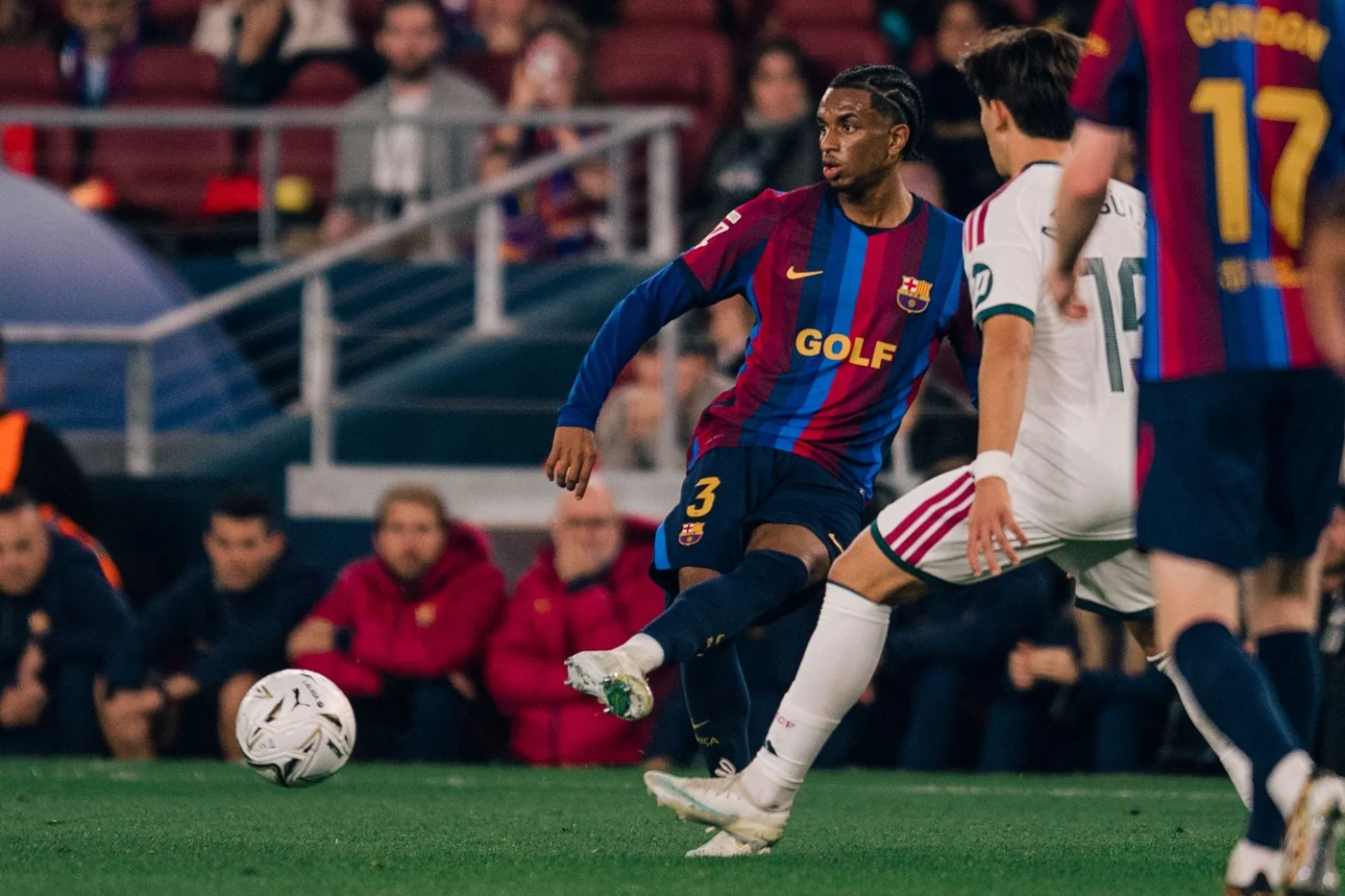
Barcelona finished with 62% possession and outshot Madrid 18-10. However, Madrid generated the better overall quality of chances, according to the expected-goals numbers.
Possession alone doesn't mean Barcelona controlled the game.
A Reality Check, Not a Crisis
The biggest takeaway from this week is that Barcelona may not be quite as far ahead of Europe's other elite teams as its spectacular opening two months suggested.
Against PSG, Barcelona struggled to handle an aggressive press and the speed of the French team's attacking transitions. Against Madrid, the problem was different. Mourinho organized his defense to limit Barcelona's preferred attacking routes while preserving enough speed and quality to exploit the space behind Flick's back line.
In both games, Barcelona showed enough attacking quality to fight back from deficits. They also showed an inability to protect those recoveries in the final stages.
There is an important counterargument, however.
Barcelona has been dealing with significant defensive injuries, including the absences of Jules Koundé and Eric García. Espart's departure on Sunday made an already difficult situation worse, and several players have been asked to operate in unfamiliar roles.
It is also worth remembering that these defeats came against the reigning European champions and a Madrid team loaded with world-class talent. Losing competitive games against opponents of that caliber is hardly evidence that Barcelona's entire approach is broken.
The concern is less about the two losses themselves than the recurring manner in which Barcelona conceded decisive goals.
Their aggressive structure is designed to prevent opponents from creating exactly these situations. When the press fails or individual defenders make mistakes, the team can suddenly find itself in a footrace against attackers like Mbappé. That is not a particularly appealing proposition, no matter how talented the young defenders might be.
Barcelona remains in first place in La Liga with 27 points from ten games. Atlético Madrid sits two points behind, while Real Madrid has closed to within three. What appeared to be an opportunity for Barcelona to build a commanding nine-point lead over its biggest rival has instead produced a genuine three-team title race.
Flick's team still has plenty of reasons for optimism. Pedri remains one of the best midfielders in the world, Raphinha continues to score at an extraordinary rate and Lamine will have many better days than Sunday. The return of injured defenders should also help stabilize the back line.
But the past week has offered a reminder that overwhelming the weaker teams in La Liga is not the same as consistently beating Europe's elite.
Barcelona has spent most of the season looking like the best team in Spain and perhaps the best in Europe.
After this week, both claims are open for debate.
Follow the season: Barcelona Season Dashboard — results, statistics, squad output and availability.