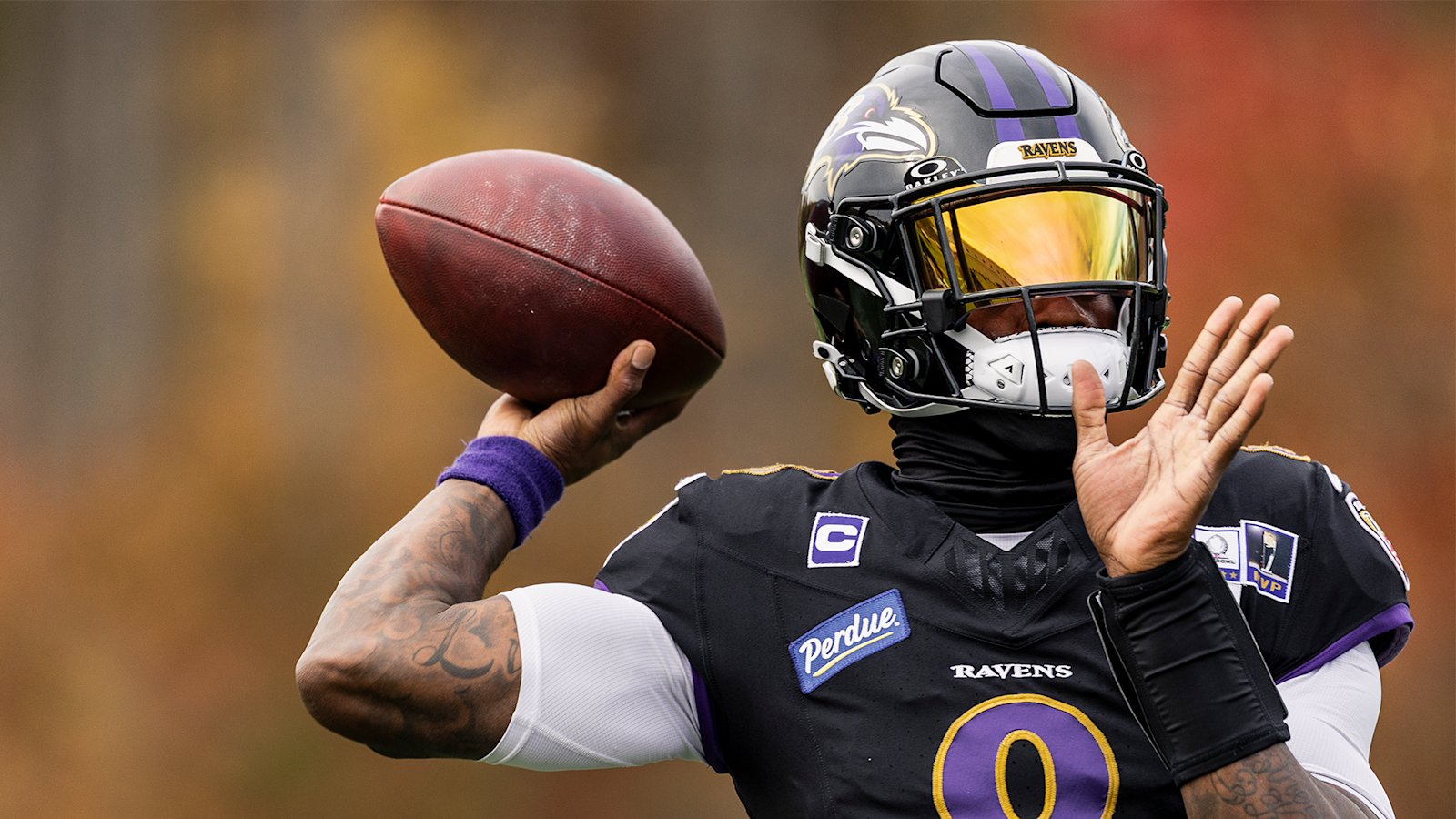
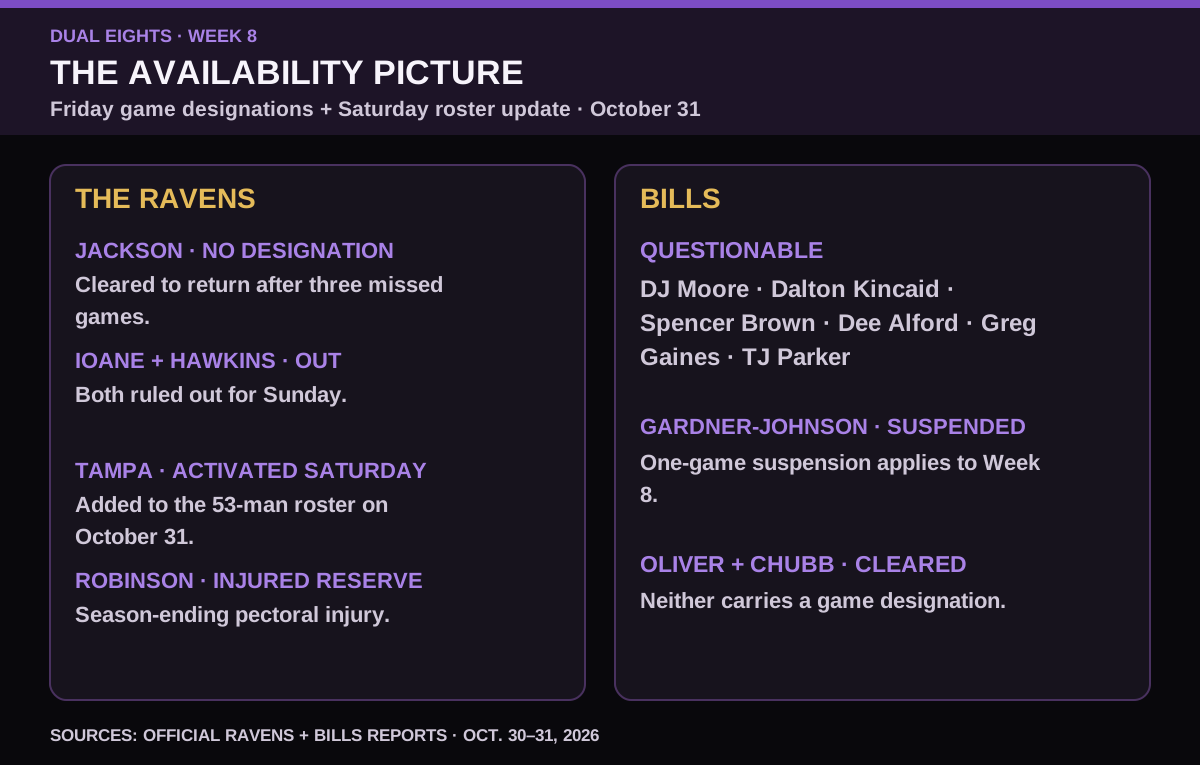
Saturday availability · October 31: Jackson has no injury designation; Ioane and Hawkins are out. The Ravens also activated T.J. Tampa from injured reserve.
Week 8 | Sunday, November 1, 2026 | 1 p.m. ET | CBS | Highmark Stadium
Get ready for the game with the Ravens Season Dashboard.
The Ravens are finally (maybe) getting Lamar Jackson back. At least, that's what all the signs coming out of practice this week suggest.
After three and a half games without their franchise quarterback, they have fallen to 4-3, lost consecutive division games and find themselves looking up at everyone else in the AFC North. Their latest defeat, a humiliating 35-13 loss to Cincinnati, raised legitimate questions about whether this team is anywhere close to the championship contender we expected.
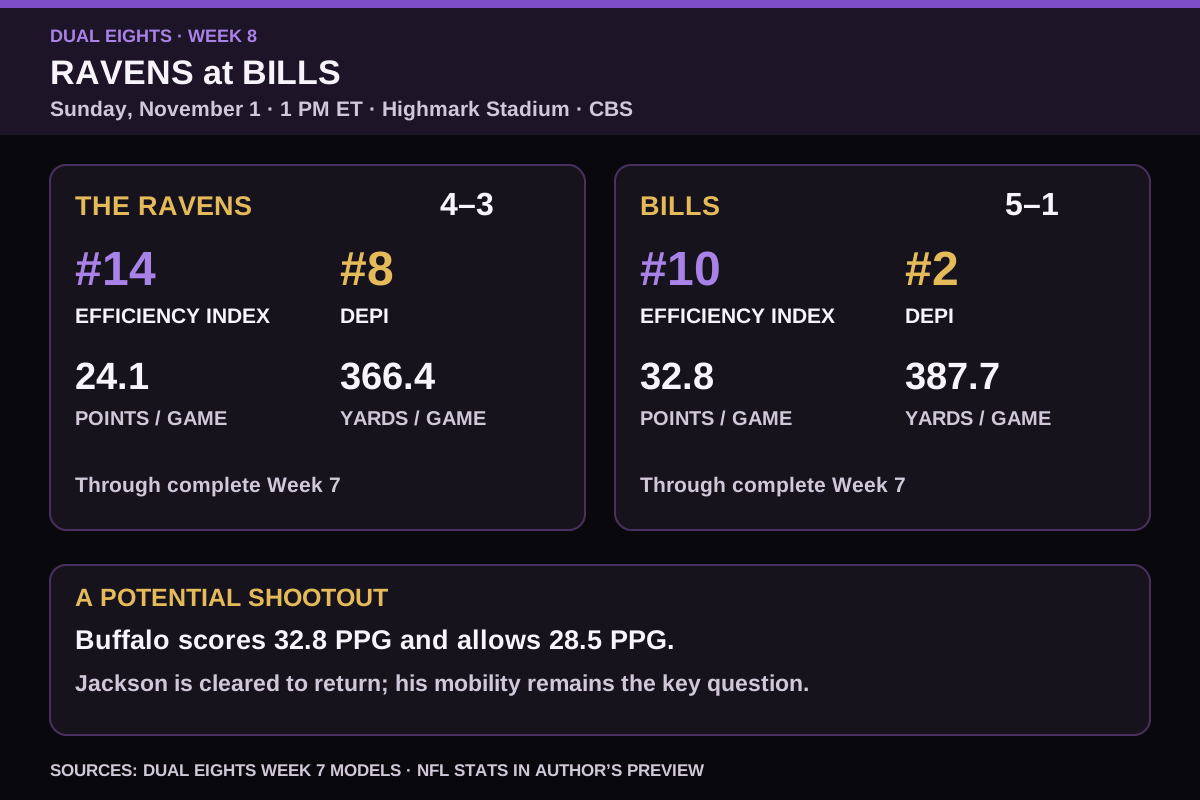
Now comes a trip to Buffalo, where the 5-1 Bills are waiting after their bye week (thanks schedule makers).
The good news is that Buffalo's defense might be exactly what the Ravens need to get their offense moving again. The Bills have allowed 28.5 points per game, the third-most in football, and have been particularly vulnerable against the pass. A healthy Lamar, Derrick Henry and Zay Flowers should be capable of doing considerable damage.
The bad news is that Buffalo has Josh Allen.
The Bills lead the NFL in scoring at 32.8 points per game, and their offense has been good enough to overcome most of the defensive problems. They are a particularly uncomfortable opponent for a Ravens defense that has repeatedly struggled with tackling, quarterback containment and finishing possessions.
The numbers paint a pretty clear picture of what we should expect.
| Through Week 7 | Ravens | Bills |
|---|---|---|
| Record | 4-3 | 5-1 |
| Points per game | 24.1 | 32.8 |
| Total yards per game | 366.4 | 387.7 |
| Offensive EPA/play rank | 8th | 1st |
| Defensive EPA/play rank | 19th | 31st |
Sources: NFL game statistics and rbsdm EPA rankings through Week 7.
Both teams have elite quarterbacks, dangerous running backs and the ability to produce explosive plays. Neither has a defense that has consistently performed to expectations.
There should be plenty of opportunities to score. The biggest question is whether the Ravens can prevent Buffalo from taking advantage of quite so many of them.
1. How much of Lamar Jackson is actually coming back?
Jackson's return should immediately change what the Ravens can accomplish offensively. But the more important question is whether his ankle will allow him to play the football we're accustomed to seeing.
Before suffering the injury against Tennessee, Lamar was playing at an extraordinary level.
He completed 70.8% of his passes, averaged an NFL-best 10.1 yards per attempt and threw six touchdowns against just one interception. His 119.6 passer rating was among the best in football.
Without Lamar, the Ravens have been operating with considerably fewer options. Tyler Huntley delivered when it mattered most against Atlanta and produced a solid first half against Cincinnati, but even when he has played well, the defense hasn't faced the same problems.
That has been particularly apparent with Henry.
A healthy Lamar changes the math of the running game without even needing to call his own number that often. A defensive end who has to account for the quarterback keeping the ball cannot simply chase Henry down the line. Linebackers can't attack downhill quite as aggressively when a keeper might force them to redirect toward the perimeter.
When Lamar isn't a legitimate running threat, defenders can make those decisions much more confidently. It also dampens the big-play ability of the offense when he can’t use his legs to escape the pocket and extend plays.
That is important to watch for this week.
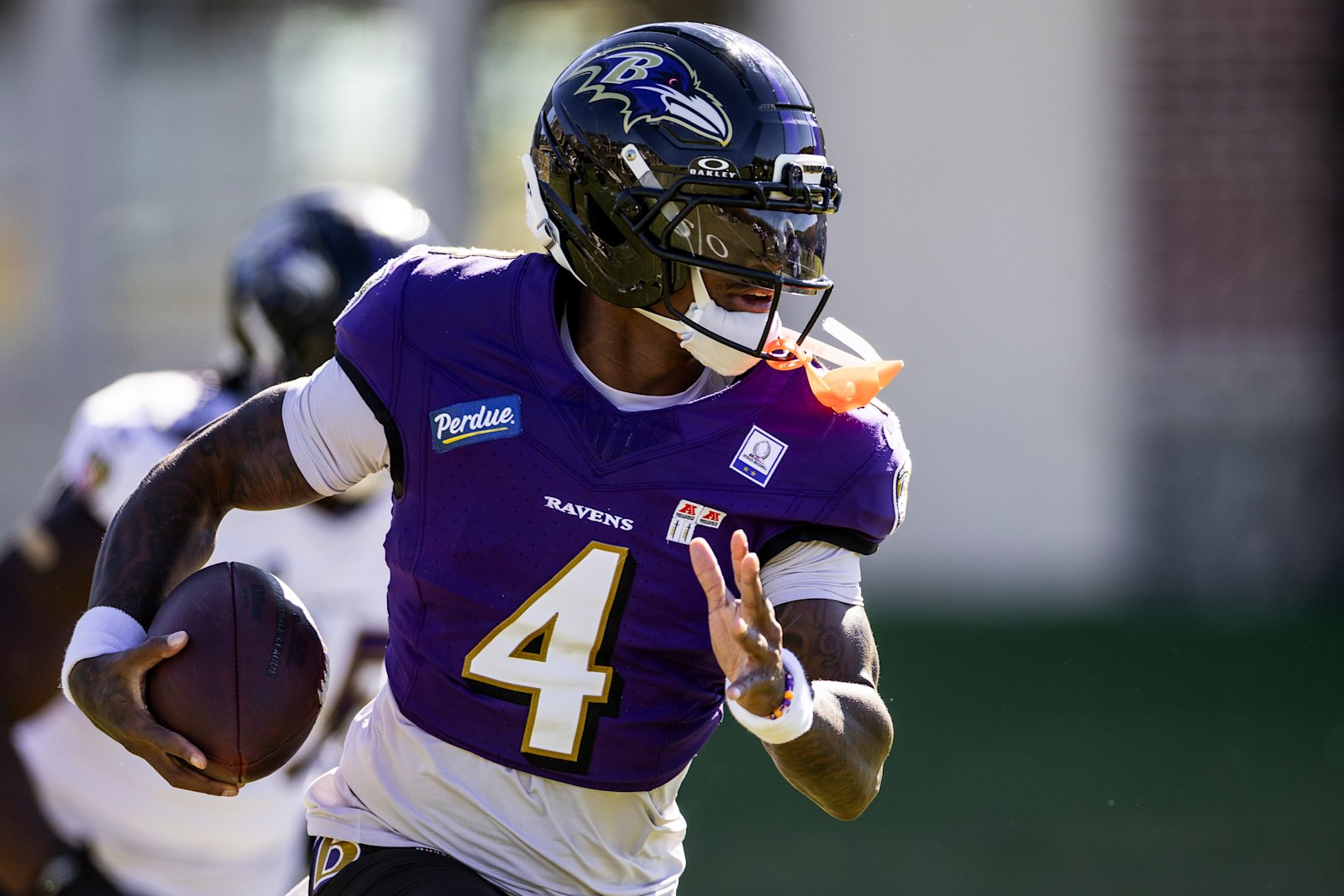
Lamar practiced fully all three days after being limited throughout the previous week. That's an encouraging development, but practice participation doesn't tell us how comfortable he will be planting, cutting or escaping pressure during a game. He even acknowledged in his Friday media session that there is still some pain.
And the Ravens' offensive line isn't exactly providing a reassuring environment for an injured quarterback. Vega Ioane returned to limited practice Thursday and Friday after suffering a knee injury against Cincinnati, but the Ravens have ruled out their starting right guard for Sunday's game.
John Simpson has also been dealing with a groin injury, and the interior line has spent much of the season dealing with injuries and constant personnel changes.
Buffalo has struggled defensively, but it isn't entirely without dangerous pass rushers. Greg Rousseau has generated 39 pressures this season, among the league's highest totals for edge defenders. His matchup against Roger Rosengarten could become particularly important if Jackson is unable to consistently escape pressure.
Still, this is an excellent opportunity for Declan Doyle.
Buffalo ranks 31st in defensive EPA per play and 29th against dropbacks. Opponents have repeatedly found room to move the football, particularly through the air.
Doyle should have opportunities to use motion, play action and the threat of Henry to create favorable passing situations. There is no reason to build an offense that requires Lamar to repeatedly escape three defenders before somebody gets open.
The Ravens need him healthy enough to make the Buffalo defense respect his legs, but they don't need to make him survive 15 dangerous rushing attempts.
If Lamar can move normally, this offense should look dramatically different from what we've watched over the past three weeks.
If he can't, merely having No. 8 back under center won't solve nearly as much as everyone hopes.
2. Josh Allen presents a different challenge for the Ravens defense
The Ravens just watched Joe Burrow dismantle their defense once Cincinnati adjusted its offensive approach.
Burrow finished the second half completing 16 of 18 passes for 249 yards and four touchdowns. The Bengals improved their protection, got the football to their best receivers and prevented the Ravens from consistently disrupting the timing of the passing game.
Buffalo presents an entirely different problem.
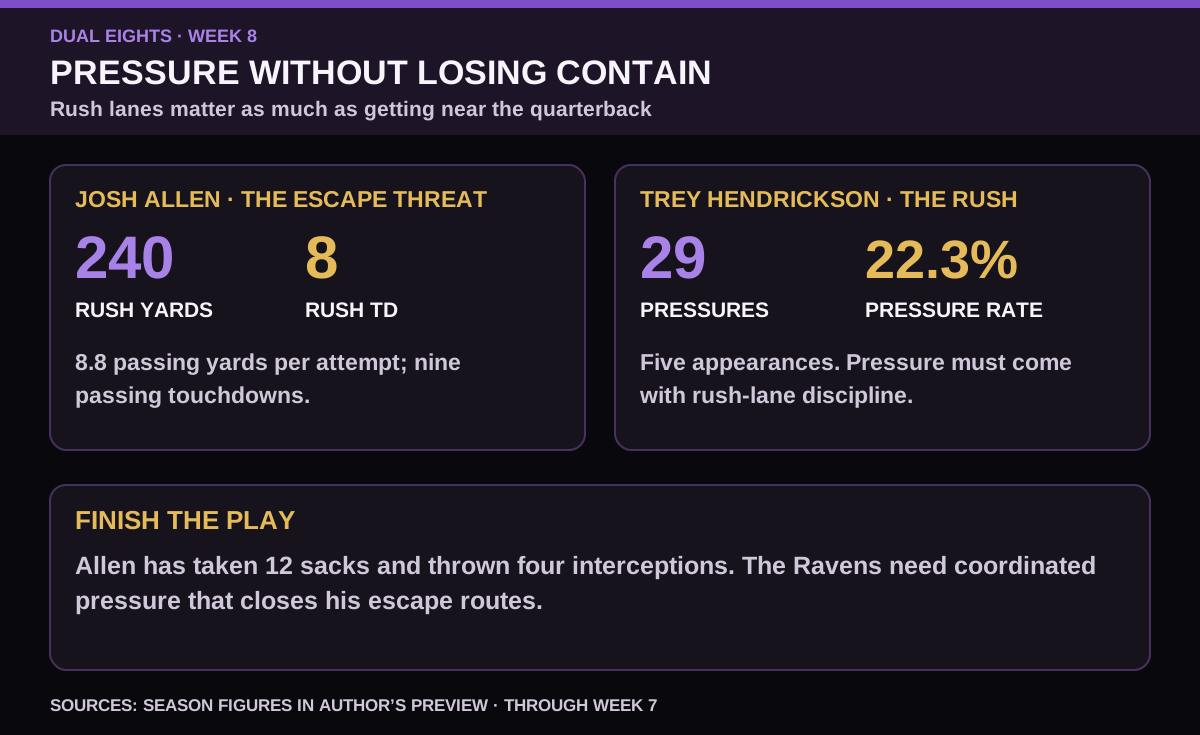
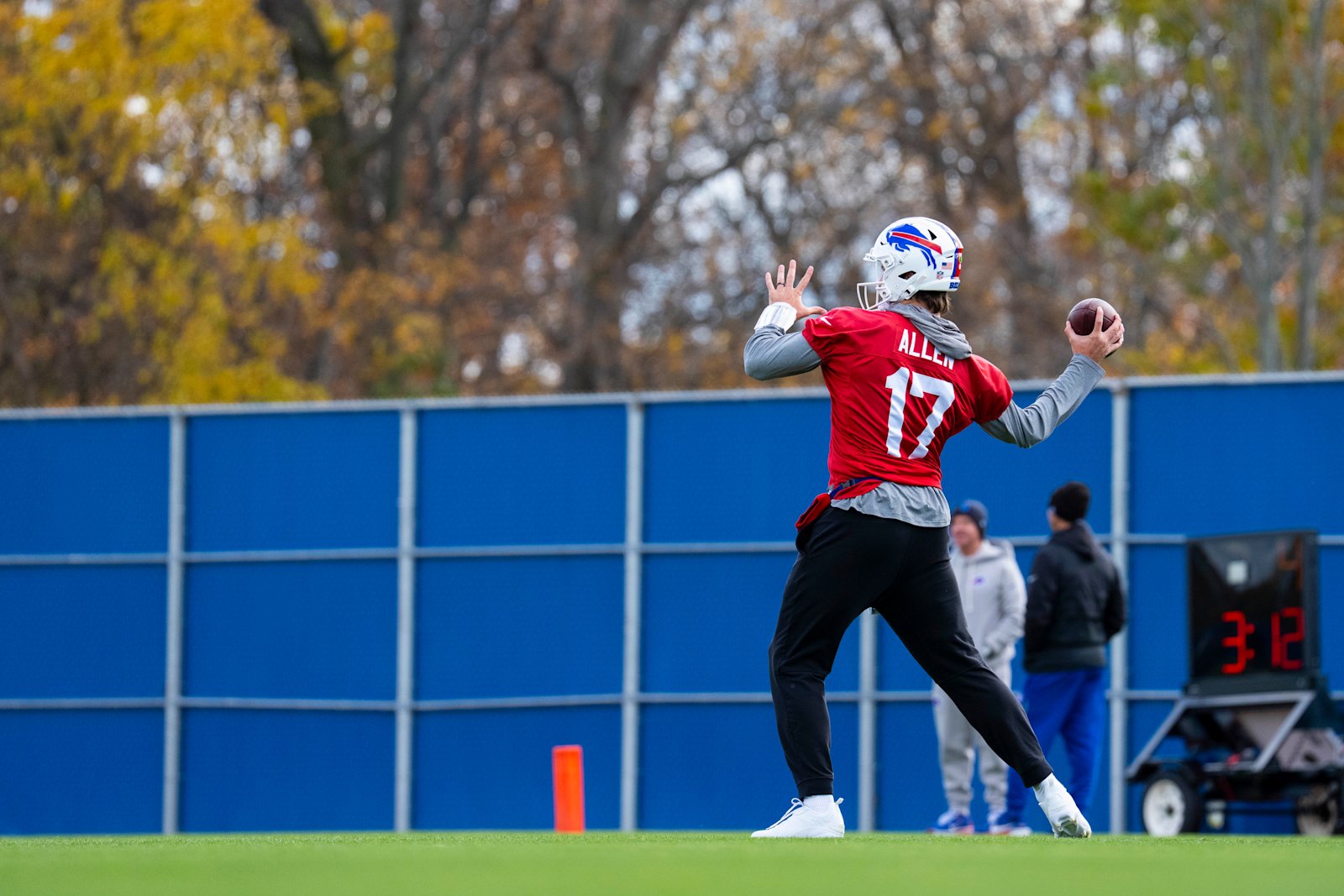
Allen can certainly beat a defense from the pocket. He's thrown for 1,504 yards and nine touchdowns through six games, averaging an impressive 8.8 yards per attempt.
Whereas Burrow punished the Ravens by getting the ball out quick and finding his most dangerous targets, Allen can punish a defense by inviting the rush and then beating it with his legs and movement.
He has rushed for 240 yards and an NFL-leading eight touchdowns this season. Those numbers don't fully capture the difficulty of defending him.
Allen can avoid the first defender, extend a passing play and give his receivers additional time to uncover. If the coverage holds but the pass rush loses containment, he can simply take off running. And at approximately 240 pounds, he isn't particularly interested in making life easy for the defender responsible for bringing him down.
The comparison to Lamar is obvious, even if their running styles are very different.
Both quarterbacks force defenses to defend two plays.
First, there is the play the offense actually called. Then there is whatever happens after the quarterback escapes the original structure.
For Jesse Minter, that creates a difficult balance.
The Ravens have enough pass-rushing talent to disrupt Allen. Trey Hendrickson has generated 29 pressures in five appearances, including an excellent 22.3% pressure rate. Mike Green has continued developing into a useful edge defender, while Nnamdi Madubuike and Travis Jones can create problems inside.
There may also be an opportunity to attack Buffalo's right side. Starting right tackle Spencer Brown missed practice Wednesday and Thursday with a back injury. If he cannot play, the Ravens should have an opportunity to test his replacement.
But generating pressure against Allen is not simply a matter of sending more defenders.
An edge rusher who takes an aggressive path upfield without maintaining outside leverage can create an enormous running lane. An interior defender who gets too far upfield can allow Allen to step forward into open space. Blitzing a linebacker might create an immediate opportunity for a sack, but it also removes a defender who could otherwise account for Allen escaping.
The Ravens have to rush as a coordinated unit.
Ideally, Hendrickson and Green can force Allen toward the middle while the interior defenders prevent him from stepping through the pocket. Minter can still use simulated pressures and disguised rushers to create favorable matchups, but the coverage behind those looks must account for what happens when Allen survives the initial rush.
Kyle Hamilton could become especially important.
His ability to align near the line of scrimmage, threaten pressure or function as an additional linebacker gives Minter flexibility that most defensive coordinators don't have. Hamilton can also help contain Allen when a play breaks down, provided the Ravens aren't leaving a dangerous receiver uncovered elsewhere.
There is an opportunity here.
Allen has already been sacked 12 times and thrown four interceptions. His willingness to extend plays creates chances for defenders to get him on the ground, force an inaccurate throw or attack the football.
The Ravens don't have to play passively and hope Allen makes a mistake.
They need to create situations where his options become progressively worse rather than allowing the first missed tackle or lost rush lane to turn into an explosive play.
Burrow punished Baltimore by getting the football out quickly.
Allen might punish them by holding onto it.
The Ravens have to be prepared for both possibilities.
3. Buffalo's yards after the catch could expose Baltimore's biggest defensive weakness
Perhaps the most concerning aspect of this matchup isn't Allen's ability to throw deep or escape the pocket. It's what happens when he completes a relatively ordinary pass.
Buffalo has several players capable of turning short completions into significant gains, and the Ravens haven't demonstrated that they can consistently prevent those plays from developing.
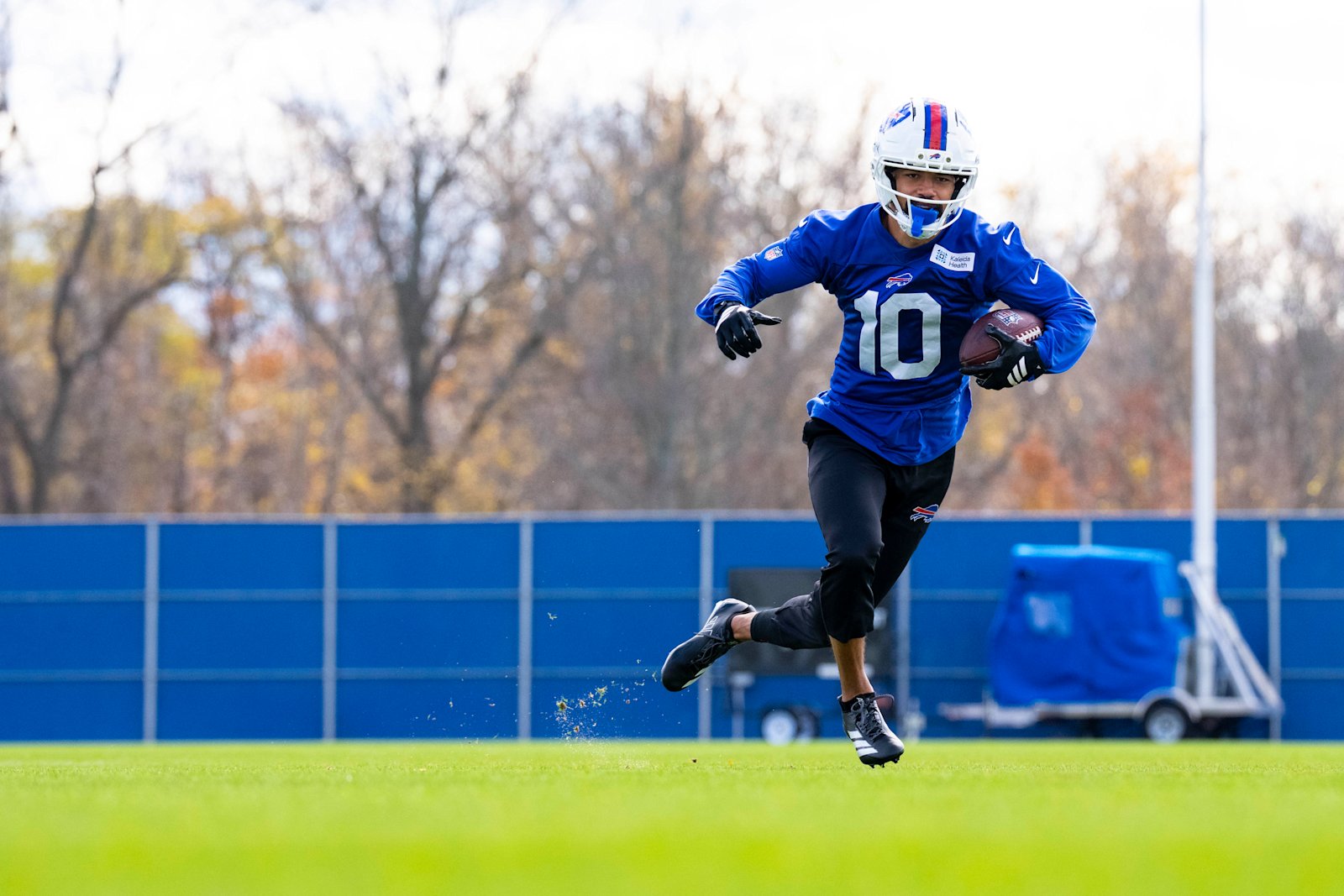
Khalil Shakir is the clearest example. Through six games, Shakir has caught 22 passes for 290 yards. According to NFL receiving statistics, 198 of those yards have come after the catch.
Shakir doesn't need to consistently win 20 yards downfield to hurt a defense. Buffalo can get him the football underneath, on crossing routes or in space against zone coverage, and trust him to create additional yardage.
Dalton Kincaid presents another problem.
The tight end leads Buffalo with 315 receiving yards on 23 catches and gives Allen a dependable target between the numbers. He can exploit linebackers who are concerned about Allen running, or settle into the space behind defenders who have stepped forward to account for James Cook.
Kincaid has been managing a chest injury, so we will have to monitor his availability. DJ Moore also appears to be set to return from a shoulder injury, providing another downfield threat.
But the broader problem remains.
This is an offense capable of forcing Ravens defenders to tackle repeatedly in space.
That's not encouraging after what we've watched this season.
The Ravens have regularly allowed opposing receivers to turn short completions into first downs. Against New Orleans, Tyler Shough repeatedly found underneath options and watched the Ravens fail to finish the play. Atlanta converted nine of 17 third downs, including four conversions on third-and-10 or longer.
Then Cincinnati exposed the defense again.
Some of those failures are individual. Roquan Smith needs to arrive under control and finish tackles. Hamilton cannot repeatedly lose favorable leverage. Defensive backs must take proper angles instead of allowing receivers to escape toward the sideline or reverse direction into open space.
But the scheme also deserves scrutiny.
Minter has frequently preferred keeping the football in front of his secondary rather than risking explosive plays by leaving defensive backs isolated. That's a reasonable philosophy, particularly when facing dangerous quarterbacks.
However, conceding an eight-yard completion on third-and-10 only makes sense if somebody actually gets the receiver on the ground. If the first defender misses, the coverage structure that successfully prevented a deeper throw has accomplished very little.
The Ravens have used dime packages extensively this season, often with Hamilton functioning as a hybrid linebacker while additional defensive backs handle coverage responsibilities.
That should provide enough speed and flexibility to match Buffalo's passing game. It also places considerable responsibility on smaller defenders to finish tackles and on Hamilton to cover an enormous amount of space.
Allen and the Bills are particularly well equipped to test those responsibilities.
The Ravens need to make Buffalo earn its yardage.
Force Allen to complete six passes instead of one explosive throw. Get the receiver on the ground. Create another third down. Then actually get off the field.
It sounds straightforward.
Unfortunately, the Ravens have spent seven weeks demonstrating just how difficult they can make it look.
4. Zay Flowers could have another enormous game
If there's one matchup that should make Ravens fans optimistic about Sunday, it's Zay Flowers against Buffalo's secondary.
Flowers has been one of the few consistently outstanding parts of this Ravens season.
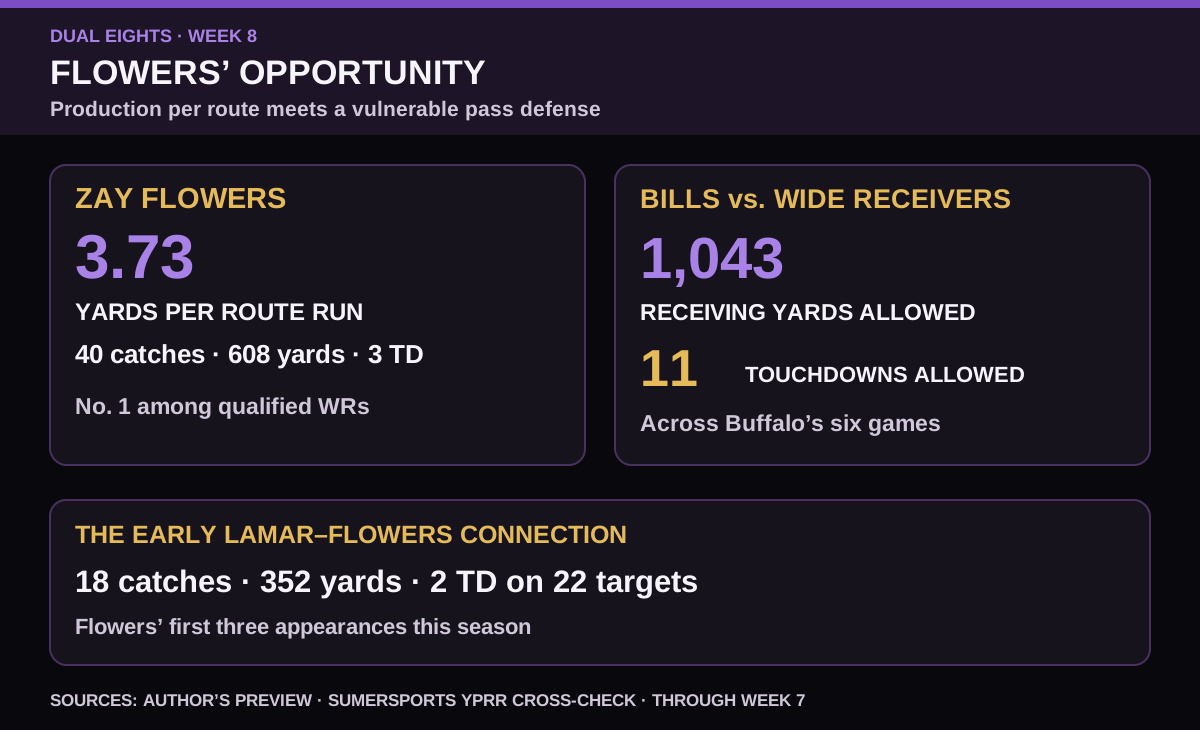
Despite missing Week 2 and playing through injuries, he has caught 40 passes for 608 yards and three touchdowns. His 15.2 yards per reception and ability to create yardage after the catch have made him one of the most dangerous receivers in football.
And those numbers have come with Lamar Jackson missing the past three games.
The connection between the two was almost absurd before Jackson's injury.
In Flowers' first three appearances this season, he caught 18 passes for 352 yards and two touchdowns on just 22 targets. That works out to 16 yards every time the football was thrown in his direction.
Nobody can reasonably expect that level of efficiency to continue indefinitely, but the important part is how those opportunities were being created.
Doyle has made Flowers a central piece of his offensive design, moving him between the outside, slot and condensed formations. Motion can provide cleaner releases against press coverage. Bunches and stacks can force defensive backs to navigate traffic. Play action and the running threat can pull linebackers away from the crossing routes that Flowers has become so dangerous running.
Rather than forcing Flowers to win every matchup from a static position, Doyle has consistently placed him in situations where he already has some advantage before the football arrives.
And Flowers has done the rest.
According to Pro Football Focus, Flowers is averaging an NFL-leading 3.73 yards per route run among qualified receivers. That measures receiving production relative to the number of routes a player actually runs, rather than simply rewarding someone for receiving a large volume of targets.
It's an extraordinary number, especially considering the disruption at quarterback.
Buffalo's defense provides a particularly attractive matchup.
Through six games, opposing wide receivers have produced 1,043 receiving yards and 11 touchdowns against the Bills. Buffalo has struggled to consistently cover receivers outside and has also been vulnerable in the slot.
Though he has struggled at times this year, Christian Benford remains a capable cornerback. Maxwell Hairston has been exploited in coverage, while slot corner Dee Alford is managing an ankle injury that kept him out of Thursday's practice.
The secondary will also be without C.J. Gardner-Johnson, who is serving a one-game suspension for spitting on an opponent. Damar Hamlin is expected to take on a larger role.
Those personnel concerns give Doyle several ways to attack.
Flowers can line up outside and test Buffalo's corners vertically. He can move into the slot and attack linebackers or defensive backs who are less comfortable handling his quickness. Motion can reveal how Buffalo intends to cover him, potentially creating advantageous matchups before the snap.
The Bills will obviously be aware of the threat.
Buffalo could devote additional safety help to Flowers, bracket him on critical downs or use its best cornerback to follow him around the formation.
That's where Doyle needs to make the rest of the offense dangerous.
Rashod Bateman, Mark Andrews and the young receivers have to punish Buffalo if it commits too many defenders to Flowers. And Doyle must be willing to use Flowers as a decoy when that attention creates better opportunities elsewhere.
But there's no reason for the Ravens to spend long stretches without involving their best receiving weapon.
Against Cincinnati, Flowers had six catches for 120 yards before halftime and then virtually disappeared until the fourth quarter. Whatever the explanation, that cannot become a regular feature of this offense.
A healthy Lamar should make it easier to consistently find him.
Flowers doesn't have to catch 12 passes for the Ravens to win, but this matchup offers a legitimate opportunity for another enormous performance.
Doyle should make Buffalo prove it can stop him.
5. James Cook vs. Derrick Henry: Who controls the running game?
The quarterback matchup will naturally dominate the attention, but the two running backs might have almost as much influence on the outcome.
And their performances this season have been surprisingly different.
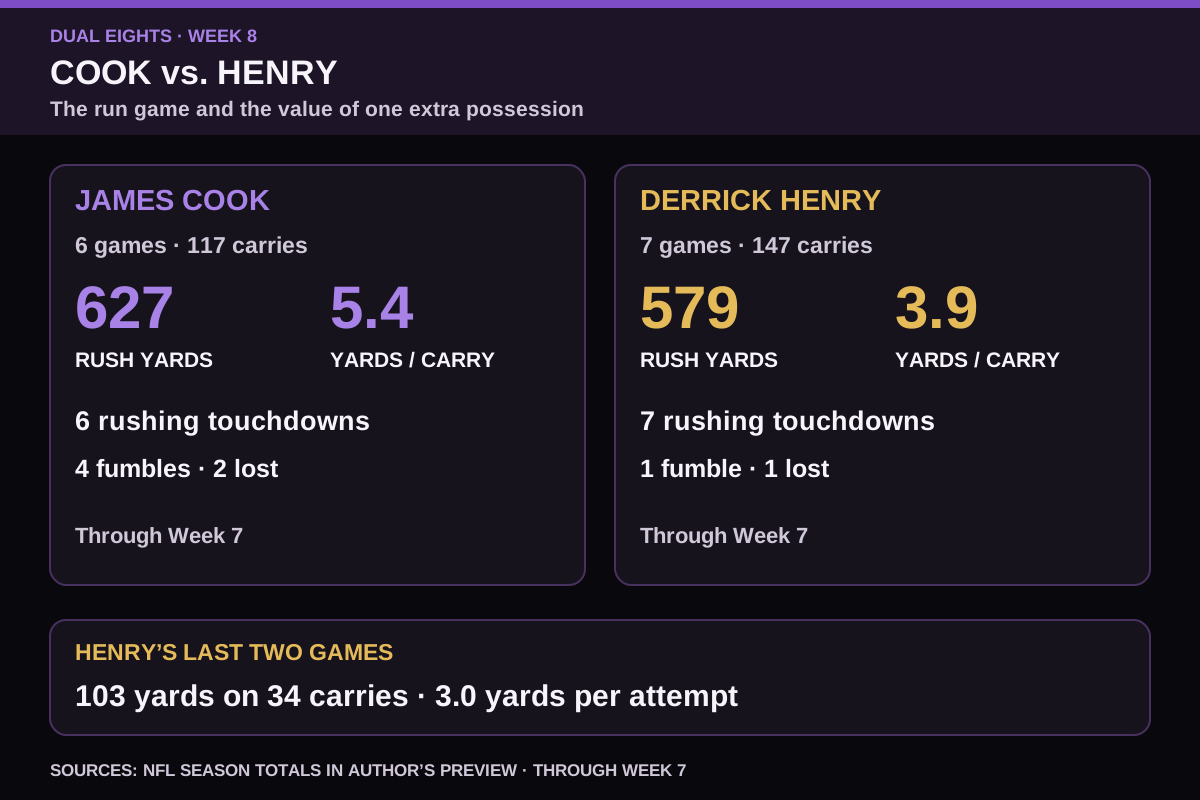
| Through Week 7 | James Cook | Derrick Henry |
|---|---|---|
| Games | 6 | 7 |
| Carries | 117 | 147 |
| Rushing yards | 627 | 579 |
| Yards per carry | 5.4 | 3.9 |
| Rushing touchdowns | 6 | 7 |
| Fumbles | 4 | 1 |
| Fumbles lost | 2 | 1 |
Cook has been outstanding.
He's averaging more than five yards per carry while providing Buffalo with a reliable rushing threat that prevents defenses from concentrating exclusively on Allen.
Allen's threat to keep the football can hold edge defenders in place while Cook attacks the interior. Play action can force linebackers forward and open passing opportunities behind them. And when Cook gets into the second level, he has the acceleration to turn an ordinary running lane into a significant gain.
The Ravens have not consistently defended that combination well.
Baltimore ranks 22nd in defensive rushing EPA allowed, meaning opposing running plays have been more productive than they should be on a down-and-distance-adjusted basis.
That's concerning enough against Cook alone. Adding Allen's ability to keep the football or scramble creates even more responsibilities for a defense that has repeatedly struggled with run fits and tackling.
Buffalo won’t need Allen to carry the offense himself.
The same should be true for the Ravens with Henry, but it hasn't worked out that way recently.
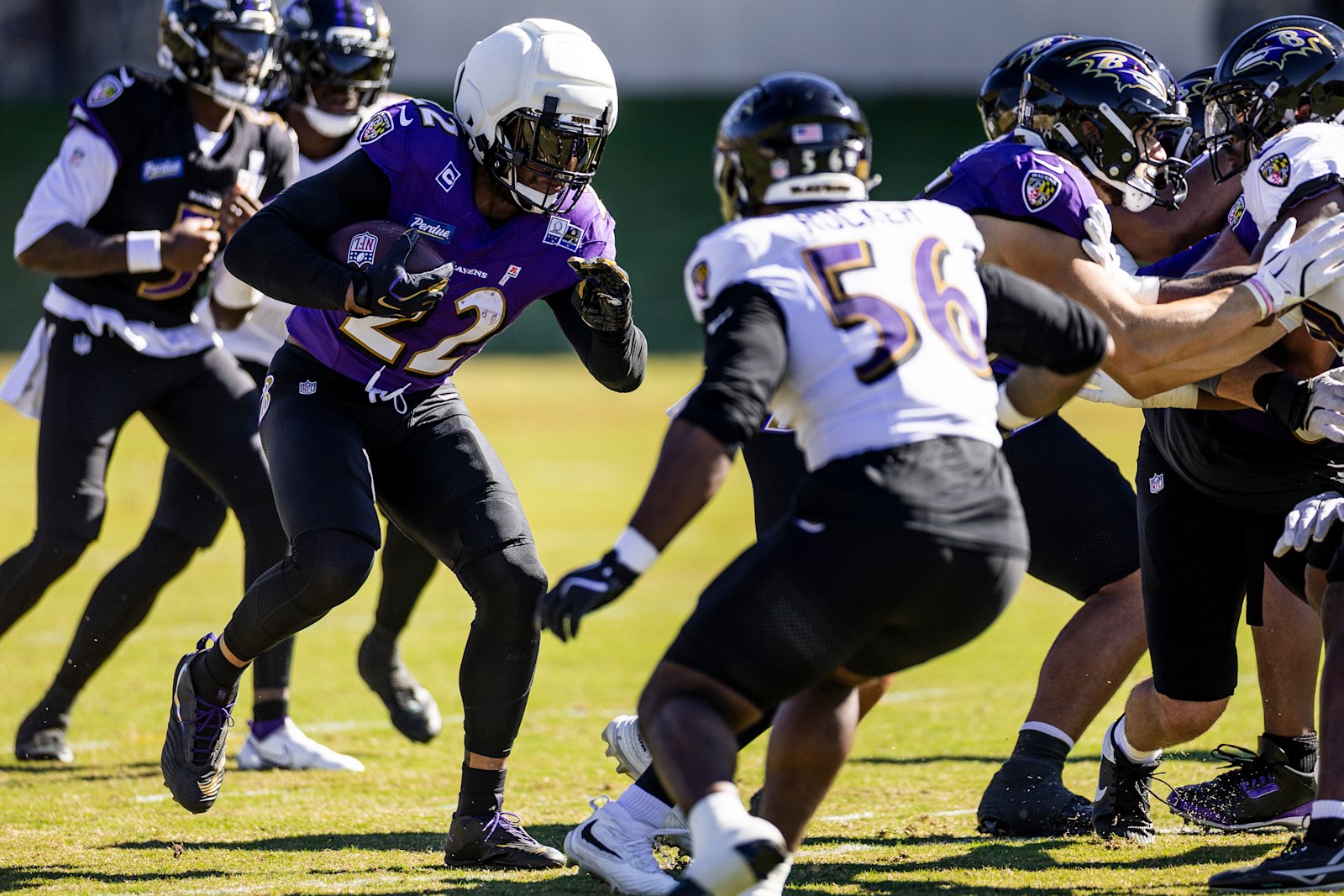
Henry has rushed for 579 yards and seven touchdowns this season, respectable production in isolation. But his 3.9 yards per attempt is well below the efficiency we've come to expect.
The past two games have been particularly disappointing.
Against Cleveland, he managed 58 yards on 17 carries. Cincinnati held him to just 45 yards on another 17 attempts.
That's 103 yards on 34 carries across two losses.
Some of the struggles can be attributed to the offensive line. Injuries have disrupted the interior, and the Ravens have too frequently allowed defenders into the backfield before Henry can develop any momentum.
But Lamar’s absence has also made Baltimore's rushing intentions considerably easier to diagnose.
Defenses can attack Henry without worrying nearly as much about the quarterback keeping the football. They can crowd the interior, challenge an inconsistent offensive line and force the Ravens to win individual blocking matchups.
With Lamar back, those responsibilities become much more complicated.
Doyle should be able to combine the quarterback threat, motion and misdirection to create favorable running angles. Buffalo's defensive front has struggled enough that Henry should have chances to produce, particularly if Lamar demonstrates early that he remains willing to keep the football.
Then there's the turnover question.
Cook has already fumbled four times this season, losing two. Henry has lost one, a particularly costly mistake against Cleveland that contributed to the Ravens' defeat.
And anyone who watched last season's opener in Buffalo remembers what happened.
Henry rushed for 169 yards and two touchdowns as the Ravens built what appeared to be a comfortable lead. Then his fourth-quarter fumble helped Buffalo launch an extraordinary comeback in a 41-40 victory.
The Ravens don't need another reminder of how quickly one mistake can change a game between these teams.
Cook and Henry are both capable of producing the kind of afternoon that forces an opponent to change its defensive priorities.
They're also handling the football often enough that ball security becomes especially significant.
In a matchup featuring two quarterbacks capable of creating touchdowns from almost nothing, a single extra possession could be decisive.
The Ravens need that possession to come from Allen or Cook putting the ball on the ground rather than another Henry mistake.
What will decide the game?
The Bills certainly have some weaknesses the Ravens should be capable of exploiting.
Buffalo has one of the league's worst defenses, a vulnerable secondary and several important players dealing with injuries. If Lamar returns close to full strength, the Ravens should be capable of attacking Buffalo in multiple ways.
Flowers can create explosives. Henry should see better running opportunities. Doyle has enough versatility in his offense to make Buffalo defend far more than it has successfully defended through six games.
I don't think the Ravens need a perfect offensive performance to put up 30 points.
Unfortunately, the same can be said about Buffalo.
Allen is playing outstanding football. Cook has been considerably more efficient than Henry. Shakir and Kincaid present exactly the kind of underneath threats that have repeatedly caused the Ravens problems. And the Bills have been productive enough to overcome their defense allowing nearly 29 points per game.
The Ravens defense has plenty of players with big contracts and big mouths. This is the week they need to step up and let their play do the talking.
Hamilton, Roquan, Wiggins, Humphrey, Hendrickson, Madubuike and the rest of this highly paid group should be capable of considerably better football than we've watched recently.
Minter and Anthony Weaver have the personnel to create pressure, disguise coverage and prevent explosive plays without simply throwing additional defenders at Allen on every passing down.
But eventually the players have to execute.
There are few quarterbacks in football better equipped to punish defensive mistakes than Allen.
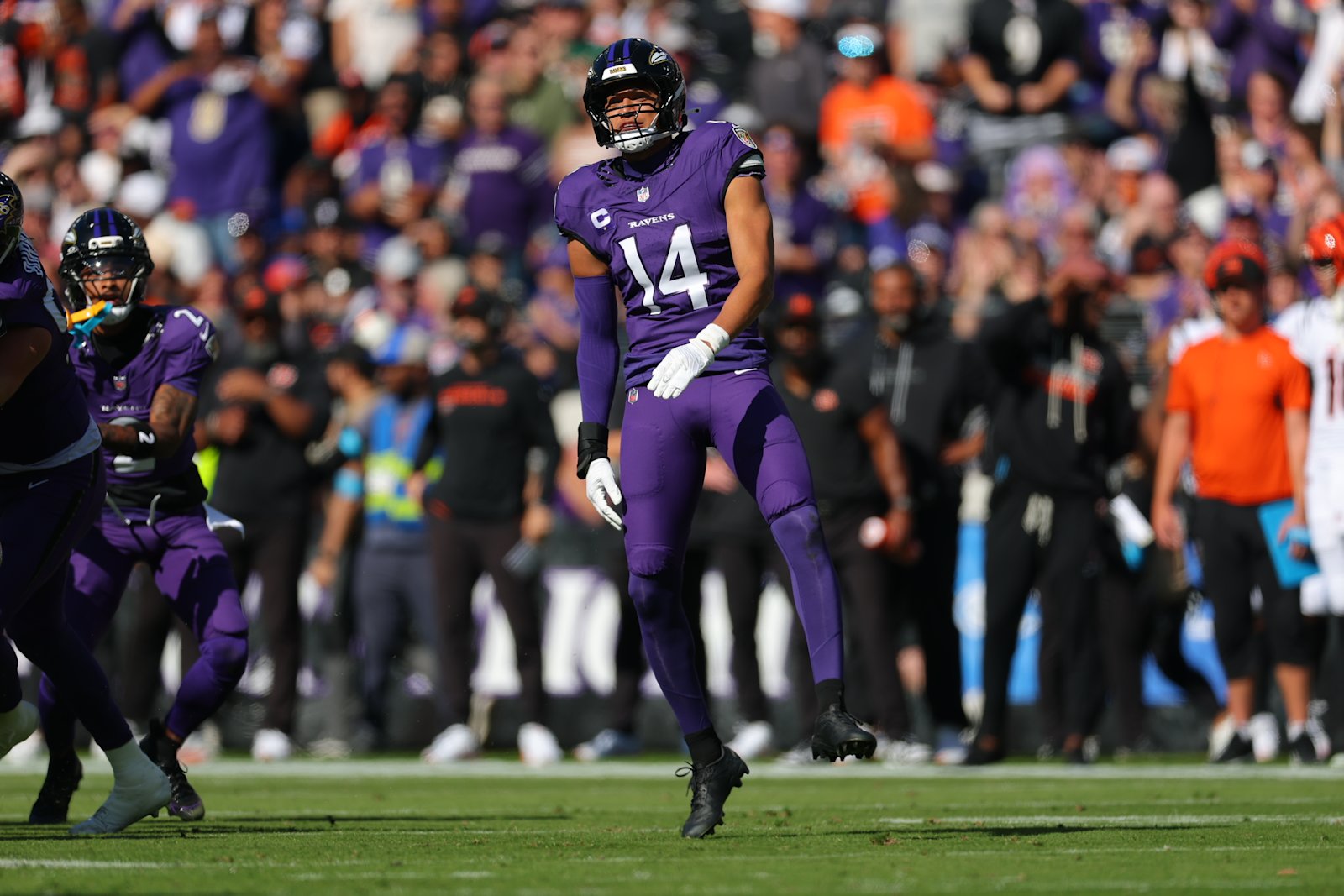
I expect Lamar's return to make an immediate difference offensively, assuming his ankle allows him to move normally. Flowers should have another productive afternoon, and I wouldn't be surprised if Henry returns to form against a defense that has struggled to stop much of anything.
The problem is that I have totally lost confidence in the other side of the football. At this point I think many of the veterans just aren’t good football players anymore and the young players are not ready to fill all those shoes.
Until the Ravens demonstrate that they can consistently stop a quality offense, it's difficult to expect them to travel to Buffalo and beat one of the best quarterbacks in the league. And without knowing if Lamar is fully mobile, it’s tough to expect the offense to win a shootout in Buffalo.
Prediction: Bills 40, Ravens 33.