Group D Standings
| Team | P | W | D | L | GF | GA | GD | Pts |
|---|---|---|---|---|---|---|---|---|
 United States United States |
1 | 1 | 0 | 0 | 4 | 1 | +3 | 3 |
 Australia Australia |
1 | 1 | 0 | 0 | 2 | 0 | +2 | 3 |
 Türkiye Türkiye |
1 | 0 | 0 | 1 | 0 | 2 | -2 | 0 |
 Paraguay Paraguay |
1 | 0 | 0 | 1 | 1 | 4 | -3 | 0 |
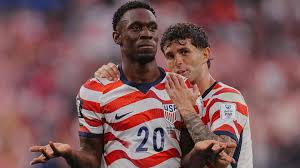
After the dream start against Paraguay, the U.S. Men’s National Team heads into its second World Cup game on Friday with a chance to turn a great opening performance into real control of the group. The US could not have scripted a better start to its home World Cup than the 4-1 win over Paraguay. The stars looked like stars. The system looked coherent. The press looked vicious. The home crowd seemed to matter. For the first time in a long time, a US World Cup game felt less like survival and more like dominance.
But tournaments are not won on opening night and the second game of a group rarely looks like the first.
The next step is Australia, and this is exactly the type of game that can get uncomfortable if the US does not bring the same intensity. Australia may not have the top-end talent Paraguay has. They do not have a Pulisic-level attacker or a midfield full of players from elite European clubs. But they are organized, physical, confident, and coming off a 2-0 win over Türkiye that changed the complexion of the group.
Kickoff: Friday, June 19 — 3:00 p.m. ET / 12:00 p.m. local
Venue: Lumen Field, Seattle, WA
TV/Stream: FOX and FOX One
That makes this more than just a chance to take a big step toward advancement. It is a chance to take control of the entire group. With the change in tiebreakers for this tournament, prioritizing head-to-head results, if the US beats Australia and then Türkiye loses or draws against Paraguay later that night, the US would clinch the top spot in the group before even playing the final game.
That would be massive.
Winning the group is not just about pride. It is about setting up the cleanest possible path into the knockout rounds and avoiding the kind of stressful third game where every goal in every stadium suddenly matters. It would also give them a chance to preserve players like Christian Pulisic, who took a knock against Paraguay, or Tyler Adams, who needs to avoid another yellow card. After the Paraguay win, the US put itself in a position to make the rest of the group stage much easier. Friday is the chance to actually do it.
Lessons From Paraguay
The lesson from the Paraguay game is not complicated.
Keep the press on.
That was the story of the opener. The US overwhelmed Paraguay in the first half with pressure, speed, and energy. Paraguay could not breathe. They could not build. They could not get out. Every clearance felt temporary. Every loose ball seemed to find an American player. The US kept winning the ball back in dangerous areas or forcing Paraguay to retreat into emergency defending around their own box.
That constant pressure did two things. First, it created chances. When you live around the opponent’s box, good things eventually happen. Maybe the final touch is clean. Maybe it takes a deflection. Maybe a defender panics. Maybe a clearance falls to the wrong player. But the more often you put defenders under stress, the more likely they are to break.
Second, and maybe just as importantly, it drained Paraguay emotionally. By the end of the first half they looked like a team that had spent 45 minutes chasing shadows. The third goal was the perfect example. Tyler Adams had a simple passing lane in midfield. Malik Tillman had acres of space and time to pick out the pass as Paraguay looked uninterested in moving quickly. Balogun still had to deliver the finish, and he absolutely did, but the buildup told the story. Paraguay no longer had the energy or sharpness to get tight. The press had worn them down.
That should be the formula again.
Australia will almost certainly be comfortable playing without the ball. They managed just 28% possession against Türkiye. They will not panic if the US controls the game for long stretches. They just beat Türkiye in a game where they spent long stretches defending deep, absorbing pressure, and looking for the right moment to strike.
So the US cannot let Australia’s defensive comfort turn into actual comfort. There is a difference between a team sitting deep because that is its plan and a team sitting deep because it is being suffocated. Against Paraguay, the US forced the latter. They need to do it again.
The back line matters here too. One of the underappreciated parts of the Paraguay win was how well Alex Freeman and Chris Richards handled long balls. Paraguay repeatedly tried to bypass the press by going direct, and the US back line consistently won first contact, cleaned up second balls, and immediately restarted the attack. That is what allows a high press to become a siege. If the opponent can go long and win the ball, the press becomes risky. If the opponent goes long and immediately loses it, the press becomes demoralizing.
Australia will test that. They are going to go long far more often and far more deliberately, with Mohamed Touré as a genuine aerial target. Winning those headers will not just be about defending. It will be about keeping the press alive and keeping Australia pinned in.
What Australia Showed Against Türkiye
Australia’s opener against Türkiye was a reminder that styles make fights, and pretty soccer does not always win. Türkiye had most of the ball. Türkiye had most of the shots. Türkiye spent most of the game probing around Australia’s defensive block. And Australia won 2-0.
That is the warning sign.
Australia is not trying to impress anyone with possession numbers. They are not trying to build out beautifully from the back and play through the lines. They are trying to stay compact, protect the middle, force the opponent wide, survive crosses and half-chances, and then punish the one or two moments when the game opens up.
That worked perfectly against Türkiye. Nestory Irankunda scored the opener after Australia found him in space on the break, and Connor Metcalfe finished it off later with a counterattacking goal from distance. Goalkeeper Patrick Beach also had a massive game, making several key saves after being surprisingly selected over veteran Mat Ryan.
So there are two ways to read that game.
The optimistic read for the US is that Türkiye did enough to create danger and just lacked the speed, precision, and ruthlessness to finish the job. They had the ball. They found shooting opportunities. They forced saves. They just could not break Australia before Australia found their moments.
The cautious read is that Australia is perfectly happy to let you think you are in control until suddenly you are not. They can defend for long stretches. They can survive pressure. They can frustrate a more talented team. And if they score first, they become very difficult to play against.
That is why the first goal is so important.
If the US scores first, Australia has to open up. They cannot simply sit in their block for 90 minutes and hope for one break. That would create more space for Pulisic, Balogun, Dest, Jedi Robinson, McKennie, and Tillman to attack. The US has more speed and athleticism than Türkiye, and if Australia has to chase the game, that becomes a major problem for them.
If Australia scores first, this could become a grind in a hurry.
They would sit even deeper, take even fewer risks, slow the game down, foul when they need to, and try to turn the final hour into a frustrating exercise in U.S. possession around the horseshoe. That is not where the US wants to be. This team has more creativity than past versions, but no team wants to spend an entire World Cup game trying to break down eleven players behind the ball while the clock keeps moving.
Australia is built to punish exactly the spaces this US setup leaves behind. Their attack runs through the pace of Irankunda, with the larger Touré up top as a target to play off, win the long ball, and bring others into it. The template is obvious for them. They want to go direct, win the knockdown, and spring Irankunda into the grass behind the US wingbacks before the back line can reset.
That makes him the player the US needs to worry about most. He is young, fast, confident, and coming off the type of goal that can announce a player to the world. Australia will likely look for him early and often whenever they win the ball. He gives them the exact outlet they need against a team like the US that wants to press high and push wingbacks forward.
That makes Alex Freeman one of the key players in this game again. Freeman’s pace and recovery speed were already important against Paraguay, but they may be even more important on Friday. If Irankunda gets loose in transition, Freeman is probably the player best suited to chase him down, engage physically, and keep the play from becoming a clean break at the US goal. Richards will also be crucial in reading when to step up and when to drop, especially if Australia tries to pair Irankunda’s speed with Touré’s size and direct running.
The hope is that Irankunda does not get singled up with Tim Ream very often. Since he tends to play on the left so that he can cut in to shoot on his right, the US may be spared that matchup for most of the game.
Jordan Bos gives Australia another danger man on the wing, often overlapping or underlapping on the same side as Irankunda. He wants to carry the ball forward, arrive from deeper positions, and turn a defensive shape into an attacking move before the opponent has fully reacted. That makes his matchup with Sergiño Dest especially important. Dest’s width and creativity are a huge part of how the US can stretch Australia, but every time he pushes high, Bos becomes a potential outlet into the space he leaves behind. If the US gets its rest defense right, Dest can pin Bos back and force him to spend most of the game defending. If the spacing gets loose, Bos is good enough and direct enough to make the US pay.
Winning the first ball will matter against Australia. Winning the second ball may matter even more. Australia will not need many chances to make this game uncomfortable. They are going to look for those direct balls into the channels, flick-ons, knockdowns, and broken-field moments where the US back line is turned around and the midfield has to sprint back toward its own goal. Adams has to be excellent in those moments. Tillman has to bring the same defensive bite he showed against Paraguay. The wingbacks have to pick their moments carefully.
That does not mean the US should play scared. It means the rest defense has to be locked in. The press can be aggressive, but it has to be connected. The wingbacks can fly forward, but the back three and Adams have to be positioned to kill counters before they become real chances.
The US will also need to find Harry Souttar on set pieces. The 6’6” center back is a real attacking weapon on corners, wide free kicks, and second balls around the box. Australia does not need to create a beautiful move to hurt the US. They can win a corner, load the box, and suddenly turn one restart into the biggest chance of the game. That means the US has to defend aggressively without giving away cheap fouls in bad areas. Against a team like Australia, a needless foul near the sideline can be almost as dangerous as a turnover in midfield.
These two sides actually met just last October, with the US coming from behind to win 2-1 in Colorado on a pair of Haji Wright goals after Jordan Bos had put Australia ahead. But it is hard to read much into that result. Both teams looked almost nothing like they do now. Pulisic captained that night but limped off early, the US rolled out a heavily rotated lineup, and Australia was still sorting out its own roster under Tony Popovic. The two opening games in this tournament tell us far more about who these teams are today than a friendly built around experimentation.
Can the US Sustain the Energy?
One of the more interesting numbers from the opening round was distance covered. Through all games completed by the end of Tuesday, the US was third in the tournament in distance covered at 119.9 km, just behind Austria and France. Australia was eighth at 116.6 km. Paraguay, by comparison, covered 114.3 km in the game against the US.
That lines up with what the game looked like. The US did not just outplay Paraguay. They outran them. They were faster to loose balls, more committed in pressure, and more willing to keep making the extra run. It was a full-team effort, and it helped produce one of the best US World Cup performances in recent memory.
The question is whether the US can do it again, in a noon kickoff, with the temperature climbing toward 80 degrees in Seattle on Friday. While this is not quite the brutal heat of the Mid-Atlantic or Texas, it is still a midday game right after the US emptied the tank for ninety minutes. Australia ran plenty in its opener too, so this is not a clear fitness edge for either side. Both teams can cover ground. Both will have to manage it. The home crowd at Lumen should give the US a real lift, but emotion only takes you so far, and the press has to be smart as much as it is energetic. Pochettino has to use his substitutions effectively.
The one personnel question is Christian Pulisic, who came off at halftime against Paraguay after a knock to the calf. His status was listed as “day-to-day” earlier this week. If he is right, he starts and runs the show. If there is any doubt, Pochettino has to weigh this game against a tournament this group still believes it can make a run in. Either way, the bench already proved it can change a game, with Gio Reyna curling in a goal off the bench, Tim Weah offering direct running, Ricardo Pepi keeping the line honest, and Haji Wright giving them a different, more chaotic look if Australia is dug in late. That depth matters in a game that may demand patience for an hour before it finally opens up.
What to Expect Friday
I expect the US lineup to look very similar to the Paraguay game, assuming Pulisic is healthy. Balogun should lead the line again after his two-goal opener. Pulisic and McKennie should occupy the attacking half spaces, with Pulisic drifting into dangerous areas and McKennie crashing the box. Dest and Jedi Robinson should provide the width, with Adams and Tillman behind them. Ream, Richards, and Freeman should stay together across the back line with Freese in goal.
The biggest tactical question is how aggressive Pochettino wants the wingbacks to be early. Dest and Jedi are crucial to breaking Australia down; the US needs width and overlapping runs to stretch the block so Pulisic, Tillman, and McKennie can find pockets between the lines. But Australia’s best attacking route may be the space behind those same wingbacks, where Irankunda is most dangerous. That does not mean Dest and Jedi should be cautious. It means the structure behind them — Freeman’s recovery speed, Richards’ athleticism, and Adams’ positioning — has to be right.
For the US attack, the path is clear. Keep the press suffocating and do not let Australia settle. Attack quickly before they get all eleven behind the ball, because the best chances may come in the few seconds after the US wins possession, where Balogun’s speed and Pulisic’s directness can be devastating. And do not get impatient. Australia wants the US frustrated, firing low-value crosses into a packed box and long shots from distance. The US has to keep moving the ball, keep changing the angle, and trust the quality of Pulisic, Dest, Tillman, Reyna, and McKennie to eventually find the gap.
This is the type of game the US should win, but it is not the type of game they can assume they will win. Australia already showed against Türkiye that they are more than capable of making a more talented team uncomfortable. They will defend. They will run. They will compete. They will believe they can steal this.
But if the US brings the same energy it brought against Paraguay — the same aggression in the press, the same confidence on the ball, and the same ruthless edge in the final third — they should have too much.
The opener was the statement.
Friday is the chance to prove it was not a one-off.
Win this game, and the US can stop worrying about surviving the group and start thinking about what kind of run this team is capable of making.