A season of little games for four- to six-year-olds: ten playful practices, every setup in one place, and the things that make the first season easier.
U6 game library
Every game, without hunting through the weeks.
All 10 of them, written for Ages 4-6 and drawn out where a setup picture helps. Use one as planned or use the search when you need a quick replacement.
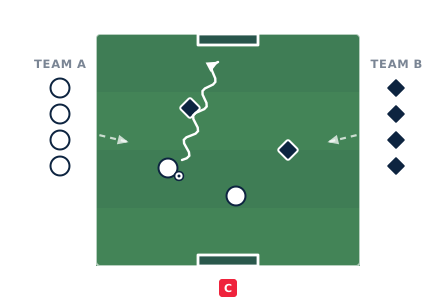
What the pictures mean
A kid on the team with the ball
A kid on the other team
A ball
You
A cone
A goal
Running with the ball
A pass
Running without the ball
Nothing matches that. Try a shorter search.
Warm-up1v1 up to 3v3Every weekLittle GamesStart moving, find the ball and go toward a goal.
How long
10-15 min
How many
2 or more
What you need
Cones, balls, two small goals
Setting it up
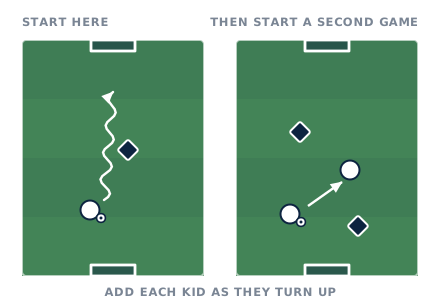
Make one tiny field with a cone goal at each end. Start 1v1, then make a second field or add a player as children arrive.
Shout Find your ball, go to the goal
Things to ask them
Which way are you going?
Can you take your ball with you?
Ball workEveryone with a ballEvery weekGatesLots of touches and turns.
How long
5-10 min
How many
Any
What you need
Lots of cones, a ball each
Setting it up
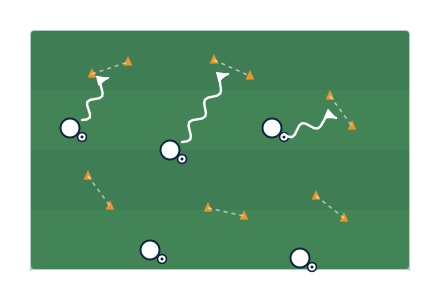
Scatter cone gates around a small space. Every child has a ball and goes through any open gate.
Shout Little touches, turn away
Things to ask them
Can you find a new gate?
Can you turn before you bump anybody?
Ball workEveryone with a ballWeeks 1-2Freeze Tag with a BallKeeping the ball close while noticing other people.
How long
Short rounds
How many
Any
What you need
Cones, a ball each
Setting it up
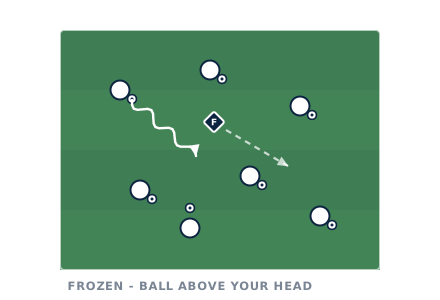
Everyone dribbles in a square. One friendly freeze monster tries to tag them; a tagged child stands still with their ball above their head until a teammate high-fives them.
Shout Keep it close, look up
Things to ask them
Where is the monster?
Can you turn into empty space?
Ball workEveryone with a ballWeeks 2-3Sharks and MinnowsDribbling with someone in the way.
How long
Short rounds
How many
Any
What you need
Cones, a ball each
Setting it up
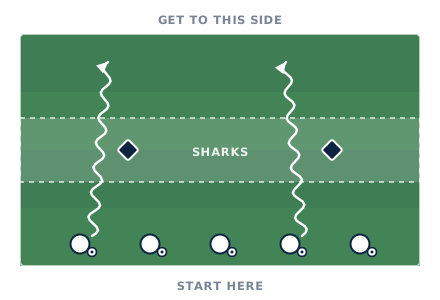
Make a rectangle. The minnows dribble from one safe shore to the other while one or two sharks try to touch their ball.
Shout Head up, find a gap
Tip Nobody sits out. A child who loses a ball can be a shark for the next round, then comes straight back.
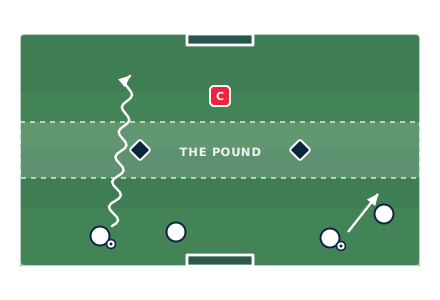
AttackingSmall groupsWeeks 3-4Boston BulldogsGoing forward with the ball and changing direction.
How long
Short rounds
How many
6 or more
What you need
Cones, a ball each
Setting it up
Mark a middle band as the bulldog pound. Players with balls begin at either end and try to dribble through to the far side.
Shout Go, turn, go again
Things to ask them
Where is a safe way through?
What can you do if a bulldog is in front?
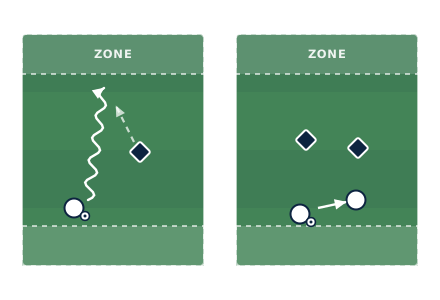
Attacking1v1 or 2v2Weeks 4-5End Zone SoccerGoing to an open space with the ball.
How long
10 min
How many
4 or more
What you need
Cones, balls
Setting it up
Give each team an end zone. Score by dribbling under control into the far zone. Start 1v1, then add a teammate if it stays lively.
Shout Go forward, under control
Things to ask them
Which way is your zone?
Can you get there with your ball?
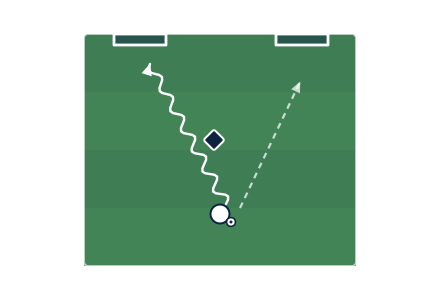
Attacking1v1Weeks 5-6One on One, Two GoalsSeeing the open goal and changing direction.
How long
Short rounds
How many
2 per field
What you need
Cones, balls
Setting it up
Set two cone goals at one end of a small field. The player with the ball can score in either; swap jobs after a goal or a minute.
Shout Which goal is open?
Things to ask them
Can you trick them?
Can you turn to the other goal?
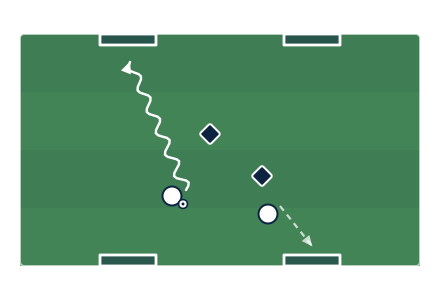
Attacking2v2 or 3v3Weeks 6-8Four Goal GameFinding a goal with space in front of it.
How long
10-15 min
How many
4 or more
What you need
Four cone goals, balls
Setting it up
Give each team two cone goals to attack. Keep teams small and swap quickly.
Shout Can you find the other goal?
Things to ask them
Which goal has space?
Can you turn and go there?
Small-sided game1v1 up to 3v3Weeks 8-9NumbersFast starts and lots of little games.
How long
Keeps going
How many
6 or more
What you need
Two small goals, plenty of balls
Setting it up
Make two teams beside a tiny field. Call one, two or three and that many from each side run in when you serve a ball.
Shout Ready, go!
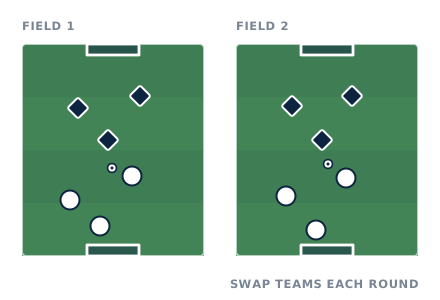
Small-sided game2v2 or 3v3Week 10Tiny Soccer FestivalFinishing the season by playing.
How long
The whole session
How many
Any
What you need
Cones, balls, small goals
Setting it up
Set up two tiny fields, make quick teams and play short games. Swap opponents after each round.
Shout Play, help, have fun
The short version
Are they moving and smiling more than they are waiting?
If they are, you're on the right track. These are the few things that help most before your first U6 practice.
01
Before they arrive
Set out the first game before anyone arrives. At U6, a fast start matters more than a perfect plan.
Bring a ball for every child if you can, plus a few spare balls and lots of cones.
Use one clear boundary and keep the next game close by. Walking a long way between activities loses the group.
Check the space for holes, equipment and anything a child could trip over.
02
While you coach
Keep instructions under thirty seconds. Show the game instead of explaining every detail.
Use imagination: sharks, pirates, treasure and superheroes turn repetition into play.
Never eliminate a child for long. Give them a new role, then bring them straight back in.
Use short rounds. Change the game before attention runs out, not after.
Keep spare balls at your feet and restart instantly.
03
What is normal at U6
Everybody chasing the ball, forgetting which way to go and wanting to dribble are all normal.
They are still learning to share space and attention. Do not expect passing patterns or positions.
A player may need a water break, a parent nearby or a minute out. Let that be fine.
The win is a child leaving excited to play again next week.
Where this came from
The weekly plans are adapted from the Massachusetts Youth Soccer U6 session-plan library and beginner volunteer guide, both recommended by U.S. Soccer. The diagrams here are our own simplified coaching visuals. Match-day rules are league-specific, so check yours.
Play, teach one thing, play again. Open a week to see the purpose, the games and the questions that make it easy to coach.
First 15 minutes
Arrive and play
Start when two children are there
Give everyone a ball or start a tiny game. Say hello, show the edges, and get moving before you explain anything else.
Middle 15 minutes
One playful challenge
One game, one simple idea
Use a short story - sharks, treasure or a race. Show it once, then let them discover it through lots of quick turns.
Last 15 minutes
Play soccer
Small teams, lots of restarts
Finish with a real tiny game. Roll in a fresh ball as soon as one goes out and celebrate brave tries, not just goals.
A small rectangle, roughly a basketball court or smaller, is enough. Make two tiny fields when you can: fewer kids around each ball means more playing.
At this age, keep the game tiny and simple. Use your own league's rules on match day, but at practice start with 1v1, 2v2 or 3v3 and let every child have a ball whenever possible.
What the pictures mean
A kid on the team with the ball
A kid on the other team
A ball
You
A cone
A goal
Running with the ball
A pass
Running without the ball
01Ball workMaking friends with the ballCarry it, stop it, turn with it
The idea Keeping the ball close while noticing other people.
Everyone dribbles in a square. One friendly freeze monster tries to tag them; a tagged child stands still with their ball above their head until a teammate high-fives them.