Project 2030 / Living depth chart
The Player Pool
A curated map of the veterans, contenders and prospects who begin the road to 2030.
The first cut
73 players. Six starting points. One evolving pool.
This is an editorial snapshot, not a ranking. Open a group, then select a player card to see where profiles, key indicators and continuing status updates will live.
Group 01Key Vets The leading candidates to form the experienced core of the 2030 team. 10 players
Chris Richards Center back

Scouting file
Chris Richards
Richards remains the most secure center back in the pool and one of the clearest candidates to become a team leader. He played 90 minutes in Crystal Palace's 2-0 loss at Everton, where he was caught around both goals but also made several aggressive reads and shut down dangerous second-half breaks. His starting role is secure; the next step is turning his individual range into command of the entire line.
Project 2030 caseRichards should be in his prime in 2030. Unless injuries intervene, he projects as a starting center back and a plausible captain.
Folarin Balogun Striker

Scouting file
Folarin Balogun
Balogun finished the cycle as the most complete striker in the pool. He threatens the space behind the defense, can create separation inside the box and has enough strength to play through contact without turning every possession into a wrestling match. His scoring run for Monaco and his production at the World Cup strengthened the case that the US attack is most dangerous when it gives him early service and room to run rather than asking him to live with his back to goal.
Project 2030 caseBalogun should enter 2030 as either the starting striker or half of a genuine competition with Ricardo Pepi. The position is no longer waiting for a solution.
Alex Freeman Right back / right wingback

Scouting file
Alex Freeman
Freeman was the major defensive breakthrough of the 2026 cycle. His length, recovery speed and willingness to carry forward gave the US a different solution on the right side, especially when Sergiño Dest moved higher. He is still learning the details of defending at a high European level, but the combination of age, athletic range and immediate World Cup responsibility makes him one of the most important players in this entire projection.
Project 2030 caseFreeman has a realistic path to becoming a locked-in starter by 2030. His tactical relationship with Dest may be more important than a simple competition between them.
Malik Tillman Attacking midfielder / advanced No. 8

Scouting file
Malik Tillman
Tillman finally converted club-level promise into a sustained national-team role. He can receive between lines, protect the ball in traffic and arrive in the box without abandoning the midfield structure. The important change is that he no longer looks like a luxury No. 10 who must dominate the ball. He has become more useful without it and more comfortable connecting attacks in fewer touches.
Project 2030 caseTillman should be one of the central attacking pieces in 2030. The question is whether he becomes the primary connector or remains a high-level complementary player.
Weston McKennie Central midfielder / utility midfielder

Scouting file
Weston McKennie
McKennie remains the pool's most unusual problem-solver. He can play as an eight, a deeper midfielder, a wide midfielder or an emergency fullback, and his timing in the penalty area gives the US a scoring threat that does not require another attacker. He will be 31 in 2030, so the question is less about talent than whether his physical range and club role remain strong enough to justify building around him.
Project 2030 caseMcKennie should remain a major roster candidate and could still start. His versatility makes him particularly valuable in a tournament squad, even if his role becomes less automatic.
Christian Pulisic Winger / attacking midfielder

Scouting file
Christian Pulisic
Pulisic remains the player the US can least easily replace. He is the best combination of ball carrying, final-third creation, finishing and experience in the pool. By 2030 he may not attack every match with the same burst he had in his early twenties, but his movement, two-footed finishing and understanding of where chances develop should age well. The larger program question is whether the next cycle can reduce the burden on him rather than simply asking him to solve another attack.
Project 2030 caseBarring a major decline or injury, Pulisic should be a third-time World Cup starter and one of the team's leaders.
Tyler Adams Defensive midfielder

Scouting file
Tyler Adams
Adams is still the cleanest defensive midfielder in the pool. He closes space before attacks fully form, protects aggressive fullbacks and gives the press a reliable organizer. His value becomes clearest against strong opponents, when the US needs someone who can erase transition danger without dropping the entire team into a low block. The obvious concern is that his body has already accumulated a long injury history.
Project 2030 caseA healthy Adams is a likely 2030 starter and captain candidate. The pool still needs a credible alternative because planning around perfect health would be reckless.
Antonee Robinson Left back / left wingback

Scouting file
Antonee Robinson
Robinson remains the best true left back the US has produced. His repeated runs stretch defenses, his recovery speed protects the space behind him and his engine allows the team to build attacks down the left without leaving Pulisic isolated. He will be 32 in 2030, which is not disqualifying, but his game depends heavily on athletic repetition. The cycle should treat him as a likely contributor while aggressively developing a successor.
Project 2030 caseRobinson can still start in 2030, but his status should not block serious investment in the next left back.
Sergiño Dest Right back / right wingback

Scouting file
Sergiño Dest
Dest gives the US something no other defender in the pool can replicate: the ability to beat pressure and create an attack through dribbling. In PSV's 5-1 win over Groningen, he made an aggressive forward run, combined with Ruben van Bommel and scored the fifth goal. The performance reinforced how much PSV values his high starting positions and ability to carry or combine through pressure.
Project 2030 caseDest should remain a major 2030 player. His best use may be as an attacking wingback with a more conservative defender balancing him.
Ricardo Pepi Striker

Scouting file
Ricardo Pepi
Pepi enters the cycle with a much stronger professional foundation than he had four years earlier. He started at striker and converted a confident first-half penalty in PSV's 5-1 win over Groningen. The broader evidence remains the important part: he is starting and scoring regularly for the best team in the Netherlands, even while he continues to chase a more complete all-around forward game.
Project 2030 casePepi projects as one of the two leading strikers for 2030. The competition with Balogun should be treated as a strength rather than a problem to settle permanently.
Group 02Borderline Vets Established senior players whose roster place, role or age profile leaves meaningful uncertainty. 14 players
Gio Reyna Attacking midfielder / winger

Scouting file
Gio Reyna
Reyna remains the most difficult player in the pool to categorize. His touch, passing imagination and ability to receive between lines are still rare, and he can change a match with a few actions. The problem is that club instability, injuries and uneven defensive work have prevented those flashes from becoming a dependable ninety-minute role. Talent keeps him close to the core. Reliability keeps him outside it.
Project 2030 caseReyna can still become a major 2030 contributor, but the next two club seasons matter more than his reputation. He needs proof, not another reset.
Tim Weah Right winger / wingback

Scouting file
Tim Weah
Weah remains a useful international player because he stretches the field without needing the ball at his feet for long. His runs behind the defense create space for central attackers, and his willingness to defend makes him easier to fit into different shapes than many wingers. He will be 30 in 2030, so the concern is whether he can preserve enough acceleration and production to hold off younger, more creative options.
Project 2030 caseWeah remains a strong roster candidate and situational starter. His path is clearer against aggressive opponents than against teams that concede possession.
Sebastian Berhalter Central / defensive midfielder

Scouting file
Sebastian Berhalter
Berhalter earned his 2026 place by becoming a dependable two-way midfielder rather than by filling a famous surname quota. He covers ground, competes for second balls and delivers dangerous set pieces. He is not an elite controller or destroyer, but his balance made him useful in a roster that needed midfield reliability. The challenge is that useful balance can be easier to replace than a truly distinctive trait.
Project 2030 caseBerhalter can remain in the mix through 2030, especially if coaches value role clarity. He will need to outperform younger midfielders rather than rely on continuity.
Matt Freese Goalkeeper

Scouting file
Matt Freese
Freese seized the national-team goalkeeping job late in the cycle and carried it into the World Cup. His size, patience and shot stopping gave the US a steadier floor than it had for much of the previous two years. Goalkeeper careers can shift quickly, however, and his distribution is good enough rather than transformative. He begins the cycle ahead, but not protected from competition.
Project 2030 caseFreese is the early favorite to remain in the 2030 group, though the starting job should stay open through at least the middle of the cycle.
Matt Turner Goalkeeper

Scouting file
Matt Turner
Turner's return to MLS restored regular minutes and reminded everyone why he won the job before Qatar. He remains an excellent reaction keeper and a strong penalty stopper, but he entered the 2026 World Cup behind Freese and will be 36 in 2030. His path depends on maintaining top-level shot stopping while accepting that the team may prefer a younger goalkeeper with a broader buildup game.
Project 2030 caseTurner can still make the 2030 roster as an experienced No. 2 or No. 3, but he is no longer the automatic projection.
Joe Scally Right back / left back

Scouting file
Joe Scally
Scally is a reliable defender whose value is clearest when the US needs to contain a dangerous winger. He is stronger and more conservative than Dest, and he has enough experience on both sides to cover multiple roster needs. His problem is that Alex Freeman now offers athletic upside while Dest offers much more creation. Scally must either separate himself as the best pure defender or add more to the buildup.
Project 2030 caseScally remains a credible 2030 roster player, especially as a defensive matchup option. His starting path is narrower than it was entering 2026.
Alejandro Zendejas Right winger / attacking midfielder

Scouting file
Alejandro Zendejas
Zendejas played his way onto the 2026 roster through production rather than projection. He is sharp receiving on his left foot, finds shooting positions from the right and works well in quick combinations around the box. He will be 32 in 2030, and his margin is therefore small. He must continue producing at a high club level because younger wingers will have more runway and more athletic upside.
Project 2030 caseZendejas is a viable veteran bench option, but he is more likely to be challenged out of the pool than to become a long-term starter.
Mark McKenzie Center back

Scouting file
Mark McKenzie
McKenzie remains one of the better American center backs in possession. He can step forward, hit line-breaking passes and defend in a team that asks its back line to hold space. He has never fully secured an international starting role because occasional errors and a lack of dominant aerial presence have outweighed otherwise solid stretches. By 2030 he will still be a reasonable age, but the center-back pool should become more competitive.
Project 2030 caseMcKenzie projects as a credible squad defender with a chance to start if his club form rises. He is not secure enough to block new options.
Auston Trusty Left center back

Scouting file
Auston Trusty
Trusty offers a useful left-footed profile, real size and experience defending in aggressive club structures. He can cover ground outside the box and gives the back line a natural passing angle from the left. The concern is that he has not consistently looked dominant enough in individual duels to turn those tools into an automatic international role.
Project 2030 caseTrusty has a plausible 2030 roster path because left-footed center backs are scarce. He still needs to prove he is more than useful depth.
Brenden Aaronson Attacking midfielder / winger

Scouting file
Brenden Aaronson
Aaronson remains a difficult player to dismiss because coaches trust his movement and defensive work. He presses with purpose, makes supporting runs and can speed up combinations when the match is already open. The limitation has not changed: against a settled defense, his touch and final action can break down before his energy becomes useful.
Project 2030 caseAaronson is a strong tournament-squad candidate but not a protected starter. His route to 2030 is continuing to be the best high-energy connector in the pool.
Haji Wright Striker / left forward

Scouting file
Haji Wright
Wright's club scoring and physical profile kept him in the 2026 team, and Coventry's promotion gives him a chance to test those traits in the Premier League. He is dangerous running from the left into central areas and can finish with either foot, but his national-team fit has sometimes been less natural as a lone striker. By 2030 he may be competing for a specialist role rather than a starting place.
Project 2030 caseWright can remain a useful third striker or hybrid wide forward. Balogun and Pepi currently have the clearer long-term path.
Max Arfsten Left wingback / winger

Scouting file
Max Arfsten
Arfsten's rise was one of the better late-cycle stories. He gives the team direct running from the left, attacks the back post and understands how to rotate inside a fluid possession system. He is more natural as a wingback than a traditional fullback, which makes his value dependent on the coach's structure. His 2026 roster place established a baseline, not a four-year guarantee.
Project 2030 caseArfsten can return in 2030 if the US uses wingbacks or values a direct left-sided substitute. His tactical fit is narrower than Robinson's.
Miles Robinson Center back

Scouting file
Miles Robinson
Robinson remains one of the best pure recovery defenders in the domestic pool. He can survive open-field situations, defend crosses and match athletic forwards without requiring constant protection. The Achilles injury earlier in his career reduced some of the certainty around his ceiling, and by 2030 he will be 33. His path depends on remaining clearly better defensively than younger center backs who offer more on the ball.
Project 2030 caseRobinson is a reasonable short-term veteran and depth option. A 2030 place is possible, but the pool should expect younger center backs to challenge him.
Tim Ream Left center back

Scouting file
Tim Ream
Ream's presence in 2026 was a remarkable extension of a career that appeared close to finished before Qatar. His calm passing, scanning and defensive positioning remained valuable because he solved problems before his lack of speed became decisive. He will be 42 in 2030, so this profile is less a roster projection than a transition plan. The team needs to preserve what he provides through another player rather than assume he will still provide it himself.
Project 2030 caseA 2030 World Cup place is highly unlikely. His immediate value is helping bridge the defense into the new cycle before stepping away.
Group 03Just Missed Players close to the 2026 group or capable of forcing their way back into the pool during the next cycle. 11 players
Johnny Cardoso Defensive / central midfielder

Scouting file
Johnny Cardoso
Cardoso was on a World Cup path before a serious ankle injury in May required surgery. His club résumé is stronger than his national-team résumé: he reads pressure well, receives cleanly in deeper areas and can defend through positioning rather than constant emergency sprints. The unresolved issue is that those qualities have not consistently translated to the US, where matches have often moved around him.
Project 2030 caseCardoso should return to the pool quickly and has a real chance to start by 2030. He must convert club credibility into national-team control.
Tanner Tessmann Defensive midfielder / deep-lying No. 8

Scouting file
Tanner Tessmann
Tessmann was the most difficult healthy-enough omission from the 2026 roster. He earned substantial Ligue 1 and Europa League responsibility, can switch play from deep and has the size to protect central space. A late muscle injury clouded the final decision, but the larger question was tactical preference rather than whether he belongs near the pool.
Project 2030 caseTessmann is well positioned to become a regular in the 2027-30 cycle. His club level is high enough that repeated exclusion would require a clear tactical explanation.
Diego Luna Attacking midfielder / left winger

Scouting file
Diego Luna
Luna's omission was surprising because he had become one of the most fearless creators in the pool. He receives in traffic, turns toward goal and tries passes that less adventurous players do not see. Early-2026 injuries disrupted his timing, but he recovered and returned to production before the tournament. His challenge is proving that the attacking value outweighs questions about pace, defensive range and positional fit.
Project 2030 caseLuna should receive an early-cycle reset and remains one of the best candidates to add attacking imagination before 2030.
Jack McGlynn Central midfielder / left-sided playmaker

Scouting file
Jack McGlynn
McGlynn remains one of the best passers in the pool. His left foot can change the point of attack, break a midfield line or create from set pieces, and his move to Houston expanded his responsibility. He is not quick enough to survive careless positioning, so the question is whether his defensive improvement can make the passing worth building around.
Project 2030 caseMcGlynn offers a skill the pool lacks. If his defensive floor rises, he can become a valuable 2030 roster midfielder rather than a matchup-specific option.
Aidan Morris Central / defensive midfielder

Scouting file
Aidan Morris
Morris has built a strong Championship reputation through defensive work, clean circulation and the ability to play at a demanding tempo. He does not have Adams' recovery speed or Tessmann's passing range, but he offers a dependable middle ground. He was likely near the end of the 2026 selection conversation and should begin the next cycle close to the first team.
Project 2030 caseMorris can become reliable 2030 depth and could start in the right midfield combination. His floor is stronger than his ceiling is obvious.
John Tolkin Left back

Scouting file
John Tolkin
Tolkin offers more natural left-back technique than most of the players chasing Robinson. He is comfortable receiving in possession, can deliver set pieces and has now experienced both the Bundesliga and 2. Bundesliga. A knee injury damaged his late push for 2026, and the next cycle will test whether he is athletic enough to defend international wingers without sacrificing his buildup value.
Project 2030 caseTolkin should receive meaningful early-cycle minutes. The left-back succession is open enough for him to become Robinson's primary challenger.
Patrick Schulte Goalkeeper

Scouting file
Patrick Schulte
Schulte has the strongest big-match club résumé among the goalkeepers who missed 2026. He has handled MLS Cup, Concacaf competition and Olympic responsibility while playing in a possession-heavy system. His distribution and willingness to play outside the box give him a modern profile, though his shot stopping has not always separated him from Freese, Turner or Brady.
Project 2030 caseSchulte remains a legitimate 2030 goalkeeper candidate. The position is open enough that one strong season or camp can change the hierarchy.
Roman Celentano Goalkeeper

Scouting file
Roman Celentano
Celentano has quietly accumulated one of the largest MLS starting samples in the goalkeeper pool. He is steady, rarely turns routine situations into emergencies and has produced several seasons of evidence behind a strong team. He has not yet forced his way into senior international minutes because his distribution and shot-stopping ceiling have looked solid rather than exceptional.
Project 2030 caseCelentano is a credible depth option who could rise if the more heralded keepers stall. He needs a defining trait to become more than a safe alternate.
Cameron Carter-Vickers Center back

Scouting file
Cameron Carter-Vickers
Carter-Vickers would have been a serious 2026 candidate before an Achilles rupture ended his season and World Cup hopes. At his best he is a powerful penalty-area defender who plays with calm and can handle direct forwards. The injury changes the projection because explosiveness, turning and recovery are central to surviving international space.
Project 2030 caseA full recovery puts him back in the pool quickly. By 2030 he will be 32, so he needs to re-establish his level early rather than lose another season.
Josh Sargent Striker

Scouting file
Josh Sargent
Sargent's club scoring has often been stronger than his national-team production. His pressing, movement and combination play make him a more complete forward than his US numbers suggest, but the 2025-26 conflict at Norwich and move to Toronto created another detour just before the World Cup. MLS gives him regular minutes and a long-term platform, but it also raises the standard of production required to pass Balogun, Pepi and Wright.
Project 2030 caseSargent is still young enough to return and remains one of the deeper striker options. He must score heavily and take his next international chances.
Patrick Agyemang Striker

Scouting file
Patrick Agyemang
Agyemang's first Championship season was a real success before an Achilles injury ended his World Cup push. His size and running power gave the US a direct outlet, and he adapted faster to England than many expected. The injury is now the entire short-term story. His game depends on acceleration, repeated duels and the ability to cover ground, all of which must be rebuilt carefully.
Project 2030 caseA healthy Agyemang can return as a different type of striker from Balogun and Pepi. His 2030 case begins with proving that his athletic base has survived.
Group 04Lost in the Woods Players with real prior promise whose club role, development path or national-team fit has become unclear. 5 players
Yunus Musah Central midfielder / wide midfielder

Scouting file
Yunus Musah
Musah's fall from 2022 World Cup starter to 2026 omission remains a warning against assuming pedigree guarantees progress. But his 90-minute start in AC Milan's 2-1 win at Torino was unusually encouraging: local coverage praised his intelligence, connective passing, vertical intent and transition recoveries. If he can make those choices consistently, he can reopen the central-midfield case rather than rely only on athletic versatility.
Project 2030 caseMusah is talented enough to return, but he needs a genuine reinvention rather than another camp based on old expectations.
Gabriel Slonina Goalkeeper

Scouting file
Gabriel Slonina
Slonina once appeared to be the obvious long-term goalkeeper, but the Chelsea move has not produced a stable senior pathway. Loans at Eupen and Barnsley brought useful experience but also errors, injury interruptions and another return to a crowded parent club. He still has the frame, reactions and age to recover, but goalkeeper development requires games, not reputation.
Project 2030 caseSlonina can still re-enter the 2030 race, but the next club decision is critical. Another year without a clear No. 1 role would be a major setback.
Gianluca Busio Central midfielder / deep-lying playmaker

Scouting file
Gianluca Busio
Busio's club trajectory is stronger than the category suggests. The 2025-26 season was arguably his best, and he helped captain Venezia back to Serie A. He remains outside the central national-team discussion because his athletic limitations can be exposed in transition and because the pool has not settled on whether his passing is valuable enough for a deep role.
Project 2030 caseBusio is a credible bounce-back candidate and may be misplaced if his club form holds. He needs the next coach to evaluate the player he is now, not the prospect he was.
Bryan Reynolds Right back / wingback

Scouting file
Bryan Reynolds
Reynolds finally converted several productive Belgian seasons into a move to Ligue 1. His size, speed and attacking runs have always been intriguing, but he has not built a meaningful senior US role because the defensive details lagged behind the physical tools. Rennes gives him a better weekly test and a chance to reopen a position that has become crowded.
Project 2030 caseThe Rennes transfer is a legitimate reset. Reynolds must show clear defensive growth to become more than an athletic depth option.
George Campbell Center back / right back

Scouting file
George Campbell
Campbell's first Championship season was more encouraging than his national-team standing suggests. He handled regular minutes, played both center back and right back and added set-piece production. The difficulty is that his profile is broad rather than distinctive: he is athletic, useful and versatile without yet being an elite passer, aerial defender or recovery specialist.
Project 2030 caseCampbell has a plausible route back because he is playing meaningful games in England. He needs a stronger defining trait and more senior-team exposure.
Group 05Prospects Younger development cases who still need stronger first-team evidence before entering the main pool. 24 players
Caleb Wiley Left back / left wingback

Scouting file
Caleb Wiley
Wiley remains a prospect because injuries have prevented his European move from becoming a true first-team test. At his best he is an explosive left-sided runner who can overlap, carry in transition and recover defensively. The raw pathway is still attractive because the US needs a long-term successor to Robinson, but potential will stop mattering if he cannot string together healthy months and regular starts.
Project 2030 caseWiley still has the athletic ceiling to become a 2030 left back. The next move must prioritize minutes over club prestige.
Damion Downs Striker

Scouting file
Damion Downs
Downs has the frame and movement to become a useful international striker, but his first season after leaving Köln did not produce the breakthrough expected. He struggled for production at Southampton and then failed to score during a loan at Hamburg. That does not end the projection at 21, but it shifts the question from ceiling to whether he can establish a reliable senior scoring level.
Project 2030 caseDowns remains young enough to re-emerge and offers a different striker profile. He needs a productive club season before another senior US role is justified.
Zavier Gozo Winger / wingback

Scouting file
Zavier Gozo
Gozo is the best combination of current production, age and immediate readiness in this prospect group. He is a direct, explosive attacker who wants to receive facing goal, isolate a defender and attack the box. He can stay wide, run diagonally behind the line or function as an aggressive wingback.
Project 2030 caseHis directness could earn him an early bench role before he becomes a complete player.
Julian Hall Striker / wide forward

Scouting file
Julian Hall
Hall is already producing like a senior scorer. His game is based on mobility, separation and attacking space rather than traditional target-forward play. He presses, runs across center backs and is especially dangerous when New York forces turnovers.
Project 2030 caseHe has already cleared the first hurdle that defeats many striker prospects by scoring against adults at a young age.
Justin Ellis Forward / attacking midfielder

Scouting file
Justin Ellis
Ellis is listed as a forward, but his game is closer to a creative second striker or false nine than a penalty-box specialist. He likes dropping toward the ball, drawing a center back or defensive midfielder with him and then finding runners beyond the defense. He has a strong feel for tempo and can receive with his back to goal, protect the ball, turn into space or release a teammate with a through ball or curling diagonal. His five MLS assists show that his playmaking has translated unusually quickly to the first-team level. He remains capable of finishing moves himself, but the most interesting part of his profile is the combination of scorer and facilitator. His technical quality and field awareness appear ahead of his physical development.
Project 2030 caseEllis was born in Florida and is eligible for Uruguay through his mother. He has consistently represented U.S. youth teams, making the United States the clear favorite, but Uruguay remains an alternative until he is senior cap-tied. Ellis may deserve inclusion in the main top-20 table. The senior assist production and unusual striker-playmaker profile give him a clearer differentiating trait than many prospects with more minutes. His next step is proving that he can sustain this influence over a full MLS season.
Adri Mehmeti Defensive midfielder / No. 8

Scouting file
Adri Mehmeti
Mehmeti may have the most impressive age-to-responsibility relationship in the group. At 17, he has already been trusted for substantial MLS minutes in central midfield. He scans, anticipates passing lanes, moves the ball quickly and can break lines from deeper positions.
Project 2030 caseIf Mehmeti develops into a true six/eight controller, he fills a valuable niche in the American pool.
Neil Pierre Center back

Scouting file
Neil Pierre
Pierre combines an unusual physical profile, strong age-adjusted production and a rapidly improving senior resume. His progression from MLS NEXT Pro to productive minutes in Denmark and then immediate usefulness in MLS gives the projection real momentum.
Project 2030 caseCenter back should be one of the most open positions in the cycle, and Pierre's physical ceiling and trajectory put him near the top of the domestic prospect group.
Chris Brady Goalkeeper

Scouting file
Chris Brady
Brady is the highest-floor goalkeeper in this group because he has already handled several seasons as an MLS starter. He is a large, athletic keeper whose best traits are reactions, close-range saves and control of crosses.
Project 2030 caseThe post-2026 goalkeeper order is open. Brady has a more proven floor than Diego Kochen, even if Kochen may possess the higher technical ceiling.
Rokas Pukstas Box-to-box No. 8

Scouting file
Rokas Pukstas
Pukstas has one of the strongest professional resumes among young, unestablished American midfielders. His game is built around running power, timing and penalty-area instincts. He is most effective as a No. 8 who presses, competes for second balls and arrives late in scoring positions.
Project 2030 caseHe has a strong chance to become a useful international No. 8 even if he never develops into the midfield's primary organizer.
Cavan Sullivan Attacking midfielder / winger

Scouting file
Cavan Sullivan
Sullivan has the highest theoretical ceiling and is beginning to stack more senior evidence behind it. He played 90 minutes against Inter Miami, where he helped create Philadelphia's first goal and repeatedly generated second-half chances, then headed in the 18th-minute opener at Austin. His game is built around close control, imagination and seeing passing windows early; these performances showed he can increasingly turn that talent into match influence.
Project 2030 caseHe will still be only 20 at the 2030 World Cup and has the tools to become a transformative creator.
Niko Tsakiris No. 8 / No. 10

Scouting file
Niko Tsakiris
Tsakiris is one of the most polished creators in the MLS group. He can vary tempo, carry through pressure and create through combinations, switches and set pieces. His 2026 production was excellent, although injuries reduced the total sample.
Project 2030 caseHis ceiling depends on proving he can function as a genuine two-way No. 8 rather than only as a No. 10.
Paxten Aaronson Attacking midfielder / No. 8

Scouting file
Paxten Aaronson
Aaronson is one of the least speculative prospects in the group. He has played in Germany and the Netherlands and returned to MLS as a proven professional. He is a high-energy attacking midfielder who presses, combines quickly and times late runs into scoring positions.
Project 2030 caseHis route is straightforward: sustain production and turn his versatility into a tactical advantage rather than positional ambiguity.
Mathis Albert Winger

Scouting file
Mathis Albert
Albert demonstrates why a minutes-only screen is insufficient. He had virtually no Bundesliga role in 2025-26, but became the youngest American to appear in the league, trained with Dortmund's senior team and impressed during the 2026 preseason. His projection rests on exceptional acceleration and the ability to attack defenders directly.
Project 2030 caseGenuine Dortmund first-team consideration at 17 is a sufficiently rare signal to justify tracking him closely despite the limited proof.
Diego Kochen Goalkeeper

Scouting file
Diego Kochen
Kochen is the highest-upside goalkeeper in this group but lacks Brady's senior resume. He fits the modern possession model: comfortable with the ball, willing to invite pressure and capable of passing through the first line. His 2026-27 loan to Lyngby is the critical test.
Project 2030 caseA season as a Danish top-flight starter could move him rapidly up the goalkeeper depth chart; a reserve season would weaken the projection.
Benjamin Cremaschi Box-to-box No. 8

Scouting file
Benjamin Cremaschi
Cremaschi's limited 2025-26 Serie A minutes understate the total case. Parma's long-term commitment, his productive U-20 World Cup and his leadership record keep him in the discussion. His best qualities often appear without the ball through pressing, ground coverage and assertive runs beyond the forwards.
Project 2030 caseHis best path is becoming a tactically reliable, goal-contributing No. 8 who supports more creative midfielders.
Kevin Paredes Wingback / winger

Scouting file
Kevin Paredes
Paredes is the research group's largest injury adjustment. Foot surgery and a later muscular injury wiped out much of 2025-26, making his minutes a poor reflection of his established ability. When healthy, he is a high-energy two-way wide player who carries forward, presses, tackles and arrives in the box.
Project 2030 caseHis ability has already been demonstrated; the issue is whether health and club context allow him to restore the trajectory.
Peyton Miller Left back / wingback / winger

Scouting file
Peyton Miller
Miller is an explosive left-sided runner whose attack has developed faster than his defending. He is most dangerous accelerating into space, overlapping, carrying in transition or attacking the back post.
Project 2030 caseMiller has the athletic ceiling to challenge for the long-term opening behind Antonee Robinson but must become dependable without the ball.
Cooper Sanchez Central / attacking midfielder

Scouting file
Cooper Sanchez
Sanchez has unusually substantial MLS experience for an 18-year-old midfielder. His senior evidence is meaningful; the next question is whether he establishes a clear long-term role and an international-level trait that separates him from the other young central midfielders.
Beau Leroux Central / defensive midfielder

Scouting file
Beau Leroux
Leroux is the late-developing, high-floor midfielder in the group. He covers ground, competes defensively, plays the next progressive pass and arrives late around the box. His balanced senior production makes him easier to project than many younger names.
Project 2030 caseCoaches can understand and use his profile quickly. Current reliability raises his probability even if his ceiling is lower than several younger prospects.
Francis Westfield Right back / left back

Scouting file
Francis Westfield
Westfield has meaningful Philadelphia minutes at right back and strong early-career performance indicators. He begins just outside the leading prospect tier because right back offers a more crowded pathway and several younger candidates carry greater projected upside.
Cole Campbell Winger

Scouting file
Cole Campbell
Campbell remains a high-upside winger despite a stalled Dortmund pathway. His defining traits are pace, directness and repeated attacks at the fullback. The move to Elversberg creates the first credible opportunity to convert those tools into regular senior production.
Project 2030 caseA productive 2026-27 season could move him sharply upward; another year without meaningful minutes would weaken the case.
Luca Bombino Left back

Scouting file
Luca Bombino
Bombino is a calmer, more possession-oriented left back than Peyton Miller. He progresses attacks through positioning, combination play and sensible passing under pressure rather than elite explosiveness. He can step inside during buildup and already has meaningful senior minutes.
Project 2030 caseHis pathway depends on becoming a highly dependable possession fullback at a position with a plausible opening.
Jackson Hopkins Central / wide midfielder

Scouting file
Jackson Hopkins
Hopkins has developed from an attacking academy player into a large, versatile two-way midfielder. At 6-foot-2, he brings running power and physical range that allow him to play centrally, from the right side or in a more advanced role. He is most dangerous when he can move vertically, attacking open grass, pressing forward and arriving around the penalty area rather than controlling possession from a fixed midfield position. His versatility is both an asset and a concern. He has been used in enough roles that his single best position remains unclear, while his chance creation, passing security and defensive positioning are not yet strong enough to define him as a specialist No. 10 or deep midfielder.
Project 2030 caseHopkins' pathway is likely as a versatile squad midfielder rather than a projected star. He can remain on the radar by sustaining his 2026 scoring progress and establishing himself as a true box-to-box No. 8 instead of continuing to shift between midfield and attacking roles.
Duran Ferree Goalkeeper

Scouting file
Duran Ferree
Ferree is a modern, proactive goalkeeper whose distribution is a central part of his value. San Diego's possession model asks its goalkeeper to remain calm under pressure, pass through the first line and support a high defensive structure. Ferree has shown unusual comfort with those responsibilities for a teenager. He is also a sharp reaction goalkeeper who sets himself quickly, attacks one-on-one situations bravely and has shown enough poise to manage stretches of first-team responsibility without appearing overwhelmed. His height, listed between 6-foot-1 and 6-foot-2, is adequate but not exceptional for an international goalkeeper, placing greater importance on timing, positioning and command of crosses.
Project 2030 caseFerree has moved beyond being merely an academy goalkeeper. More than 1,000 MLS minutes at 19 place him in the same broader conversation as Chris Brady, Gabriel Slonina and Diego Kochen. Brady has the strongest current résumé, Kochen may have the highest possession ceiling, and Ferree is building the most interesting middle case.
Group 06Dual-Nats Players eligible for another national team who could strengthen the pool but have not committed to the United States. 9 players
Noahkai Banks Center back

Scouting file
Noahkai Banks
Banks owns the strongest club resume in this research group. More than 1,700 Bundesliga minutes as a teenage center back is powerful evidence. He is a modern, front-foot defender who receives calmly, steps into midfield and looks to break lines rather than merely recycle possession.
Project 2030 caseIf he chooses the United States, he immediately becomes one of the most important young center backs in the pool.
Leonard “Leo” Prescott Goalkeeper

Scouting file
Leonard “Leo” Prescott
Prescott is one of the highest-upside goalkeepers in the broader US-eligible pool. The New York-born keeper stands 6-foot-5 but is more than a large target in goal. He moves well laterally, has sharp reactions and is unusually comfortable passing with both feet. Bayern accelerated him into its U19 team during the 2025-26 season and included him in several senior matchday squads, including Champions League games, although he has not yet made his professional debut. He is currently sidelined by a knee injury after moving toward Bayern's reserve team for the new season.
Project 2030 casePrescott will only be 20 during the 2030 World Cup and may possess a higher ceiling than any goalkeeper currently connected to the US pool. The problem is availability, both at club and international level. He has represented Germany in UEFA youth competition and appears firmly established in its development pathway, so a move to the US would require a formal change of association rather than an ordinary youth call-up.
Montrell Culbreath Right winger / attacking midfielder

Scouting file
Montrell Culbreath
Culbreath has already moved beyond the purely theoretical stage. The 18-year-old made 16 appearances across the Bundesliga, Champions League and DFB Pokal during his breakthrough 2025-26 season. He scored on his Bundesliga debut against RB Leipzig, started nine of Leverkusen's final 11 league matches and earned a new contract through 2031. He can play from the right wing or move inside as an attacking midfielder, giving him several ways to connect midfield buildup with the front line. Culbreath is a quick, two-footed attacker who plays with more maturity than his age suggests. He can accelerate at a defender, combine in tight areas or retain possession when the direct attack is not available. Leverkusen's coaches have also praised his physical play, attention and decision-making without the ball. That matters because it gives him a path to minutes even when he is not producing a goal or assist.
Project 2030 caseCulbreath has stronger senior evidence than most players labeled as prospects. A Bundesliga winger earning starts and Champions League minutes at 18 would immediately become relevant to the US conversation. However, he started for Germany throughout its run to the 2026 European U19 Championship final, so joining the US would require a formal change of association. Talent is not the major question here. Recruitment is.
Brooklyn Raines Defensive / central midfielder

Scouting file
Brooklyn Raines
Raines is a mobile, ball-winning midfielder whose best role is as a defensive No. 8 or an active member of a double pivot. He is more dynamic than a stationary holding midfielder: he covers space, presses forward, closes passing lanes and can carry possession away from pressure after a recovery. His strongest quality is the amount of defensive work he can perform without becoming purely destructive. Raines generally receives cleanly, turns away from pressure and moves the ball quickly enough to maintain rhythm. He can also drive through midfield when opponents leave space in front of him. He is not yet a high-level possession organizer, and his limited final-third production means his international pathway depends on becoming an elite defensive connector rather than a creator.
Project 2030 caseRaines was born in Liberia and remains eligible for its national team, but he has spent years in the U.S. youth system and represented the United States at the U-20 World Cup. The U.S. is the strong favorite until he is cap-tied at senior level. He has a credible pathway as an energetic depth midfielder, particularly in matches requiring pressing and transition control. His senior floor is relatively high; the question is whether his passing and attacking impact develop enough to distinguish him from the many competent American No. 8s.
Michael Bresser Right-sided center back

Scouting file
Michael Bresser
Bresser is a ball-playing center back developed within one of Europe's strongest possession academies. He is most comfortable as the right center back, where he can receive facing the field, step forward with the ball and find a midfielder or fullback beyond the first line of pressure. PSV's academy assessment emphasizes initiative: Bresser is willing to dribble into midfield and force an opponent to engage him, creating numerical advantages. The defensive projection is less certain. He has fewer than 1,000 minutes in the Dutch second division during the most recent season and only a token Eredivisie appearance, so his anticipation, strength and recovery speed still need top-flight testing.
Project 2030 caseBresser was born in Pennsylvania and is U.S.-eligible by birth, while his family and development are Dutch. He has represented the Netherlands at youth level and has not established a meaningful public connection to the U.S. program, leaving the Netherlands with the stronger demonstrated relationship. He is a recruitment watch rather than a current top-20 player. A regular Eredivisie role, at PSV or on loan, would change his standing quickly because his buildup profile fits a need and the U.S. center-back pathway remains open.
Manu Romero Left back / wingback
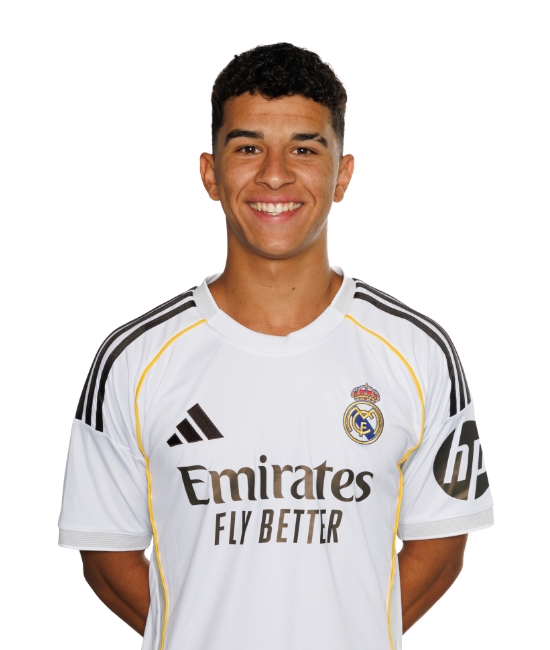
Scouting file
Manu Romero
Romero is an attacking left back whose best tools are technical rather than purely athletic. He has a powerful left foot, is comfortable dribbling at defenders and can influence the final third through crosses, combinations and shots. He often plays more like a wide attacker beginning from a defensive position, receiving high on the flank, moving inside onto the ball and attempting decisive actions. His youth scoring and assist totals attracted attention because they were extraordinary for a nominal fullback, although academy statistics should not be treated as direct evidence of senior readiness. His defensive profile is much less established publicly, and Real Madrid's elite technical environment does not guarantee a senior path.
Project 2030 caseRomero was born in the United States and is the son of former Uruguay international Marcelo Romero. He first appeared for Uruguay's youth teams but subsequently played for the U.S. U-15s and U-17s. That recent direction is encouraging for the United States, although his family ties and upbringing in Spain mean recruitment is not settled. Romero is a ceiling bet rather than a first-team-proof candidate. He belongs on the radar because elite left-footed fullbacks are scarce and Real Madrid's continued investment is meaningful, but he should not enter the primary ranking until he reaches Castilla, another senior side or a clearly higher academy level with regular minutes.
Austyn Jones Center forward

Scouting file
Austyn Jones
Jones is a mobile center forward with a natural instinct for scoring inside the penalty area. He attacks the space between center backs, adjusts his runs quickly and generally wants to arrive on the end of a move rather than remain outside the box as a stationary target. His four goals in only 544 Dutch second-tier minutes are encouraging because they show some translation from dominant academy scoring to adult competition. He can also press and run channels, traits that make him useful even before his combination play becomes fully mature. The open question is whether he becomes a complete striker or remains dependent on service as his physical and movement advantages narrow against senior defenders.
Project 2030 caseJones was born and raised in the Netherlands and has played for Dutch youth teams. He is U.S.-eligible through an American parent and has accepted U.S. youth involvement, showing genuine openness. The Netherlands retains the stronger historical connection, but this is a realistic recruitment opportunity rather than merely technical eligibility. Jones is one of the more interesting European dual-national forwards because he has begun scoring in an adult professional league. A full Jong PSV season or an Eredivisie debut could move him rapidly into the main 2030 prospect group.
Tyler Meiser Center back

Scouting file
Tyler Meiser
Meiser is a tall, right-footed center back developed in two major German academies. At 6-foot-2, he has the frame for central defending and is comfortable playing in a structured buildup system. His projection is based more on reputation and pathway than on public statistical evidence. Dortmund viewed him as one of its stronger age-group defenders, and Gladbach acquired him with the expectation that he could move from the Regionalliga team toward the senior squad. He appears most comfortable defending proactively, stepping toward the ball, competing early and attempting to prevent a forward from turning. That aggression can be useful but has also contributed to disciplinary issues.
Project 2030 caseMeiser is German-American through an American parent, but his playing and international development have occurred almost entirely in Germany. He has represented Germany through U-19 level. The United States can recruit him, but he remains a low-probability target unless his German pathway stalls or he accepts a U.S. camp. He is worth tracking because of his club pathway and positional value, not because he has already made a compelling USMNT case. His status changes materially only when he enters Gladbach's Bundesliga rotation or signals genuine interest in the United States.
Justin Che Right back / center back

Scouting file
Justin Che
Che is a fast, versatile defender whose early appeal was the ability to play either center back or right back. He has the recovery speed to defend space, enough size to play centrally and the athleticism to overlap or carry forward from the flank. His career has not followed the projected straight line from FC Dallas to Bayern, moving through several European clubs and loans without a stable top-flight role. Returning to MLS with Red Bull New York gives him a chance to convert experience into consistency. In possession, Che is comfortable enough to support buildup but is not a specialist passer. His best actions come through athletic defending, recovery runs and carrying into open space, making him a better fit for aggressive pressing structures.
Project 2030 caseChe has United States and German citizenship and has publicly kept his options open; his family background may also provide eligibility for Cameroon and Russia. His extensive U.S. youth involvement and senior training-camp call-up make the United States the practical favorite, but he is not senior cap-tied. Che remains a plausible rebound candidate because the U.S. needs defenders who can cover both right back and center back. He is behind the leading prospects because his development stalled, but a strong full season in New York could restore him as a credible depth option.