If it's too hard
More space, more chances
Make the area bigger or use an empty small goal. For a version without elimination, reset with every team after each round. Give players time to spot a shot or a supporting teammate.
Project 2030 / Grassroots
A full season for nine- and ten-year-olds: twelve practice plans, every game in one place, and practical help for coaching 7v7 without turning it into a lecture.
U10 game library
All 14 of them, written for Ages 9-10 and drawn out where a setup picture helps. Use one as planned or use the search when you need a quick replacement.
What the pictures mean
Nothing matches that. Try a shorter search.
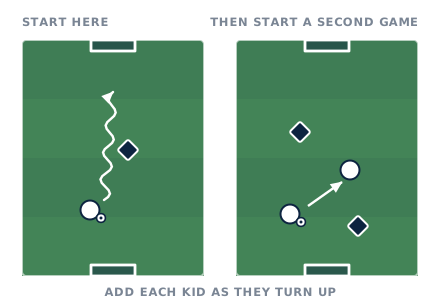
Set up two 19-yard-wide fields with small goals. Start 1v1, 2v1 or 2v2 and add players as they arrive. Use kick-ins or dribble-ins to keep it moving.
Shout Play forward, react fast
What do you see when you get the ball?
What changes when you lose it?
Use a 24-by-35-yard area with a goal at one end and an end zone at the other. One team builds toward the end zone; the other tries to win it and score.
Shout First touch, support, play forward
Where is the first safe pass?
When can we play forward?
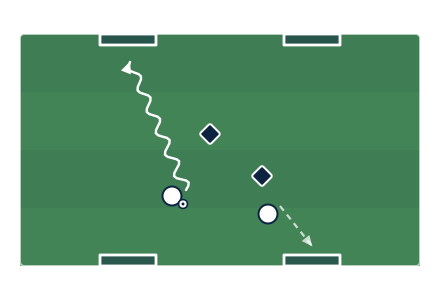
Give each team two goals to attack. Make the field wide enough that changing the point of attack becomes possible.
Shout Scan, switch, support
Which goal has space?
How can we move the defender?
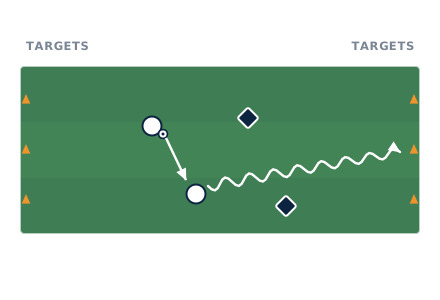
Make the field wider than long. Teams score by playing the ball into or through the opponent's row of cone targets.
Shout Draw them in, find the free player
What makes a teammate a good option?
When should you drive forward instead?
Set a regular goal at one end and two counter goals at the other. The attacking team scores in the regular goal; the defending team wins it and counters to either small goal.
Shout Finish, combine, counter
When is the opening to shoot?
Can a pass create a 2v1?
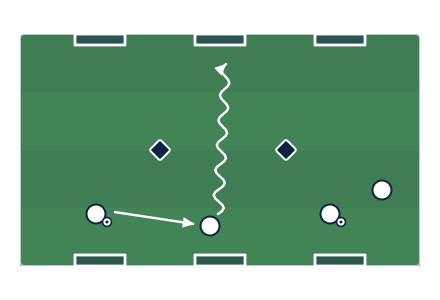
Serve a ball to two attackers against one or two defenders. The attackers look to score; new players enter after each round.
Shout Commit them, make an option
What makes it a 2v1?
Where can the second attacker help?
Use a small directional field with a regular goal and two counter goals. Let one team build; the other presses, covers and counterattacks on the win.
Shout Closest player pressures, teammate covers
Who is closest to the ball?
Where can the next defender help?
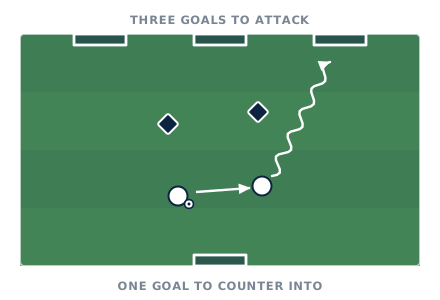
One team attacks three small goals; the other protects them and counters to one goal after a regain.
Shout Protect, pressure, help
Which space must we protect first?
What happens after we win it?
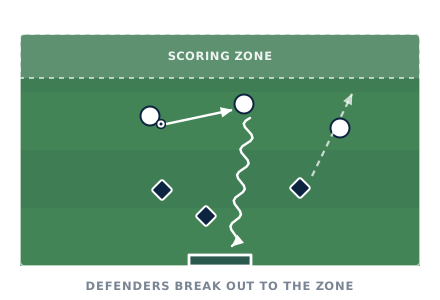
Give one side a goal to protect and the other an end zone to reach after winning the ball. Switch roles between rounds.
Shout Block the way, force, help
Where is the goal?
How can the second defender help?
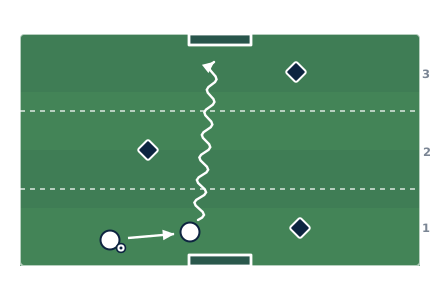
Divide a directional field into three zones. Start with one defender in each zone, then remove the restriction as players understand the problem.
Shout Pressure, cover, balance
Who pressures the ball?
Who covers the space behind them?
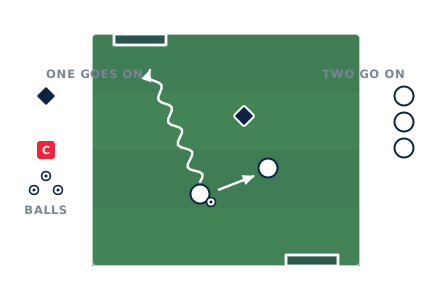
Send two attackers and one defender into a small field. The defender tries to slow them down, protect the best route and win the ball if it is there.
Shout Delay, protect, recover
Which route is most dangerous?
How can you buy time for help?
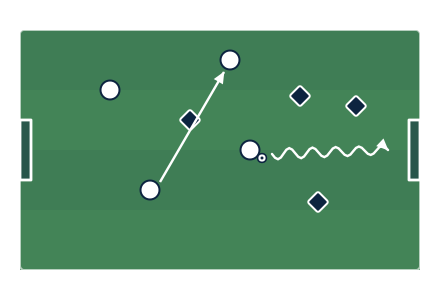
Use two goals and the space your group can handle. Keep teams even, rotate roles, and use your league's restarts when useful.
Shout See it, decide, react
What did you see?
What changes when we lose it?
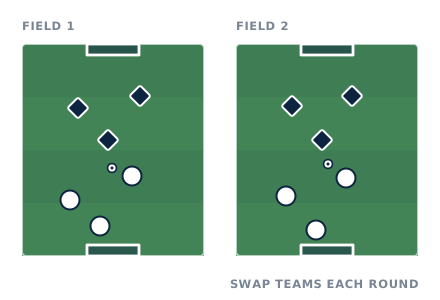
Set up two fields. Play short rounds, switch opponents and let players see every role.
Shout Play, communicate, enjoy it
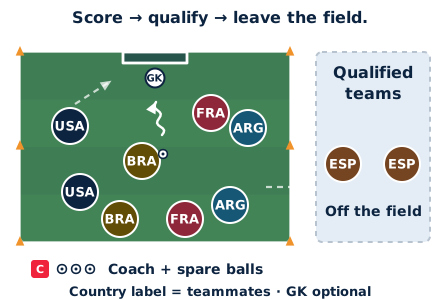
Use pairs or trios. Start around 20 × 25 yards for six pairs, then adjust space for the number of teams. Put one goal at an end and mark a separate waiting area outside the shooting space. Keep the coach and spare balls beside the boundary so a new ball goes in straight away.
With 12 outfield players, make six pairs: USA, Brazil, Argentina, France, Spain and Germany.
A goalkeeper needs to be an additional player or adult; the six pairs still need all 12 outfield players.
Shout Scan, shoot or dribble or pass, support, block, recover
Is there space to shoot?
Where can you move to help your partner?
What do you do when another team wins the ball?
How can you get between the ball and the goal?
If it's too hard
Make the area bigger or use an empty small goal. For a version without elimination, reset with every team after each round. Give players time to spot a shot or a supporting teammate.
If it's too easy
Reduce the space a little or add a goalkeeper. Encourage scanning before receiving, supporting a teammate, blocking shots and recovering possession. Try first to two goals in the final.
Tip Qualified and eliminated teams stay involved in a separate supervised ball activity outside the shooting area, or safe ball-retrieval roles. Use a helper, keep tournaments short and reset quickly. Avoid long waits; if you cannot supervise a second activity, use the no-elimination version.
Extra game based on the supplied World Cup description; separate from the Massachusetts Youth Soccer weekly plans.
The short version
If they are, you're doing fine. The rest is the practical stuff that helps U10 practices move.
Where this came from
The weekly plans are adapted from the Massachusetts Youth Soccer U10 session-plan library and beginner volunteer guide, both recommended by U.S. Soccer. The diagrams here are our own simplified coaching visuals. Match-day rules are league-specific, so check yours.
World Cup is an extra game based on a supplied activity description, separate from these weekly plans.
The season
Play, teach one thing, play again. Open a week to see the purpose, the games and the questions that make it easy to coach.
First 20 minutes
Start with small-sided soccer and watch for the week's problem. Let the game show you what needs attention.
Middle 20 minutes
Use numbers, targets and space to create the decision. Ask a question at the break, then get the ball moving again.
Last 20 minutes
Return to a directional game with real transitions. Rotate roles each round and resist solving every decision for them.
Use the 7v7 field when it is available, then split it into two small fields for the first play phase. A 19-yard-wide small field is plenty for 1v1 through 3v3.
These plans use the U10 source curriculum's 7v7 context. Match rules, goalkeepers, build-out lines and restarts belong to your league, so use its version on game day.
What the pictures mean
Just play
15-20 min
The idea Find the theme in a real game.
Set up two 19-yard-wide fields with small goals. Start 1v1, 2v1 or 2v2 and add players as they arrive. Use kick-ins or dribble-ins to keep it moving.
Shout Play forward, react fast
Teach one thing
15-20 min
The idea Keeping the ball in the first half, then finding a way forward.
Use a 24-by-35-yard area with a goal at one end and an end zone at the other. One team builds toward the end zone; the other tries to win it and score.
Shout First touch, support, play forward
Play again
15-20 min
The idea Using the week's idea in soccer.
Use two goals and the space your group can handle. Keep teams even, rotate roles, and use your league's restarts when useful.
Shout See it, decide, react
Just play
15-20 min
The idea Find the theme in a real game.
Set up two 19-yard-wide fields with small goals. Start 1v1, 2v1 or 2v2 and add players as they arrive. Use kick-ins or dribble-ins to keep it moving.
Shout Play forward, react fast
Teach one thing
15-20 min
The idea Keeping the ball in the first half, then finding a way forward.
Use a 24-by-35-yard area with a goal at one end and an end zone at the other. One team builds toward the end zone; the other tries to win it and score.
Shout First touch, support, play forward
Play again
15-20 min
The idea Using the week's idea in soccer.
Use two goals and the space your group can handle. Keep teams even, rotate roles, and use your league's restarts when useful.
Shout See it, decide, react
Just play
15-20 min
The idea Find the theme in a real game.
Set up two 19-yard-wide fields with small goals. Start 1v1, 2v1 or 2v2 and add players as they arrive. Use kick-ins or dribble-ins to keep it moving.
Shout Play forward, react fast
Teach one thing
10-15 min
The idea Seeing a new route when one goal is blocked.
Give each team two goals to attack. Make the field wide enough that changing the point of attack becomes possible.
Shout Scan, switch, support
Play again
15-20 min
The idea Using the week's idea in soccer.
Use two goals and the space your group can handle. Keep teams even, rotate roles, and use your league's restarts when useful.
Shout See it, decide, react
Just play
15-20 min
The idea Find the theme in a real game.
Set up two 19-yard-wide fields with small goals. Start 1v1, 2v1 or 2v2 and add players as they arrive. Use kick-ins or dribble-ins to keep it moving.
Shout Play forward, react fast
Teach one thing
Short rounds
The idea Recognizing when to dribble, pass or move to help.
Make the field wider than long. Teams score by playing the ball into or through the opponent's row of cone targets.
Shout Draw them in, find the free player
Play again
15-20 min
The idea Using the week's idea in soccer.
Use two goals and the space your group can handle. Keep teams even, rotate roles, and use your league's restarts when useful.
Shout See it, decide, react
Just play
15-20 min
The idea Find the theme in a real game.
Set up two 19-yard-wide fields with small goals. Start 1v1, 2v1 or 2v2 and add players as they arrive. Use kick-ins or dribble-ins to keep it moving.
Shout Play forward, react fast
Teach one thing
15-20 min
The idea Creating a scoring chance while protecting against the counter.
Set a regular goal at one end and two counter goals at the other. The attacking team scores in the regular goal; the defending team wins it and counters to either small goal.
Shout Finish, combine, counter
Play again
15-20 min
The idea Using the week's idea in soccer.
Use two goals and the space your group can handle. Keep teams even, rotate roles, and use your league's restarts when useful.
Shout See it, decide, react
Just play
15-20 min
The idea Find the theme in a real game.
Set up two 19-yard-wide fields with small goals. Start 1v1, 2v1 or 2v2 and add players as they arrive. Use kick-ins or dribble-ins to keep it moving.
Shout Play forward, react fast
Teach one thing
Short rounds
The idea Creating and using an advantage near goal.
Serve a ball to two attackers against one or two defenders. The attackers look to score; new players enter after each round.
Shout Commit them, make an option
Play again
15-20 min
The idea Using the week's idea in soccer.
Use two goals and the space your group can handle. Keep teams even, rotate roles, and use your league's restarts when useful.
Shout See it, decide, react
Just play
15-20 min
The idea Find the theme in a real game.
Set up two 19-yard-wide fields with small goals. Start 1v1, 2v1 or 2v2 and add players as they arrive. Use kick-ins or dribble-ins to keep it moving.
Shout Play forward, react fast
Teach one thing
15-20 min
The idea Stopping the ball moving forward, then attacking straight away.
Use a small directional field with a regular goal and two counter goals. Let one team build; the other presses, covers and counterattacks on the win.
Shout Closest player pressures, teammate covers
Play again
15-20 min
The idea Using the week's idea in soccer.
Use two goals and the space your group can handle. Keep teams even, rotate roles, and use your league's restarts when useful.
Shout See it, decide, react
Just play
15-20 min
The idea Find the theme in a real game.
Set up two 19-yard-wide fields with small goals. Start 1v1, 2v1 or 2v2 and add players as they arrive. Use kick-ins or dribble-ins to keep it moving.
Shout Play forward, react fast
Teach one thing
15 min
The idea Protecting the important space while looking to counter.
One team attacks three small goals; the other protects them and counters to one goal after a regain.
Shout Protect, pressure, help
Play again
15-20 min
The idea Using the week's idea in soccer.
Use two goals and the space your group can handle. Keep teams even, rotate roles, and use your league's restarts when useful.
Shout See it, decide, react
Just play
15-20 min
The idea Find the theme in a real game.
Set up two 19-yard-wide fields with small goals. Start 1v1, 2v1 or 2v2 and add players as they arrive. Use kick-ins or dribble-ins to keep it moving.
Shout Play forward, react fast
Teach one thing
15-20 min
The idea Denying a shot, then breaking out with the ball.
Give one side a goal to protect and the other an end zone to reach after winning the ball. Switch roles between rounds.
Shout Block the way, force, help
Play again
15-20 min
The idea Using the week's idea in soccer.
Use two goals and the space your group can handle. Keep teams even, rotate roles, and use your league's restarts when useful.
Shout See it, decide, react
Just play
15-20 min
The idea Find the theme in a real game.
Set up two 19-yard-wide fields with small goals. Start 1v1, 2v1 or 2v2 and add players as they arrive. Use kick-ins or dribble-ins to keep it moving.
Shout Play forward, react fast
Teach one thing
15-20 min
The idea Recognizing pressure, cover and balance across the field.
Divide a directional field into three zones. Start with one defender in each zone, then remove the restriction as players understand the problem.
Shout Pressure, cover, balance
Play again
15-20 min
The idea Using the week's idea in soccer.
Use two goals and the space your group can handle. Keep teams even, rotate roles, and use your league's restarts when useful.
Shout See it, decide, react
Just play
15-20 min
The idea Find the theme in a real game.
Set up two 19-yard-wide fields with small goals. Start 1v1, 2v1 or 2v2 and add players as they arrive. Use kick-ins or dribble-ins to keep it moving.
Shout Play forward, react fast
Teach one thing
Short rounds
The idea Delaying an outnumbered attack and protecting the goal.
Send two attackers and one defender into a small field. The defender tries to slow them down, protect the best route and win the ball if it is there.
Shout Delay, protect, recover
Play again
15-20 min
The idea Using the week's idea in soccer.
Use two goals and the space your group can handle. Keep teams even, rotate roles, and use your league's restarts when useful.
Shout See it, decide, react
The whole session
The whole session
The idea Reviewing the season through games.
Set up two fields. Play short rounds, switch opponents and let players see every role.
Shout Play, communicate, enjoy it
Quick check on any game
On the drive home
The Dual Eights dispatch
New analysis from all three desks, delivered occasionally.