You volunteered to coach a team of seven and eight-year-olds. Here's a season of practices, every game drawn out, and the stuff nobody tells you beforehand.
All the games
Every game, without hunting through the weeks.
All 24 of them, each one drawn out. Handy if you want to swap something out, run a favourite again, or fill ten minutes you didn't plan for.
What the pictures mean
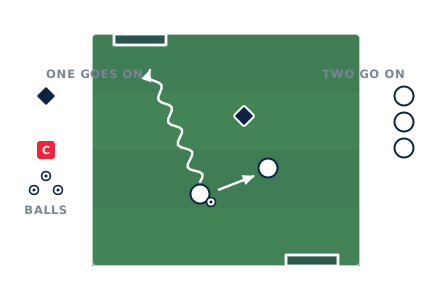
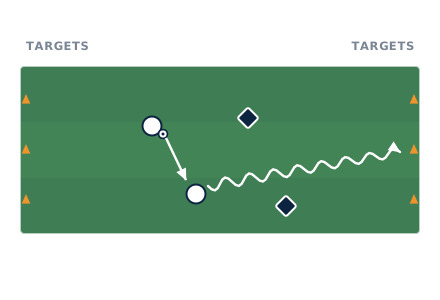
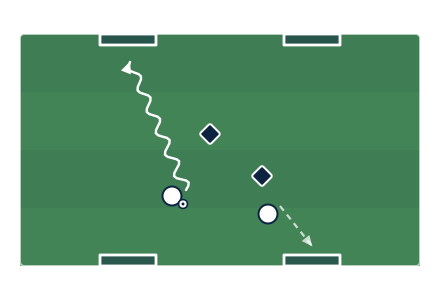
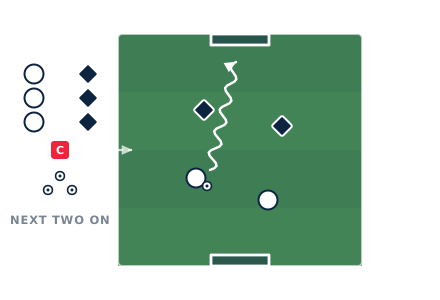
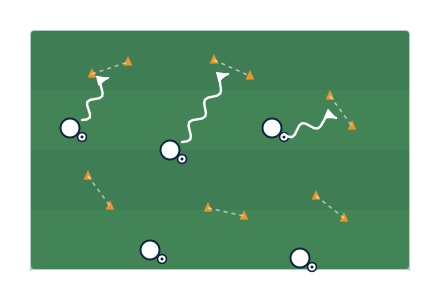
A kid on the team with the ball
A kid on the other team
A ball
You
A cone
A goal
Running with the ball
A pass
Running without the ball
Nothing matches that. Try a shorter search.
Warm-up
1v1 building to 3v3
Every week
Arrival gameThe one you start with every week
How long
About 20 min
How many
2 or more
What you need
Cones, four small goals, balls
Setting it up
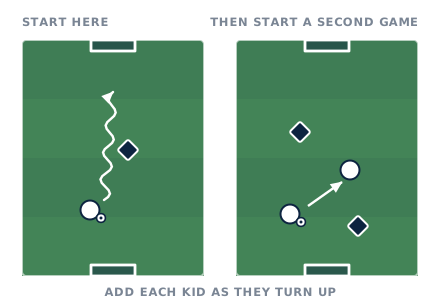
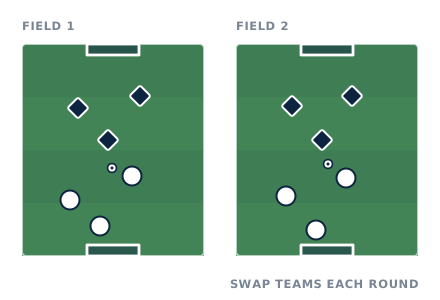
Split your space into two small fields with a goal at each end. As soon as two kids have arrived, start a game. It begins as 1v1 and grows - 2v1, then 2v2, then 3v3 - as more turn up. Once one field is busy, start the second one.
How it works
Don't wait for a full group. Whoever's there, start.
Send each new arrival into whichever game needs a player.
Shout Go forwards, go to goal
Things to ask them
If there's a gap in front of you, what should you do?
Go forwards, towards the goal, whenever you can.
When is it better to pass than to dribble?
When everything in front of you is blocked - then pass and let your teammate try.
Tip This isn't a teaching bit. Say hello to everyone as they arrive, watch what they're doing, and maybe ask a question or two when you pause.
Small-sided game
Even teams
Every week
The game at the endHow every session finishes
How long
About 20 min
How many
8 or more
What you need
Two goals, pinnies, spare balls
Setting it up
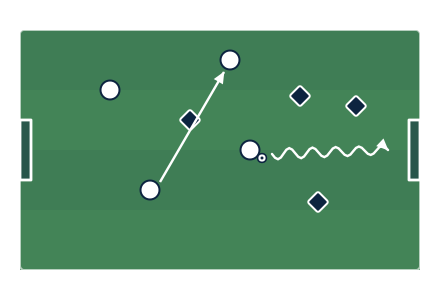
Use the whole space with a goal at each end and split them into even teams. Two halves with a short break in the middle. Play it however your league plays it.
How it works
If the ball goes out, throw another one straight in and let them keep playing.
Only bother with throw-ins and goal kicks if your league uses them.
Shout Turn, spread out, score
Things to ask them
Who decides whether to pass, dribble or shoot?
Whoever's got the ball. Let them choose - that's the whole point.
How can you help whoever's got the ball?
If it's crowded near the goal, move somewhere else so they've got another option.
Tip Don't stop it for restarts, and try not to coach every play. Let them play.
Attacking
Pairs against bandits
Week 1
Partner BanditsGet the ball past the bandits and score.
How long
About 18 min, in 90-second rounds
How many
8-12
What you need
Cones for two wide goals, one ball per pair
Setting it up
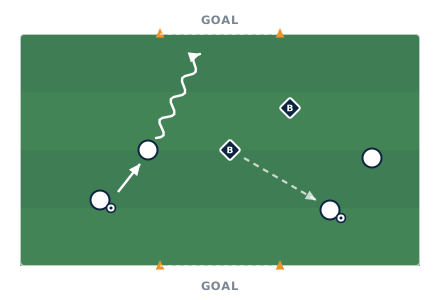
Mark a wide goal out of cones at each end of your space. Put everyone in pairs sharing one ball. One pair are the bandits and don't get a ball.
How it works
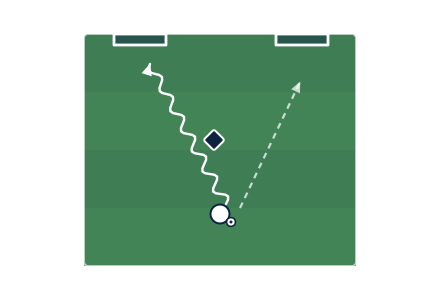
Pairs score by dribbling into a goal or passing to their partner standing in it, then turn round and attack the other one.
Bandits try to steal a ball and dribble it into either goal - their hideout. The pair can win it back before they get there.
If the bandits get a ball to a hideout, that pair loses all their points and starts from zero.
Bandits aren't allowed to stand in the goals.
Ask them how many they can score in 90 seconds. Pick new bandits each round.
Shout Heads up, find the gap, go through it
Things to ask them
Where can you go if a bandit is blocking your way to the goal?
Tell your partner to move somewhere else and make a new gap.
What are the two ways of getting the ball through a gap?
Dribble through it, or pass through it.
Which bit of your foot do you use to run with the ball?
Your laces - toes pointed down, and push the ball out in front of you.
If it's too hard
Bandits, and you're the bandit
Same setup, but every kid has their own ball and you're the only bandit. They dribble into either goal, then turn and go for the other. If you get their ball, their score goes back to zero. Once they've got the idea, put two of them together sharing a ball.
Where can you go if another kid is in your way?
What can you do if I'm standing in front of the goal?
If it's too easy
Two games of 2v2 at once
Same space, teams of two. Two separate 2v2 games run at the same time, sharing the same goals - each team defends one and attacks the other. Score by dribbling in or passing to a teammate in the goal. After a goal the scorers back off and let the ball come back out.
What have you got to watch out for in this game?
How can you help your partner make a gap?
Tip Fun twist: once the bandits get a ball into a hideout, they become scorers and the pair who lost it become the new bandits.
Attacking
2v2
Week 2
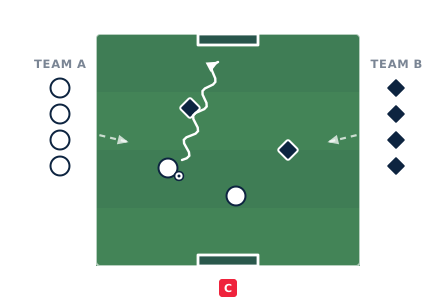
Four Corner GoalsBeat a defender and get a shot away.
How long
About 20 min, in 2-minute rounds
How many
8-12
What you need
Eight goals or cone gates, spare balls
Setting it up
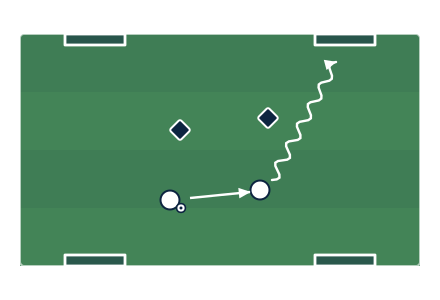
Split your space into two small fields and put a goal in each corner, so there are four per field. Play 2v2 with the other teams waiting on the side. Scatter spare balls around so you can restart instantly.
How it works
Each team defends the two goals behind them and attacks the two at the other end.
After two minutes both teams come off and the waiting teams go on. It starts the moment someone steps on.
Shout Which goal is open?
Things to ask them
What can you do if nobody's near you?
Run at the nearest goal and score.
Where can you go if it's crowded in front of the goal?
Switch across to the other goal - a big kick over there works.
How do you aim at the goal?
Turn and face it, point your other foot at it, and hit through the middle of the ball.
If it's too hard
Two against one
Same four goals. You stand at the side with all the balls and one team waits on each side. Before you roll a ball in, call which team sends two players and which sends one. Both teams go for it. The round ends on a goal or when the ball goes out - everyone comes off and you roll the next one in.
If your teammate's got the ball, where should you go?
If it's too easy
Three against three
Same setup played 3v3, swapping a sub in at least every couple of minutes. If the ball goes out, whichever team didn't kick it out grabs a spare and plays on.
Once you've passed it, where do you go next?
Tip Eight kids only needs one field. Fewer than that, make three teams - two play, one has a breather.
Attacking
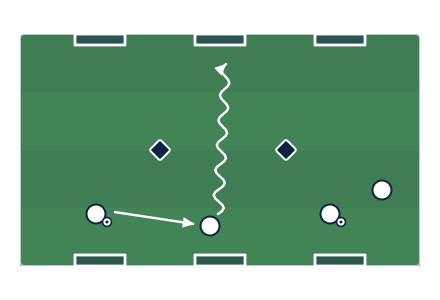
Pairs against dog catchers
Week 3
BulldogsGet through the middle and score.
How long
About 18 min, in 90-second rounds
How many
8-12
What you need
Cones for the strip, two goals, one ball per pair
Setting it up
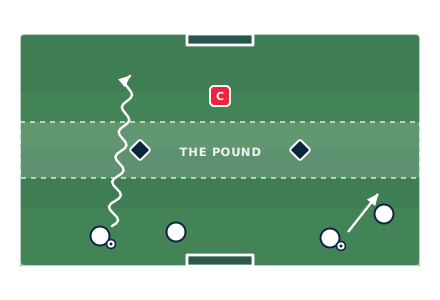
Mark a strip right across the middle of your space - that's the dog pound - with a goal at each end. You and any other grown-ups start in the pound as dog catchers, with no ball. Every pair shares a ball and lines up on an end line.
How it works
Shout "who let the dogs out?" to start it.
They sneak through the pound and score, then turn around and go for the other goal.
If a catcher steals their ball, that pair's score goes back to zero.
Miss the goal and it doesn't count. They have to shoot at the far goal before coming back.
Catchers have to stay inside the strip.
Shout Get through quick, keep moving
Things to ask them
What's the fastest way through the middle?
Dribble through if there's room, or knock it through to your partner.
Where should your partner go to help you get through?
To a gap on the far side, ready for the ball.
If your partner's close by, which bit of your foot do you pass with?
The inside - the flat bit - toes turned out, and swing through the middle of the ball.
If it's too hard
No catchers
Same strip and goals, but nobody's catching. Pairs just go as fast as they can through the middle and score. They lose their points if the ball goes out the side. You can stand in the strip as a thing to dribble around.
What's the quickest way to get it down to the goal?
Where do you go after you've passed it?
If it's too easy
Catchers everywhere
Take the strip away. The catchers can go anywhere. Pairs get past them, score, then turn and go the other way. Everything else stays the same.
Which bit of your foot do you use for a big kick?
Tip Kids can be catchers too, working in pairs inside the strip. After a few goes, let a catcher who wins a ball swap places with the kid they got it from.
Attacking
1v1 turning into 2v2
Week 4
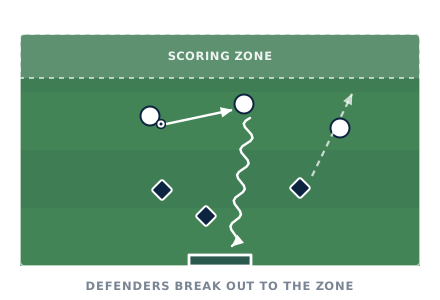
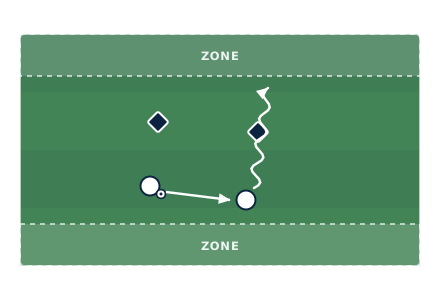
Race to the End ZoneBeat a defender and get into the zone.
How long
About 20 min, in 1-minute rounds
How many
8-12
What you need
Cones for the zones, plenty of balls
Setting it up
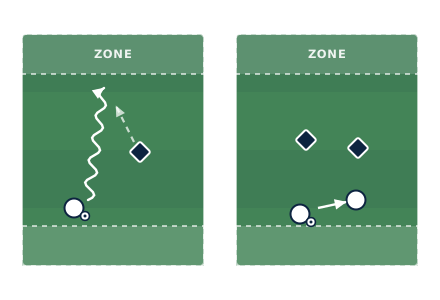
Split your space into two small fields and mark a short scoring zone across each end. One team waits behind one zone with the balls, the other behind the opposite one.
How it works
On your shout, two kids go on with a ball each and head for the far zone.
The team without balls sends two out to stop them and steal it, then score back in the other zone.
You score by dribbling into the zone. Defenders can't stand in the zone waiting.
Once one ball's dead, those two go and help whoever's still got one.
Rounds last a minute. Swap ends after five.
Shout Find the gap, trick the defender
Things to ask them
What do you do if there's a clear run all the way?
Run straight at the zone with it.
How can you use your teammate to trick the defender?
Swing your leg like you're passing but don't touch it - then go the other way.
If there's a gap, how do you get there fastest?
Push it further out in front and run onto it.
If it's too hard
Two against one
Same fields and zones, but two kids go on sharing one ball against a single defender. The round ends as soon as the ball's scored or knocked out, or after a minute.
You've got an extra player - how do you use them?
If it's too easy
Three against two
Same fields, but with a scoring zone at one end and a proper goal at the other. The team of three starts with the ball and goes for the goal. The team of two scores by stopping the ball in the zone. First goal wins the round. Swap sides every few rounds.
What should you do when a defender steps in front of you?
When should you push the ball further ahead of you?
Tip Cheer on whoever's got the ball at the start, then once it's two against two, talk about the choices they're making.
Defending
Pairs against defenders
Week 5
Guard the GoalsStop them scoring in your goals.
How long
About 18 min, in 1-minute rounds
How many
8-12
What you need
Cones for several triangles, one ball per pair
Setting it up
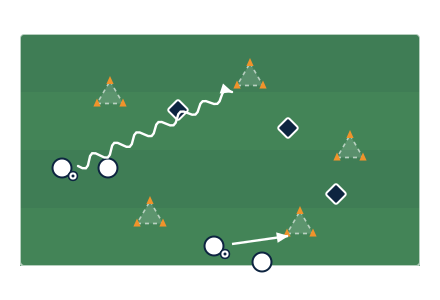
Dot several little triangle goals around your space. Pick one fewer defender than there are triangles. Everyone else pairs up and shares a ball.
How it works
Pairs dribble or pass into or through as many triangles as they can in a minute.
Defenders look after all the triangles and try to win the ball, but they can't stand inside one.
A pair who stops the ball inside a triangle is safe and can have a breather, but can't score again until they come back out.
If a defender wins their ball, that pair's count goes back to zero.
Shout Get in the way, win the ball
Things to ask them
How do you know where they're coming from?
Keep your head up and keep looking around.
Where do you go if your goal's safe but another one isn't?
Over to the one that isn't covered - get between them and it.
How do you get the ball off someone?
Get close, then either poke it away with your toe or put your foot in front of it so they can't push it forward.
If it's too hard
Tag instead of tackling
Only two triangles, one defender each. They can win the ball properly or just tag the kid who's got it - either one sends that pair back to zero. You can join in with a pair if the numbers need it, but let the kids be the defenders.
When should you stay near your goal?
What if they knock the ball too far ahead of themselves?
If it's too easy
Three against three
Two triangles, one in each half. Two teams of three - each attacks one and defends the other, scoring by passing or dribbling through. You can't stand inside the one you're defending. After a goal, the scorers leave the ball and get back to protect theirs while the others come at them.
When should two of you be close together?
Where does the third one go if the other two have got it covered?
Tip This one's about defending, so talk to the defenders. Let the pairs get on with it.
Defending
2v2, straight back on
Week 6
CornersStop them getting a shot away.
How long
About 18 min, in 30-second rounds
How many
8-12
What you need
Cones, two to four goals, lots of balls
Setting it up
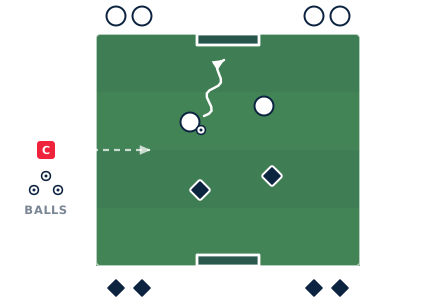
Mark a small field with a goal at each end - two of them if you've got the numbers. Split the group in half, with each half waiting in the two corners of their own end line. You stand off to the side with all the balls.
How it works
You roll a ball in and one kid from each corner runs on to play 2v2.
The round's over as soon as someone scores or the ball goes out. Everyone comes off and you roll the next one in.
Nobody goes on before the ball does.
Shout Get back, get in the way
Things to ask them
What's your job the second the other team gets the ball?
One of you goes at the ball, the other gets back and covers the goal.
Where do you go if they get past you?
Back towards your own goal.
How do you get the ball off them?
Get close, then poke it away or block it so they can't push it forward.
If it's too hard
One against two
Same idea, but whichever side you roll the ball to sends one player and the other side sends two - so the defenders have an extra.
There's two of you - who goes for the ball and who covers?
If it's too easy
Three against four
Use the whole space. Whichever side you roll it to sends four, the other sends three. Rounds last a minute, and you throw a new ball in whenever one goes out.
How do three of you cover a goal against four?
Tip Roll the ball to whoever's had the least to do, and aim it nearer one team than the other rather than straight down the middle.
Defending
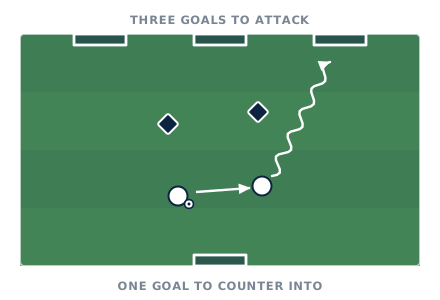
2v2
Week 7
Three Goals, One GoalCover three goals with two players.
How long
About 18 min, in 1-minute rounds
How many
8-12
What you need
Four small goals or cone gates, balls
Setting it up
Put three small goals along one end line and a single goal at the other. Half the group waits at each end. The team defending the single goal starts with the ball.
How it works
Two attackers go on; as soon as they do, two from the other end come on to defend.
Whoever's got the ball can go at any of the three goals. If the defenders win it, they can go the other way and score in the single one.
Defenders can't come on until the attackers have taken their first touch.
Rounds last a minute, and you can roll new balls in - they can score more than once.
Shout Which goal is the danger?
Things to ask them
Which of the three goals is the dangerous one right now?
Whichever one's closest to the ball.
Where should you be standing if a goal's in danger?
In between the ball and that goal.
What if they knock the ball too far in front of themselves?
Step in and nick it off them.
If it's too hard
Two defenders, one attacker
One attacker goes on, and as soon as they touch the ball two defenders come out. Rounds are 30 seconds, or until it's scored or goes out. Swap who's attacking and who's defending after a few goes.
There's two of you against one - who goes and who waits?
If it's too easy
Two defenders, three attackers
Three attackers against two defenders, minute-long rounds. Everything else is the same.
How do two of you cover three goals?
Tip You'll want to help the attackers because there are fewer of them. Don't - this one's about the defenders working together.
Defending
3v3
Week 8
Defend Your GoalClose down whoever's got the ball.
How long
About 18 min, in 4-minute rounds
How many
8-12
What you need
One or two goals, cones for the zone
Setting it up
One goal at one end and a short scoring zone at the other. Play 3v3. The team you're coaching defends the goal, and scores by stopping the ball in the zone - either dribbling in or passing to someone in it. The other team scores in the goal.
How it works
Nobody's allowed to just stand in the zone waiting, but you can step in to stop someone scoring.
Everything else, play it how your league plays it.
Shout Go to the ball, win it back
Things to ask them
If you're nearest to the ball, what should you do?
Get close and don't let them run straight at your goal.
When's the right moment to try and take it?
When they knock it too far ahead of themselves.
How do you get to the ball and cover your goal at the same time?
Curve your run, so you end up between them and the goal.
If it's too hard
Three against two
Same idea on a smaller field: three defend the goal against two attackers, and score by stopping the ball in the zone.
You've got an extra defender - who goes to the ball and who covers?
If it's too easy
Three against four
Use the whole space with a goal at each end. Your three defend theirs against four, and score in the other one.
Attacking
Pairs against defenders
Week 9
Pairs Against the DefendersTwo of you, working together, beating a defender.
How long
About 18 min, in 2-minute rounds
How many
8-12
What you need
Six small goals or cone gates, one ball per pair
Setting it up
Put three goals along each end line. Pick two or three defenders; everyone else pairs up and shares a ball.
How it works
Pairs get past the defenders and score in any of the three goals, then grab any ball and go for the three at the other end.
Shooting, passing or dribbling into a goal all count.
If a defender wins a ball and knocks it off the side, that pair goes back to zero.
How many can they get in two minutes? Swap the defenders each round.
Shout Heads up, move with your partner
Things to ask them
How do you know where the goals and the defenders are?
Look up and check whether your way through is open or blocked.
How can two of you get past one defender?
Run at the defender, see if they come to you, then pass round them.
Why turn and face your partner before you pass?
Because facing them makes the pass go where you want it to.
If it's too hard
Just get over the line
No goals at all - pairs score by getting the ball over the end line, either dribbling over it or passing to their partner over it. You and any other grown-ups start as the defenders. After a few rounds, step out, pick two or three kids to defend and go back to the main game.
Where can your partner go so you can pass to them?
If it's too easy
Three against two
Same six goals, played as a proper 3v3 or 3v2 - the bigger team starts with the ball and attacks the three goals at one end, then turns and goes for the other three.
How do you keep it moving between three of you?
Tip After a few good rounds, let a defender who wins a ball swap in with the pair they got it from.
Defending
Pairs against zone defenders
Week 10
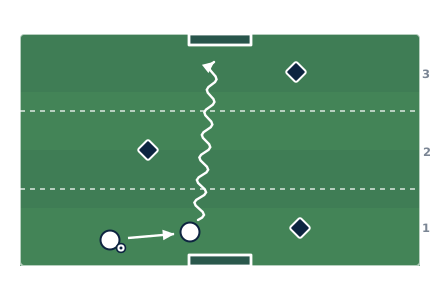
Defend Your ZoneDefending as a group, in front of your own goal.
How long
About 18 min, in 1-minute rounds
How many
8-12
What you need
Cones to mark the bands, two goals, one ball per pair
Setting it up
Split your space across into three bands with a goal at each end. Put one defender in each band, and they have to stay in it. Everyone else pairs up and shares a ball.
How it works
Pairs work their way through all three bands and score at one end, then come back through and score at the other.
Miss the goal and it doesn't count - carry on to the other end.
If a defender wins their ball, that pair goes back to zero.
Shout Push them wide, win it back
Things to ask them
Why is it worth getting close to whoever's got the ball?
It makes them hurry and look down at their feet.
When's the right moment to go for it?
When they push it too far ahead of themselves.
How do you go at the ball and cover the goal at once?
Curve your run so you're covering the goal on your way there.
If it's too hard
Two bands and a spare defender
Split it in half instead of into three. One defender in each half, plus one extra who's allowed to go anywhere. Same scoring.
When should the spare defender come across and help?
If it's too easy
Three defenders, go anywhere
Split it in half, with three defenders who can go wherever they like and have to look after both goals between them.
Who goes to the ball and who covers the goal?
Tip Let the defenders count how many balls they win and challenge the next lot to beat it. You can hold a band yourself if you're short.
Defending
2v1, straight back on
Week 11
Two Against OneOne defender holding off two attackers.
How long
About 18 min, in 30-second rounds
How many
8-12
What you need
Two to four small goals, lots of balls
Setting it up
A small field with a goal at each end, tucked near the nearest corner. You stand at the side with all the balls and a team waiting on each side.
How it works
You roll a ball in. Whichever side it goes to sends one player; the other side sends two.
Each team has one goal to score in and one to look after.
The round's over on a goal or when the ball goes out. Everyone off, next ball in.
Shout Get in the way, win the ball
Things to ask them
What should you do if your goal's wide open?
Get back and stand in front of it.
What does it actually mean to tackle someone?
Getting close enough to touch the ball, then taking it.
How do you nick it off them without fouling?
Come at them from the side, get slightly in front, and reach in with your toe.
If it's too hard
Players on first
They go on before the ball does. You say which team's got two and which has one, then roll it to whoever's on their own. Rounds last a full minute with new balls rolled in as needed.
When do you go to the ball and when do you hang back?
If it's too easy
Two against two
Same rolling game, but both sides send two when the ball goes in.
How do you and your partner split up the job?
Tip The two will both chase the ball together. Help them work out when one goes and the other hangs back. Set up two of these if you can - twice as much playing.
Small-sided game
Even teams
Week 12
End-of-Season FestivalFinish the season with a mini tournament - same game each time, with a different twist.
How long
Rounds of 6-8 min with a break between
How many
8 or more
What you need
Goals and pinnies for as many small fields as you can fit
Setting it up
Split everyone into even teams - threes or fours, whatever keeps them all playing. Change opponents each round if you can, and add up the scores between games.
How it works
Three points for a win, two for a draw, one for a loss, plus whatever the round's bonus is.
Keep track of goals scored and let in, in case you need a tie-breaker.
Make the rounds shorter or longer to fit the time you've got.
The rounds
Round 1 - Normal game No twists, no bonus.
Round 2 - Three passes String three passes together before you score and it counts triple.
Round 3 - First time Score without stopping the ball first and it counts five times.
Round 4 - Everyone over the line Your whole team has to be in the other half for a goal to count.
Round 5 - Everyone scores Once you've scored, you can't score again until everyone on your team has one.
Round 6 - Win by two Win by exactly two and you get five bonus goals. 3-1 counts, 3-2 doesn't.
Round 7 - Normal game No twists, no bonus.
Shout Play, have fun, see who wins
Tip Change any of these if it'll suit your group better. Nobody's checking.
Ball work
Everyone with a ball
Any week
Freeze Tag with a BallDribbling with their heads up - and a worked example of adding rules one at a time.
How long
About 15 min, in 1-minute rounds
How many
Any
What you need
Cones, a ball each
Setting it up
Mark out a square, every kid with a ball. Run it as ten or twelve one-minute rounds instead of one long game.
How it works
Round 1: everyone just dribbles around and learns where the edges are. Nobody's getting tagged yet.
Rounds 2 and 3: they dribble and try not to get tagged by you. Who gets caught the fewest times?
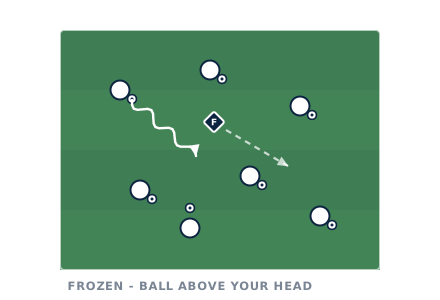
Rounds 4 and 5: if you tag them they're frozen until they count to five, then off they go again.
Rounds 6 and 7: ask them how to unfreeze a teammate - a tag, or rolling their ball through their legs. Frozen kids hold their ball over their head so everyone can see.
Rounds 8 to 10: now they're the freeze monsters, a new one each round.
Shout Head up, ball close
Tip This is a dribbling game, not a tag game. If it turns into a chase you've lost the point. The same build-it-up approach works on nearly anything - give them the edges and the direction first, then add one rule per round.
Attacking
1v1
Extra
One on One, Two GoalsRunning with the ball, changing direction, spotting the space.
How long
Short rounds
How many
2 or more
What you need
Four cones
Setting it up
A small square with two goals set well apart. One attacker against one defender, and the attacker can score in either goal.
Shout Which one's open?
Things to ask them
Which goal is open?
Can you change direction?
When can you really go for it?
Attacking
2v2
Extra
Two on Two to the ConesWorking with a teammate without being told to pass.
How long
Short rounds
How many
4 or more
What you need
Cones
Setting it up
Make the space wider than it is long. Each team looks after a row of cones and scores by knocking the ball into or through the other team's row.
Shout Dribble if it's open, pass if they come to you
Tip Watch for whether they dribble when there's space, pass when a defender commits, move away from trouble, and how quickly they react when they lose it.
Attacking
2v2, 3v3 or bigger
Extra
Four Goal GameGetting their heads up and spotting space, without being told to spread out.
How long
Any
How many
4 or more
What you need
Four small goals or cone gates
Setting it up
Give each team two goals to attack instead of one. The extra goal makes spreading out something they work out for themselves, instead of something you shout.
Shout Is the other goal open?
Tip Start with no extra rules. Only add something if it actually gets them doing what you wanted.
Attacking
2v2, straight back on
Extra
In and OutReacting fast, and getting loads of goes at it.
How long
Keeps going
How many
8 or more
What you need
Two goals, lots of balls
Setting it up
Two lines of kids next to you. Roll a ball in and the first two from each line play 2v2. The second the ball goes out or someone scores, the next two are straight on.
Shout Forwards first
Tip Keep the balls with you and never let it stop. The whole point is that they're playing instead of fetching.
Ball work
Everyone with a ball
Extra
GatesLots of touches, both feet, changing direction.
How long
5-10 min
How many
Any
What you need
Lots of cones, a ball each
Setting it up
Scatter pairs of cones around the space to make little gates. Every kid has a ball.
Shout How many gates in a minute?
Tip Challenge them to use as many different gates as they can, both feet, and to turn between them.
Ball work
Everyone with a ball
Extra
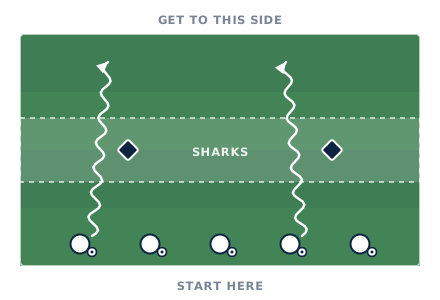
Sharks and MinnowsDribbling with someone coming at them.
How long
Short rounds
How many
Any
What you need
Cones, a ball each
Setting it up
Normal sharks and minnows, except every minnow has a ball and has to get it to the far side.
Shout Head up
Tip Don't leave anyone out for long. A kid who loses their ball becomes a shark, comes straight back on, or does a quick job and rejoins.
Small-sided game
2v2 or bigger
Extra
End ZoneRunning at space with the ball.
How long
Any
How many
4 or more
What you need
Cones
Setting it up
Score by dribbling into the zone at the far end with the ball under control. Later on you can let them score by receiving a pass in there instead.
Shout Under control
Small-sided game
1v1 up to 3v3
Extra
NumbersQuick changes, lots of decisions.
How long
Keeps going
How many
6 or more
What you need
Two goals, balls
Setting it up
Two teams waiting along the sides. Call out one, two or three and that many run on from each team, so you get instant 1v1s, 2v2s and 3v3s.
Shout Go!
AttackingDefendingJust Play
Pairs, one goal
Extra game
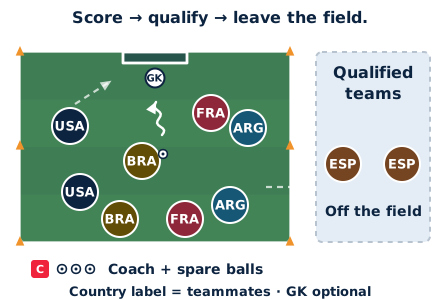
World CupShoot quickly, dribble under pressure, help a partner and win the ball back. React when possession changes.
Matching country labels are teammates; every pair attacks the same goal. GK is an optional goalkeeper. Dashed arrows show movement without the ball, including the exit to the waiting area.
How long
8-12 min, in short tournaments
How many
6-12 outfield players, plus an optional goalkeeper
What you need
One goal, cones, team-identifying bibs and spare balls; goalkeeper optional
Setting it up
Use pairs. Start around 20 × 25 yards and adjust to the group. Put one goal at an end and mark a waiting area well outside the shooting space. Keep the coach and spare balls beside the boundary. Give short instructions and restart immediately after a goal or when the ball goes out.
How it works
Divide the players into teams of 2-3. Each team chooses a country.
Mark a playing area with one goal. Use a goalkeeper if available, or an empty small goal.
The coach serves one ball. Every team competes against every other team to score in the same goal.
A team that scores qualifies for the next round and immediately moves to the waiting area outside the playing space.
Serve a fresh ball and continue with the remaining teams. If the ball goes out, restart straight away.
When only one team has not scored, that team is eliminated from the tournament.
Start the next round with the qualifying teams. Repeat until two teams remain.
Play the final on the same goal: first to score wins. Try first to two goals if you want a longer final.
Example: 12 outfield players
With 12 outfield players, make six pairs: USA, Brazil, Argentina, France, Spain and Germany.
Round 1: 6 teams → 5 advance.
Round 2: 5 → 4.
Round 3: 4 → 3.
Round 4: 3 → 2.
Final: 2 → 1 champion.
A goalkeeper needs to be an additional player or adult; the six pairs still need all 12 outfield players.
Shout Try a shot, find your partner, win it back
Things to ask them
Is there space to shoot?
Where can you move to help your partner?
What do you do when another team wins the ball?
How can you get between the ball and the goal?
If it's too hard
Everyone comes back
Use an empty small goal or give them more space. For a version without elimination, reset with every team after each round instead of knocking out the last team. Keep rounds short and encourage trying a shot and finding a partner.
If it's too easy
Find another way
Make the space a little smaller, or add a goalkeeper. Encourage a pass or a dribble when the shot is blocked. Try first to two goals in the final.
Tip Keep tournaments short. Qualified and eliminated players can do a separate supervised ball activity outside the shooting area, or retrieve balls only when it is safe. Use a helper for that group and reset tournaments quickly so nobody has a long wait. If you cannot supervise two activities, use the no-elimination version and quick resets.
Extra game based on the supplied World Cup description; separate from the Massachusetts Youth Soccer weekly plans.
The short version
Are they playing more than you're talking?
If they are, you're doing fine. The rest of this is the stuff it helps to know before your first practice.
01
Before you get there
Get there about fifteen minutes early and set up before the kids arrive, so once they're there you can pay attention to them instead of the cones.
Set up backwards. Put out your last game first using one colour of cone, then the middle game in another colour, then the first one. That way you only ever pick cones up, never put them out mid-session.
Walk the space and clear anything they could trip on or cut themselves on. If you can't move it, just shift your cones so you're playing somewhere else.
Bring a couple of spare balls. Someone always leaves theirs in the car.
Check your league's rules before the first game - how many players, whether there's a keeper, and what happens when the ball goes out.
02
Running practice
Start them playing straight away. Two kids is enough for a game.
Keep instructions under a minute. They can hold about two or three things in their head at once, so tell them where the edges are and which way they're going, then add anything else later.
Do lots of short rounds. Ten one-minute rounds hold their attention far better than one ten-minute game.
Talk to one kid while the rest keep playing, instead of stopping everybody.
Ask instead of tell. Every game below has a couple of questions you can use.
Keep the spare balls with you and throw a new one in the second one goes out. They should be playing, not chasing.
If a game isn't working, change the size of the space before you add another rule. Bigger is easier for the team with the ball, smaller is harder.
If a kid asks for water, let them go. Even if they just went.
03
What's normal at this age
They'll all chase the ball in a clump. That's completely normal for seven and eight-year-olds and it sorts itself out with age - it's not something to coach out of them.
Dribbling everywhere isn't being selfish. Passing and looking for teammates comes later, on its own.
Don't give anyone a fixed position, and don't spend practice on where everyone should stand.
They've got short attention spans and big imaginations. A defender is boring; a bandit, a dog catcher or a freeze monster is not.
A good player at this age is one who wants the ball, can control it, and is willing to try something. That's the goal - not a small version of a grown-up player.
04
Keep everyone in it
No games where losing means sitting out and watching. The first kid knocked out is almost always the one who needed the practice most.
If a ball gets booted away, send them to go get it and jump back in - don't park them on the side.
Everyone plays at least half of every game.
Never have them queuing more than two deep, and never make them run without a ball.
Agree the ground rules with them rather than announcing them - where the water bottles go, listening while someone else is talking, telling you before they wander off.
05
Making it work with nine
Make three groups of three and keep them all season. Then it's group A against B, B against C, C against A.
For a bigger game, swap one kid in every couple of minutes.
Or run 3v3 on one side while the other three do a 1v1 or a ball challenge, then switch.
Nobody should be standing around for more than a minute or two.
06
Game day
Have a rough idea where everyone starts before you get there, but don't get hung up on positions - they won't mean much yet.
Give everyone about the same amount of playing time, and move them around so they try different spots.
Keep spare balls next to you. At this age the main thing is keeping the game going.
Pick one thing from practice and mention it. Don't call out instructions on every play.
If you've got another parent helping, split it up - one of you with the game, one with the kids waiting - and swap week to week.
It's part of them learning, not a test. Nobody's getting scouted.
07
What they need to bring
Shirt, usually handed out by the club. Shorts, or sweats once it gets cold.
Shin guards. These aren't optional - no shin guards, no playing.
Socks pulled up over the shin guards. That's why soccer socks look so long.
Flat trainers or soccer cleats. No metal studs and no baseball cleats.
A size 3 or 4 ball. A full-size one is too big for them.
More water than you'd think. Half of it ends up on the ground.
08
Finishing up
Make picking up cones a race, but give them a colour each - otherwise they'll grab whatever's nearest.
Ask what they liked today. It tells you what to run again next week.
Check in with them before they go.
Say goodbye to every kid and every parent, and thank them for coming.
Where this came from
The practices are adapted from the Massachusetts Youth Soccer session plans and their guide for new volunteer coaches, which is what U.S. Soccer points beginners toward. The diagrams here are our own. Anything to do with match day - how many players, whether there's a keeper, what happens when the ball goes out - comes from your own league, so check with them.
World Cup is an extra game based on a supplied activity description, separate from these weekly plans.
Play, teach one thing, play again. Open a week to see how long each bit takes, how to set it out, and what to ask them. Every game is drawn out, and links to its own page with the easier and harder versions.
First 20 minutes
Just play
Start the moment two kids are there
Don't wait for everyone. Two kids is a game. Start 1v1 and add each new arrival, so it grows to 2v1, 2v2, 3v3. You're not teaching yet - you're watching, saying hello, and letting them get warm.
Middle 20 minutes
Teach one thing
One game, one idea
One game that makes them practise the thing you picked. Explain the boundaries and which way they're going, then start. Add rules one at a time as they get it. Lots of short rounds with breaks, not one long one.
Last 20 minutes
Play again
Back to a real game
Split into teams and play. Show them, tell them in about thirty seconds, then let them go. This is where you find out if the middle bit stuck. Don't referee it and don't shout instructions.
You don't need a full field. A rectangle a bit bigger than a basketball court is plenty, and most sessions split it into two smaller ones.
Play games the way your league plays them - same numbers, same restarts, keeper or no keeper. The practice games below are deliberately smaller than that, because fewer kids per ball means more touches.
What the pictures mean
A kid on the team with the ball
A kid on the other team
A ball
You
A cone
A goal
Running with the ball
A pass
Running without the ball
01
Attacking
Getting the ball moving forwardGo forwards, spread out
The idea Get past someone and into the other half.
Split your space into two small fields with a goal at each end. As soon as two kids have arrived, start a game. It begins as 1v1 and grows - 2v1, then 2v2, then 3v3 - as more turn up. Once one field is busy, start the second one.
Shout Go forwards, find your teammate
If there's a gap in front of you, what should you do?
Use the whole space with a goal at each end and split them into even teams. Two halves with a short break in the middle. Play it however your league plays it.
Split your space into two small fields with a goal at each end. As soon as two kids have arrived, start a game. It begins as 1v1 and grows - 2v1, then 2v2, then 3v3 - as more turn up. Once one field is busy, start the second one.
Shout Go to goal
Once you've got the ball, what do you want to do next?
Split your space into two small fields and put a goal in each corner, so there are four per field. Play 2v2 with the other teams waiting on the side. Scatter spare balls around so you can restart instantly.
Shout Which goal is open?
What can you do if nobody's near you?
Where can you go if it's crowded in front of the goal?
Use the whole space with a goal at each end and split them into even teams. Two halves with a short break in the middle. Play it however your league plays it.
Shout Help your teammate, switch it
Once you've passed it, where do you go?
Where can you go if it's crowded in front of the goal?
The idea Get past someone and into the other half.
Split your space into two small fields with a goal at each end. As soon as two kids have arrived, start a game. It begins as 1v1 and grows - 2v1, then 2v2, then 3v3 - as more turn up. Once one field is busy, start the second one.
Shout Go to goal, score
When you've got the ball, what are you trying to do?
Mark a strip right across the middle of your space - that's the dog pound - with a goal at each end. You and any other grown-ups start in the pound as dog catchers, with no ball. Every pair shares a ball and lines up on an end line.
Shout Get through quick, keep moving
What's the fastest way through the middle?
Where should your partner go to help you get through?
If your partner's close by, which bit of your foot do you pass with?
Use the whole space with a goal at each end and split them into even teams. Two halves with a short break in the middle. Play it however your league plays it.
Split your space into two small fields with a goal at each end. As soon as two kids have arrived, start a game. It begins as 1v1 and grows - 2v1, then 2v2, then 3v3 - as more turn up. Once one field is busy, start the second one.
Shout Go to goal, score
Once you've got it, what's the next thing you want to do?
Split your space into two small fields and mark a short scoring zone across each end. One team waits behind one zone with the balls, the other behind the opposite one.
Shout Find the gap, trick the defender
What do you do if there's a clear run all the way?
How can you use your teammate to trick the defender?
Use the whole space with a goal at each end and split them into even teams. Two halves with a short break in the middle. Play it however your league plays it.
The idea Look after your goal, and win the ball if you can.
Talk to the team without the ball, not the one with it. Split your space into two small fields with a goal at each end. As soon as two kids have arrived, start a game. It begins as 1v1 and grows - 2v1, then 2v2, then 3v3 - as more turn up. Once one field is busy, start the second one.
Shout Get back, cover the goal
What do you do if your goal's wide open?
Where do you go if they're closer to your goal than you are?
The idea Look after your goal and win the ball back.
Use the whole space with a goal at each end and split them into even teams. Two halves with a short break in the middle. Play it however your league plays it.
Shout Get back, win it
What's the first thing you do when your team loses the ball?
If your teammate's already covering the goal, where do you go?
Set up two small fields with a gap between them. Split your space into two small fields with a goal at each end. As soon as two kids have arrived, start a game. It begins as 1v1 and grows - 2v1, then 2v2, then 3v3 - as more turn up. Once one field is busy, start the second one.
Shout Get back, cover the goal
If there's a gap in front of you, what should you do?
Mark a small field with a goal at each end - two of them if you've got the numbers. Split the group in half, with each half waiting in the two corners of their own end line. You stand off to the side with all the balls.
Shout Get back, get in the way
What's your job the second the other team gets the ball?
Use the whole space with a goal at each end and split them into even teams. Two halves with a short break in the middle. Play it however your league plays it.
The idea Look after your goal, and win the ball if you can.
Split your space into two small fields with a goal at each end. As soon as two kids have arrived, start a game. It begins as 1v1 and grows - 2v1, then 2v2, then 3v3 - as more turn up. Once one field is busy, start the second one.
Shout Get back, cover the goal
If there's a gap in front of you, what should you do?
Put three small goals along one end line and a single goal at the other. Half the group waits at each end. The team defending the single goal starts with the ball.
Shout Which goal is the danger?
Which of the three goals is the dangerous one right now?
Where should you be standing if a goal's in danger?
What if they knock the ball too far in front of themselves?
The idea Look after your goal and win the ball back.
Use the whole space with a goal at each end and split them into even teams. Two halves with a short break in the middle. Play it however your league plays it.
Two small fields with a gap between them. Split your space into two small fields with a goal at each end. As soon as two kids have arrived, start a game. It begins as 1v1 and grows - 2v1, then 2v2, then 3v3 - as more turn up. Once one field is busy, start the second one.
Shout Go to the ball, win it
If there's a gap in front of you, what should you do?
One goal at one end and a short scoring zone at the other. Play 3v3. The team you're coaching defends the goal, and scores by stopping the ball in the zone - either dribbling in or passing to someone in it. The other team scores in the goal.
Shout Go to the ball, win it back
If you're nearest to the ball, what should you do?
When's the right moment to try and take it?
How do you get to the ball and cover your goal at the same time?
Use the whole space with a goal at each end and split them into even teams. Two halves with a short break in the middle. Play it however your league plays it.
Split your space into two small fields with a goal at each end. As soon as two kids have arrived, start a game. It begins as 1v1 and grows - 2v1, then 2v2, then 3v3 - as more turn up. Once one field is busy, start the second one.
Shout Heads up, find your teammate
How do you know where the goal and the defenders are?
Use the whole space with a goal at each end and split them into even teams. Two halves with a short break in the middle. Play it however your league plays it.
Two small fields with a gap between them. Split your space into two small fields with a goal at each end. As soon as two kids have arrived, start a game. It begins as 1v1 and grows - 2v1, then 2v2, then 3v3 - as more turn up. Once one field is busy, start the second one.
Shout Go to the ball, win it
If there's a gap in front of you, what should you do?
The idea Defending as a group, in front of your own goal.
Split your space across into three bands with a goal at each end. Put one defender in each band, and they have to stay in it. Everyone else pairs up and shares a ball.
Shout Push them wide, win it back
Why is it worth getting close to whoever's got the ball?
When's the right moment to go for it?
How do you go at the ball and cover the goal at once?
Use the whole space with a goal at each end and split them into even teams. Two halves with a short break in the middle. Play it however your league plays it.
The idea Look after your goal, and win the ball if you can.
Split your space into two small fields with a goal at each end. As soon as two kids have arrived, start a game. It begins as 1v1 and grows - 2v1, then 2v2, then 3v3 - as more turn up. Once one field is busy, start the second one.
The idea Look after your goal and win the ball back.
Use the whole space with a goal at each end and split them into even teams. Two halves with a short break in the middle. Play it however your league plays it.
The idea Finish the season with a mini tournament - same game each time, with a different twist.
Split everyone into even teams - threes or fours, whatever keeps them all playing. Change opponents each round if you can, and add up the scores between games.