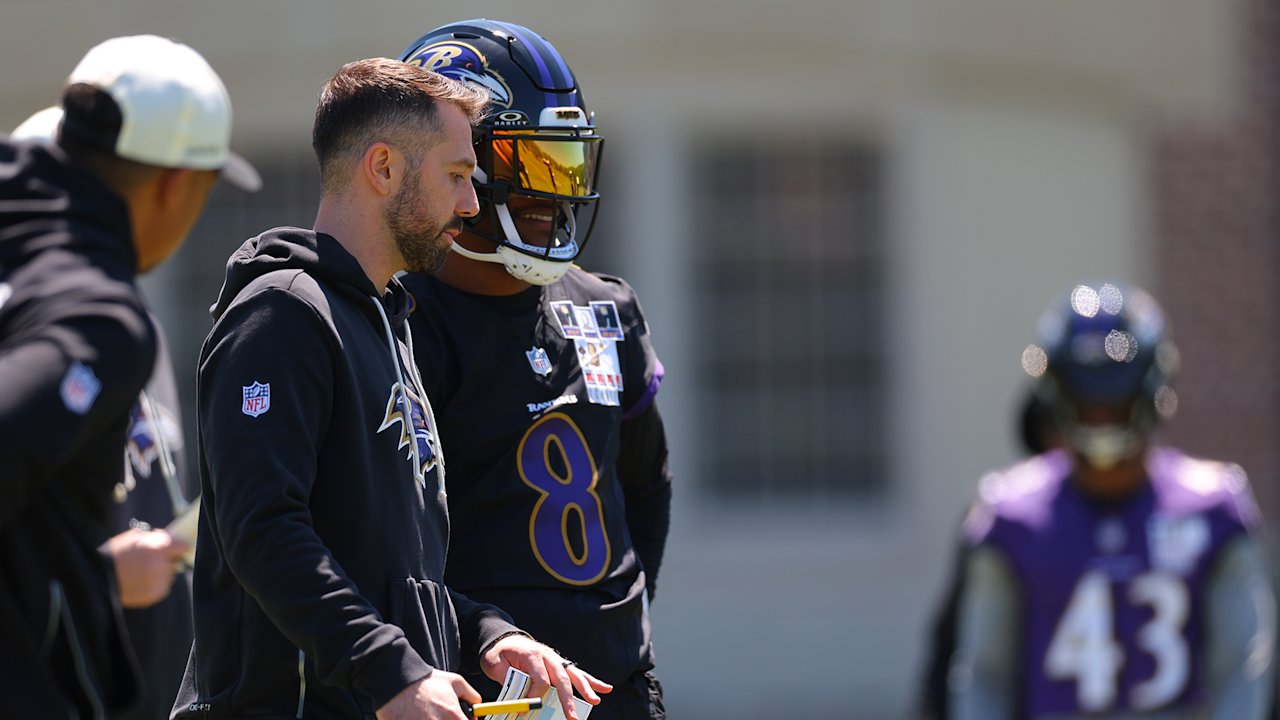
The easiest way to project Declan Doyle’s new Ravens offense is to borrow from his two most prominent mentors.
Sean Payton’s detail. Ben Johnson’s motion and deception. Add Lamar Jackson and Derrick Henry and the sky is the limit. At least that’s what we hope.
While this points us in the right direction, it won’t be just as simple as that. Doyle is not bringing a proven personal system to Baltimore. He has never called plays in a regular-season NFL game, as Ben Johnson remained the designer and play caller during Doyle’s one season as Chicago’s offensive coordinator. The Ravens are betting that a 30-year-old coach who has spent his career absorbing ideas from several of the most successful offensive environments can combine them into something of his own.
Early evidence suggests that there won’t be a dramatic departure in mentality or philosophy from the offense that had success under Todd Monken.
The Ravens will run the ball, Henry will remain central, and Lamar’s legs will still distort defensive numbers. Mark Andrews will remain the workhorse target in the middle of the field and after his recent contract extension, Zay Flowers will be the offense’s most dangerous receiver.
The difference should be in the details of how this offense presents and pieces those strengths together. Doyle’s assignment is not to replace the Ravens’ offensive identity. It is to disguise it better, teach it more precisely and give Lamar more answers before the snap, within the play and after the original structure breaks down.
That is an appealing vision, but whether a first-time NFL play caller can turn it into a coherent offense on Sundays is the much bigger question.
Physical, detailed and explosive
Doyle has repeatedly described his offense with three words: physical, detailed and explosive.
The first word should calm anyone expecting Baltimore to suddenly become a pass-first spread team. Doyle inherited Henry and Lamar, perhaps the most intimidating rushing combination in football. He also spent 2025 coordinating an offense in Chicago that finished third in the NFL with 2,456 rushing yards. The Bears did not generate that production by lining up in one formation and running the same concept repeatedly.
The Ravens under Doyle should remain committed to the run, but the presentation of that run could change considerably. That is already apparent in what Doyle has installed this offseason, with the offense working from under center, pistol and shotgun, using built-in shifts and motion. Tight ends and receivers are moving around the formation rather than being tied to one spot, most notably Rashod Bateman, while players are being taught concepts that allow them to understand multiple assignments. Even cadence is being used as another way to make the defense process information before the snap.
The objective is to make defenders process more information before they ever have a chance to tackle Henry.
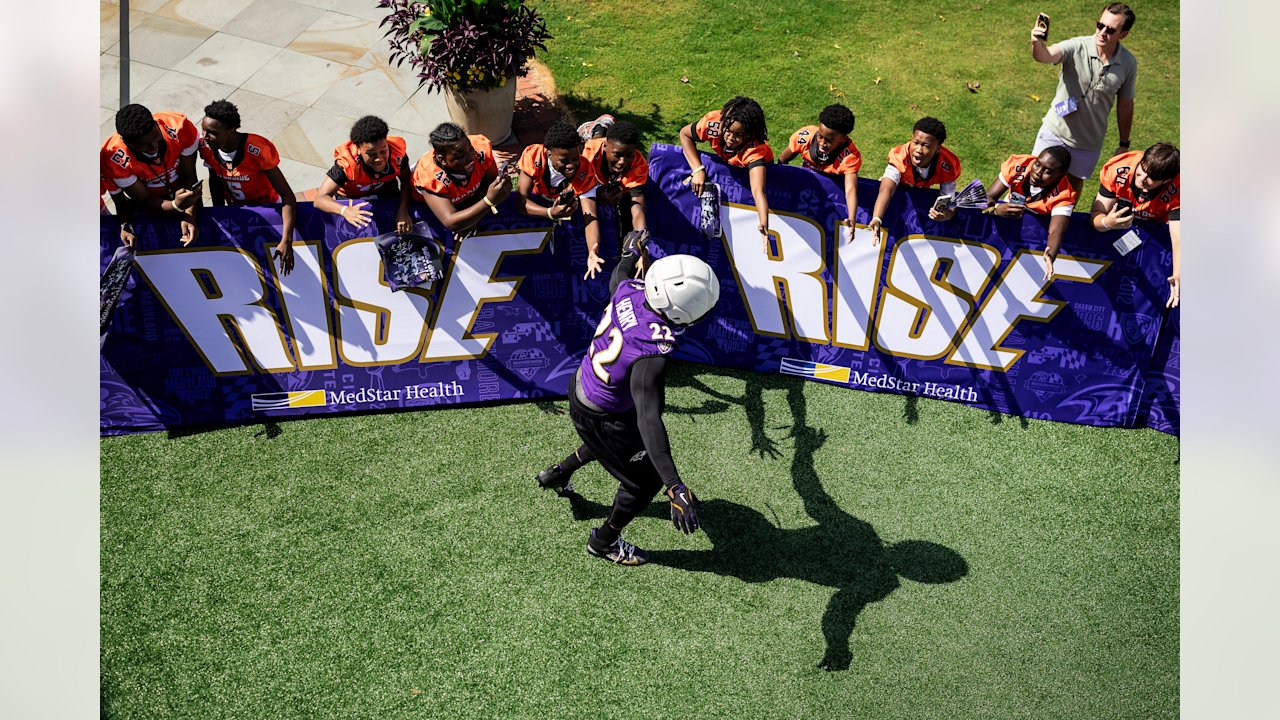
That does not mean motion for motion’s sake. Chicago used motion on 60.6 percent of its plays last season, according to Sharp Football Analysis, but the more revealing part is what the movement was designed to accomplish.
A shift can change the defensive front. Motion can force a secondary to communicate. Moving a tight end can alter the run fit. Sending Flowers across the formation can give him a cleaner release or expose whether the defense is playing man coverage. Doyle has described the goal as slowing down the “11 brains” across from the offense.
For a Ravens team already capable of creating hesitation with the Jackson/Henry mesh point, another half-second of uncertainty can matter.
The Ben Johnson influence should be obvious
Doyle’s one season with Johnson in Chicago provides the best clue to how the Ravens could look. The Bears used 11 personnel on only 51.6 percent of their tracked snaps, according to SumerSports. They played 32.6 percent from 12 personnel and another 8.5 percent with three tight ends on the field.
More importantly, those heavier formations were not automatic declarations that the Bears were about to run. Chicago threw the ball on roughly 48 percent of its snaps from 12 personnel.
That is where the concept becomes particularly interesting in Baltimore. Put two tight ends on the field with Henry and force the defense to make a choice. Stay light in nickel and Baltimore can run at the smaller box. Bring another linebacker or bigger defensive front onto the field and Doyle can detach Andrews, move Flowers, use play action or make a slower defender deal with Lamar in space.
The formation might say power football. The play does not have to.
Doyle’s background coaching tight ends in Denver fits naturally with that approach. He has spent significant time teaching a position that operates at the intersection of the run game, protection and passing concepts. He understands the value of a tight end who can line up attached to the formation on one snap, move into the slot on the next and cross the formation as a blocker after that.
The departure of Patrick Ricard adds another wrinkle. Baltimore no longer has a traditional fullback defining its personnel structure. They also lost Isaiah Likely and Charlie Kolar in the offseason. Tight ends such as Durham Smythe can absorb some of those insert-blocking and split-flow responsibilities while preserving more flexibility in the passing game. It remains to be seen how the tight end personnel will shake out, which could limit their ability to play heavier.
How much 12 or 13 personnel Doyle actually uses may ultimately depend on which tight ends earn his trust. However, the larger principle is already visible. Personnel should be a method of creating a defensive problem, not merely a label attached to a formation.
More under center could change the picture for Lamar
One of Doyle’s most obvious changes has been Lamar’s increased work from under center, which creates particularly interesting possibilities with Henry. A hard downhill fake can pull linebackers toward the line of scrimmage and open space behind them. Jackson can sell the handoff, turn back toward the defense and find crossing routes developing into the vacated space. Baltimore can boot him outside, change the launch point or build screens and throwbacks from the same initial action.
A defense accustomed to reading Lamar from the shotgun now has to process a different picture. But this does invite another looming question. Under-center play action often asks the protection to hold up longer, and Baltimore enters the season with significant uncertainty along the interior offensive line. It does little good to create a beautifully layered route combination if Lamar turns around after the fake and finds a defensive tackle in his lap.
That could become one of the first constraints on Doyle’s grander plans. The Ravens can install an enormous menu in August. The offensive line may determine how much of it survives into October.
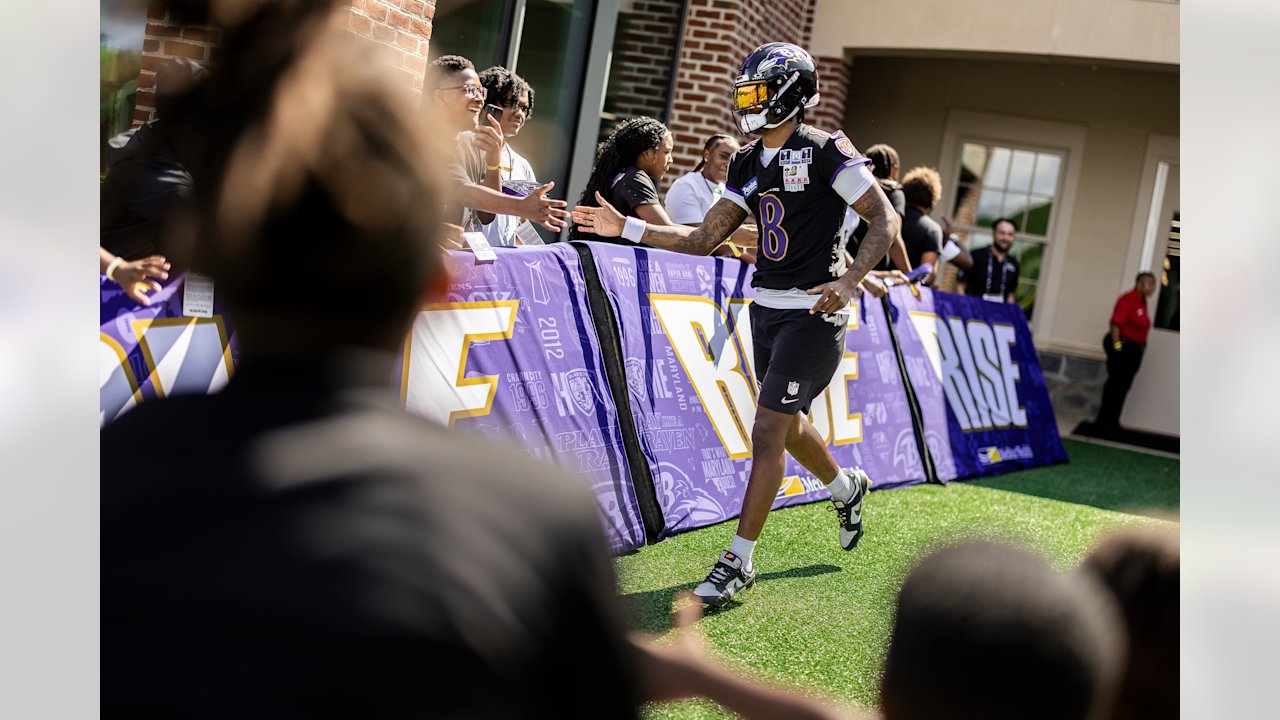
The biggest change may be how Lamar is coached
Perhaps the most interesting part of Doyle’s approach has less to do with formations than with Lamar himself.
Doyle has described defending him as having to stop two plays.
There is the called play.
Then there is the “second act” created by Lamar’s exceptional elusiveness.
The Ravens have always benefited from the second one. Lamar escapes pressure, extends the snap and turns something that appears dead into a completion 20 yards downfield. Too often, though, that improvisation has been forced to rescue a failed structure rather than functioning within the design.
Doyle wants to preserve the improvisation while making both stages more organized.
First comes greater emphasis on Jackson’s footwork, eyes, timing, huddle operation and understanding of why the play has been called. Doyle famously got after Jackson during minicamp after the quarterback changed a boot-action play, and Jackson’s reaction was revealing. He liked the coaching.
There is an important distinction here. Doyle is not treating a two-time MVP as a finished product whose gifts are too valuable to touch. He is trying to improve the mundane parts of quarterback play so Lamar has fewer snaps that require a spectacular solution.
Then, if the play does break down, everyone else needs rules.
Receivers need to understand who goes vertical and who works back toward Jackson. Backs need to know how to become outlets. The spacing must change depending on which direction Lamar escapes. Linemen have to remain conscious of drifting illegally downfield. The improvisation should remain unpredictable to the defense without being unpredictable to his teammates.
The Ravens do not need to coach creativity out of their QB, they just need to stop requiring quite so much of it.
Zay Flowers should be harder to find before the snap
The conceptual teaching extends to Baltimore’s receivers. Under Doyle, Flowers, Rashod Bateman and the rest of the group will be moved around formations rather than learning one narrowly defined spot. Flowers has described the offense as learning a new language, while praising the routes and designs Doyle is installing to help receivers create separation and he may be the most likely to benefit.
There is no reason for Baltimore to consistently leave its best receiver in a static alignment and ask the defense to comfortably identify how it wants to cover him.
Doyle can use motion to give Flowers a running start. Condensed formations can protect him from press coverage. Stacks and bunches can create natural traffic. He can move into the slot, cross the formation or serve as a decoy that pulls defenders away from the eventual target.
That is another Ben Johnson trait worth importing. The offense should make the defense spend time locating its best players before it begins worrying about stopping them.
Andrews can serve a similar purpose. If Baltimore can make his alignment credible as both a blocker and receiver, defenses cannot simply use his location as a clue. He can stay attached to the formation, flex into the slot, release late behind linebackers or become Jackson’s immediate answer when pressure arrives.
Again, multiplicity only matters if every possibility is believable.
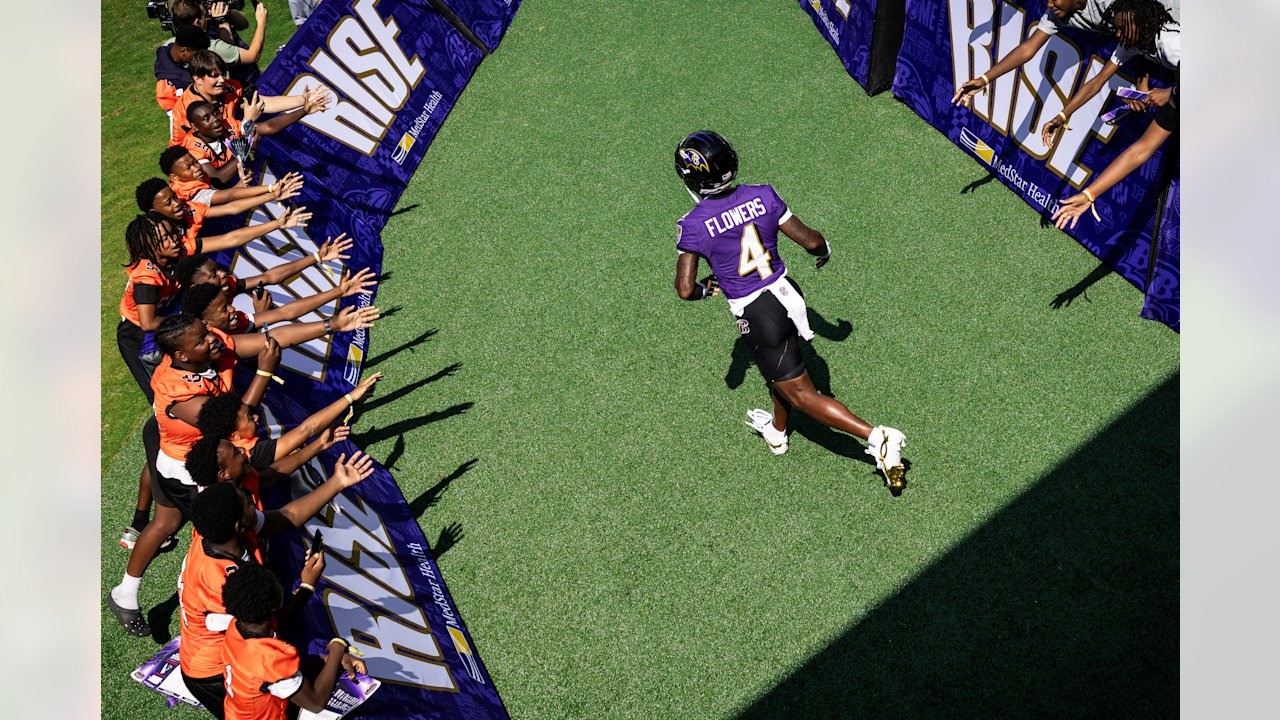
The Ravens should hunt explosives without living on hero ball
Doyle has also been clear that he wants the offense to create explosive plays deliberately.
Chicago pushed the ball downfield last season. Caleb Williams completed 28 passes traveling at least 20 yards in the air, fifth-most in the NFL. The Bears paired that aggression with a top-three rushing attack that forced defenses to respect what was happening near the line of scrimmage.
The Ravens obviously have the personnel to replicate that approach, but Doyle has emphasized knowing when to “take the profit”, which may be just as important.
A functioning version of this offense should give Lamar layered solutions. Take the shot when the defense provides it. Hit the crosser or seam when the deep safety stays high. Check the ball down when the coverage has won. Let Henry take the efficient run when the box is favorable.
The danger is building an offense that knows too much
Everything Doyle is adding sounds good individually, but he risks overcomplicating an offense that already had many strengths. The first-time coordinator will have to find the right balance of introducing complexity but phasing it in at a pace that the players can absorb.
Doyle has intentionally overloaded the offense during installation. His belief that “growth happens on the other side of stress” makes sense during the summer. The Ravens can find the breaking point now, determine what their players handle well and reduce the package before the games count.
Chicago itself required time to become comfortable with Johnson’s system last season. Baltimore has an experienced quarterback rather than a young Caleb Williams, but Lamar has said almost nothing from Todd Monken’s offense carried into Doyle’s system.
This is not a collection of new wrinkles attached to the old playbook. It is a new language.
Late huddle breaks, illegal formations, false starts and wasted timeouts will tell us quickly if the install is overly ambitious. So will Lamar spending so much mental energy operating the offense that he is slower processing the defense.
Multiplicity is only an advantage when the offense understands it better than the opponent.
Otherwise it is just complexity for complexity’s sake.
And then Doyle has to call the plays
That remains the part that can’t be easily projected. And Ravens fans will have some hesitation with a nascent play-caller after two years of a defense underperforming under a similar raw coordinator.
Doyle has been around excellent offensive coaches. He spent years with Payton in New Orleans and Denver. He was an important organizer underneath Johnson during Chicago’s dramatic offensive improvement in 2025.
The Bears went from 32nd in total offense in 2024 to sixth last season, increased their scoring by 131 points and improved from 4.5 yards per play to 5.5.
Doyle deserves credit for helping Johnson install and manage that offense, but he does not get credit for being Ben Johnson.
Johnson designed the system and called the plays. Doyle now has to prove he can handle the part that cannot be demonstrated on a whiteboard.
Can he sequence calls so one play creates an opportunity for another later? Can he recognize how a defense has changed its plan between series? Will he stick with a concept that is working rather than chasing the next clever idea? Can he manage third downs, the red zone, two-minute situations and the inevitable afternoon when the opening script gets punched in the mouth?
Most importantly, can he keep the offense grounded when a game becomes chaotic?
Those questions matter more than whether the Ravens unveil a fun reverse in Week 2.
Creativity is not in doubt. Game management is.
The Ravens do not need reinvention
That is ultimately why Doyle is such an interesting hire.
Baltimore did not need a new offensive coordinator to discover that Lamar is difficult to defend or that giving Henry the football is generally a useful idea.
Todd Monken set a high standard. The Ravens are not trying to escape an offensive failure. They are trying to push an already talented unit toward another level while asking a first-time play caller to manage a championship-caliber roster.
Doyle’s best version of the Ravens offense should look more different before the snap than it does in its fundamental priorities.
The Ravens will still be physical. They will still run. Lamar will still turn broken plays into absurd ones. Henry will still force defenses to commit bodies they would rather leave in coverage.
The difference should be that defenses have to solve more problems before reaching the problem they already know is coming.
Then, once the ball is snapped, Lamar can still turn the answer sheet upside down.
That is the promise of Doyle’s offense.
If he can implement it without burying the offense beneath its own playbook, Baltimore will not have changed its offensive identity.
It will simply be much harder to see coming.