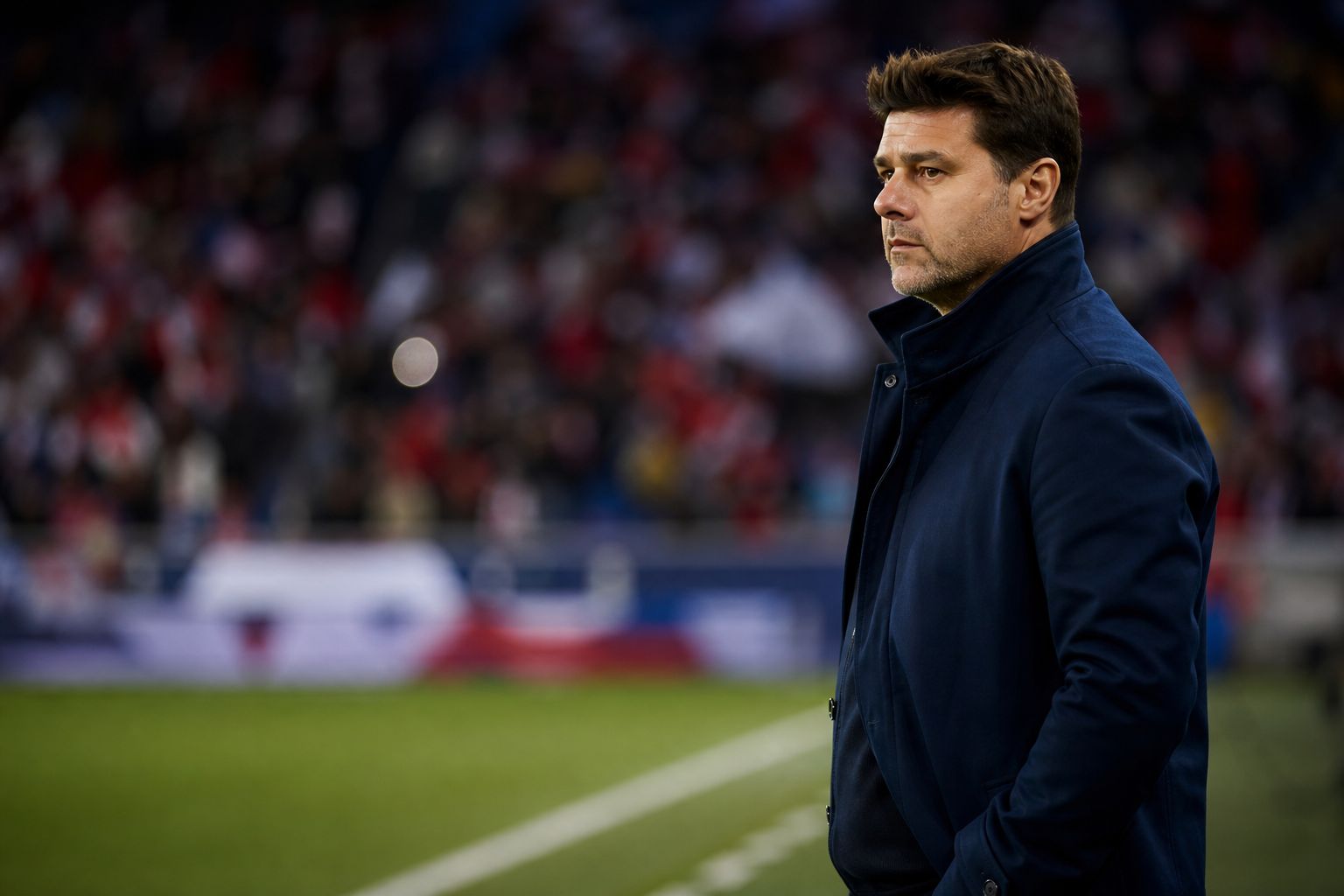
U.S. Soccer has signed Mauricio Pochettino to a new contract through the 2030 World Cup, choosing continuity after a tournament that offered both the most encouraging soccer the US men have played in years and a painful reminder of how far they remain from the world’s best teams.
The US was unlikely to find a replacement with a more accomplished resume than Pochettino, particularly one who already understood the player pool and wanted the job. While he did not deliver the transformative World Cup run many hoped for when he was hired, he largely met any reasonable expectations. The Americans won the most games they have at a World Cup and earned their first World Cup knockout victory since 2002 before bowing out with an embarrassing loss to Belgium.
The US produced high-quality wins over Paraguay, Australia and Bosnia. For most of the competition, Pochettino had the team playing a coherent, modern and attack-minded style. They pressed with purpose, moved the ball forward more quickly and committed enough players to the attack to create consistent danger.
Then Belgium exposed the limitations of the project.
Pochettino deserves some blame for a game in which the US was comprehensively outplayed, but the larger lesson of the cycle was that the players matter more than the coach. A manager can establish expectations, choose a structure and put players in sensible positions. He cannot receive the ball cleanly, recognize the next pass or win an individual matchup for them.
Against Belgium, too many important players performed below their abilities in the biggest game of the cycle. That does not mean coaching is irrelevant. The Belgium loss demonstrated how much an opponent’s plan and a manager’s response can shape a match. It means the coach can influence the team’s floor more easily than its ceiling. Pochettino helped create a better collective structure, but beating an elite opponent still required the US players to execute at a level they could not reach.
Bringing Poch back should help with the continuity, but only under two conditions.
First, Pochettino must continue holding the players accountable. No one should enter the next cycle assuming his place is secure because he started in 2026 or plays for a recognizable club. Pochettino showed a willingness during his first tenure to look beyond the established core and give opportunities to players who earned them. That needs to continue.
The next four years cannot become a victory lap for the 2026 roster. Established players should be forced to defend their positions against younger options, and club reputation should not outweigh national-team performance.
Second, Pochettino has to stay.
A contract through 2030 is not the same as a guarantee that he will coach the team at the World Cup. His name will inevitably surface when major European club jobs become available. U.S. Soccer has made a substantial commitment to him. Pochettino now needs to treat this as a full-cycle project rather than an attractive place to wait for the right Premier League offer.
The financial arrangement also raises a broader question.
It is encouraging that U.S. Soccer has benefactors willing to pay for a coach of Pochettino’s stature. At the same time, it is fair to wonder whether that level of investment would create a greater long-term return if directed toward coaching education, affordable access and the infrastructure needed to produce more elite players.
To be fair, that may not be a direct choice. Donors usually decide which projects they want to support. Pochettino and his staff will also have an expanded advisory role across youth development, coaching education and the broader men’s national-team pathway.
Still, no coach can manufacture players who do not exist. Pochettino can improve the senior team, but the US will not reach the top tier of international soccer without improving the system that develops the next generation.
As far as what he can control, Pochettino will have three main tasks ahead of him. He must begin to incorporate the next generation of players, while building greater cohesion among the likely 2030 core and winning enough meaningful games to improve the USMNT’s ranking before the World Cup draw. Unlike in 2026, the US will not receive a top seed simply for hosting the tournament. Results throughout the cycle will matter if the team hopes to reach Pot 1 for 2030 and avoid an elite opponent in the group stage.
That makes the regional competitions more than opportunities to collect trophies. Pochettino will need to use them to develop the team without treating results as irrelevant.
His biggest checkpoint will come in the summer of 2028, with a potential Copa America providing the best possible test between World Cups, with meaningful games against strong South American opposition. It would also come at a useful point in the cycle. Young players would have had time to emerge, while Pochettino would still have two years to respond to whatever the tournament revealed.
The 2028 Copa America should answer whether the US has moved beyond beating regional opponents and producing occasional impressive performances. It should show whether the team can control stretches of games against elite competition, create chances under pressure and respond when its initial plan stops working.
Pochettino earned another cycle by giving the US an identifiable way of playing and producing several of the program’s best World Cup performances. He also failed to take them beyond the round of 16 and watched his team collapse when it finally encountered an elite opponent.
Keeping him is a reasonable bet.
The next four years will determine whether continuity allows the team to build on its progress or merely produces a more polished version of the same ceiling.