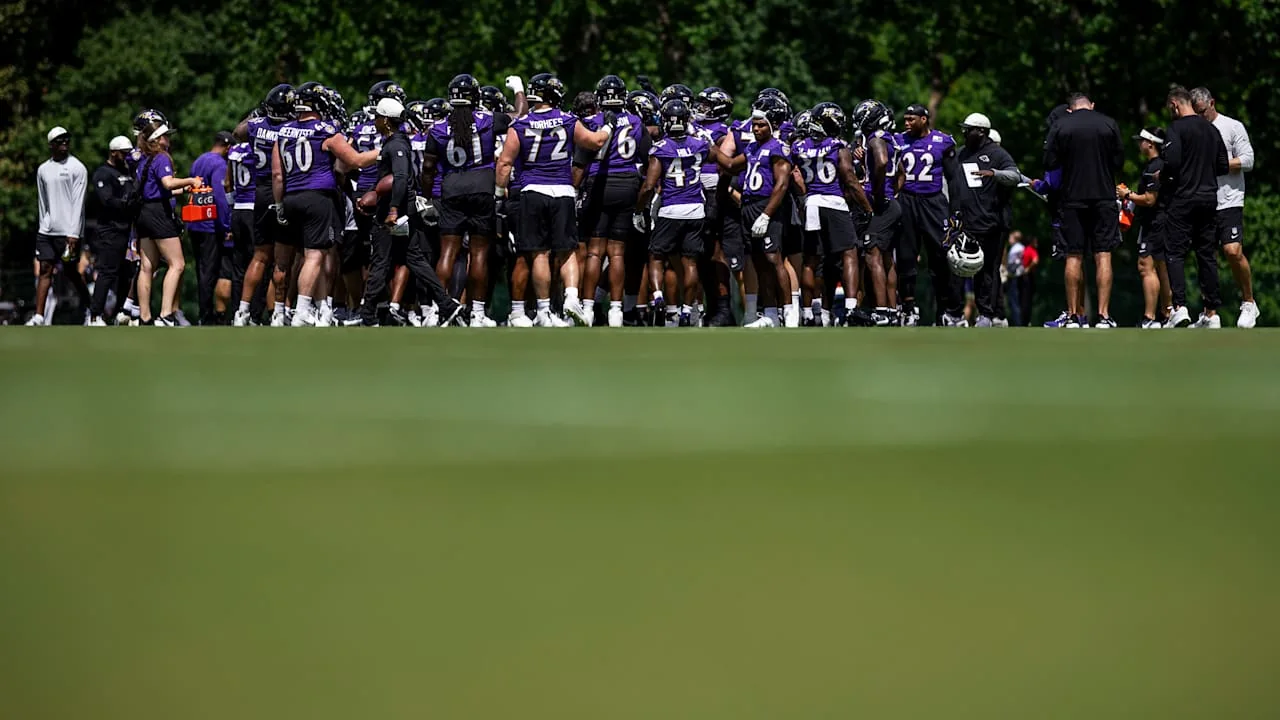
The Ravens enter the season with high hopes once again, but also with significant question marks. Several positional units rank among the best in the league, while several others have been overhauled or bolstered this offseason in hopes that they can repair the issues that dragged Baltimore down last year and rise back to the top of the AFC North and beyond.
So what should we expect in 2026?
Here is how I rank the Ravens’ 12 major units entering the season. This is not simply a list of their projected NFL rankings. Positional importance, depth, certainty and the degree to which a unit can change Baltimore’s championship ceiling all matter. That is why quarterback leads the list even though safety has the cleaner argument as the best unit in the NFL.
1. Quarterback
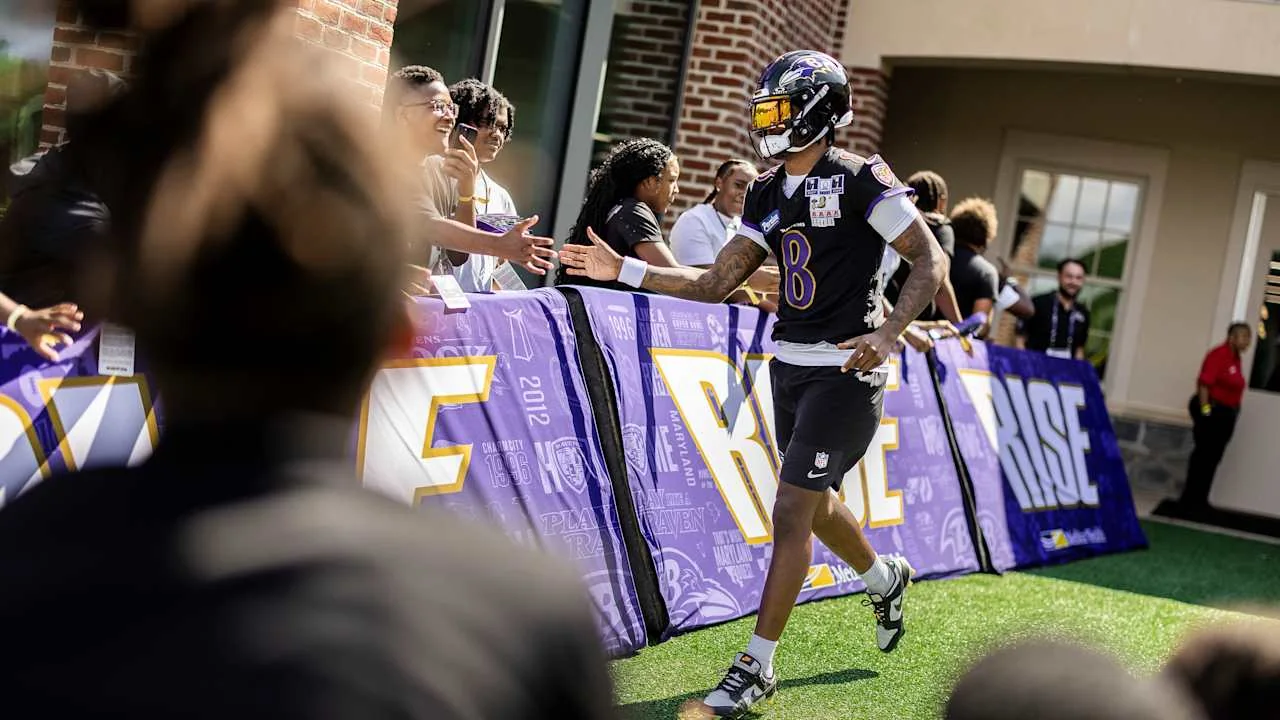
There is not much mystery about why this starts with Lamar Jackson.
The two-time MVP is among the cream of the crop at the position when healthy. Entering the season, only two quarterbacks can really make a case to rank above Lamar: Josh Allen and Patrick Mahomes. With Mahomes returning from a serious knee injury, we’ll project Lamar as the No. 2 quarterback entering the season.
The only real question is whether the Ravens can keep him healthy.
His 2024 season was absurdly efficient. Lamar generated +0.28 EPA per play, threw for 4,172 yards with 41 touchdowns and four interceptions, added 915 rushing yards and was sacked on only 4.23 percent of his dropbacks.
Almost all of those numbers crashed in 2025. His EPA per play fell to +0.07, his sack rate more than doubled to 9.78 percent and injuries limited both his availability and effectiveness. Lamar missed three games with a hamstring injury, dealt with additional physical issues afterward and was pretty clearly never himself for the remainder of the season.
The mistake would be treating either season as the automatic 2026 baseline.
Lamar does not have to reproduce his historic 2024 efficiency for Baltimore to have one of the two or three best quarterback situations in football. He simply needs to look much more like himself than he did during the injury-disrupted 2025 season.
Declan Doyle adds another variable. The Ravens are asking Lamar to operate a new offense with more movement, different formations and greater responsibility within the structure of each concept. Done well, that should provide cleaner answers before the snap and reduce the number of plays Lamar has to rescue through improvisation. The concern is whether the rebuilt offensive line gives any of those ideas enough time to develop.
Depth is the weakness here. Tyler Huntley is a useful backup who understands the offense and the organization, but there is no realistic replacement for what Lamar does to a defense. Baltimore can survive a short Huntley stretch. It becomes a completely different offense if Lamar is gone for a month.
That does not prevent quarterback from ranking first on this list. It merely explains why keeping Lamar healthy remains the single most important condition attached to the Ravens’ season.
2. Safety
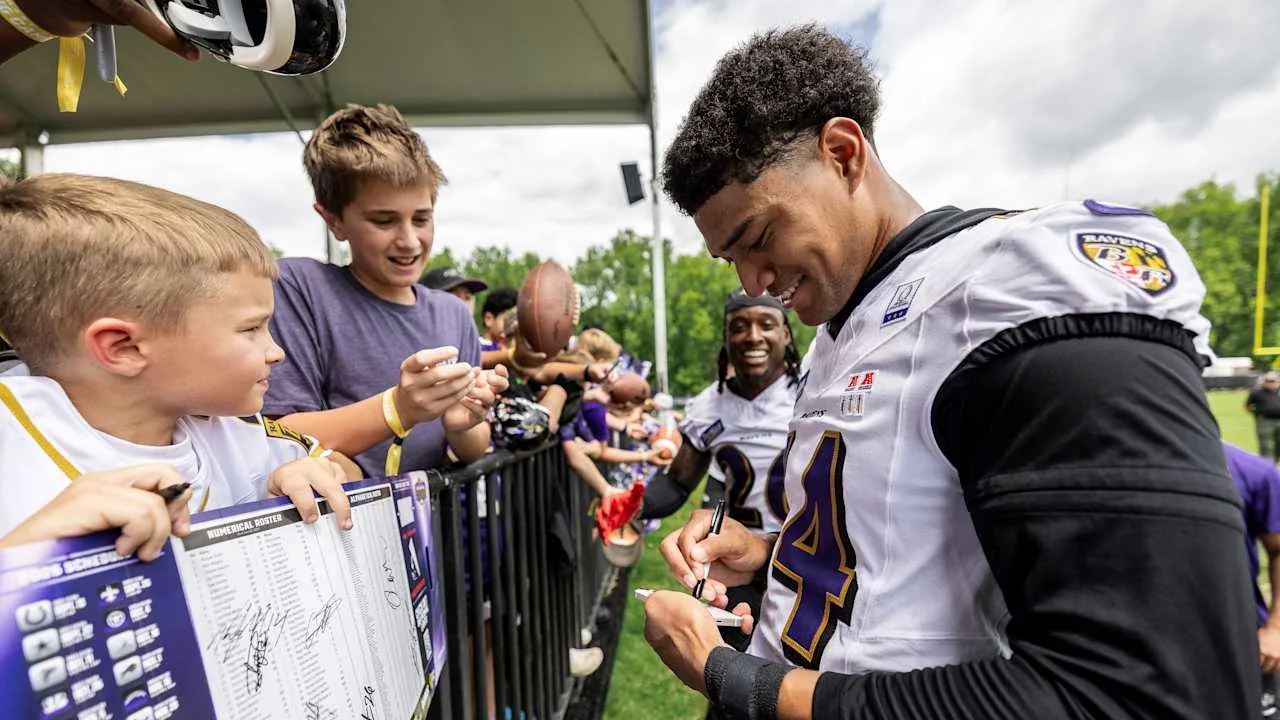
If this were strictly a ranking of where each Ravens position stands against the league, safety would be first.
Kyle Hamilton has become the prototype for what modern defenses want from the position. He can play deep, cover the slot, fit the run, blitz, match tight ends and move around enough before the snap to make quarterbacks identify him repeatedly.
He was a first-team All-Pro last season after posting an 86.3 PFF grade, including an 84.3 coverage grade and 91.5 pass-rush grade. PFF currently ranks him as the NFL’s best safety, and his multi-year grading since entering the league supports the argument that this is more than reputation.
The exciting part for Baltimore is that this no longer has to be Hamilton carrying the position by himself.
Malaki Starks played more than 1,000 snaps as a rookie and was already a strong run defender. His coverage was more ordinary, which is hardly alarming for a young safety asked to process NFL route combinations and rotations immediately. A normal second-year improvement would give Baltimore one of the league’s best young safety tandems.
The arrival of Jaylinn Hawkins bolsters the position further. Having a legitimate third safety allows Jesse Minter to move Hamilton without forcing him to compensate for a hole somewhere else. Three-safety personnel can become a tactical choice rather than something Baltimore only uses when the matchup demands it.
Hamilton himself remains irreplaceable, but the room has both elite talent and legitimate depth.
There are very few Ravens units where No. 1 in the NFL feels like the most reasonable starting point rather than an optimistic ceiling. This is one of them.
3. Running Back
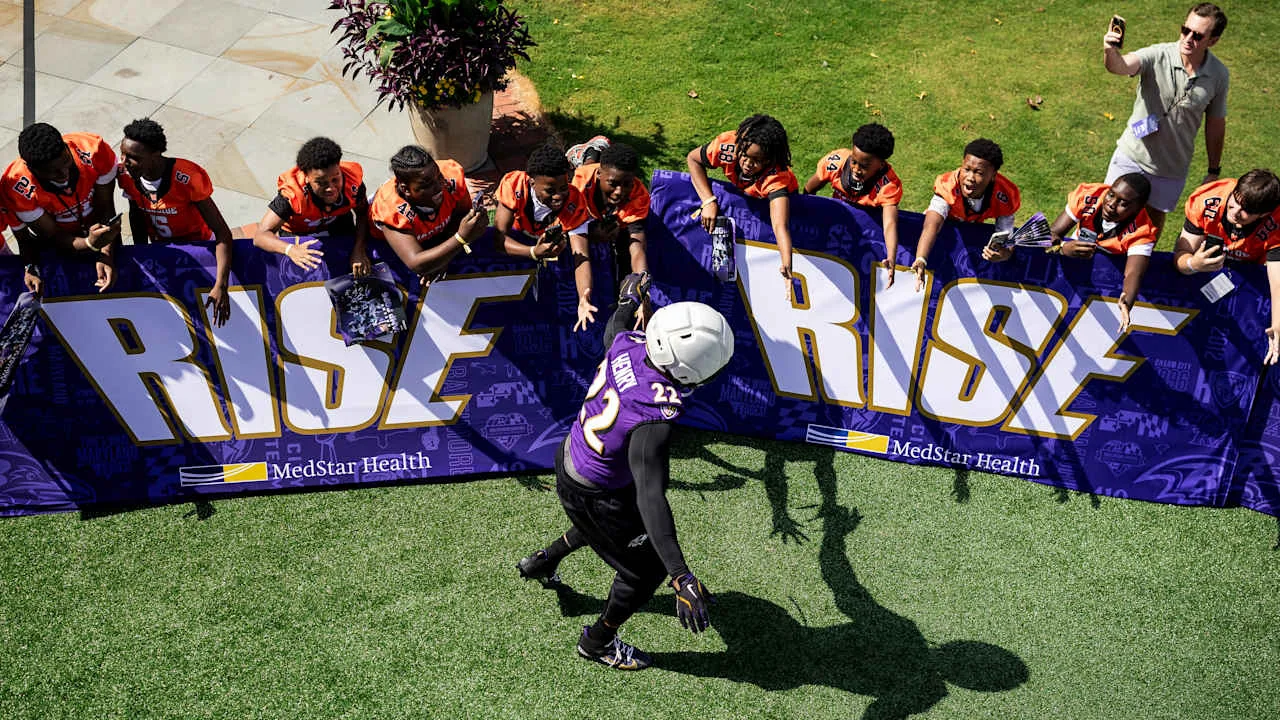
Derrick Henry finally showed signs of regression last season.
He ran for only 1,595 yards, averaged 5.2 yards per carry and scored 16 touchdowns.
Some regression.
The important context is that Henry’s 2024 season was never a sensible baseline. He averaged 5.91 yards per carry at age 30 and produced 1,921 rushing yards. Expecting that again would have been unreasonable even if he were five years younger.
Instead, his 2025 efficiency came back toward earth while remaining elite. The Ravens still finished fourth in rushing DVOA despite the broader offensive decline.
Henry also remains more valuable than a normal productive running back because defenses have to structure themselves around stopping him while simultaneously accounting for Lamar. The Ravens do not merely hand the ball to Henry and hope he falls forward. His downhill threat changes linebacker fits, creates opportunities for Lamar on the perimeter and increases the value of play action.
The obvious concern is age. Henry is 32, and eventually even the exceptions stop being exceptions. Workload durability is a greater concern than whether he suddenly forgot how to run.
The Ravens at least have useful depth. Justice Hill remains a good passing-down and change-of-pace option, while Rasheen Ali and converted receiver Adam Randall give the Ravens different choices for the remaining snaps.
None of them replaces Henry, which is the same caveat every team with an elite player faces.
This is still a top-five NFL running-back room, with a legitimate case to finish higher if Henry keeps delaying the inevitable decline.
4. Interior Defensive Line

This may be the deepest unit on the roster.
The temptation is to make everything about Nnamdi Madubuike’s return from the neck injury that ended his 2025 season in Week 2. His health is unquestionably the biggest variable. The Ravens spent almost the entire 2025 season without the interior rusher who produced 60 pressures in 2024, according to PFF.
But this ranking does not require the Ravens to simply close their eyes and assume Madubuike becomes his old self immediately.
Travis Jones changed the floor of the group last season. He finished with an 80.1 PFF grade and an 82.8 run-defense grade, while adding 47 pressures and five sacks. He developed from a powerful nose tackle into a high-volume interior defender capable of affecting both phases.
Then Baltimore brought back Calais Campbell, who generated 33 pressures and six sacks last season despite being at an age where most defensive linemen are several years into retirement. The key is that the Ravens do not need Campbell to be the centerpiece. Keeping his role manageable within a deep rotation should give him a better chance of remaining effective.
John Jenkins can handle the dirty early-down work. Broderick Washington, Aeneas Peebles and rookie Rayshaun Benny provide further rotation possibilities.
That gives Minter options. Jones and Jenkins can provide size against heavier run personnel. Madubuike and Jones can attack inside on passing downs. Campbell can move around the front. Peebles can potentially develop into a situational penetrator.
Most importantly, the Ravens should not have to run their best defensive linemen into the ground in September.
The ceiling depends upon Madubuike’s neck holding up. The top-10 case does not. There is enough quality and depth here for Baltimore to have a very good interior even if his return is gradual.
5. Edge
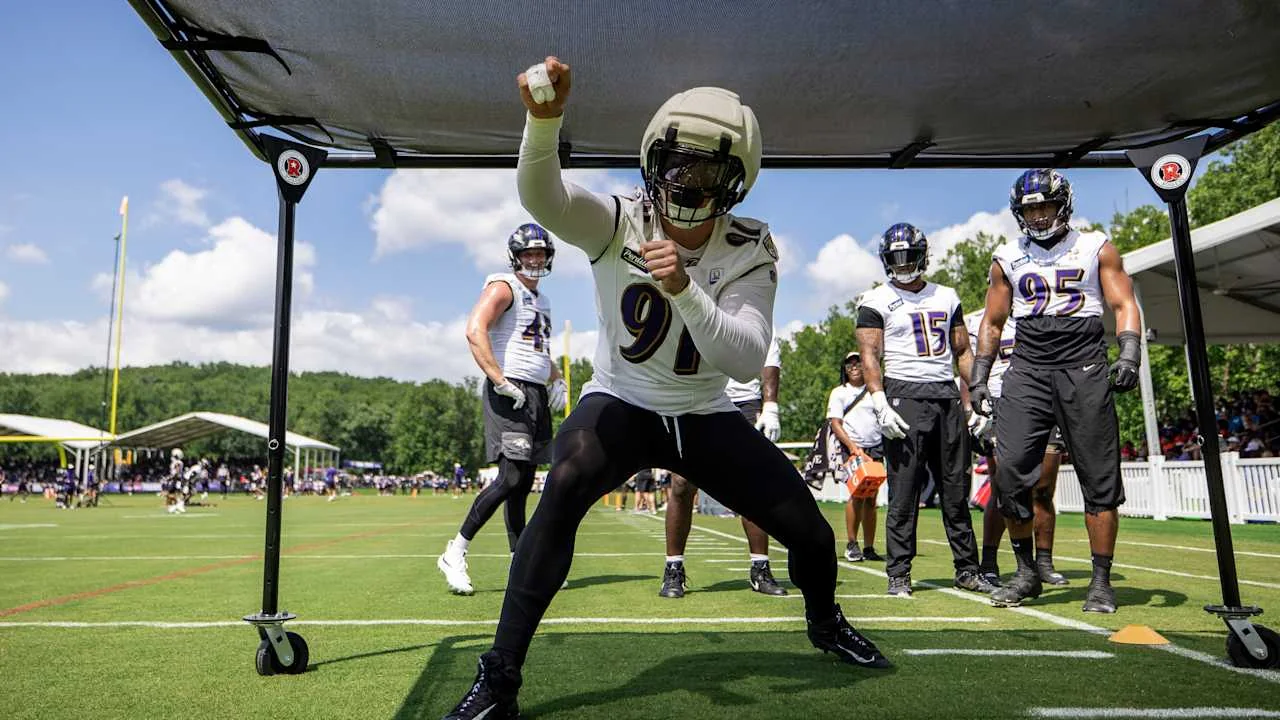
For several years the Ravens have tried to create an elite pass rush without actually employing an elite edge rusher.
That is a difficult trick to sustain.
Baltimore’s defensive sack rate fell from 7.65 percent in 2024 to 4.32 percent last season, when the defense managed only 30 sacks. Mike Green flashed as a rookie but produced only 3.5 sacks and was not ready to become the player an opposing protection had to locate before every third down.
Trey Hendrickson changes that.
He produced 17.5 sacks and 83 pressures in 2024, then earned a 90.0 PFF pass-rush grade during an injury-shortened 2025. He has demonstrated the ability to win without Baltimore manufacturing the matchup for him.
Minter can still use simulated pressures, overload protections and move rushers around. The difference is that those designs are now being built around a defender offenses already have to account for rather than being used to compensate for the absence of one.
Green can move into a much more reasonable complementary role. Second-round pick Zion Young arrives after producing 53 pressures and eight sacks at Missouri. Tavius Robinson offers a stronger early-down option.
The first four make this a top-10 unit. The depth becomes shakier after that, particularly given Adisa Isaac’s inability to stay healthy through his first two seasons.
There is also age and injury risk with Hendrickson, who missed significant time last season. Young is still a rookie, and Green has not yet proven he can consistently finish NFL pass-rush opportunities.
Still, no Ravens unit received a more obvious personnel upgrade this offseason. Baltimore finally has the proven edge winner it has been trying to manufacture through scheme.
6. Cornerback
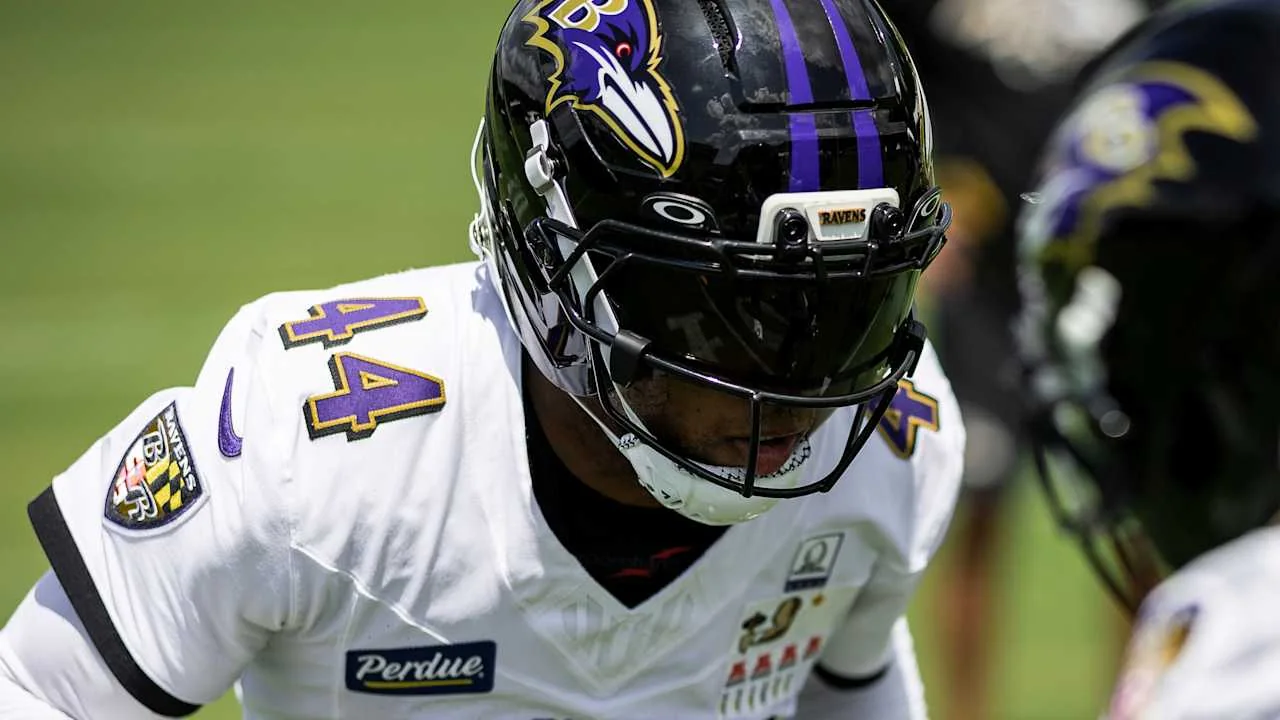
This might have the widest range of plausible outcomes of any Ravens unit outside punter.
Nate Wiggins remains the ceiling player. His 2025 season was uneven, but the talent that made Baltimore believe it had found a potential No. 1 corner has not disappeared. The recent leg injury that required him to be carted from practice was concerning, although the early news indicated there was no structural damage.
Then there is Marlon Humphrey.
His PFF coverage grade went from 81.0 in 2024 to 43.8 last season. Maybe that is an aging corner beginning to decline. Maybe it is a wild one-year performance swing that should move substantially back toward his established level. Both possibilities have to be taken seriously.
The reason I still have the corners this high is depth.
Chidobe Awuzie was arguably Baltimore’s most consistent corner last season, finishing with a 77.2 coverage grade. T.J. Tampa played only 148 defensive snaps but held up well when called upon. Keyon Martin and rookie Chandler Rivers give the Ravens multiple possibilities in the slot, while Hamilton provides yet another way to construct the nickel defense.
That means an injury does not immediately force Baltimore to play someone who does not belong on an NFL field.
The Ravens can use Wiggins outside, kick Humphrey inside and play Awuzie on the other boundary. They can keep Humphrey outside and use a designated nickel. Tampa can fill in if one of the top three misses time.
That is meaningful depth at a position where teams inevitably reach CB4 and CB5 during a 17-game season.
This is not an elite cornerback room based on the current performance of its starters. It is a deep one with enough upside to become elite if Wiggins makes his expected jump and Humphrey rebounds.
An improved pass rush should help too. Covering for three seconds is generally easier than covering for five. Advanced analytics remain undefeated.
7. Pass Catchers
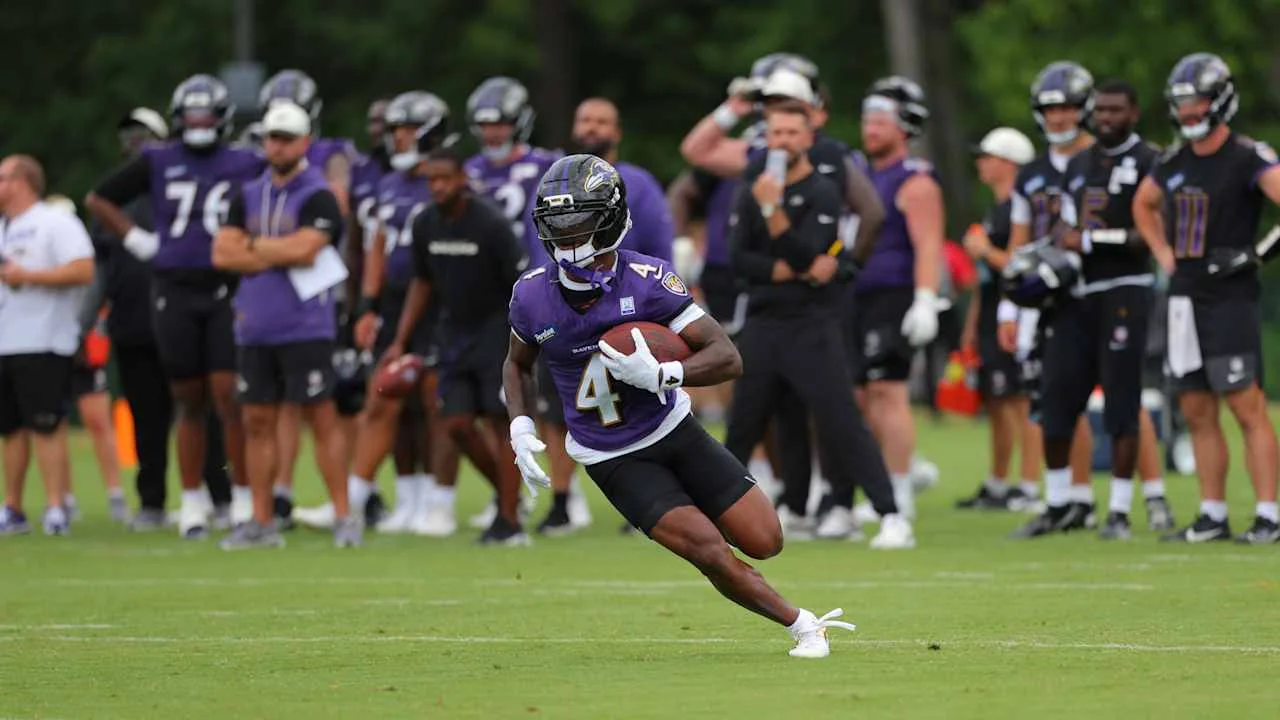
Zay Flowers has removed himself from the list of concerns.
He caught 86 passes for 1,211 yards last season, commanded a 29 percent target share and averaged 2.52 yards per route run. He has developed into a legitimate No. 1 receiver rather than merely Baltimore’s best receiver by default.
The questions begin immediately afterward.
Mark Andrews declined from 673 yards and 11 touchdowns in 2024 to 422 yards and five scores last season, while his yards per route run fell from 1.87 to 1.20. Rashod Bateman dropped from 756 yards and nine touchdowns to 224 yards and two scores.
Both players were probably on the fortunate side of touchdown variance in 2024 and the unfortunate side of Baltimore’s entire passing-game collapse in 2025. The sensible projection lies somewhere between those extremes.
Bateman is particularly important because the Ravens need an outside receiver who can punish defenses for devoting extra attention to Flowers and Andrews. Devontez Walker has flashed explosiveness but has not established a full-time role.
Baltimore tried to address the uncertainty by drafting Ja’Kobi Lane and Elijah Sarratt. That gives Doyle options, but rookie receivers should not be treated as solved problems in August.
The larger depth concern is at tight end, where Isaiah Likely and Charlie Kolar are gone. Durham Smythe gives Baltimore a veteran blocker and useful role player, while Matt Hibner and Josh Cuevas provide developmental upside. None should be casually penciled in to replace Likely’s receiving ability.
If Andrews misses time, Baltimore suddenly has very little proven receiving production at the position. Flowers is good enough to keep the Ravens around the middle of the league almost by himself. Getting into the top 10 requires at least one additional development: an Andrews rebound, a Bateman revival or a young receiver becoming a legitimate weekly threat.
Preferably more than one.
8. Linebacker
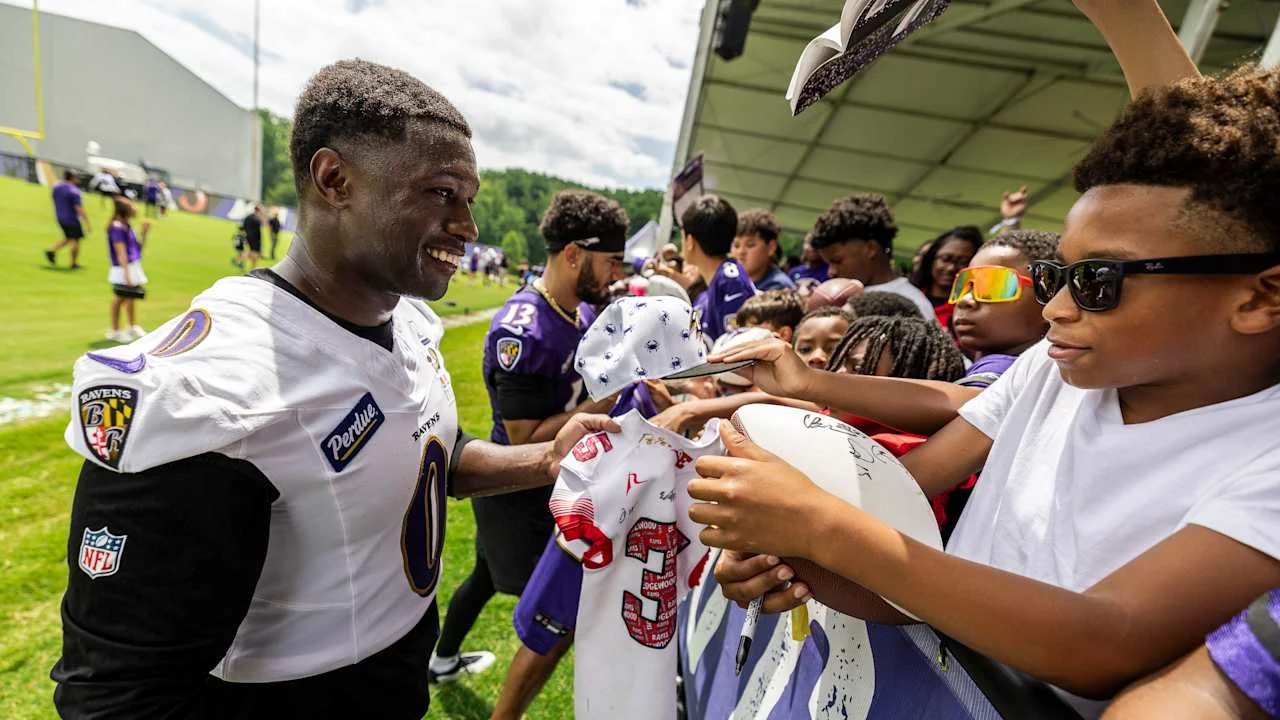
This unit is better than “Roquan Smith and whoever lines up next to him,” which is probably the easiest way to underestimate it.
Smith remains the foundation. He was not quite at his best last year, but he still posted PFF grades above 74 in both coverage and run defense. A rebuilt defensive front should also make his life easier by preventing offensive linemen from reaching the second level quite so cleanly.
Trenton Simpson deserves more credit than his changing role suggests. He earned a 79.6 run-defense grade last season and generated 12 pressures in limited work. Coverage remains the concern, but the Ravens do not need to hide him on every down.
That matters because Teddye Buchanan is still recovering from the torn ACL that ended his rookie season. Buchanan showed useful run-defense ability before the injury but struggled more in coverage. Even before considering the knee, he still had development ahead of him.
Having Simpson gives Baltimore the option to bring Buchanan along rather than treating Week 1 as a deadline.
Minter also has ways to reduce the burden on the second linebacker. Hamilton can play closer to the box. Three-safety personnel can replace a conventional linebacker in certain matchups. Simpson can be used as a pressure player rather than repeatedly isolated in coverage.
The problem comes after the top three. Jay Higgins IV has barely played NFL defense, and the rest of the depth chart is largely developmental.
If Smith, Simpson and Buchanan are available, Baltimore has a solid group. Lose Smith or two members of that trio and the floor drops quickly.
That keeps the Ravens just outside the top 10 entering the season.
9. Blocking
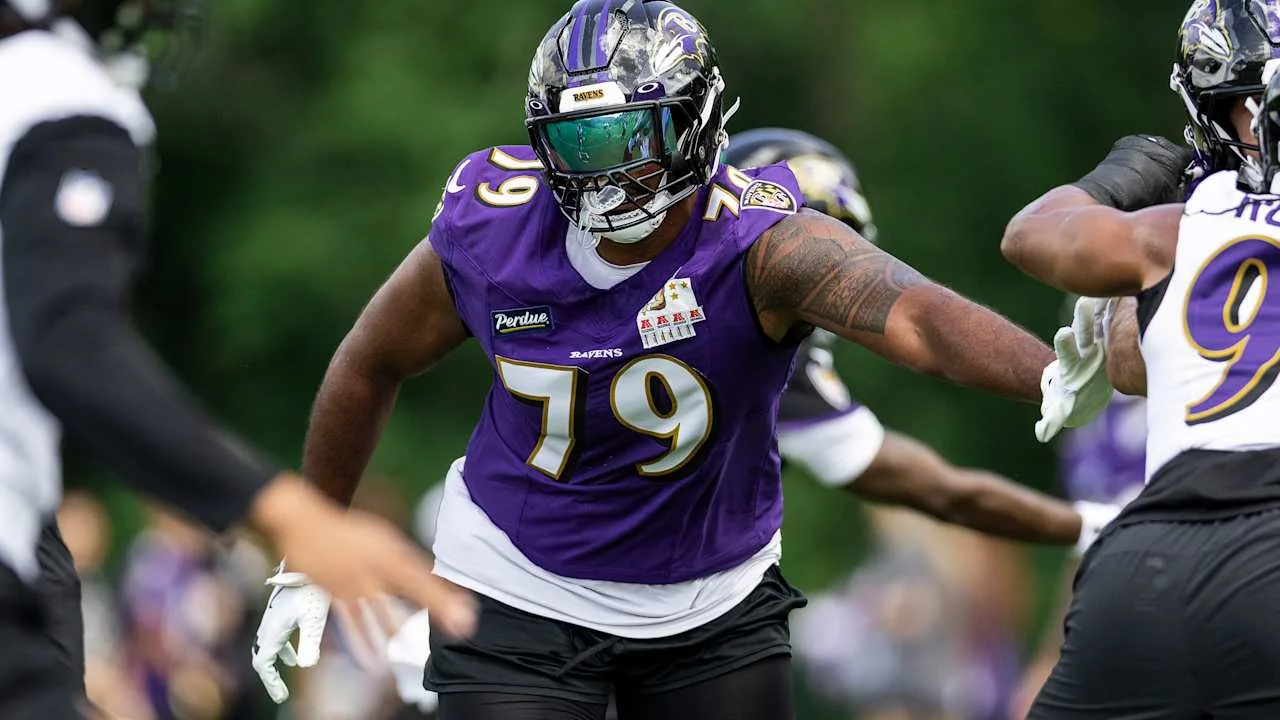
No unit is more difficult to evaluate because Baltimore’s blocking was simultaneously very good and very bad last season.
The Ravens created 2.9 yards before contact, second in the NFL according to FTN’s offensive-line data, and finished sixth in adjusted line yards. Henry did not run for 1,595 yards entirely through individual stubbornness.
Pass protection was another story.
Baltimore allowed pressure on 32.7 percent of its pass plays, 29th in the league. The guards combined to allow seven sacks and 58 pressures.
With the overhaul of their line, the Ravens need to preserve as much of the rushing operation as possible while becoming competent enough inside that Lamar can step into the pocket without immediately meeting a defensive tackle.
Ronnie Stanley and Roger Rosengarten give Baltimore stability at tackle. The entire interior is different. John Simpson returns to the team at left guard. First-round pick Vega Ioane is expected to start on the right. Danny Pinter has emerged during camp as the favorite at center, with Ethan Pocic providing unusually experienced competition and depth as he builds back up from his injury last December.
The concern is continuity and certainty. Pinter has played plenty of NFL football but has never entered a season as an established full-time center. Ioane is a rookie. Simpson is new to this particular combination. Meanwhile, Tyler Linderbaum, Patrick Ricard, Isaiah Likely and Charlie Kolar are all gone from the broader blocking structure.
There are reasons for optimism. It is difficult to imagine the guard play being worse than it was last season, and Ioane has substantially more upside than a typical rookie being thrown into the lineup. Pocic’s 97 career starts give Baltimore a legitimate fallback if Pinter struggles.
The interior depth is respectable. Tackle depth is much less comforting, particularly if Stanley misses extended time. National projections capture the uncertainty. FTN has Baltimore’s line 13th. PFF has it 24th.
The run blocking should remain a strength. If pass protection merely becomes average, this ranking will look too low. If the new interior spends September passing off stunts incorrectly while Lamar runs for his life, it will look generous.
10. Return Unit
The return game was quietly pretty good last season.
LaJohntay Wester averaged 12.4 yards on 16 punt returns, eighth in the NFL, while the Ravens were roughly average on kickoff returns. They did it without producing a return touchdown, so the improvement was not built around one fluky play inflating the numbers.
Wester should retain the punt-return job and gives Baltimore a legitimate weapon there. Kick returner is less settled, but Rasheen Ali, Adam Randall, Justice Hill and others give the Ravens enough options that losing one candidate should not destabilize the unit.
The complication is that return and coverage performance cannot be fully separated from the specialists. Jordan Stout’s placement and hang time helped Baltimore allow only 6.9 yards per punt return last season. Rookie Ryan Eckley now has to reproduce enough of that value for the coverage team to continue operating from favorable circumstances.
Anthony Levine Sr. also takes over as special-teams coordinator, adding another element of transition. Returns themselves should be somewhere around average to above average. The reason the overall unit does not rank higher is volatility. Wester’s punt-return average came on only 16 attempts, kickoff rules continue to change how teams approach the play and the punter transition affects the other half of the equation.
There is enough here to feel comfortable.
There is not enough to feel particularly certain.
11. Kicker
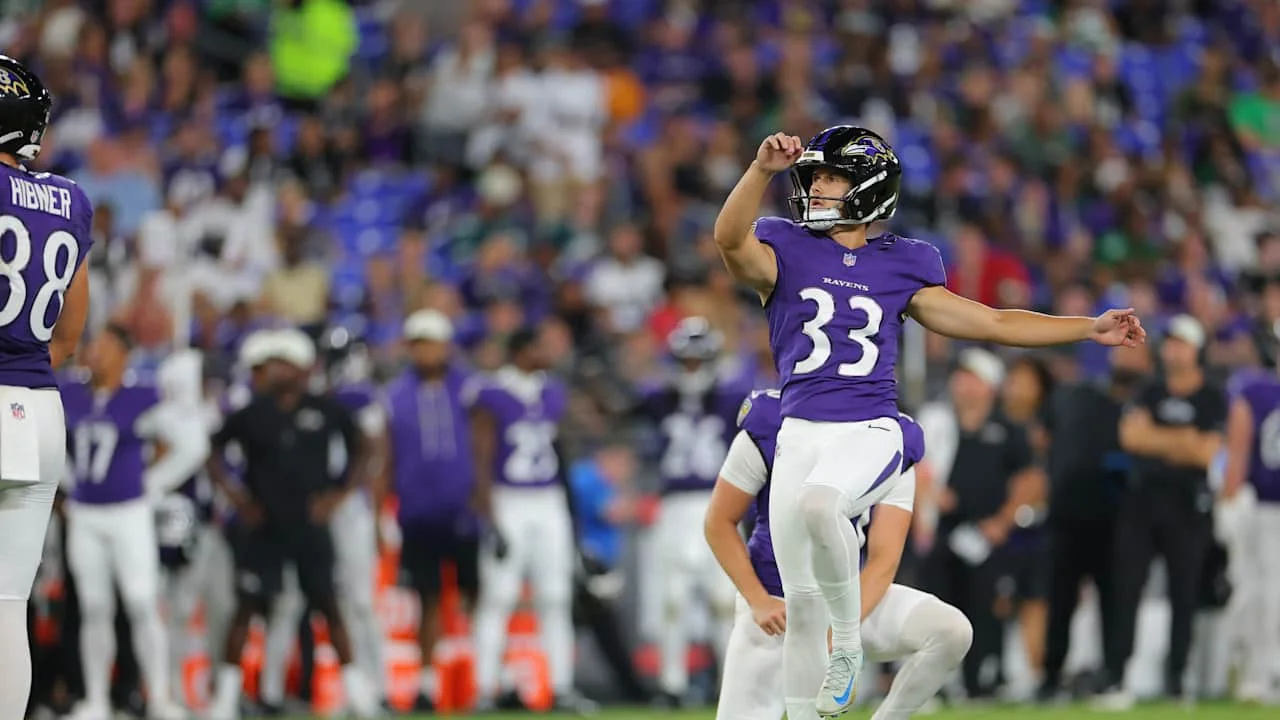
Tyler Loop’s rookie season was better than the final kick makes it feel.
Unfortunately for him, the final kick was the one everyone remembers.
Loop made 30 of 34 field-goal attempts, an 88.2 percent success rate, and was perfect inside 50 yards until missing from 44 on the final play in Pittsburgh with the division and a playoff berth at stake.
His larger concern was distance. Loop went only 1-for-4 from 50-plus yards.
That concern did not disappear in the preseason opener. Loop pushed a 49-yard attempt wide right against Philadelphia on Saturday night before rebounding to make a 42-yarder and all three extra points. One preseason miss should not materially change the evaluation, but after going 1-for-4 from 50-plus as a rookie, every failed longer attempt is going to receive more scrutiny than it otherwise would.
That is why league average feels appropriate entering Year 2.
The Ravens have reason to believe in the leg. Loop made six of nine attempts from at least 50 yards during his final college season. Four NFL attempts are not enough to conclude that he cannot make long kicks.
At the same time, they should not pretend the position is solved simply because his overall percentage was respectable. The mental side following the season-ending miss will receive plenty of attention, but the Ravens should be evaluating mechanics rather than attempting amateur psychology. Does his operation remain consistent? Is the contact clean? Is the miss pattern stable? Can he convert from distance?
If those answers are positive, Loop has enough talent to climb well above 16th.
If accuracy becomes unstable during the preseason or early in the year, the Ravens should not allow a draft pick or a decent rookie percentage to guarantee him an unlimited leash.
12. Punter
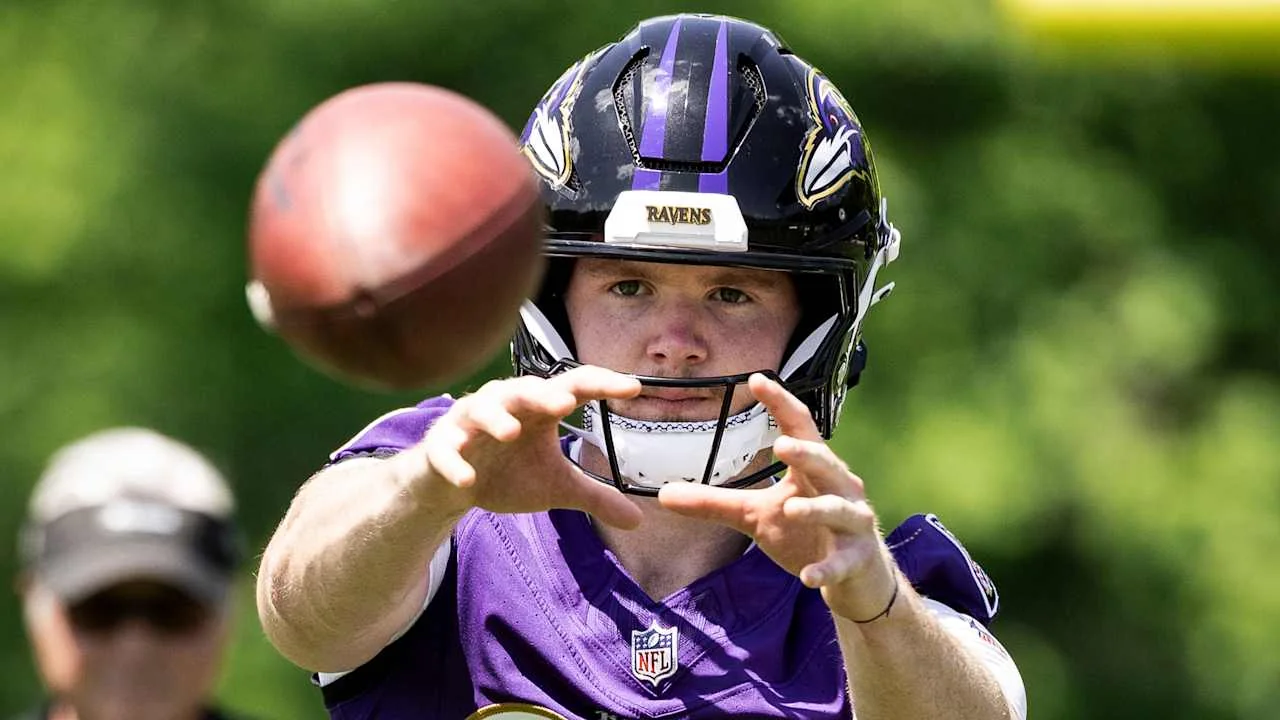
This is the weakest Ravens unit mostly because nobody really knows what it is yet.
Jordan Stout went from an ordinary 2024 season to a first-team All-Pro in 2025. He led the league with a 44.9-yard net average, averaged 50.1 gross yards per punt and was a significant reason Baltimore’s punt coverage was so efficient.
Then he followed John Harbaugh to the Giants.
The Ravens responded by selecting Ryan Eckley in the sixth round. There is plenty to like about the prospect. Eckley led the FBS at 48.5 yards per punt last season, finished his college career with a 47.6-yard average and showed both distance and directional ability.
That is an excellent résumé for a rookie punter, but he is still a rookie punter. College gross average does not automatically translate to NFL net punting. Placement, hang time, operation speed and the ability to control distance become more demanding against professional returners and coverage units.
His first preseason appearance illustrated that uncertainty almost too neatly. Eckley shanked his first NFL punt out of bounds for just 27 yards, then responded with a much better 40-yarder that was fair-caught at the 10. Two punts tell us almost nothing about what kind of NFL punter he will become, but they certainly do not give us a reason to shrink the enormous error bar around the position yet.
Baltimore also has essentially no in-house safety net because teams do not carry a developmental rotation at punter. If Eckley struggles, the solution probably comes from outside the roster.
He could absolutely become another successful Ravens specialist and make this ranking look silly by November.
But preseason rankings are supposed to separate what we know from what we hope.
Baltimore just replaced the best punter in football last season with someone who has never punted in an NFL regular-season game.
Until Eckley proves otherwise, that makes punter the most uncertain unit on the team.