Statistics through August 14, 2026.
The Orioles emerged from the trade deadline with a much different farm system. Anthony Eyanson immediately became one of the organization’s top prospects as the headliner of the Adley Rutschman trade, while several other acquisitions added depth to a system that had thinned out after years of graduations, trades and disappointing development.
Rankings are useful for understanding upside, but they do not necessarily tell us who is playing the best right now. A highly drafted teenager in Low-A may have considerably more long-term value than a 24-year-old succeeding at Triple-A, even though the older player is having the better season.
This list is based primarily on performance. I considered production, underlying indicators, age relative to level, sample size and proximity to the majors. For hitters, that means looking beyond batting average and home runs to plate discipline and power production. For pitchers, strikeouts, walks, WHIP and home-run suppression matter more than ERA alone.
The results are particularly encouraging on the mound. MLB Pipeline’s updated rankings now have Eyanson, Joseph Dzierwa and Caden Hunter all among baseball’s top 100 prospects. Dzierwa and Hunter were both drafted by the O’s just last summer. Considering this organization’s long-running difficulty developing starting pitching, that may be the most important development anywhere in the farm system this season.
I’ve broken the ten into the top five arms and top five bats.
Arms
Five pitchers closest to making an impact
Arm No. 1 · LHP
Joseph Dzierwa
- Level
- Double-A Chesapeake
- Age
- 22
- Draft
- 2025, second round, 58th overall
- Acquired
- Drafted by the Orioles
- Estimated MLB arrival
- 2027
Dzierwa has delivered the best combination of volume, command and missed bats anywhere in the Orioles system. Through 22 appearances and 20 starts between High-A and Double-A, the 6-foot-8 left-hander is 8-2 with a 2.01 ERA, 0.86 WHIP and 132 strikeouts in 112 innings. He has now gone 17 consecutive innings without allowing an earned run after six more scoreless innings against Reading on Wednesday.
As recently as August 7, Dzierwa’s 2.12 ERA ranked second among all full-season minor-league pitchers and his 125 strikeouts were tied for second. He has since lowered the ERA to 2.01 and added seven more strikeouts.
Dzierwa is not overpowering hitters simply because he throws 100 mph. His fastball has generally operated in the low-to-mid 90s, though he has touched 96. What makes it play better is the delivery. At 6-foot-8 with a low three-quarter arm slot, he creates an unusual angle that makes the ball difficult to pick up. His best pitch is a fading low-80s changeup, which MLB Pipeline grades as a 60, and his command of the fastball-changeup combination allows the two pitches to play off each other.
That is also the lingering question. His slider is improving, but Dzierwa’s success is still driven heavily by two pitches. Major-league starters generally need another reliable weapon once hitters have seen them multiple times. The combination of deception, command and the changeup gives him an unusually high floor, but the development of the breaking stuff may determine whether he becomes a mid-rotation starter or something better.
For now, the performance is difficult to argue against. Eyanson may have the superior collection of raw pitches and Hunter may have produced the more dramatic breakout, but neither has matched Dzierwa’s combination of innings, command and sustained dominance.
MLB Pipeline now lists his ETA as 2027, meaning he should enter next year with a chance to pitch his way into the Orioles’ plans.
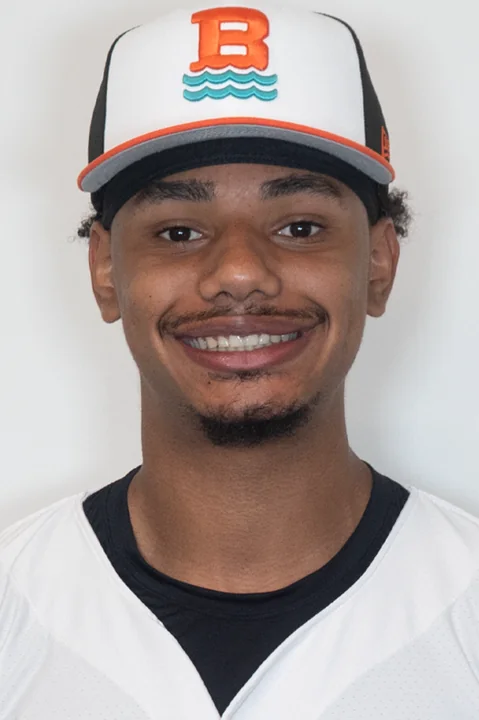
Arm No. 2 · RHP
Anthony Eyanson
- Level
- Double-A Chesapeake
- Age
- 21
- Draft
- 2025, third round, 87th overall by Boston
- Acquired
- 2026 Adley Rutschman trade
- Estimated MLB arrival
- 2027
Eyanson is the highest-ranked prospect on this list and the most important player acquired at the deadline. The Orioles did not trade the former face of their rebuild to acquire organizational depth. Eyanson needs to become an impact major-league pitcher for the Rutschman deal to have any chance of being remembered positively in Baltimore.
So far, there is plenty to like.
In his first professional season, Eyanson is 6-0 with a 1.60 ERA, 0.94 WHIP and 110 strikeouts in 78⅔ innings. That works out to 12.6 strikeouts per nine innings. After dominating for Boston affiliates, he has continued missing bats since arriving at Chesapeake. MLB Pipeline now ranks him No. 49 overall in baseball and second in the Orioles system.
The stuff explains the strikeouts. Eyanson’s fastball has made a substantial jump since college. At LSU it generally sat 92-93 mph and touched 98. In professional baseball it has been sitting around 95-96 and has reached 100, with improved carry that makes it a considerably more dangerous pitch.
The fastball is not even his best offering. His tight mid-80s slider receives a 65 grade from Pipeline and can generate swings and misses both inside and outside the strike zone. He also has an upper-70s curveball that can flash plus and is developing a mid-80s splitter. That gives him three secondary pitches with legitimate major-league potential rather than requiring him to survive on velocity alone.
That arsenal is why Eyanson has the highest ceiling of the pitchers on this list. The question is command. He has been more willing to nibble than Dzierwa and has not consistently located every secondary pitch. The splitter in particular remains a work in progress.
That is a developmental issue rather than a glaring weakness. A 21-year-old already getting Double-A hitters out with this level of stuff has time to refine the edges.
Dzierwa is ahead in these rankings based on his performance this season and the fact that he has thrown 33 more innings with exceptional command while producing similarly dominant results. If the question were simply which Orioles pitching prospect I would most want five years from now, Eyanson probably gets the nod.
If the fastball gains hold and the command improves, there is legitimate No. 2 starter upside here.
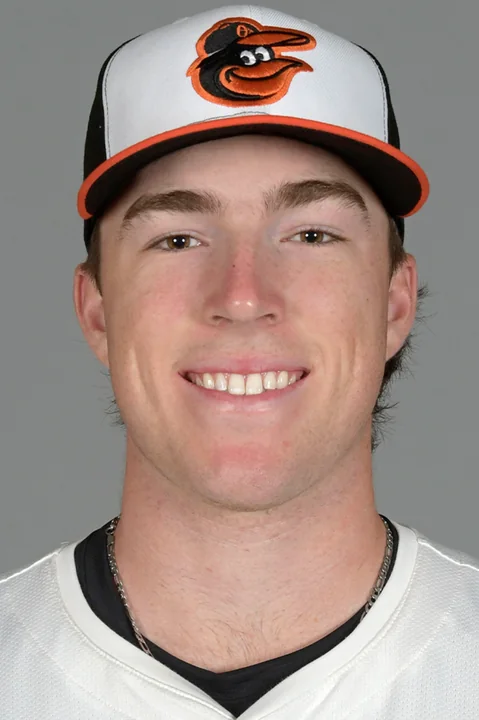
Arm No. 3 · LHP
Caden Hunter
- Level
- Double-A Chesapeake
- Age
- 22
- Draft
- 2025, sixth round, 184th overall
- Acquired
- Drafted by the Orioles
- Estimated MLB arrival
- 2027
No Orioles prospect has improved his standing more dramatically this season than Caden Hunter.
The 2025 sixth-rounder has a 2.04 ERA, 1.02 WHIP and an absurd 128 strikeouts in 84 innings across three levels. That is 13.7 strikeouts per nine innings. Even after finally encountering a rough outing at Double-A that pushed his ERA above 2.00, the overall body of work remains exceptional.
Before his promotion to Chesapeake, the underlying numbers were even more impressive than the ERA. Hunter carried a 38.1 percent strikeout rate, third-best in the minors among pitchers with at least 65 innings, while his 2.66 FIP and xFIP both ranked second. Those numbers demonstrate that he was controlling plate appearances himself.
The Orioles have also apparently unlocked more velocity. Hunter worked primarily in the low 90s during his season at USC. This year he has reached 97 mph, and he plays particularly well at the top of the strike zone because of his approach angle.
The encouraging part is that he increasingly looks like more than a fastball-heavy college lefty overwhelming inexperienced hitters. His mid-80s slider and changeup have both developed into above-average offerings, giving him a legitimate chance to remain in the rotation rather than eventually being pushed toward relief.
There is still more projection involved here than with Dzierwa or Eyanson. Hunter only reached Double-A at the end of July, so advanced hitters are just beginning to get multiple looks at him. His walk rate has also been less pristine than Dzierwa’s, leaving another area for refinement.
But the strikeout ability is impossible to dismiss as small-sample noise at this point. One hundred twenty-eight strikeouts in 84 innings across three levels is a season-long pattern.
Hunter entered the year outside MLB Pipeline’s Orioles Top 30. He is now fourth in the organization and No. 98 in baseball. That is an enormous developmental jump in four months.
Turning a sixth-round pick into a legitimate starting-pitching prospect would be important for any organization. For this organization, it would be especially notable.
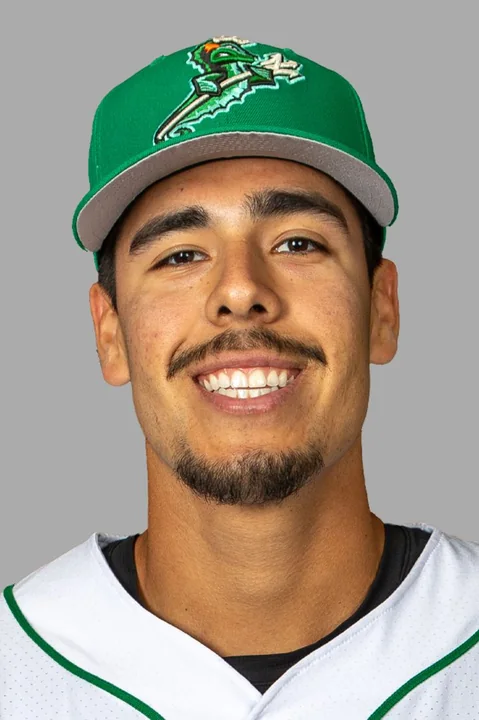
Arm No. 4 · RHP
Nestor German
- Level
- Triple-A Norfolk
- Age
- 24
- Draft
- 2023, 11th round, 331st overall
- Acquired
- Drafted by the Orioles
- Estimated MLB arrival
- Late 2026
German’s numbers are nowhere near as eye-popping as those of the three pitchers above him, but level matters.
Through 23 appearances and 21 starts for Norfolk, German has a 3.85 ERA, 1.31 WHIP and 115 strikeouts in 112⅓ innings. That works out to 9.2 strikeouts per nine, and only nine of the 104 hits he has allowed have left the park.
A 3.85 ERA at Triple-A is a good season, not merely an acceptable one. German currently ranks fifth among qualified International League pitchers in ERA. He is doing it against lineups filled with older players, former major leaguers and hitters one phone call away from the majors rather than dominating younger competition in A-ball.
German’s profile is almost the opposite of Eyanson’s. He is not going to light up a radar gun. His fastball generally sits 92-94 mph and can flash a little higher. What makes him effective is the assortment and his ability to locate it. His best secondary pitch is an overhand curveball that has generated strong whiff rates, complemented by a harder slider and splitter. MLB Pipeline considers his command one of his better attributes.
There is probably not a frontline starter hiding here. German profiles more naturally as a fourth or fifth starter who keeps hitters off balance by mixing pitches and locating rather than overpowering them.
One of the O’s recurring problems over the past several seasons has been what happens after the first five starters. Injuries inevitably force the sixth, seventh and eighth options into meaningful innings. Too often Baltimore has responded with pitchers who simply were not good enough.
German looks increasingly capable of being one of those next options. His ceiling is lower than Dzierwa, Eyanson or Hunter, but his proximity gives him a chance to matter sooner.
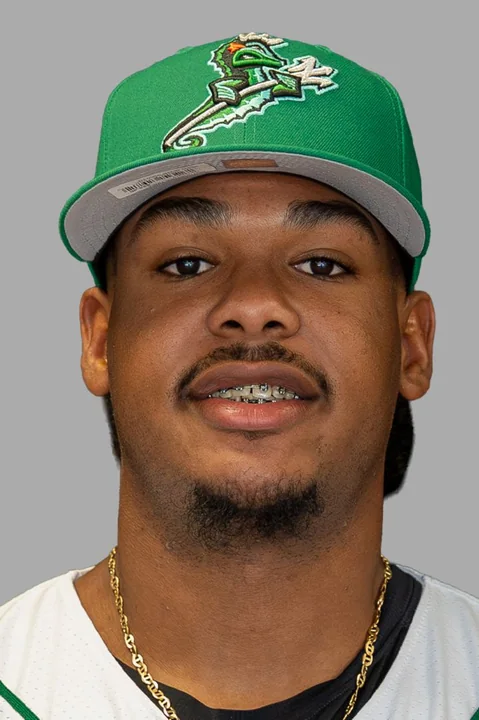
Arm No. 5 · RHP
Yaqui Rivera
- Level
- Triple-A Norfolk
- Age
- 23
- Draft
- International free agent, signed by Miami in 2021
- Acquired
- PTBNL in the 2022 Tanner Scott/Cole Sulser trade
- Estimated MLB arrival
- Late 2026 or 2027
Rivera is the least conventional pitcher in this group. He has made eight starts this season but has mostly worked out of the bullpen, which is probably where his major-league future lies.
Across Double-A and Triple-A, Rivera has a 3.25 ERA, 1.26 WHIP and 83 strikeouts in 63⅔ innings. That comes to 11.7 strikeouts per nine innings, which is the number that keeps him interesting.
He is not a pure velocity reliever. Rivera’s fastball generally works in the low-to-mid 90s rather than sitting in the upper 90s. His carrying tools are the movement on his secondaries, particularly a sweeping slider and fading changeup. FanGraphs has identified plus movement on both pitches while projecting him most likely as an optionable reliever.
His issue remains control. Rivera has shown stretches where the walks disappear and his stuff becomes extremely difficult to square up, including a dominant run at Double-A earlier this season. At other times, the command is shaky enough to put too many runners on base.
That distinction probably determines whether he becomes a trustworthy seventh-inning reliever or spends time traveling back and forth between Baltimore and Norfolk.
Still, there is enough swing-and-miss ability here to warrant an opportunity. Rivera originally came to Baltimore as the player to be named later in the Tanner Scott and Cole Sulser deal, which would make developing him into even a competent major-league reliever a nice secondary return from a trade made more than four years ago.
Bats
Five position players producing now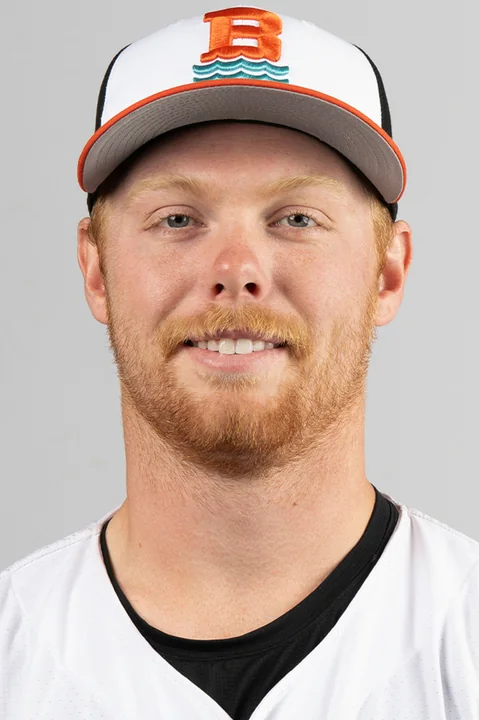
Bat No. 1 · C/1B
Ethan Anderson
- Level
- Double-A Chesapeake; rehab at High-A Frederick
- Age
- 22
- Draft
- 2024, second round, 61st overall
- Acquired
- Drafted by the Orioles
- Estimated MLB arrival
- 2027
Anderson remains the best-performing upper-level position player in the system even though an injury cost him more than a month.
In 68 games at Chesapeake, the switch-hitting catcher and first baseman has hit .270/.369/.520 with 17 home runs, 37 walks and 58 strikeouts. That gives him a .250 isolated-power mark while maintaining a strikeout rate below 20 percent. He has managed impact power without adopting the type of all-or-nothing approach that frequently derails minor-league sluggers.
His power also stacks up well against the rest of the Eastern League. Despite playing only 68 Double-A games because of the injury, Anderson’s 17 homers still rank tied for 15th in the league. Everyone ahead of him has had considerably more opportunities to accumulate them.
There was more good news Friday. Anderson began a rehab assignment at Frederick and immediately went 4-for-4 with a two-run homer, three RBI and a stolen base.
The most important question remains defensive. Anderson’s offensive standard changes dramatically depending on whether he can remain a catcher. A switch-hitting catcher producing this kind of power and on-base ability is potentially an everyday player. A first baseman needs to hit considerably more to provide the same value.
Samuel Basallo obviously complicates the path to regular catching time in Baltimore, but that does not make Anderson redundant. A player capable of catching, covering first base and producing power from both sides gives a roster plenty of options.
The bat has done enough this year that the positional question is increasingly worth asking.
Bat No. 2 · INF
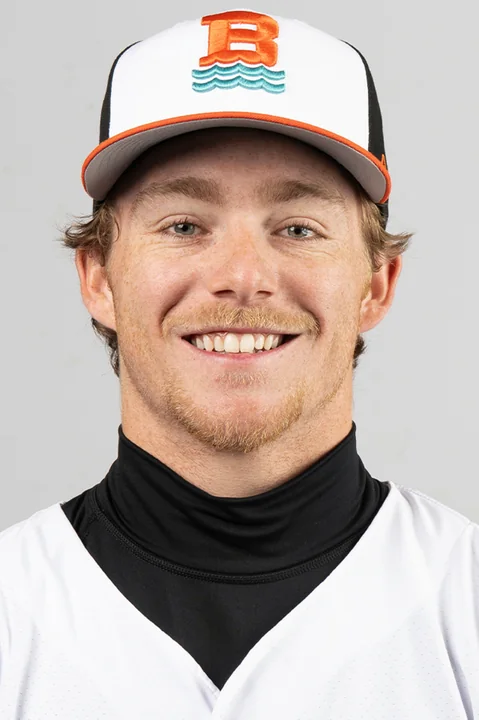
Brandon Butterworth
- Level
- Triple-A Norfolk
- Age
- 23
- Draft
- 2024, 12th round, 360th overall by San Diego
- Acquired
- 2025 Ryan O’Hearn/Ramón Laureano trade
- Estimated MLB arrival
- 2027
Butterworth’s season became even more interesting this week when the Orioles promoted him to Triple-A Norfolk on August 14.
Across his stops this year, Butterworth is hitting .292 with a .403 on-base percentage and .917 OPS, ten home runs and 17 stolen bases. There is a little bit of everything in the profile. Butterworth gets on base, has shown more power than expected and can run. The power is the development that makes the season particularly interesting because he entered professional baseball looking more like a versatile contact-oriented player than someone likely to threaten double-digit home runs in a shortened season.
He also offers defensive flexibility across the infield with his most realistic major-league path as a multi-position player rather than a star at one position. He still has a relatively small sample size. Injuries have limited the season, and we still need to see whether this new level of power carries into Triple-A against pitchers better capable of exploiting holes in his swing. Double-A performance can make a player interesting. Triple-A performance can put him one injury away from joining the O’s.
Butterworth was one of six prospects acquired from San Diego for O’Hearn and Laureano last July. Boston Bateman and Tyson Neighbors received more prospect attention at the time, but Butterworth is increasingly making his own case as a useful piece of that return.
Bat No. 3 · INF
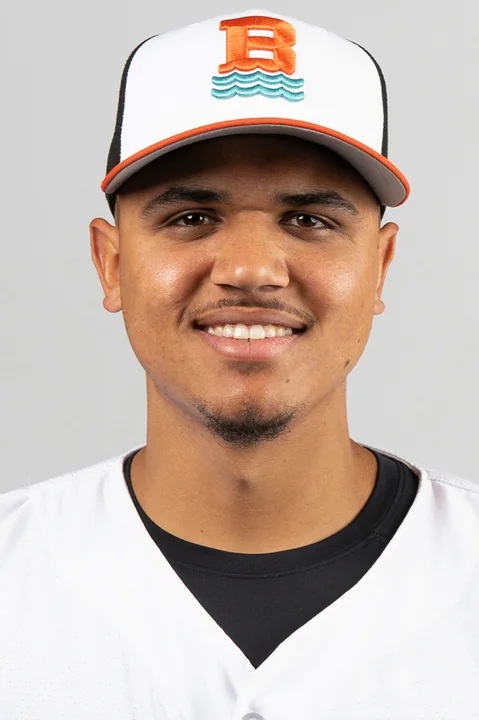
Frederick Bencosme
- Level
- Double-A Chesapeake
- Age
- 23
- Draft
- International free agent
- Acquired
- Signed by the Orioles in 2020
- Estimated MLB arrival
- 2027
Bencosme has the least spectacular offensive profile among the top Double-A bats, but perhaps the most balanced.
He is hitting .268 with a .361 on-base percentage and .793 OPS, 11 home runs and 13 stolen bases. That is not star-level production, but it represents a substantial amount of offensive value without relying entirely on one tool.
The on-base percentage is probably the most important number. Bencosme is not simply chasing hits to create his value. He works counts, puts the ball in play and has enough speed to add something once he reaches base. The power has also improved considerably from the light-hitting profile he showed earlier in his career.
That creates a reasonably clear path to becoming a useful utility player. Bencosme has experience around the infield and does not need to hit 25 home runs to justify a roster spot if he can provide competitive at-bats, defensive flexibility and competent baserunning.
The ceiling is the question. There is no obvious carrying tool here that screams everyday major leaguer. Balanced prospects can become valuable bench players, but they can also stall when each individual tool is merely average. Considering the Orioles signed him as an international free agent in 2020 rather than spending premium draft capital, reaching that useful-utility-player outcome would still represent a development win.
Bat No. 4 · C/1B
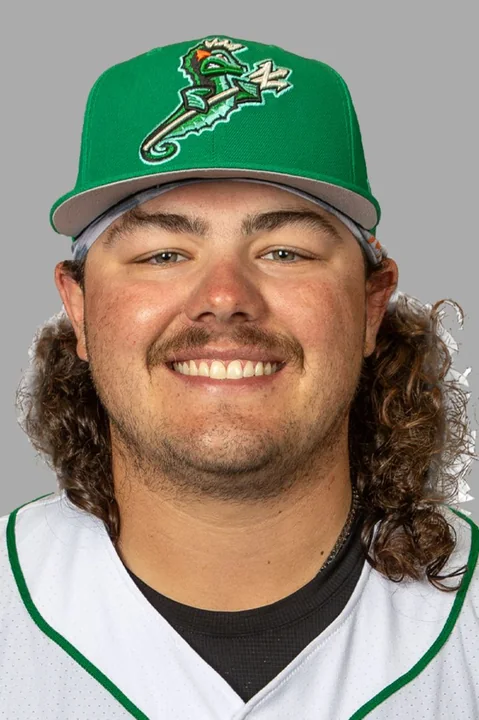
Creed Willems
- Level
- Triple-A Norfolk
- Age
- 23
- Draft
- 2021, eighth round, 227th overall
- Acquired
- Drafted by the Orioles
- Estimated MLB arrival
- 2027
Willems has quietly put together a solid Triple-A season. He is batting .268 with a .356 on-base percentage and .811 OPS, 18 home runs and 56 RBI. He homered again Friday night for Norfolk.
His production is more interesting as a catcher. MLB Pipeline still gives Willems a 55 power grade and a 65 arm, the latter the best throwing-arm grade in the Orioles system. The questions are whether he can make enough contact and whether his receiving will allow him to remain behind the plate.
If the answer to the second question is yes, an .800-plus OPS with left-handed power can absolutely play at catcher. If Willems ends up primarily at first base, the offensive standard becomes much higher.
That is the recurring issue with several hitters in this system. Anderson, Willems and Basallo all occupy some combination of catcher, first base and DH, and there are only so many plate appearances available at those positions.
The solution is simple enough. Keep the players who hit.
Willems has not produced at a level that demands a major-league promotion, but he has improved enough to keep himself relevant. An eighth-round pick becoming a left-handed power bat capable of handling some catching duties would be a perfectly useful outcome.
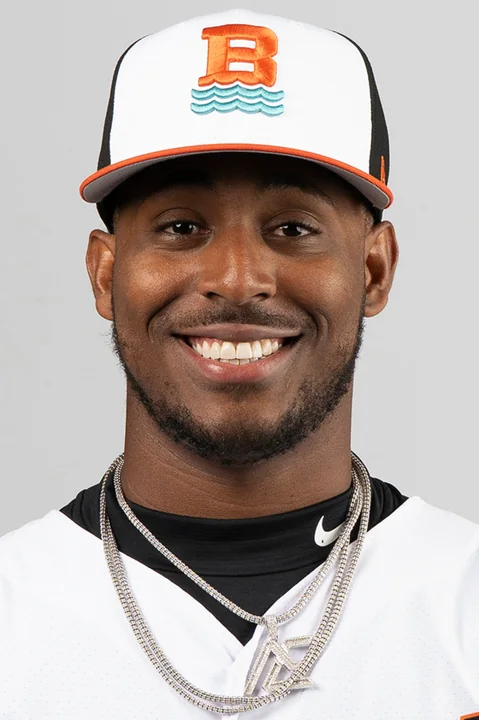
Bat No. 5 · 2B
Aron Estrada
- Level
- Double-A Chesapeake
- Age
- 21
- Draft
- International free agent
- Acquired
- Signed by the Orioles in 2022
- Estimated MLB arrival
- 2027
Estrada’s season is becoming harder to ignore.
The switch-hitting 21-year-old is batting .276/.312/.478 with 19 home runs and 63 RBI in 100 games for Chesapeake. His latest homer came Friday night against top Phillies pitching prospect Gage Wood, giving Estrada home runs in three consecutive starts. His 19 long balls are tied for sixth in the Eastern League and second-most anywhere in the Orioles farm system.
That is legitimate power production from a young middle infielder competing against older players. Estrada’s age remains an important part of the evaluation. A 21-year-old holding his own at Double-A is doing something different from a 24- or 25-year-old producing the same numbers.
The reason he remains fifth among the bats is obvious when you look one column to the right of his home runs on the league leaderboard: 20 walks.
Estrada has walked only 20 times against 72 strikeouts. His .276 batting average therefore turns into only a .312 on-base percentage. Better pitchers will eventually figure out which pitches he is unwilling to take and force him to prove he can adjust.
That does not mean an aggressive approach cannot work. Estrada has enough bat-to-ball ability and growing power to make it plausible. But he is making the path considerably narrower than it needs to be.
If the plate discipline improves even modestly, the combination of age, power, contact and middle-infield experience becomes much more interesting. If it does not, Triple-A pitchers may expose him quickly.
Baltimore signed Estrada as an international free agent in January 2022. Four years later, he is one of the youngest productive hitters in the upper levels of the system. There is still plenty of development left, but there is also something worth developing.