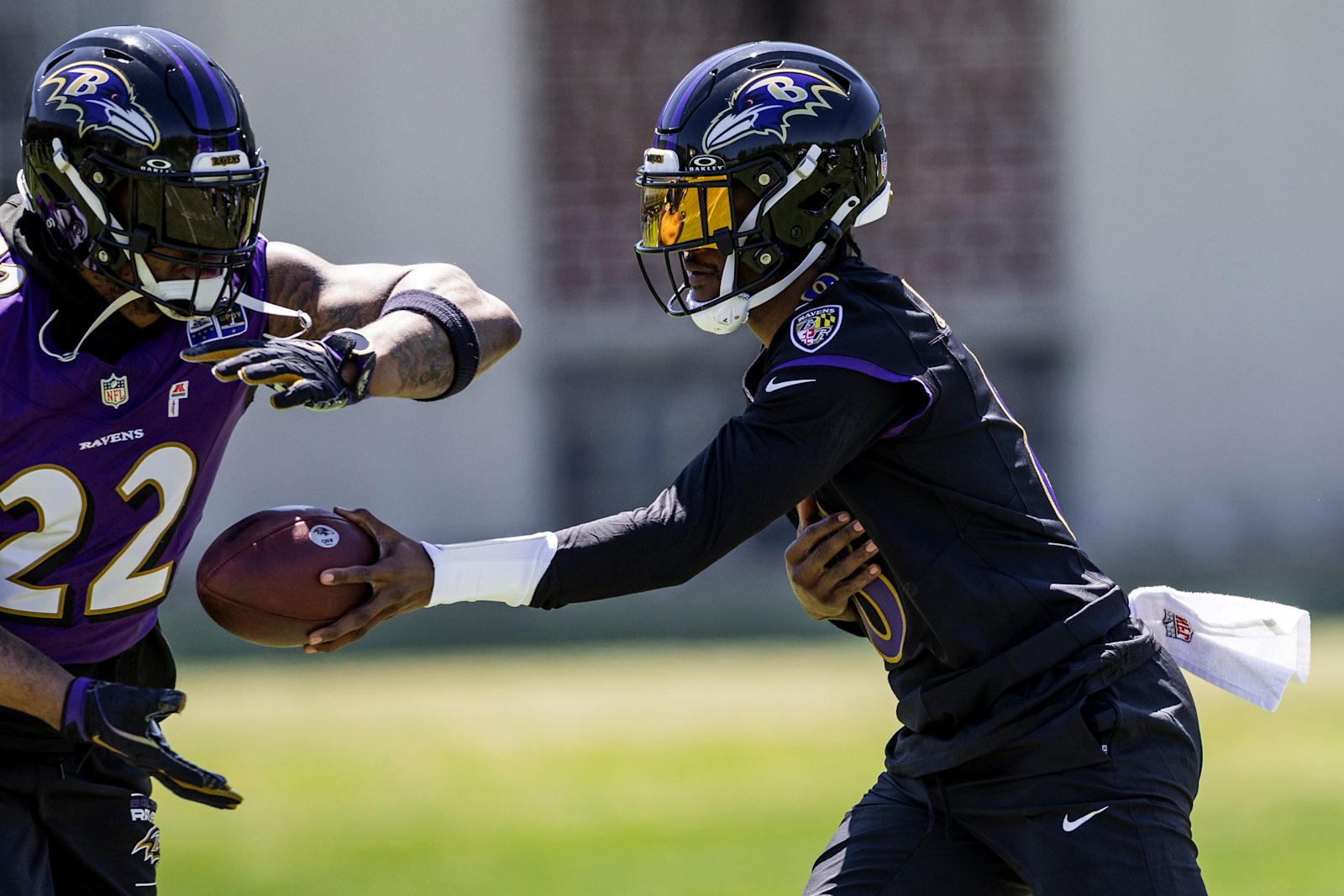
The Ravens will arrive at training camp with enough talent to believe last season was an aberration and enough uncertainty to know that belief must be proven.
Baltimore finished 8-9, missed the playoffs when Tyler Loop pushed a 44-yard field goal wide on the final play in Pittsburgh and replaced John Harbaugh after 18 seasons. The result is an unusual Ravens offseason: a championship-caliber core surrounded by significant changes at head coach, offensive coordinator, offensive line and several supporting positions.
Lamar Jackson, Derrick Henry, Zay Flowers, Mark Andrews, Kyle Hamilton and Roquan Smith provide a foundation most teams would gladly accept. But Baltimore’s ambitions demand more than an impressive collection of stars. The Ravens need to determine whether the structure around those stars is strong enough to withstand a full season and four playoff rounds.
These are the five biggest questions facing them as training camp begins.
1. Can the rebuilt interior offensive line protect Lamar Jackson?
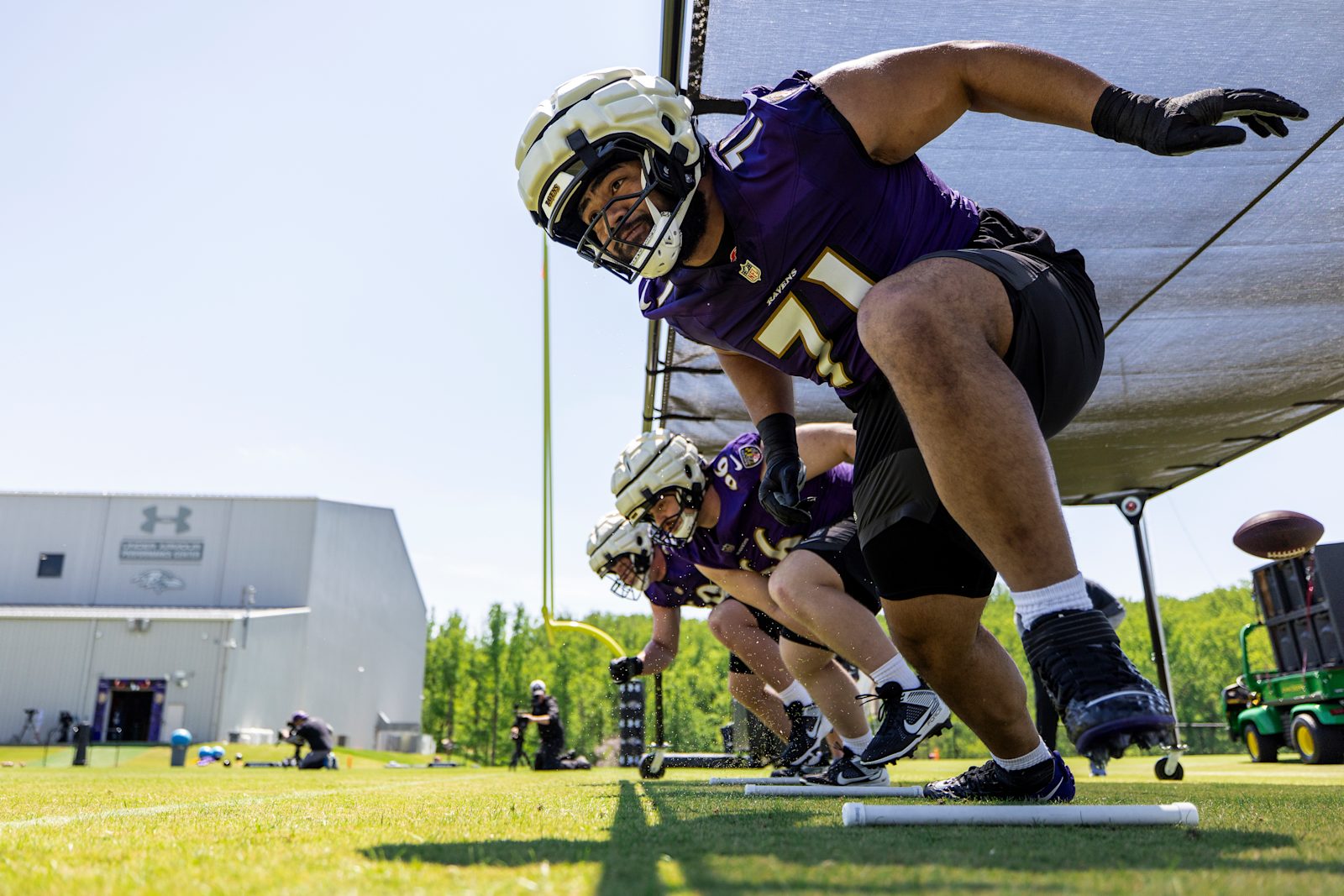
After a disappointing season from the interior offensive line and the departure of its lone solid performer, Tyler Linderbaum, to a massive free agent offer from the Raiders, the Ravens have replaced the entire middle of the line.
John Simpson returns to Baltimore as the projected left guard, first-round pick Vega Ioane is expected to start at right guard and Ethan Pocic enters camp as the favorite to replace Linderbaum at center. Pocic will compete with Danny Pinter, Jovaughn Gwyn and Corey Bullock, but his 97 career starts make him the obvious choice if his body and performance cooperate.
That qualification is doing considerable work as Pocic tore his Achilles in December and is attempting to return less than eight months later. He has been medically cleared, but clearance is only the beginning for a center who must anchor against power, reach defenders in the running game and repeatedly redirect in pass protection. His recent performance also gives Baltimore reason for caution. Pocic’s Pro Football Focus grades declined over the past two seasons, and his 2025 pass-blocking grade was 62.2. He allowed 14 pressures and two sacks before the injury.
Those numbers are not disastrous and an average starting center would represent a substantial improvement over entering the season with an inexperienced alternative. But Baltimore is not asking Pocic to stabilize an otherwise settled interior. He will be working between two new guards, including a rookie who will be expected to start immediately.
Ioane’s physical ability is not the concern. The Ravens selected him 14th overall because they believe he can become a difference-making guard, not merely survive as one. The more immediate question is how quickly he recognizes pressure looks, passes off stunts and adjusts to the speed with which NFL defenses attack uncertain combinations. Simpson offers experience and familiarity with Baltimore, but he is another new piece in a unit that will be responsible for keeping the franchise quarterback healthy.
The Ravens can help with scheme and Lamar’s mobility covers up some mistakes. However, neither of those excuses immediate interior pressure. Penetration through the middle prevents Lamar from climbing the pocket, forces him to retreat into edge pressure and disrupts the timing of concepts before receivers can uncover.
Baltimore’s offense ranked first in the NFL in 2024 before falling to 16th during its injury-disrupted 2025 season. Inconsistent guard play contributed to that decline. The new line does not need to become dominant immediately, but it cannot spend September learning through free rushers and collapsed pockets.
Pocic is the key. If he recaptures his better Cleveland form and holds up physically, the Ravens may have turned their weakest position into a competent one at a manageable cost. If his decline continues or the Achilles limits him, Baltimore will be asking an inexperienced center to organize an entirely new interior.
That is too much uncertainty in the three spots closest to Lamar.
2. Can the new coaching staff improve a roster that is expected to contend?
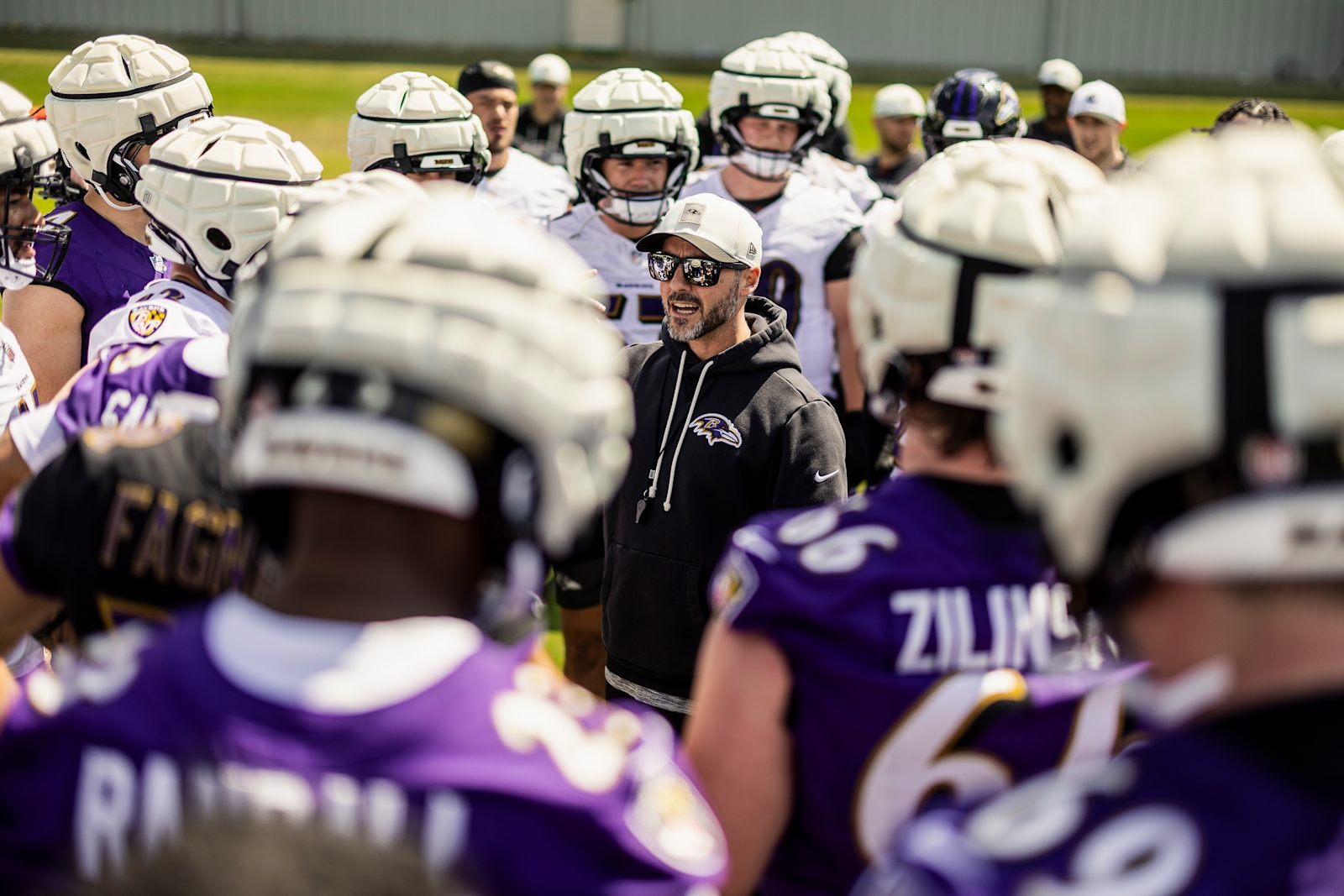
Jesse Minter inherits a much different assignment from the typical first-year head coach. He is not being asked to establish credibility during a long rebuild. He is being asked to modernize and improve a team that believes it should compete for the Super Bowl immediately.
The defensive fit is easy to understand. Minter helped the Chargers rank among the NFL’s top five in points allowed, total defense, passing defense, interceptions and opponent red-zone efficiency across his two seasons as defensive coordinator.
He also brings a layer of continuity with his coaching roots tied directly to Baltimore’s modern defensive identity. Minter worked alongside Mike Macdonald on the same staff, and later followed him at Michigan. That shared language and philosophical overlap should ease installation, reduce the learning curve and allow the Ravens to evolve rather than reset defensively.
Minter also has the kind of versatile centerpiece his system has previously used well. Kyle Hamilton can align deep, cover the slot, play near the line of scrimmage or pressure the quarterback. The challenge is moving Hamilton around without making everyone else’s responsibilities less clear.
The Ravens have spent several seasons searching for the balance between disguise and reliability. A defense can present complicated pressure looks and late safety rotations without becoming confused itself, but only when communication and assignment discipline match the ambition of the design. Minter must create uncertainty for the offense rather than for his own linebackers and defensive backs.
He also needs to manufacture pressure without depending upon reckless blitz rates. Minter’s plan must produce favorable rush matchups while maintaining edge discipline and protecting the secondary from the explosive plays that turn promising defensive performances into losing ones.
The addition of Trey Hendrickson should make that task considerably easier. Baltimore has lacked an edge defender who can consistently win without schematic assistance, while Hendrickson has recorded at least 13.5 sacks in four of the past five seasons and posted a pass-rush win rate of at least 20% in each of the past three.
Minter can still use simulated pressures and overloaded fronts to manipulate protections, but he should not need to expose the secondary merely to create a credible rush. Hendrickson gives the Ravens a defender offenses must account for on every obvious passing down, allowing the disguise to create favorable matchups elsewhere rather than serving as the entire source of pressure.
Declan Doyle faces a different kind of pressure. Todd Monken set a high bar by expanding Baltimore’s passing game without discarding the quarterback run threat or the physical rushing identity that made the offense difficult to defend. The Ravens reached the league’s No. 1 offensive ranking in 2024 before injuries and line problems contributed to last season’s decline.
Doyle was Chicago’s offensive coordinator last season, but this will be his first opportunity to take full control as an NFL play caller. The Bears had the league’s third-ranked rushing attack and distributed the ball broadly, with seven players recording at least 30 receptions (the Ravens had two). Baltimore hired him to build upon Monken’s work, not replace it with change for its own sake.
The encouraging possibility is that Doyle can make the offense easier for Lamar before the snap. It will be interesting to see if more of the offense moves under center and how much more pre-snap motion Doyle brings to the Ravens. These changes may help Lamar identify coverage, influence defensive leverage and create cleaner answers against pressure. The danger is installing complexity that looks creative in May but slows the quarterback in October.
Doyle must also avoid treating Henry and Lamar as separate running games. The offense is most difficult to defend when linebackers and edge defenders cannot be right against every option. Henry’s downhill threat, Lamar’s ability to keep the ball and the option to throw behind overaggressive second-level defenders should work together.
Minter and Doyle do not need to reinvent the Ravens. They need to preserve what already works, remove recurring points of failure and make better use of the roster’s best players.
That sounds straightforward. Coaching usually does until the opponent starts adjusting.
3. Who catches passes behind Flowers and Andrews?
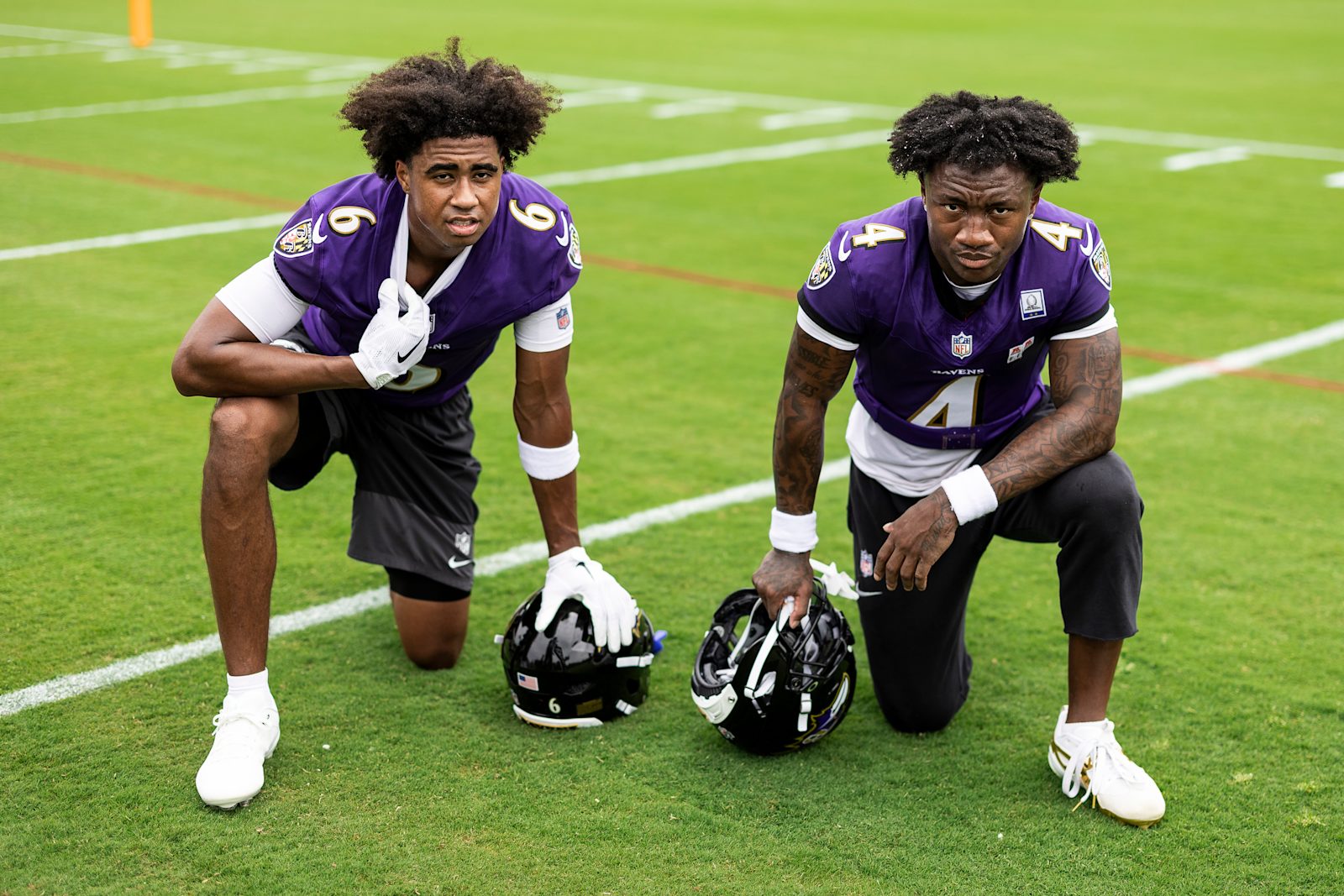
The Ravens know what they have at the top of their receiving hierarchy.
Flowers has produced consecutive 1,000-yard seasons and should remain the offense’s primary receiver. Andrews has never finished with fewer than 45 catches or five touchdowns in any season after his rookie year. Both should receive significant volume if healthy.
Everything behind them is less certain. The most important player in that discussion is Rashod Bateman. His 2024 season, when he produced career highs of 756 yards and nine touchdowns, appeared to establish him as a legitimate complementary receiver. He followed it with 19 catches, 224 yards and two touchdowns in 13 games last season. Injuries affected his availability, but they do not fully explain how rarely he influenced games.
The Ravens need Bateman to become a dependable outside receiver who punishes defenses for tilting coverage toward Flowers and Andrews. That means winning isolated matchups, maintaining route timing and converting opportunities when Lamar attacks outside the numbers. Doyle should give him chances on in-breaking routes, intermediate play-action concepts and selective deep shots rather than asking him to live on low-percentage opportunities. Entering his sixth season, it’s time for Bateman to step up and prove he can consistently make a difference.
In the event that he doesn’t, the Ravens protected themselves by drafting Ja’Kobi Lane in the third round and Elijah Sarratt in the fourth. Lane’s 6-foot-4 frame and catch radius could address a red-zone offense that ranked 27th in touchdown efficiency last season. Sarratt offers another bigger target and could compete for work from the slot. Devontez Walker also enters his third season with an opportunity to turn occasional flashes into a defined role.
Baltimore does not need both rookie receivers to emerge immediately. It probably needs one of Lane, Sarratt or Walker to become trustworthy enough that defenses cannot treat the Ravens’ third receiver as an afterthought.
The loss of Isaiah Likely adds another layer. Likely and Charlie Kolar both departed in free agency, leaving Andrews as the only returning tight end. Durham Smythe can replace some of the blocking and movement responsibilities previously handled by Kolar and Patrick Ricard, but he is not a direct replacement for Likely’s ability to detach from the formation and threaten coverage.
Fourth-round pick Matt Hibner is the clearest candidate for that receiving role, while fifth-rounder Josh Cuevas offers another versatile option. Expecting either rookie to reproduce Likely’s full route inventory immediately would be unreasonable. Baltimore may instead divide the job among Smythe’s blocking, Hibner’s athleticism, additional three-receiver formations and more targets for Andrews.
The Ravens have invested enough resources to create competition. Camp must reveal whether they have also created answers.
4. Can Tyler Loop be trusted?
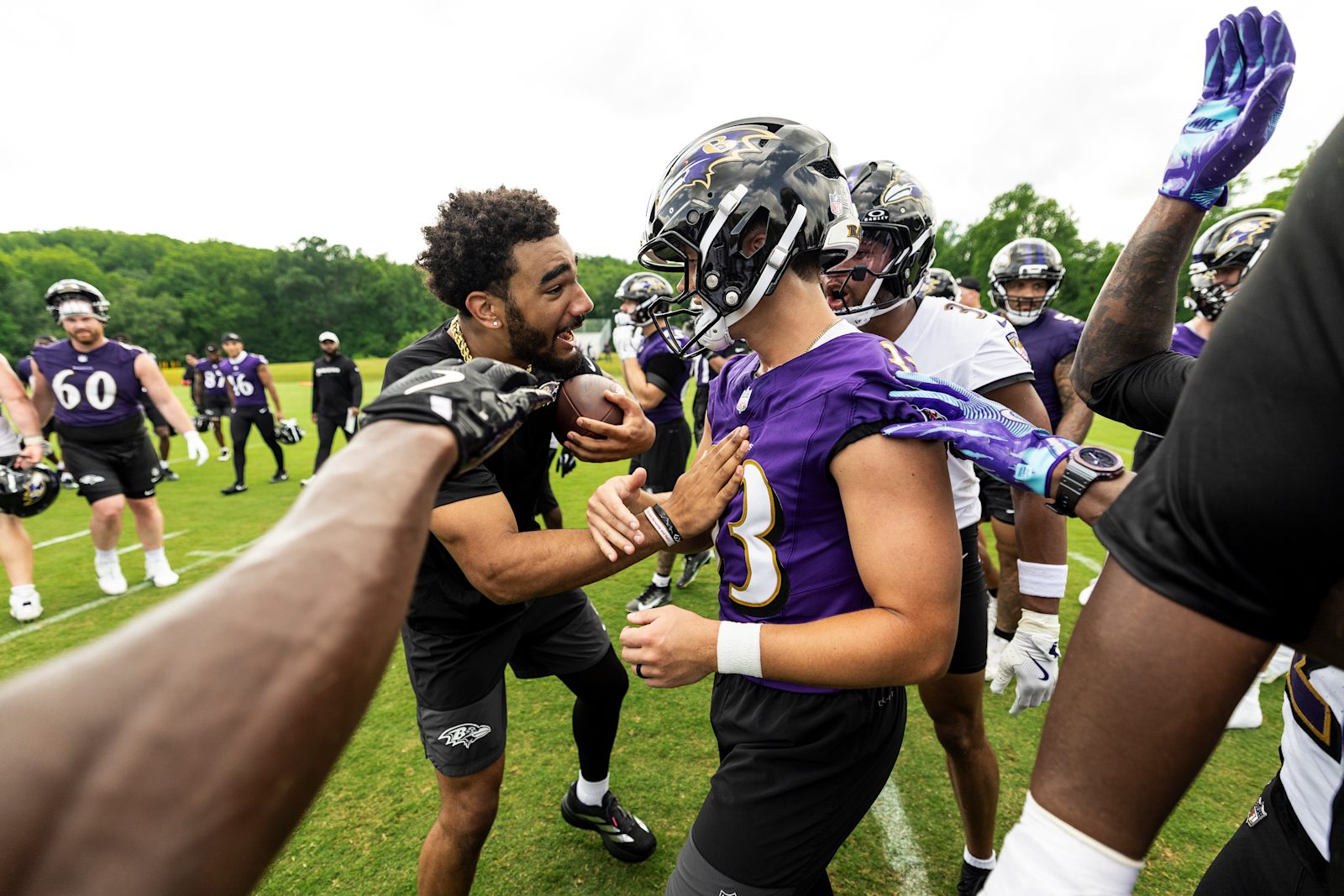
Tyler Loop’s rookie season should not be reduced to one kick, but there were concerning signs well before the season-killing miss in Pittsburgh.
He made 30 of 34 field-goal attempts, an 88.2% success rate, but missed only once from inside 50 yards. Unfortunately, the one miss inside 50 came from 44 yards on the aforementioned final play of the season, with the AFC North title and a playoff berth at stake.
The question is not whether Loop feels confident during June interviews or makes pressure-themed kicks at the end of practice. The Ravens need to see whether his operation remains consistent when the stakes rise again. His plant, timing and contact must hold up when he knows everyone in the stadium is thinking about Pittsburgh, even if he insists he is not.
The Ravens haven’t brought in another kicker, signaling genuine confidence rather than a carefully managed public endorsement. Minter has nevertheless left open the possibility of adding competition before the season.
If the Ravens truly believe Loop is the man, then I guess that is a justifiable approach. Signing a veteran simply to create the appearance of accountability would accomplish little if Loop remains the clearly superior kicker. But I have my doubts, and granting Loop an unlimited leash because the organization invested a draft pick would be equally misguided.
If they stick to their guns here and allow Loop to continue without a competition, they need to closely evaluate the entire process through training camp, rather than react to impressive practice kicks or non-pressure preseason field goals. They cannot afford to discover in November that Pittsburgh created a lasting mechanical or psychological problem. If Loop’s accuracy becomes unstable during camp or the preseason, the front office must act before games begin to count.
5. Can the Ravens remain healthy enough for their talent to matter?
Every contender needs injury luck. The Ravens need more than most because two of their most important players enter the season after health significantly altered 2025.
Nnamdi Madubuike is the immediate concern. A neck injury suffered in Week 2 required surgery and ended his season. Baltimore placed him on the active physically unable to perform list before camp, although independent spine and cervical specialists have cleared him to return and he could practice soon.
That is encouraging news, but a medical clearance does not immediately restore the player who accumulated 19.5 sacks across 2023 and 2024. Madubuike must regain strength, confidence and football conditioning while proving he can repeatedly absorb contact against double-teams.
The Ravens added Trey Hendrickson and Calais Campbell and drafted Zion Young, while Travis Jones is coming off a productive season. Those moves improve the front’s depth. They do not replace a healthy Madubuike’s ability to defeat a guard quickly and force quarterbacks away from the middle of the pocket.
His presence affects the entire defense. Interior pressure creates easier finishes for edge rushers, prevents quarterbacks from comfortably stepping forward and allows the secondary to cover for less time. Without it, Minter must generate disruption through design, which creates more stress elsewhere.
Lamar’s health is obviously even more important.
Jackson missed three games early last season after suffering a hamstring injury and never really looked like himself after that, dealing with knee, ankle, toe and back issues. He frequently missed practice time and did not possess his usual movement or consistency. He finished with career lows that reflected a diminished quarterback, not a suddenly diminished talent.
Keeping Lamar healthy does not mean removing his running ability from the offense. Asking him to become a stationary pocket passer would sacrifice the trait that most dramatically changes defensive structure. The Ravens instead need to reduce unnecessary exposure.
That starts with the rebuilt interior line. It continues with clearer pressure answers, more efficient early-down passing and fewer situations in which Lamar must rescue a failed play by escaping multiple defenders. Doyle must distinguish between designed runs that create a mathematical advantage and improvised collisions caused by poor spacing, protection or route timing.
Lamar also has responsibility. There are moments to fight for an extra yard and moments to get down, step out or throw the ball away. Protecting himself is not playing timidly. It is understanding that no marginal gain is worth forcing Tyler Huntley to start the following month.
Madubuike is the biggest medical uncertainty entering camp, but Lamar remains the player whose health determines Baltimore’s ceiling. The Ravens can survive stretches without almost anyone else. Without a healthy version of their quarterback, the rest of the roster becomes largely theoretical.