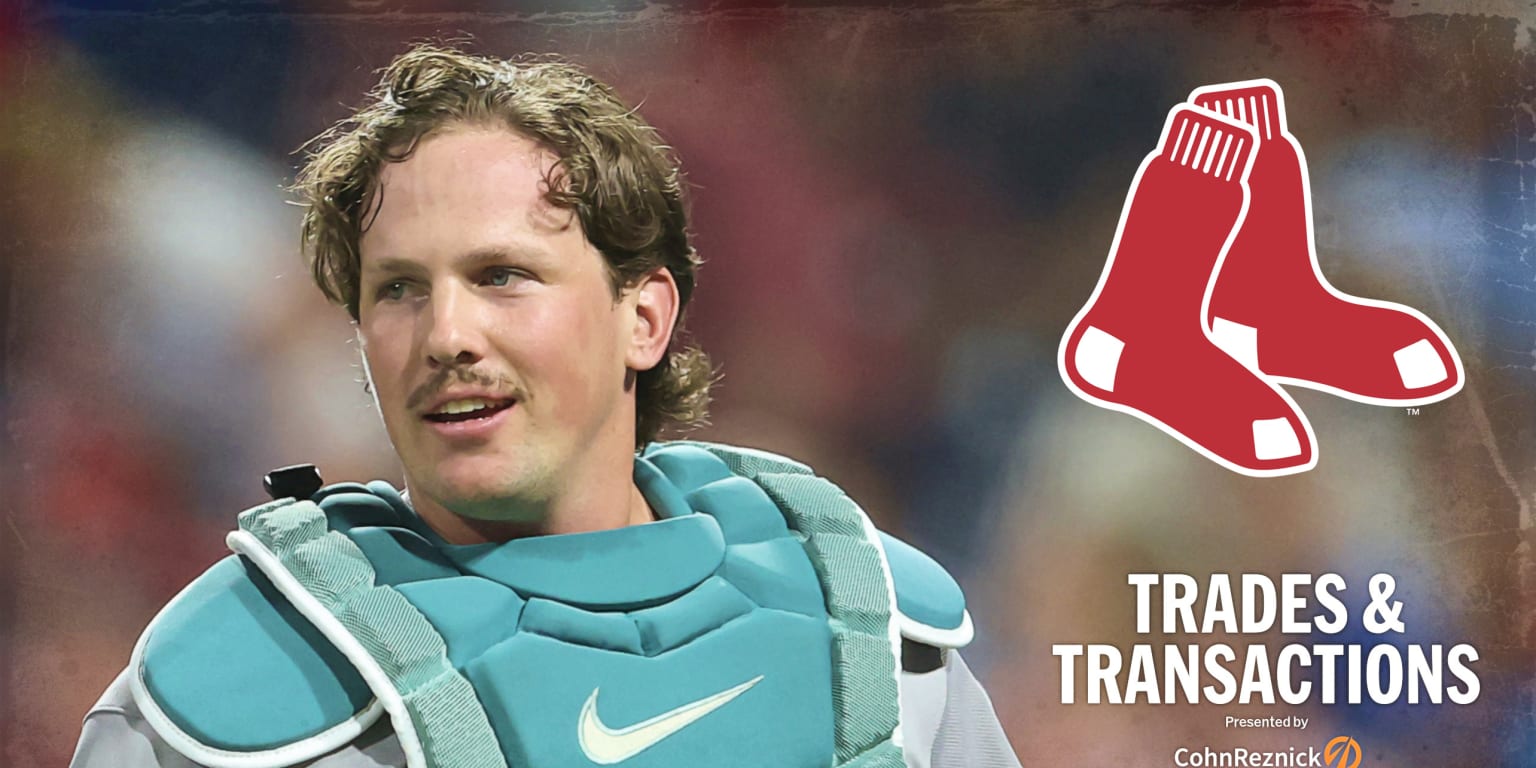
The Orioles did not get robbed at the trade deadline, but they sent a clear signal that no Orioles fan will enjoy.
Did the Orioles receive reasonable value for the players they traded? In most cases, yes. Did those trades leave the organization in an acceptable position for 2027? Probably not.
Baltimore traded Dean Kremer, Taylor Ward, Tyler Wells and, most painfully, Adley Rutschman. In return, the Orioles acquired nine named players and another player to be named later. The system is deeper, particularly on the pitching side, than it was a week ago. Anthony Eyanson immediately becomes one of the organization’s best prospects. Michael Forret gives them a starter who could be ready next season. Kyson Witherspoon and Enddy Azocar add significant long-term upside.
That is the good news, but as Orioles fans have learned over the last few years, highly touted prospects don’t guarantee any kind of major-league performance. Mike Elias has based his whole career on earning praise from pundits and colleagues for “winning” trades and drafts without actually winning any meaningful games.
The Orioles entered deadline day only 2.5 games out of a Wild Card spot and proceeded to trade their three-time All-Star catcher, one of their most reliable relievers and one of the few established starting pitchers they had under control for 2027. The core of the return may eventually be very good. Much of it also appears more relevant to 2030 than 2027.
The Orioles did well in the trades. The direction is still unacceptable.
The Adley Return Was Substantial
Let’s begin with the deal that will define this deadline and probably Mike Elias’ tenure.
The Orioles sent Adley Rutschman, Jake Rogers and cash to the Red Sox for catcher Carlos Narváez, pitchers Anthony Eyanson and Kyson Witherspoon, outfielder Enddy Azocar and a player to be named later. Eyanson was ranked as the No. 33 prospect in baseball by Baseball America and No. 49 by MLB Pipeline. Witherspoon was a first-round pick last summer. Azocar had emerged as one of Boston’s fastest-rising prospects. Narváez was a 2.7-win major-league catcher last season.
That is a lot of talent for one and a half years of any player, especially a catcher who has battled multiple injuries and is eligible for free agency after 2027.
Eyanson is the key. The 21-year-old had a 1.32 ERA with 94 strikeouts over 68.1 innings in his first professional season and has already reached Double-A. His fastball now sits in the mid-90s, and he has three secondary pitches that project as above-average or better. FanGraphs views him as at least a future No. 3 starter, with a realistic chance to become a No. 2. He could conceivably reach Baltimore next season.
Witherspoon has a higher draft pedigree and impressive raw stuff, including a fastball that can reach 99 mph. He also had a 4.78 ERA and 34 walks in 75.1 innings at High-A. His command has backed up since college, and his fastball has not missed enough bats. There is still starter potential, but there is also a real chance he eventually moves to the bullpen.
Azocar may be the best long-term lottery ticket in the deal. He is a 19-year-old center fielder who hit .286/.341/.540 with 18 homers this season. He has power, speed and enough defensive ability to remain in center. He could develop into an everyday outfielder.
He also will not help the Orioles next year.
Narváez could. His bat has fallen apart this season, but he was an average hitter with 15 homers in 2025 and remains one of baseball’s better defensive catchers. He should be a perfectly good backup and defensive complement to Samuel Basallo.
Put it all together, and Boston paid heavily. This cannot be called a bad trade based strictly on the return.
But the optics of trading Adley Rutschman to a hated division rival are something else.
The Face of the Rebuild Leaves Without a Playoff Win
Mike Elias was hired in November 2018. Less than eight months later, he made Adley Rutschman the first overall pick in the draft and the face of the organization’s rebuild. Adley represented the promise behind all the losing. He was the player fans tracked through the minor leagues while the major-league team lost 108 games, then 110 more. When he finally arrived in 2022, the Orioles almost immediately became relevant again.
He made three All-Star teams and produced 16.6 Baseball-Reference WAR in five seasons. The Orioles won 101 games in 2023, captured the AL East and returned to the playoffs in consecutive seasons.
They did not win a single playoff game.
The failure is not entirely his fault. The Orioles scored one run across two games against Kansas City. Their pitching pipeline failed to produce the frontline arms needed to survive October. The front office repeatedly relied on temporary fixes instead of building a rotation around the position-player core it had spent years assembling.
But it does make the trade brutal.
Fans endured the teardown because Adley, Gunnar Henderson, Grayson Rodriguez and the rest of the farm system were supposed to produce a sustained contender. Grayson was traded last winter. Adley is now in Boston. The first great Orioles team of this era never won a playoff game, and two of the players who best symbolized its promise are already gone. The third has no long-term deal.
The Other Returns Were Mostly Good
The Dean Kremer trade also brought back a better prospect than I expected. Jhomnardo Reyes is only 18, but he has legitimate power and was viewed by some evaluators as a top-10 prospect in the Minnesota system. Kremer had made only seven starts this season and carried a 6.50 ERA, although his previous track record and team control through 2027 still gave him real value. Even coverage from the Twins’ side viewed Reyes as a fairly expensive price.
As a value play, it’s understandable. As a move for the near future, it makes much less sense.
Kremer was not an ace. He was not even someone the Orioles should have guaranteed a rotation spot to next spring. But he had thrown 599 innings with a 3.95 ERA from 2022 through 2025 on a team that already lacks dependable starting pitching. In modern MLB, you can never have enough reliable starters; on any day, one can go down for the season with Tommy John surgery. Reyes could eventually become an impact hitter, but he is not impacting the Orioles anytime soon.
The Taylor Ward trade was easier to defend. Ward was a free agent after this season, his power had disappeared and the Orioles had internal outfield options in Dylan Beavers, Enrique Bradfield Jr., Heston Kjerstad and Colton Cowser. Getting three pitchers for a rental was reasonable.
Alex Hoppe has already reached the majors and should receive bullpen opportunities. Hoppe is an optionable power reliever with a chance to become a useful middle-inning arm. His ceiling would be a dependable setup reliever if the O’s can improve his command and fastball shape.
Brock Moore has upper-90s velocity and struck out 67 hitters in 38.2 minor-league innings, although his control remains a significant problem. Harrison Kreiling has interesting secondary pitches but only 10.2 professional innings. All three appear more likely to become relievers than starters.
No problem there. Ward could be replaced, and the return added several potentially useful arms.
The Tyler Wells trade may have been the best deal of the deadline. Wells had been one of the Orioles’ only dependable relievers, posting a 2.67 ERA and 0.96 WHIP in 54 innings. He was also controlled through 2027, so moving him was another clear subtraction from next year’s roster.
In exchange, Baltimore reacquired Michael Forret, the pitching prospect it sent to Tampa Bay as part of the Shane Baz trade eight months ago. Forret has already reached Triple-A and projects as a possible mid-rotation starter because of his command, deception and developing changeup. His Triple-A results have been uneven, but he could be a legitimate candidate for major-league innings next season.
Of course, reacquiring a pitching prospect the Orioles just traded away also provides a tidy summary of where this organization currently stands. Perhaps the plan is simply to keep rearranging the same pitchers until a rotation appears.
What Exactly Is the Plan for 2027?
Adley, Kremer and Wells were all controlled through next season. They were not distant future assets or veterans approaching free agency in two months. They were three established major-league players who could have helped the Orioles in 2027.
Ward was a rental and made sense to trade, but the Orioles already entered this season with a rotation built around health risks, short-term contracts and hopeful projections. They are now positioned to enter the winter with Kyle Bradish and Shane Baz as the primary established starters under control, followed by Brandon Young, Cade Povich and whichever prospects survive the transition to the majors.
It also makes little sense that they held on to Trevor Rogers, who must have had value in this market and will be a free agent at the end of the year. They couldn’t get anything of value for him?
What is the point of keeping him when the front office has clearly decided it’s not worth pursuing a Wild Card spot this season?
In 2027, Eyanson could help. Forret could help. Perhaps Witherspoon moves quickly after joining a different development system.
Could is doing far too much work there.
Prospects are not useless merely because they are uncertain. Every sustainable contender needs young, inexpensive talent, and the Orioles desperately needed to restock their pitching pipeline. These players can also be included in future trades for established major leaguers.
The problem is that nobody knows which established pitchers will be available six months from now, much less what those teams will demand. Trading current major-league contributors for prospect capital that might later be exchanged for different major-league contributors is mostly just kicking the can down the road.
The Orioles now have more options, but they have fewer dependable players. That can still work if ownership spends aggressively this winter. Sign two legitimate starting pitchers. Add a late-inning reliever. Use some of the expanded prospect depth to trade for another player who is controlled beyond one season. Build around Gunnar, Basallo, Pete Alonso, Jordan Westburg and the remaining core instead of asking two pitching prospects to save the organization immediately.
If that happens, this deadline could be viewed as an aggressive retool. If the Orioles instead point to Eyanson, Forret and Witherspoon as the rotation reinforcements and shop for another collection of short-term bargains, then this was the beginning of another rebuild regardless of what the team calls it.
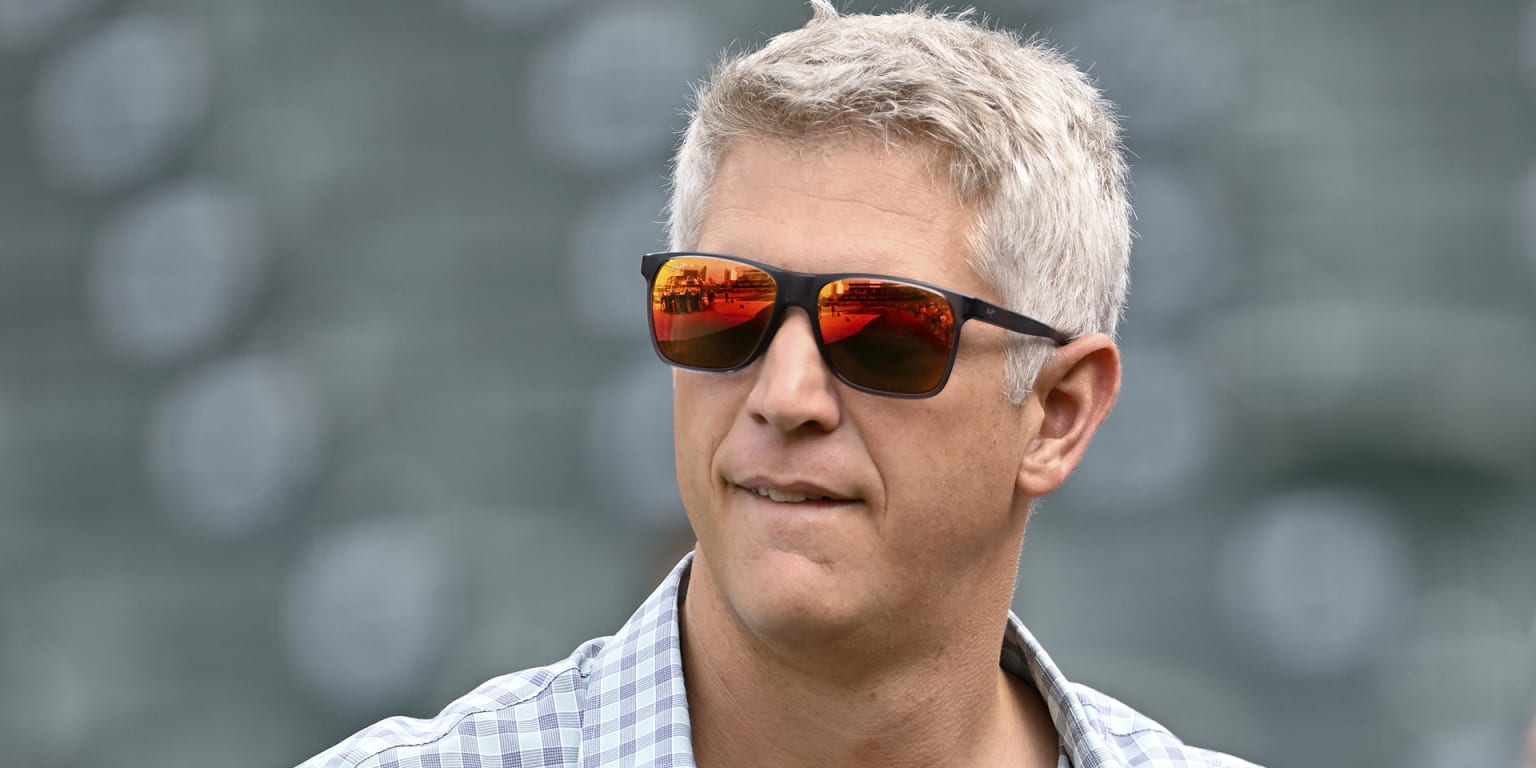
Mike Elias Should Be Relieved of His Duties Immediately
The Orioles promoted Mike Elias to president of baseball operations before the 2025 season. Since then, the team finished last in the AL East, fired its manager, underperformed again and traded the face of the franchise to a division rival. He remains the person in charge of baseball operations today.
There is no reason he should remain in that position tomorrow.
This is not because every trade was bad. Most of the returns were good, as long as your plan is to be in perpetual rebuild mode. The scouting department may eventually look very smart. But Orioles fans have heard that story over and over again, and right now, none of them looks that smart.
The issue is not whether Elias can win a prospect trade. The issue is whether he can build a major-league roster capable of winning in October.
He had the top farm system in baseball, an emerging MVP candidate in Gunnar Henderson, an All-Star catcher, a new ownership group and one of the lowest payrolls in the sport. That collection of advantages produced zero playoff victories, and the team has been on a downward trajectory since getting booted unceremoniously after its 2023 division title.
Ownership cannot solve this merely by hiring a more charismatic general manager. Free agents generally go where the money, role and competitive opportunity make sense. David Rubenstein and the ownership group must be willing to spend market rates, and sometimes more than market rates, to bring established pitching to Baltimore.
But ownership also should not entrust another winter to the executive whose roster philosophy helped create this problem.
The Orioles received enough talent at the deadline to avoid calling the trades a failure. They did not receive enough immediate help to justify retreating from 2027. A new baseball operations leader should be hired, given a serious budget and instructed to turn these prospects and the remaining core into a contender next season.
The returns were fine.
But no Orioles fan is ready to sign on for another rebuilding era.