November 3, 2026 | Through Week 8
The Jacksonville Jaguars have taken over the top spot in the Dual Eights Efficiency Index, but the Chicago Bears might have made the biggest statement of Week 8.
Chicago's impressive 34-17 victory in Seattle moved the Bears into second place in both our Efficiency Index and forward-looking Dual Eights Power Index (DEPI). Eight weeks into the season, there is increasingly convincing evidence that the Bears belong among the NFL's elite teams.
Jacksonville made its own case with a 42-7 demolition of Indianapolis, overtaking San Francisco for the first time since Week 4. The 49ers, who were on a bye, dropped to third in Efficiency but remain the strongest team in our Power Index.
Elsewhere, the Rams and Bills made five-place jumps, Tampa Bay continued its unlikely climb toward the top of the rankings despite a 3-5 record, and Seattle suffered the biggest decline of the week.
And then there are the Ravens.
Baltimore's 36-10 loss in Buffalo dropped the team to 4-4, sent it down to 16th in Efficiency and produced a dramatic fall from eighth to 21st in DEPI. That Power Index decline has as much to do with who's available to play quarterback as what happened on Sunday, although the underlying performance is becoming increasingly concerning as well.
Week 8 Dual Eights Efficiency Index Top 10
| Rank | Team | Record | Index | Change | DEPI Rank |
|---|---|---|---|---|---|
| 1 |  Jacksonville Jaguars |
5-2 | 69.95 | ↑ 1 | 5 |
| 2 |  Chicago Bears |
6-2 | 67.64 | ↑ 2 | 2 |
| 3 |  San Francisco 49ers |
6-1 | 67.27 | ↓ 2 | 1 |
| 4 |  Tampa Bay Buccaneers |
3-5 | 64.17 | ↑ 2 | 9 |
| 5 |  Buffalo Bills |
6-1 | 61.22 | ↑ 5 | 4 |
| 6 |  Los Angeles Rams |
4-4 | 60.95 | ↑ 5 | 3 |
| 7 |  Cincinnati Bengals |
5-2 | 60.65 | ↓ 2 | 7 |
| 8 |  Detroit Lions |
5-2 | 60.02 | ↑ 1 | 6 |
| 9 |  Seattle Seahawks |
4-4 | 59.59 | ↓ 6 | 12 |
| 10 |  Kansas City Chiefs |
5-2 | 58.36 | ↓ 3 | 11 |
Rank changes are compared with the published Week 7 rankings. Efficiency scores reflect all 121 completed games through November 2.
1. Jacksonville Jaguars: 69.95
5-2 | Previous: 2 | DEPI: 5 (+5.16)
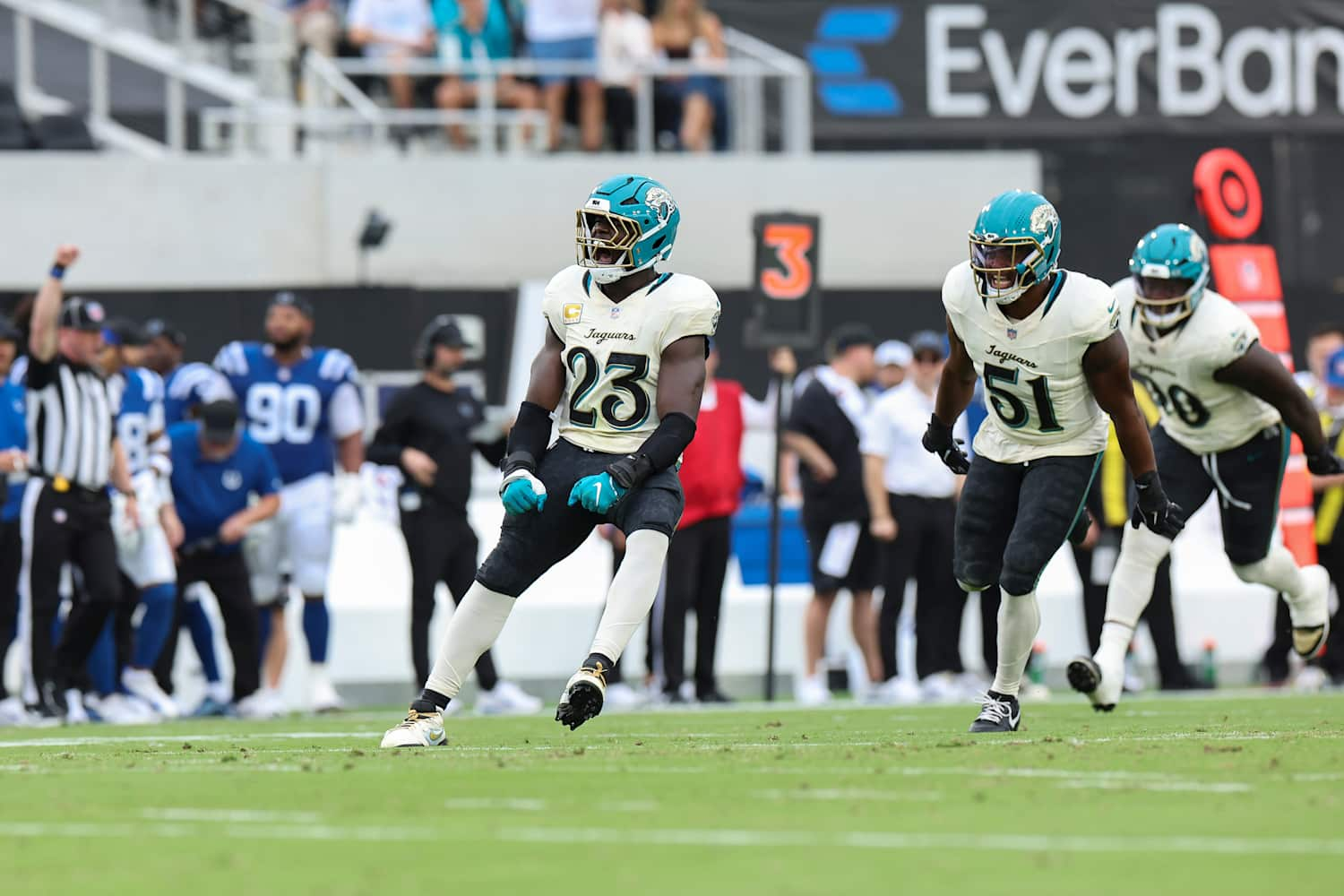
Jacksonville has been hovering near the top of the Efficiency Index all season. After Sunday's 42-7 demolition of Indianapolis, the Jaguars finally reclaimed first place.
And this wasn't just a case of running up the score against an inferior opponent.
Jacksonville generated +0.199 offensive EPA per play while holding Indianapolis to a miserable -0.392 EPA per play. Both units were excellent, with the defense supplying the largest improvement in the team's adjusted rating.
For the season, Jacksonville is producing +0.164 offensive EPA per play while allowing -0.083 defensively. That is the kind of balance that makes a team particularly difficult to prepare for. Opponents cannot simply shut down one strength and assume the other side will give them opportunities.
Perfect team for the Ravens to play with potentially a QB off the street on Thursday.
The Jags did benefit from a 92-yard interception return for a touchdown last week, so the 42 points was not all offensive dominance, but the underlying numbers remain impressive even after accounting for that.
Jacksonville gained 2.85 Efficiency points and now leads Chicago by 2.32.
Interestingly, DEPI is more restrained, ranking the Jaguars fifth at +5.16. The model acknowledges their excellent performance without projecting that they will necessarily continue playing at the same level.
2. Chicago Bears: 67.64
6-2 | Previous: 4 | DEPI: 2 (+5.85)
The Bears are making a convincing argument that they belong among the inner circle of Super Bowl contenders.
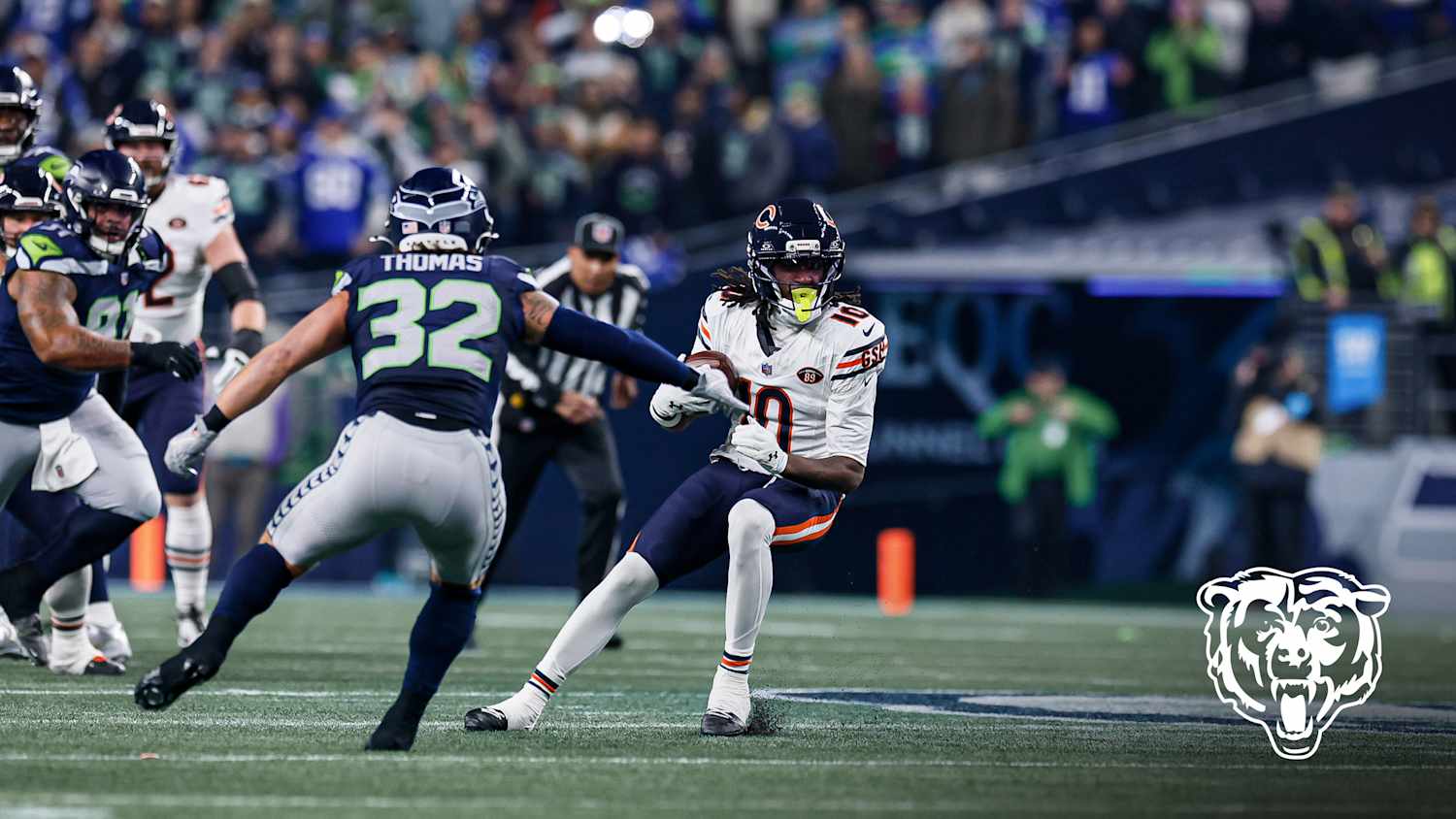
Monday night's 34-17 victory in Seattle was particularly impressive because of the opponent and venue. Seattle entered the game with one of football's strongest defenses, and Chicago walked into Lumen Field and controlled much of the evening.
Caleb Williams completed 24 of 34 passes for 247 yards and a touchdown. More importantly, Chicago's offense generated +0.175 EPA per play against a defense that had made life difficult for nearly everyone.
The Bears were equally impressive defensively, holding Seattle to -0.184 EPA per play.
That performance raised Chicago's Efficiency score by 4.32 points, while DEPI now ranks the Bears second at +5.85.
The Efficiency Index sees a team producing excellent results against quality opponents. The Power Index independently sees a team with the underlying strength to sustain those results. Chicago's projected offensive contribution alone is +4.25 points. The Power Index also reduces the importance of their offense under backup quarterbacks now that Caleb Williams is back.
At 6-2, Chicago is beginning to look like a legitimate contender rather than merely a promising team enjoying a strong start.
3. San Francisco 49ers: 67.27
6-1 | Previous: 1 | DEPI: 1 (+7.17)
San Francisco didn't play this week and still managed to lose the top spot.
The Efficiency Index continuously reassesses opponent strength and league-wide performance. Jacksonville and Chicago both improved substantially while San Francisco's existing results were revalued slightly downward.
The result was a 1.30-point decline and a drop from first to third.
San Francisco continues to produce +0.175 offensive EPA per play with a 53.25% offensive success rate. That combination indicates an offense that generates valuable plays without depending entirely on occasional explosive gains.
The Power Index remains particularly impressed. San Francisco leads DEPI at +7.17, a full 1.32 projected points ahead of Chicago.
4. Tampa Bay Buccaneers: 64.17
3-5 | Previous: 6 | DEPI: 9 (+2.69)
At some point, Tampa Bay's record will catch up with its performance.
The Buccaneers are 3-5 and now rank fourth in the NFL in Efficiency. They have allowed just 13 points across their last two games, following a dominant win over Carolina with Sunday's 16-0 shutout of Atlanta.
The defense was extraordinary against the Falcons, holding them to -0.529 EPA per play.
Tampa Bay also leaned heavily on Bucky Irving, who rushed for 170 yards on 27 carries. Baker Mayfield attempted just three passes without a completion in monsoon weather.
That is not a conventional formula for sustained offensive success, and the underlying numbers reflect it. Tampa Bay generated -0.167 offensive EPA per play Sunday, while its season offensive average remains at -0.092.
The defense, however, has been excellent. Tampa Bay is allowing -0.156 defensive EPA per play this season. DEPI is somewhat less enthusiastic than the Efficiency Index, ranking the Buccaneers ninth at +2.69. The defensive contribution of +2.73 and special teams contribution of +1.05 are doing considerable work to overcome a -1.73 offensive rating.
The Bucs are not suddenly a complete team, but they have become a difficult opponent, particularly for teams that struggle to sustain drives against quality defenses.
Sunday night's trip to Chicago will tell us quite a bit about whether this defensive improvement is enough to make Tampa Bay dangerous against the league's best.
5. Buffalo Bills: 61.22
6-1 | Previous: 10 | DEPI: 4 (+5.56)
Buffalo's 36-10 victory over the Ravens moved the Bills five places in Efficiency, the biggest jump among teams entering the top five. They may be overrated by the systems a little bit considering the circumstances.
Their defense was the primary driver, but it's getting a little more credit than it deserves considering Lamar Jackson lasted one play and emergency QB Joey Fagnano took the majority of the Ravens snaps.
Buffalo held Baltimore to -0.427 EPA per play, an outstanding single-game performance. The Bills' special teams also contributed substantially to the improvement. They deserve credit for controlling the game, but shutting down that collection of quarterbacks is not the same thing as shutting down a healthy Lamar Jackson.
For that reason, DEPI includes a published 0.50-point downward editorial adjustment to Buffalo's defensive projection. Without that review, the Bills would rate +6.06. Their published rating is +5.56, fourth in the league.
Importantly, the Efficiency Index does not include that editorial adjustment. It measures the performance that actually occurred.
Buffalo's broader concern remains its defense, which is still allowing +0.077 EPA per play for the season despite Sunday's excellent result.
The Bills have one of the NFL's most productive offenses at +0.184 EPA per play. If Sunday's defensive improvement proves repeatable against healthy starting quarterbacks, their championship outlook becomes considerably stronger.
6. Los Angeles Rams: 60.95
4-4 | Previous: 11 | DEPI: 3 (+5.70)
The Rams are beginning to justify the confidence our Power Index has maintained in them.
The Rams climbed five places after beating the Chargers 24-9, entering the Efficiency top 10 for the first time this week. The defense was particularly impressive, holding the Chargers to -0.452 EPA per play. The Rams now allow -0.107 defensive EPA per play for the season.
Their adjusted defense and special teams supplied most of the week's improvement.
At 4-4, Los Angeles still has plenty of work to do in the standings. But DEPI has consistently been more optimistic about the Rams than their record or early-season Efficiency ranking suggested.
That projection now stands third at +5.70, supported by a +4.23 offensive contribution and +2.26 defense.
The Rams gained 1.06 DEPI points this week.
There is still a significant difference between projecting a team's potential and seeing it consistently produce at that level. But recent results are beginning to close that gap.
For weeks, DEPI has been insisting the Rams are better than they look.
They are finally starting to play like it.
7. Cincinnati Bengals: 60.65
5-2 | Previous: 5 | DEPI: 7 (+3.85)
Cincinnati scored 43 points, won an overtime game and dropped two places.
That might initially seem unreasonable.
Then consider the opponent scored 36.
The Bengals' offense remained productive against Tennessee, generating +0.164 EPA per play. The defense was considerably less convincing, allowing +0.131.
Cincinnati's adjusted defensive decline outweighed the improvements on offense and special teams, producing a 2.03-point Efficiency decrease despite the victory.
The Bengals remain dangerous because their offensive foundation is strong. They average +0.118 offensive EPA per play for the season with a success rate above 50%.
But the defensive inconsistency is becoming difficult to ignore.
We saw what Cincinnati's offense could accomplish when it exploded for 35 second-half points against the Ravens in Week 7. Sunday demonstrated that even an excellent offensive performance can remain a tight game when the defense cannot consistently stop the opponent.
The Bengals remain seventh in DEPI at +3.85.
They have enough offensive talent to threaten almost anyone. Whether their defense can support that offense against better competition remains a significant question.
8. Detroit Lions: 60.02
5-2 | Previous: 9 | DEPI: 6 (+4.15)
Detroit handed Minnesota its first loss with a 19-15 victory that was more impressive than the final score might suggest.
The Lions' adjusted offensive rating improved despite generating slightly negative raw offensive EPA against one of the NFL's strongest defenses.
That is exactly why opponent adjustment matters. An ordinary offensive performance against an exceptional defense can tell us more than a dominant performance against a terrible one.
Detroit continues to produce +0.136 offensive EPA per play for the season, giving it a strong foundation. The defense is considerably less reassuring, allowing +0.113 EPA per play.
DEPI reflects that imbalance. Detroit ranks sixth at +4.15, driven by a +3.95 offensive contribution that offsets a -0.92 defensive rating.
The Lions deserve credit for beating a previously undefeated divisional opponent.
But their path to becoming a serious championship contender probably involves getting more consistent defensive performances rather than asking the offense to compensate every week.
9. Seattle Seahawks: 59.59
4-4 | Previous: 3 | DEPI: 12 (+1.17)
Seattle suffered the week's biggest Efficiency decline.
Monday night's loss to Chicago cost the Seahawks 5.80 index points and six ranking places, dropping them from third to ninth. The most concerning part was that both sides of the ball deteriorated in the adjusted numbers, with the defensive decline having the larger impact.
Seattle's defense remains good. It is allowing -0.089 EPA per play for the season. But the offense continues to be a serious limitation. The Seahawks average -0.058 offensive EPA per play, and DEPI assigns their offense a -1.70-point contribution.
That is a substantial problem for a team expected to compete with the NFC's best.
Seattle still has enough defensive talent to frustrate quality opponents, and the Power Index gives its defense a +2.10 contribution. The question is whether that unit can keep carrying an offense that struggles to consistently generate value.
Chicago demonstrated the danger.
When an opponent can move the ball against Seattle's defense, the Seahawks don't have enough offensive reliability to consistently answer.
One loss doesn't erase their strengths. It does make their limitations considerably harder to ignore.
10. Kansas City Chiefs: 58.36
5-2 | Previous: 7 | DEPI: 11 (+1.34)
Kansas City rounds out the top 10 after losing 28-24 in Denver.
Interestingly, the Chiefs' adjusted offensive performance improved, but declines on defense and especially special teams pulled their overall rating down 1.75 points.
Their season offense remains productive at +0.128 EPA per play, while the defense is allowing -0.037. Those are respectable numbers. They just don't describe the dominant team many still expect Kansas City to be.
DEPI is even more skeptical, ranking the Chiefs 11th at +1.34. That rating actually increased slightly this week despite the loss, which demonstrates another important distinction between ranking movement and projected strength.
A team can lose and still improve part of its underlying forecast.
Kansas City remains one of the most interesting disagreements between our model and the betting market.
And Week 9 will provide another example.
Biggest Risers: Buffalo, the Rams and a Green Bay Rebound
Buffalo and the Rams shared the biggest positive ranking movement this week, each gaining five places.
The Bills jumped from 10th to fifth, while the Rams moved from 11th to sixth.
Dallas was another notable riser, climbing four places from 24th to 20th despite losing 33-30 in overtime to Arizona. That is an unusual result until you examine the components. The Cowboys improved defensively and on special teams, even as their offensive performance declined.
The Efficiency Index doesn't award points for winning or subtract them for losing. It evaluates the underlying plays within their opponent and game context.
Green Bay provides another interesting example.
The Packers gained only two ranking places, from 25th to 23rd, but their 27-19 victory over Carolina produced the largest numerical Efficiency improvement in the league at +5.39 points.
Both their adjusted offense and defense improved. Green Bay simply began the week far enough down the rankings that a sizable increase translated into a relatively modest movement in position.
Here were the largest positive changes:
| Team | Previous | Current | Index Gain |
|---|---|---|---|
| Buffalo |
10 | 5 | +4.48 |
| Los Angeles Rams |
11 | 6 | +4.32 |
 Dallas |
24 | 20 | +3.96 |
 Green Bay |
25 | 23 | +5.39 |
| Chicago |
4 | 2 | +4.32 |
The most important development might be the Rams. Buffalo's outstanding offense was already well established, while Chicago has increasingly demonstrated its quality. Los Angeles was the team whose current-season performance most clearly lagged behind its Power Index projection.
That gap is narrowing.
Biggest Fallers: Seattle and Cleveland Take the Biggest Hits
Seattle's six-place decline was matched by Cleveland, which fell from 19th to 25th after losing 27-6 in Pittsburgh.
The Steelers sacked Cleveland eight times, and the Browns lost 4.42 Efficiency points.
Minnesota also exited the top 10, dropping from eighth to 12th following its first loss of the season. The Vikings' 3.49-point decline opened the door for the Rams to enter the top 10.
Kansas City lost three places, while the Ravens fell two spots from 14th to 16th.
Baltimore's ranking movement understates the size of its performance decline. The Ravens lost 4.91 index points, the second-largest decrease among these notable fallers.
| Team | Previous | Current | Index Change |
|---|---|---|---|
| Seattle |
3 | 9 | -5.80 |
 Cleveland |
19 | 25 | -4.42 |
 Minnesota |
8 | 12 | -3.49 |
| Kansas City |
7 | 10 | -1.75 |
 Baltimore |
14 | 16 | -4.91 |
San Francisco also dropped two places, but its bye makes that a different situation. The 49ers lost ranking positions through the re-evaluation of existing games and improvement elsewhere, not because of a poor Week 8 performance.
Dual Eights Power Index: San Francisco Remains No. 1
The Power Index tells a somewhat different story than the Efficiency rankings.
San Francisco remains first despite falling to third in Efficiency. Chicago rises to second in both models. The Rams hold third, while Buffalo slips from second to fourth despite its dominant victory.
Jacksonville, now the Efficiency leader, ranks fifth in DEPI.
New England and Pittsburgh are the newcomers to the Power Index top 10, replacing Baltimore and Seattle.
Week 8 DEPI Top 10
| Rank | Team | DEPI | Change | Efficiency Rank |
|---|---|---|---|---|
| 1 | San Francisco 49ers |
+7.17 | — | 3 |
| 2 | Chicago Bears |
+5.85 | ↑ 2 | 2 |
| 3 | Los Angeles Rams |
+5.70 | — | 6 |
| 4 | Buffalo Bills |
+5.56 | ↓ 2 | 5 |
| 5 | Jacksonville Jaguars |
+5.16 | ↑ 1 | 1 |
| 6 | Detroit Lions |
+4.15 | ↑ 1 | 8 |
| 7 | Cincinnati Bengals |
+3.85 | ↓ 2 | 7 |
| 8 |  New England Patriots |
+2.93 | ↑ 3 | 11 |
| 9 | Tampa Bay Buccaneers |
+2.69 | ↑ 1 | 4 |
| 10 |  Pittsburgh Steelers |
+1.40 | ↑ 3 | 14 |
Pittsburgh's entry is particularly interesting for the AFC North.
The Steelers climbed three places after their dominant performance against Cleveland, reaching +1.40. New England also moved up three positions to eighth at +2.93.
Green Bay made the biggest Power Index jump of the week, moving seven places from 20th to 13th while adding 1.60 projected points.
At the other end of the table, Baltimore suffered the largest decline by a considerable margin.
Where DEPI Disagrees With the Week 9 Betting Market
One of the most useful applications of the Power Index is comparing our projected scoring margins with the actual betting market.
DEPI estimates a team's relative strength in points, then applies a home-field adjustment of approximately 1.54 points. Neutral-site games receive no home-field advantage.
That produces a projected margin we can compare with sportsbook spreads.
The important qualification is that a disagreement between the model and market is not automatically a betting opportunity. Quarterback assumptions, injuries, individual matchups and other factors can explain differences that the underlying model doesn't fully capture.
Here are the seven largest discrepancies for Week 9.
Market snapshot: November 3, 2026, 1:50 p.m. EST. Differences use unrounded model projections. Lines can change, and the figures below are not a list of recommended wagers.
| Matchup | DEPI Projection | Market Spread | Difference |
|---|---|---|---|
| Dallas at Indianapolis | DAL -0.5 | DAL -6.0 | 5.53 toward IND |
| Jets at Kansas City | KC -4.0 | KC -9.5 | 5.47 toward NYJ |
| Arizona at Seattle | SEA -5.8 | SEA -10.5 | 4.73 toward ARI |
| Jacksonville at Baltimore | JAX -4.9 | JAX -9.5 | 4.60 toward BAL |
| Las Vegas at San Francisco | SF -12.8 | SF -10.0 | 2.76 toward SF |
| Cincinnati vs. Atlanta (Madrid) | CIN -5.1 | CIN -3.0 | 2.07 toward CIN |
| Denver at Carolina | DEN -0.4 | DEN -2.5 | 2.07 toward CAR |
Dallas at Indianapolis: Is the market overreacting to the Colts?
The largest disagreement on the board involves Dallas and Indianapolis.
The market favors the Cowboys by six points on the road. DEPI makes Dallas only a 0.5-point favorite.
That creates a 5.53-point gap.
The explanation begins with Dallas's balance, or lack thereof. The Cowboys' projected offense contributes +2.37 points, but their defense is rated -2.44. That effectively cancels out much of their offensive strength.
Indianapolis is rated -1.56 overall. Dallas is +0.45.
Once home-field advantage is included, the model sees something close to an even matchup.
There is, however, an enormous personnel caveat.
Indianapolis traded Quenton Nelson to Seattle and DeForest Buckner to San Francisco on October 27. Those are significant losses that the model doesn't directly account for through individual non-quarterback player adjustments.
The market may be incorporating the effect of those departures more aggressively than DEPI.
That would be a perfectly reasonable explanation for at least part of the discrepancy.
The model sees the Colts as more competitive than the spread suggests. Whether that reflects a genuine opportunity or an incomplete evaluation of their depleted roster is another question.
Jets at Kansas City: The model is skeptical of the Chiefs
The market has Kansas City favored by 9.5 points at home against the Jets.
DEPI projects a margin of just four points.
That is another difference of nearly five and a half points. Kansas City's current Power Index rating is only +1.34, while the Jets sit at -1.16. Those are not ratings for two teams separated by several tiers of quality.
The Chiefs' offense contributes +1.62 projected points, but their defense is approximately average and special teams contribute -0.73. The Jets aren't particularly good either. Their offense and defense both grade below average.
But the model sees Kansas City as a modestly better team, not one that should routinely be favored by nearly ten points. The public perception of the Chiefs, Patrick Mahomes and their established ceiling may reasonably exceed what the current model captures.
Still, it is worth monitoring whether Kansas City's market prices continue to reflect a more dominant team than its recent underlying performances justify.
Arizona at Seattle: Another Seahawks offensive problem
Seattle is favored by 10.5 points against Arizona.
DEPI makes the Seahawks approximately 5.8-point favorites.
The difference comes primarily from Seattle's offensive limitations. The Seahawks have a strong defense, but their projected offensive contribution remains -1.70 points. That makes it difficult for the model to project large winning margins, even against weaker opponents.
Arizona is rated -3.06, compared with Seattle's +1.17. The calculation already assumes Gardner Minshew will start for the Cardinals, so this isn't simply a case of the model overlooking a quarterback change.
The market sees Seattle as a significantly stronger favorite.
DEPI sees a team whose defense is good enough to win comfortably, but whose offense may struggle to create the separation required to justify laying double digits.
Monday's performance against Chicago certainly didn't make that offensive concern disappear.
Week 9 Matchup to Watch: Tampa Bay at Chicago
Sunday, November 8 | 8:20 p.m. EST | Soldier Field
There are several interesting games on the Week 9 schedule, including Buffalo visiting Minnesota in a meeting of two 6-1 teams.
But according to the combined strength of our two rankings, Tampa Bay at Chicago is the best matchup of the week.
The Bears rank second in both Efficiency and DEPI. Tampa Bay ranks fourth in Efficiency and ninth in DEPI.
No other Week 9 matchup features teams with better combined rankings across both models.
The records might suggest otherwise.
Chicago is 6-2 and playing some of its best football. Tampa Bay is 3-5 and still trying to recover from a disastrous opening stretch.
But the Buccaneers' recent defensive performances make this far more interesting than the standings suggest.
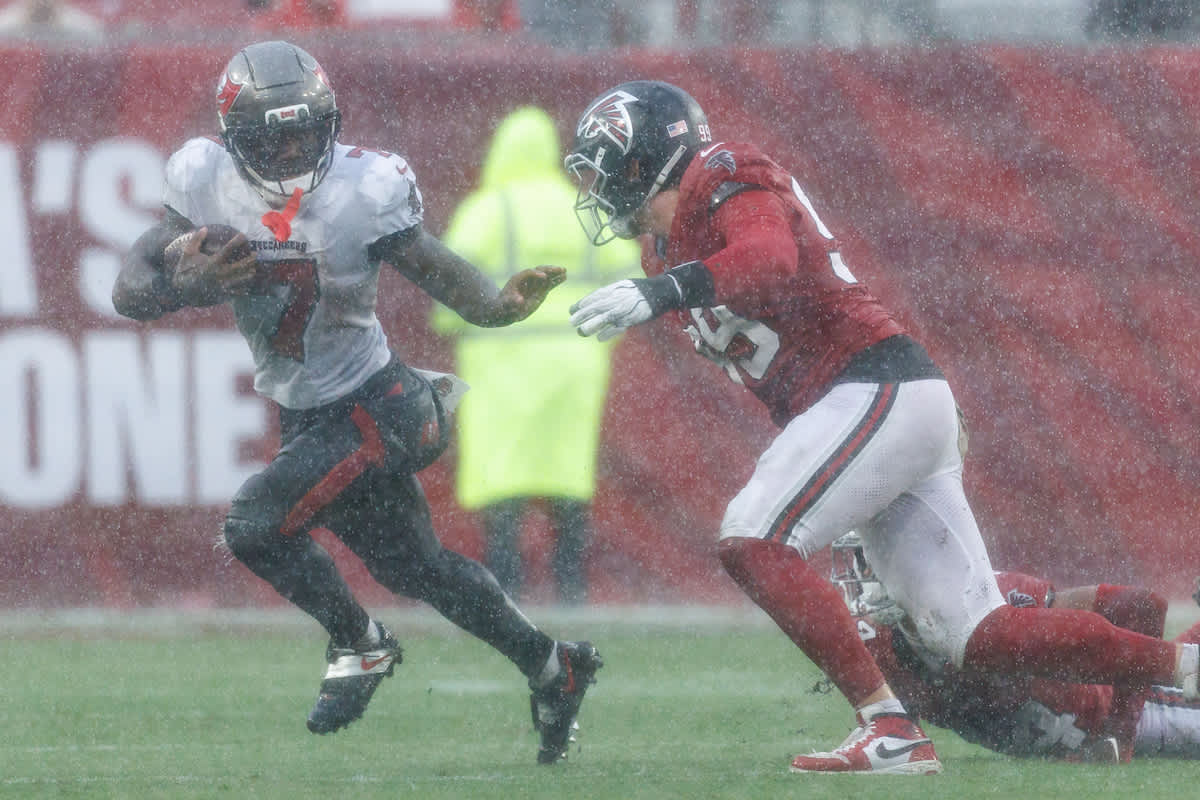
Tampa Bay has allowed just 13 points in two weeks. Its season defensive EPA per play is -0.156, an excellent figure.
Chicago, meanwhile, enters the game after demonstrating it can move the football against one of the NFL's strongest defenses.
That creates the central matchup.
Can Tampa Bay's defense slow down a Bears offense that is increasingly looking like one of the league's best?
Chicago's projected offensive DEPI contribution is +4.25 points, compared with Tampa Bay's +2.73 defensive contribution.
The Bears have been able to distribute the football, create difficult coverage assignments and generate productive offense without depending entirely on Caleb Williams making spectacular individual plays.
Tampa Bay's challenge will be preventing that variety from stretching its defense beyond what it can comfortably handle.
The other side of the football is considerably less encouraging for the Buccaneers.
Their offense carries a -1.73 projected contribution. Chicago's defense is only modestly above average in DEPI at +0.40, but Tampa Bay has struggled to consistently sustain drives even against less imposing opponents.
If the Bucs cannot move the football, their defense may spend far too much of the evening trying to contain Williams and the Bears.
DEPI favors Chicago by approximately 4.7 points. The market has the Bears favored by six.
That is only a 1.31-point disagreement, far smaller than the gaps in several other Week 9 games.
But it may be the most revealing matchup on the schedule.
A convincing Chicago victory would further establish the Bears as one of the league's strongest teams. A competitive Tampa Bay performance would reinforce the argument that its record badly understates its current quality.
And if the Buccaneers can win in Chicago, their place near the top of the Efficiency rankings will become considerably more difficult to dismiss.
Explore the full Dual Eights NFL Rankings Dashboard for all 32 teams, updated Efficiency and Power Index ratings, team comparisons and detailed unit breakdowns.
You can also explore the Week 9 model projections and betting spreads and read more about the Dual Eights methodology.