NFL futures are generally an exercise in figuring out which parts of last season actually deserve to be carried into the next one.
A 13-win team is not automatically a 13-win-quality team again. An eight-win team is not necessarily stuck around .500. Turnovers, injuries, free agents, draft picks, coin-toss games, schedules all contribute major variance between seasons.
Some signals carry stronger from one season to the next while others are more likely to regress to the mean. An offense that was genuinely good is usually more likely to remain good than a defense that lived on takeaways.
That was the premise behind my look at which 2025 playoff teams are most likely to fall out and which teams could replace them. Two futures came out of that research that I like before the season begins.
They arrive through very different arguments.
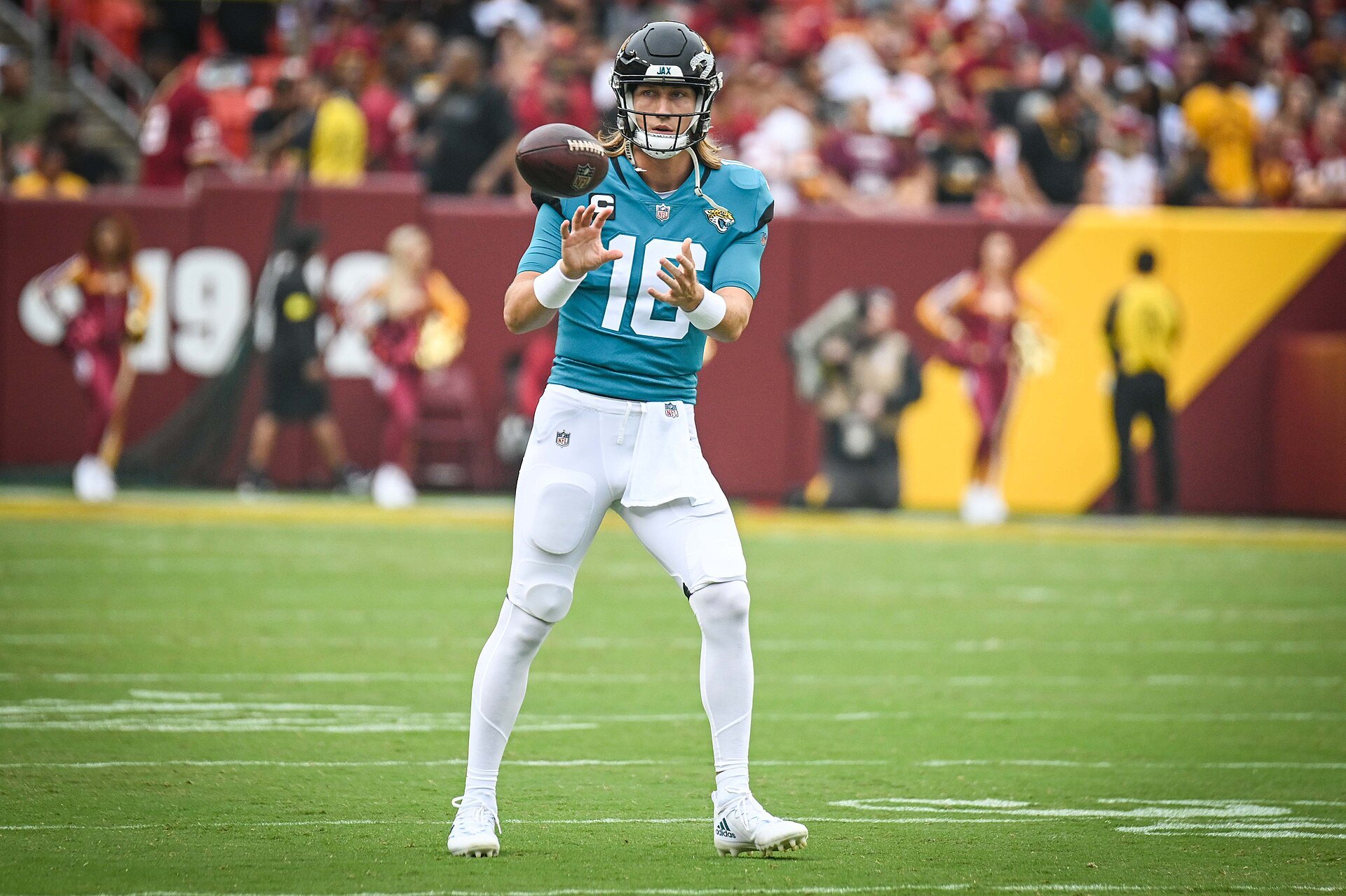
Jacksonville was legitimately one of the NFL’s better teams last season, but several of the factors that pushed the Jaguars all the way to 13 wins are unlikely to repeat.
Tampa Bay was not particularly good, but its mediocre results came during an injury-ravaged season and the Buccaneers play in a division that could again be won without anyone approaching elite status.
The Jacksonville bet is the stronger of the two. Tampa requires a little more faith and, importantly, the right price.
Jacksonville Jaguars to miss the playoffs

The play
Jaguars to miss the playoffs
- Break-even at -110 — 52.4%
- My estimate — mid-to-high 50s
The bet: Jacksonville Jaguars to miss the playoffs at -110.
The easiest way to make a bad argument against Jacksonville is to call the Jaguars frauds.
They weren’t.
Jacksonville went 13-4 with a +138 point differential, finished sixth in total DVOA and climbed to third in weighted DVOA, which gives more weight to late-season performance. The Jaguars closed the regular season with eight consecutive wins before Buffalo eliminated them 27-24 in the Wild Card round.
That is not the profile of a team that lucked its way through four months.
My bet is that while the Jaguars may remain a good football team, they will not be nearly as successful as last season, losing four or five more games. In a crowded AFC that may be enough to leave them out.
Where the 13 wins actually came from
The first concern is where Jacksonville’s 2025 strength came from. The Jags finished sixth in defensive DVOA and third in defensive EPA per play, compared with 14th in offensive DVOA and 12th in offensive EPA.
Jacksonville, 2025
A defense-first profile
League rank out of 32, best on the left. The units that carried the Jaguars are the ones that travel worst from season to season.
- Total DVOA 6th
- Weighted DVOA 3rd
- Defense · DVOA 6th
- Defense · EPA per play (PFF) 3rd
- Offense · DVOA 14th
- Offense · EPA per play 12th
- Defensive EPA, turnovers removed (clevanalytics) 5th 11th
- As played
- With turnovers stripped out
The two defensive EPA rows come from different analysts and are not directly comparable: the season figure is PFF's, which had Jacksonville third; the turnover-adjusted row is clevanalytics', which starts from its own fifth-place baseline. Both point the same direction — the defense looks meaningfully worse once takeaways come out.
Defense obviously matters, but defensive performance is less stable from season to season than offense, particularly when it is accompanied by an extreme turnover advantage. Jacksonville finished +13 in turnover differential and generated 31 takeaways after producing only nine the year before. An analysis by clevanalytics found that if turnovers are removed, the Jaguars fall from fifth to 11th in defensive EPA per play, the second-largest drop in the league behind Chicago. Jacksonville also received 27 points from defensive or special-teams touchdowns.
After producing only nine the year before.
Among the league's most extreme margins.
Points scored without the offense on the field.
That is not easily repeatable. The defense can remain good and still not expect to create the same number of extra possessions, short fields and direct points. That difference is key when the offense underneath it was good rather than dominant.
A defense that goes from elite to seventh or eighth, an offense that remains somewhere around 10th to 15th and a turnover margin that comes back toward normal can turn several comfortable wins into coin flips. Jacksonville does not need a dramatic collapse for 13-4 to become 9-8.
The schedule turns hard
The schedule makes that regression more plausible.
The Jags entered last season with what Sharp Football Analysis projected as the sixth-easiest schedule. That moves to 18th easiest this year. The opponent quality is only part of the problem. ESPN’s schedule “pain index,” which incorporates travel, rest disadvantages, short weeks and road sequencing, rated Jacksonville’s 2026 schedule the most difficult in the NFL and, according to Sharp, the worst score for any team since 2002.
Easiest schedule in the league last season; middle of the pack now.
The most difficult schedule in the NFL, and per Sharp the worst score for any team since 2002.
Two London games, a three-game road stretch and no consecutive games in Jacksonville.
Jacksonville has a negative rest differential, two London games, a three-game road stretch in the middle of the season and no consecutive games in Jacksonville. A legitimate 10-win-quality team can survive that. A team that loses some of last season’s turnover and defensive advantage suddenly has far less room for error.
There is also at least some reason to question whether Jacksonville will receive the same overall health it enjoyed last season. The Jaguars had the third-fewest player-games lost to injury in one analysis, and most importantly received essentially a full season from Trevor Lawrence. That comes with an enormous qualification because Travis Hunter missed the final 10 regular-season games.
The case against the bet
Hunter’s return is probably the strongest argument against this bet.
So is Lawrence, as the Jaguars were improving late in Liam Coen’s first season, and Lawrence appeared increasingly comfortable operating the offense. If that development continues, Jacksonville could become exactly the sort of team the regression framework usually favors: one whose more stable offensive performance improves enough to offset slippage elsewhere. Hunter gives them another obvious path to improvement on both sides of the ball.
Those are real reasons not to overstate the case.
There is also the AFC South itself. Houston carries many of the same regression concerns after finishing with the league’s best defense and a +17 turnover margin. Jacksonville could drop from 13 wins to nine or ten and still win the division if Houston slips with it.
Though the Titans could improve in year two of Cam Ward and Indy could easily rebound after starting strong and fading down the stretch last season. So there won’t be a cake walk to the division even if Houston regresses as well, and the AFC Wild Card field could be crowded with a stacked AFC West, and defending AFC champs New England battling with Buffalo in the East.
There is also a late-preseason concern along the offensive line. Patrick Mekari underwent a back procedure and remains out, while Jacksonville has been sorting through several combinations up front. The Jaguars still expect Mekari to play this season, but the line remains fluid entering the final preseason game.
That is important because the best counterargument to regression depends on Lawrence and the offense becoming the team’s more stable foundation.
At -110, the break-even probability is about 52.4 percent.
I think the true probability of Jacksonville missing is somewhere in the mid-to-high 50s.
That is enough of an edge for me.
The bet: Jacksonville Jaguars to miss the playoffs at -110.
Tampa Bay Buccaneers to win the NFC South
The play
Buccaneers to win the NFC South
- Break-even at +185 — 35.1%
How far the price has moved
- +210FanDuel, when I first worked through this32.3%
- +185Bet365, the price I will still take35.1%
- +175FanDuel now36.4%
Each shortening of the price raises the win rate the bet has to clear. Below +185 the market has caught up with the argument.
The bet: Tampa Bay Buccaneers to win the NFC South at +185 or better.
Tampa Bay requires a different argument because the Buccaneers were not secretly excellent last season.
They finished:
- 8-9
- -31 in point differential
- 20th in total DVOA
- 18th in offensive DVOA
- 18th in defensive DVOA
Pro Football Reference’s expected record was 7.7-9.3.
This was pretty much what it looked like: an average team.
The reason I am interested is that Tampa’s average performance occurred under circumstances that give the offense a plausible path to improve, while the NFC South remains the type of division where nine or ten wins should be enough.
The health argument
The biggest reason to like the Bucs is health.
Sharp Football Analysis ranked Tampa 29th in offensive player health last season and 24th overall.
Mike Evans played eight games. Chris Godwin played nine. Jalen McMillan played four. Bucky Irving played ten. Tristan Wirfs played twelve.
Only Graham Barton among Tampa’s primary offensive linemen played all 17 games.
Tampa Bay, 2025
The offense never had its pieces
Regular-season games played out of 17. An 18th-ranked offense built this way is a different proposition from an 18th-ranked offense at full strength.
- Jalen McMillan Wide receiver 4
- Mike Evans Wide receiver 8
- Chris Godwin Wide receiver 9
- Bucky Irving Running back 10
- Tristan Wirfs Left tackle 12
- Graham Barton Center 17
- Games played
- Available all season
That changes how I view an offense that finished 18th in DVOA.
If the Buccaneers had produced that result with their preferred lineup available every week, there would be little reason to expect much improvement. Producing approximately league-average efficiency while repeatedly replacing major pieces is different.
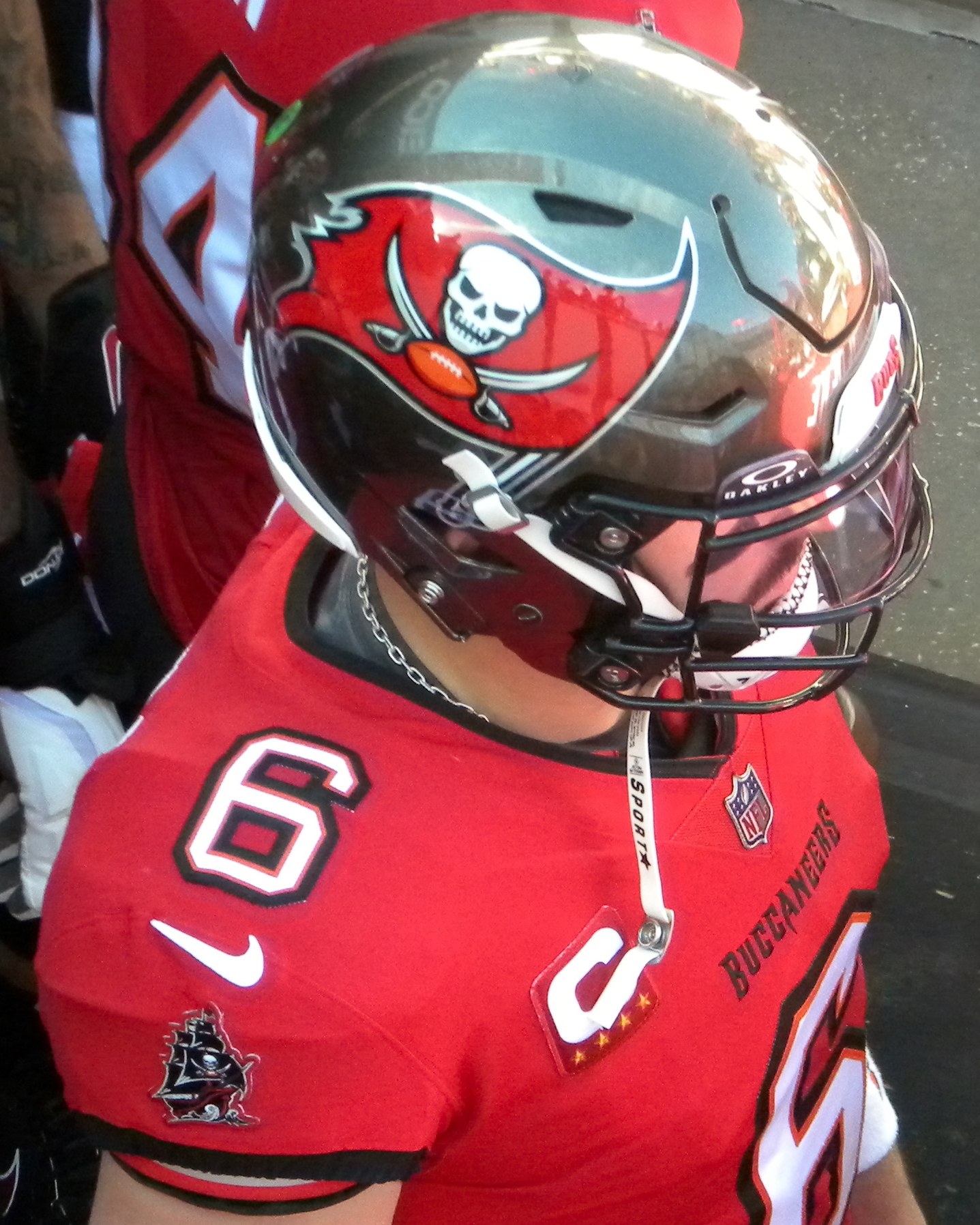
The offensive line is particularly important. Tampa’s preferred starting five from its outstanding 2024 offense never played a snap together last season. Wirfs has now returned to full-team work, and this week the Buccaneers finally had that full projected starting group together again during joint practices with Jacksonville.
That gives new offensive coordinator Zac Robinson a much more functional base for an offense that fell all the way to 26th in rushing DVOA last season.
A healthier line does not merely help Baker Mayfield avoid pressure. It can repair the running game, make play action more credible and prevent the offense from asking the quarterback to solve every difficult down himself.
The case against the bet
There are a few problems with the injury-rebound argument to consider.
Evans is gone, so Tampa does not simply get to restore all the production it lost last year.
The receiving corps is also not entering Week 1 perfectly healthy. Emeka Egbuka has remained sidelined with a toe injury and McMillan has continued to deal with a knee issue late in camp. The Buccaneers were practicing without both this week.
That keeps me from treating improved health as automatic. Tampa also benefited from some of the same unstable factors I am fading with Jacksonville.
The Buccaneers finished +7 in turnover differential and received favorable results in several penalty metrics. Six of their eight victories came by three points or fewer.
That is not something I want to project forward without adjustment.
The schedule gets tougher as well. Sharp ranks Tampa’s 2026 slate 25th easiest, or eighth hardest.
Why the division still makes it worth it
So why bet them anyway?
Because the opponent that matters most is not the schedule as a whole. It is the NFC South.
Carolina won the division at 8-9 despite a -69 point differential, ranking 25th in total DVOA, 25th offensively and 22nd defensively.
The Panthers can improve this season and still fail to repeat. Last year’s division championship did not establish a particularly high bar.
That does not mean Tampa automatically inherits it. New Orleans is interesting enough that BetMGM currently makes the Saints the second choice in the market, and Atlanta has enough offensive talent to create problems if the rest of its roster cooperates.
The current BetMGM prices reflect how open the division is:
| Team | Odds | Implied probability | Implied probability bar |
|---|---|---|---|
| Tampa Bay | +180 | 35.7% | |
| New Orleans | +260 | 27.8% | |
| Carolina | +325 | 23.5% | |
| Atlanta | +375 | 21.1% |
Implied probabilities are calculated from the listed prices and sum to more than 100 percent because they include the book's margin.
That is exactly why price matters.
At +185, Tampa needs to win the division more than 35.1 percent of the time for the wager to have value.
I think it does, though not by a huge margin.
My case is essentially that Baker Mayfield gives Tampa the best established quarterback situation in a division without a clear top-tier team, while the 2025 offense has more realistic upside than its final rankings suggest because of just how compromised the surrounding personnel became.
The Bucs do not need to become an elite team. They just need a healthier offensive line, reasonable quarterback play and some improvement from an offense that survived last season with important players cycling in and out of the lineup.
If that gets Tampa into the nine-to-ten-win range, the division is very much there for the taking.
The price has already moved against us. FanDuel offered +210 when I first worked through this bet. It is now +175 there, while Bet365 is still offering +185.
That difference matters.
At +210, I liked the bet comfortably. At +185, I still like it, but it becomes a smaller edge. If the number drops much farther, the market will have caught up with the argument.
The bet: Tampa Bay Buccaneers to win the NFC South at +185 or better.