The largest group stage in World Cup history is finally done. Forty-eight teams, twelve groups, 72 games, and a million different third-place scenarios. A bracket that required a flow chart, an engineering degree, and possibly a small prayer to understand. And after all of that, we are down to 32 teams.
The good news is that the expanded field did not ruin the tournament. If anything, the group stage was more fun than expected. There were blowouts, late collapses, surprise qualifiers, old stars refusing to go quietly, new teams announcing themselves, and plenty of goals. The goals per game rate in the group stage finished at 2.99, well above any World Cup since 1970.
The forgiving new format means all of the heavyweights are still here. France, Argentina, Spain, Brazil, England, Germany, Portugal, the Netherlands, Colombia, and the United States all advanced. Some looked great. Some looked vulnerable. Some looked like they were trying to make this much harder than necessary.
So before the knockout rounds begin, let’s reset the field.
Group Winners and Runners-Up
| Group | Winner | Runner-Up |
|---|---|---|
| A | Mexico | South Africa |
| B | Switzerland | Canada |
| C | Brazil | Morocco |
| D | United States | Australia |
| E | Germany | Côte d’Ivoire |
| F | Netherlands | Japan |
| G | Belgium | Egypt |
| H | Spain | Cabo Verde |
| I | France | Norway |
| J | Argentina | Austria |
| K | Colombia | Portugal |
| L | England | Croatia |
The eight third-place teams to survive were: Ecuador, Sweden, Senegal, Algeria, DR Congo, Bosnia and Herzegovina, Paraguay, and Ghana.
That is the new reality of the 48-team World Cup. Finishing third no longer automatically means you are going home. For teams like Paraguay, Bosnia, Ghana, and Senegal, that meant a lifeline. For teams like Uruguay, Scotland, Iran, and South Korea, it meant an agonizing few days of scoreboard watching before the door finally closed.
Then there were the stories that just make the World Cup the World Cup. Cabo Verde getting through as a runner-up. Morocco backing up 2022 by going unbeaten in a group with Brazil. Côte d’Ivoire getting out of a difficult group. Japan surviving the Netherlands-Sweden-Tunisia goal carnival. Canada and South Africa turning a Group B survival scramble into a knockout-stage matchup. This is where the expanded field delivered. It gave more countries a real moment without completely watering down the top of the tournament.
Best XI of the Group Stage
Goalkeeper: Vozinha, Cabo Verde
Cabo Verde getting out of the group is one of the great stories of the tournament, and Vozinha was central to it. They did not overwhelm anyone, but they stayed organized, stayed alive, and got enough goalkeeping to turn three draws into a historic knockout spot.
Defenders: Achraf Hakimi, Joshua Kimmich, Dayot Upamecano, Aymeric Laporte
Hakimi was outstanding for Morocco, who again look like far more than a one-tournament fluke. Kimmich was one of Germany’s most important players even with the stumble against Ecuador. Upamecano has helped hold together a France team that has so much attacking talent it would be easy to overlook the defensive work behind it. Laporte gets the nod from a Spanish defense that did not concede a goal in the group stage.
Midfielders: Pedri, Bruno Guimarães
Pedri has been exactly what Spain needed him to be. The attack still has another gear to find, especially with Lamine Yamal not fully igniting yet, but the midfield control has been there. Spain can still put teams in a blender for long stretches, and Pedri is the biggest reason why, leading them in chances created and possession won in the final third.
Bruno Guimarães was the standout in Brazil’s midfield. Vinicius Jr. will get the headlines, and deservedly so, but Brazil’s improvement over the course of the group stage was not just about the forwards. Bruno gave them control, bite, and progression through midfield.
Forwards: Lionel Messi, Vinicius Jr., Kylian Mbappé, Ousmane Dembélé
Yes, this is basically a 4-2-4. No, I do not care. Good luck telling one of these four they are out.
Messi was the player of the group stage. Vinicius Jr. looked like Brazil’s most dangerous player and one of the few attackers in the tournament who can tilt an entire defense by himself. Mbappé remains Mbappé, which means every French attack has the possibility of becoming terrifying in about two seconds. Dembélé’s explosion against Norway was one of the signature individual performances of the group stage and a reminder that France are not just Mbappé and everyone else.
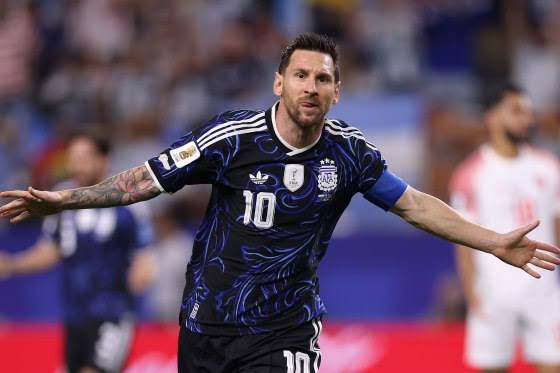
Player of the Group Stage: Lionel Messi
I did not expect this.
Messi was always going to be one of the biggest stories of the tournament, because he is Messi and because this may really be the last time we see him on this stage. But there is a difference between being a story and being the best player in the tournament. Through the group stage, he was the best player in the tournament.
The biggest question for Argentina coming into this tournament was whether Messi could still be a game-breaking force against top international competition, in the heat of a World Cup, four years after he completed the sport in Qatar.
The answer has been a resounding yes.
He has not just been a ceremonial presence or a late-game specialist. He has been nearly unstoppable. He has forced teams to defend Argentina differently. And even when Argentina rotated in the final game, he came off the bench and still scored, taking a two-goal lead in the Golden Boot race.
That changes the entire tournament. Argentina with “still pretty good Messi” is dangerous. Argentina with “maybe still the best player here Messi” is a top-tier favorite.
Re-Ranking the Contenders
This is a power ranking, not a title odds ranking. That matters because the bracket path is not equal. Some teams have a cleaner road than others. So this is “who has looked the best and who I would trust most on a neutral field tomorrow.”
1. France
The most talented team in the tournament and, through the group stage, the most convincing.
The scary thing is they have not needed everything to click at once. Mbappé can take over a game. Dembélé can take over a game. Michael Olise can take over a game. The midfield concerns that felt like the one possible weak spot have not really been an issue yet, and the back line has been solid enough behind all that attacking firepower.
France just look overwhelming. They can beat you with pace, combinations, individual brilliance, depth, or simply by making you defend wave after wave of elite attackers until something breaks.
2. Argentina
Argentina entered the tournament as defending champions, but the Messi question was real. Could he still do it at this level? Could he still be the center of a World Cup contender? Could he still decide games against elite athletes in a tournament that demands so much physically?
So far, yes. Emphatically yes.
Argentina look composed, balanced, experienced, and still capable of producing the one moment of genius that swings a knockout game. They are not as overwhelming as France, but they may have the clearest identity of any contender. They know exactly who they are.
3. Spain
Spain have not exploded yet, but I am not sure that is a bad thing.
They missed some of their star attacking punch in the opening game and have not quite looked like the full-throttle version of themselves going forward. Lamine Yamal still has another level to reach, and Nico Williams remains limited by injury. The front line has not been as ruthless as France or the Netherlands.
But the midfield has been exactly as advertised. Spain control games. They squeeze the air out of opponents. They give up very little. Along with Mexico, they were the only group winners not to concede a goal. That travels in knockout soccer.
If the attack finds another gear, Spain can absolutely win the tournament.
4. Netherlands
The Netherlands have been one of the most entertaining teams in the tournament. They scored 10 goals in the group stage and at times looked like they could generate chances whenever they wanted.
The concern is pretty obvious. They also conceded four against Japan, Sweden, and Tunisia. Against better teams, those gaps will be punished.
Still, the attacking form is real. Cody Gakpo, Brian Brobbey, Denzel Dumfries, and that whole front group look confident, direct, and dangerous. If they can tighten things up behind them, they are a real threat.
5. England
England looked best in their first game, beating Croatia 4-2 in one of the more impressive opening performances of the tournament. Since then, it has been a little less convincing, but not enough to panic.
They still have an absurd amount of talent. Jude Bellingham can dominate games. Harry Kane is still Harry Kane. Bukayo Saka has more time to work his way closer to 100%. The depth is still there. The ceiling is still there.
The concern is that England often find a way to turn abundance into anxiety. The bracket is not exactly forgiving either.
6. Brazil
Brazil have gotten better every game, which is what you want to see from a team adjusting to a new tournament rhythm. The 1-1 draw with Morocco was not a disaster, and the wins over Haiti and Scotland were exactly the sort of professional performances they needed.
Vinicius Jr. has looked like a superstar. Neymar’s return gives them another layer of creativity. Bruno Guimarães has helped stabilize the midfield.
But the Raphinha injury is a major blow. Brazil have enough attackers to absorb almost anything, but Raphinha gave them directness, work rate, and balance. Losing him lowers the margin for error.
7. Germany
Germany looked outstanding through two games. Then they played their starters against Ecuador and lost — which is not ideal, though who knows how the stakes affected the performance.
It was not just a weird scoreline where Germany dominated everything and got robbed. Ecuador created more chances too, which makes it a little harder to dismiss as pure bad luck. Germany still have a ton of quality, and their first two performances showed how dangerous they can be when the attack gets rolling. But that Ecuador game put a flashing yellow light over the whole operation.
The other problem is the bracket. They are probably staring at France in the Round of 16 if both teams handle business. That is a brutal reward for winning your group.
8. Colombia
Colombia deserve more attention than they are getting. They won a group over Portugal, only failing to beat them head to head because of a very close offside call. The defense held up better than expected, and they have enough technical quality in midfield and attack to make anyone uncomfortable.
They may not have the same top-end star power as the teams above them, but they have been cohesive, difficult to break down, and confident on the ball. That is a dangerous combination in a knockout tournament.
9. Norway
Norway are hard to rank because of how they approached the France game. They looked excellent in their first two matches, then essentially punted the group finale against France. That makes them difficult to evaluate.
But Haaland is Haaland. In a single-elimination tournament, having the best pure striker in the world is a pretty nice starting point. Norway may not control every game, and they may have defensive issues against top teams, but no opponent is going to feel comfortable giving Haaland 90 minutes to find one chance.
10. Portugal
Portugal have been disappointing. That may feel strange to say about an unbeaten team that finished with five points and a +5 goal difference, but the standard is different for a squad with this much talent. A draw with DR Congo, a blowout of Uzbekistan, and a draw with Colombia is not exactly a disaster. It is also not what Portugal should be producing with this player pool.
The Ronaldo question still hangs over this team. At some point Portugal have to ask whether they are still maximizing the whole team or continuing to orbit around a player who is no longer their best attacker. They have too much creativity and too much attacking depth to look this ordinary.
Just missed: Morocco
Morocco should not be overlooked. They drew Brazil, won their other two games, and once again look like a team that knows exactly how to make life miserable for more talented opponents.
The problem is their reward. They get the Netherlands. If they win that, their path probably gets even nastier. But at this point, 2022 was not a fluke. Morocco are just good.
The Bracket
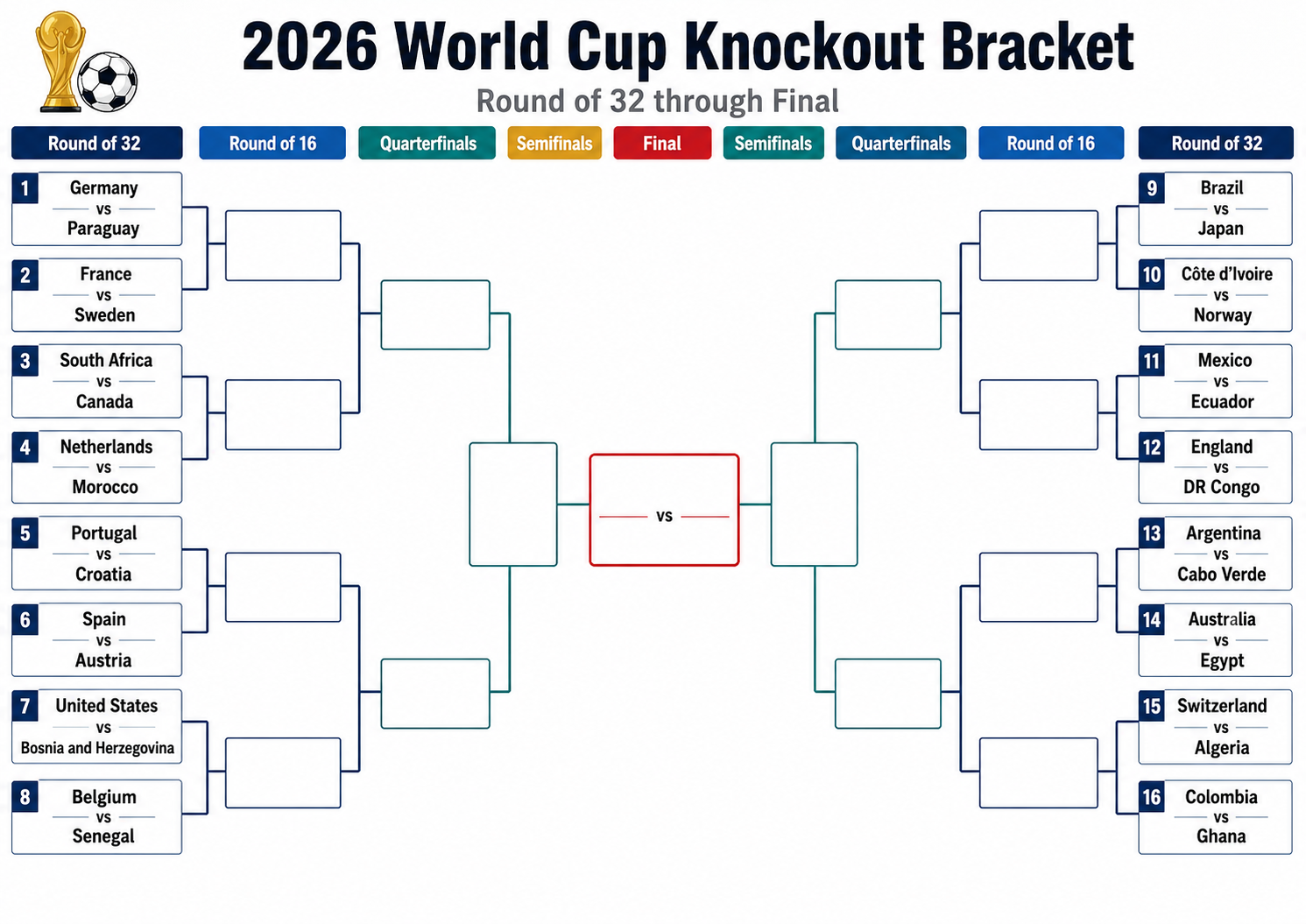
That setup matters as much as the power rankings.
France may be the best team in the tournament, but their path is not easy. They get Sweden first, then likely Germany in the Round of 16. If they survive that, the Netherlands or Morocco could be waiting in the quarterfinal. That is an absurdly difficult start to the knockout rounds.
Germany are in the same boat, just from the other side. Paraguay is a manageable Round of 32 opponent, but France looming next is brutal. Winning the group was supposed to buy them a cleaner path. Instead, it may have put them directly into the tournament favorite.
Spain’s path is also tricky. Austria is a winnable opener, but after that it could be Portugal or Croatia. Portugal have not looked great, but they still have enough talent to beat anyone. Croatia are old, stubborn, and basically designed to annoy better teams in knockout soccer. Spain may be better than both, but neither is a comfortable Round of 16 opponent.
England’s path is fascinating. DR Congo is a game England should win, though they have shown they can make life difficult as an underdog. After that, they likely get Mexico at the Azteca, assuming Mexico get by Ecuador. That means going up against one of the strongest home field boosts in the world. Survive that, and Brazil could be waiting in the quarterfinals.
Brazil have Japan first, which is dangerous but manageable, then probably Norway or Côte d’Ivoire. That is not easy, but it is cleaner than what France, Germany, Spain, or England are staring at.
The United States got about as reasonable a draw as they could have hoped for. Bosnia and Herzegovina in the Round of 32 is a winnable game. If they advance, Belgium or Senegal awaits. That is difficult, but not impossible. The quarterfinal would likely be Spain, Portugal, or Croatia, so the path gets real in a hurry. But there is at least a plausible route to a deep run without immediately running into France, Argentina, Brazil, or England.
Who Has the Best Path?
It has to be Argentina.
Argentina have Cabo Verde first. Then the winner of Australia and Egypt. Then their most likely quarterfinal opponent comes from Switzerland, Algeria, Colombia, and Ghana. Colombia are dangerous, and Switzerland are never easy, but compared to the other contenders, that is about as clean as a World Cup knockout path can get.
If Argentina make the semifinals, then the bracket probably turns into England or Brazil. But they do not have to see either until then. They do not have France, Germany, Spain, Portugal, or the Netherlands on their side. For a defending champion with Messi playing like this, that is a massive opportunity.
That is how tournaments are won sometimes. You need talent. You need health. You need stars. You need a little luck.
Argentina already have the first three. The bracket may have just handed them the fourth.