It wasn’t the perfect ending to the group stage, but in the big picture, it probably does not matter. The US had already won the group. Türkiye had already been eliminated. The Round of 32 opponent was set. There were no real tournament stakes on the line and no reason to draw sweeping conclusions from a rotated lineup in a dead rubber.
But still. Losing on a goal in the 98th minute is never fun.
Türkiye scored at the death to beat the US 3-2 in Los Angeles, stealing a game that had no impact on the standings but still delivered plenty of entertainment, a few useful data points, and one final gut punch before the Americans move on to Bosnia-Herzegovina.
How It Played Out
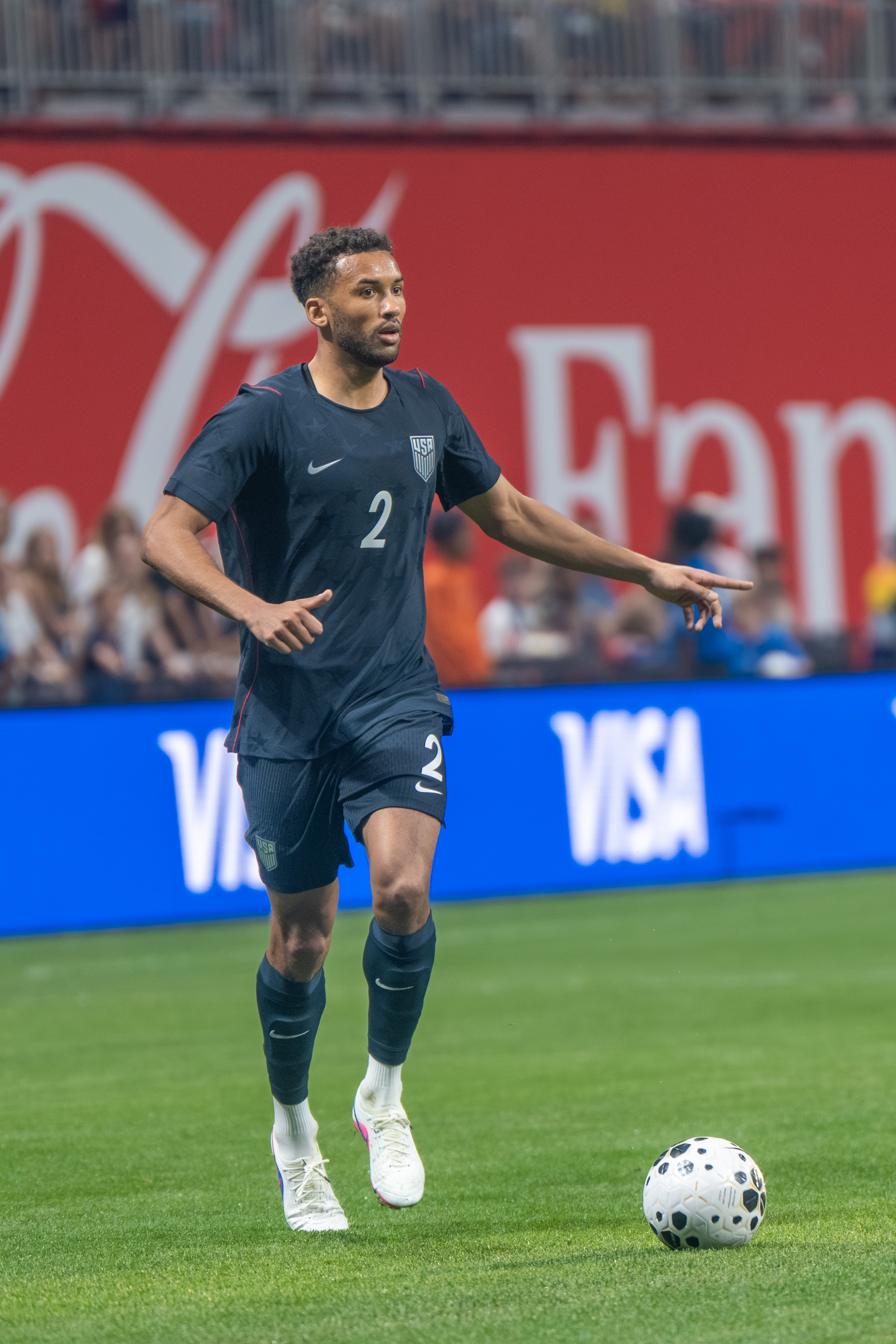
The game started about as well as possible for the US. Just three minutes in, Sebastian Berhalter swung in a corner that found Auston Trusty completely unmarked at the back post. Trusty brought the ball down calmly and fired a left-footed finish inside the near post to make it 1-0. Despite the rotated lineup, the US was off to another fast start.
For a few minutes it looked like Türkiye, still scoreless through its first two games, might be ready to fold. Instead, they responded almost immediately. Arda Güler, who was easily Türkiye’s most dangerous player, equalized in the 10th minute after a slick move through midfield. He started the move, slipped into space, continued his run, and finished off Barış Alper Yılmaz’s square ball to make it 1-1. It was Türkiye’s first goal of the tournament, and it seemed to settle them into the game.
The US nearly went back in front around the half-hour mark after another set piece caused chaos in the box. Berhalter’s corner eventually found Mark McKenzie, who finished from close range, but the goal was ruled out for offside. Less than a minute later, Türkiye went the other way and punished the US. Güler played a sharp ball through the lines, the move ended with Orkun Kökçü’s shot glancing in off Yılmaz, and suddenly the Americans were down 2-1.
That was probably the most frustrating stretch of the game. The US had the ball in the net at one end, had it taken away, and immediately conceded at the other. Türkiye had done almost nothing in front of goal through two full games, then scored twice in the first half against the US backups.
The first half was choppy from the American perspective. There were some good moments, especially from Berhalter, McKennie, and Trusty, but the press was not nearly as connected as it had been with the first-choice group. That should not be shocking. Pressing is one of the things that suffers most when you change a large portion of the lineup. The timing is not quite the same. The angles are a little off. One player steps, another player hesitates, and suddenly good teams can play through you.
The second half was much better, which may be the most encouraging part of the night. Against Paraguay, the US had the game won by halftime and understandably took a step back. Against Australia, they again did most of their best work early and then had to manage the game after the break. In this one, they actually came out of halftime stronger.
Berhalter tied it in the 49th minute with the best moment of his US career so far. After Türkiye failed to fully clear a long throw into the box, the ball popped out to Berhalter around 20 yards from goal. He ran onto it and drilled a low first-time shot through traffic and into the net.
It was an outstanding strike, and it capped what was probably his best performance in a US shirt. He became the first US men’s player to record a goal and an assist in the same game in the modern era. Berhalter is still not a perfect fit for everything this team wants to do. He is not a dynamic ball progressor by dribble, and he is not going to slice teams apart as a passer from deep the way the very best midfielders can. But he does have useful qualities. He competes. He covers ground. He delivers good set pieces. He can hit the occasional diagonal ball that springs an attack. And now he has shown he can step into a loose ball and bury a chance from distance.
The game changed when Pulisic came on in the 58th minute. Pochettino gave him just over a half-hour, and that was enough time to remind everyone what this team looks like with its best attacker on the field. Pulisic immediately gave the US more directness, more danger, and more belief in the final third. Reyna nearly picked him out with a gorgeous ball over the top in the 63rd minute, leading to a chance from a tight angle that forced a save. A minute later, Pulisic had another close-range look that was somehow pushed onto the post by the Türkiye keeper.
That is the difference Pulisic makes. Even when the final product is not there, the whole game tilts differently when he is involved. Defenders have to react to him. Space opens for everyone else. Attacks that looked a little slow or predictable suddenly look dangerous.
The US shape looked slightly different against Türkiye, especially late in the game. It was mostly the same basic structure Pochettino has used throughout the tournament, but in possession it sometimes looked more like a 4-2-3-1 than the normal 3-4-3, especially after Pulisic and Alejandro Zendejas came on. There was a little more traditional attacking-midfield spacing, a little more width from the forwards, and a little more variety in how the US tried to break Türkiye down.
For most of the second half, the US looked like the team more likely to find a winner. That is what made the ending so irritating.
After Auston Trusty suffered an injury late with no subs left, the US looked content to grind out the final minutes for a 2-2 draw. That would have been a perfectly fine result. Not exciting, not important, but fine. Then, in the final seconds, Güler worked himself out of a tight area — nutmegging Pulisic in the process — before Can Uzun latched on to his cross and sent a ball through Matt Turner’s legs past three defenders. Kaan Ayhan finished from close range, and that was that. Türkiye stole it at the final whistle. A totally meaningless loss that still felt bad in the moment.
Who Helped or Hurt Their Stock for the Knockouts?
Weston McKennie showed why he is one of the starters, looking like a class above most of the rest of the B-team lineup. He wore the armband, brought energy, and showed strength on the ball. His ability to drive into wide areas, hold off defenders, and still make something happen remains one of the more underrated parts of his game.
Trusty also helped himself. Assuming the late injury is nothing serious, he looks like he should probably be the first center back off the bench if something happens to one of the starters. He used his body well, looked solid defensively, and seemed mostly comfortable on the ball. He also hit some useful progressive passes and, of course, scored the opening goal. That is a pretty good night for a player trying to prove he can be trusted in a knockout-round emergency.
On the other side, Tim Weah had a rough one. Some of that may have been role-related. Weah still looks much more natural on the right, where he can run at defenders, get to the end line, and whip crosses into the box. In this game, he never really found a rhythm. He was caught offside multiple times, killing potentially dangerous attacks. He took a few poor touches on long balls that could have put him in behind. And he got bodied too easily by the Turkish back line on several occasions.
That does not mean he is suddenly out of the picture. He is still a useful player, and he still makes sense as a replacement for Dest if Pochettino needs a more direct option on the right. But this was not the kind of performance that forces a lineup rethink.
Ricardo Pepi was in a similar category, though not as concerning. It was not a bad game exactly, but he did get muscled around by the Türkiye center backs at times. He showed some decent hold-up play and had moments where he linked things together, but he did not provide the same physical threat Balogun has brought in the first two games. That difference matters in this system. Balogun stretches the line, fights through contact, and gives the US a more explosive outlet. Pepi can still be valuable, but this game was a reminder that he may be better suited as a change-of-pace striker than a like-for-like replacement.
Gio Reyna had a few nice touches and moments around the box, but this probably did not change his status much either. Like Pepi, it was not a bad performance, but it also was not the kind that screams for more minutes in the knockout rounds. He remains a useful bench option if the US needs a passer to unlock a packed defense, but Tillman still appears ahead of him in the pecking order.
What’s Next?
Ultimately, this was a weird game to evaluate because the result matters less than almost anything else that happened.
Would it have been nice to go unbeaten through the group? Obviously. Would it have been nice to avoid giving up three goals to an eliminated team that had not scored in the tournament? Yes. Would it have been nice to close out a game where the US looked like the better team for most of the second half? Absolutely.
But the actual priorities were pretty simple: avoid injuries, avoid suspensions, get Pulisic some minutes, keep the starters fresh, and maybe learn something about the bench.
On those terms, the night was mostly fine. The US still had arguably the most successful group stage in their history, finishing with two wins, one meaningless loss, first place secured, and a Round of 32 matchup against Bosnia-Herzegovina waiting on July 1. That is the real story. The group stage mission was accomplished before this game even kicked off.
Now the tournament changes. No more dead rubbers. No more rotated lineups.
From here on out, every mistake can end the World Cup.
The US got through the group. They got their stars rest. They got Pulisic back on the field. They avoided any disaster scenarios.
That is what matters.