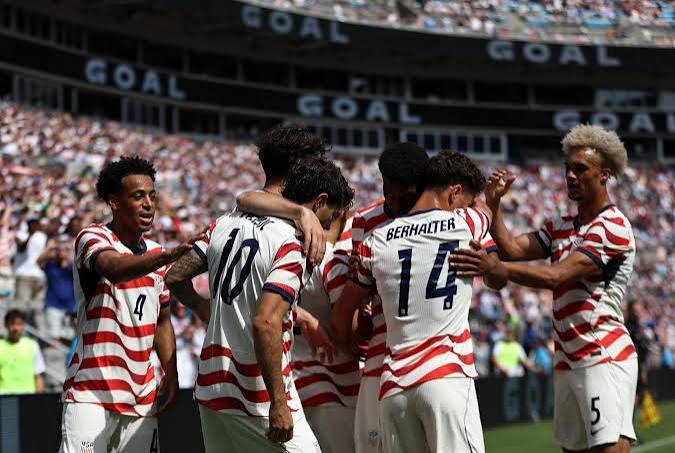
After three group stage games, a dominant win over Paraguay, a professional win over Australia, and a meaningless last-second loss to Türkiye with a rotated lineup, the real tournament starts now.
The US men will face Bosnia and Herzegovina on Wednesday night in the Round of 32 at 8:00pm eastern (5:00pm local) at Levi’s Stadium in Santa Clara. On paper, this is close to the best possible draw the US could have hoped for. Bosnia is not a European heavyweight.
That does not mean this is a free pass.
Bosnia did not stumble into this game by accident. They got here the hard way. They beat Wales in Wales in the UEFA playoff semifinals, then beat Italy in Bosnia in the playoff final to qualify for the World Cup. Both games required late equalizers and penalty shootout nerve. Then, once they got to the tournament, they drew Canada on home soil, held Switzerland nearly even for 74 minutes before the game got away late, and then beat Qatar to grab four points and earn a place in the knockout round.
That is not the profile of a team that is going to be overwhelmed by the moment. This is a limited team in some ways. They are not loaded with elite speed and they are not going to pass the US off the field. But they are organized, physical, stubborn, dangerous on set pieces, and very comfortable playing the kind of game where the favorite has most of the ball and slowly starts to get frustrated.
That is exactly the kind of game the US has to avoid.
What Bosnia Wants This Game to Become
Bosnia’s plan is not complicated, but it has been effective. They defend in a 4-4-2 shape, with two forwards up top, two compact banks behind them, and a clear willingness to concede the ball if it means keeping the game in front of them. They are not always in a full bunker. Against Canada and Switzerland, they were often in more of a mid-block than a pure low block, with their line of confrontation around midfield. They will press at times, especially when the ball goes backward or when an opponent tries to build slowly from the center backs, but they are not going to chase the US all over the field.
The numbers from the group stage tell the story pretty well. Against Canada, Bosnia had just 39% possession but still got out of the game with a 1-1 draw, losing the xG (expected goals) battle only narrowly, 1.25 to 0.98. Against Switzerland, they had just 38% possession and were out-created 2.01 to 0.24 on xG, but that final number is a little misleading because the game was still scoreless until the 74th minute and then completely opened up after a red card in the 80th. Against Qatar, Bosnia won 3-1 despite actually losing the xG battle 0.77 to 0.64, which is a good reminder that this team is not built to dominate games through volume. They are built to survive stretches, take advantage of moments, and make opponents regret mistakes.
Going the other way, everything starts with Edin Džeko. Yes, he is 40 years old. No, he is not running in behind the US back line all night. Bosnia will use him as the outlet over the press, the target on crosses, and the magnet on set pieces. When they cannot play through pressure, they will go over it. Džeko does not need to win every long ball cleanly. He just needs to make the first contact, help Bosnia get to second balls, and allow their wingers to join the attack before the US can reset.
That is where Esmir Bajraktarević and Kerim Alajbegović become important. Bosnia does not have a ton of pure pace, but those two can carry the ball, hit crosses, take shots from distance, and turn a half-cleared ball into danger. Alajbegović’s goal against Qatar was a reminder that Bosnia has players capable of producing a moment. Bajraktarević can be direct on the right, and the US will know him well because of his time with American youth national teams and club connection with Sergiño Dest and Ricardo Pepi at PSV.
Then there is Sead Kolašinac on the left. The former Arsenal defender is one of the few remaining links to Bosnia’s 2014 World Cup team, and he still gives them physicality and experience. He can defend deep, battle in the air, and get forward when Bosnia has a chance to overload the left side.
The danger is that Bosnia turn the game into a grind, survive the first 25 minutes, steal a goal from a corner or free kick, and suddenly the US is chasing a knockout game against a packed defense. That is how games get weird. That is how favorites go home.
Where the Game Will Be Won
The US will have more of the ball. Bosnia will try to stay compact. The US will press aggressively when Bosnia builds from the back. Bosnia will try to bypass that pressure by playing directly into Džeko, then winning second balls and getting the ball wide. The US will try to pin Bosnia in, force clearances, win those second balls, and turn long stretches of pressure into chances.
For the US, the first key is the press. Against Paraguay, and in the first half against Australia, the US did an excellent job suffocating weaker build-outs. They forced long balls and they won the long balls and immediately attacked again. Plenty of teams can press Bosnia into a clearance, but the better teams will keep the ball in Bosnia’s half after the clearance.
That is where Chris Richards, Tim Ream, Alex Freeman, Tyler Adams, and Malik Tillman have to be sharp. If Bosnia’s escape valve is Džeko, the US has to win the first header or clean up the second ball. If Bosnia’s wingers are trying to break out, the US wingbacks have to counter-press immediately without leaving the back line exposed.
Just as important, the US needs to be dangerous in the moments before Bosnia gets set. If Bosnia has all ten field players behind the ball, this becomes a slower, more crowded, more frustrating game. But when the US wins the ball off a press, or collects a second ball after Bosnia goes long, there will be a few seconds where Bosnia’s midfield is stretched, the fullbacks are not quite in line, and Džeko or the second striker are still ahead of the ball. Those are the moments where the US should attack quickly through Balogun, Pulisic, Dest, and Jedi Robinson. Not recklessly. Not forcing a hero ball every time. But quickly enough that Bosnia has to defend while facing its own goal instead of sitting comfortably in two banks of four.
The second key is width. Bosnia wants opponents to attack around them. They want the ball forced wide, then crosses coming into a crowded box where their center backs and Džeko can defend. The US cannot just spend 90 minutes passing side to side and clipping hopeful balls into traffic. That is not the point of having Pulisic, Dest, Tillman, McKennie, Jedi Robinson, and Balogun on the field.
The US needs to use width to move Bosnia, not bail them out. That means Pulisic drifting into the left half-space and then exploding at defenders. It means Jedi overlapping to pull the right back away and create the inside lane for Pulisic. It means Dest isolating defenders on the right and forcing Bosnia’s left-sided midfielder to help, which can open pockets for McKennie or Tillman. It means Balogun making diagonal runs into the channels instead of standing between the center backs waiting for service.
The third key is scoring first. That is obvious in every knockout game, but it feels especially true here. If Bosnia scores first, they can sink deeper, slow the game down, foul when needed, and make the US prove it can break down a compact European defense under pressure. If the US scores first, Bosnia has to come out. That is when the game opens up for Pulisic, Balogun, Dest, Jedi, and the rest of this attack.
The US has done a great job starting each game with high energy and playing on the front foot to score early goals. That would be a huge advantage if they can replicate the same against Bosnia. They don’t need to force the game in the first five minutes, but they do need to play with urgency. They need to keep the tempo high, keep Bosnia pinned back, and make every clearance feel like temporary relief. This is not a game to let Bosnia breathe.
The US Advantages
The good news for the US is they should have more weapons to hurt Bosnia than teams like Canada and Qatar or even Switzerland and Italy.
Italy had skill but did not stretch Bosnia enough. They played too many longer balls into the strikers, never consistently pinned Bosnia deep, and did not force the back line to defend enough runs into the channels. Canada created pressure, but they were missing Alphonso Davies and did not have a consistent attacking focal point until Cyle Larin came off the bench. Switzerland eventually broke Bosnia open, and the lesson there was important: speed and movement in the wide channels caused real problems once the game opened up.
The US should be able to borrow from the best parts of those approaches while avoiding the worst parts.
A healthy Pulisic is a different kind of problem than Bosnia has faced so far. Switzerland had speed and directness. Italy had technical quality. Canada had athleticism. But none of them had a winger quite like Pulisic, especially when he is sharp and confident. He can receive in tight spaces, beat the first defender, draw fouls, combine around the box, and turn a normal possession into an emergency for the back line.
Dest gives the US another one-v-one threat on the opposite side, helping to pull Bosnia out of their shape. If Pulisic is the only player constantly forcing help, Bosnia can tilt the field toward him. If Dest is also beating defenders on the right, Bosnia has to stretch. That is where gaps appear.
Balogun is also a crucial piece. He has the strength to deal with a physical back line and the speed to punish them if they get pulled too high. His runs into the channels should be a major part of the plan. Embolo caused Bosnia problems for Switzerland with his physicality and movement. Balogun can give the US a similar outlet, but with more speed to threaten in behind.
Set Pieces Could Decide It
This is the part of the game that should make any US fan nervous.
The US will probably have the field tilted in its favor. That means corners. That means wide free kicks. That means chances to punish Bosnia without having to break them down from open play every time.
They need to take advantage.
At the same time, they cannot give Bosnia cheap free kicks in dangerous areas. That is the easiest way to let an underdog into a knockout game. Džeko, Kolašinac, Katić, Muharemović, and the rest of Bosnia’s bigger bodies do not need many chances to make one count. Against Canada, Bosnia’s goal came from a set piece. Against Qatar, Džeko helped create the second goal by attacking a cross at the back post. This is who they are.
The US has enough size and athleticism to handle it, but they have to be switched on. No unnecessary fouls. No lost runners. No hesitation from the goalkeeper. No soft marking at the back post.
On the other end, the US has to be more efficient. They cannot waste eight or nine corners and then complain that Bosnia is hard to break down. In a game like this, a set-piece goal might be the difference between a comfortable night and an hour of pure stress.
Tactical Deep Dive
Bosnia’s defensive shape is usually described as a 4-4-2, but the important detail is how they use the front two and the first midfield line to close the middle of the field. Their first defensive goal is to take away easy central progression. One forward can step to a center back while the other shades the deepest midfielder, or one can drop all the way into the passing lane to prevent the opponent from easily connecting into the No. 6. Behind them, the two central midfielders stay tight and try to deny clean entries into the middle.
When that works, opponents get pushed outside. The ball goes from center back to fullback, fullback back to center back, center back to the other side, and suddenly the favorite has the ball without really threatening. That is the trap. Bosnia will happily let the US have sterile possession if it means Pulisic, Tillman, and McKennie are receiving the ball with their backs to goal and two defenders nearby.
Pochettino’s setup has often looked like a hybrid back three/back four system. In possession, it usually becomes a 3-4-2-1, with the wingbacks high, two midfielders underneath the attack, and Pulisic/McKennie operating in the half-spaces around Balogun. Out of possession, the US can fall into more of a 4-4-2 look depending on where the wingbacks and wide attackers recover.
Against Bosnia, the US cannot let the possession structure become too static.
If Ream, Richards, and Freeman are just circulating the ball in front of Bosnia’s first line, the game will bog down. If Adams and Tillman are standing flat next to each other behind Bosnia’s forwards, the passing lanes will disappear. The US needs rotation.
Tillman can drop next to Adams to help the buildup, but he also needs moments where he steps beyond Bosnia’s midfield line. McKennie can start high, but he should not be nailed to one spot. If he drifts into the right half-space and Dest holds the width, Bosnia has to decide whether the left midfielder tracks Dest or tucks in to help with McKennie. That decision can create the first crack.
On the left, the Pulisic-Jedi relationship is probably the biggest attacking key. If Pulisic stays wide, Bosnia can double him with the right back and right midfielder. That is manageable for Bosnia. But if Jedi overlaps and Pulisic moves inside, Bosnia has a harder problem. The right back has to respect the overlap, the right midfielder has to decide whether to follow Pulisic inside or stay wide with Jedi, and one of Bosnia’s central midfielders may get dragged toward the sideline. That opens the exact space the US wants to attack.
The ideal left-sided pattern is not just “give Pulisic the ball and hope.” It is Pulisic receiving between the lines, Jedi running outside him, Balogun dragging a center back toward the channel, and Tillman arriving underneath as the safe release valve. That creates a four-man overload against Bosnia’s right back, right midfielder, near-side center back, and central midfielder. If Bosnia stays compact, Jedi can get around the outside. If they jump to Jedi, Pulisic has the inside lane. If the center back steps toward Balogun, space opens in the box. If the midfielder follows Tillman, Pulisic has room to turn. That is the kind of layered possession the US needs.
The same idea applies on the right, but with a different flavor. Dest is not just a wide crosser. He is most dangerous when he can isolate a defender, draw pressure, and then either beat the first man or combine inside. With Dest wide, McKennie in the right half-space, and Freeman stepping forward behind the play, the US can create a triangle that asks Bosnia’s left side to make uncomfortable choices. If Kolašinac steps out to Dest, McKennie can run into the gap behind him. If the left midfielder drops too deep to help, Tillman or Adams can receive with more time in midfield. If the center back shades over, Balogun can pin the other center back and attack the space between them.
That is how overloads become more than just extra bodies on one side. The goal is not to crowd the ball. The goal is to force Bosnia to commit defenders, then attack the space their movement creates.
The US should also look for switches after creating those overloads. Bosnia’s 4-4-2 can be difficult to break through when it is set and narrow, but if the US pulls four or five Bosnian players toward Pulisic and Jedi on the left, then quickly switches through Ream, Richards, or Tillman to Dest on the right, Dest may be isolated before the block can slide. That is a much better attacking situation than sending a hopeful cross into a packed box.
Quick combinations around the box matter for the same reason. The US cannot always beat a compact 4-4-2 with one great dribble. They need third-man runs. Pulisic into Tillman, Tillman around the corner to Jedi. Dest inside to McKennie, McKennie back wide to Dest. Balogun checking short, laying it off, then spinning into the channel. These are the movements that turn possession into pressure.
The other big tactical point is attacking transition. The US will have long spells where Bosnia is set. That is unavoidable. But the best chances may come before the game becomes that static. When the US wins the ball high, or wins the second ball after Bosnia goes long toward Džeko, the first pass forward has to be aggressive. That does not mean forcing low-percentage through balls every time. It means recognizing that Bosnia’s defensive structure is at its weakest in the three to five seconds after a turnover.
That is when Pulisic should be driving at a backpedaling fullback. That is when Balogun should be sprinting into the channel instead of checking short. That is when Jedi and Dest should be exploding forward before Bosnia’s wide midfielders can recover. That is when McKennie’s box runs can turn a half-transition into a real chance.
If the US waits too long, Bosnia gets back into its 4-4-2 and the attack has to start all over again.
The other side of that same equation is transition defense.
Because the US wingbacks will push high, the rest defense behind the ball has to be clean. If Dest and Jedi are both high, the back three and Adams cannot get caught flat. Bosnia will look for the first ball into Džeko, but the real danger may come from the second action: Džeko knocking it down, Demirović or Bajraktarević collecting, then a quick switch into space before the US can recover.
That is why the US has to press in waves. The first wave forces the long ball. The second wave wins the duel. The third wave attacks before Bosnia can breathe. If any of those waves breaks, Bosnia can get out.
The Switzerland game gave the clearest blueprint for how Bosnia can be hurt. Switzerland did not blow them away immediately. In fact, Bosnia held them for a long time. But as the game wore on, Swiss runners started finding more space in the channels, and once Johan Manzambi came on and the tempo changed, Bosnia’s back line started to crack. The late red card obviously distorted the final score, but the warning signs were there before that: quicker movement, more direct running, and better use of wide areas stretched Bosnia in ways Italy never really managed.
That should be the US model. Not 90 minutes of hopeful crosses. Not endless possession for possession’s sake. Pressure, width, quick combinations, overloads that force defensive choices, channel runs, and immediate counter-pressing. The US needs to make Bosnia defend at a speed they do not want to defend.
Outlook
This is the kind of game the US should win. They have more talent. They have more athleticism. They have more attacking variety. They are playing at home. Their best lineup should be rested after the group finale rotation. And tactically, they have the tools to give Bosnia real problems if they execute.
But as the first few days of this round have demonstrated, things can get frustrating quick if the execution is not at its top level.
Bosnia is not a pushover. They have already survived Wales, Italy, Canada, and long stretches against Switzerland. They are not going to be intimidated by the crest on the shirt or the crowd in the stands. They will defend, battle, foul, cross, crash the box, and try to drag the US into the mud.
The US has to be mature enough not to let that happen. That means no cheap set pieces. No casual defending after turnovers. No wasted corners. No slow, predictable possession. No frustration if the first 20 minutes do not produce a goal.
The US does not need to play the perfect game. They just need to play with the same energy and clarity they showed in the best stretches of the group stage. Press hard. Win second balls. Attack quickly before Bosnia gets set. Create overloads that force defenders to make choices. Get Pulisic and Dest attacking defenders. Let Balogun run the channels. Make Bosnia defend facing its own goal instead of standing comfortably in its box.
Do that, and the US should be moving on.