
In the end, it comes down to a battle of heavyweights. Two of the most prominent nations in international soccer for the past two decades. The reigning champion of Europe against the reigning champion of South America. A matchup that has never before happened in a World Cup final.
The two teams were supposed to play each other in the Finalissima in Qatar in March, but regional tensions canceled that match. Instead, they will meet in the World Cup final.
On one side, you have the machine.
Spain does not demolish you. It slowly closes every window in the room until there is no air left.
On the other side, you have the magic.
Argentina spends 90 minutes looking dead, then Lionel Messi finds his moment and the whole balance shifts.
Machine versus magic. It is the perfect final.
It kicks off at 3:00 p.m. Eastern on Sunday from MetLife Stadium in East Rutherford, New Jersey. Spain is playing in only its second World Cup final, 16 years after winning its first. Argentina is appearing in its seventh and attempting to become the first repeat champion since Brazil in 1962. Only Italy in 1934 and 1938 and Brazil in 1958 and 1962 have ever successfully defended the men’s World Cup.
It is a remarkably fresh matchup for two countries with such intertwined soccer histories. The country that birthed Messi and the country that refined him.
Spain and Argentina have met 14 times, with six wins apiece and two draws, but only once in an official competition. Argentina won that 1966 World Cup group-stage meeting 2-1. The most recent game was considerably less competitive, a 6-1 Spanish victory in a 2018 friendly that Messi missed with an injury.
This version will be remembered through Messi and Lamine Yamal.
The 39-year-old king against the 19-year-old heir. Two left-footed geniuses developed at Barcelona. One playing what could be the final game of the greatest international career ever assembled, the other attempting to win a European Championship and World Cup before he is old enough to legally buy a drink in the United States.
There is even the now-famous photograph from a 2007 charity calendar in which a 20-year-old Messi helped bathe an infant Yamal. The photo now seems so prophetic that you would think it must be an AI-generated deepfake.
But this final will not really be Messi against Yamal.
It will be Spain’s machine against Argentina’s mística.
The Machine
Spain has not been the fireworks show it was at Euro 2024. It has been something quieter, and possibly scarier. La Roja has suffocated teams out of games, limiting chances, hogging the ball for long stretches and striking the moment a crack appears. Through seven games, it has conceded exactly one goal. Spain has not lost a match in nearly two years, a 37-game unbeaten run.
The semifinal against France was that whole idea distilled into 90 minutes.
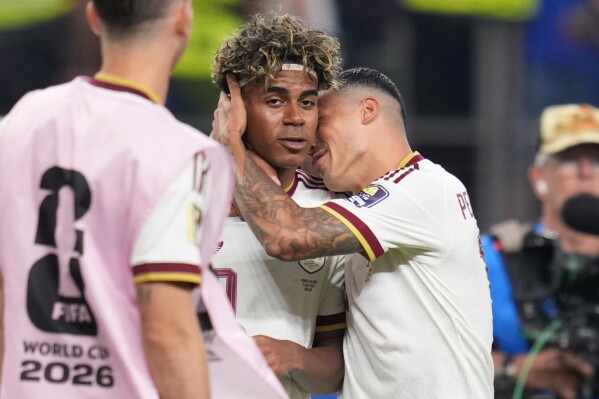
Spain took the lead just past the 20-minute mark when Lucas Digne was too complacent and Yamal attacked his clearance in the box, drawing a foul for a penalty that Mikel Oyarzabal calmly buried.
Spain doubled it in the 58th minute with a goal that was a small masterpiece. After a long spell of possession building out from the back line, Pedro Porro played a give-and-go with Dani Olmo, took the return in stride and side-footed it past Mike Maignan. Yamal thought he had added a third with a curler, but the offside flag pulled it back.
What happened at the other end mattered just as much.
France arrived with Kylian Mbappé, Ousmane Dembélé and Michael Olise, the most dangerous attack in the tournament, and Spain held them to roughly one-third of an expected goal from 10 shots. Aymeric Laporte, 19-year-old Pau Cubarsí and Rodri spent the afternoon reading French passes before they arrived, stepping in front of entry balls and killing every counter at the source.
It was defending as theft.
The scary part is that Spain has been managing bodies all tournament. Yamal has been playing through groin and hamstring trouble. Nico Williams has fought muscle problems all year. Pedri has been in and out with fatigue and form issues. The attack has gone flat for stretches, from a scoreless draw with Cape Verde to open the tournament to a grind past Portugal.
The reason none of it has cost Spain is that the defense never blinks.
You cannot score on Spain if you cannot get the ball, and you cannot get the ball.
The Magic
Argentina is the exact opposite kind of team, and somehow it has worked just as well.
The defending champions have turned survival into an art form.
They have not led a single knockout game in the 90th minute, not once, and they are still standing. They needed extra time to get past Cape Verde. They came from two goals down in the 78th minute to beat Egypt. They needed extra time and a Julián Álvarez stunner to escape Switzerland.
Then, in the semifinal, they did the most Argentina thing imaginable.
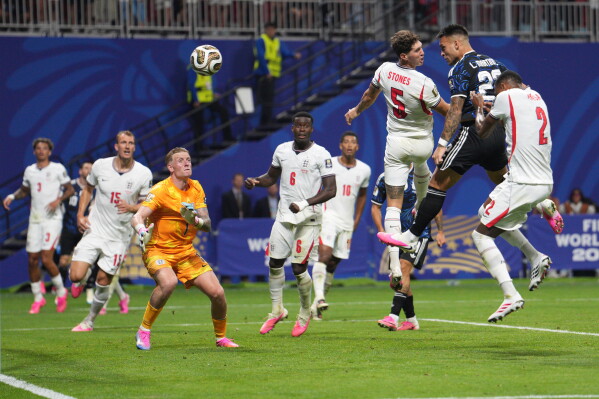
England took the lead in the 55th minute, and it was a lovely goal. Harry Kane dropped deep into midfield to start the move, Morgan Rogers delivered from the right and Anthony Gordon arrived to finish.
For half an hour, England sat on it. Thomas Tuchel pulled Gordon, Reece James and Declan Rice and tried to see the game out behind a defensive wall.
That is when the dam broke.
Enzo Fernández smashed in an equalizer from 20 yards in the 85th minute. Then, in the second minute of stoppage time, Messi beat two defenders to create the space for a floated cross to the back post and substitute Lautaro Martínez headed Argentina into the final.
Messi set up both goals.
Of course he did.
Messi magic continues. The numbers around him have gone from historic to one-of-a-kind. He is Argentina’s leading scorer here with eight goals. He is now the leading scorer and assister in the entire history of the World Cup with 21 and 12. At 39, in what is almost certainly his last World Cup, he is playing in his third final.
That is the veteran savvy Argentina leans on. Much of this group won it all in 2022, and the players seem to genuinely not engage until they fall behind. Then they turn it on and play their best soccer.
It should be terrifying that a team can be this passive and this dangerous at the same time.
How They Match Up
The shape of the game seems simple.
Spain will control the ball, while Argentina will absorb pressure and wait for the moment when Messi can turn one recovery into a chance. The match will come down to whether Spain’s control produces enough clear openings or Argentina can survive long enough to create one or two clean transitions.
The individual battles inside that framework are more complicated.
Argentina must protect its left side from Yamal, pass Dani Olmo between defenders without losing its shape and decide how aggressively to press Spain’s buildup. Spain, meanwhile, must contain Messi without allowing the attention devoted to him to open the field for Álvarez, Fernández or Alexis Mac Allister.
Tactical Deep Dive
Spain’s Passing Sets the Trap
On the surface, La Roja still looks like the same possession-heavy juggernaut, but fixating on the pass counts ignores the more lethal truth.
The ball circulation is often just the setup for the sting.
While the opposition defense is hypnotized by the tiki-taka, Spanish attackers are tirelessly ghosting into gaps, swapping roles across the front three and hunting for the seam. It is a collective effort to distort the defensive shape before the final ball arrives to finish the job.
The second goal against France was this philosophy in its purest form.
Pedro Porro did not just clear the ball out of the back. Instead, he dribbled inside to link with the back line, shifting the play from the right and swinging it back through the heart of the pitch. It was a sequence designed to pull the French midfield out of position and buy Aymeric Laporte precious seconds of clarity.
When Laporte found Dani Olmo in the pocket on the left, Olmo did not hesitate, turning and driving toward the box with intent. Even when the initial surge stalled, Spain kept the pressure on, recirculating the ball and allowing Porro to get back into the attack and burst forward for a give-and-go.
Olmo’s return was so delicate it practically handed Porro the keys to the penalty area.
By the time the shot was taken, it looked easy.
But that simplicity was bought and paid for by the relentless manipulation that preceded it.
Mikel Oyarzabal is now vital to this setup. Nominally a striker, he spends half the match dropping deep to form an amorphous attack along with Dani Olmo, the wingers and Fabián Ruiz.
He presents a lose-lose choice for the Argentine center backs.
Step up to shadow him, and you leave a highway behind for Yamal or a surging midfielder. Stay home, and Oyarzabal is free to pick you apart from the half-spaces. When Mikel Merino comes off the bench, he presents the same problems with added danger as a target in the air.
Out wide, the wingers stretch the field while the fullbacks calculate their moments to strike. Porro might overlap Yamal or tuck into the middle to overload the engine room. Meanwhile, Marc Cucurella remains the defensive insurance policy, deciding when to join the hunt and when to stay back to kill the counter.
Spain presents a familiar 4-3-3, then spends 90 minutes forcing the defense to solve a series of increasingly complex, moving riddles.
Argentina’s midfield cannot afford a single lapse in communication. The baton for Olmo and Oyarzabal has to be passed flawlessly between the lines, or Spain will walk right through the front door.
On a chalkboard, it sounds straightforward.
Under the lights of a final, it is a nightmare to execute.
Argentina Must Suffer Without Becoming Passive
The reality of this matchup is that Argentina will not see the ball as often as it did against England. That does not mean it can afford to park the bus and wait for the inevitable.
France learned that lesson the hard way, giving the Spanish center backs too much room to breathe. England made the same mistake after taking the lead, discovering that retreating into a shell does not stop the bleeding. It just lets the opponent choose where to cut you. It hands the initiative to an elite team that is more than happy to take its time.
What Argentina needs is calculated, surgical aggression.
Julián Álvarez has to be the first line of defense, harassing the ball carriers. Messi will pace himself, but his positioning alone can cut off the easy supply to Rodri or out wide. When Spain moves to the flanks or a player is forced to face his own goal, that is the trigger for a midfielder to pounce.
The goal is not a suicide mission of high pressing for 90 minutes. That would only leave the defense exposed and the lungs empty.
The goal is to ensure Laporte, Cubarsí and Rodri do not have a comfortable afternoon in the office.
Discipline will be the deciding factor. The raw fire that saw Argentina win nearly two-thirds of its second-half duels against England is a double-edged sword against Yamal and Olmo, who specialize in drawing the foul in dangerous areas.
Giuliano Simeone and Cristian Romero have to play on the edge without falling over it.
A red card in a final is a death sentence.
Argentina needs the grit and the fight.
It just cannot let that passion become Spain’s path to the trophy.
Yamal Against Argentina’s Left Side
England never really forced the issue with a traditional right winger cutting inside on his left.
Lamine Yamal is a different beast entirely.
He will hug the touchline to stretch the defense, then explode diagonally toward the box the moment he touches the ball. If the fullback commits, he is gone. If the defender sits back, Yamal has the vision to pick a pass or the audacity to curl one into the top corner.
Argentina cannot leave Nicolás Tagliafico on an island here.
It will take a village to stop Yamal. The left-sided midfielder must stay goalside, the central trio has to slide over when Olmo drifts near and the center backs have to stay alert for Oyarzabal’s runs without losing sight of the teenager with the ball.
The overlapping runs of Porro only make the math harder. He forces the defense to choose between the threat out wide and the genius cutting inside.
This will force Argentina into a frantic series of handoffs where a single second of hesitation is the difference between a save and a goal.
Even hampered by injury, Yamal is the ultimate one-on-one test for this Argentine back line.
Who Handles Dani Olmo?
Olmo might just be the most dangerous cog in the Spanish machine for this final.
He is a ghost, drifting from behind the striker to the wings or dropping deep to help Rodri dictate the tempo. He refuses to stay in one place long enough to be tagged.
Putting a shadow like Leandro Paredes on him would be a tactical trap. Olmo would simply drag him out of the center, creating a vacuum for Yamal or Fabián Ruiz to exploit. Spain would gladly lose Olmo for a few minutes if it meant dismantling Argentina’s defensive shield.
Argentina has to play it zonally.
Paredes and Enzo Fernández need to engage Olmo when he is central, but the responsibility has to shift to Alexis Mac Allister or Rodrigo De Paul when he drifts. If he breaks beyond the midfield, a center back has to step out and commit, trusting the rest of the line to cover the space left behind.
England’s goal came when Argentina failed that very test with Harry Kane. He dropped deep, the defense blinked and he found Morgan Rogers to set up the opportunity.
Olmo and Oyarzabal will be looking to recreate that exact chaos all night.
Paredes or De Paul?
This is the riddle Lionel Scaloni has to solve before kickoff.
Does the occasion call for the refined passing of Paredes or the relentless motor of De Paul?
Paredes gives Argentina the composure to keep the ball and actually test Spain’s defense. If Argentina does not want to be a spectator in its own final, his ability to manage the tempo is vital.
But the constant Spanish rotations might make this a game for De Paul’s lungs.
He is the one who can cover every blade of grass, follow the runners and turn the midfield into a scrap. His energy was the spark against England, raising the physical stakes when the game seemed to be slipping away.
It is a classic tactical trade-off.
Go with De Paul and you are better without the ball, but messier when you win it. Pick Paredes and you are cleaner in possession, but potentially more vulnerable to the Olmo-Oyarzabal carousel.
Scaloni might need to use one to start the fire and the other to finish it.
Spain’s Messi Problem
It is tempting to tell Rodri to follow Messi into the locker room if necessary, but it is also a gamble that could blow up in Spain’s face.
Messi is not a target man. He is an atmosphere.
He drifts to the right, vanishes into midfield and then suddenly appears in the one spot you did not account for. If Rodri gets dragged out of position chasing a ghost, Spain loses its anchor and the whole structural integrity of the team collapses.
Spain is likely to opt for a cage instead of a shadow.
Rodri will prioritize cutting the supply lines, while Cucurella squeezes from the flank. Laporte or Cubarsí will be the one to step up when Messi gets the ball, but only if they know the other is tracking Álvarez.
The timing has to be perfect.
Commit too soon, and Messi will slide a ball through for Álvarez to finish. Wait too long, and he will walk it to the edge of the box and do what he has done for 20 years.
The danger of focusing too much on the king is that you forget the pawns move too. Enzo Fernández and Mac Allister are more than capable of exploiting the space left behind by a Messi-obsessed defense.
Argentina’s attack is built to force that impossible choice.
Argentina’s First Pass May Decide the Final
In a game like this, the tackle that wins the ball is secondary.
The pass that follows it is everything.
Spain’s counterpress is a swarm. Argentina will not have the luxury of taking three touches to find Messi. Rodri and his cohorts will have smothered the play before it even breathes.
The first ball out of defense has to be instinctive: either straight to Messi or into the stride of a runner.
Whether it is Enzo playing it first-time or Romero stepping up to release Álvarez, Argentina has to move while Spain’s defenders are still transitionally exposed. It cannot afford to waste the few seconds when Spain is facing the wrong way.
Álvarez is the wild card.
Spain’s high line is a trap that has snared many, but it is a high-stakes game. If the pass is right, there is an ocean of space behind it. Even Unai Simón, who sweeps outside his box with confidence, can be punished if his clearance is anything less than perfect.
The most direct route to the trophy is Messi into Álvarez. Messi does not need to beat five men anymore. He just needs to receive the ball once and play the pass before the Spanish net closes around him.
One clean transition can undo an hour of Spanish dominance.
Cutbacks, the Far Post and Second Balls
Spain is not a team for long, hopeful balls into the mixer. It prefers to work the ball to the baseline and fire low, hard cutbacks toward the penalty spot. That is where the late arrivals of Olmo, Fabián or Porro thrive.
Argentina must guard that zone without being sucked so deep that it cannot get out. Enzo and Mac Allister have the unenviable task of tracking those runners while staying ready to ignite the counter.
Conversely, Argentina might find its luck at the far post rather than banging its head against the central wall.
The trio of Laporte, Cubarsí and Rodri is built to clear anything coming through the middle. But quick switches and early crosses to the weak side can catch the Spanish fullbacks in no man’s land, forced to defend in the air while retreating toward their own goal.
That is an invitation for Lautaro Martínez or a late-running midfielder to steal the show.
This final could also be won on the second balls.
Against France, Rodri was a vacuum for anything loose. The Spanish structure is designed to swallow up deflections and restart the attack before you have even recovered. That is how Spain turns one wave of pressure into five.
Argentina cannot just clear the ball. It has to win the battle for the scraps.
If Argentina cannot turn defensive headers into actual possession, the weight of the Spanish machine will eventually break it.
The Bench Could Decide It Again
Scaloni’s tactical tweaks from the bench were the difference against England.
De Paul brought the fire, and Lautaro provided the finishing touch. If Álvarez starts, Lautaro remains a terrifying late-game substitute for a tired defense that has already been run ragged.
Or Scaloni could flip the script and start the bull, Lautaro, to wear down the center backs and let Álvarez’s speed finish them off in the final 20 minutes.
But Spain has a deeper arsenal.
Pedri can settle a chaotic game, Nico Williams can skin a leg-weary fullback and Mikel Merino has proved he can be decisive in the final third when it matters most. If Porro’s tank is empty, Marcos Llorente is waiting in the wings.
Spain has the youth and the depth.
Argentina has the specialized tools for the specific moment.
The final half-hour will be the ultimate test: Can Luis de la Fuente keep the machine humming, or will Scaloni pull another rabbit out of the hat?
Who Has the Edge?
From a purely analytical standpoint, it is Spain, and it is not especially close.
Spain is younger, it is deeper, it has been the better team for two years and it has built the sturdiest defense in the tournament.
The oddsmakers agree. DraftKings has Spain at -150 and Argentina at +130 to win the cup.
But Argentina just refuses to die.
There is a word for it down there: aguante. The idea of enduring anything, refusing to break, holding on well past the point where holding on makes any sense. This team is aguante in cleats.
And here is the strange part.
Argentina has carried the same black magic through this World Cup that Messi’s old rivals at Real Madrid used to carry through the Champions League. That sense that the scoreboard is only a suggestion and the ending is already written.
Spain is the better team.
That has stopped mattering to Argentina four times already.
Machine versus magic, one more time.
Sunday, we find out which one wins.