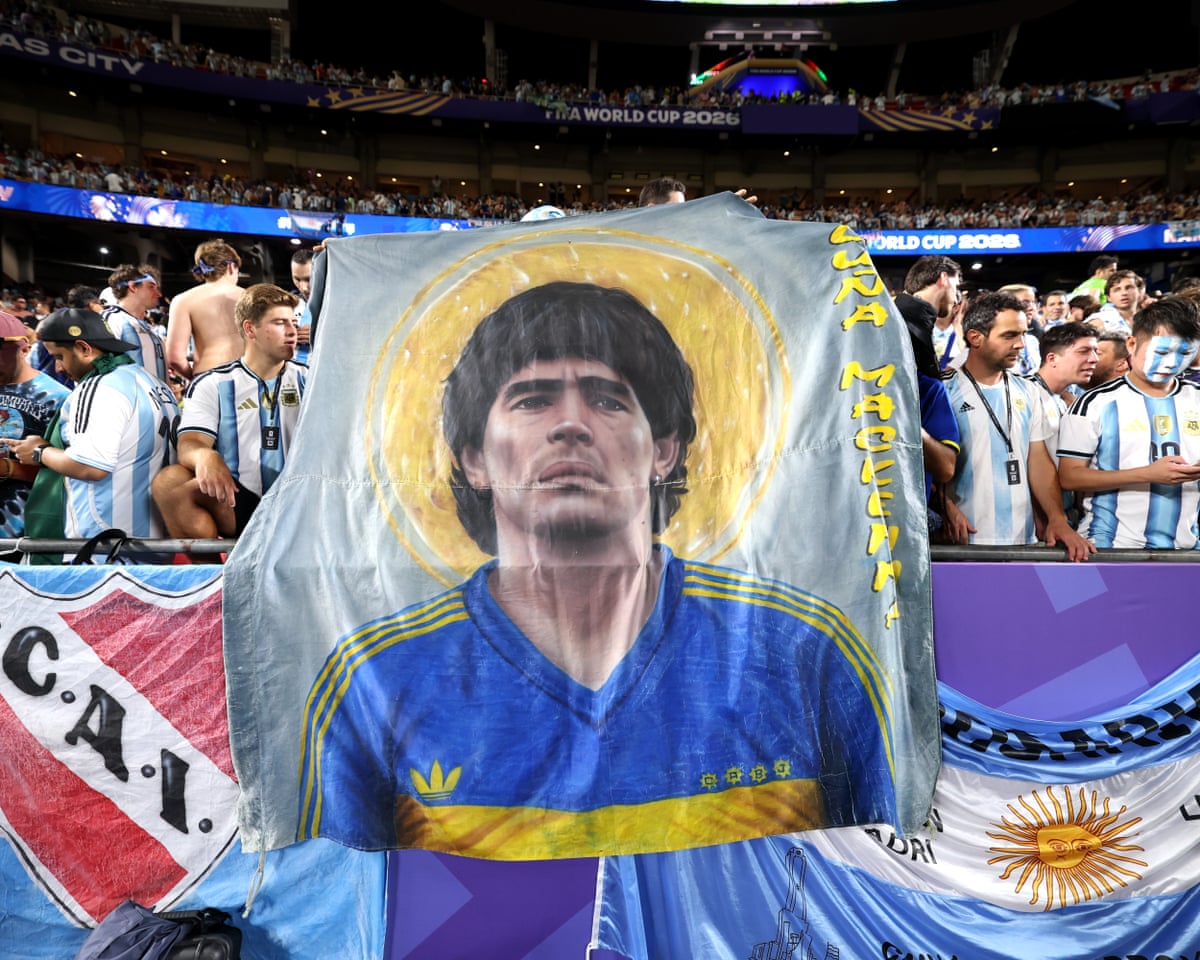
Argentina and England is a game with ghosts.
The Hand of God. The Goal of the Century. Antonio Rattín’s dismissal at Wembley. David Beckham’s red card. Diego Simeone’s theatrical fall. Michael Owen announcing himself to the world. Beckham’s redemption four years later.
Few international matchups carry this much history. Even fewer have produced so many moments that have become inseparable from the history of the World Cup itself.
Now, after 24 years without meeting in this tournament, Argentina and England will renew the rivalry with a place in the final on the line.
Lionel Messi is attempting to become the first player ever to captain his country to consecutive World Cup titles. England is one win away from its first World Cup final since winning the tournament 60 years ago. Jude Bellingham has emerged as perhaps the best player in the knockout rounds. Harry Kane is trying to add the one trophy that would permanently change the way his career is remembered.
This will also be the first time Messi has ever faced England at the senior international level.
Argentina-England kicks off Wednesday at 3:00 p.m. Eastern from Atlanta Stadium. The game will air on FOX and stream through FOX One and FOX Sports.
Both teams arrive after draining extra-time victories in the quarterfinals. Argentina needed 120 minutes to finally put away Switzerland 3-1. England survived Norway 2-1 behind two more goals from Bellingham, including the winner in extra time.
Neither team has a rest advantage. Neither will be particularly fresh.
At this point, nobody is supposed to be.
History
Argentina and England have played five times at the World Cup. England has won three. Argentina has won two, although one of those officially counts as a draw because Argentina advanced on penalties in 1998.
The first controversial chapter came in the 1966 quarterfinal at Wembley. Argentina captain Antonio Rattín was sent off by German referee Rudolf Kreitlein for “violence of the tongue,” despite the referee speaking no Spanish. England won 1-0. Argentina called the match the “robbery of the century.” England went on to win its only World Cup.
The 1986 meeting carried additional political weight. It came only four years after the Falklands War, known in Argentina as the Malvinas War, in which Argentina and the United Kingdom fought over the disputed islands. The match was not literally a continuation of that conflict, but in Argentina especially, victory over England carried a significance that extended well beyond soccer.
Twenty years later, Diego Maradona delivered two of the most famous goals ever scored within four minutes of each other.
The first was the Hand of God, a blatant handball Maradona later described as being scored “a little with the head of Maradona and a little with the hand of God.” The second was the Goal of the Century, a 60-yard run through the England defense that remains one of the defining highlights in the history of the sport.
Argentina won 2-1 and eventually lifted the trophy.
The rivalry was renewed in 1998. Michael Owen scored one of the great individual goals in England history, David Beckham was sent off for kicking Diego Simeone and Argentina advanced on penalties after Sol Campbell’s apparent winner was disallowed.
Four years later, Beckham converted the penalty that gave England a 1-0 group-stage victory and a measure of personal redemption.
The teams have not played at a World Cup since.
The players involved Wednesday were either children or not yet born for the most recent meeting. There is no recent tactical history between the managers or familiarity from repeated international matchups.
But they will understand the weight of the shirt and the history attached to the opponent.
Argentina and England have met 14 times in total. England has six wins, Argentina has three and five have ended in draws. None of those previous meetings featured Messi.
How Argentina Got Here
Argentina has not arrived unscathed. After looking dominant in the group stage, it has had to scratch and claw its way through the knockouts.
In the group, Argentina was comfortable and overwhelming. It beat Algeria 3-0, Austria 2-0 and Jordan 3-1, controlling possession and generating enough chances that none of the games ever felt seriously threatened.
The knockout rounds have been considerably more chaotic.
Cape Verde pushed Argentina into extra time in the Round of 32. Egypt opened a 2-0 lead in the Round of 16 before Argentina rallied for a 3-2 victory. Switzerland then survived for more than 90 minutes despite playing the final portion of regulation down a man after a red card for a dive. Argentina eventually broke through in extra time behind a brilliant Julián Álvarez goal, then added another to close out the 3-1 win.
Through six games, Argentina has scored 17 goals and conceded six. Messi has eight goals and remains the center of everything. Álvarez, Lautaro Martínez, Alexis Mac Allister and Enzo Fernández provide enough additional scoring that opponents cannot simply build the entire defensive plan around one player.
But Messi is still the straw that stirs the drink.
Argentina’s most important tactical adjustment over the last two matches has been the return of Leandro Paredes as the deepest midfielder.
Against Egypt, Paredes played the full match at the base of the midfield, completing 115 passes. Lionel Scaloni kept him in the same role against Switzerland, with De Paul, Fernández and Mac Allister operating ahead of him in a narrow midfield.
Paredes gives Argentina a more natural organizer in front of the defense. He drops toward the center backs to begin possession, changes the direction of attacks and provides the short passing option that allows Fernández and Mac Allister to move higher. His presence also gives De Paul more freedom to drift toward Messi and provide the running that the 39-year-old no longer does without the ball.
The tradeoff is mobility. Paredes is excellent when Argentina controls the pace. He is less comfortable when the game becomes stretched and he has to defend large spaces against midfielders running at him. Switzerland found moments to break through the center, and Paredes looked exhausted by the end of extra time.
England does more midfield running than anyone Argentina has faced, making Paredes’ ability to control Bellingham, Kane and Elliot Anderson between the lines a key factor in determining whether Argentina can keep the game at its preferred tempo.
Scaloni also faces a decision at striker. Álvarez has started next to Messi the past two games and probably remains the favorite after scoring the quarterfinal winner. His pressing, movement into the channels and willingness to run beyond the defense make him a more natural complement to Messi.
Lautaro has made a strong case for a larger role. He provides a more traditional presence inside the box and has been dangerous arriving against tired defenders. Starting both Álvarez and Lautaro would give Argentina more attacking power, but it would likely require sacrificing one of the midfielders or moving Messi into a more formal No. 10 role. Against an England midfield built around Rice, Anderson and Bellingham, removing a midfielder would be a considerable gamble.
Argentina’s defensive numbers are excellent. It has allowed only 0.52 expected goals per 90 minutes, the second-best mark in the tournament behind Spain. Argentina is also one of only two teams that has not conceded a single shot from inside the six-yard box, though its path has been considerably weaker than England’s.
Argentina may have produced stingy defensive statistics, but this will be the first time its back line has faced a combination like Kane and Bellingham.
How England Got Here
England’s tournament has been less controlled, but the path has been more difficult.
England opened with a 4-2 win over Croatia, drew Ghana 0-0 and beat Panama 2-0 to win the group. Kane scored twice in the closing minutes to rescue England from a potential upset against DR Congo in the Round of 32. It then survived a wild 3-2 game against Mexico, boosted by two Bellingham goals, and he scored another brace to carry it past Norway.
The performances have not always been convincing. There have been long stretches when the attack has looked too static and disconnected. Kane has dropped into midfield without anyone running beyond him. The wingers have received the ball in isolation. Rice and Anderson have sometimes occupied similar spaces rather than complementing each other.
Then one of England’s stars changes the game.
Kane has six goals. Bellingham has six. Beyond them, Thomas Tuchel has a collection of attacking options that can completely alter the shape and pace of the match from the bench.
While Kane was the story in the group stage, Bellingham has been the key in the knockouts. His equalizer in the quarterfinal came from another perfectly timed run into the box. His winner came after reacting faster than everyone else to a loose ball in extra time.
Bellingham is one of the best players in the world at recognizing when defenders have turned their attention toward Kane or the ball. He begins outside the danger area, waits until the defender loses sight of him and then attacks the space at full speed.
He can also create the opportunity himself. He is strong enough to carry the ball through contact, athletic enough to turn a harmless midfield possession into an attacking transition and technically good enough to combine with Kane in tight spaces.
Stopping Kane is difficult.
Stopping Kane while accounting for Bellingham’s movement behind him is the real problem.
Bellingham now has six goals in the tournament and has put himself in the conversation for Player of the Tournament. England would not be in the semifinal without him.
Anderson has been almost as important in a much less visible role.
He covered 14.8 kilometers against Norway, the most of any England player, while completing 87 of 93 passes. He provides the running that allows the rest of England’s midfield to function, helping Rice defensively, moving forward to connect with the wingers and immediately pressing when England loses possession.
Anderson is not simply a defensive worker. He can receive under pressure, turn out of trouble and play early passes into Kane or the wide attackers. Tuchel has increasingly allowed him to move higher while Rice remains behind the ball, reversing the roles many expected before the tournament.
He finished the Norway game with severe cramping after the extraordinary workload. Argentina will want to make him defend long possessions and test how much he has left after playing 120 minutes.
Rice is expected to start after being removed at halftime against Norway. He had been managing an illness along with discomfort around his hamstring and lower back, but England is optimistic that he will be available next to Anderson.
The largest attacking question is whether Tuchel goes back to Saka. Madueke started against Norway but struggled to get involved and was replaced at halftime. Saka immediately provided more control on the right, combining with Bellingham and helping England sustain possession closer to Norway’s penalty area.
Madueke is more direct and willing to attack his defender immediately. Saka gives England a better combination player and another attacker who can move inside when Kane drops away from the box. Against Argentina, Saka’s ability to retain possession and make the correct decision probably gives him the edge. Madueke would then become another dangerous option against tired legs.
What Will the Game Look Like?
Argentina ranks sixth in the tournament with 60.1% possession. England is 11th at 57.2%. Argentina is tied for the most goals per game and ranks second in expected goals behind France. England ranks seventh in goals and sixth in expected goals.
The attacking numbers suggest two aggressive teams.
The pressing numbers suggest something different.
Argentina and England rank 21st and 22nd in possessions won in the attacking third. Neither has spent the tournament chasing the ball with an exhausting high press. Both are more selective, increasing the pressure when an opponent plays toward the sideline, receives with his back to goal or produces a poor touch.
That selectivity should become even more pronounced after both teams played 120 minutes in the quarterfinals.
Argentina will want to circulate the ball through Paredes, slow England’s midfield runners and gradually create openings for Messi. England will be comfortable defending in a middle block, then trying to accelerate as soon as Rice or Anderson wins possession.
This game could be decided by which team successfully changes the tempo.
The Kane and Bellingham Problem
The most difficult tactical question for Argentina is how to defend Kane and Bellingham at the same time.
Kane rarely remains on the shoulder of the center backs. He drops toward midfield, receives with his back to goal and tries to draw a defender out of the line. If Cristian Romero or Lisandro Martínez follows him, Kane can lay the ball off and Bellingham can attack the space that defender vacated. If they maintain their line, Kane may have time to turn and bring England’s runners into the attack.
Paredes should have the first responsibility when Kane drops centrally. That would allow Argentina’s center backs to remain in position for Bellingham’s run. But Paredes cannot simultaneously pressure Kane, follow Bellingham and protect the entire area in front of the defense.
Argentina will need coordinated handoffs. Paredes can meet Kane between the lines. De Paul or Mac Allister must track Bellingham’s initial movement. Once Bellingham enters the penalty area, a center back has to take responsibility for him without losing Kane.
The worst outcome would be hesitation, with two defenders following Kane while everyone assumes someone else has Bellingham. His equalizer against Norway demonstrated how quickly he punishes that confusion.
Romero’s instinct is to step forward and attack the ball before the striker can turn. That aggression can disrupt Kane, but it can also create exactly the space Bellingham wants.
Scaloni could add a third center back, giving one defender the freedom to follow Kane while the others protect the box. The cost would be sacrificing either De Paul or another midfielder, weakening Argentina’s ability to control possession.
Whatever the formation, simply assigning Paredes to Bellingham would not work. Paredes must protect the zone in front of the defense. Everyone else must recognize when Bellingham leaves it.
England’s Messi Problem
England faces a similar dilemma with Messi.
Trying to man-mark him with one player rarely works because he does not remain in one position. Messi will drift into the right half-space, drop alongside the midfielders and occasionally disappear from the attack before suddenly receiving at the edge of the penalty area.
England will probably try to surround him rather than assign a permanent shadow. Rice and Anderson can protect the central lanes, while the left winger and fullback close the passing route from De Paul or Molina. Stones and Guéhi should avoid following Messi too far into midfield, because doing so would open space for Álvarez to run behind them.
The critical moment comes when Messi receives near the box. Step toward him and he can slip Álvarez or Mac Allister behind the defense. Stay deep and he can open his body for a shot. Send a second defender and another Argentina midfielder becomes available.
England must make Messi play through traffic without becoming so obsessed with him that it loses track of Argentina’s other attackers. England must also avoid conceding unnecessary fouls near the penalty area. Its physical advantage could be useful in an open game. Giving Messi repeated free kicks from 25 yards would erase much of that advantage.
Who Has the Edge?
Argentina is the defending champion. It has Messi, a proven big-game goalkeeper and a group that has shown resiliency while winning every major international trophy together.
Argentina is comfortable suffering until it finds its moment.
England has more depth of talent, younger legs and a formidable attacking duo.
Bellingham is the matchup Argentina is least equipped to handle. His power, speed and movement directly attack the limitations of Paredes and Argentina’s aging midfield. Kane can create the openings, while Gordon and Saka stretch the narrow defensive structure.
Argentina has not faced an attack this complete.
England has not faced anyone like Messi.
If forced to choose, I would give England the narrowest possible edge. Its midfield running and attacking depth are well suited to expose Argentina if the game becomes stretched. Rice and Anderson also give England two players capable of surrounding Messi without completely abandoning the rest of the midfield.
But England has repeatedly reached this stage carrying the weight of everything that came before.
Argentina has spent the Messi era turning that kind of pressure into mythology.
England may be better equipped to control the matchup.
Argentina has the one player who has spent his career proving that control is not always enough.