The Round of 16 is complete, and for American fans, it could feel like this World Cup has reached a natural stopping point.
The US is out. Canada is out. Mexico is out. All three host nations are gone before the quarterfinals, ending the local party earlier than any of the home crowds would have wanted. Canada were beaten soundly by Morocco. Mexico went toe-to-toe with England at the Azteca but came up just short. The US had a chance to make a real statement against Belgium and instead were put firmly in their place.
So the tournament has lost some of its home-soil appeal, but that does not mean it is time to check out.
There are only eight teams left. Four games in the quarterfinals. Two semifinals. One final. The bracket has thinned out, the stakes are obvious, the stars are still here, and every remaining team has a clean storyline.
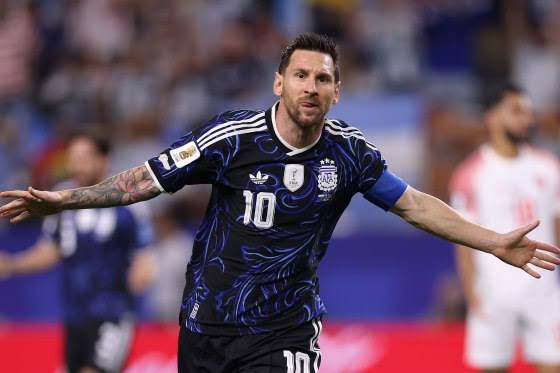
The Round of 16 gave us the end of the host-nation dream, the end of Brazil and Portugal, another Messi miracle, another Haaland takeover, another England survival act, and a final eight that splits almost perfectly between established powers and countries chasing something they have never done before.
Before getting into why you should keep watching, here is how the Round of 16 played out.
Full Results
 Canada0–3
 Morocco
 Paraguay0–1
 France
 Brazil1–2
 Norway
 Mexico2–3
 England
 Portugal0–1
 Spain
Spain United States1–4
 Belgium
 Argentina3–2
 Egypt
Egypt Switzerland0–0Swi 4–3 pens
 Colombia
The Quarterfinals Are Set
And now the quarterfinals are set. That is a pretty spectacular final eight.
FrancevsMoroccoReigning powerhouse vs. Africa's standard-bearer — a rematch of the 2022 semifinal.
SpainvsBelgiumDefensive perfection vs. one more Belgian run.
NorwayvsEnglandHaaland's moment vs. England's 60 years of burden.
ArgentinavsSwitzerlandMessi's last dance vs. the bracket menace.
For anyone who came into this tournament mostly focused on the US, or the novelty of a World Cup in North America, here are eight reasons to keep watching.
8. The Tournament Is Simpler, Sharper, and More Dramatic Now
The group stage is fun, but it is chaotic. There are too many games to track, too many scenarios to calculate, and too many teams that casual fans barely recognize.
The Round of 32 was exciting, but it was also new. It took some adjustment. It felt a little strange to have another knockout round before the usual last 16.
Now the tournament is simple.
Eight teams. Seven games left. No more scoreboard watching. No more “best third-place team” math. No more wondering which results matter.
Win and move on, lose and go home.
The US run is over, and it ended in sobering fashion. The Americans were good enough to dominate weaker teams, good enough to win their group, good enough to beat Bosnia shorthanded, but not good enough to handle Belgium when the tournament reached the level where mistakes get punished immediately. That is disappointing, but it should not end the viewing experience.
In some ways, this is the best time for casual fans to jump back in. You do not need to know the entire tournament history. You do not need to watch three games a day. You do not need to understand every tactical debate.
You just need to know the stakes.
7. The First-Time Winners Are Not Just Cute Stories
There are four teams left that have never won the World Cup: Morocco, Belgium, Norway, and Switzerland.
None of them should be treated like a novelty act.
Morocco are probably not a Cinderella anymore. At some point, when you reach the semifinal in 2022, knock out the Netherlands in 2026, beat Canada 3-0, and reach back-to-back World Cup quarterfinals, you are just good. They are organized, confident, and completely comfortable making more famous teams uncomfortable. They also carry the hopes of an entire continent. No African team has ever reached a World Cup final. Morocco came closest four years ago. Now they get another shot, and fittingly, it comes against France, the same country that ended their 2022 run.
Belgium are a different kind of first-time hopeful. They are not some scrappy underdog. They have been around the top of international soccer for years. But that is exactly what makes their story interesting. The old Belgium golden generation never finished the job. They were always talented enough to win a tournament and always found a way to fall short. This group may not have the same aura as peak Belgium, but after beating Senegal late in the Round of 32 and then hammering the US in the Round of 16, they are very much alive. That 4-1 win over the Americans was not a fluke. Belgium created the better chances, punished the US mistakes, and looked like a team that understood the level of the moment better than the hosts did.
Norway are the easiest sell. They have Haaland. That alone makes them dangerous. But they are not just a one-man team. Martin Ødegaard gives them a creator to pair with the most ruthless finisher in the world, and now they have the belief that comes from knocking out Brazil. For a country that had never won a World Cup knockout game before this tournament, that is an enormous shift.
Then there is Switzerland, the least glamorous and possibly most annoying team left in the bracket. They are the type of team nobody wants to play. Organized, experienced, defensively solid, and perfectly happy to turn a game into a coin flip if that is what the moment requires. Colombia had been one of the most dangerous non-favorites in the tournament, and Switzerland still dragged them through 120 scoreless minutes and beat them on penalties.
That is the beauty of the final eight. The famous teams are famous for a reason. But the challengers all have real arguments too.
6. France and Argentina Are Chasing Dynasty Status
There are two different dynasty stories still alive.
France are trying to reach a third straight World Cup final. That is a rarefied level of consistency in a tournament that is built to destroy plans. One bad bounce, one red card, one penalty shootout, one goalkeeper standing on his head, and four years of work can disappear.
France won it in 2018. They reached the final in 2022. Now they are in the quarterfinals again, with Morocco standing between them and another semifinal. This is not just a talented generation. This is one of the great national-team runs of the modern era.
And the thing with France is that they still feel like they have another gear. They have Mbappé. They have Dembélé. They have Olise. They have waves of athletes and attacking options. They can win a game 3-0, or they can grind through Paraguay 1-0 without ever looking truly panicked. That is what great tournament teams do.
Argentina’s chase is different. They are trying to become the first repeat World Cup winner since Brazil in 1962.
Repeating is brutally hard. The target on your back is bigger. The emotional peak of winning the first one is almost impossible to recreate. The squad gets older. The opponents adjust. The margins shrink.
Argentina have already felt all of that. Cape Verde pushed them to extra time. Egypt nearly knocked them out. Messi had to rescue them again. This has not been a smooth title defense.
But that may actually make the story better. Argentina are not cruising toward history. They are staggering, fighting, clinging, and somehow still moving forward. Every round feels like it could be the end. Every time it looks like the magic is running out, Messi finds a little more.
France look like a machine chasing history.
Argentina look like a legend refusing to let go.
Both are worth watching.
5. Spain’s Defense Is Chasing History
Spain have played five games in this World Cup and still have not conceded a goal.
That is absurd.
There is always a temptation to define Spain by their possession and passing. Death by a thousand sideways passes until suddenly someone is walking the ball into the net. That is the stereotype.
But this version of Spain has been defined just as much by what they do without the ball. They are organized, disciplined, and suffocating. Rodri and Pedri have quickly won balls back and stopped transitions. Laporte and Cubarsí have kept them organized and calm at the back. They make games feel small. They do not just beat teams, they slowly remove oxygen from the match.
Their 1-0 win over Portugal was not exactly the kind of game that will bring casual fans sprinting back to soccer, but it was the kind of game that wins tournaments. Spain did not panic. They did not open themselves up. They kept Portugal under control, waited for the moment, and found the winner in stoppage time.
No men’s World Cup champion has ever gone through the entire tournament without conceding a goal. Spain are still three games away from doing something that has never been done.
The irony is that Spain’s 2010 champions were already famous for winning ugly. They scored only eight goals in the whole tournament and won every knockout game 1-0. This group has a chance to do something even more extreme defensively.
For fans who like offense, France may be the team. For fans who like chaos, Norway and Argentina have delivered. But if you want to watch a team attempt to turn the World Cup into a tactical chokehold, Spain are the team to follow.
4. Heavyweights on a Collision Course
One of the fun parts of the Round of 16 was that the bracket did not completely break.
Brazil are gone. Portugal are gone. The hosts are gone. Germany and the Netherlands were already gone. So yes, there has been plenty of chaos.
But the top of the bracket still has the potential for monster matchups.
France and Spain are one win away from a semifinal that would feel worthy of any final. France have the overwhelming attacking talent. Spain have the best defensive record in the tournament and the midfield structure to control any opponent. It would be a fascinating clash of styles: French explosiveness against Spanish control.
On the other side, Argentina and England are both one win away from reviving one of the great international rivalries. Argentina-England has World Cup history, political history, Maradona history, penalty shootout history, and enough lingering tension to make the buildup feel enormous before anyone even mentions the current players.
Of course, that assumes Morocco, Belgium, Norway, and Switzerland cooperate. They may not.
Morocco already knocked out the Netherlands in the Round of 32 and then beat Canada 3-0 in the Round of 16. Belgium just hammered the US 4-1. Norway knocked out Brazil. Switzerland just sent Colombia home on penalties. None of these teams are here by accident.
But for the neutral fan, that is the perfect setup. You can root for the heavyweight semifinals, or you can root for the Cinderella stories. Either way, there is something to watch.
3. Champions vs Dreamers
Every quarterfinal matches a former World Cup champion against a country trying to win it for the first time.
France have won it twice. Morocco have never reached a final.
Spain have won it once. Belgium have never won it.
England have won it once. Norway have never been this far before.
Argentina are the defending champions. Switzerland have not been this far since 1954.
That gives every game an easy frame. History against hunger. Old money against new money. The countries that expect to be here against the countries trying to make this the greatest soccer moment in their national history.
That is especially useful for American fans who may not know every player or every tactical wrinkle. You do not need a deep scouting report to understand the stakes.
France are trying to become a dynasty. Morocco are trying to become the first African team to reach a World Cup final.
Spain are trying to turn defensive dominance into another trophy. Belgium are trying to finally win the tournament that their golden generation never could.
England are trying to end 60 years of baggage. Norway are trying to ride Haaland into completely uncharted territory.
Argentina are trying to repeat as champions. Switzerland are trying to ruin the storybook ending.
That is a great bracket.
2. The Stars Are Still Here
One of the fears with an expanded World Cup was that the tournament might become too bloated. More teams, more games, more mismatches, more chances for the bracket to get weird before the best teams finally met.
But at this stage, the star power is undeniable.
Messi is still here. Kylian Mbappé is still here. Erling Haaland is still here. Harry Kane is still here. Spain still have their absurd collection of young talent. France still have the most frightening attacking group in the tournament.
The Round of 16 made that clear.
Haaland scored both goals as Norway stunned Brazil 2-1, knocking out the five-time champions and giving Norway its first ever World Cup quarterfinal appearance. This is the kind of thing that makes the World Cup different from club soccer. Haaland scores constantly for Manchester City, but doing this for Norway is something else entirely. This is not a super team built around him. This is a country that has never been a World Cup power, now suddenly three wins from a trophy because it has one of the most terrifying forwards alive.
It was mostly Bellingham who carried England in this round, helping them survive a wild 3-2 game against Mexico at the Azteca, but Kane stepped up to bury the eventual game-winning penalty. England were pushed hard, the atmosphere was ridiculous, and they had to play most of the second half down a man. It was exactly the type of game England could have lost in a dozen different ways. Instead, they survived.
Mbappé and France did not need fireworks against Paraguay. They needed one goal, one professional defensive performance, and one more step forward. That is almost scarier. France have not always had to hit top gear in this tournament, but they keep advancing, and they still look like the team with the highest ceiling.
Then there is Spain, who edged Portugal 1-0 on a stoppage-time goal from Mikel Merino, ending Cristiano Ronaldo’s World Cup run and possibly closing the book on one of the great international careers. It was not a classic. It was not Spain at their prettiest. But knockout soccer is often about control, patience, and one ruthless moment. Spain found it.
This is not a tournament where the famous names disappeared early and left casual fans searching for a reason to care. The biggest stars in the sport are still right in the middle of the story.
1. Messi’s Last Dance Is Still Alive
There are not many players in any sport who can make a game feel historic just by stepping onto the field. Lionel Messi is one of them.
At 39 years old, Messi is still dragging Argentina through the highest-pressure games in the world. That sentence should not make sense, and yet here we are.
Argentina looked dead against Egypt. Down 2-0 late, with Egypt playing fearlessly and the defending champions staring at one of the most shocking exits in World Cup history, it felt like the tournament was about to lose its biggest story. Then Messi did what Messi has done for almost two decades. He bent the game back toward himself.
He helped create the first goal with a pinpoint cross, then he scored the equalizer with a blazing half-volley. Argentina found the winner in stoppage time. Somehow, they survived.
This comes after Argentina had already been pushed to the brink by Cape Verde in the Round of 32. For two straight knockout games, Argentina have not exactly looked like a machine. They have looked vulnerable, stretched, and at times almost overwhelmed by the moment. But they still have Messi.
This is almost certainly the last time we will see Messi on this stage. Every Argentina game could be his final World Cup game. Every free kick, every corner, every touch around the box now carries that extra weight.
And the craziest part is that this is not some ceremonial farewell tour. He is not being carried by a younger generation while everyone politely applauds the legend. He is still the main character. He is still deciding games. He is still adding to a World Cup résumé that already looked complete four years ago.
If you are a casual sports fan, that is reason enough to keep watching. You do not get many chances to see one of the greatest athletes ever try to extend the final act of his career one game at a time.
The hosts are gone, and for American fans that stings. This World Cup was supposed to be the moment where the home teams carried the event deep into July. Instead, the quarterfinals will go on without them.
But the World Cup was never only about the hosts. It is about the biggest stars, the strangest upsets, the heavyweight collisions, the countries that believe this might finally be their time, and the legends trying to write one more chapter before the lights go out.
The Round of 16 closed the North American portion of the dream.
The real tournament is still very much alive.