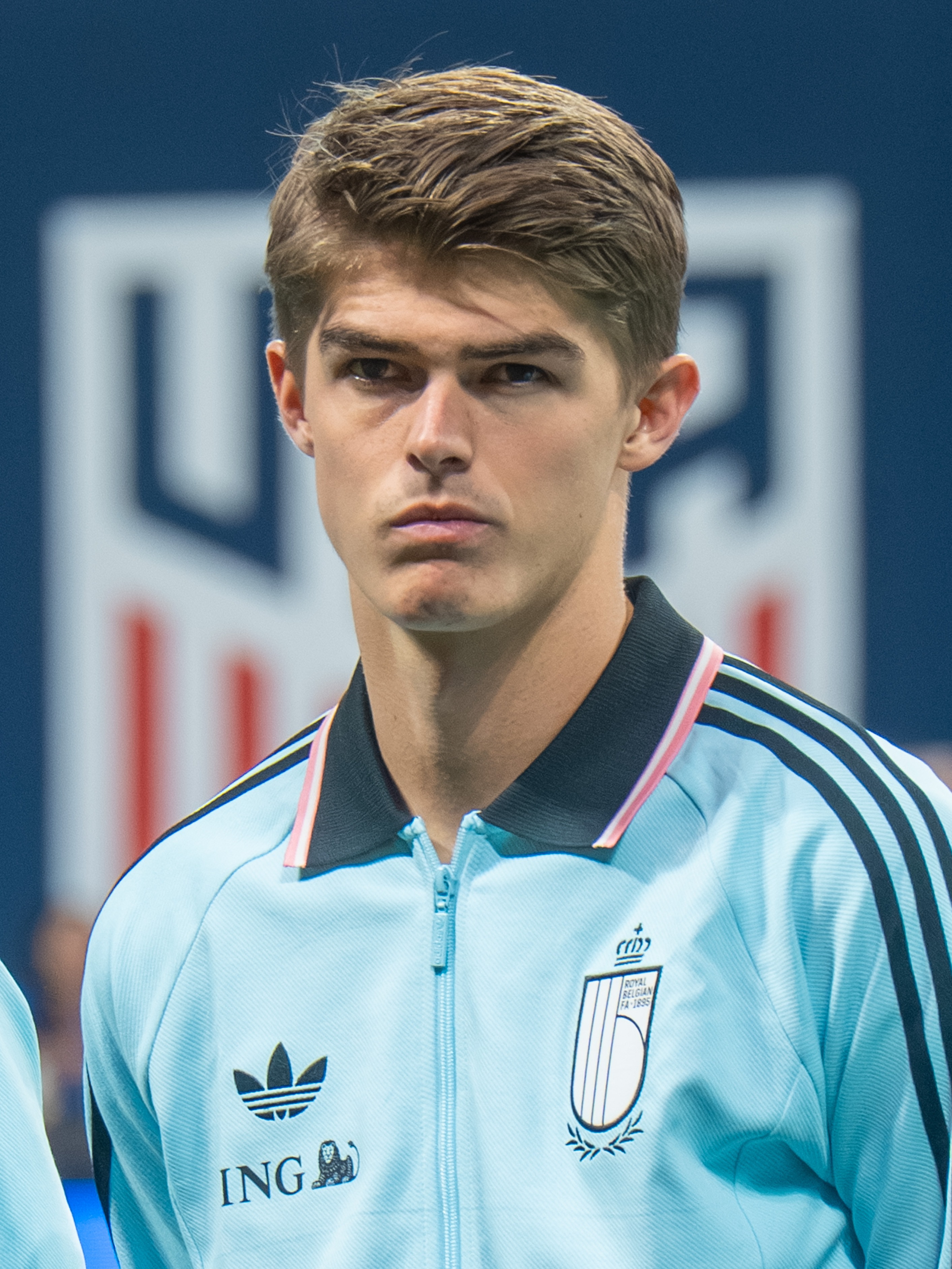
For most of this World Cup, the US had been able to dream. They dominated Paraguay. They handled Australia. They navigated the dead rubber against Türkiye. They survived the chaos against Bosnia. They looked organized, athletic, dangerous, and, at times, genuinely like a team that might be ready to make a real run on home soil.
Then Belgium showed up and put them in their place.
Belgium 4, United States 1.
That is harsh, but it is also the reality of what happened. The US was good enough to dominate weaker teams. They were good enough to punish opponents that could not match their athleticism, could not play through their press, and could not handle their front-foot energy. But when the level jumped, when the opponent had elite players, real technical quality, and the composure to punish every loose touch and every bad decision, the US was not ready for primetime.
This was the fear all along. Not that this team was bad. They are not. Not that this tournament was a failure. It was not. But that the gap between being the best version of the US and being a true top-tier contender was still there.
Belgium exposed it.
The opening half hour was about as rattled as the US has looked in quite a while. They looked like deer in headlights. The touches were heavy. The passes were rushed. The midfield was overrun. Christian Pulisic could not get into the game. Sergiño Dest looked like he was trying to win the match by himself every time he got the ball. Weston McKennie, Malik Tillman, and Tyler Adams could not get any clean rhythm through midfield. Belgium pressed, challenged, and waited for the mistakes to come.
How It Happened
They did not have to wait long.
The first goal was a complete breakdown in responsibility. Belgium switched the ball left to Leandro Trossard, Alex Freeman blocked the initial cross, and then everything fell apart. The clearance dropped right in between three US defenders at the edge of the box and as they stared at each other Nicolas Raskin attacked the loose ball aggressively. Raskin slid the ball across goal, De Ketelaere tapped it in, and Belgium had a 1-0 lead after nine minutes.
It was the kind of goal that is so preventable. Freeman could have cleared the first ball better. Someone, anyone, could have taken ownership once the ball dropped in the box. Instead, everyone hesitated, Belgium acted, and the US was chasing.
That was the story of the night in miniature.
To their credit, the US did find a way back into the game. Malik Tillman, who has been one of the clear bright spots of this tournament, delivered another special set-piece moment. After Balogun won a free kick in a dangerous area, Tillman stepped up and whipped a shot that took a slight deflection off Hans Vanaken and wrong-footed Thibaut Courtois. Out of nowhere, after barely creating anything for the first half hour, the US was level.
For about two minutes, it felt like maybe they had survived the storm.
They had not.
Belgium immediately went back in front, and this one was less about chaos and more about a matchup they had clearly identified. They picked on Tim Ream repeatedly in the first half, especially with direct balls and back-post attacks. On the second goal, Youri Tielemans found Trossard wide on the left, Trossard pulled both Jedi Robinson and Dest toward him near the byline, and then floated a perfect cross to the back post. Ream was underneath it, De Ketelaere went over him, and Belgium was back ahead.
That one was not a freak accident. It was poor defending on the point of attack, a dangerous cross allowed too easily, and then Ream simply getting dunked on at the back post.
The US did settle in over the final 15 minutes of the first half. Balogun had a difficult chance near the six-yard box after Freeman flicked on a long throw. The Americans finally started to play with a little more bite. But even then, the numbers at halftime told the truth. Belgium led 2-1 and had created 1.90 expected goals to just 0.42 for the US. The scoreline was close. The actual game was not.
Pochettino made the obvious change at halftime, bringing Gio Reyna on for Dest. The US switched to a straight 4-2-3-1, gaining some extra foothold in midfield. Reyna gave the US a cleaner connector in possession, and the Americans looked more settled after the break. Jedi Robinson finally started to get forward. The ball moved a little quicker. Belgium dropped off a bit. For 10 or 12 minutes, it felt like the US had a path back into the game.
Then Matt Freese lost his mind.
That sounds harsh, but there is no other way to describe the third goal. Freese actually did the hard part. He read the long ball over the top, came way out of his box, got there before De Ketelaere, and settled the ball cleanly. All he had to do was put his foot through the ball and send it somewhere safe. Instead, he hesitated. De Ketelaere poked it away, Vanaken collected the loose ball from nearly 35 yards out, and with Freese scrambling back toward goal, he hit a low shot that skipped past Ream and into the net.
It was a brutal mistake. Not just because it made the score 3-1, but because it came right when the US had finally started to look like the better team. The Americans were growing into the second half. Belgium was not exactly hanging on, but they were not dominating the way they had early. The game was still there.
Then it was gone.
After that, the US huffed and puffed, but Belgium always looked more likely to kill the game than the US did to make it truly uncomfortable. Sebastian Berhalter came on and nearly scored with a terrific half-volley from distance. Balogun forced Courtois into a save from a tight angle after a Reyna ball over the top. Freeman got to the end of a corner but could not keep his header down. There were moments. There was effort. There was some late pride.
The final goal came in stoppage time, and by then it was mostly academic, but even that goal felt symbolic. Richards gave it away while trying to play out, and the ball fell to Romelu Lukaku. Of course it did. Lukaku cut inside and finished into the bottom corner to make it 4-1.
Four goals conceded. Three of them deeply avoidable.
That is the part that will sting most. Belgium was better, but the US also helped them. The first goal was a diffusion-of-responsibility disaster. The second was poor wide defending and Ream losing an aerial battle at the back post. The third was an inexplicable goalkeeper mistake. The fourth came from trying to dribble out of pressure when the game was already over.
Against Paraguay or Australia or even Bosnia, maybe you can survive one or two of those. Against Belgium, you cannot.
The final numbers were ugly. The US finished with 56% possession, but that was misleading. They had just 47% in the first half before the game state forced them to chase. Belgium won the expected goals battle 2.15 to 0.67. They outshot the US 15 to 7, put seven shots on target to the Americans’ two, and created four big chances to zero.
That last number is the one that matters most. The US had the ball. Belgium had the chances.
For all the talk about tactics, and there will be plenty to dissect, this was also a technical and psychological gap. The US midfield did not handle pressure well enough. The passing was sloppy. The first touch was off all over the field. Pulisic never found the pockets where he could turn and run at defenders. Dest forced the issue. McKennie was active but not clean. Adams had to cover too much ground. Tillman had the free kick, but even he struggled to impose himself in open play the way he had earlier in the tournament.
Belgium looked like a team that understood the moment. The US looked overwhelmed by it.
That does not erase the good that came before. This tournament still had real positives.
Who Stood Out for the US in This World Cup?
Alex Freeman was one of the biggest. He was a fairly late arrival to the national team setup in the lead-up to the World Cup, and he more than proved he belongs. He is such an interesting modern defender because he can play that hybrid right-sided center back/fullback role, but he has enough athleticism and attacking instinct that he does not feel limited to one niche. If the next coach wants to play a back four, he can probably be a true fullback. If the next coach wants to keep a back three, he looks like a natural right center back in that system. At 21 years old, with a move to one of the big European leagues already in motion, he may have been the biggest long-term discovery of the tournament for the US.
Malik Tillman also took a major step. His two free kicks will be remembered, and they should be. Becoming just the second player in World Cup history to score two direct free-kick goals in one World Cup is a ridiculous accomplishment. But he was more than just the set pieces. He gave the US poise, creativity, and flexibility throughout the tournament. He could play deeper next to Adams. He could push higher into the attacking midfield line. He could help defensively without completely sacrificing the ability to create. At 24, he is not a finished product, but the ceiling is obvious.
Folarin Balogun was probably the best US player in the tournament. He did not get his goal tonight, but he led the team in scoring and gave the US a type of striker it has rarely had. Athletic, technical, aggressive, and confident in front of goal. For years, the US has had hard-working strikers, useful strikers, physical strikers, and promising strikers. Balogun looked like a real international-level scoring threat. That matters. In the biggest games, you need someone who can turn a half chance into a goal. He showed he can be that player.
What Comes Next?
There were other positives too. Pochettino did give this team a tactical identity. For all the frustration tonight, this was probably the best tactical setup we have ever seen from a US team at a World Cup. The back-three system unlocked Freeman, gave Jedi room to run, allowed Dest to play high, and created better attacking spacing than this program has had in a long time. The press had real teeth. The attacking transitions were dangerous. The US did not spend this tournament just trying to survive.
But ultimately, the grade for Pochettino’s tenure is a passing one and nothing more.
The biggest question now is whether he is back. The assumption has always been that this was a short-term job for him and that he would want to return to club coaching after the World Cup. If the reports of an extension offer are accurate, maybe US Soccer will try to convince him to stay. I would still be surprised if he does. Pochettino is still relatively young for a coach and won’t want to spend too much time away from the club game.
There were positives, absolutely. But there was no breakthrough. The US beat the teams it should beat, had some great moments, and then got handled when the opponent stepped up in class.
That is progress, but it is not a revolution. Hopefully the US will be equally ambitious in their next coaching choice if he moves on. There is another high profile club manager who just left his most recent post that would make for a very intriguing candidate.
Projecting four years out is always difficult. A lot will change between now and the 2030 World Cup in Spain, Portugal, and Morocco. Players will rise. Players will fall. Injuries will happen. Some young prospect no one is talking about enough right now will probably force his way into the conversation. But the broad shape of the core should still be there.
Pulisic, McKennie, Balogun, Tillman, Adams, Jedi, Dest, Richards, Freeman, Pepi, and Berhalter should all still be in or around their prime years. Behind them, there will be another wave pushing for spots, whether that is Cavan Sullivan, Zavier Gozo, Adri Mehmeti, Julian Hall, or whoever emerges next from the youth pipeline. The talent base is not going away.
The next real competition is the Gold Cup next summer. There may be another Copa America opportunity in 2028, especially with rumors that the US could host again. Then comes qualifying for 2030, and with it the start of another cycle of hope, frustration, roster debates, and questions about when this team will finally take the next step.
That is where this loss leaves us.
The US is no longer a plucky underdog hoping to steal a result. They are past that. They have real players. They have depth. They have athleticism. They have guys who can play at a high European level. They can dominate teams below them. They can win knockout games. They can create moments that feel different from the old version of this program.
But against Belgium, they were reminded that there is still another level.
The top teams do not just have talent. They have composure. They punish mistakes. They survive bad stretches. They do not panic when the game gets weird. They do not need 10 good chances. They need two mistakes and one moment of quality.
Belgium had all of that.
The US did not.
So the dream ends in Seattle, not with a heroic defeat or a narrow escape, but with a pretty clear message. This team is better than it used to be. It is more talented than it used to be. It is more fun than it used to be.
It is still not ready to compete with the big boys.
Not yet.