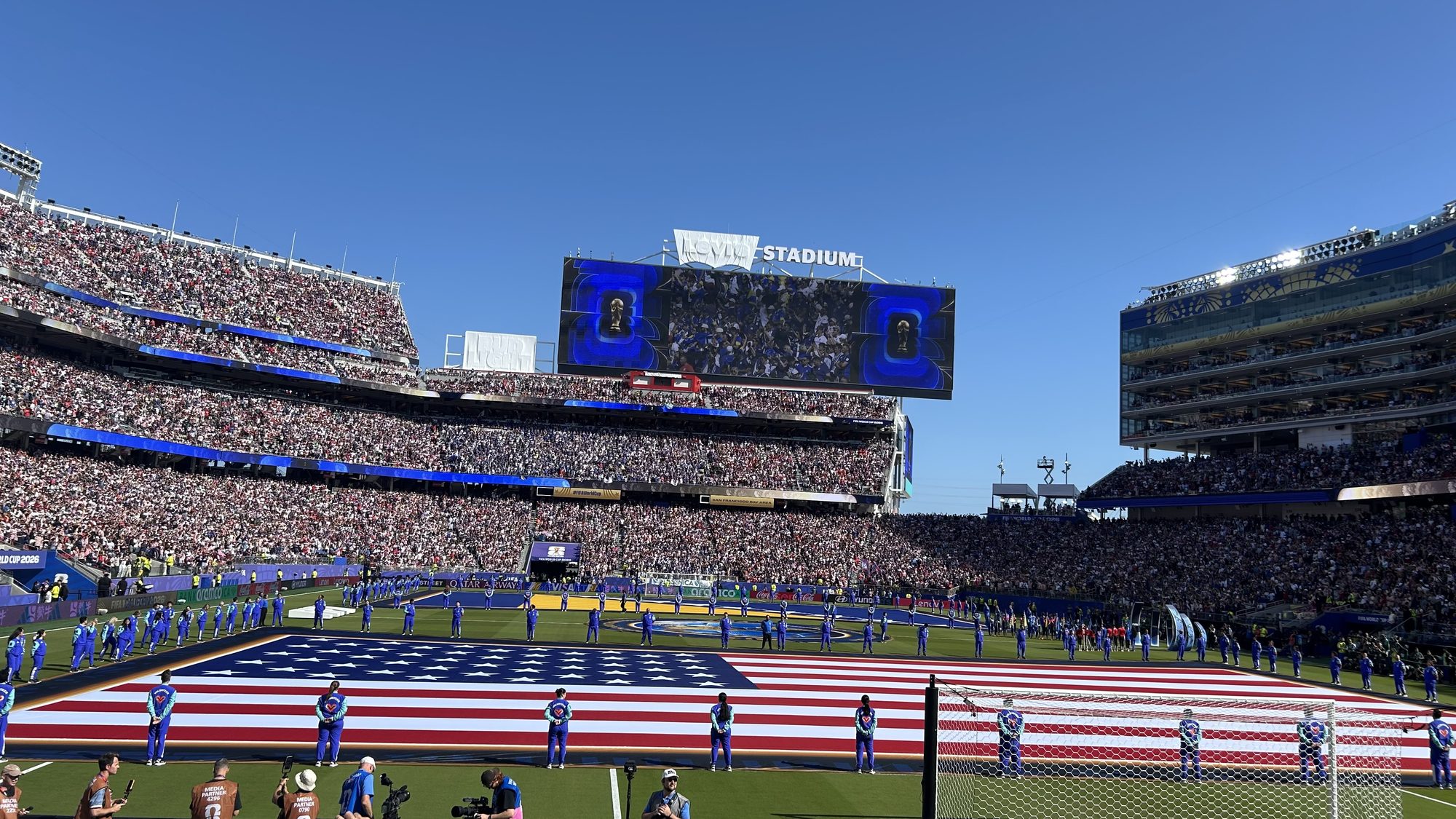
Job done. Moving on to the next round.
The performance was more workmanlike than free-flowing for most of the night, and it was absolutely not helped by an embarrassingly bad performance from the referee. But in the knockout rounds, that part does not really matter. Win and advance. That is the whole assignment.
Just ask Germany. Just ask the Netherlands. Or even England and Belgium, who both barely escaped their own first knockout tests. At this stage of a World Cup, style points are nice, but survival is what counts. The US survived, beat Bosnia-Herzegovina 2-0, won a knockout game at a World Cup for just the second time in the modern era, and kept their tournament alive.
From the outset, Bosnia looked to frustrate the US attack and hope they could find one lucky counterattack or set piece to get on the scoreboard. Despite the red card, despite the frustration, despite the weird game state, the US overcame and advanced to the Round of 16.
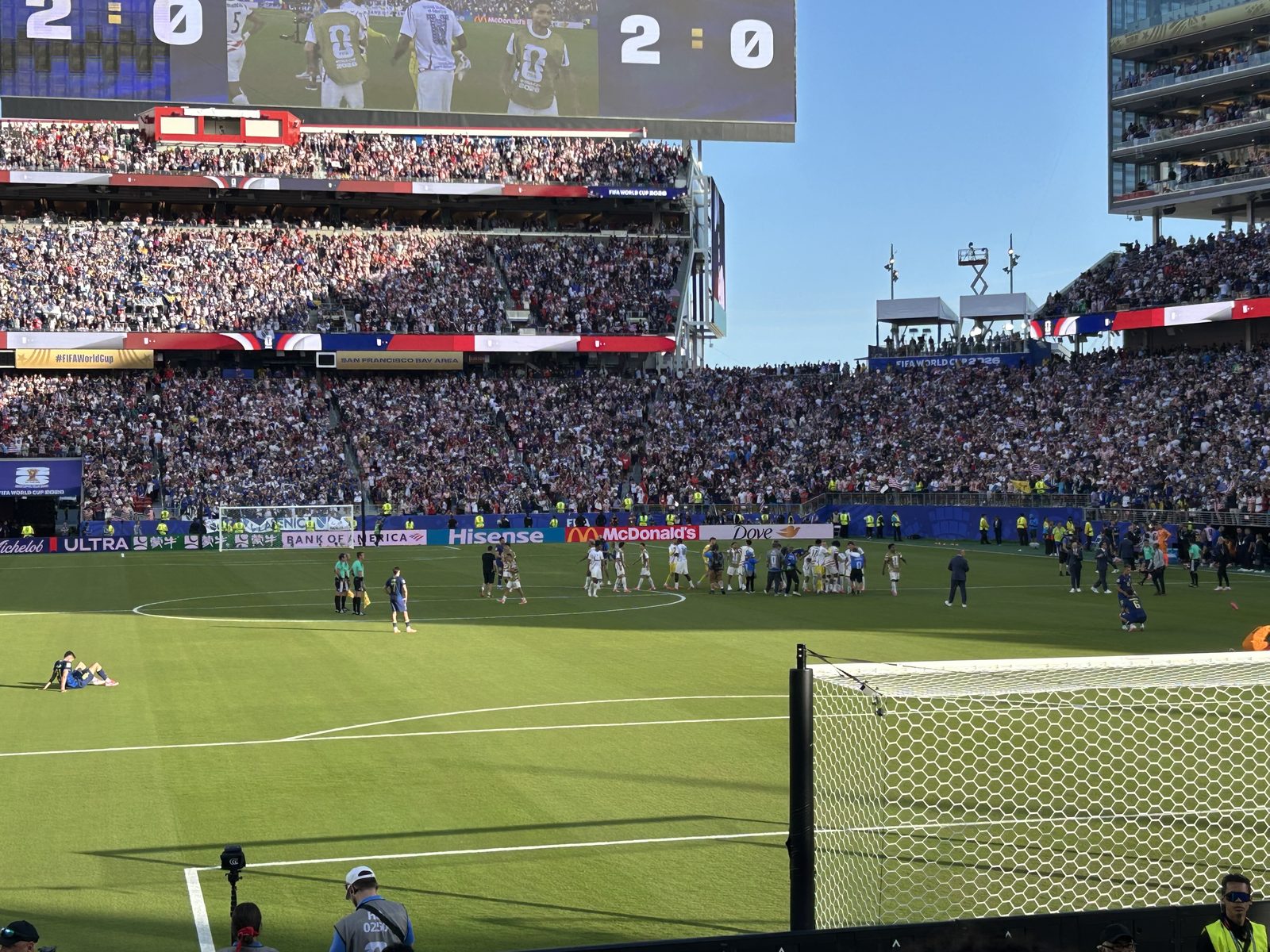
The headline moment will be Malik Tillman’s free kick. After the US went down a man, after Bosnia finally started pushing bodies forward, after the crowd at Levi's San Francisco Bay Area Stadium (except in Santa Clara, an hour south of San Francisco) went from tense to furious to fully alive, Tillman stepped up in the 82nd minute and buried a free kick from just outside the box to put the game away.
It is probably the most technically impressive goal the US men have ever scored at a World Cup. It will certainly go down as one of the great moments in USMNT history, especially if they move deeper in this tournament.
Down a man. One-goal lead. Entire stadium holding its breath.
And Tillman just bent it over the wall and in.
That is the kind of moment that lives forever.
How They Lined Up
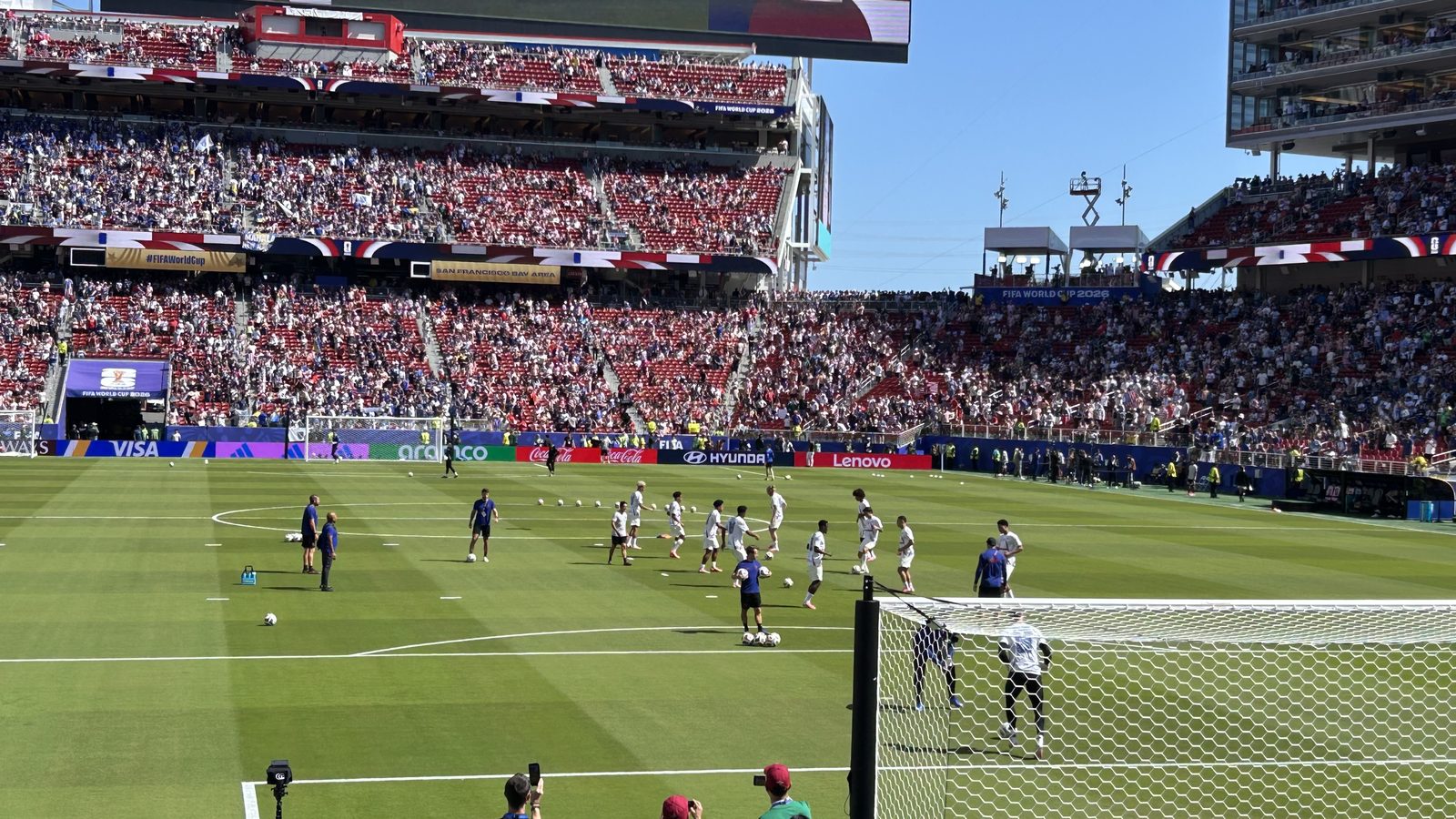
There were no real surprises in the US lineup. Mauricio Pochettino went back to his first-choice group after rotating heavily in the dead-rubber loss to Türkiye. Matt Freese started in goal, with Antonee Robinson, Tim Ream, Chris Richards, and Alex Freeman across the back. Tyler Adams and Malik Tillman formed the midfield base, with Christian Pulisic, Weston McKennie, and Sergiño Dest underneath Folarin Balogun.
On paper, it was listed more like a 4-2-3-1. In practice, as we have seen throughout the tournament, it often looked like the same flexible attacking shape the US has used when the game tilts in their favor. Jedi and Dest provided width. Freeman was comfortable stepping into the right-sided buildup role. Ream and Richards helped initiate attacks. McKennie pushed high to press and crash the box. Tillman floated between deeper buildup and attacking combinations.
Bosnia made the more interesting tactical adjustment. Instead of the 4-4-2 they had shown earlier in the tournament, they came out in a 5-3-2/3-4-2-1 shape that often collapsed into a back five. They started only one of their young, dynamic wide attackers, with Esmir Bajraktarević beginning on the bench, and clearly came in trying to make the game compact, ugly, and frustrating.
Their line of engagement was mostly around midfield. They were not parking the bus on top of their own six-yard box, but they were not interested in turning the game into an open track meet either. The front two would engage selectively. The midfield stayed narrow. The back line tried to squeeze the vertical space between the lines. At times, when their wider midfielders jumped out toward the US wide center backs or wingbacks, the shape almost looked like a 5-1-4.
The plan made sense. Bosnia wanted to deny the US the easy central lanes, survive the first wave of pressure, and find moments through Edin Džeko, Ermedin Demirović, set pieces, or long balls.
The problem for Bosnia was that the US never really let them breathe.
The US Controlled the First Half
The US held 62% of the possession in the first half, connecting on nearly twice as many passes as Bosnia (234 to 122), and it was not merely empty possession. This was not passing the ball around the back for the sake of control. With 66% of those passes coming in the opponent’s half and 28% in the final third, the Americans were probing. They were turning. They were trying to play into the box, finishing the half with 18 touches in the Bosnia box to just one touch for Bosnia in the US box.
There were combinations on the edge of the area. There were balls into the channel for Balogun. There were attempts to get Dest in behind. McKennie got loose down the wing. Ream slipped one into the channel for Tillman. Freeman hit a switch to Jedi just outside the box. Pulisic drove at defenders. Balogun kept looking for little pockets between the center backs.
The US did not create a ton of clear chances early, but they were stressing the defense. More importantly, they were making Bosnia defend under constant strain.
That pressure showed up without the ball too. The US pressed high for the entire first half and repeatedly trapped Bosnia in their own end. Bosnia’s only outlets were hopeful long balls toward Džeko and occasional US fouls that provided temporary relief. For long stretches, they had no real way to play through the American pressure.
That was a credit to everyone, but especially Adams and McKennie. Adams was everywhere in midfield, winning balls, stepping into challenges, and keeping possessions alive before Bosnia could turn them into counters. McKennie worked tirelessly, pressing the back line one moment and dropping back into midfield the next. That work became even more important after the red card, but it was already driving the game in the first half.
The US back line also deserves a lot of credit for the way the press functioned. Richards, Ream, Freeman, and Adams were excellent dealing with long balls and loose balls. This was critical, because pressing high only works if the players behind the press can clean up the first escape route. The US could be aggressive higher up the field because the rest defense was balanced and the center backs handled their business.
There was one real scare. In the 10th minute, a miscommunication off a long goal kick turned into Bosnia’s best first-half moment. Freese made the initial stop on Demirović but parried it back into a dangerous area, forcing a clearance for a corner. The ensuing corner nearly went straight in, and Freese had to scramble back and make a diving save.
That was basically it for Bosnia before halftime.
The rest of the half belonged to the US, even if the scoreboard took a while to reflect it.
Balogun had a goal ruled out in the 31st minute after Tillman picked a defender’s pocket just outside the box and McKennie quickly slipped him in. Balogun finished it beautifully, low into the corner, but he had just drifted offside. That moment woke up the crowd a bit, which had been fairly subdued for most of the first half.
A trend that would become a major frustration later in the game was the lack of control from the referee. There were multiple occasions in the first half where he could have set a standard for the game with yellow cards for cynical fouls by the Bosnians, but he seemed to forget the yellow card existed as a concept.
McKennie broke past two players in the eighth minute and was taken down in a dangerous spot. Freeman took a late kick to the back of the leg in the 25th minute; the ref played advantage but never came back to give the expected card. Balogun went down in the box in the 30th minute after contact from Dedić. It was not the clearest penalty in the world, but we have absolutely seen weaker ones given. Then in the 37th minute, Balogun was tangled up again in the box by Muharemović on a cross that was probably over his head but still looked like a UFC takedown.
The most obvious missed yellow came in first-half stoppage time, when Pulisic beat his man on the left and was pulled down by the shirt. That is a yellow card almost every time. Somehow, not this time.
The referee did not create the first-half story, but he was already losing control of the standard. Bosnia were allowed to foul just enough to slow the US down without paying the normal price for it.
Still, the breakthrough finally came in the 45th minute.
And like so many of the US goals in this tournament, it came from pressure.
In a move that started with Bosnia on the ball at midfield, the US gradually forced them to play back to their keeper, inching their press higher and higher. Balogun and Tillman corralled the keeper into a panicked long ball. Tim Ream was first to it and, instead of just clearing, took an excellent touch and played it first time into Adams. Adams’ first touch was an outstanding slipped pass to Tillman, who immediately looked for Balogun in the box.
The through ball was cut out, but it deflected off another Bosnia defender and fell right into Balogun’s path. One-on-one with Nikola Vasilj, Balogun made no mistake, calmly slotting it under the keeper with his left foot.
Yes, there was some luck in the final bounce. But that is the kind of luck you earn by applying constant pressure and forcing defenders into emergency actions. When you spend an entire half making a team uncomfortable, eventually something breaks.
The US went into halftime up 1-0, and honestly, Bosnia were lucky it was not more. Deep into stoppage time, Adams dinked a lovely ball to Dest, who picked out Balogun for what should have been a second, only for the striker to hit the top of the bar.
The Red Card Changed Everything
Bosnia did claw back a little more possession early in the second half. They made a triple change in the 51st minute, bringing on Bajraktarević, Benjamin Tahirović, and Ermin Mahmić, with Džeko forced off in what became the end of his World Cup. That gave them a little more energy and a little more willingness to step forward.
But even then, they were not producing much danger. Before the red card, the US still looked more likely to extend the lead than Bosnia looked to equalize. Bosnia had a hopeful long-range effort from Katić. Ream had to cut out a cross. There were a few moments that hinted at pressure, but nothing that felt like sustained danger.
Then came the 64th minute.
Balogun and Muharemović came together in what looked like a 50/50 challenge. Balogun was knocked off balance and, as he came down, accidentally stepped on the defender’s foot and ankle. It was unfortunate. It was painful. It was probably a foul. You can make the argument for yellow.
A red card was absurd.
By the letter of the law, yes, serious foul play includes a challenge that endangers the safety of an opponent or uses excessive force or brutality. That language gives referees room for interpretation. But that is the whole point. There is supposed to be judgment involved.
This was not Balogun flying into a challenge. It was not a tactical foul to stop a dangerous break. It was not violent conduct. It was not malicious. It was not an out-of-control lunge. It was a coming-together between two players, with Balogun off balance, and an accidental step as he landed.
No one who has watched a lifetime of soccer would look at that play in real time and think, “That player needs to be sent off in a World Cup knockout game.”
The referee wilted in the moment. VAR gave him the chance to make the biggest possible decision, and instead of applying common sense, he hid behind the harshest possible interpretation of the law.
It was a horrendous call on a night when the referee had already allowed Bosnia to get away with multiple fouls that should have brought yellow cards. That is what made it even more infuriating. You cannot swallow your cards all night, then suddenly discover the strictest version of the rulebook for an accidental landing.
The red card changed the game. It also takes Balogun out of the next match, removing a critical piece of the attack against the toughest opponent the US have faced in the tournament. That may end up being the more damaging part of the decision.
Because Balogun has been enormous in this tournament. He scored the opener. He had the offside goal. He created multiple dangerous moments. His movement stretches defenses. His finishing gives the US a real threat at striker. He has looked like exactly the kind of center forward this program has been searching for forever.
And now, he is gone for the biggest game of the tournament. Apparently there is no appeals process in the World Cup. One dumb ref gets to throw a wrench in the entire tournament run.
Brutal.
The US Bent, But Never Really Broke
After the red card, Pochettino had no choice but to change the game. The US dropped into two banks of four with Pulisic left up top to apply whatever pressure he could. Bosnia naturally pushed higher and started to stress the US defense with crosses into the box.
But even with the man advantage, Bosnia did not create enough.
That is probably the most encouraging part of the whole performance. This was not a game where the US got completely shelled for 30 minutes and held on for dear life. Bosnia had more of the ball. They sent in crosses. They took a few shots from distance. They forced the US to defend. But they never truly put Freese under siege.
The back line was excellent. Ream, Richards, Freeman, and Jedi all had important moments stepping out to contest crosses, blocking shots, winning headers, and dealing with balls into the box. Adams and McKennie kept working in front of them. Tillman and Pulisic still found enough quality touches to relieve pressure when the US needed it.
Freese had a few shaky moments, including one late cross he failed to claim cleanly, but ultimately he did what he needed to do. Bosnia finished with just 0.25 xG and zero big chances. That is a pretty remarkable defensive outcome considering the US played the final forty minutes down a man.
The US just continued to battle. They won 59% of the duels on the night and 62% of aerial duels, and that percentage actually increased in the second half.
And the US still found moments to attack. In the 78th minute, they actually put the ball in the net again after a nice passing sequence around the box. McKennie found Tillman, Tillman slipped it through to Pulisic, and Pulisic bundled it home, only for the flag to go up. It was clearly offside, but it was a reminder that even down to 10 men, the US still had more attacking quality when they got into the final third.
Then came the moment.
In the 80th minute, Jedi launched a long throw into the corner. Bosnia dealt with it poorly, just booting it high and allowing the US to regain possession in the attacking third. Even down a man, the US counter-pressed well enough to turn a throw-in into a sustained attacking moment. Bosnia looked tired. Dest received the ball near the top of the box, made a sharp turn, and Radeljić grabbed him to stop the attack.
Finally, somehow, the referee found his yellow card for Bosnia.
The foul set up a free kick just outside the box. Tillman stood over it. And then he delivered the defining moment of the night.
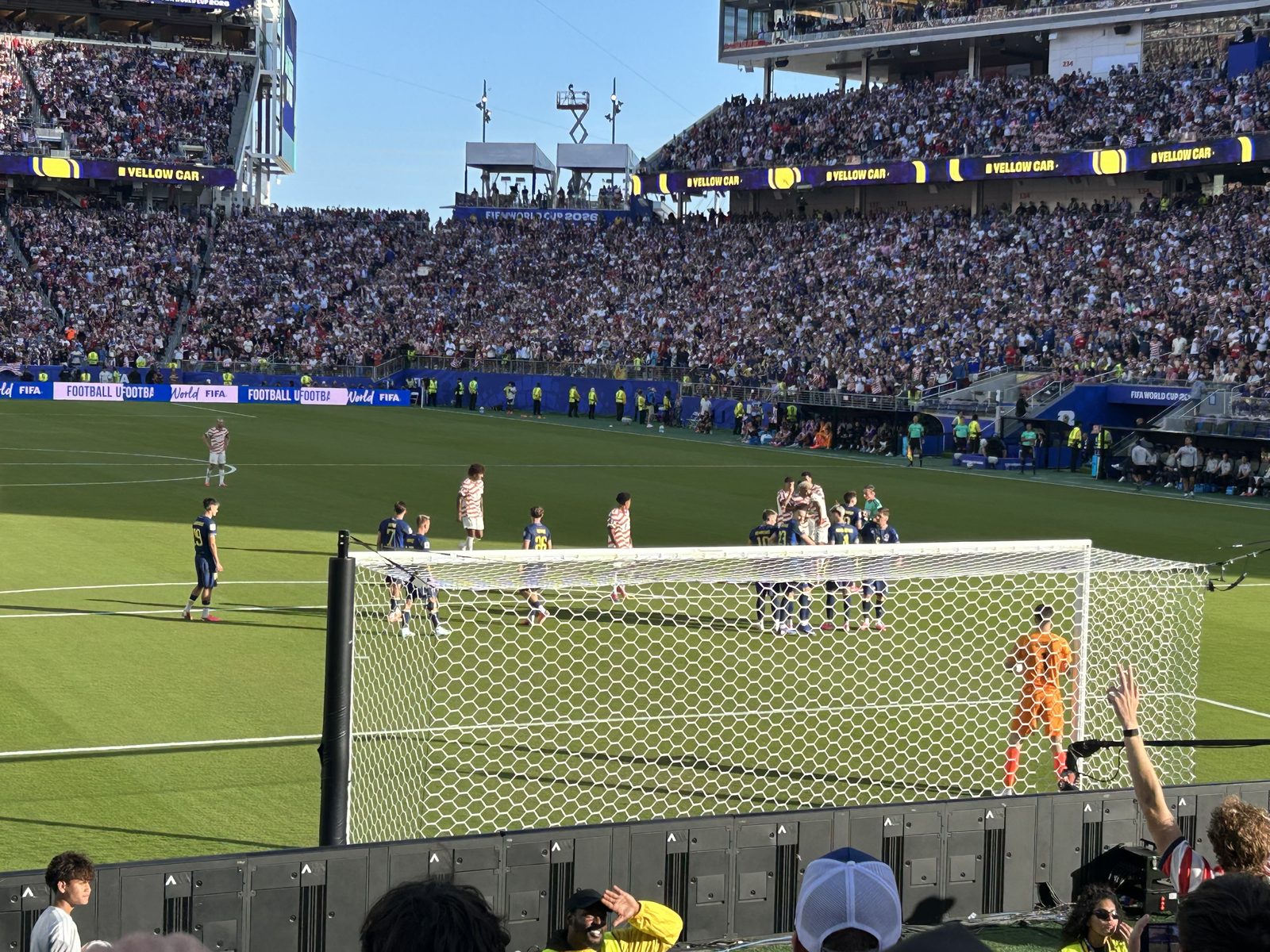
Right foot. Over the wall. Keeper got a touch but could not keep it out.
2-0.
San Francisco Bay Area Stadium exploded.
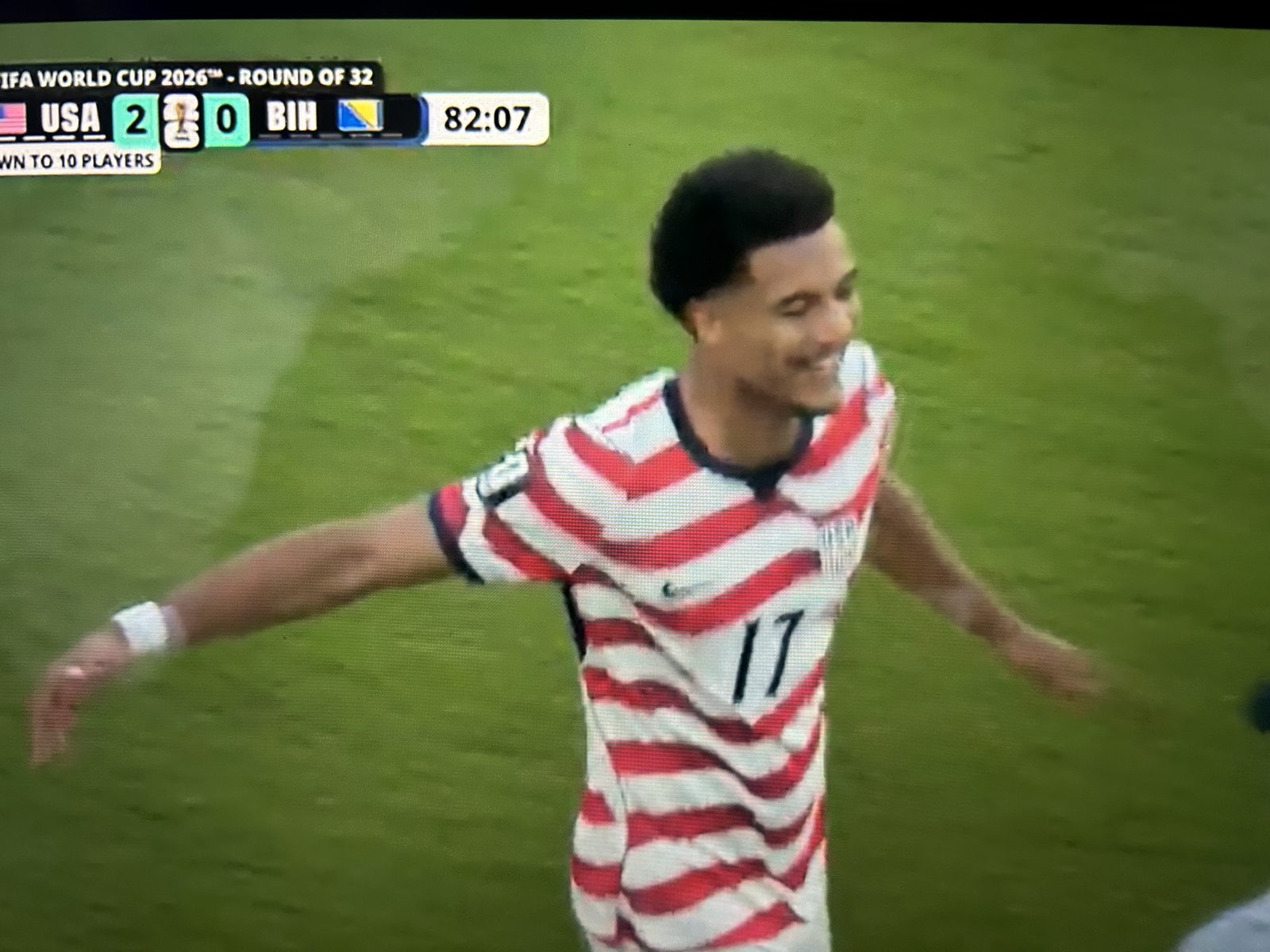
That goal was more than just insurance. It changed the emotional weight of the final minutes. Instead of the US hanging on, one mistake away from extra time, Bosnia now had to score twice. That breathing room was massive.
From there, the US saw it out. There was even some good old-fashioned dark arts from Freese near the end line after light contact, which was exactly the kind of thing every other country in the world does in those moments, and no one should apologize for it. McKennie came off in the 95th minute to a deserved standing ovation. Pepi and Berhalter came on late. Bosnia had a couple of long-range shots whistle wide in stoppage time, but again, nothing that really forced Freese into a major save.
Full time. USA 2, Bosnia-Herzegovina 0. Survive and advance.
Tillman, McKennie, Adams, and the Back Line
Tillman was the man of the match. The free kick will be the highlight, but his whole performance was outstanding. He was composed on the ball, clever in tight spaces, dangerous when pressing defenders, and willing to do the dirty work. He finished with six ball recoveries and won nine of his 15 duels, which captures how important he was on both sides of the game.
His development in this tournament has been one of the biggest stories for the US. Coming in, there were fair questions about how Pochettino would balance Tillman, McKennie, Adams, Reyna, and the front line. Tillman has answered them. He gives the US poise, ball security, pressing, and now one of the biggest goals in program history.
McKennie and Adams were also outstanding. McKennie’s work rate was absurd, especially after the red card. He pressed. He recovered. He battled. He helped connect attacks. He gave the US the kind of emotional and physical presence you need in knockout games.
Adams was just as important. His ball-winning and pressure in midfield kept returning possession to the US in the first half, and his quick first touch helped start the sequence for Balogun’s goal. There are games where Adams’ value shows up more in the structure than the box score, and this was one of them. He allowed the US to play aggressively without falling apart behind the ball.
The back line was exceptional. Richards, Ream, Freeman, and Jedi dealt with Bosnia’s long balls, crosses, and late pressure while also helping initiate the attack. Ream’s touch and pass into Adams before the opening goal was a veteran play. Freeman continues to look completely at home in a role that asks a lot of him. Richards gives the whole group confidence. Jedi’s engine is ridiculous.
Balogun’s night is complicated only because of the red card. Before that, he was excellent again. He scored. He had a goal disallowed. He got into dangerous spots. He gave Bosnia’s back line problems. He continued to show why he is so vital to this version of the US.
Which makes his absence an enormous problem.
Pepi came on late and had some decent touches, but he also missed a chance to put an exclamation point on the game in stoppage time when he could not quite control a good ball into the box. He will need to be stronger than he was against Türkiye. That is not meant as a criticism as much as reality. If Balogun is out, Pepi probably becomes one of the most important players in the biggest USMNT game in a generation.
No pressure.
What This Win Means
This was a solid, if not spectacular, win. The US did not create a ton of chances. The final xG was roughly 0.9 to 0.25, with two big chances to zero. That is not a demolition. But against a stubborn, defensive-minded opponent in a knockout game, especially after going down a man, it is more than enough.
The US gave Bosnia almost nothing before the red card and still limited the danger after it. They did not panic. They did not collapse. They did not let the bad call become the story of their tournament.
Germany and the Netherlands are on flights home after being upset in this round. England and Belgium required late turnarounds to survive. Knockout soccer is weird and cruel and often stupid. The US avoided the trap.
By winning this game, the US have held serve with pre-tournament expectations. Pochettino has now done the minimum of what this home World Cup demanded. The US won its group comfortably. It took care of business against a lesser opponent in the first knockout round. It has three wins in a single World Cup, the most ever for the US men. Those are real accomplishments.
But his legacy as USMNT coach will be defined by what happens next.
Like it or not, that is the reality. This team was not built just to beat Paraguay, Australia, and Bosnia at home. It was built to change the ceiling of the program. To do that, the US has to beat a European power in a knockout game and get to the deepest stage it has ever reached in the modern era.
In 2002, the US got to the quarterfinals by beating a familiar rival in Mexico. Then they nearly upset Germany, only to be denied by a combination of Oliver Kahn, missed chances, and some extremely questionable officiating.
Maybe this team has already survived its questionable officiating moment. Maybe now comes the breakthrough.
Belgium will be a different level. They knocked the US out in 2014 in extra time despite Tim Howard’s record 16-save masterpiece. They beat the US badly in March. They have high-end attacking talent, tournament experience, and the ability to punish mistakes in a way Bosnia simply could not.
The US will also likely have to do it without Balogun, who has been one of the best players in the tournament for them and provides a vertical threat, a finisher, and a striker who can punish elite defenders. Pepi, or whoever Pochettino chooses, will have to rise to the moment.
I’ll have a deeper dive on Belgium this weekend.
For now, the US is still alive. They survived a bad referee. They beat a stubborn European opponent. They defended like grownups after going down a man. They got a goal from their striker. They got an all-time free kick from Malik Tillman.
And they earned the game everyone wanted.
USA-Belgium. Home soil. Revenge for 2014. Quarterfinals at stake.
This is the moment.