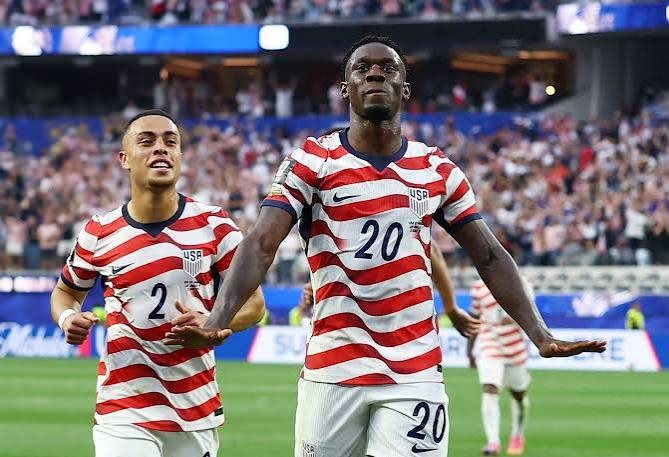
The deeper this tournament goes, the stiffer the competition becomes.
The US handled the group with room to spare. It did the job against Bosnia in the Round of 32, even after one of the more infuriating red card decisions you will see. Now comes the real test.
The US men will face Belgium on Monday night in the Round of 16 at Lumen Field in Seattle, with kickoff set for 8:00 p.m. Eastern / 5:00 p.m. local. The match will air on FOX and Telemundo, with streaming available through the usual FOX and Telemundo options.
And yes, we have been here before.
The US met Belgium in the same round in 2014, when Tim Howard delivered a superhuman performance with a World Cup-record 16 saves. Despite the barrage, Chris Wondolowski had a chance to win the game in the final moments of stoppage time but he put his shot over the bar. Belgium survived, took over in extra time, and won 2-1 behind goals from Kevin De Bruyne and Romelu Lukaku before Julian Green pulled one back late.
It was one of the most memorable and most painful US World Cup games. They were outplayed for long stretches, somehow nearly stole it at the death, then ran out of gas in extra time as Belgium’s attacking depth took over.
Twelve years later, Belgium is still relying on some of the same names, and that may be the reason this time will be different for the US. De Bruyne is still here. Lukaku is still here. Belgium is still talented, still dangerous, still carrying the weight of a golden generation that never quite got the trophy it was supposed to win.
But this is not 2014.
This US team is not just trying to survive. It has spent most of this tournament playing on the front foot. It has pressed aggressively. It has created chances. It has won games with a confidence and clarity that has not always existed for this program in World Cups. For the first time in a long time, a knockout game against a European power does not have to be treated like a miracle chase.
That does not mean the US should be favored. Belgium is the strongest team the Americans have faced in this tournament by a clear margin.
It also does not mean Belgium should feel comfortable. The US is the best team Belgium has seen in this tournament too.
Belgium has more proven top-end talent. The US has looked more convincing. Belgium already beat the US 5-2 in a March friendly. The US team that takes the field Monday night should be much stronger than the one that played that day. Belgium has world-class attackers. The US has the athleticism and structure to make this game uncomfortable.
For this US team to prove it has truly reached another level, they need to win this game.
This is the test.
How Belgium Got Here
Belgium won Group G, but it was not exactly a smooth ride.
The opener was a 1-1 draw against Egypt. Belgium had more of the ball, finishing with 54% possession, and narrowly winning the xG battle 1.35 to 1.08. Both teams created two big chances. Egypt struck first in the 19th minute, and Belgium had to chase the game for most of the night. Lukaku came on in the 66th minute and immediately changed the feel of the attack, helping force an own goal by making a hard run across goal on a dangerous cross.
That may be a sign of what the US sees from Belgium on Monday. They have plenty of talented attackers, but Lukaku gives them the most reliable focal point.
The second game was even more frustrating. Belgium drew Iran 0-0 despite controlling the match. They had 70% possession, 23 shots to Iran’s seven, seven shots on target to Iran’s three, and a 1.79 to 0.62 edge in xG. Nathan Ngoy’s red card in the 66th minute changed the final half hour, but Belgium had already spent most of the game failing to turn control into goals. They won 57% of the duels and still could not find the breakthrough.
The final group game brought an offensive explosion. Belgium hammered New Zealand 5-1 in the group finale, finally looking like the version of Belgium everyone expected. The xG was 3.64 to 0.24. Belgium put 10 shots on target to New Zealand’s two. They created four big chances and allowed none. Leandro Trossard had a massive game and Belgium turned what had been an underwhelming group stage into a first-place finish thanks to the goal outburst.
Belgium and Egypt finished tied on points, but Belgium won the group because of that final-game cushion.
Then came Senegal in the Round of 32, and that may be the most useful game to study for this matchup.
On paper, Belgium survived and advanced. In reality, Belgium was close to going home. Senegal led 2-0 deep into the second half and looked, for most of the night, like the better team. Through the first half, Senegal held only 49% possession but produced 1.83 xG to Belgium’s 0.16 and created three big chances to none. A lot of that came from the huge early Sarr chance off the post, but it was not a fluke. Senegal’s athleticism, directness, and willingness to attack Belgium before it could reset caused real problems.
Belgium’s midfield gave the ball away too often in the first half. Some of it was pressure. Some of it was sloppy passing. Some of it was the kind of casual tournament play that gets teams knocked out when the opponent is good enough to punish it.
At halftime, Lukaku came on and gave Belgium a better outlet. In the 55th minute, Rudi Garcia made a surprising move, bringing on Nicolas Raskin and Dodi Lukébakio for stars Doku and De Bruyne. That pushed Tielemans higher and gave Belgium a more direct left-footed option on the right wing. It also changed the energy of the game.
Still, even into the 85th minute, Senegal looked as likely to score the next goal as Belgium did. This was not a slow-building inevitable comeback. It was a late escape.
The full-game numbers, including extra time, were pretty jarring. Senegal finished ahead 3.58 to 1.74 on xG. Both teams had 19 shots and five shots on target. Senegal had six big chances to Belgium’s three. Senegal won 54% of the duels. Belgium did win 65% of the aerial duels, and that eventually mattered, because once the game got stretched and desperate, Belgium’s size, set-piece danger, and attacking depth gave them a way back.
That game should give the US both confidence and warning.
The confidence is obvious. Senegal’s athleticism bothered Belgium. Their pressure forced turnovers. Their directness exposed the Belgian back line. Their wide players found space. Sadio Mané, playing mostly tucked in from the left, created three chances, produced two big chances, and was fouled four times. That role is not identical to Christian Pulisic’s role for the US, but it is close enough to matter. Belgium can be hurt there.
The warning is just as obvious. Senegal did a lot right and still lost. Belgium has too much quality to assume one good half, or even 85 good minutes, is enough. If the US switches off, if it stops pressing in coordinated waves, if it starts giving away set pieces, if it lets De Bruyne or Tielemans pick their heads up, Belgium can turn a bad performance into a win very quickly.
That is what talented teams do.
What the March Friendly Tells Us
The easy version is to say Belgium beat the US 5-2 in March, so Belgium should be confident.
The more useful version is that the March friendly matters, but only so much.
Neither team was the same. The US was missing Chris Richards, Sergiño Dest, Tyler Adams, and Alex Freeman. Those are not minor absences. Richards, Adams, and Freeman especially change the defensive structure of this team. Richards gives the back line athleticism and composure. Adams gives the midfield a true ball-winner and transition shield. Freeman gives Pochettino the hybrid right back/right center back profile that makes the whole system work.
The US also started Tim Weah at right wingback, used only two true center backs, and had Tanner Tessmann dropping deeper to form something closer to a back three in possession. That is a slightly different setup than the one Pochettino has leaned on in this tournament.
Belgium was not at full strength either. Thibaut Courtois missed that game, though Senne Lammens, the Manchester United starting keeper, played well in his place. Belgium also started Charles De Ketelaere over Lukaku and was missing Trossard and Tielemans.
So that friendly is not a perfect preview. But it still matters because of what Belgium did to hurt the US.
The final score was ugly, but the game was not quite as one-sided as 5-2 suggests. The US was the better team in the first half. They created the better chances, including two big chances to Belgium’s zero, despite having only 41% possession. Pulisic and Balogun caused the Belgian defense problems. The US found space in transition. They got McKennie loose on set pieces. They made Belgium uncomfortable.
Even the full-game stats were not a complete disaster. The US finished with 52% possession. Each team created three big chances. Each team had six corners. Belgium did have 10 shots on target to the US’s five and 11 more touches in the opponent’s box, so this was not imaginary. Belgium absolutely took control in the second half. But the scoreline also included an unfortunate handball, some low-percentage finishing, and a stretch after the hour mark when both teams started making mass substitutions.
There was a wave of substitutions around the 60th minute, reducing the relevance of the remainder of the game. Belgium led 3-1 at that point and after that the game got looser and uglier.
The main concern from that friendly was how Belgium created their danger. Doku tormented the US, especially Weah and Johnny Cardoso. He was a threat every time he got one of them singled up and was able to go one on one.
The US continually failed to apply quick enough pressure to cutbacks. They lost track of midfield runners behind the ball. They were late closing down shots from the top of the box. They allowed Belgium to turn wide possession into central danger too easily.
Those are exactly the things that cannot happen Monday night.
The good news is that the personnel should be better suited to handle it. Dest is not a pure defensive stopper, but he understands the fullback role better than Weah. Freeman’s recovery speed and defensive instincts should give the US more cover on that side. Adams gives them a much better chance of cleaning up cutbacks and second balls. Richards gives them someone who can battle Lukaku, help on Doku, and still defend space behind the line.
The question is what version of Doku Belgium has available.
He has not been at his best in this tournament, dealing with an illness during the group stage, then missing the Iran game after the birth of his child. He was then subbed off against Senegal while Belgium was chasing the match. But anyone who watched the March friendly knows how quickly he can become the whole problem.
The US cannot leave Dest on an island against him. That does not mean double-teaming him recklessly and opening everything else. It means the nearest midfielder has to be ready to help. Freeman has to recognize when to slide over. Richards has to be prepared to defend the next action if Doku beats the first man.
And the US cannot get so obsessed with Doku that it forgets about Trossard.
Trossard leads the tournament in chances created, though a large chunk of that came against an overmatched New Zealand team. Still, he is dangerous. He finds pockets. He combines well. He is comfortable drifting inside and letting the fullback overlap around him. If everyone is tilted toward Doku, Trossard can quietly become the player who unlocks the game.
Belgium has multiple ways to hurt you. That is what separates this matchup from Paraguay, Australia, Bosnia, and Türkiye.
What Belgium Wants This Game to Become
Belgium under Rudi Garcia has generally been flexible, but the broad shape is familiar. In possession, it can look like a 4-3-3 that morphs into more of a 3-2-5. Tielemans often drops deeper to initiate the attack, sometimes next to Vanaken or Raskin, while the fullbacks push high and the wingers stay dangerous in wide areas. Out of possession, Belgium can settle into more of a 4-4-2 defensive shape.
They will press when the ball starts from the back. They are not a passive team. If Matt Freese, Tim Ream, Richards, and Freeman are slow or careless building out, Belgium has the players to jump passing lanes and turn one bad touch into a chance.
But Belgium’s press is not always airtight. If the first wave gets broken, they can leave gaps in midfield. When that happens, they often drop into a mid-block just below midfield and try to regain structure. That middle phase may be where the game opens up for the US.
The Belgian midfield has quality, but it is not the most athletic midfield the US will ever face. De Bruyne is still a genius with time and space. Tielemans can still dictate tempo and hit dangerous passes. Vanaken gives them size and composure. Raskin adds more bite. But this is an area where Adams, McKennie, and Tillman should feel like they can compete physically.
They need to do more than compete. They need to win this part of the field.
If De Bruyne has time, he can still punish you. He does not have the same range he once did, and he is not going to cover ground for 90 minutes like he did in his prime, but the ball off his foot is still different. Give him a pocket near the top of the box, and he can hit a shot from distance or slide a pass into a runner before the defense even realizes the window is open.
Tielemans is similar. He needs space to operate. He is not physically overwhelming. But if the US lets him receive comfortably, turn, and pick out diagonals, Belgium can start moving the American block from side to side and isolating the wingers.
The US midfield has to make both players uncomfortable.
That does not mean sprinting at them wildly and getting bypassed with one pass. It means identifying danger earlier than they did in March. It means closing the shooting lanes at the top of the box. It means tracking late runners on cutback passes. It means not letting Belgium’s wide play pull the back line apart while De Bruyne or Tielemans arrives into the exact space the US just vacated.
Belgium will also take long-range shots if they get the opportunity. De Bruyne, Tielemans, De Cuyper, and even the center backs are willing to hit one if the US line drops too far and no one steps out. That may sound like a lower-value attacking plan, but in a knockout game, one deflected shot from 22 yards can change everything.
The other thing Belgium will do, especially when pressed, is go long.
They can look for De Bruyne drifting into space. They can look for Lukaku as the target. They can look for De Ketelaere if he starts or comes on. That is where the aerial duels and second balls matter. Belgium won 65% of the aerial duels against Senegal, and even in a game where Senegal was better for long stretches, Belgium’s ability to compete in the air gave them a path back into the game.
If Lukaku starts, Richards becomes one of the most important players on the field.
Lukaku is not the same player he was at his peak, but he is still strong, still smart, still capable of pinning a center back, and still dangerous if he gets service in the box. Belgium may decide he is fit enough to start because De Ketelaere did not offer much against Senegal. De Ketelaere had just 16 touches in the first half before being subbed off, and Belgium looked more coherent once Lukaku gave them a true reference point.
If Lukaku is out there, Richards has to battle him physically without getting dragged into fouls. He has to move him off his spots. He has to make the long balls less clean. And just as importantly, Adams, Tillman, and McKennie have to be ready for the second ball. Lukaku does not need to win every duel cleanly. If he can just create chaos, Belgium’s runners can feed off it.
That is the game within the game. Belgium will try to use its stars to create isolated advantages. The US has to keep those moments connected.
How to Replace Balogun? Balogun Suspension Reversed
In a stunning late reversal, on Sunday FIFA announced that the suspension had been rescinded for a one year probationary period:
“By operation of Article 27 FDC, the implementation of the automatic match suspension for USA player Folarin Balogun is suspended for a probationary period of one (1) year.”
Without Balogun, the US would have been forced into a compromise. Ricardo Pepi would have been the cleanest replacement, but he does not stretch the game in the same way. Haji Wright would have brought more size and chaos, but not the same touch or pressing fit. A false-nine look with Pulisic or Reyna would have added creativity but removed the central outlet that helps the US get out under pressure.
Now they won’t need to worry about any of that. They can maintain the lineup that has won every game it’s played in this tournament and leverage Balogun’s athleticism and composure against a suspect Belgian back line.
We may never know exactly what kind of influence was wielded to reverse the suspension. Apparently there was a call from the White House. At the end of the day, the red card was a horrible decision to begin with. So Belgium can cry all they want, but it seems justice has been done here.
How Will the US Approach the Matchup?
I do not expect Pochettino to suddenly tear up the plan.
The US has built its tournament around controlled aggression. The wingbacks get high. The back line plays bravely. Adams gives the midfield a defensive anchor. Tillman helps link the buildout to the attack. McKennie pushes into the half-spaces and crashes the box. Pulisic drifts inside from the left and turns ordinary possession into danger. Balogun runs the line and gives the whole attack depth. The front line presses. The team tries to win the ball back immediately after losing it.
That is who they are now. The question is not whether the US should press. It has to press. Sitting deep and inviting Belgium to attack with Lukaku, De Bruyne, Trossard, Doku, and Lukébakio for 90 minutes is not a plan.
The question is how the US presses.
Against Paraguay, Australia, and Bosnia, the US could often suffocate opponents and keep the game in their half. Belgium will not be pinned back that easily. They have enough technical ability to play through pressure, enough size to go over it, and enough speed out wide to make the US pay if the press is disconnected.
So the press has to be aggressive but not emotional. The front line has to direct play into traps. The midfield has to be close enough to jump on second passes. The back line has to be high enough to compress the field, but not so high that one Doku run or Lukaku flick turns into a clean break.
That is a tough balance. That is why this is the test.
The US may also have to weather longer spells of possession than it has against most opponents in this tournament. Paraguay sat. Australia sat. Bosnia sat. Türkiye had more of the ball against the rotated US, but that game barely mattered. Belgium will not sit back and wait for the US to have the ball all night. They will push forward. Their fullbacks will get high. De Cuyper especially likes to join attacks and create width. Belgium will try to make the US defend real possession.
That creates danger, but it also creates opportunity.
This game will not look like the Bosnia game. There should be more space. Belgium’s back line is not the most athletic. Their midfield can be stretched. Their center backs can be vulnerable to balls in behind or over the top to athletic runners. Senegal found joy by getting Belgium’s wide players and fullbacks turned around. The US should be able to do the same if it executes.
And now, critically, the US has the player best suited to punish that space.
Balogun’s availability means the US can play through and over Belgium. It can attack on the ground with Pulisic, Tillman, McKennie, Dest, and Jedi Robinson, while still threatening the ball behind the center backs or into the channels. That combination is what makes Pochettino’s attack dangerous. If Belgium steps up, Balogun can run behind. If Belgium drops, Pulisic and Tillman can receive between the lines. If Belgium collapses toward Pulisic, Jedi can overlap. If the left side pulls the defense across, Dest can be isolated on the right.
That is how the US creates the kind of layered problems Senegal created, but with a more complete attacking structure.
Pulisic needs to be aggressive. His matchup may look a lot like Mané’s did for Senegal. Tucked in from the left, receiving between the lines, driving at defenders, drawing fouls, and forcing Belgium to collapse. If Pulisic can create the same type of panic Mané created, the US will have chances.
Jedi Robinson has to be relentless. His overlapping runs are not just about getting crosses in. They force Belgium’s right side to make choices. If the right back stays with Pulisic, Jedi can get around the outside. If the right back follows Jedi, Pulisic has the inside lane. If the right-sided midfielder tracks Jedi too deep, Tillman or Adams may get more room underneath. That is how the US turns movement into space.
Dest has to be brave but smart. He is one of the few US players who can beat a defender one-on-one and change the geometry of the field. But every time he goes, the US has to know where Doku is. That does not mean Dest should be scared. If Dest spends the whole game pinned next to the back line, Belgium wins that matchup by default. The US needs Dest’s attacking quality. It just needs Freeman and Adams ready behind him.
McKennie needs to get forward. This feels like a game where his box runs and set-piece presence will matter. Belgium lost him multiple times on set pieces in the March friendly. The US has to take advantage of corners and free kicks in the final third. Against better teams, you do not get unlimited chances from open play. A McKennie header, a Richards knockdown, a Ream back-post touch, one loose ball in the six-yard box could be the difference.
Tillman may be the key to linking everything together. He was strong in the March friendly and has become one of the most important players in the tournament for the US. His deeper role gives the US more composure next to Adams, but he also has the quality to receive under pressure and turn defense into attack. If Belgium’s midfield leaves gaps, Tillman is the player who can find them.
And Balogun has to keep Belgium honest. He does not need to score twice for his availability to matter. He needs to stretch the back line. He needs to make hard near-post runs. He needs to drag center backs into the channels. He needs to press with the same intensity the US has shown all tournament. He needs to make Belgium defend facing its own goal instead of standing comfortably in front of the box.
If he does that, the whole US attack becomes more dangerous.
Where the Game Will Be Won
The first key is the midfield battle.
The US should have the athletic advantage with Adams, McKennie, and Tillman. They need to press that edge. Belgium cannot be allowed to play at walking pace through De Bruyne and Tielemans. The US has to make them run, make them turn, make them defend, and make them play under pressure. De Bruyne can still pick out the pass that breaks a game open, but he should not be allowed to stand over the ball and survey the field.
The second key is the US right side.
Doku was the major problem in March. He may not be in top form now, but the US has to assume the dangerous version is still in there. Dest needs help. Freeman should provide some of that help. Adams will need to shade over at times. McKennie has to recognize when to recover. The goal is not to eliminate Doku completely, because that probably is not realistic. The goal is to make every Doku action happen under pressure, with cover behind it, and without opening easy cutbacks into the middle.
The third key is horizontal defending.
Senegal had success by stretching out to Belgium’s wide players and getting its wingbacks close enough to prevent Belgium’s wingers from receiving comfortably. The US needs a version of that. If Doku and Trossard are allowed to receive wide, turn, and attack with momentum, that is a problem. If they are receiving with Dest or Jedi already tight, with a midfielder nearby and a center back covering behind, that is a different game.
The fourth key is transition.
Belgium’s back line and midfield will turn the ball over. Senegal proved that. The US has to be ready to attack those moments immediately. Not every possession needs to become a track meet, but when Belgium loses the ball with its fullbacks high and its midfield stretched, the US has to go. Pulisic driving. McKennie running. Jedi and Dest sprinting into space. Balogun getting into the box. Tillman making the first forward pass.
That is where the best chances may come.
The fifth key is set pieces.
Belgium showed vulnerability on dead balls in the March friendly. The US has enough size and timing to cause problems. McKennie, Richards, Ream, Balogun, and even Freeman can be targets. Pulisic, Tillman, Berhalter, and Reyna can all deliver dangerous service. The US cannot waste corners. It cannot take short corners that go nowhere. It cannot let Belgium clear the first ball and then fail to counter-press the second.
At the same time, the US has to defend its own box cleanly. Belgium has too much size to give away cheap fouls. Lukaku, Onana, Mechele, Theate, De Ketelaere — there are too many bodies that can turn one restart into chaos. The US has been good enough defensively in this tournament, but Belgium is the first opponent that can punish a single lost runner or slow closeout.
The Outlook
This is the biggest game for the US men since the 2002 quarterfinal against Germany, if not ever.
That may sound dramatic, but it is true. The US has been to Round of 16 games since then. It has played knockout games with plenty of emotion and stakes. But this is different. This is a home World Cup. This is a team that has already won a knockout match. This is a chance to reach the quarterfinals for only the second time in the modern era. This is a chance to turn a fun tournament into something that gets remembered for decades.
Belgium is absolutely good enough to end it.
They have the better résumé. They have the bigger names. They have attackers who can punish one mistake. They have already beaten the US this year. They survived Senegal even after being outplayed for long stretches, which is both a criticism and a compliment. Lesser teams go home in that game. Belgium found a way.
But this is not a game the US should enter hoping to hang around.
The Americans have been the more convincing team in this tournament. Their best performances have been cleaner, more coherent, and more repeatable than Belgium’s. They have pressed better. They have defended transitions better than they did in March. They have found a system that fits the players.
Press with purpose. Win second balls. Do not leave Doku isolated against one defender. Close down De Bruyne and Tielemans before they can pick passes or shots. Track runners on cutbacks. Use the wingbacks to stretch Belgium. Get Pulisic attacking from the left half-space. Get McKennie into the box. Let Balogun run the channels. Make Belgium’s center backs defend movement instead of just standing in front of them.
This will not be Paraguay. It will not be Australia. It will not be Bosnia.
Belgium will have stretches. Belgium will create chances. Belgium will probably make the US uncomfortable in a way it has not been for most of this tournament.
That is fine.
The US does not need a fairy tale. It needs a performance.
For years, US fans have talked about wanting to see this program tested against the best teams in games that matter. Not friendlies. Not moral victories. Not “we played well for 60 minutes.” Real games. Real stakes. Real consequences.
Here it is.
Belgium ended the 2014 run in extra time. Monday night in Seattle, the US gets another shot.
This time, survival should not be the goal.
This time, with Balogun back in the lineup, the US should send Belgium home.