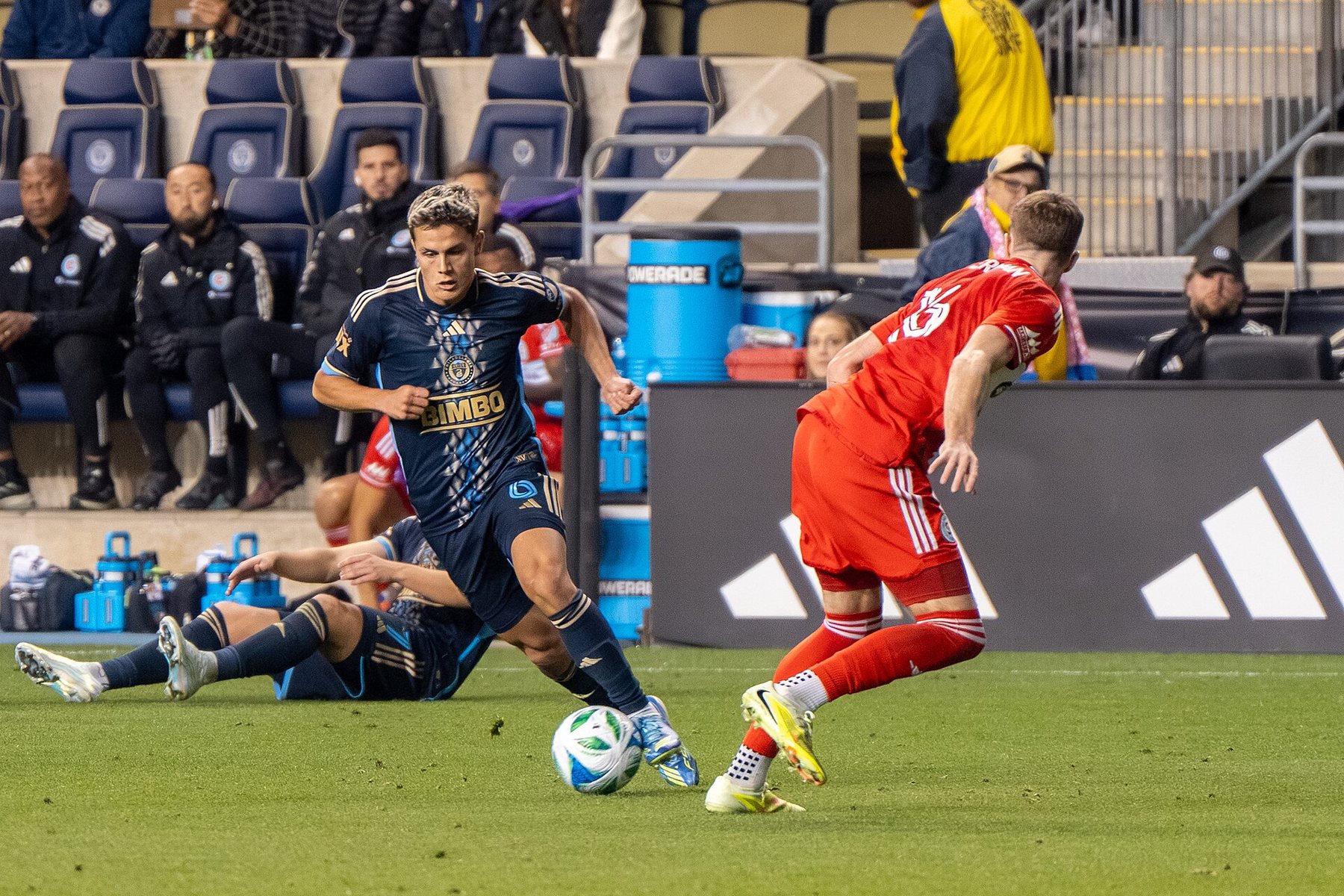
The next USMNT cycle will not require a complete rebuild. Many of the players expected to form the core of the team in 2030 are already established with the national team and should still be in or near their primes.
The more interesting question is which young players can force their way into that group.
A breakthrough does not necessarily mean becoming the next Christian Pulisic. It could mean winning a starting position, becoming a trusted tournament substitute, filling a specific tactical need or developing into a legitimate alternative when injuries and form inevitably disrupt the preferred lineup.
This is also not a pure ranking of talent. Cavan Sullivan may have a higher theoretical ceiling than nearly anyone in the American pool, but that does not mean he is more likely to play meaningful USMNT minutes during the first year of the cycle than a proven professional like Chris Brady or Rokas Pukštas. Club opportunity, positional competition, injuries, tactical fit and international commitment all matter.
The central distinction is between probability and upside. Some of these players already look close. Others are bets on rare talent, improved health or a developmental leap that may never come.
The profiles below are grouped by the kind of bet each player represents, not presented in numerical order. The complete 1-to-20 ranking and a plain-language explanation of the scoring model appear at the end of the article.
The Best Bets
Noahkai Banks
There is one significant qualification with Banks: he still has to choose the United States.
If he does, he will have a strong chance to make the 2030 roster and could become a leading candidate to start at center back. More than 1,700 Bundesliga minutes as a teenage defender is stronger first-team evidence than nearly anyone else on this list possesses.
Banks is not just surviving in a major European league. He is being trusted to defend large spaces, step into midfield and help Augsburg progress the ball from the back. He completed more than 90 percent of his passes during the 2025-26 season and looks comfortable trying to break lines rather than immediately sending the ball toward the nearest sideline.
That skill set would be valuable for the US. American center backs have generally been divided between strong athletes and dependable passers. Banks has a chance to combine the two. He is mobile enough to defend away from his own box and confident enough in possession to help the team play through pressure.
He is not a finished player. He can be too aggressive stepping forward, and his aerial play is not always as dominant as his size suggests it should be. Teenage center backs make mistakes, especially when asked to play proactively in the Bundesliga.
Those concerns are developmental rather than disqualifying. The larger issue is his international decision. Banks is eligible for Germany, and the US should not build its future plans around a player who may never join the program.
But if he selects the United States, the conversation changes quickly. He would not merely become another young defender worth monitoring. He would enter the cycle as one of the best bets to claim a major role.
Chris Brady
Goalkeeper remains one of the most open positions in the USMNT pool, and Brady has already crossed several barriers that stop young keepers from developing.
He has started for multiple seasons in MLS, handled the normal fluctuations that come with playing behind an inconsistent team and already received exposure to the senior national-team environment during the 2026 cycle. At 22, he has far more professional experience than most goalkeepers his age.
Brady’s best traits are relatively traditional. He has a large frame, reacts well from close range and is comfortable coming through traffic to claim crosses. There is value in a goalkeeper who can consistently handle the basic responsibilities of the position before the conversation moves to ambitious distribution patterns.
His passing is still a question. He is not yet the type of goalkeeper who will transform the buildup by stepping outside his box or repeatedly splitting the first line of pressure. His save numbers have also fluctuated, although goalkeeper statistics can be especially dependent on the quality and type of shots a team allows.
Brady does not need to become an elite possession goalkeeper to earn a significant USMNT role. He needs to remain a dependable starter, continue improving with the ball and prove that his shot-stopping holds up when the level rises.
The goalkeeper position often develops unpredictably. A backup can become a starter after one transfer, while a highly rated prospect can lose two years sitting behind an established veteran. Brady has already secured the opportunity that many of his competitors are still searching for.
That gives him the highest floor of the young American goalkeepers and makes him one of the safest bets to remain involved through 2030.
The Golden Tickets
These are not necessarily the four players most likely to break through. They are the prospects capable of changing the level of the team if their development reaches its upper range.
Cavan Sullivan
Sullivan will still be only 20 when the 2030 World Cup begins, which sounds absurd considering how long he has already been discussed as the future of American soccer.
The attention is understandable. Sullivan sees passing windows early, handles the ball comfortably in tight areas and attempts creative actions that most players would not recognize, much less execute. The US has produced good attacking midfielders, but it has rarely produced a player with this combination of imagination, close control and long-term technical upside.
He has also begun moving beyond the stage where every discussion is based on youth tournaments and training reports. Sullivan is starting to earn more regular MLS minutes for Philadelphia, giving him the opportunity to learn which of his ideas work against senior defenders and which ones end with him getting knocked off the ball.
The physical side remains important. He must become strong enough to receive between the lines without being removed from the possession by the first contact. He also needs to improve his defensive consistency and learn when to attempt the spectacular pass rather than forcing the game.
Then there is the Manchester City question. Joining an elite organization can accelerate a player’s tactical and technical education, but it does not guarantee first-team soccer. There are plenty of gifted teenagers scattered around the academies and loan networks of the largest European clubs.
Sullivan’s pathway may be complicated, but the ceiling is obvious. He is the player on this list with the clearest chance to become a true attacking centerpiece rather than merely another useful option.
Adri Mehmeti
Calling a 17-year-old the “American Rodri” is a good way to place a ridiculous amount of pressure on him. It is also easy to understand why the comparison is tempting.
Mehmeti plays a position the US has rarely filled with a genuine organizer. American midfield development has produced plenty of runners, ball-winners and energetic two-way players. It has been less successful at producing midfielders who can receive under pressure, control the tempo and consistently play through an opponent’s shape.
Mehmeti has already handled significant responsibility in the middle of the field for the New York Red Bulls. He scans before receiving, recognizes pressure and usually moves the ball before the defense can collapse on him. He also anticipates passing lanes well enough to contribute defensively without chasing every movement.
His game is based more on intelligence and timing than overwhelming athleticism. That creates both the excitement and the concern.
If his awareness and technique continue developing, his lack of exceptional size or speed may not matter. If he cannot protect himself in larger spaces or escape faster international pressure, those physical limitations will become more obvious as the level rises.
He also needs to do more than survive in MLS. The next step is to control games, play forward more consistently and add progressive carrying when passing lanes close.
The Rodri comparison should remain a question rather than an expectation. Mehmeti does not need to become one of the best midfielders in the world to help the US. Developing into a press-resistant six or deeper eight who can organize possession would already give the national team something it has rarely had.
Zavier Gozo
Gozo may be the strongest combination of current production and long-term attacking upside in the American player pool.
Through the early part of the 2026 MLS season, he recorded six goals and four assists in 1,327 minutes for Real Salt Lake. More importantly, the production reflects a repeatable style of play. He wants to receive facing the defender, accelerate into space and attack the box.
That directness is immediately useful at the international level. Tournament games often become cautious and compressed, especially late, and the US has frequently lacked substitutes capable of changing the rhythm by attacking a defender rather than circulating the ball around him.
Gozo can remain wide, make diagonal runs behind the back line or operate as an aggressive wingback. That versatility could get him into the team before his final position has been completely settled. There were already supporters who wanted him considered for the 2026 roster, which illustrates how quickly his senior production has changed expectations.
The next challenge is refinement. His decisions in the final third can be rushed, and young attackers often discover that an early scoring run is easier to produce than sustain. Defenders will adjust to his preferred movements and force him toward his weaker foot.
Gozo does not need to lose the aggression that makes him dangerous. He needs to learn when to use it. If he can combine his athleticism with more patient final-third choices, he has the potential to become much more than an energetic bench option.
Mathis Albert
Albert is almost entirely a projection, but it is a projection based on an unusual signal.
He has barely played first-team soccer, yet he became the youngest American to appear in the Bundesliga, trained regularly around Borussia Dortmund’s senior team and earned positive attention during the club’s 2026 preseason. A 17-year-old American winger receiving genuine first-team consideration at Dortmund is not something to dismiss because the sample is small.
Albert’s defining quality is his acceleration. He is primarily an inverted left winger who can attack outside, cut onto his right foot or make diagonal runs behind the defense. He plays with the confidence of a player who expects to beat the first defender.
Whether that translates against Bundesliga opponents is still unknown. He needs to become stronger, improve his work without the ball and make better decisions after creating the initial advantage. Beating a fullback is only useful if the following shot or pass creates something.
Dortmund also presents a difficult environment. The club develops young players, but it recruits them from across the world. A strong preseason does not guarantee a place once competitive matches begin.
The 2026-27 season should reveal much more. If Albert begins making Bundesliga squads and receiving real substitute minutes, he could climb this list faster than anyone. If he spends the season stuck between youth soccer and occasional senior training, the projection will become much harder to defend.
Next Up?
These players have already shown enough to move beyond pure projection, but each faces a specific question that will determine whether he becomes an important USMNT option or remains on the edge of the pool.
Kevin Paredes
Paredes would have been a strong candidate for the 2026 roster if injuries had not disrupted much of the previous two seasons. When healthy, he has already shown he can contribute in the Bundesliga through vertical ball carrying, pressing, defensive work and well-timed runs from wide positions.
His versatility as a winger, wingback or attacking fullback gives a national-team coach several ways to use him. The problem is availability. Foot surgery and a later muscular injury removed too much of the 2025-26 season, and his club situation became less certain after Wolfsburg’s relegation.
Paredes does not need to prove that the talent exists. He needs a healthy season in a stable role. If he gets one, he could move directly into the 2030 roster conversation.
Paxten Aaronson
Aaronson has already played in Germany, the Netherlands and MLS, giving him one of the stronger professional foundations in this group. He presses well, combines quickly and makes intelligent runs into the box.
The uncertainty is positional. He can play as an attacking midfielder, advanced eight or narrow winger, but has not fully claimed any of those roles. His versatility becomes valuable only if it gives a coach multiple solutions rather than leaving him behind better specialists.
Aaronson may not develop into the player who controls the US attack, but international rosters need reliable players who understand pressing, spacing and off-ball movement. Sustained production and a clearer role as a two-way eight could bring him back into the senior picture.
Diego Kochen
Kochen has the highest technical ceiling among the young American goalkeepers, but he still lacks the senior evidence Brady already possesses. He is composed in buildup, willing to invite pressure and capable of passing through the first line. He also has quick reactions and good one-on-one technique.
His loan from Barcelona to Lyngby is the critical test. Training in an elite environment cannot replicate dealing with crosses, rebounds and mistakes every weekend with points at stake.
Kochen must win the starting job, become stronger in the box and show that his distribution holds up under pressure. A full season as a starter could move him above Brady quickly. Another season on the bench would make the projection much harder to defend.
Rokas Pukštas
Pukštas has one of the strongest senior résumés on the list. He has made more than 100 appearances for Hajduk Split and scored nine league goals in 2,456 minutes during the 2025-26 season.
He is a vertical, box-to-box midfielder whose best qualities are pressing, physicality and late runs into scoring positions. He recognizes where crosses and loose balls will fall and attacks those spaces aggressively. That gives him a distinctive trait even if he never becomes a midfield organizer.
The question is how his game translates against stronger competition. He can become peripheral when asked to dictate possession, and the Croatian league requires some adjustment when evaluating his production. Still, his senior floor is high. A productive move to a stronger league or convincing USMNT performances could establish him as a useful international eight.
Benjamin Cremaschi
Cremaschi’s first season with Parma produced little club evidence. He played only 129 Serie A minutes before injury interrupted the year. His U-20 performances were much more encouraging: he captained the US, scored five goals at the 2025 U-20 World Cup and won the tournament’s Golden Boot.
His best qualities appear without the ball. Cremaschi presses, covers ground and makes assertive runs beyond the forwards. He can contribute goals without needing to dominate possession.
He still needs a clearer senior identity. He is not yet a top creator, deep controller or dominant ball-winner, and his first touch can become loose under pressure. His pathway is as a tactically reliable, goal-contributing eight. To reach it, he must recover fully and earn meaningful Serie A minutes.
Lottery Tickets
The label is not dismissive. Each player has a legitimate pathway, but all require a larger leap, a specific opening or a more complete body of evidence.
Julian Hall
Hall has already cleared an important hurdle by scoring against adults. He produced nine goals during the first half of the 2026 MLS season through sharp movement, acceleration and intelligent runs across center backs.
His game currently fits transition soccer better than a traditional lone-striker role. His hold-up play, aerial influence and back-to-goal strength remain developmental, and he also faces significant competition at striker. Poland remains an international alternative as well.
Still, goals change the conversation. If Hall sustains the production while rounding out his all-around game, he will become difficult for the US to overlook.
Niko Tsakiris
Tsakiris is one of the more polished creators in the MLS group. He can carry through pressure, vary the tempo and create through combinations, switches and set pieces. His two goals and four assists in 908 early-season minutes during 2026 showed that the technical quality can produce senior results.
The problem has been continuity. Injuries have repeatedly interrupted his progress, and the USMNT pathway is crowded among advanced midfielders.
Tsakiris needs to stay healthy and prove that he can function as a genuine two-way eight rather than requiring a free attacking role. The talent is close. The availability and role are less certain.
Peyton Miller
Miller is an explosive left-sided runner who can play as a fullback, wingback or winger. He is dangerous overlapping, carrying in transition and arriving at the back post. Three goals in his first 804 MLS minutes of 2026 were an impressive return for an 18-year-old defender.
His attack has developed faster than his defending. Positioning, physical matchups and final-ball selection remain inconsistent.
The opening behind Antonee Robinson gives Miller a real pathway, but speed alone will not win an international job. He must become dependable when isolated defensively and when protecting the back post.
Beau Leroux
Leroux emerged as a balanced two-way MLS midfielder, recording two goals and three assists in more than 1,100 early-season minutes for San Jose. He covers ground, competes for loose balls, moves possession forward and arrives late around the box.
He does not possess one obvious elite trait, and at 22 he has less developmental runway than many players on the list. That lowers his ceiling but may not eliminate his usefulness.
International coaches need players who can understand several responsibilities and enter a game without disrupting the structure. Leroux’s pathway is probably as dependable midfield depth rather than a centerpiece.
Cole Campbell
Campbell remains a high-upside winger despite his stalled pathway at Dortmund. His speed, directness and ability to attack either flank give him tools the US could use.
What he lacks is senior proof. His end product and defensive concentration remain inconsistent, and there is limited evidence of how he handles settled defenses that deny him space to run behind.
The move to Elversberg creates a clean test. A productive Bundesliga season could move him sharply upward. Another year without meaningful minutes would make the projection increasingly difficult to defend.
Luca Bombino
Bombino is a calmer and more possession-oriented left-back prospect than Miller. He can step into midfield during buildup, combine under pressure and progress the ball without forcing the action.
His athletic ceiling is less obvious. He lacks elite recovery speed and can be vulnerable when isolated against dynamic attackers.
Bombino’s route depends on reliability. If he becomes a dependable defender whose positioning and passing improve the buildup, he could offer the US a useful tactical alternative at left back.
Francis Westfield
Westfield has already handled meaningful MLS minutes for Philadelphia and shown he can contribute on both sides of the ball. His omission from the higher tiers is more about pathway than current performance.
Right back is crowded, so Westfield needs a defining advantage. That could be elite one-on-one defending, consistent final-third production or the flexibility to play on either side.
Being a good young MLS fullback is enough to earn attention. To win an international role, he must show which problem he solves better than the other available options.
Neil Pierre
Pierre may not remain in this tier for long. The 6-foot-5 center back was named the 2025 MLS NEXT Pro Defender of the Year, gained senior experience on loan at Lyngby and immediately contributed after returning to Philadelphia.
His size gives him obvious aerial and set-piece value, but his mobility is the more interesting trait. He can step forward and defend outside the penalty area better than many players with his frame.
The questions are refinement and sample size. His progressive passing remains inconsistent, and quicker attackers can test his turning radius. Center back should be open during the next cycle, however, and Pierre’s physical ceiling gives him a chance to rise quickly with regular MLS minutes.
Cooper Sanchez
Sanchez has already accumulated substantial MLS experience for an 18-year-old midfielder. That matters because he has moved beyond brief developmental appearances and shown he can handle the speed and physicality of senior soccer.
What remains unclear is his eventual role. He has played in central and advanced midfield positions but does not yet possess an obvious defining trait. Mehmeti projects as an organizer, Pukštas as a goal-scoring eight and Tsakiris as a creator. Sanchez’s identity is less settled.
His early experience gives him a strong foundation. The next step is separation. He must develop into a consistently progressive passer, creator, controller or defensive presence rather than remaining a versatile young midfielder without a clear international specialty.
What Comes Next
Prospect lists rarely age neatly. Some of these players will accelerate after the right transfer or coaching change. Others will stall because of injuries, limited minutes or competition at their position. A few players who currently look like long shots will inevitably pass more established names.
The broader question is whether this group can add qualities the USMNT has often lacked: a midfielder who controls games under pressure, another reliable source of one-on-one attacking threat, greater depth at center back and a goalkeeper who clearly claims the position.
The US does not need all 20 players to develop into internationals. It needs a handful to become legitimate starters or valuable tournament options. That would deepen the pool, create real competition for places and give the next coach more ways to solve matches against opponents beyond CONCACAF.
By 2030, the order of this list will almost certainly look wrong. The hope is that it looks wrong because several players developed faster and further than expected.
Methodology + complete ranking
How the 2030 Breakthrough Score Works
The ranking below is ordered by total Breakthrough Score, from highest to lowest. The score is a weighted editorial model designed to answer one question: Which young players are the best bets to earn meaningful USMNT roles during the 2030 cycle? It is not a pure talent ranking, a forecast of World Cup selection or a claim that a one-point difference is meaningful.
Each player receives points in six categories that add up to 100. The heaviest weight goes to evidence the player has already produced against senior professionals. The model then balances that evidence against age, upside, opportunity with the national team, recent momentum and—when relevant—international commitment.
- First-team proof FTP · 25 points
- How much meaningful senior soccer has the player already played, how much responsibility has he handled and how strong was the competition? A high score means the projection rests on professional evidence rather than youth reputation.
- Age-adjusted performance AAP · 20 points
- How impressive has the player’s production been for his age, position and league? This prevents raw goals, assists or minutes from being compared without context.
- Long-term ceiling CEIL · 20 points
- How valuable could the player’s technical, physical and tactical profile become if development goes well? This is the most projection-heavy part of the model.
- USMNT pathway PATH · 15 points
- How realistic is the route to an international role? Positional need, competition for places, tactical fit and the ability to fill multiple jobs all affect this score.
- Development trajectory TRAJ · 10 points
- Is the player’s club role and responsibility expanding right now? Rising minutes and responsibility score well; injuries, stalled progression or an uncertain role lower the mark.
- U.S. commitment USA · 10 points
- How likely is the player to be available and committed to the United States? A committed player receives full credit. An unsettled dual-national receives less because the USMNT cannot benefit from development that leads to another country.
| Rank | Player | Age | Position | Breakthrough Score/100 |
|---|---|---|---|---|
| 1 | Zavier Gozo | 19 | Winger / wingback | 90 |
| 2 | Noahkai Banks | 19 | Center back | 87 |
| 3 | Julian Hall | 18 | Striker / wide forward | 86 |
| 4 | Adri Mehmeti | 17 | Defensive / central midfielder | 85 |
| 5 | Neil Pierre | 18 | Center back | 84 |
| 6 | Chris Brady | 22 | Goalkeeper | 82 |
| 7 | Rokas Pukštas | 21 | Box-to-box No. 8 | 81 |
| 8 | Cavan Sullivan | 16 | Attacking midfielder / winger | 81 |
| 9 | Niko Tsakiris | 21 | No. 8 / No. 10 | 80 |
| 10 | Paxten Aaronson | 22 | Attacking midfielder / No. 8 | 78 |
| 11 | Mathis Albert | 17 | Winger | 77 |
| 12 | Diego Kochen | 20 | Goalkeeper | 76 |
| 13 | Benjamin Cremaschi | 21 | Box-to-box No. 8 / attacking midfielder | 76 |
| 14 | Kevin Paredes | 23 | Wingback / winger | 75 |
| 15 | Peyton Miller | 18 | Left back / wingback / winger | 74 |
| 16 | Cooper Sanchez | 18 | Central / attacking midfielder | 73 |
| 17 | Beau Leroux | 22 | Central / defensive midfielder | 72 |
| 18 | Francis Westfield | 20 | Right back / left back | 71 |
| 19 | Cole Campbell | 20 | Winger | 70 |
| 20 | Luca Bombino | 20 | Left back | 69 |