Five immediate takeaways from the Ravens’ 41-23 win over the Colts, before any rewatch.
These are the five things that stood out watching the Ravens live, before going back through the highlights, snap counts and tape to figure out whether the first impression was actually right.
And the first impression from Jesse Minter’s debut was a pretty good one.
The Ravens beat the Colts 41-23, piled up 506 yards and gave us an opening afternoon that was equal parts exciting and reassuring. There were injuries that could complicate Week 2, some early defensive problems and enough penalties to keep this from being perfect. But after an 8-9 season defined by injuries, inconsistency and an inability to finish, this looked a lot more like the Ravens we expected to see.
Here are my first five takeaways.
1. This is gonna be fun
The first drive was concerningly easy for Indianapolis, as the Colts drove straight through the Ravens defense on their opening possession, finding plenty of room in the secondary and scoring without much resistance. After an offseason spent imagining what Jesse Minter could do with this defensive talent, it was not exactly the introduction anyone had in mind.
Then Lamar Jackson and the offense came onto the field.
Three plays later, Lamar was in the end zone.
From that point forward, the Ravens looked like the team we hoped they could be.
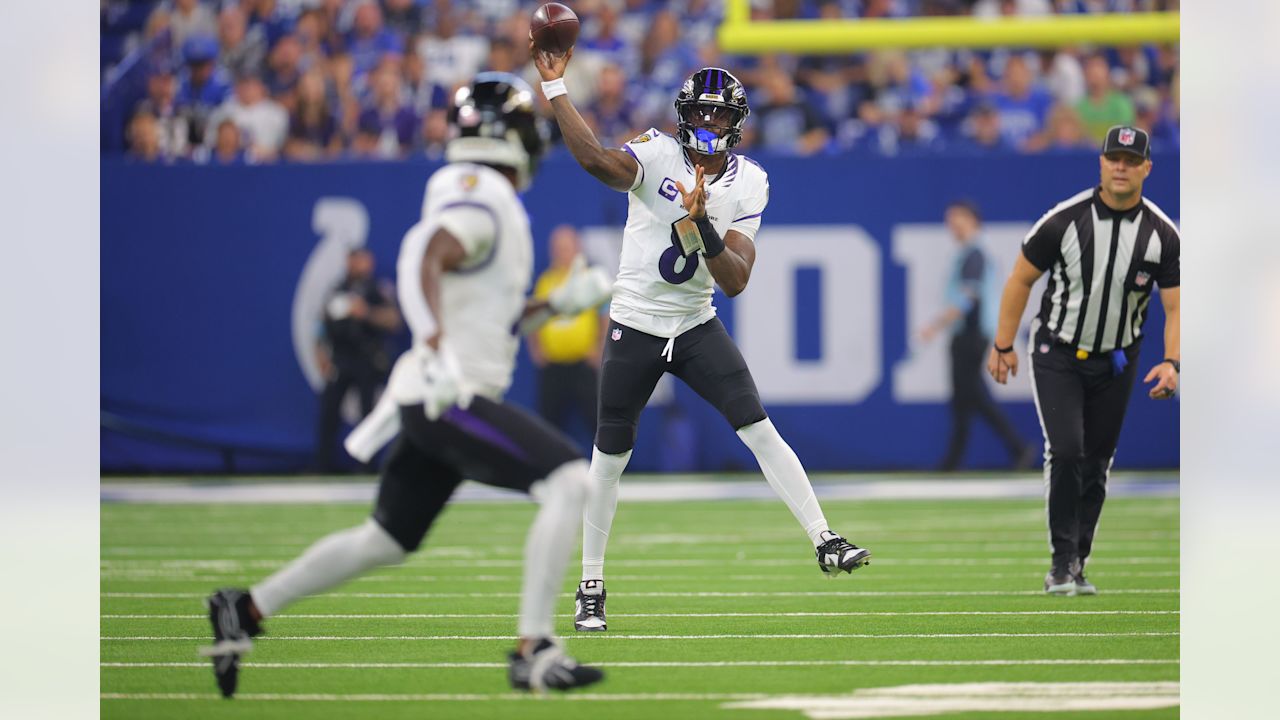
The most encouraging part was not any one individual performance. It was seeing all the pieces Baltimore spent the offseason imagining actually function together. A healthy Lamar was moving differently than the compromised version we watched for much of last season. Zay Flowers looked uncoverable. Derrick Henry still looked perfectly capable of punishing a defense for four quarters. Declan Doyle’s offense created explosive plays without requiring Lamar to create everything himself, though occasionally he still did.
Jackson finished with 324 passing yards and added another 40 on the ground. The rushing number hardly captures the effect he had when plays broke down. There were multiple snaps where Indianapolis appeared to have done its job, only for Lamar to escape the pocket and turn a defensive win into another Ravens first down.
That is the version of Lamar the Ravens desperately missed last season. Not simply a quarterback capable of running designed keepers, but one who can flip a play on its head when the defense thought it did everything right.
And then the ageless wonder, Derrick Henry.
Apparently his legs did not receive the memo that he is 32 years old.
Henry ran for 144 yards and three touchdowns, including a 32-yard score, and was still being fed the ball as the Ravens put the game away in the fourth quarter. The question with an older running back is rarely whether he can still look good on his first carry in September. It is whether the burst, power and workload can hold up. We obviously learned nothing about the full-season part of that equation Sunday, but he looked every bit like Derrick Henry.
The entire offense was locked in and firing on all cylinders until two concerning injuries, when Zay Flowers and Ja’Kobi Lane both left and never returned. The Ravens did not score in the third quarter, and the offense understandably looked less dangerous without its best wide receiver.
But the healthy version of this offense produced 506 yards in Doyle’s first game calling plays.
One week is one week. Still, this could be a lot of fun.
2. The receiver room suddenly looks a lot more concerning
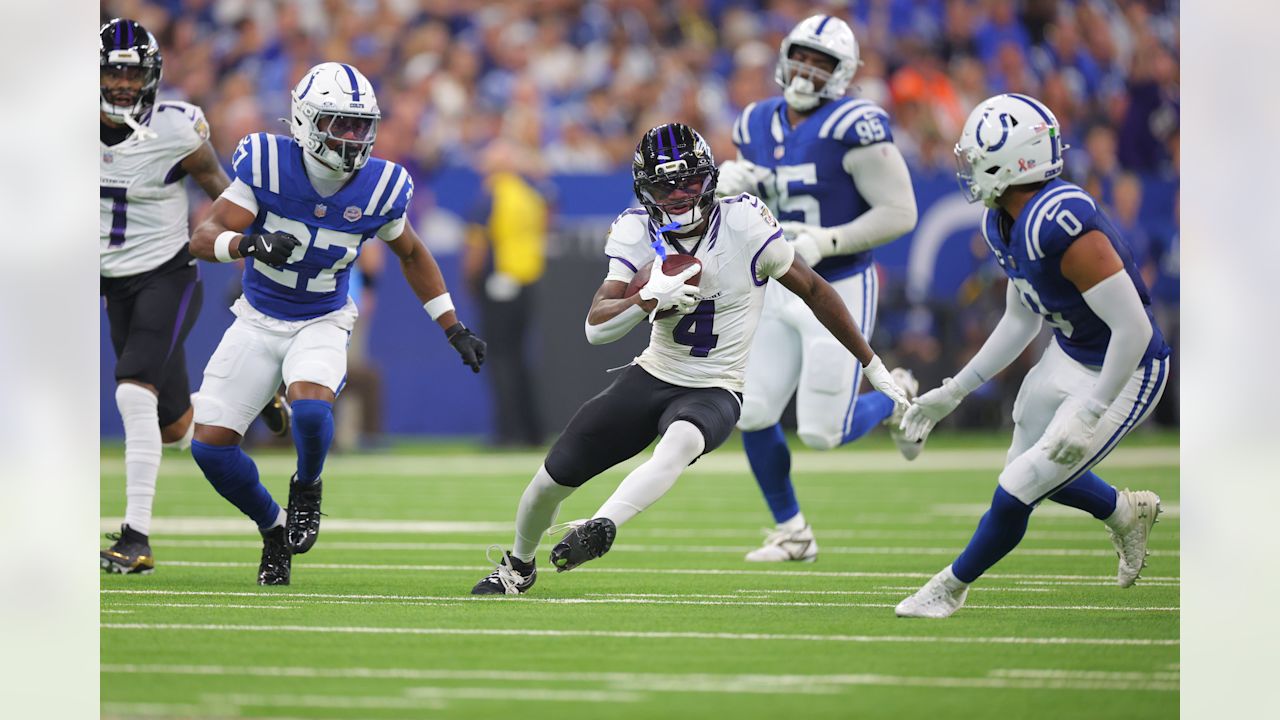
Statistically, Flowers had already produced the best receiving yardage game of his career before halftime. He caught five passes for 150 yards and a touchdown, highlighted by the 54-yard score that pushed the Ravens’ lead to 21-6. He was consistently creating space and then turning that space into big yardage after the catch.
It was exactly the kind of performance you wanted to see after the Ravens committed to making him the centerpiece of the receiving game.
Then the hamstring tightened up.
Flowers eventually was ruled out, and rookie Ja’Kobi Lane joined him after suffering a wrist injury. Suddenly a receiving room that was punishing the Colts early in this game feels very thin heading into the home opener next weekend.
Chris Moore deserves credit here. Activated from the practice squad for the opener, the 33-year-old Ravens reunion tour produced a 53-yard reception that helped set up Henry’s fourth-quarter touchdown. He also had added several long kick returns.
The bigger question is what happens if either injury carries into next Sunday. Flowers is not merely Baltimore’s WR1. Today showed how much of the explosiveness of this passing game can run through him. Losing Lane at the same time removes one of the players the Ravens hoped could make the depth behind Flowers more credible.
That puts considerably more responsibility on Rashod Bateman (who was invisible today), Moore and LaJohntay Wester, while Mark Andrews inevitably becomes even more central to the passing game.
Minter didn’t comment on the injuries, though rumor has it that Lane broke his wrist. We will await the reports later this week to see how banged up they are for the Saints. Deandre Hopkins may need to sit near his phone this week.
3. The Ravens took care of business in the 4th quarter
When Indianapolis cut the lead to 31-16 and the Ravens had gone scoreless throughout the third quarter, the nerves started to kick in.
Here we go again?
Ravens fans have watched too many comfortable leads turn into unnecessarily stressful fourth quarters to sit completely relaxed when an opponent gets within two scores. Add Flowers and Lane leaving the game, and there was enough happening to make the familiar anxiety understandable.
This time, the collapse never came.
The Ravens opened the fourth quarter by finishing a 77-yard touchdown drive, with Henry powering in from three yards to restore a 22-point advantage. The Colts immediately answered with a touchdown of its own. But rather than giving the ball back quickly and allowing the Colts another chance to create some chaos, the Ravens went 43 yards in 10 plays and burned 6:17 off the clock. Loop finished the drive with a 45-yard field goal, making it 41-23 with barely four minutes remaining.
Game essentially over.
That is what closing a game looks like. Not just sitting on the football from the moment you build a lead, but continuing to move the ball, keeping the clock ticking and suffocating the life out of the game.
It is only one game. The late-game issues that plagued this team did not magically disappear because they handled a Week 1 lead correctly.
But after everything we watched last season, there was something satisfying about a fourth quarter becoming progressively less stressful instead of more stressful.
4. Dime looks like a major part of Minter’s defense
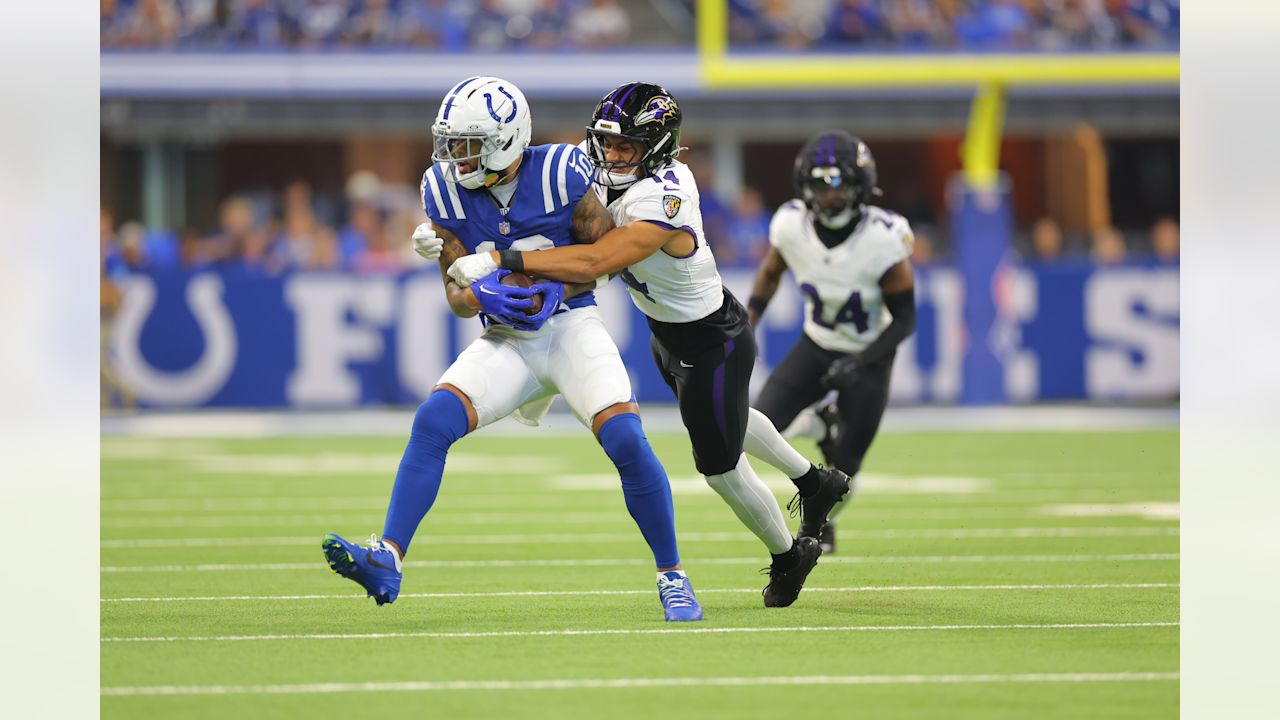
The thing that caught my attention most watching live was the use of dime on defens. I went back through the first half to check it. By my count, the Ravens played at least 10 snaps with six defensive backs in the first half alone, generally turning to the package when Indianapolis reached an obvious passing down and distance.
There weren’t official snap counts out at the time of writing, but it was definitely a heavy part of the defensive plan.
The interesting part is not necessarily just how often they used it.
The Ravens were already one of the NFL’s heaviest dime teams under Zach Orr last season, playing six defensive backs on 23.8% of their snaps. Orr’s usage could fluctuate dramatically by matchup, from just two dime snaps against Kansas City to 28 against Cincinnati.
What also caught my attention was how Minter constructed it.
Keyon Martin generally took over in the slot, with Kyle Hamilton moving into the box to function essentially as the second linebacker next to Roquan Smith.
Calling that dime is technically accurate. It also undersells what Hamilton allows the Ravens to do.
Baltimore can put six defensive backs on the field without necessarily becoming a conventional light defense. Hamilton is big enough and physical enough to fit the run like a linebacker, but he can also cover, blitz or rotate away from the line of scrimmage after the snap. Martin gives Minter another legitimate coverage player inside instead of forcing Hamilton to spend the down matched up in the slot, putting the offense in an awkward spot.
The personnel says dime. Hamilton’s alignment can make it look more like nickel. And none of that tells the quarterback whether Hamilton is actually going to remain in the box once the ball is snapped.
There is also some continuity here. Orr used Hamilton in similar ways, particularly after shifting heavily toward dime early in the 2024 season. Jesse Minter’s Chargers were another one of the league’s most dime-heavy defenses last year, using it on 23.3% of their snaps.
Minter appears very comfortable making it a core passing-down package, and Baltimore now has a pretty natural division of labor for it: Martin handles the slot while Hamilton gets to become the positionless problem Minter inherited him to be.
Ten first-half snaps is enough to make that worth watching.
5. Tyler Loop answered the question. For one week.
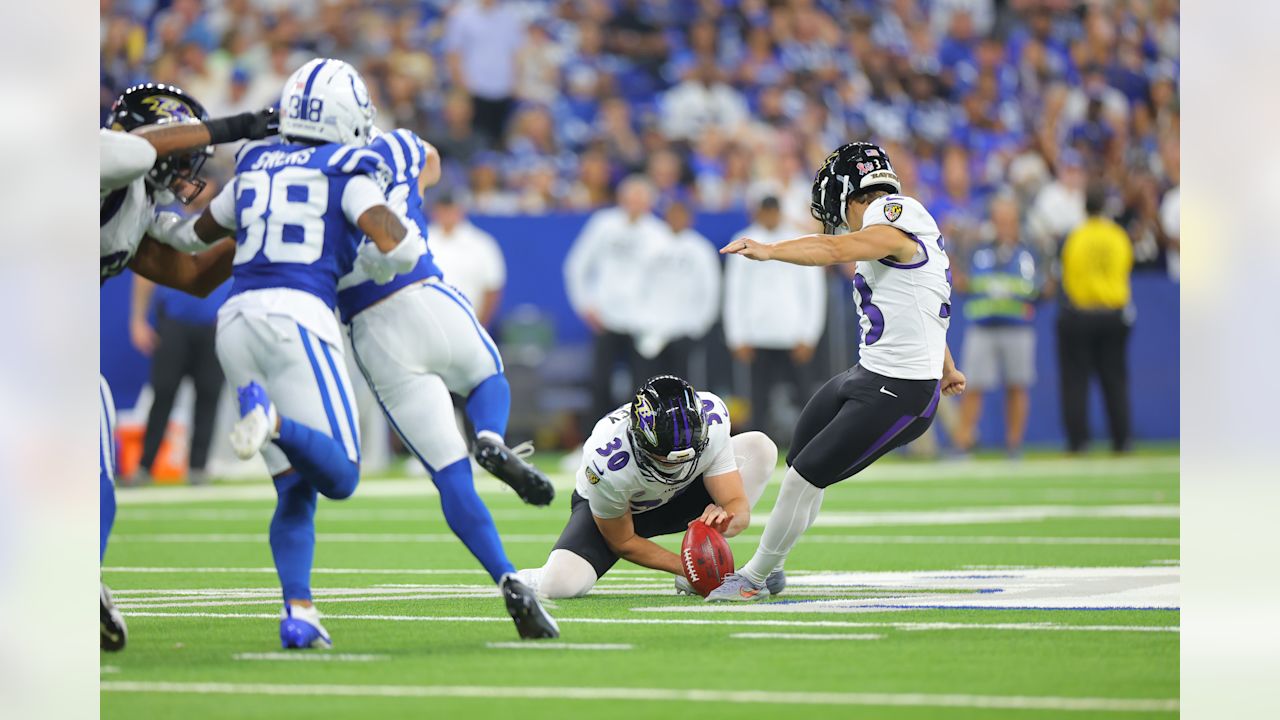
There was no way Tyler Loop was going to erase Pittsburgh with one kick in Indianapolis.
But a 57-yarder is a pretty good place to start.
Loop’s final meaningful kick of last season was the 44-yard miss in Pittsburgh that ended the Ravens’ season. Then he had enough issues in preseason to amp up the concern level to the max. Eventually, Loop was going to have to make a difficult kick in a real game and begin replacing that memory with better ones.
With two seconds left in the first half, the Ravens sent him out from 57 yards. Loop drilled it to give them a 31-13 halftime lead. He later added the 45-yarder that effectively finished the game in the fourth quarter and made all five of his extra points.
Kickers are evaluated over months, not afternoons, and the real test will eventually come when Loop is standing over a kick that determines whether the Ravens win or lose. A 57-yarder with a substantial lead does not recreate the pressure of Pittsburgh, but confidence has to begin somewhere.
Loop entered this season with a legitimate question hanging over him and went 7-for-7 on his kicking opportunities in Week 1, including the longest field goal of his NFL career.
For one afternoon, there was nothing else the Ravens could have asked from him.