With the first-round group stage games completed, the first lap of the 2026 World Cup has delivered just about everything you could ask for. Goals. Upsets. Superstar performances. Goalkeeper heroics. Favorites looking terrifying. Favorites looking completely stuck. And, perhaps most importantly, a much more open tournament than many expected.
The quick data baseline tells the story: 75 goals in 24 games, 3.13 goals per game, 16 wins, 8 draws, 17 of 24 games with both teams scoring, and only one 0-0. For context, in the previous 32-team format from 1998 through 2022, the World Cup group stage averaged about 2.54 goals per game across 336 group-stage games.
So this is not just a slightly lively start. It is a materially more chaotic one.
The expanded field was supposed to create the possibility of more mismatches, and it has. Germany beat Curaçao 7-1. Sweden beat Tunisia 5-1. The US beat Paraguay 4-1. Norway beat Iraq 4-1. England beat Croatia 4-2. But the bigger story is that those games have not all looked like tidy, professional 2-0 wins where the favorite scores early, controls the ball, and slowly bleeds out the clock. They have looked more like track meets.
Even many of the weaker teams are finding a goal before getting overwhelmed. Curaçao scored against Germany. Tunisia scored against Sweden. Paraguay scored against the US. Croatia scored twice against England. Iraq equalized against Norway before Haaland and company pulled away. The mismatches are still real, but they are not sterile. They are open. They are volatile. They are fun.
The Results at a Glance
| Group | Match 1 | Match 2 |
|---|---|---|
| A | Mexico 2-0 South Africa | Korea Republic 2-1 Czechia |
| B | Canada 1-1 Bosnia and Herzegovina | Switzerland 1-1 Qatar |
| C | Brazil 1-1 Morocco | Scotland 1-0 Haiti |
| D | USA 4-1 Paraguay | Australia 2-0 Türkiye |
| E | Germany 7-1 Curaçao | Côte d’Ivoire 1-0 Ecuador |
| F | Netherlands 2-2 Japan | Sweden 5-1 Tunisia |
| G | Belgium 1-1 Egypt | Iran 2-2 New Zealand |
| H | Spain 0-0 Cape Verde | Saudi Arabia 1-1 Uruguay |
| I | France 3-1 Senegal | Norway 4-1 Iraq |
| J | Argentina 3-0 Algeria | Austria 3-1 Jordan |
| K | Portugal 1-1 DR Congo | Colombia 3-1 Uzbekistan |
| L | England 4-2 Croatia | Ghana 1-0 Panama |
The Expanded Field Has Been More Chaotic Than Weak
The natural concern with a 48-team World Cup was always dilution. More teams meant more mismatches, more overmatched debutants, more games where the favorite could cruise and the underdog would be thrilled just to lose honorably.
That has not really been the feel of the tournament so far.
Yes, the blowouts are there. But the underdogs have not looked terrified. They have not all sat in a low block for 90 minutes praying the score stays respectable. In a lot of cases, they have come out willing to press, willing to counter, willing to attack the space left behind by aggressive favorites, and willing to keep playing even after falling behind.
That is how you get 17 of 24 completed games with both teams scoring. That is the real stat of the opening round. It is not just that there are goals. It is that goals are coming from both sides.
Some of this may be tournament structure. With 12 groups and eight third-place teams advancing, goal difference and goals scored could matter a lot. A team down 3-0 still has incentive to chase a goal. A favorite up 2-0 still has incentive to keep pushing. The result is a group stage that has not felt cautious. It has felt like teams understand that every goal may end up mattering.
The concern was that the new format would water down the World Cup. Through one lap, it has mostly just made it weirder. That is a good thing.
CONMEBOL Has Stumbled Out of the Gate
If there is one confederation that has underperformed expectations so far, it is South America.
Coming into the tournament, there was a pretty easy case that CONMEBOL teams were being undervalued. The qualifying gauntlet in South America is brutal. The travel is difficult. The altitude swings are extreme. The opponents are familiar, physical, and experienced. Just surviving that process usually says something real about a team.
But that has not translated into a strong opening round.
Brazil were held by Morocco. Paraguay were completely overwhelmed by the US. Ecuador lost to Ivory Coast. Uruguay needed a late equalizer to salvage a point against Saudi Arabia. Argentina took care of business against Algeria, but they were the clear exception, not the rule. Colombia improved the report card with a professional 3-1 win over Uzbekistan, but through one full round the South American sides are still only 2-2-2.
That is not a disaster, but it is a clear disappointment.
The most concerning part is not just the results, but how some of them looked. Paraguay did not lose a fluky game to the US. They were run off the field. Ecuador did not announce themselves as a dark horse. Uruguay looked more like a team that escaped than a team that imposed itself. Brazil had moments, but Morocco were not at all overwhelmed by the name on the shirt.
This is not the time to bury CONMEBOL. It would be foolish to overreact to one game in a World Cup. Argentina lost their opener in 2022 and then won the whole thing. Spain lost their opener in 2010 and then won the whole thing. One game can lie.
But the first impression is real: outside of Argentina, the South American teams have not looked like the tournament bullies. They have looked mortal.
Asia and Africa Have Justified the Extra Spots
The other side of the CONMEBOL story is the early performance from Asia and Africa.
Again, it has not been perfect. Senegal lost to France. Tunisia were blown out by Sweden. Iraq and Jordan both lost by three. South Africa dropped the opener to Mexico. But the overall picture has been much stronger than those losses suggest.
South Korea beat Czechia. Australia beat Türkiye. Japan drew the Netherlands and looked fully capable of winning. Saudi Arabia took a point off Uruguay. Iran and New Zealand played one of the wildest games of the first round. Qatar took a point from Switzerland.
On the African side, Morocco drew Brazil and looked more than comfortable. Ivory Coast beat Ecuador. Egypt drew Belgium. Cape Verde produced the shock of the tournament so far by holding Spain. DR Congo took a point from Portugal. Ghana beat Panama. That is a lot of credibility in one round.
This is the version of World Cup expansion that actually makes sense. Not because every extra team is going to be great. But because international soccer is deeper than it used to be, and there are plenty of teams outside the traditional power centers that can make life miserable for favorites.
The gap is still there. France, Germany, Argentina, England, and the other heavyweights have more high-end talent. But the gap between “favorite” and “comfortable win” is not as wide as it used to be. The first round has made that clear.
Biggest Upsets
The biggest result, without question, was Cape Verde holding Spain to a 0-0 draw.
But the important thing about that game is that it was not really an indictment of Spain’s overall process. It was more of a goalkeeper-and-finishing variance game taken to the extreme. Spain generated 2.29 xG to Cape Verde’s 0.29. They took 27 shots. They put seven on target. On most nights, that is a 2-0 or 3-0 win and everyone moves on.
Instead, 40-year-old Vozinha turned in one of the performances of his life, saved all seven shots on target, and gave Cape Verde the kind of result that will be remembered forever.
Spain should still be fine. You generally bet on 27 shots and 2.29 xG turning into goals eventually. But there was one real concern: they clearly missed the direct attacking danger of Lamine Yamal and Nico Williams, who did not come on until late. Spain can pass anyone to death, but without those two stretching and destabilizing the defense, the attack looked a little too same-speed.
Cape Verde earned their moment. Spain should not panic. Both things can be true.
Australia’s 2-0 win over Türkiye was probably the most important result for the US group. It was not as flashy as Cape Verde-Spain or as dramatic as Portugal-Congo, but it completely changes the shape of Group D. Australia now have three points in their pocket, and they can come into the US game with a real path to the knockout rounds. They are not loaded with stars, but they are physical, organized, and comfortable turning the game into a grind. That is exactly the type of opponent that can make a favorite uncomfortable if the favorite does not bring the right intensity.
Portugal’s 1-1 draw with DR Congo may be the most worrying result for a favorite. Spain dominated and failed to finish. Portugal just looked dormant. They had the ball, holding roughly 75% possession, but did almost nothing with it. They failed to create a big chance, lost the xG battle, and produced one of those sterile possession performances where the passing numbers look fine and the actual danger is almost nonexistent.
Ronaldo had a few of Portugal’s best openings and could not take advantage. That does not mean Portugal are finished, but it does raise the obvious question: can they still be ruthless enough against teams that sit deep if the attack runs through a 41-year-old striker who needs the game served into very specific areas? Portugal have too much talent to look that flat. That is what makes it concerning.
The Stars Came Out
Tuesday felt like the day the superstar forwards decided to take over the tournament.
Kylian Mbappé scored twice as France pulled away from Senegal, the second an excellent long-range strike. Erling Haaland scored twice in his World Cup debut as Norway beat Iraq 4-1, demonstrating how he can pop up at moments and completely change the game.
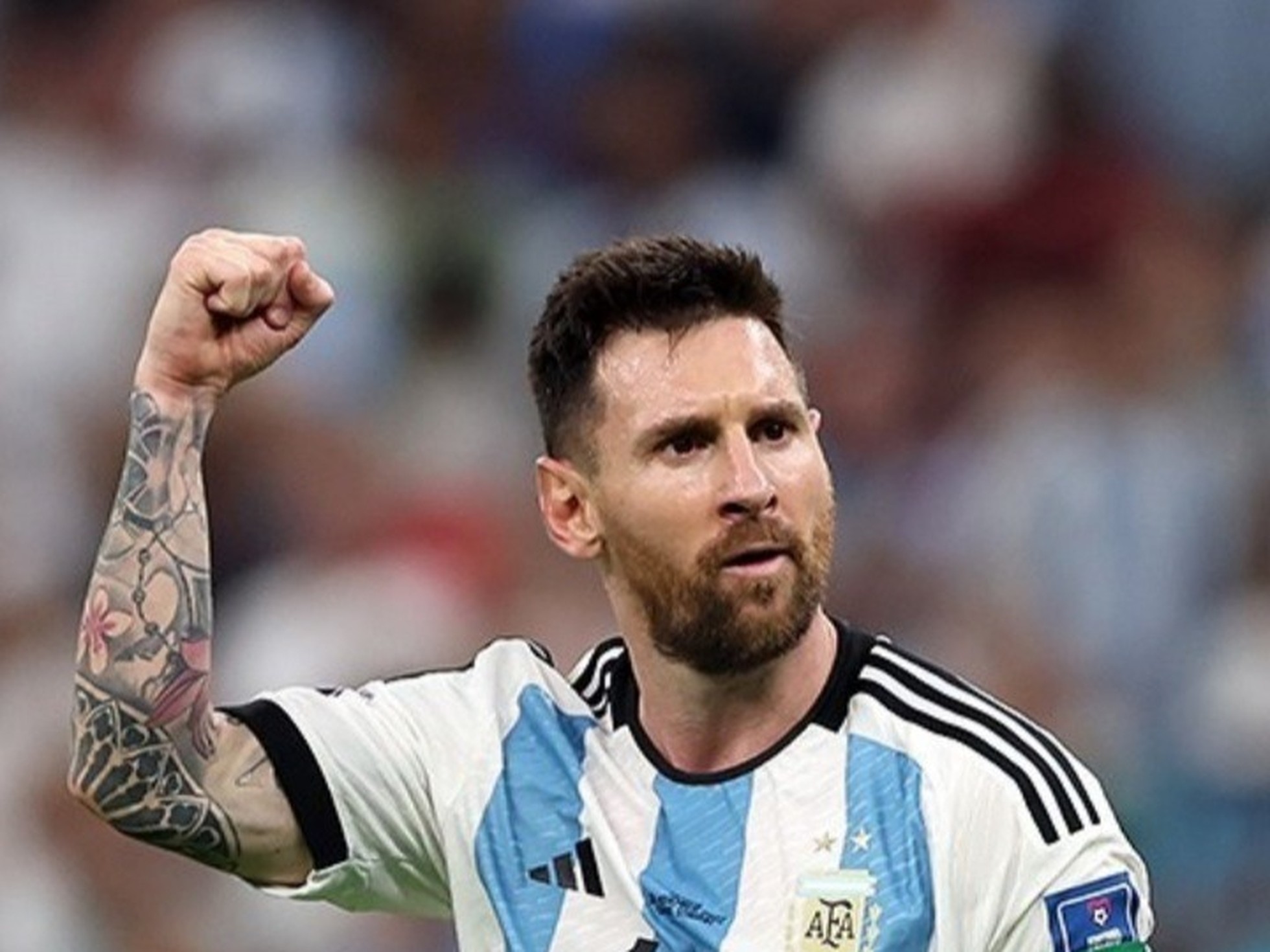
Then Lionel Messi showed them all up with his first World Cup hat trick.
At 38 years old, Messi is still doing ridiculous Messi things. The treble pulled him level with Miroslav Klose on 16 World Cup goals, the all-time record, and pushed him past Pelé for the most goal involvements in World Cup history. Argentina’s 3-0 win over Algeria was not the most dramatic game of the first round, but it may have been the most comforting for a favorite. No chaos. No panic. No wasted dominance. Just Messi being Messi and Argentina looking like a team that knows exactly who it is.
On Wednesday Harry Kane carried over his incredible club scoring form, netting a brace for England as they notched four against Croatia.
Joshua Kimmich also deserves a mention for the way he ran the show in Germany’s rout, leading the round in key passes with two assists.
The Goalies Deserve Their Own Section
This has also been a huge opening round for goalkeepers.
Vozinha is the obvious headliner. A 40-year-old keeper playing for a World Cup debutant, saving seven shots against Spain, and walking away with a 0-0 draw is the kind of story that makes the World Cup the World Cup. It is the sort of performance that is almost impossible to predict and almost impossible to forget.
Mohammed Al-Owais was not far behind for Saudi Arabia. Uruguay battered away in the second half, but Al-Owais kept Saudi Arabia alive long enough to earn a point. Uruguay eventually found the equalizer, but without Al-Owais that game could have easily gotten away from Saudi Arabia.
Those two performances also speak to a broader point. In a tournament with more teams, there are going to be more games where the talent disparity is obvious. But a goalkeeper can compress that gap in a single match. One great keeper performance can turn a comfortable favorite win into a draw. Spain and Uruguay both learned that immediately.
Top Team Performances
Germany had the loudest performance of the round. Yes, it was Curaçao. But seven goals in a World Cup game is seven goals in a World Cup game. Germany looked ruthless, fluid, and completely unwilling to turn the game into a polite opening exercise. Joshua Kimmich controlled everything, and the attacking group looked like it could create chances from almost anywhere.
Sweden were not far behind in terms of pure attacking statement. A 5-1 win over Tunisia will not get the same attention as Germany’s 7-1, but it was a reminder that Sweden have real weapons and may be a dangerous team if the attack clicks. Alexander Isak and Viktor Gyökeres give them a forward line few teams will want to deal with.
Argentina were the cleanest favorite. A 3-0 win, a Messi hat trick, and no real drama. Sometimes that is exactly what you want from an opener. It does not need to be a masterpiece. It needs to be three points, control, and no injuries or panic.
France may have had the most impressive second-half performance. Senegal made them work, but France eventually looked like France. They have so many ways to hurt you, and once Mbappé gets involved near goal, the game changes instantly.
England were the most entertaining contender. Four goals against Croatia is a serious statement, and the second half was more dominant than the final score suggests. The defensive concerns are real, but this is also the danger of judging England too harshly. They can look a little open and still score four against a very capable opponent.
And then there is the US.
The Americans’ 4-1 win over Paraguay was not just a good host-nation opener. It was one of the best World Cup performances in program history. Paraguay are not some helpless opponent. They qualified out of South America. They have real players. They know how to suffer and survive.
The US did not let them breathe.
The press was suffocating. The field was tilted. The energy was exactly what you would hope to see from a team playing a home World Cup. Folarin Balogun finished like a true World Cup striker. Christian Pulisic looked dangerous before coming off. Malik Tillman and Weston McKennie were everywhere. Chris Richards gave the back line the confidence to play high. Gio Reyna came off the bench and scored a goal that reminded everyone how much quality this team still has beyond the starting eleven.
What We Learned
The first round does not crown anyone. It never does. Argentina lost to Saudi Arabia in 2022 and won the tournament. Spain lost to Switzerland in 2010 and won the tournament. One game can deceive you.
But one game can also tell you what kind of tournament you are watching.
So far, this World Cup looks open, chaotic, and much more entertaining than expected. The expanded field has not produced a bunch of terrified underdogs waiting to get eliminated. It has produced volatility. It has produced goalkeepers standing on their heads. It has produced favorites getting punched in the mouth. It has produced superstars immediately entering the Golden Boot race. It has produced a US team that looked ready for the moment.
The favorites are still the favorites. France, Argentina, England, Germany, Spain, Portugal, and Brazil are not going away because of one result, good or bad.
But the first lap has made one thing clear: nobody gets to sleepwalk through this tournament.
Not Spain. Not Portugal. Not Brazil. Not Uruguay. Not anyone.
The World Cup is only one round old, and it already has a pulse.