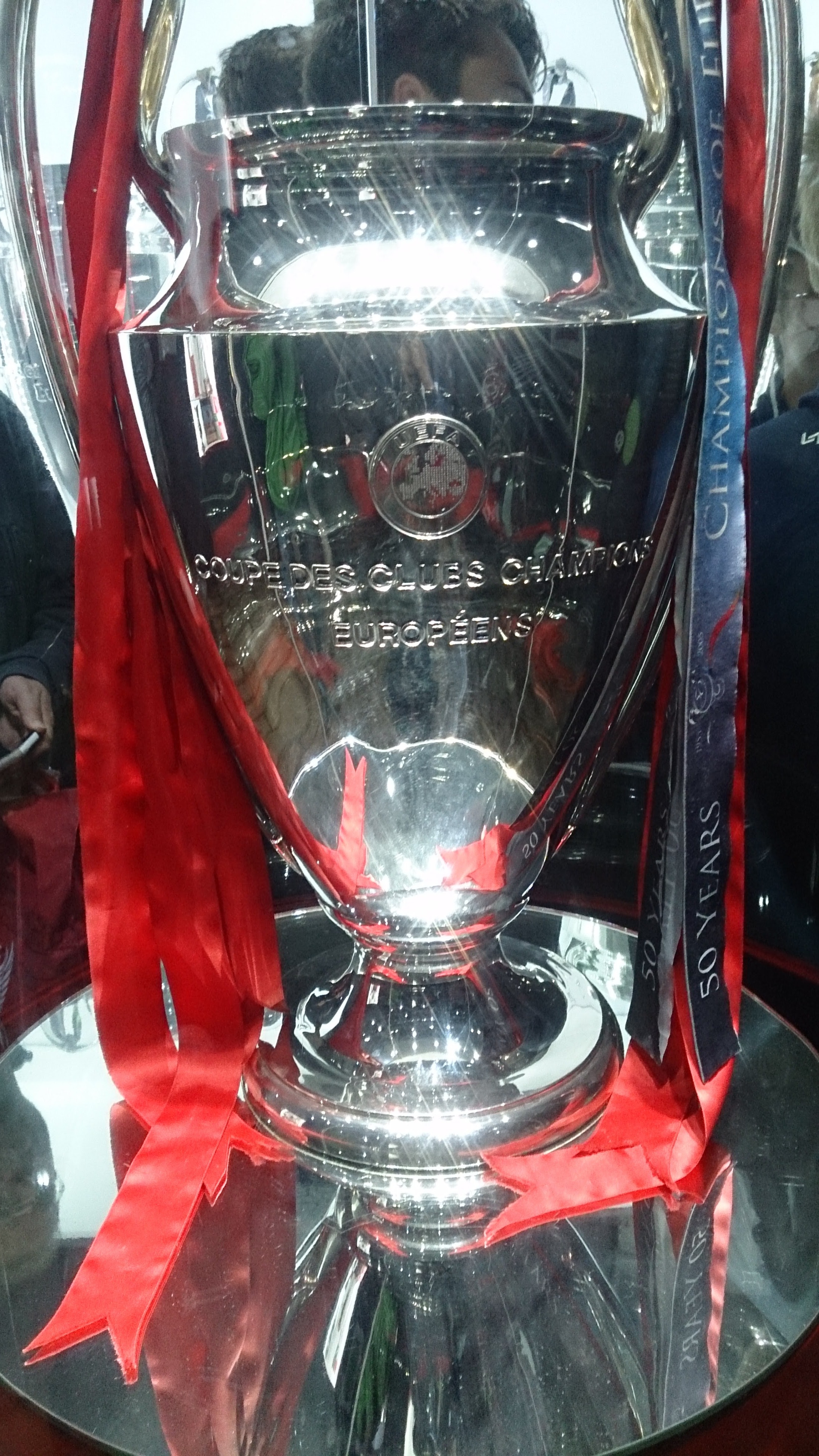
The Champions League final, European soccer’s ultimate showcase, takes place this Saturday afternoon at the Puskás Aréna in Budapest, with defending champions Paris Saint-Germain facing Arsenal at 12pm ET on CBS and Paramount+. This matchup features two teams that have been among the best in Europe all season, the newly crowned champions of England and the defending champions of Europe. This should be a fascinating clash of styles, with PSG aiming to become the first club to successfully defend the trophy since Real Madrid’s three-peat from 2016-2018 and Arsenal chasing the only major prize that has eluded them in their 139-year history.
For both clubs, this final represents a chance at history. PSG won their first ever Champions League last season with a 5-0 demolition of Inter Milan in Munich, and would join an exclusive club of back-to-back winners with another triumph. Arsenal are appearing in their second ever final, with their only previous appearance coming in 2006 when they lost 2-1 to Barcelona at the Stade de France. The Gunners arrive in Budapest fresh off ending their 22-year Premier League title drought, with Mikel Arteta becoming the first Arsenal manager to lift the league trophy since Arsène Wenger’s Invincibles in 2003-04.
The storylines are plentiful. Last season, PSG eliminated Arsenal at the semifinal stage on their way to the trophy, providing the Gunners with extra motivation entering Budapest. The final also pits two managers with very different European pedigrees, but clear, modern tactical identities, against each other. Luis Enrique already has two Champions League titles to his name, winning with Barcelona’s treble-winning side in 2015 before last year’s triumph with PSG. Meanwhile Mikel Arteta will be coaching his first Champions League final after six full seasons at the helm.
This final brings a fascinating clash in styles, with Arsenal’s control, defensive structure, set-piece dominance and transition protection against PSG’s pace, fluidity, aggressive pressing and relentless possession. It should entertain soccer purists and casual fans alike.
How They Got Here
Arsenal’s path to Budapest has been historic. They became the first team ever to win all eight matches in the new Champions League league phase, securing a bye directly to the Round of 16. From there, they dispatched Bayer Leverkusen 3-1 on aggregate, edged Sporting CP 1-0 on aggregate in the quarterfinals, and overcame Diego Simeone’s Atlético Madrid 2-1 on aggregate in the semis. A 1-1 draw in Madrid followed by Saka’s 44th-minute winner in a 1-0 home leg has made the Gunners the first team in Champions League history to go 14 consecutive matches without defeat in a single campaign.
The numbers behind that run are staggering. Arsenal have conceded just 6 goals in 14 matches, a 0.43 per game average that is the best in the competition. David Raya has 9 clean sheets, tied for the all-time tournament record. A shutout in the final would put Raya alone atop that list. Domestically, Arsenal outlasted Manchester City for the Premier League title with 85 points, finishing seven ahead of Manchester City with a goal differential of +44. They kept 19 clean sheets in the league as well, with Raya claiming his third consecutive Premier League Golden Glove. Arsenal averaged 53% possession and completed 86.5% of their passes in the Champions League, which paints the picture of a team that is comfortable controlling the ball without becoming reckless in possession.
PSG took a far more circuitous route to defend their crown. The defending champions stumbled in the new league format, finishing 11th and being forced into a knockout playoff against fellow French side Monaco, where they squeaked through 5-4 on aggregate despite a chaotic 2-2 draw at home in the second leg. From there, however, they have looked back to their title-winning form.
In the Round of 16, they hammered Chelsea 8-2 on aggregate behind a 5-2 thrashing in Paris. In the quarterfinals, they were the more clinical side in a 4-0 aggregate dismantling of Liverpool, winning 2-0 in both legs with Dembélé scoring twice late at Anfield. The semifinal against a Bayern Munich that was arguably the best team in Europe all season delivered one of the best Champions League ties in recent memory — a 5-4 thriller in Paris followed by a 1-1 draw at the Allianz that saw PSG advance 6-5 on aggregate after Dembélé scored just three minutes into the second leg.
PSG enter the final averaging 2.8 goals per game, second only to the Bayern side they eliminated. Khvicha Kvaratskhelia leads the team with 10 goals and 6 assists in the competition. Dembélé has added 7 of his own and Désiré Doué 5. The flip side of all that attacking firepower has been some defensive vulnerability, with PSG conceding 22 goals in 16 matches (1.38 per game). They have averaged 60.3% possession and completed 89.3% of their passes, while also ranking near the top of the competition in ball recoveries.
Domestically, PSG claimed their 14th Ligue 1 title in a far more competitive race with Lens this season, settling things with a game to spare.
What to Watch For
This final represents one of the cleanest stylistic clashes in recent Champions League history. PSG are the elite attacking force, leading Europe in goals, big chances created, ball recoveries, and pressing intensity. Arsenal are the defensive juggernaut, with a record-tying clean sheet pace and a structural rigor that has frustrated nearly all their opponents this season. Whichever side imposes its identity is likely to lift the trophy.
The marquee individual matchup is Kvaratskhelia against whichever Arsenal right back Mikel Arteta is forced to deploy. With Ben White and Jurriën Timber both dealing with injury issues, the most likely starter at right back is 21-year-old Cristhian Mosquera, who would be making his Champions League final debut against arguably the form attacker in Europe. Kvaratskhelia just decimated Bayern Munich’s right flank across both semifinal legs and has been involved in a goal or assist in every knockout match of PSG’s run. That is the kind of mismatch that can swing a final, and Arsenal will need consistent help from Saka and the right center back (likely William Saliba) to provide cover.
In addition, Désiré Doué gives PSG another dribbler and connector, and reigning Ballon d’Or winner Ousmane Dembélé another dangerous attacking threat. Achraf Hakimi and Nuno Mendes provide width and vertical threat from fullback. Vitinha, João Neves and Fabián Ruiz can control the middle without needing to force the game.
On the other side of the pitch, Saka faces an equally stern test against Nuno Mendes. The Portuguese international is one of the best left backs in the world, with the pace and stamina to match Saka’s relentless one-on-one wing play. Saka has been Arsenal’s most important attacker all season, combining the goal threat of a true winger with the defensive work rate Arteta demands. If Arsenal are going to consistently break PSG’s high press, it will likely be through Saka isolating Mendes or finding combinations with Martin Ødegaard or Eberechi Eze and overlapping runs from the back.
Arsenal make their opponents solve a series of small problems. They rarely give up easy central access. They do not overcommit bodies forward without rest-defense protection. Rice and his partner, whether Zubimendi or Lewis-Skelly, give them two midfielders who can both pass and defend space. Saliba and Gabriel are capable of defending large areas without panic. Raya has become an underrated part of their buildup and their ability to manage pressure.
The game may hinge on Arsenal’s ability to handle the PSG press and whether they can neutralize PSG into sterile possession when they control the ball. If PSG spend long stretches moving the ball side to side without pulling Arsenal’s block apart, the game tilts toward the Gunners. If PSG can force turnovers high up the field or drag Arsenal’s midfield out of shape, isolate the fullbacks and get runners attacking the box from multiple angles, Arsenal could spend the afternoon defending emergency situations.
The other clear battle is set pieces. Arsenal have become one of the most dangerous set-piece teams in Europe, and in a final that could be tight and low scoring, their corners and wide free kicks may be the cleanest path to a goal. Gabriel, Saliba, Rice and Gyökeres give them multiple targets. PSG have athletic defenders, but they have also conceded 22 goals in the Champions League this season. Arsenal will believe they can create the one ugly, decisive chance that wins finals.
Both teams arrive in Budapest exceptionally well-rested. Arsenal clinched the Premier League title before their final league match, allowing Arteta to rotate heavily against Crystal Palace. PSG wrapped up Ligue 1 with a game to spare and have had a nearly two-week break since their final league fixture. Neither team has a domestic cup final to worry about, and both have used the past week to rest key players and prepare specifically for this matchup. That should bring out the best in both of these exceptional teams.
My Prediction
This game is a true 50/50 toss-up. The clash of styles makes it impossible to predict with any real confidence, since either tactical identity could prevail depending on how the early stages unfold. If Arsenal weather the opening 15 minutes of PSG pressing and impose their defensive structure, this can become the kind of low-scoring chess match they have thrived in all season.
If PSG can establish their tempo early and force Arsenal to chase the game, the Gunners’ lack of attacking depth and PSG’s front line quality could make for a tough afternoon. Both teams have had ample time to rest key players and prepare specifically for this matchup. Neither side will have any fitness excuses, and both managers should have their preferred starting lineups available.
If I had to put money on it, I would take Arsenal at +120. They are being priced as slight underdogs despite having the better defensive record, the better organizational structure, and one of the elite set piece attacks in Europe. PSG’s price reflects their reigning champion status and their attacking ceiling, but the Gunners are too well-coached and too defensively sound to dismiss at plus money.
Expect a close, low-scoring affair where the result hangs on a single key moment, whether that is a Hakimi cutback finding Dembélé, a Rice free kick finding Gabriel, or a Mosquera tackle (or missed tackle) on Kvaratskhelia. One foul, one set piece, or one counter could decide the entire title.
Tactical Preview
This game presents a classic tactical matchup of the irresistible force versus the immovable object. Oddly enough, both of these coaches have their roots in the exciting Barcelona teams of the 2010s. Luis Enrique played for Barcelona in the late 90s and early 2000s and then took over as manager of the Messi-era Barcelona a few years after Pep Guardiola’s departure, leading them back to a Champions League crown in 2015. Arteta began his club career at Barcelona in the late 90s but never fully broke through there, later becoming a fixture for Everton and Arsenal. Arteta, however, apprenticed under Guardiola as an assistant coach for several years before taking the reins at Arsenal in 2019. Despite the similar backgrounds, the two coaches present very different interpretations of the Guardiola-based philosophy.
PSG Tactics
Enrique’s PSG is more reminiscent of the Messi-led Barcelona teams he managed, though less star-focused. Under Enrique, PSG line up nominally in a 4-3-3, but the shape becomes highly fluid the moment they win the ball. The defining feature of this PSG side, and the tactical wrinkle that has caused the most problems for elite opposition, is the way the front three drift and rotate to create overloads.
Enrique has spoken of his ambition to find 20 players who can play everywhere, and the front line of Dembélé, Kvaratskhelia, and either Désiré Doué or Bradley Barcola embodies that philosophy. They constantly swap sides, drop into midfield, and combine in ways that break man-marking systems. UEFA Technical Observer Erik ten Hag specifically highlighted this against Bayern, where Doué would drift all the way over to Kvaratskhelia’s left wing to create 2v1s and leave Bayern’s defenders without a clear reference point. These overloads cause big problems for defenses trying to match man to man.
Dembélé’s role as a false 9 is the linchpin that makes the rotations work. With no true target striker, Dembélé drops deep to combine with the midfield while the wide forwards and/or full backs attack the spaces behind. This creates a dual problem for opposing center backs: either they follow Dembélé out of position and risk leaving space in behind, or they let him receive freely between the lines. Arsenal’s center backs Saliba and Gabriel will face this exact question in Budapest. The same problem confronted Atlético Madrid in the semifinal, with Julián Álvarez and Antoine Griezmann dropping between Arsenal’s lines, and the Gunners’ solution there was for Rice and Zubimendi to drop and pick up the runners while the center backs held their position.
PSG’s midfield is a different beast from what Arsenal will be used to. Vitinha is the metronome, leading the team in progressive passing and ball circulation. Fabián Ruiz adds technical quality and passing range, while João Neves provides the defensive bite as the destroyer of the unit, leading PSG in ball recoveries during the knockouts. The trio is built to control central areas, both with and without the ball.
Their full backs complete the picture. Achraf Hakimi is one of the most dangerous attacking full backs in the world, regularly bombing forward to overlap or underlap on the right. Nuno Mendes plays a more balanced role on the left, with his attacking instincts tempered by the responsibility of covering for Kvaratskhelia’s wandering, but he can be equally as dangerous with space to run.
The harder question for any team facing PSG is figuring out which version of the French side will show up. They are a possession-heavy team by default, averaging 60% possession through the competition, but they have proven repeatedly this run that they can play multiple ways depending on the opponent.
Against Bayern in the second leg, with a one-goal aggregate lead to protect, PSG had only 34% of the ball and won by retreating into what UEFA Technical Observer Ange Postecoglou described as a “funnel” defensive structure, flooding bodies back into central areas to deny Bayern’s wingers any space to cut inside or cross. PSG defended crosses outstandingly, won every second ball, and never allowed Bayern to get the clean shooting opportunities they normally rely on.
Against Liverpool in the quarterfinals, PSG showed yet another adjustment. With Liverpool’s man-oriented press denying them the central rotations they prefer, goalkeeper Matvei Safonov’s passing changed dramatically. In the first half at Anfield he played six of his 11 passes into PSG’s defensive third (54.5%), but in the second half none of his 21 passes were received in their own third. PSG simply went over the top of the press, bypassing it entirely and turning Liverpool’s high line into attacking space. The fact that they can switch between intricate buildup, direct vertical play, and a disciplined low block is what makes them so dangerous in a one-off final.
In goal, Safonov has supplanted both Donnarumma (who departed for Manchester City over the summer) and offseason signing Lucas Chevalier (who struggled before an October injury opened the door). The 27-year-old Russian is in his first Champions League campaign as PSG’s clear knockout-stage No. 1, and he has been solid if not spectacular throughout the run.
Arsenal Tactics
Mikel Arteta’s Arsenal also typically deploy a 4-3-3, but with a far more structured and defensively conservative approach than PSG. The Gunners’ identity this season has been built around an iron-clad defensive shape, with Declan Rice as the holding midfielder anchoring everything in front of center backs William Saliba and Gabriel. Arsenal lead the Champions League with 9 clean sheets and have conceded just 0.43 goals per game in the competition, the kind of defensive record that travels well to a neutral-site final.
The structural underpinning of that defensive record is the relationship between the back four and the midfield pivots. UEFA Technical Observer Edin Terzić specifically highlighted how Zubimendi and Rice drop deep to track runners between the lines, allowing Saliba and Gabriel to hold their positions and the back line to stay organized. This is precisely the discipline Arsenal will need when Dembélé drops off the front line to receive.
Terzić outlined three principles that Arsenal have executed well all season: maintaining a three-point view of ball, opponent, and teammate; proactive communication between defenders and midfielders to manage handovers; and holding midfielders dropping to handle attackers between the lines. Arsenal have done this better than any team in the competition.
In possession, Arsenal often invert one or both full backs into midfield, creating numerical superiority centrally and freeing the wingers to maintain width and isolate defenders one-on-one. Martin Zubimendi (or Myles Lewis-Skelly) plays alongside Rice to provide passing range and ball circulation. Martin Ødegaard, or more recently Eberechi Eze, operates as the chief creative outlet, drifting into pockets between the opposition midfield and defense to deliver the final ball. The attack flows heavily through Saka on the right, with Gabriel Martinelli or Leandro Trossard stretching defenses on the left and Viktor Gyökeres or Kai Havertz as the focal point at center forward.
The newest, and potentially most important, wrinkle in Arsenal’s tactical playbook came in the semifinal second leg against Atlético Madrid. After being frustrated by Atlético’s deep block in the first leg, Arsenal made their breakthrough by attacking the spaces in behind. Arsenal made just 35 runs in behind in the first leg in Madrid. In the home leg, they made 63. Gyökeres alone made 29 runs and covered 722 meters in sprints, and 1.3 of Arsenal’s overall xG of 1.6 came specifically from runs in behind. Saka’s winning goal came directly from a Gyökeres run that disorganized the Atlético back line.
UEFA’s Rui Faria highlighted how runs in behind create uncertainty by forcing defenders to turn and face their own goal. They create space, because even when the runner doesn’t receive the ball, defenders drop to track the movement and open pockets between the lines. They increase speed by bypassing the need to circulate slowly around a block. And they stretch defenses, making the kind of compactness PSG showed against Bayern much harder to maintain.
As Faria observed of Gyökeres specifically, his work rate forced Atlético’s defenders to constantly worry about the space behind them, which discouraged them from stepping up to press.
This is the most important tactical thread for Arsenal to pull on against PSG. The French side’s possession-based identity inevitably involves committing players forward and leaving a higher defensive line than most opponents. If Gyökeres/Havertz and Saka can stretch PSG with constant vertical runs the way they did against Atlético, they will create chances. It is also worth noting that this is exactly how Bayern caused so many problems in the first leg in Paris, with Luis Díaz and Michael Olise constantly threatening to run in behind Marquinhos and Pacho. Bayern scored four goals in that game.
Arsenal’s biggest weapon beyond their structural defense is their set-piece prowess. Arsenal have scored more headed goals from set pieces in this Champions League campaign than any other team. Gabriel, Saliba, Gyökeres, Havertz and Mikel Merino (if back from injury) all provide aerial threats from corners and wide free kicks. Rice’s exquisite delivery from dead balls, which produced two stunning free kick goals against Real Madrid in last year’s quarterfinal, creates constant danger on standard set pieces as well. Set piece coach Nicolas Jover has built Arsenal into the most reliably dangerous set piece team in Europe, and given PSG’s documented vulnerability defending crosses prior to the Bayern second leg, this could be Arsenal’s most reliable path to goal in a tight game.
In goal, David Raya has been in extraordinary form, with 9 clean sheets that tie the all-time tournament record. He has also won the Premier League Golden Glove for three consecutive seasons. He will be busy in Budapest.
Key Tactical Matchups
The Press
The first tactical question is how Arsenal handle PSG’s press. PSG will almost certainly look to press high in moments, especially after Arsenal goal kicks or when the ball is played backward to David Raya. Dembélé, Kvaratskhelia, Barcola or Doué can all trigger pressure from the front, while Vitinha, João Neves and Fabián Ruiz are aggressive enough to jump onto midfielders if Arsenal try to play short through the middle. PSG’s goal is not always to win the ball with the first press. Sometimes the goal is to force a rushed second pass, trap Arsenal near the sideline, and then pounce when the next outlet is predictable.
Arsenal have the quality to play through that, but they will have to be precise. Raya is comfortable with the ball at his feet. Saliba and Gabriel can split wide. Zubimendi, Rice or Lewis-Skelly can drop in to provide a passing option, and Rice is great at driving the ball forward after the initial line is broken. Ødegaard and Eze are both skilled at drifting into pockets between the lines to find danger. The problem is that PSG’s press is designed to make good teams think they have escaped, only to win the ball on the next action when the structure is stretched.
That is where either Kai Havertz or Viktor Gyökeres becomes important up top. Arsenal do not need to prove a philosophical point by playing short every time. If PSG commit numbers forward, Arsenal can go longer and play off the second ball. That gives them a way to bypass the most dangerous part of PSG’s pressure and forces PSG’s center backs to worry about defending space behind them rather than stepping aggressively into midfield.
The Midfield Battle
Vitinha and Neves versus Rice and Zubimendi/Lewis-Skelly is the chess match within the chess match. PSG’s midfield is more technical and possession-oriented. Arsenal’s combines defensive discipline with the breakthrough creativity of Ødegaard/Eze. Both teams will likely try to press the other’s holding midfielder. Neves will try to disrupt Rice on the ball; Rice will try to do the same to Vitinha. The key for Arsenal is whether Rice and his partner can disrupt PSG’s rhythm without sacrificing their defensive structure. The Atlético Madrid blueprint from the semifinal is instructive: sit deep, win the ball in the right zones, and break quickly into space. Bayern provided a different blueprint, pressing hard in midfield and exploiting the spaces PSG leaves behind when their full backs push forward.
The Drifting Wingers Problem
Aside from the press, Arteta’s biggest headache is determining how his defense handles PSG’s dynamic attacking trio. PSG’s front three constantly swap sides, and Kvaratskhelia in particular has been involved in a goal or assist in every knockout match of PSG’s run. Arsenal’s typical defensive shape relies on clear assignments and disciplined positioning, but the drifting forwards challenge that by creating chaotic reference points.
Bayern’s solution was inconsistent. At times Alphonso Davies followed Doué centrally, creating massive 1v1 spaces elsewhere that PSG exploited. Other times Bayern lost track of who was supposed to be marking whom. Arteta will need to decide before kickoff whether his full backs pass off drifting wingers to the central defenders and midfielders or simply track them across the pitch.
The False 9 Question
Arsenal’s center backs cannot get pulled out of position by Dembélé dropping off the front line. This is where Rice and his midfield partner become absolutely critical. Their job is to drop and pick up Dembélé between the lines while Saliba and Gabriel stay anchored, exactly as they did against Álvarez and Griezmann in the Atlético semifinal. If Dembélé can get on the ball facing forward in pockets of space, he will create chances or score them himself. If Arsenal’s holding midfielders track him properly, the front three loses its primary connector.
Saka vs. Mendes
This is one of the best individual matchups in world football. Mendes is one of the best left backs on the planet, with the pace and stamina to match Saka’s relentless one-on-one wing play. Saka has been Arsenal’s most important player all season, combining the goal threat of a true winger with the defensive work rate Arteta demands. If Arsenal are going to consistently break PSG’s high press, it will likely be through Saka isolating Mendes one-on-one or finding combinations. Mendes also pushes forward aggressively when PSG has the ball, so Saka’s defensive tracking will be just as important as his attacking output.
Set Pieces
Arsenal are the best set piece team in Europe, and PSG, for all their attacking dynamism, can be vulnerable in defending crosses, particularly when Marquinhos gets pulled out of position to defend a runner. If this match remains tight, expect Arsenal to look for corner and free kick opportunities to find Gyökeres, Havertz, Gabriel, or Saliba in the box. On the other end, PSG’s set piece threat largely runs through Hakimi’s delivery, with Marquinhos and Pacho as the primary aerial targets. In a low-scoring final, set pieces will likely produce at least one of the goals, and Arsenal have the clear edge on this front.
Transition Discipline
The most underrated tactical battle could come down to which team manages transitions better. PSG showed against Bayern in Munich that they can keep bodies behind the ball without sacrificing their counterattacking threat. Arsenal, for their part, are masters of breaking up play and immediately springing forward through their wingers. The team that wins the transition moments, both attacking and defending, is likely to win the game. One careless turnover in midfield by Vitinha or Rice could be the difference, given how lethal both attacks can be in space.
In-Game Management
Both Luis Enrique and Mikel Arteta are excellent in-game tacticians, with deep benches to draw from. Enrique’s pragmatism, demonstrated throughout this run with the adjustments against Liverpool and Bayern, gives him a strong track record of solving in-game tactical problems. Arteta showed his own acumen in the semifinal against Atlético, when his 57th-minute triple substitution of Hincapié, Ødegaard, and Noni Madueke stabilized a wobbling team and helped close out the game. Mikel Merino’s potential return from injury also gives Arteta the option of an extra physical presence and aerial target off the bench. With a competition this tight, the first manager to make a decisive in-game adjustment may well be the one who lifts the trophy.